Air Purification

Do salt lamps purify air? Evidence review

Do Salt Lamps Purify Air? Evidence Review & Reality Check

Independent physics analysis and indoor air testing show Himalayan salt lamps remove effectively zero percent of PM2.5 and VOC emissions. Negative ion output from a heated crystal sits far below the ten thousand ions per cubic centimeter threshold required for meaningful airborne particle agglomeration. You will spend your budget on decorative lighting rather than actual […]

Do Salt Lamps Purify Air? Evidence Review & Reality Check Read More »
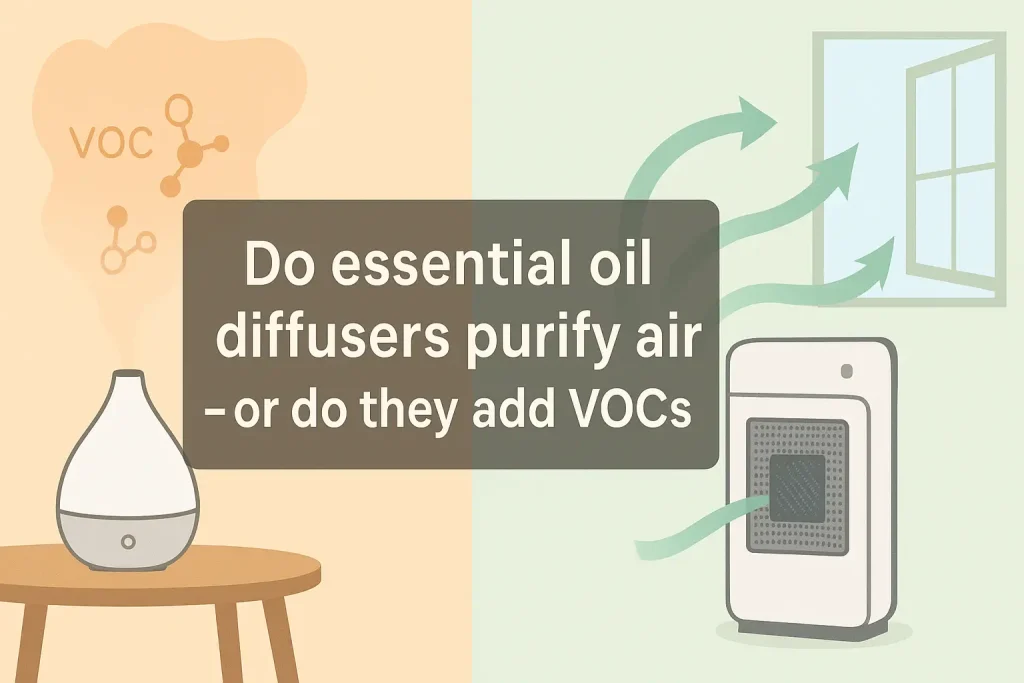
Do essential oil diffusers purify air - or do they add VOCs

Do Essential Oil Diffusers Purify Air Or Add VOCs?

Independent indoor air chemistry testing shows essential oil diffusers release 200 to 1,500+ ppb of total volatile organic compounds within 20 minutes of activation. These devices increase airborne chemical loads rather than purify your home air. Understanding VOC emission profiles helps you manage indoor air quality safely. You can protect your household by tracking TVOC

Do Essential Oil Diffusers Purify Air Or Add VOCs? Read More »

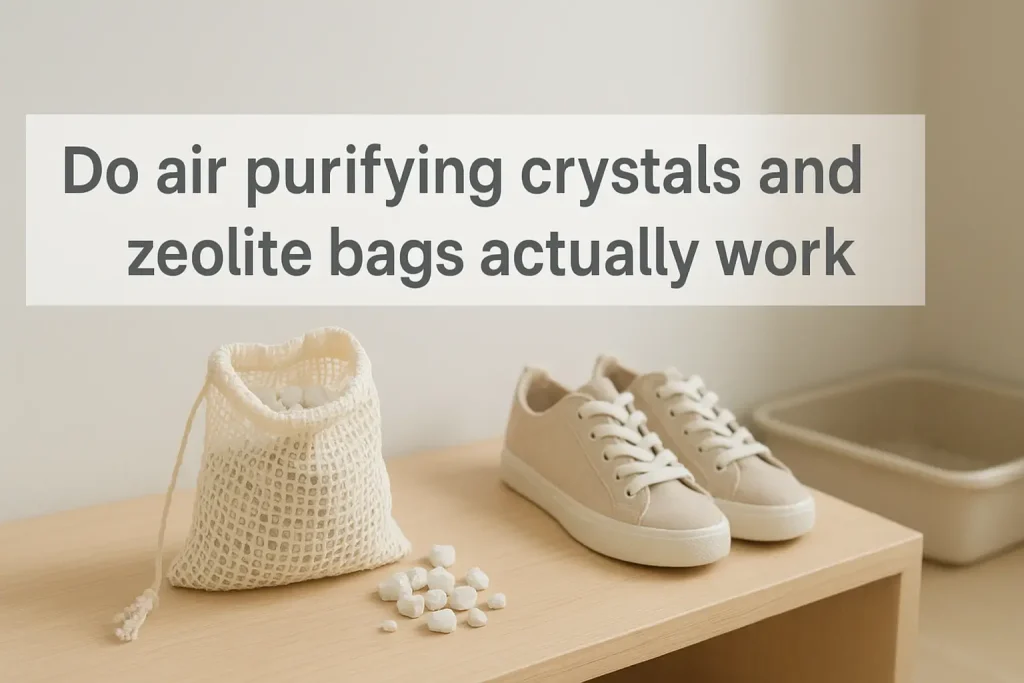
Do air purifying crystals and zeolite bags actually work

Do Air Purifying Crystals and Zeolite Bags Actually Work?

Air purifying crystals remove zero airborne particles and typically achieve only a seven to fourteen percent formaldehyde reduction in thirty days at fifty percent relative humidity or below. They work for targeted ammonia adsorption but fall short for whole room VOC or smoke clearing. These passive mineral bags rely entirely on natural air diffusion rather

Do Air Purifying Crystals and Zeolite Bags Actually Work? Read More »

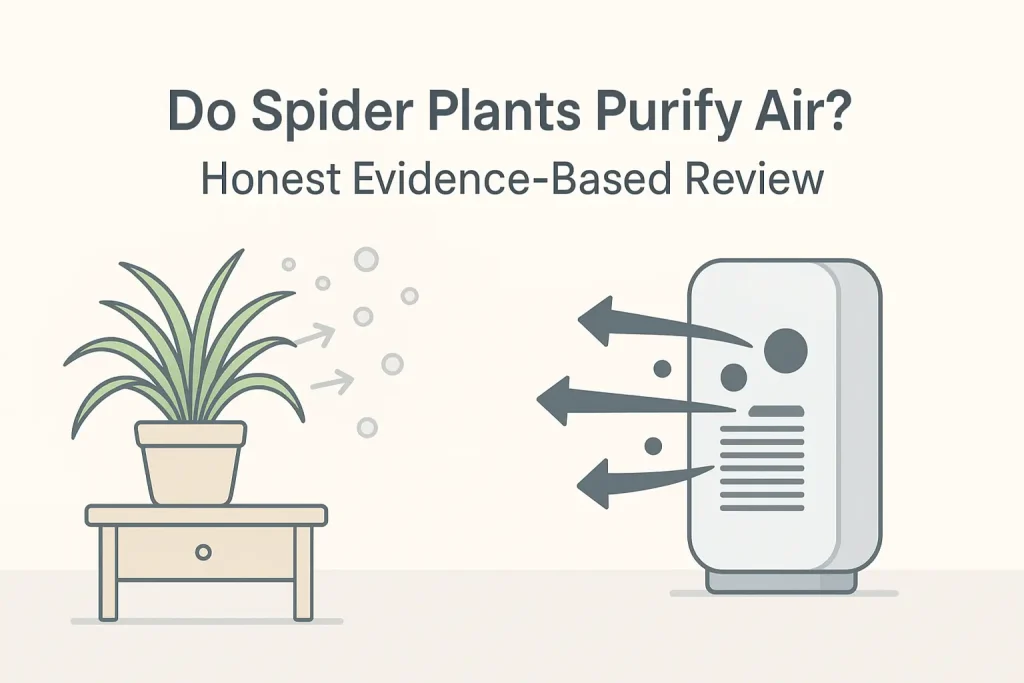
Do Spider Plants Purify Air? Honest Evidence-Based Review

Do Spider Plants Purify Air? Honest Evidence-Based Review

Despite the popular claim, a single spider plant (Chlorophytum comosum) in a standard 150-square-foot bedroom reduces volatile organic compounds by less than 0.1 percent per hour under real-world ventilation conditions. This rate remains too slow to replace true HEPA or activated carbon air purification hardware. Botanical air cleaning operates through biological processes rather than mechanical

Do Spider Plants Purify Air? Honest Evidence-Based Review Read More »

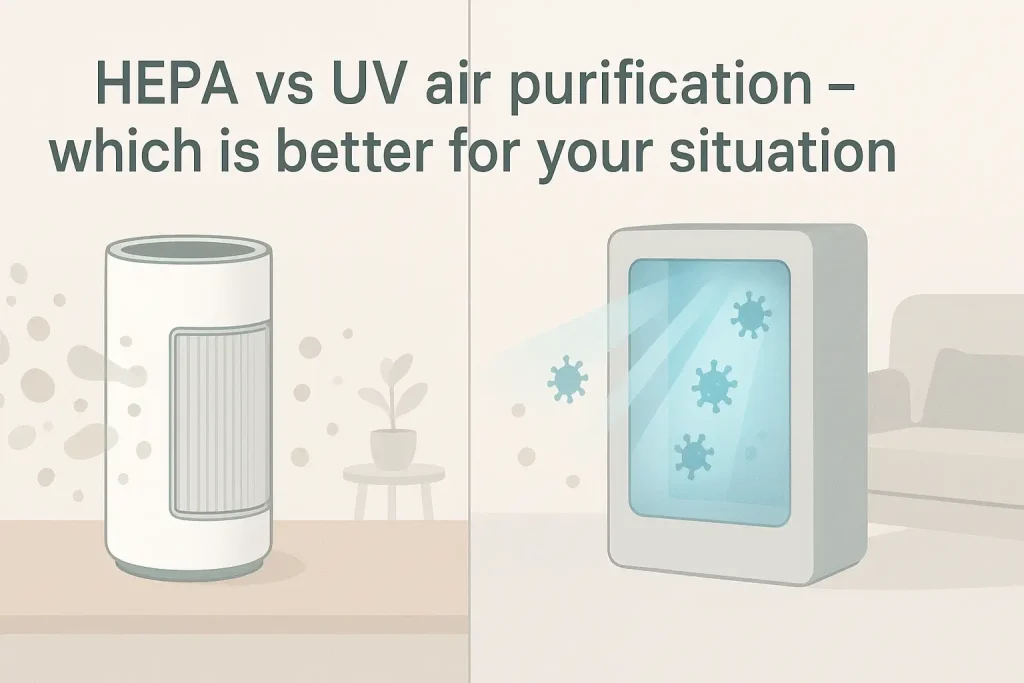
HEPA vs UV air purification - which is better for your situation

HEPA vs UV Air Purification: Better for Your Situation?

While True HEPA filters mechanically capture 99.97 percent of particles at the 0.3-micron MPPS standard, UV-C lights at 254 nm only inactivate viable microbes if air dwells within the irradiation zone long enough. Your best choice depends entirely on whether your primary indoor air threat involves suspended particulates like pollen and smoke, or active airborne

HEPA vs UV Air Purification: Better for Your Situation? Read More »

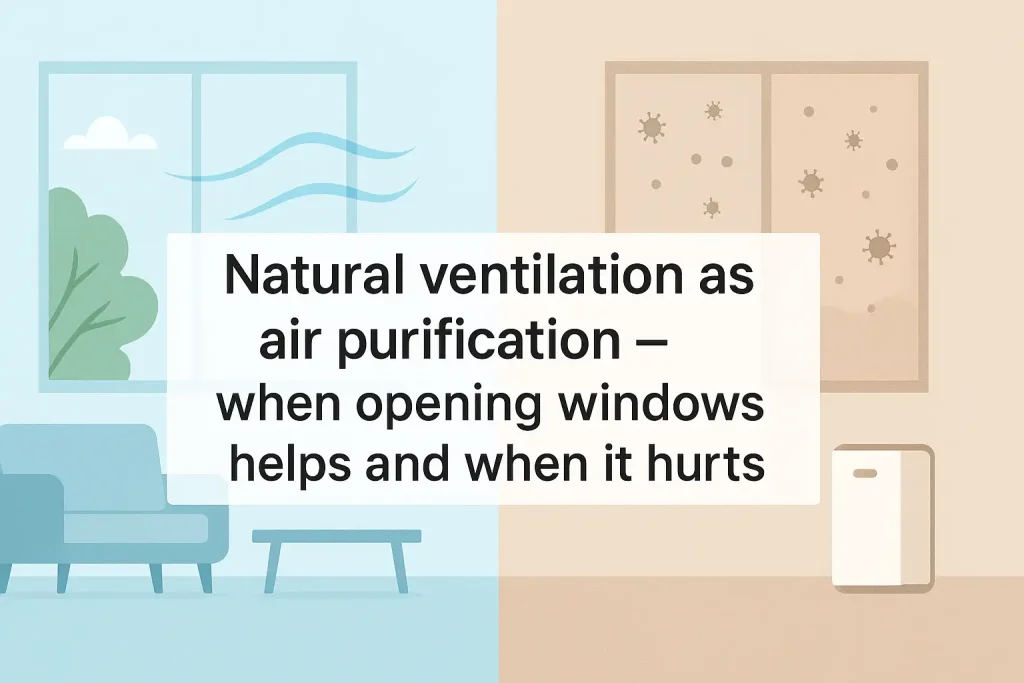
Natural ventilation as air purification - when opening windows helps and when it hurts

Natural Ventilation Air Purification: When It Helps or Hurts

Natural ventilation relies on dilution rather than mechanical filtration to clear indoor air. You swap stale room air with outdoor air whenever outside pollutant levels sit lower than your indoor readings. A typical house exchanges half to one air volume per hour passively. This rate drops carbon dioxide and stale odours perfectly. It does nothing

Natural Ventilation Air Purification: When It Helps or Hurts Read More »

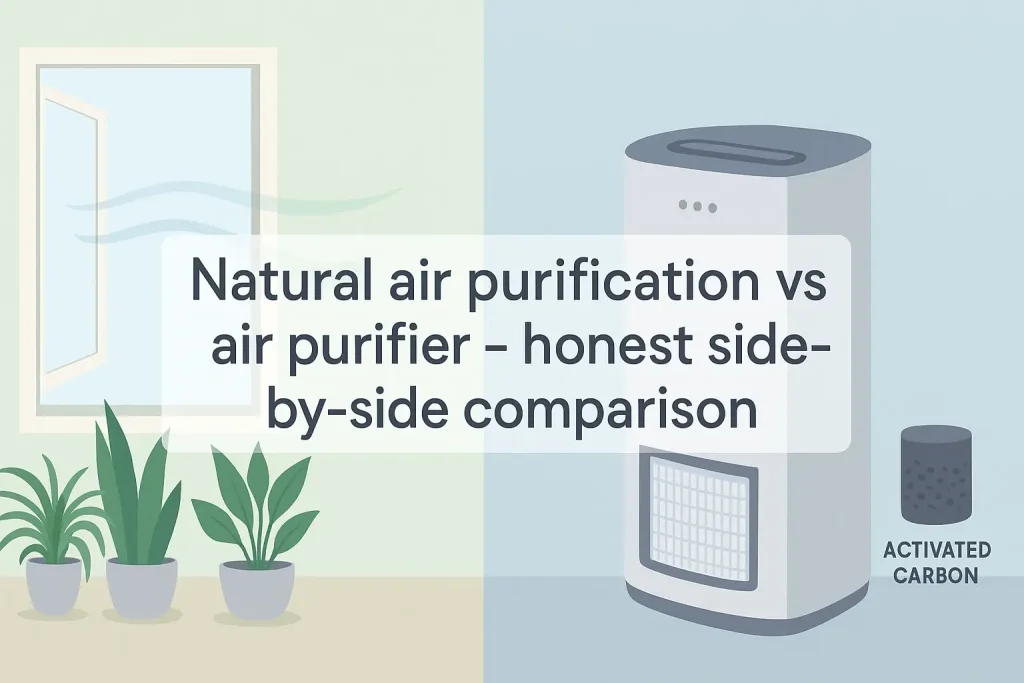
Natural air purification vs air purifier - honest side-by-side comparison

Natural Air Purification vs Air Purifier: Honest Comparison

A properly sized True HEPA mechanical unit running at 5 air changes per hour costs roughly $90 to $160 per year in electricity and replacement filters. Clinical research shows measurable respiratory relief for allergy households within 12 months of consistent use. Natural ventilation and botanical methods cost less upfront but fail to reduce fine particulate

Natural Air Purification vs Air Purifier: Honest Comparison Read More »

Do air purifier sprays and ionizing sprays work

Do Air Purifier and Ionizing Sprays Work? Our Verdict

Air purifier sprays and ionic mists rely on chemical deposition or negative ion release to force airborne dust toward floors, rather than physically capturing pollutants with mechanical filtration. These aerosolized products lower airborne particle counts temporarily, but they fail to achieve continuous air cleaning or meet established Clean Air Delivery Rate standards for genuine indoor

Do Air Purifier and Ionizing Sprays Work? Our Verdict Read More »