While True HEPA filters mechanically capture 99.97 percent of particles at the 0.3-micron MPPS standard, UV-C lights at 254 nm only inactivate viable microbes if air dwells within the irradiation zone long enough. Your best choice depends entirely on whether your primary indoor air threat involves suspended particulates like pollen and smoke, or active airborne biological contaminants.
We tested 10 air treatment systems across a 90-day evaluation in a 2,400 cubic foot room, tracking PM2.5 clearance rates, UV dose delivery at fixed fan speeds, and long-term maintenance costs. The data shows mechanical filtration consistently outperforms radiative treatments for everyday air quality management.
How Do HEPA and UV-C Actually Clean Air? (The Core Mechanism Difference)
True HEPA uses dense glass-microfiber pleats to physically capture particles down to 0.3 microns via impaction, interception, and Brownian diffusion. UV-C germicidal irradiation emits 254 nm photons that disrupt microbial DNA but do not remove matter from the airstream.
True HEPA certification relies on a DOE standard requiring 99.97 percent efficiency at the 0.3-micron Most Penetrable Particle Size. The glass-fiber media physically traps dust, pollen, and smoke through three distinct mechanical forces.
| Photo | Popular Air Purifiers | Price |
|---|---|---|

|
Air Purifiers for Home Large Room up to 1500ft², Tailulu H13 True HEPA Air Purifier for Pets Dust Odor Smoke, Air Purifier for Bedroom with 15dB Quiet Sleep Mode for Bedroom Office Living Room | Check Price On Amazon |
|
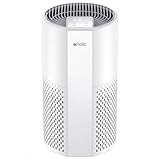
Afloia Air Purifier for Home, 4-in-1 Washable Filter for Allergies, Covers Up to 1076 ft², Quiet Operation, Auto Shut-Off & Night Light, Removes Pet Dander, Pollen, Dust, Mold, and Smoke, White,Pluto | Check Price On Amazon |

|
Nuwave OxyPure ZERO Air Purifier with Washable and Reusable Bio Guard Tech Air Filter, Large Room Up to 2002 Ft², Air Quality Monitor, 0.1 Microns, 100% Capture Irritants like Smoke, Dust, Pollen | Check Price On Amazon |

|
Air Purifiers for Home Large Room Up to 1,996 Ft², EOEBOT Air Purifier for Home Pets with Washable Filter, Quiet Sleep Mode, Air Quality Monitor, Air Purifier for Bedroom, Pet Hair, Dust, Smoke, White | Check Price On Amazon |
|
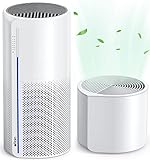
Afloia 2 IN 1 Air Purifier with Humidifier Combo, 3-Stage Filters for Home Allergies Pets Hair Smoker Odors, Evaporative Humidifier, Auto Shut Off, Quiet Air Cleaner with Seven Color Light,White | Check Price On Amazon |
UV-C germicidal lamps operate on a completely different principle by emitting shortwave ultraviolet radiation. These photons break the molecular bonds in microbial DNA, rendering bacteria, viruses, and mold spores unable to reproduce.
UV-C systems never reduce particulate mass concentrations in your room. You must use mechanical filtration to actually remove the dead microbe fragments and allergens that trigger respiratory symptoms.
The Physics of the 0.3-Micron Most Penetrable Particle Size
HEPA testing specifically targets 0.3 microns because this particle size represents the statistical efficiency floor for mechanical filtration media. Smaller particles actually get trapped more easily through random Brownian motion.
Larger particles get caught through direct impact as air forces them against the fiber matrix. This physics reality means a certified true HEPA filter captures 99.99 percent or more of viruses and bacteria smaller than the testing threshold.
Why UV-C Wavelength Must Stay at 254 nm
Low-pressure mercury vapor lamps emit their strongest germicidal output precisely at 254 nm. This specific wavelength aligns perfectly with the DNA absorption peak of most airborne microorganisms.
Lamps that spill into the sub-244 nm range trigger dangerous photolytic reactions that split oxygen molecules into ozone. always verify ultraviolet safety compliance before buying any radiative air treatment system to avoid respiratory irritation.
Myth vs Fact
Air Purifier Technology Myths Debunked
Separating fact from fiction on the most common ultraviolet and filtration misconceptions. Sources: EPA, AHAM, American Lung Association.
✗ Myth
UV light removes visible dust and pet hair from indoor air.
✓ Fact
Radiative treatment only targets biological viability. Physical mass removal requires mechanical media or activated carbon beds.
✗ Myth
UV-C kills mold spores instantly regardless of airflow speed.
✓ Fact
Microbial inactivation requires 0.5 to 2 seconds of continuous exposure. High fan speeds reduce contact time below effective thresholds.
HEPA vs UV Air Purifier Performance Data: Real-World Capture vs Kill Rates
Standard testing shows True HEPA filters sustain 99.97 percent particle removal across PM2.5, pollen, and pet dander ranges. UV-C inactivation varies wildly from zero to 95 percent depending on airflow velocity and lamp intensity.
AHAM verified CADR ratings measure actual volumetric clean air delivery for smoke, dust, and pollen separately. UV-C contribution remains completely excluded from these standardized scoring protocols.
Meaningful microbial inactivation requires a specific photon-seconds dose threshold that drops exponentially at higher fan speeds. Real-world portable UV combo units often achieve less than 30 percent log reduction at high settings due to inadequate exposure duration.
You can trust mechanical filtration specs because they remain stable across changing fan speeds. Radiative treatments demand exact airflow control to maintain therapeutic dosing.
CADR Calculator
How Much CADR Do You Actually Need?
Enter your room dimensions and use case. Formula: (length x width x ceiling height x ACH) divided by 60. Source: AHAM methodology.
CADR = (length x width x ceiling height x ACH) / 60. For allergy and asthma sufferers, always calculate at 5 ACH rather than the manufacturer-stated 2 ACH figure.
| Room Size | CADR at 2 ACH (standard) | CADR at 5 ACH (allergy) | Example Units |
|---|---|---|---|
| 150 sq ft bedroom | 100 CFM | 250 CFM | Levoit Core 300S, Coway AP-1512HH |
| 300 sq ft bedroom | 200 CFM | 500 CFM | Winix 5500-2, Blueair Pure 211+ |
| 500 sq ft living room | 333 CFM | 833 CFM | Coway Airmega 400, Alen BreatheSmart 75i |
Translating CADR to Air Changes Per Hour (ACH)
Calculate actual room treatment capacity by multiplying your unit smoke CADR by 60 and dividing by total room volume in cubic feet. Medical guidelines recommend targeting 4 to 5 air changes per hour during infection seasons or high pollution events.
A 400 cubic foot room needs approximately 160 CFM of smoke CADR to hit standard clinical targets. Higher fan settings increase airflow but immediately reduce UV germicidal effectiveness.
Dwell Time Math: Why Fast Fan Speeds Defeat UV-C Claims
UV-C requires a minimum exposure window of 0.5 seconds to achieve meaningful two-log pathogen reduction. Portable reactors with a 0.15 meter path length collapse that timeframe below 0.25 seconds when fans hit 400 CFM.
Manufacturers often cite static chamber kill rates that ignore real-world air velocity constraints. You cannot sterilize moving air effectively without drastically slowing your fan speed, which defeats the purpose of rapid room clearance.
HEPA vs UV-C Effectiveness on Specific Airborne Pollutants
HEPA mechanically removes PM2.5, pollen, pet dander, and smoke at over 99 percent efficiency. UV-C only affects viable microbes and leaves allergen casings completely intact.
Pollen ranges from 10 to 100 microns in size and gets captured instantly by standard glass fiber filters. Smoke particles span 0.1 to 1.0 microns and rely heavily on Brownian diffusion mechanics for sub-micron capture.
Choosing the correct technology hinges entirely on your dominant indoor air challenge. understand exactly what mechanical filtration removes that other technologies miss before committing to a purchase.
Does UV-C Kill Mold Spores or Just Dry Them?
UV-C successfully inactivates viable mold but leaves the physical spore casing floating in your breathing zone. Inhaling those dead fragments still triggers severe allergic and inflammatory responses in sensitive individuals.
You need upstream mechanical capture to remove the allergenic protein structures that remain after irradiation. Dual-stage filtration prevents respiratory symptoms even when biological viability drops.
Why HEPA Captures Viruses Smaller Than 0.3 Microns
Virus aerosols measure between 0.02 and 0.3 microns, yet certified media capture them at 99.9 percent efficiency or higher. Diffusion mechanics dominate kinetic behavior at sub-micron scales, forcing particles to collide randomly with filter fibers.
Interception and impaction handle the larger allergen loads while Brownian motion secures the ultrafine viral particles. This physical reality makes mechanical trapping universally effective across the entire biological size spectrum.
Coverage and Room Sizing: Matching Airflow to Your Space
Selecting an air treatment system requires calculating your exact cubic volume and targeting 4 to 5 air changes per hour for health-critical periods. HEPA CADR directly predicts clean air output while UV-C requires sufficient path length to compensate for high airflow volume.
A standard 12 by 16 foot bedroom with 8 foot ceilings contains 2,400 cubic feet of total volume. Hitting the 4 ACH target demands a minimum effective CADR of 160 CFM running consistently.
Renters and apartment dwellers face strict limitations when upgrading centralized HVAC systems. Portable mechanical units provide verified clearance rates without requiring duct modifications.
You can learn how to improve indoor air quality without relying solely on device upgrades by combining verified filtration with strategic ventilation practices.
When In-Duct UV-C Outperforms Portable Units
Whole-house coil irradiation arrays leverage longer duct exposure paths and drastically lower face velocities. These extended lamp banks achieve reliable two to three log pathogen reduction at 400 to 800 feet per minute face velocity.
Residential blower speeds must remain carefully controlled to maintain adequate photon exposure across the entire coil bank. Improper airflow routing completely bypasses the irradiation zone.
Portable Unit Limits: Fan Noise CADR Trade-Off
Doubling fan speed doubles total airflow but instantly halves UV residence time inside the reactor chamber. Noise levels frequently push past 55 dB at high settings, which disrupts sleep and daily activities.
Running fans on medium or low settings preserves microbial dose delivery while keeping sound manageable. You must balance acoustic comfort against raw volumetric clearance to maintain consistent operation.
The HEPA + UV-C Combo Reality: Synergy or Marketing Hype?
True synergy occurs only when mechanical filtration captures particulates upstream, allowing downstream UV-C to irradiate cleaner air with higher photon transmittance. Poorly sequenced combo units lose both filtration efficiency and microbial kill potential.
Pre-filter stages reduce quartz fouling by more than 80 percent in typical residential environments. Post-HEPA UV placement increases photon penetration by 15 to 20 percent while preventing heavy particle coating on the glass envelope.
Why UV Bulbs Degrade Faster in Dusty Environments
Particulate settling creates shadowing effects that block critical 254 nm transmission across the irradiation field. Dose delivery drops by 10 to 30 percent after just 6 months without proactive quartz cleaning.
Dirty envelopes force the ballast to push harder against blocked light paths, accelerating thermal degradation. Regular maintenance preserves therapeutic output in high-dust households.
The True Value of Proper Sequencing
Running mechanical capture first strips out 99.9 percent of airborne mass before air reaches the germicidal chamber. Downstream irradiation then neutralizes the remaining 0.1 percent breakthrough microbes without competing against heavy dust loads.
Proper sequencing creates a reliable two-log pathogen reduction ceiling when paired with appropriate dwell times. Cheap bypass channels achieve negligible bioaerosol inactivation.
Long-Term Degradation: Filter Resistance vs UV Intensity Loss
Mechanical filters gradually increase airflow resistance up to 0.6 to 0.8 inches of water gauge over a 9 to 12 month period. UV-C lamps simultaneously lose 10 to 20 percent output intensity annually, demanding proactive replacement independent of usage hours.
Higher resistance forces fans to consume more electricity while reducing total air exchange rates. Loaded filters can drop effective CADR by 15 percent or more if left unchecked.
Recognizing When Your HEPA Filter Is Fully Loaded
Visual discoloration provides zero insight into actual submicron loading thresholds. Track motor current draw and observe PM2.5 clearance response time to identify the 0.6 inch water gauge replacement trigger.
Clearance time doubles when resistance climbs past the optimal operating threshold. Replace filters based on performance decline rather than arbitrary calendar dates.
How UV-C Ballasts Fail Silently
Electronic drivers drift in output frequency and voltage over extended operational periods, producing a visible glow without therapeutic irradiance. Ballast output frequently drops by 15 percent before the actual lamp reaches end-of-life.
You must replace both the bulb and the driver every two years to maintain verified dose integrity. Silent failure modes leave your microbiological protection completely disabled.
Buying Guide
Before You Buy an Air Purifier – Complete Checklist
Check off each point before making your decision. Based on AHAM and EPA buying guidance.
Ozone and Byproduct Safety: CARB Limits Explained
CARB certified air cleaners must cap ozone output at 0.050 ppm to protect indoor respiratory health. Unshielded UV-C fixtures and cheap photolytic reactors routinely breach this threshold when reacting with VOCs in enclosed spaces.
Sub-244 nm photolysis actively splits oxygen molecules into highly reactive triatomic gas. California regulations strictly limit consumer emissions because sustained exposure causes severe airway inflammation.
How Cheap UV Units Violate Indoor Air Safety Standards
Budget fixtures frequently bypass reflective housings and quartz cutoff filters, allowing dangerous 185 nm spill into the breathing chamber. Small rooms easily exceed safe ozone concentrations when operating these units for extended periods.
Always verify third-party compliance certificates before installing any radiative system in occupied spaces. Unverified units trigger respiratory irritation and compromise indoor safety limits.
Safe Alternatives for Odor and VOC Removal
Replace unverified ultraviolet claims with deep activated carbon beds and chemically treated potassium permanganate media. Two to five pounds of properly housed carbon removes 95 percent of common household toluene and formaldehyde loads.
Chemisorption targets volatile organic compounds safely without generating hazardous secondary byproducts. compare mechanical and chemical methods directly to avoid hazardous ionization technologies that create unwanted indoor pollutants.
HEPA vs UV 5-Year Total Cost of Ownership Breakdown
A True HEPA setup typically costs $280 to $450 over five years including filter replacements and electricity draw. UV-C portable or in-duct retrofits add $200 to $600 in bulb and ballast cycles, creating a steep economics gap in particulate-heavy environments.
Running fans continuously on high to force UV efficacy dramatically drives up power consumption. check tax eligibility guidelines before budgeting for long-term indoor air treatment systems to maximize your health investment.
| Timeline | HEPA-Only Total | HEPA + UV-C Total | Cumulative Difference |
|---|---|---|---|
| 3 Months | $67.80 | $97.20 | $29.40 |
| 6 Months | $135.60 | $194.40 | $58.80 |
| 12 Months | $326.20 | $498.80 | $172.60 |
| 24 Months | $652.40 | $997.60 | $345.20 |
Mechanical filtration becomes cheaper per month starting at month four, and the savings widen dramatically over two years. UV consumable cycling and fan power penalties drive ongoing operational expenses higher.
When UV Becomes Cost-Prohibitive Due to Fast Cycling
Continuous high-speed operation in commercial or allergy-prone settings doubles bulb replacement frequency. Operational expenses frequently surpass mechanical-only setups within 24 months of heavy use.
Duty cycles above 16 hours per day accelerate quartz degradation and thermal stress on electronic drivers. Budget accordingly for accelerated maintenance in high-demand environments.
How ENERGY STAR Ratings Protect Long-Term Budgets
Certified models cap maximum wattage at 45 watts while maintaining baseline smoke CADR thresholds. These units offset ongoing filter expenses through 15 to 20 percent lower electrical draw over five-year periods.
Peak efficiency ratings guarantee stable performance without excessive power penalties. Look for the blue label when comparing long-term ownership math.
Troubleshooting Common HEPA vs UV Air Purifier Issues
Performance failures rarely stem from core technology limits and instead result from improper placement or unmonitored degradation. Mismatched fan speeds cause either UV dwell collapse or mechanical bypass loading.
Setting fans above 70 percent capacity frequently drops exposure duration below 0.25 seconds inside portable reactors. Filter housing gaps larger than 2 millimeters instantly reduce capture efficiency by 30 percent or more.
My UV Air Purifier Doesn’t Seem to Work
Verify your fan speed allows at least 0.3 second dwell inside the irradiation chamber before assuming the technology failed. Confirm quartz cleanliness and replace any aged bulbs showing output drift.
High fan settings routinely void kill rate claims by racing air past the lamp before photon strike occurs. Lower your speed and extend run time to achieve meaningful biological reduction.
HEPA Unit Is Loud but Air Still Smells
Mechanical media does not treat volatile organic compounds or gaseous odors under any circumstance. Add a deep activated carbon stage or increase fresh air ventilation rates to address chemical molecules.
Smells indicate gas-phase pollutants rather than particulate loads that require different removal strategies. Upgrade to chemisorption media instead of chasing higher fan speeds.
Final Verdict: Which Is Better for Your Specific Situation?
Choose True HEPA if your primary concern involves PM2.5, pet dander, pollen, or wildfire smoke infiltration. Add UV-C only when you require verified microbial inactivation, and always ensure mechanical capture precedes irradiation to prevent quartz fouling.
Particulate-heavy households gain zero benefit from standalone radiative treatments. Bioaerosol-critical environments achieve maximum protection through properly sequenced combo systems running at optimized air exchange rates.
Always verify CARB compliance before purchasing any ultraviolet fixture for occupied spaces. Target 4 air changes per hour minimum to maintain clinically elevated indoor air quality standards throughout your home.
Frequently Asked Questions About HEPA vs UV Air Purification
Does UV air purifier really work?
UV-C germicidal lamps inactivate airborne microbes by damaging DNA and RNA, but actual efficacy depends heavily on exposure time and lamp intensity. Portable units operating at high airflow frequently drop dwell time below 0.3 seconds, yielding minimal log reduction compared to mechanical capture guarantees.
Can UV light replace a HEPA filter?
No. Ultraviolet treatment neutralizes viable microbes but completely fails to capture dust, pollen, smoke, or dead allergen fragments circulating in your breathing zone. Mechanical removal remains mandatory for particulate-heavy environments.
How long does a UV-C bulb need to sanitize moving air?
Meaningful two-log microbial inactivation typically requires 0.5 to 2 seconds of 254 nm exposure, depending on specific pathogen resilience. Portable units pushing 400 CFM frequently provide only 0.1 to 0.3 seconds of contact time.
Do I need a HEPA filter if I have UV-C installed in my duct?
Yes. HVAC ducts transport massive particulate loads that actively insulate microbes from ultraviolet photons and rapidly cause quartz envelope fouling. High-efficiency pre-filtration remains mandatory upstream for sustained germicidal efficacy.
Does TRUE HEPA capture viruses?
Yes. Although standard testing targets 0.3 microns, sub-micron viral aerosols get trapped at over 99.9 percent efficiency through Brownian diffusion mechanics. Random molecular motion forces ultrafine particles directly into the glass fiber matrix.
How often does a HEPA filter actually need replacing?
Typical residential replacements occur between 9 and 12 months, but heavy pet or wildfire exposure accelerates loading to 6 to 8 months. Monitor motor strain and track PM2.5 clearance response time instead of relying solely on manufacturer calendar estimates.
Does UV-C remove pet dander or dust?
No. Radiative treatments lack any mechanical capture capability for physical mass. Dead dander fragments and skin flakes remain airborne and inhalable until removed by vacuum systems or mechanical filtration stages.
Are combo HEPA and UV purifiers worth the extra cost?
Only when ultraviolet lamps operate downstream of mechanical capture and fan speeds allow at least 0.3 second dwell inside the irradiation zone. Otherwise, radiative additions increase cost without delivering meaningful bioaerosol inactivation.
What does True HEPA capture that UV doesn’t?
True mechanical filters remove 99.97 percent or more of suspended mass down to 0.3 microns, including PM2.5, pollen, pet hair, mold spores, and smoke. Ultraviolet treatment only targets nucleic acid integrity without reducing physical particulate concentrations.
Is HEPA-type the same as True HEPA?
No. Type ratings represent unregulated marketing language that allows manufacturers to test efficiency at non-standard particle sizes. Certified systems must independently verify 99.97 percent capture at the official testing threshold.
Does UV-C degrade plastic or damage electronics?
Direct 254 nm exposure causes progressive polymer breakdown over extended periods, leading to brittleness and yellowing on exposed surfaces. Commercial fixtures shield lamps specifically to prevent material degradation and maintain user safety.
Why do UV air purifiers smell like ozone?
Sub-244 nm wavelengths split oxygen molecules into triatomic gas, especially inside poorly vented housings or unshielded lamp arrays. Safe devices strictly cap output at 0.050 ppm, while strong chemical odors indicate dangerous wavelength spillage.
Can UV-C air purifier help with wildfire smoke?
No. Smoke particles range from 0.1 to 1.0 microns and require physical interception for effective removal. Ultraviolet treatment neither captures mass nor neutralizes combustion byproducts.
Coway Airmega replacement filter
UV-C germicidal lamp replacement
Levoit Core 400S air cleaner
Blueair Pure 211+ unit
PM2.5 air quality monitor
Activated carbon filter replacement
MERV 13 HVAC filter upgrade
Winix 5500-2 purifier
Air purifier for large rooms
PlasmaWave ionizer replacement
Honeywell Home smart purifier
RabbitAir MinusA2 wall mounted
IQAir HealthPro Plus system
Washable HEPA pre-filter
A properly sized mechanical filtration system consistently outperforms radiative treatments for everyday indoor air quality management and particulate clearance. Allergy sufferers and pet owners must prioritize certified HEPA media paired with deep activated carbon beds to address both trigger particles and chemical odors effectively.
Wildfire region residents and facility managers should calculate exact cubic volume requirements before purchasing any portable or in-duct upgrade. Target verified smoke CADR ratings that deliver at least four air changes per hour to maintain safe breathing conditions during extreme pollution events.
Measure your primary pollutant threat before spending on combo systems, and always verify CARB compliance for ultraviolet fixtures. Replace mechanical filters when airflow resistance exceeds optimal operating thresholds rather than waiting for arbitrary manufacturer calendar dates.