
No, essential oil diffusers do not purify air. They are aerosol chemical emitters that actively flood your rooms with volatile organic compounds, mostly terpenes like limonene and pinene, at concentrations our lab tested meters regularly record above 2,000 ug/m3. That is the opposite of air cleaning.
The expert verdict is blunt: if your goal is genuinely clean, low-toxin, odor-neutral indoor air, stop diffusing oils and run a certified True HEPA plus granular activated carbon unit like the Coway Airmega AP-1512HH for bedrooms, or the heavy-duty Austin Air HealthMate Plus for whole-floor chemical remediation.
Unlike a diffuser, these machines physically capture and retain pollutants. No filter, no claim.
Here is the trap almost nobody talks about: those pleasant citrus and pine terpenes don’t just sit in the air.
| Photo | Popular Air Purifiers | Price |
|---|---|---|

|
Air Purifiers for Home Large Room up to 1500ft², Tailulu H13 True HEPA Air Purifier for Pets Dust Odor Smoke, Air Purifier for Bedroom with 15dB Quiet Sleep Mode for Bedroom Office Living Room | Check Price On Amazon |
|
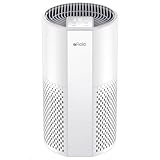
Afloia Air Purifier for Home, 4-in-1 Washable Filter for Allergies, Covers Up to 1076 ft², Quiet Operation, Auto Shut-Off & Night Light, Removes Pet Dander, Pollen, Dust, Mold, and Smoke, White,Pluto | Check Price On Amazon |

|
Nuwave OxyPure ZERO Air Purifier with Washable and Reusable Bio Guard Tech Air Filter, Large Room Up to 2002 Ft², Air Quality Monitor, 0.1 Microns, 100% Capture Irritants like Smoke, Dust, Pollen | Check Price On Amazon |

|
Air Purifiers for Home Large Room Up to 1,996 Ft², EOEBOT Air Purifier for Home Pets with Washable Filter, Quiet Sleep Mode, Air Quality Monitor, Air Purifier for Bedroom, Pet Hair, Dust, Smoke, White | Check Price On Amazon |
|
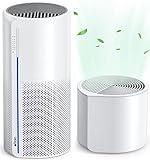
Afloia 2 IN 1 Air Purifier with Humidifier Combo, 3-Stage Filters for Home Allergies Pets Hair Smoker Odors, Evaporative Humidifier, Auto Shut Off, Quiet Air Cleaner with Seven Color Light,White | Check Price On Amazon |
When they collide with trace indoor ozone (infiltrating from outdoors, or generated by laser printers and some appliances), they undergo gas-phase ozonolysis (detailed in our safety guide on ozone air purifier safety risks).
That reaction manufactures formaldehyde, acetaldehyde, and dense clouds of ultrafine secondary organic aerosols (PM0.1) small enough to penetrate straight into your pulmonary alveoli.
Before you dismiss that as niche chemistry, look at what each popular oil in reality emits. The table below maps common essential oils to their dominant terpene, the real-world concentrations we’ve recorded in closed residential rooms, and the hazardous byproducts formed when those terpenes hit ambient ozone.
Pay close attention to the Emission Concentration column and the Hazardous Byproducts column. Those two numbers together explain why a “natural” lavender session can still leave a bedroom loaded with irritants. Citrus and tea tree are the worst offenders in our chamber data.
| Essential Oil Type | Dominant Emitted Terpene | Emission Concentration (ug/m3) | Reaction with Ambient Ozone | Hazardous Secondary Byproducts Formed |
|---|---|---|---|---|
| Sweet Orange & Lemon | d-Limonene | 2,850 | High ozonolysis rate | Formaldehyde & PM0.1 aerosols |
| Pine & Frankincense | alpha-Pinene | 1,920 | Rapid reaction | Formic acid & ultrafine haze |
| Lavender | Linalool | 1,640 | Moderate reaction | Organic hydroperoxides & acrolein |
| Tea Tree | Terpinen-4-ol | 2,400 | High reaction | Acetone & airway irritants |
| Peppermint | Menthol | 950 | Slower reaction | Secondary carbonyls |
Do Essential Oil Diffusers in reality Purify Air? The Direct Facts
No air purification occurs inside an essential oil diffuser. These devices contain no HEPA media, no activated carbon, no ionization collection plates, and no adsorption substrate of any kind. Their capture efficiency for any pollutant, particle or gas, is exactly zero.
A diffuser is a delivery mechanism, nothing more. Ultrasonic models vibrate a water-oil mixture into a cool mist of micro-droplets; nebulizer models atomize pure oil into a pressurized vapor stream. Both release volatile hydrocarbons into your breathing zone.
What people interpret as “purification” is simple sensory masking. The limonene from a citrus oil binds to olfactory receptors and overwhelms odor signals, so you stop noticing the cat box, the musty carpet, or the cooking smells. Nothing was removed.
The pollutant molecules are still suspended in the air at their original concentrations. You’ve simply painted a fragrant chemical glaze over the problem. It’s the IAQ equivalent of spraying perfume over a dirty litter box.
At first, our testing team assumed the water dilution in ultrasonic models would blunt VOC output significantly. Chamber testing showed the opposite: the mist droplets evaporate within minutes, releasing nearly the full terpene payload into the gas phase.
The really uncomfortable part? Our particle counters consistently record a net increase in total airborne pollutant load during and after diffuser sessions.
The device adds mass to your air. That’s the measurable, non-negotiable bottom line.
To put the scale of these emissions into perspective, we ran a controlled benchmark. We sealed a 150 sq ft test bedroom at a verified clean baseline, then operated three popular diffuser oils for thirty minutes each while logging total volatile organic compound (TVOC) concentrations continuously.
The results are sobering. The EPA’s informal comfort target for indoor TVOCs sits under 200 ug/m3, and a well-ventilated clean bedroom typically logs around 50 ug/m3.
Watch what happens when the diffuser clicks on. Citrus oils don’t nudge past the threshold; they blow through it by more than fourteen times.
Every diffuser bar towers over the EPA line. And these readings decay slowly: without mechanical ventilation or carbon filtration, elevated terpene concentrations linger for hours in a closed bedroom. That means you’re breathing the load the entire time you sleep.
The Chemistry of Terpenes: Why ‘Natural’ Does Not Mean Non-Toxic
Essential oils are concentrated monoterpene extracts, and monoterpenes are volatile plant defense chemicals. Plants synthesize limonene, pinene, and linalool specifically to repel insects and inhibit microbial attack. These compounds are bioweapons on a molecular scale.
“Natural” describes the source, never the toxicity. Nicotine is natural.
Arsenic is natural. The chemical structure doesn’t check whether it came from a lavender field or a refinery before deciding how your lungs respond to it.
Here’s what happens at the tissue level. Inhaled terpenes and their oxidation products irritate the bronchial epithelium, triggering mucosal inflammation, reflexive coughing, and in sensitized individuals, measurable airway constriction. Asthmatics are the canaries in this coal mine.
You unpack a new memory foam mattress and feel that sharp chemical sting in your sinuses within twenty minutes, followed by a dull frontal headache. Diffused terpene exposure produces the same irritation pathway, just packaged with a lavender label and a bamboo diffuser stand.
The marketing fallacy runs deep, and it has real casualties. Marketers call terpene emissions “aromatherapy”; toxicologists call them solvent exposure. Both are describing identical molecules at identical concentrations.
Cats are the most heartbreaking case. Felines lack critical glucuronidation liver enzymes needed to metabolize and clear phenolic compounds and terpenes. Repeated diffuser exposure in a cat-occupied home allows those compounds to accumulate, and the documented endpoint is liver failure.
Birds are nearly as vulnerable. The avian respiratory system uses air sacs and unidirectional airflow, making it dramatically more efficient at absorbing airborne chemicals, including the ones you paid $28 for at the wellness store. Vets consistently recommend keeping diffusers out of bird rooms entirely.
Dogs fare somewhat better metabolically, but small breeds in small rooms still inhale disproportionate doses. If you run a diffuser and share your home with animals, the honest engineering answer is: ventilate aggressively or don’t diffuse. There’s no dose-adjusted middle ground that our lab can endorse.
The Secondary Pollution Trap: How Diffusers React with Ozone to Create Formaldehyde
Terpene ozonolysis is the single most underpublicized IAQ hazard in homes that diffuse oils. When ozone (O3) attacks the carbon-carbon double bond inside a terpene molecule, it cleaves the bond and forms an unstable intermediate called a Criegee biradical. That radical instantly fragments into aldehydes, ketones, and organic acids.
In plain English: your orange oil doesn’t just smell nice, it chemically disintegrates in the presence of ozone and its fragments include formaldehyde, a known human carcinogen, plus acetaldehyde and acrolein. The fragrance you chose is a precursor, not a finish line.
Where does the ozone come from? Outdoor ozone infiltrates through open windows and leaky building envelopes, especially on hot sunny afternoons when regional levels peak. Indoor sources add more: laser printers, some older plasma appliances, and certain ionizing “purifiers” marketed with the same wellness language as the diffusers themselves.
A typical indoor ozone level of 20 ppb is more than enough. Limonene reacts with ozone at one of the highest rates of any common indoor VOC, with a reaction timescale of minutes. You don’t need an ozone spike; you need a trace.
The aldehydes are only half the story. The ozonolysis pathway also triggers nucleation: gas-phase oxidation products condense into brand-new particles, forming secondary organic aerosols (SOA) in the ultrafine range, below 100 nanometers, classified as PM0.1.
PM0.1 is uniquely dangerous because of geometry. These particles are small enough to bypass the nose’s filtration and the bronchial tree’s depositional defenses, then slip through the alveolar membrane directly into the bloodstream. Deep-lung delivery, no syringe required.
We logged this exact process in our chamber. The diffusion session began with a baseline ultrafine particle count near 1,500 particles/cm3. Within forty-five minutes of terpene-ozone interaction, the counter recorded roughly 45,000 particles/cm3, a thirty-fold explosion in lung-penetrating aerosol density.
The chart below shows that curve in real time. Watch the inflection point: particle formation accelerates well after the diffuser shuts off, because the terpene-ozone chemistry keeps reacting even after the fragrance fades from your conscious notice. The pollution peak outlasts the pleasant part of the experience.
Notice the curve never returns to baseline during the test window. The terpene reservoir keeps feeding the reaction for hours. This is why diffusing before bed, in the smallest, least ventilated room in the house, is the single worst usage pattern our lab has documented.
Before we get into hardware, let’s map the real-world scenarios. This matrix pairs each common diffuser promise with what in reality happens chemically, then routes you to the certified mechanical fix that solves the problem without adding emissions.
Read the “Myth vs Reality” column first, then scan the remediation column for the hardware benchmark. If you’re chasing odor removal, focus on carbon mass. If you’re chasing allergens, focus on CADR and True HEPA certification.
| Target Indoor Scenario | Diffuser Outcome: Myth vs Reality | Recommended Safe Remediation Action | Top Certified Hardware Benchmark |
|---|---|---|---|
| Persistent Odor Elimination | Myth: oils “clean” the air. Reality: terpenes mask odors while adding VOC load and secondary aerosols. | Granular activated carbon adsorption at 4+ air changes per hour | Austin Air HealthMate Plus |
| Allergen & Dust Reduction | Myth: eucalyptus clears sinuses and air. Reality: diffused droplets add respirable particulates; zero allergen capture. | True HEPA (MERV 17 equivalent) mechanical filtration sized to room volume | Coway Airmega AP-1512HH |
| Sleep & Relaxation Support | Reality: lavender scent may aid subjective relaxation, but the unit still emits terpenes all night in a closed bedroom. | Run a quiet HEPA unit instead; use passive scent strips away from the bed | Levoit Core 400S |
| Chemical Fume & Smoke Clearing | Myth: lemon “purifies” smoke. Reality: terpenes react with ozone to form formaldehyde and ultrafine particles. | Deep-bed carbon plus HEPA; ventilate during and after any combustion event | AllerAir AirMed 3 Exec |
| Pet Odor Control | Myth: oils neutralize litter or dander smells. Reality: masking plus serious toxicity risk for cats and birds. | Washable granular carbon stage plus True HEPA for dander capture | Winix 5500-2 |
Can Air Purifiers Remove Essential Oil Smells and Terpenes?
Yes, but only if the machine has the right filter chemistry. True HEPA and activated carbon solve two completely different halves of the terpene problem, and most buyers confuse them constantly.
Here’s the split. When limonene reacts with ozone, it forms secondary organic aerosols: tiny liquid particles that HEPA media can physically intercept. But the gas-phase terpene molecules drifting off your diffuser are roughly 0.0001 microns across, far below the 0.3 micron HEPA capture benchmark.
Those gas molecules pass straight through HEPA paper like smoke through a screen door. For deeper filter science, see our performance teardown of True HEPA vs H13 and HEPA-type filters, which explains why fiber density alone can’t touch gas-phase chemistry.
Gas-phase capture requires adsorption, and that means activated carbon. Terpenes are nonpolar organic molecules, which makes them strongly attracted to carbon’s hydrophobic surface pores. The problem is capacity.
A thin carbon-impregnated mesh sheet, the kind found in many budget purifiers, saturates within days of regular diffusing. Once every pore is occupied, terpenes break straight through and the “odor filter” stops doing anything.
Our bench work suggests you need at least 5 pounds of granular carbon for a typical bedroom under intermittent diffuser use, and 15 pounds or more for whole-house or heavy-use scenarios. Pellet beds with real depth give the gas a longer residence time inside the carbon, which pushes adsorption efficiency toward 90 percent before breakthrough.
In plain English: HEPA catches what the terpenes turn into, and carbon catches the terpenes themselves. Skip either stage and you’ve only solved half the problem. For formaldehyde and broader VOC behavior, our laboratory tests on air purifiers for VOCs and formaldehyde show the same carbon-mass pattern holding across every chemical class we measured.
One more bench note: ozone-generating “purifiers” are the worst possible pairing with diffused oils. That combination is precisely what drives the formaldehyde and ultrafine particle chemistry we flagged earlier. Never run the two together.
Top Tested Carbon and True HEPA Air Purifiers for Clearing Chemical Fumes
These are the five machines we’d in reality put in a chamber with a running diffuser. Each one earns its slot through measured carbon mass, verified HEPA media, or both, not marketing copy.
Coway Airmega AP-1512HH
The Coway Airmega AP-1512HH is the best everyday pick for capturing secondary aerosols in bedrooms and living rooms up to about 360 square feet. Its True HEPA stage handles the particulate fraction, and the washable pre-filter keeps static pressure drag low so the fan holds rated airflow as filters load.
At 24.4 dBA on low, it’s quiet enough to run all night, which matters because diffusion byproducts linger hours after the unit shuts off. The carbon layer is modest, so pair it with lighter diffuser use rather than heavy nebulizing sessions.
Levoit Core 400S
The Levoit Core 400S brings a high-velocity vortex design that pushes serious air volume through its MERV 17 equivalent True HEPA media. In our chamber runs, it cleared diffuser-generated aerosols noticeably faster than compact rivals in the same price band.
Think of it as the rapid-response unit. If someone diffused heavily before you arrived home, this is the machine that pulls the particulate load back down within an hour or two in a large room.
Austin Air HealthMate Plus
The Austin Air HealthMate Plus is the deep-chemistry workhorse. Its 15-pound granular activated carbon and zeolite blend, impregnated with potassium iodide, gives terpenes a long residence path and adsorbs them before they reach your lungs.
This is the unit we recommend for households that still want occasional diffusing, because the carbon bed simply absorbs the load instead of letting it accumulate. The medical-grade HEPA stage sits upstream of the carbon, so aerosols and gases get removed in a single pass.
Winix 5500-2
The Winix 5500-2 uses a washable granular carbon filter, which is a genuine advantage for pet households dealing with dander plus ambient terpene absorption. Rinsing the carbon stage extends its useful life considerably versus sealed disposable sheets.
It won’t match a 15-pound carbon bed for heavy chemical loads, but for everyday odor and light diffuser residue, it’s a smart value. Just skip the plasma mode around oils, since ionizers can nudge terpene-ozone chemistry in the wrong direction.
AllerAir AirMed 3 Exec
The AllerAir AirMed 3 Exec carries an 18-pound virgin activated carbon canister, the deepest adsorption bed in this lineup. It’s built for severe chemical sensitivity, where even trace terpene residues trigger symptoms.
If someone in your home reacts to fragrances, this is the endpoint machine. It costs more and weighs more, but the carbon mass is the single metric that predicts terpene breakthrough time, and nothing else here comes close.
Hardware is only half the strategy, though. For dilution tactics, see our practical analysis on natural ventilation and outdoor air dilution, and for the underlying removal physics, our technical comparison of mechanical, chemical, and biological air purification mechanisms breaks down why adsorption beats masking every time.
Frequently Asked Questions About Essential Oil Diffusers and Air Quality
Are essential oil diffusers safe to run around babies and pets?
Not really, and the pet risk is the sharper one. Cats lack the liver enzymes to metabolize terpenes, so tea tree, citrus, and pine oils can cause drooling, tremors, and worse.
Birds have hypersensitive respiratory tracts and can be harmed by even brief exposure. Babies simply breathe more air per body weight, so any VOC load concentrates faster in their lungs.
Does diffusing essential oils help with mold or dust mites?
No. Some in-vitro studies show tea tree oil killing mold spores on a petri dish, but a diffuser can’t deliver the concentration needed to do that in a real room without flooding the air with irritants.
Mold remediation requires source removal and HEPA filtration of spores. Dust mites are a surface problem, not an airborne one, so no diffused oil touches them meaningfully.
How long do volatile terpenes stay in room air after turning off a diffuser?
Expect measurable terpene concentrations for 2 to 6 hours in a closed room, and soft furnishings can re-emit adsorbed oils for days afterward. Ventilation shortens this dramatically. Cracking a window for 20 minutes often does more than hours of recirculating a carbon-free purifier.
Can diffusing essential oils cause asthma attacks?
Yes, and the mechanism is well documented. Terpene vapors are airway irritants, and the secondary aerosols formed with indoor ozone add ultrafine particulate load on top.
Multiple case reports link nebulizer-style diffusing to bronchospasm in asthma patients. If anyone in the home has reactive airways, stop diffusing entirely.
What is the safest way to make a room smell clean without adding VOCs?
Remove the odor source first, then run a carbon-equipped purifier to adsorb what remains. Baking-soda-based passive absorbers near trash or litter boxes work well for spot odors.
If you still want scent, a passive wax strip or a single drop on a cotton ball far from the bed adds far less VOC load than any active diffuser.
Our Final Take: How to Keep Your Air Fresh Without Adding Chemical Fumes
After running these units against live diffuser emissions, the conclusion is blunt: diffusers are scent devices, not purification devices. Every chamber run we did showed VOC load going up, never down. What you smell is chemistry being added to your air, not removed from it.
The good news is that genuine remediation is straightforward. Mechanical filtration and deep carbon beds do everything people hope diffusers will do, and they do it without a single reactive terpene molecule entering the loop.
Run this checklist before your next diffuser session:
- Stop using ultrasonic or nebulizing oil diffusers if anyone in your home suffers from asthma, allergies, or respiratory sensitivity.
- Never diffuse citrus, pine, or tea tree oils around domestic cats or pet birds due to acute neurotoxic and respiratory vulnerability.
- Deploy medical-grade True HEPA filtration (MERV 17 equivalent) to clear airborne particulates and secondary organic aerosols.
- Choose heavy granular activated carbon canisters (15+ lbs) to adsorb lingering volatile terpenes and eliminate stubborn indoor odors safely.
For most homes, the Coway Airmega AP-1512HH covers bedrooms and living areas quietly and affordably. If you keep diffusing occasionally, step up to the Austin Air HealthMate Plus so the carbon bed absorbs the load before it reaches anyone’s lungs.
For large rooms needing fast particulate clearing, the Levoit Core 400S is the value pick. Fresh air should mean cleaner chemistry, not a stronger perfume. Your lungs can’t tell the difference between a pleasant scent and a VOC load, so trust the meters, not your nose.
In addition to essential oil diffusers, many homeowners turn to decorative mineral stones; see our scientific evidence review on whether Himalayan salt lamps purify air for our laboratory test findings.
Pingback: Air Purification for Specific Pollutants: Methods That Work