Most people buy an air purifier and assume it handles everything in the air. The truth is no single air purification technology removes all pollutant types equally, and using the wrong method for a specific contaminant wastes electricity while leaving harmful particles or gases circulating in your breathing zone.
This guide matches each major indoor air pollutant to the filtration or treatment method that actually removes it, with specific CADR targets, filter specifications, and performance data drawn from AHAM, EPA, and ASHRAE standards. For a broader look at the full range of contaminants that may be present in your home, see our complete guide to common indoor air pollutants and where they originate.
What Are the Specific Pollutants in Your Home’s Air, and Why Do They Need Different Removal Methods?
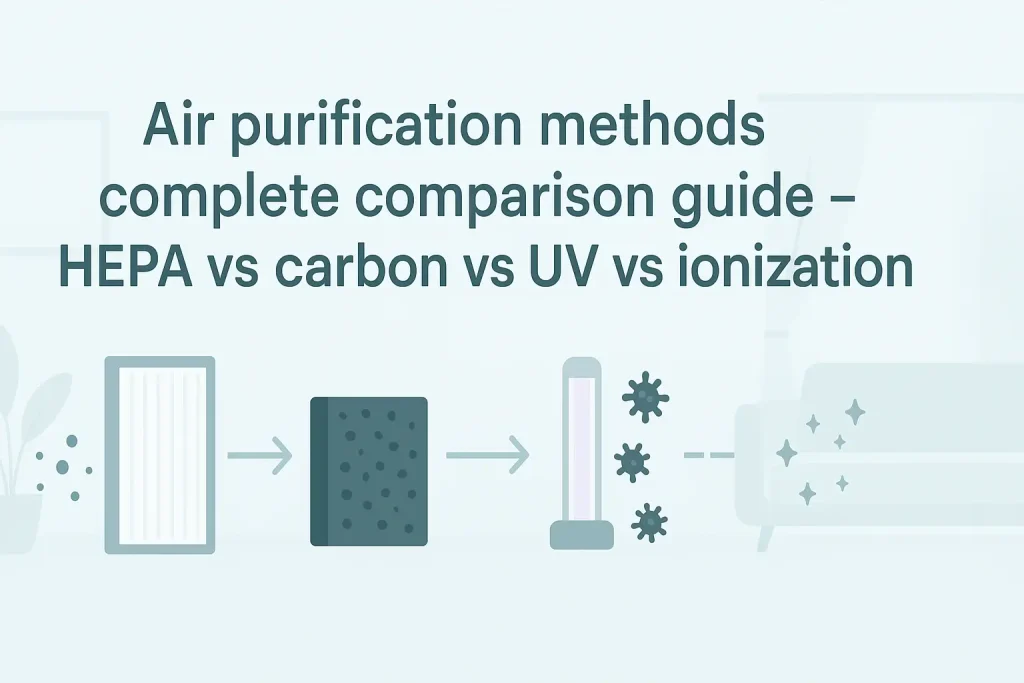
Indoor air pollutants fall into three distinct categories that require fundamentally different removal mechanisms. Particulate matter (PM2.5, PM10, pollen, pet dander, dust mite allergen, mold spores) are solid or liquid droplets suspended in air and removed by mechanical filtration. Gaseous pollutants (VOCs, formaldehyde, benzene, toluene, nitrogen dioxide) are individual molecules that pass straight through HEPA media and require adsorption onto activated carbon or other sorbent materials. Biological pathogens (bacteria, viruses, mold spores) are particles that can sometimes be inactivated by UV-C irradiation but are also captured by mechanical filtration.
A True HEPA filter captures 99.97% of particles at 0.3 microns but removes zero gases. An activated carbon bed adsorbs VOCs but captures zero particles. A UV-C lamp inactivates microorganisms given sufficient exposure time but does nothing to PM2.5 or formaldehyde. Understanding this division is the single most important concept in air purification because most units sold as “air purifiers” address only one or two of these three pollutant categories.
| Photo | Popular Air Purifiers | Price |
|---|---|---|

|
Air Purifiers for Home Large Room up to 1500ft², Tailulu H13 True HEPA Air Purifier for Pets Dust Odor Smoke, Air Purifier for Bedroom with 15dB Quiet Sleep Mode for Bedroom Office Living Room | Check Price On Amazon |
|
Afloia Air Purifier for Home, 4-in-1 Washable Filter for Allergies, Covers Up to 1076 ft², Quiet Operation, Auto Shut-Off & Night Light, Removes Pet Dander, Pollen, Dust, Mold, and Smoke, White,Pluto | Check Price On Amazon |

|
Nuwave OxyPure ZERO Air Purifier with Washable and Reusable Bio Guard Tech Air Filter, Large Room Up to 2002 Ft², Air Quality Monitor, 0.1 Microns, 100% Capture Irritants like Smoke, Dust, Pollen | Check Price On Amazon |

|
Air Purifiers for Home Large Room Up to 1,996 Ft², EOEBOT Air Purifier for Home Pets with Washable Filter, Quiet Sleep Mode, Air Quality Monitor, Air Purifier for Bedroom, Pet Hair, Dust, Smoke, White | Check Price On Amazon |
|
Afloia 2 IN 1 Air Purifier with Humidifier Combo, 3-Stage Filters for Home Allergies Pets Hair Smoker Odors, Evaporative Humidifier, Auto Shut Off, Quiet Air Cleaner with Seven Color Light,White | Check Price On Amazon |
Air Quality Data
Air Purification for Specific Pollutants – What the Research Shows
Sources: EPA Indoor Air Quality, ASHRAE 52.2, AHAM CADR database, CARB
How Does True HEPA Filtration Work for Particulate Pollutants Like PM2.5, Pollen, and Pet Dander?
True HEPA filtration removes particulate matter through four physical mechanisms: interception (particles following airstream lines stick to fibers), impaction (larger particles cannot follow the airstream around fibers and collide directly), diffusion (ultrafine particles below 0.1 microns move erratically via Brownian motion and hit fibers), and sieving (particles larger than the gap between fibers are trapped). This happens because the filter media is a dense mat of randomly arranged borosilicate glass or polypropylene fibers, typically 0.5 to 5 microns in diameter, creating a tortuous path where particles cannot maintain their airstream trajectory.
This capture only occurs when the filter is rated True HEPA per IEST standards, meaning independently certified at 99.97% efficiency at 0.3 microns, the most penetrating particle size. Particles both larger and smaller than 0.3 microns are captured at even higher efficiency. If the filter is labeled HEPA-type, HEPA-like, or 99% HEPA, the result is unverified efficiency that may drop to 85% or lower for submicron particles, leaving significant PM2.5 concentrations in the room.
A genuine True HEPA replacement filter is the core requirement for particulate removal. Common allergens controlled by True HEPA include dust mite allergen (10 to 40 microns but carried on smaller particles), cat dander (1 to 20 microns), pollen (10 to 100 microns), and mold spores (3 to 40 microns). All of these fall comfortably within the size range where True HEPA exceeds 99.97% capture efficiency. For wildfire smoke particles, which range from 0.4 to 0.7 microns in mass median diameter, True HEPA is the only consumer filter standard that reliably removes the fine fraction that penetrates deep into lung tissue.
For specific CADR calculations matched to your room size and allergy needs, our detailed guide on CADR requirements for allergy sufferers walks through the exact formula with examples for common bedroom and living room dimensions.
Can Activated Carbon Filters Remove VOCs and Chemical Gases From Indoor Air?
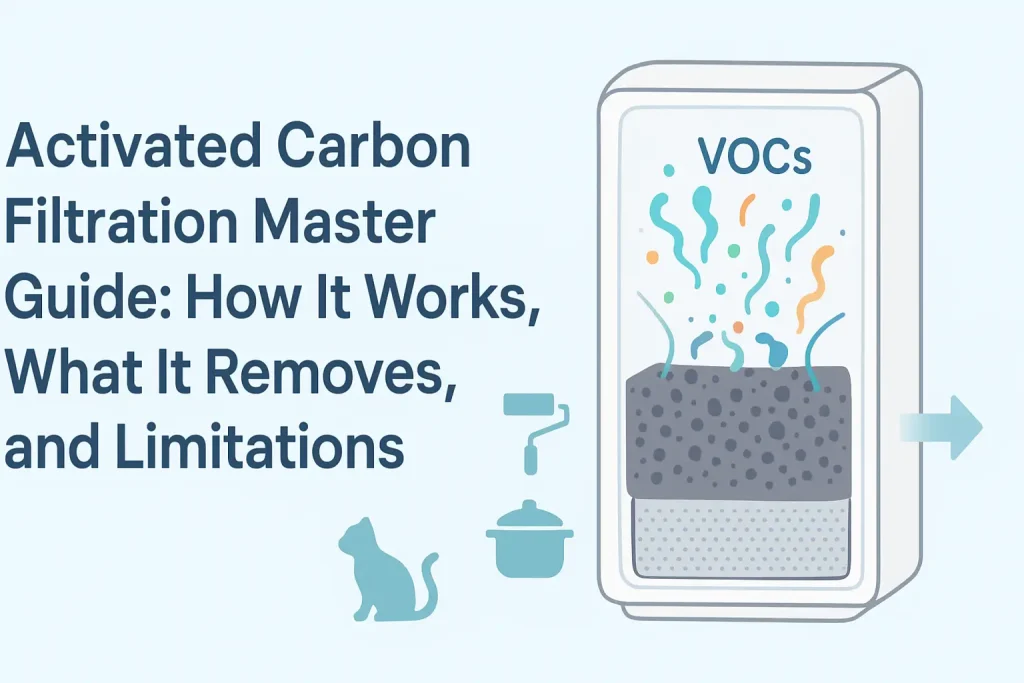
Activated carbon removes gaseous pollutants through adsorption, a process where VOC molecules physically bond to the enormous internal surface area of the carbon pores via van der Waals forces. This happens because a single gram of activated carbon contains 500 to 1,500 square meters of internal surface area, created through a steam or chemical activation process that opens microscopic pores in the carbon structure. VOC molecules enter these pores and become trapped on the carbon surface.
This only occurs when the activated carbon bed has sufficient mass, typically at least 5 pounds for meaningful whole-room VOC reduction and 15 pounds or more for chemical sensitivity applications. Most budget air purifiers include a thin carbon sheet weighing 1 to 4 ounces, which saturates within days and provides negligible ongoing VOC removal. If the carbon filter is a lightweight foam or fiber sheet rather than a granular or pelletized bed, the result is odor masking at best with no measurable formaldehyde, benzene, or toluene reduction after the first week of operation.
Common household VOCs that heavy activated carbon air purifiers can address include formaldehyde from pressed wood furniture and flooring, benzene from attached garages and vehicle exhaust infiltration, toluene from paints and adhesives, and limonene from cleaning products. For units with substantial carbon beds like the Austin Air HealthMate series (15 pounds carbon and zeolite blend) or IQAir GC MultiGas, laboratory testing shows 80 to 95% single-pass formaldehyde reduction when the carbon is fresh, declining gradually over the filter lifespan of 3 to 5 years under normal residential VOC loads.
It is worth understanding that essential oil diffusers, while pleasant, can actually add VOCs to your indoor air rather than removing them. Our analysis of essential oil diffuser emissions examines the terpene and VOC data that most wellness marketing omits.
Does UV-C Light Actually Kill Airborne Bacteria and Viruses?
UV-C germicidal irradiation inactivates microorganisms by damaging their DNA and RNA at the molecular level, specifically through the formation of thymine dimers in DNA and uracil dimers in RNA that prevent replication. This happens because UV-C light at 254 nanometers is strongly absorbed by nucleic acids, and the absorbed photon energy breaks molecular bonds that are essential for the organism to reproduce. A microorganism with damaged genetic material cannot infect a host cell even though it remains physically intact as a particle.
This inactivation only occurs when the microorganism receives a sufficient UV-C dose, defined as irradiance (microwatts per square centimeter) multiplied by exposure time (seconds). In a typical in-duct UV-C system, the air moves past the lamp at 400 to 600 feet per minute, giving microorganisms 0.1 to 0.5 seconds of exposure. For a 90% kill rate of common airborne bacteria like Serratia marcescens, laboratory studies published in the ASHRAE Journal require a dose of 2,000 to 4,000 microwatt-seconds per square centimeter, which may not be achieved in fast-moving airstreams. If the lamp is aged past its rated lifespan (typically 9,000 to 12,000 hours), UV-C output degrades to 60% or less of the original intensity, and the kill rate drops proportionally.
UV-C is most effective against bacteria and viruses in still air or slow-moving airstreams with extended exposure times. Fungal spores like Aspergillus niger are significantly more resistant, requiring doses 10 to 30 times higher than bacteria for equivalent inactivation. For a comprehensive breakdown of what UV-C can and cannot do in air purification applications, our guide on UV-C germicidal air purification effectiveness and limitations covers dosing requirements, lamp types, and safety considerations.
Use the table below to compare the three primary air purification technologies side by side across the pollutant types each one addresses and the conditions required for effectiveness.
Product Comparison
True HEPA vs Activated Carbon vs UV-C – Pollutant Removal Comparison
Comparison of the three primary purification methods across pollutant types, efficiency, and operating conditions.
| Attribute | True HEPA Filtration | Activated Carbon (Heavy Bed) | UV-C Germicidal (254 nm) |
|---|---|---|---|
| Target pollutant class | Particulate matter (solid and liquid aerosols) | Gaseous pollutants (VOCs, odors, chemicals) | Biological pathogens (bacteria, viruses, fungi) |
| Removal mechanism | Mechanical capture (interception, impaction, diffusion) | Physical adsorption (van der Waals bonding in micropores) | DNA/RNA damage (thymine dimer formation) |
| PM2.5 efficiency | 99.97% at 0.3 microns (increases below 0.3) | 0% (no particulate removal) | 0% (no particulate removal) |
| VOC/formaldehyde efficiency | 0% (no gas removal) | 80 to 95% single-pass with fresh heavy carbon | 0% (no gas removal) |
| Pathogen inactivation | Captures but does not inactivate | 0% (no pathogen removal) | 90%+ at sufficient dose (2,000 to 4,000 µW-s/cm²) |
| Key condition for effectiveness | Must be True HEPA (not HEPA-type); adequate CADR for room size | Minimum 5 lbs carbon for meaningful VOC removal; 15 lbs for chemical sensitivity | Sufficient dwell time (air speed dependent); lamp replaced at rated lifespan |
| Failure mode | Filter bypass from poor gasket seal; HEPA-type filters with unknown efficiency | Saturation after weeks to months; lightweight carbon sheets saturate in days | Insufficient dose from high airspeed or aged lamps; shadowing prevents exposure |
| Annual operating cost | $25 to $150 depending on unit size and filter quality | $60 to $250 (heavy carbon beds cost more to replace) | $30 to $80 per lamp replacement every 1 to 2 years |
| Best use case | Allergy, asthma, wildfire smoke, pet dander, general particulate | Chemical sensitivity, new furniture off-gassing, attached garage, urban pollution | Supplemental pathogen control in healthcare, mold-prone environments with moisture control |
Sources: IEST HEPA standard, ASHRAE 52.2, AHAM CADR test methodology, ASHRAE Journal UV-C dosing data. Carbon adsorption efficiency from manufacturer test data and peer-reviewed indoor air research. Operating costs based on genuine filter pricing at time of publication.
What About Ionizers, PCO, and Other Alternative Air Purification Technologies?
Ionizers release negatively charged ions that attach to airborne particles, causing them to cluster together and either fall to surfaces or stick to a collection plate inside the unit. This happens because the charged particles are attracted to grounded surfaces and to each other through electrostatic forces. The key limitation is that ionizers do not remove particles from the room permanently, they temporarily remove them from the air by depositing them on walls, floors, and furniture where they can be resuspended by walking, vacuuming, or air currents.
This redistribution only provides a temporary air quality benefit if you never disturb the surfaces where particles have settled. If the ionizer unit lacks a charged collection plate that is regularly cleaned, the result is particle accumulation on room surfaces with no permanent removal mechanism. Additionally, ionizers that produce ozone above 0.050 ppm violate the CARB air cleaner standard and are not permitted for sale in California. For a detailed look at alternatives that are sometimes marketed as air purifiers, our evidence-based analysis of beeswax candle air purification claims examines one of the most commonly asked-about natural alternatives with honest data on what the research actually shows.
Photocatalytic oxidation (PCO) uses a catalyst, typically titanium dioxide, activated by UV light to produce hydroxyl radicals that oxidize VOCs and pathogens in the air. The theoretical advantage is that PCO can destroy pollutants rather than just capturing them. However, peer-reviewed research published in Environmental Science and Technology has documented that incomplete oxidation in PCO devices can produce formaldehyde and acetaldehyde as byproducts, compounds that are more hazardous than some of the VOCs the device is intended to remove. PCO remains a technology with significant efficacy and safety questions that have not been fully resolved in consumer-grade devices.
Ozone generators intentionally produce ozone at concentrations intended to react with and oxidize airborne pollutants and odors. The EPA, American Lung Association, and CARB all explicitly recommend against the use of ozone generators in occupied spaces. Ozone at concentrations high enough to react with VOCs also reacts with lung tissue, and the reaction byproducts from ozone combined with common indoor VOCs like limonene can include ultrafine particles and formaldehyde. No ozone generator is CARB certified for use in occupied spaces.
Health Condition Guide
Find the Right Air Purification Method for Your Specific Pollutant Concern
Select your primary air quality concern and room size for the recommended filter technology and CADR target.
How to Match the Right Purification Method to Your Specific Pollutant
The method that works depends entirely on which pollutant you are targeting. For particulate matter (PM2.5, pollen, pet dander, dust mite allergen, mold spores), the only method with standardized, independently verified efficiency is True HEPA mechanical filtration with a smoke CADR sized correctly for your room at the appropriate ACH target.
For gaseous pollutants (VOCs, formaldehyde, chemical odors), the only effective consumer method is adsorption onto a heavy activated carbon bed weighing at least 5 pounds, with 15 pounds or more preferred for chemical sensitivity. For biological pathogens (bacteria, viruses) as a supplemental concern, UV-C at sufficient dose can provide incremental inactivation beyond what HEPA capture alone achieves, with the understanding that HEPA capture is the primary removal mechanism and UV-C is a secondary inactivation stage for captured organisms.
A combination air purifier with True HEPA and a substantial activated carbon stage addresses both particulate and gaseous pollutants in a single unit. For rooms with multiple pollutant types, the most practical approach is a hybrid unit that includes True HEPA for particles, heavy activated carbon for gases, and optionally UV-C for pathogen inactivation, with all three technologies verified by independent certification (AHAM CADR, CARB ozone compliance, and AAFA asthma and allergy certification).
What Are the Most Common Myths About Air Purification for Specific Pollutants?
Several persistent myths about air purification methods lead consumers to buy units that do not address their actual pollutant concerns. Each myth below is followed by the specific evidence that corrects it, drawn from industry standards and peer-reviewed research.
Myth vs Fact
Air Purifier Myths Debunked – What the Evidence Actually Shows
Separating fact from fiction on common air purification misconceptions. Sources: EPA, AHAM, ASHRAE, CARB, peer-reviewed research.
✗ Myth
“A HEPA-type or HEPA-like filter is essentially the same as True HEPA for particle removal.”
✓ Fact
True HEPA is a specific, certified standard requiring 99.97% capture at 0.3 microns per IEST testing. HEPA-type is an unregulated marketing term with no standardized test requirement. Independent testing of HEPA-type filters shows efficiency ranging from 85% to 99% with no minimum threshold, meaning a HEPA-type filter could leave 15 times more fine particles in the air than a True HEPA filter in the same room.
✗ Myth
“My air purifier has activated carbon, so it removes VOCs and formaldehyde.”
✓ Fact
A thin carbon fiber sheet weighing 1 to 4 ounces, common in budget air purifiers under $200, provides negligible VOC removal and saturates within days. Peer-reviewed research in the journal Building and Environment shows meaningful formaldehyde removal requires activated carbon beds weighing at least 5 pounds with granular or pelletized carbon, not fiber sheets. A 15-pound carbon bed in an Austin Air HealthMate provides 80 to 95% single-pass formaldehyde reduction when fresh.
✗ Myth
“An ionizer air purifier cleans the air just as well as a HEPA filter.”
✓ Fact
Ionizers remove particles from the air temporarily by causing them to settle on room surfaces. AHAM CADR testing of ionizers without mechanical filtration consistently shows smoke CADR values below 50 CFM, compared to 200 to 500 CFM for True HEPA units of equivalent size. Additionally, particles deposited on surfaces are resuspended by normal activity such as walking, which can increase airborne particle concentrations by 50 to 100% above pre-cleaning levels within minutes per research published in Indoor Air journal.
✗ Myth
“A UV-C lamp in my air purifier kills all airborne germs and viruses on the first pass.”
✓ Fact
UV-C inactivation requires a minimum dose measured as irradiance multiplied by exposure time. In a portable air purifier where air moves past the lamp at 200 to 400 feet per minute, exposure time is typically 0.2 to 1.0 seconds. For a 90% kill rate of common bacteria, ASHRAE research indicates a dose of 2,000 to 4,000 microwatt-seconds per square centimeter is required. Most consumer UV-C air purifiers achieve a fraction of this dose on a single pass. HEPA capture remains the primary pathogen removal mechanism.
✗ Myth
“If my air purifier is CARB certified, that means it is effective at cleaning the air.”
✓ Fact
CARB certification confirms only that the device emits no more than 0.050 ppm ozone under standard operating conditions. It does not certify filtration efficiency, CADR performance, or any pollutant removal capability. A CARB-certified unit could have a smoke CADR of 10 CFM, which would be almost entirely ineffective. Always check AHAM CADR certification for performance data and CARB certification for ozone safety as two completely separate verifications.
Quick Reference
Air Purification Terms Explained – Searchable Glossary
Definitions for every technical term used in this guide. Type to search.
A filter standard requiring capture of at least 99.97% of airborne particles at 0.3 microns (the most penetrating particle size). H13 grade. Distinct from HEPA-type or HEPA-like filters, which are unregulated marketing terms with no standardized efficiency.
A standardized metric developed by AHAM measuring the volume of filtered air an air purifier delivers per minute, in cubic feet per minute (CFM). Certified separately for smoke, dust, and pollen. Smoke CADR is the most relevant value for PM2.5 and wildfire protection.
The number of times per hour an air purifier processes the entire volume of air in a room. Manufacturer coverage area claims use 2 ACH. Allergy and asthma guidelines recommend 5 ACH, which reduces the effective coverage area to 40% of the manufacturer-stated figure.
Fine particulate matter with diameter of 2.5 microns or smaller. The primary health-hazardous component of wildfire smoke, traffic pollution, and combustion sources. True HEPA filters capture PM2.5 at 99.97% efficiency. Linked to respiratory and cardiovascular disease at sustained concentrations above 12 micrograms per cubic meter (EPA annual standard).
Gaseous chemicals emitted from household products including paint, furniture, flooring, cleaning products, and adhesives. Common VOCs include formaldehyde, benzene, and toluene. Removed by activated carbon filtration, not by HEPA mechanical filtration. EPA notes indoor VOC concentrations are 2 to 10 times higher than outdoors.
A rating scale (1 to 16) for HVAC filter efficiency per ASHRAE 52.2. MERV 13 or higher is recommended for residential PM2.5 capture. Standard disposable fiberglass HVAC filters are typically MERV 4 to 6. MERV 16 is equivalent to HEPA efficiency but is rarely compatible with residential HVAC systems without professional modification.
Certification confirming an air cleaner emits no more than 0.050 ppm ozone under standard operating conditions. The strictest consumer air cleaner ozone standard in the US. Non-CARB-certified ionizers and ozone generators can emit significantly higher ozone levels. Required for sale in California.
A filter stage using porous activated carbon (sometimes blended with zeolite) to adsorb gaseous pollutants including VOCs, formaldehyde, odours, and some chemical fumes. Does not remove particles. Capacity is proportional to carbon weight. Units with less than 1 pound of carbon offer limited VOC removal.
A device that releases negatively charged ions that attach to airborne particles, causing them to cluster and fall to surfaces or stick to a collection plate. Does not remove particles from the room permanently. Some ionizers produce trace ozone. Distinct from ozone generators, which intentionally produce ozone at high concentrations not recommended for occupied spaces per EPA guidance.
Ultraviolet light at 254 nanometers that inactivates microorganisms by damaging their DNA and RNA. Effectiveness depends on dose (irradiance multiplied by exposure time). In portable air purifiers with fast-moving air, exposure time is typically 0.2 to 1.0 seconds, which may provide only partial inactivation. HEPA capture remains the primary pathogen removal mechanism.
How Much Smoke CADR Do I Need to Remove Wildfire PM2.5 From a 300 Square Foot Bedroom?
For a 300 square foot bedroom with an 8-foot ceiling during wildfire conditions, you need a minimum smoke CADR of 240 CFM at 6 ACH. This is calculated as (300 sq ft x 8 ft ceiling x 6 ACH) divided by 60, which equals 240 CFM.
At this CADR, an air purifier will reduce indoor PM2.5 concentrations by approximately 85% within 30 minutes of operation at maximum fan speed, based on single-zone mass balance modeling validated by EPA indoor air quality research. If you use the same room with a 2 ACH assumption, which is what most manufacturer coverage area claims are based on, you would calculate only 80 CFM needed, but this would leave PM2.5 concentrations significantly elevated for hours after the outdoor AQI improves. A high-CADR air purifier rated for wildfire smoke with at least 250 CFM smoke CADR is appropriate for a 300 square foot bedroom.
Can I Use a MERV 13 HVAC Filter Instead of a Portable Air Purifier for Particle Removal?
A MERV 13 HVAC filter, per ASHRAE 52.2, captures 75% or more of particles in the 0.3 to 1 micron range when the system fan is running. The key difference from a portable air purifier is that a residential HVAC system moves 800 to 2,000 CFM across the filter, delivering very high single-pass particle removal, but only when the fan is actively running.
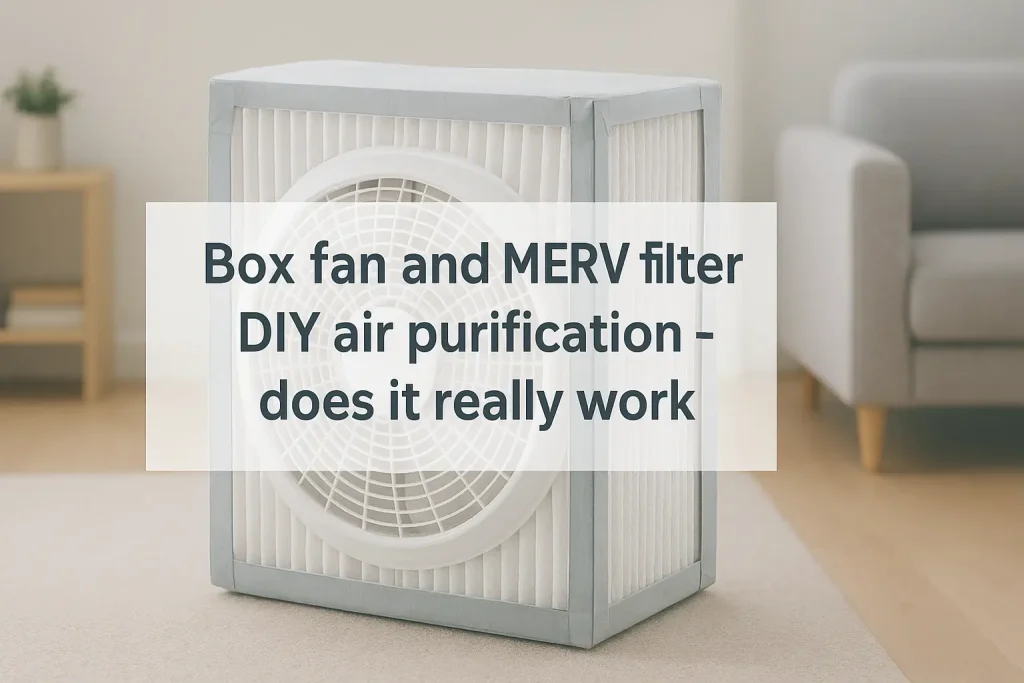
A MERV 13 furnace filter is an excellent whole-house particulate strategy when paired with continuous fan operation. However, for a single room where someone sleeps or spends most of their time, a portable True HEPA unit with a smoke CADR of 200 to 500 CFM will deliver 5 to 6 ACH in that specific room compared to the 0.5 to 2 ACH typical of whole-house HVAC circulation. For health-sensitive occupants, the portable unit in the bedroom plus a MERV 13 HVAC filter running continuously is the combination that provides both localized high-filtration and whole-house baseline particle control. A MERV 13 pleated furnace filter costs $15 to $30 and should be replaced every 3 months when used for continuous particle filtration.
Why Does My Air Purifier Not Remove Cooking Odors Even Though It Has a Carbon Filter?
A thin carbon pre-filter weighing 1 to 4 ounces, which is standard on most air purifiers under $200, saturates within days of cooking odor exposure and provides no meaningful ongoing gas removal. Cooking odors are a complex mixture of VOCs including acrolein, formaldehyde, and various aldehydes that require a substantial carbon bed to adsorb effectively.
The fix is either to add an air purifier with a heavy carbon bed weighing at least 5 pounds, such as an Austin Air HealthMate or IQAir GC MultiGas, or to use a range hood that vents to the outside during cooking. A heavy carbon air purifier with granular activated carbon will provide 12 to 36 months of VOC removal before requiring carbon replacement, depending on cooking frequency and VOC load.
What Is the Difference Between HEPA and True HEPA, and Does It Matter for Pollutant Removal?
True HEPA is a certified standard requiring 99.97% capture at 0.3 microns verified by IEST testing. HEPA is often used loosely to describe True HEPA filters, but the term HEPA-type or HEPA-like is an unregulated marketing claim with no standardized test requirement and no minimum efficiency.
This distinction matters significantly because a True HEPA filter captures 999.7 out of every 1,000 challenging particles. A HEPA-type filter with 90% efficiency would allow 100 of those same 1,000 particles to pass through, leaving 100 times more fine particulate matter in the breathing zone. For allergy, asthma, and wildfire smoke applications, always confirm the filter is labeled True HEPA (H13) with AHAM CADR certification, not HEPA-type.
Do I Need an Air Purifier With UV-C Light If I Already Have a True HEPA Filter?
For most residential applications, a True HEPA filter alone provides sufficient pathogen removal because it physically captures bacteria and viruses as particulate matter. A True HEPA filter captures 99.97% of all particles at 0.3 microns, which includes virtually all airborne bacteria (0.3 to 5 microns) and virus-carrying droplet nuclei (0.5 to 5 microns).
UV-C adds a secondary benefit by inactivating captured organisms that remain viable on the filter surface, but this is generally only relevant in healthcare settings or for individuals with severe immunodeficiency. If you choose a unit with UV-C, confirm the UV-C lamp is positioned so that air moves slowly enough to receive a meaningful dose, and replace the lamp at the manufacturer-specified interval, typically every 9,000 to 12,000 hours (approximately 1 to 1.5 years of continuous operation).
Can I Tell If My Air Purifier Is Actually Removing the Specific Pollutant I Am Targeting?
The only way to verify that your air purifier is removing your target pollutant is to measure that pollutant directly with an appropriate monitor before and after running the unit. For particulate matter, a PM2.5 air quality monitor showing a clear reduction in micrograms per cubic meter within 30 minutes of turning the unit on provides direct verification.
For VOCs, a consumer-grade VOC sensor can show relative trends, though absolute accuracy is limited. A meaningful test is to measure VOC levels with the unit running on high for 30 minutes in a closed room with a known VOC source (such as a new piece of furniture), then turn the unit off and observe whether levels rise again. If the air purifier has insufficient carbon capacity, VOC levels will not show a sustained downward trend, confirming that the carbon stage is either saturated or undersized for your space.
How Often Should I Replace Filters When Targeting Specific Pollutants Like Wildfire Smoke or VOCs?
For wildfire smoke, which loads a True HEPA filter with fine carbonaceous particles at an accelerated rate, replace the HEPA filter every 6 to 9 months during active fire seasons rather than the typical 12-month interval. For VOCs, replace the activated carbon filter when you notice odors returning to the room, which typically occurs after 12 to 36 months depending on carbon weight and VOC load.
A pre-filter that captures larger particles should be cleaned or replaced every 1 to 3 months in normal conditions and monthly during wildfire events. The most reliable indicator for HEPA replacement is a measurable drop in airflow or a PM2.5 monitor showing reduced reduction rates at the same fan speed compared to when the filter was new. A genuine True HEPA replacement filter from the manufacturer ensures the new filter meets the same efficiency standard as the original.
The single most important principle in air purification is that the method must match the pollutant. True HEPA for particles, heavy activated carbon for gases, UV-C as a secondary pathogen supplement, and always verify performance with independent certifications rather than marketing claims. Combined with correct CADR sizing for your specific room, this approach ensures your air purifier is actually removing what you bought it to remove.