Paint fumes fill a room with volatile organic compounds that a standard air purifier cannot touch. A True HEPA filter alone, no matter how high its CADR rating, will not remove the airborne chemicals that make paint smell linger for days.
The solution is an air purifier with a substantial activated carbon bed, measured in pounds, not ounces. This guide covers the five best air purifiers for paint fumes, comparing activated carbon weight, filter lifespan, room coverage, and total ownership cost so you can pick the right unit for your space.
What Are Paint Fumes and Why Are They Dangerous?
Paint fumes are volatile organic compounds, or VOCs, that evaporate from wet paint into the air. These include formaldehyde, benzene, toluene, and xylene, all of which can irritate the eyes, throat, and lungs at low concentrations and cause neurological damage at high or prolonged exposure.
The off-gassing process does not stop when the paint feels dry to the touch. According to EPA Indoor Air Quality research, paint can off-gas VOCs for five to seven days at peak levels, with trace emissions continuing for months in poorly ventilated spaces.
| Photo | Popular Air Purifiers | Price |
|---|---|---|

|
Air Purifiers for Home Large Room up to 1500ft², Tailulu H13 True HEPA Air Purifier for Pets Dust Odor Smoke, Air Purifier for Bedroom with 15dB Quiet Sleep Mode for Bedroom Office Living Room | Check Price On Amazon |
|
Afloia Air Purifier for Home, 4-in-1 Washable Filter for Allergies, Covers Up to 1076 ft², Quiet Operation, Auto Shut-Off & Night Light, Removes Pet Dander, Pollen, Dust, Mold, and Smoke, White,Pluto | Check Price On Amazon |

|
Nuwave OxyPure ZERO Air Purifier with Washable and Reusable Bio Guard Tech Air Filter, Large Room Up to 2002 Ft², Air Quality Monitor, 0.1 Microns, 100% Capture Irritants like Smoke, Dust, Pollen | Check Price On Amazon |

|
Air Purifiers for Home Large Room Up to 1,996 Ft², EOEBOT Air Purifier for Home Pets with Washable Filter, Quiet Sleep Mode, Air Quality Monitor, Air Purifier for Bedroom, Pet Hair, Dust, Smoke, White | Check Price On Amazon |
|
Afloia 2 IN 1 Air Purifier with Humidifier Combo, 3-Stage Filters for Home Allergies Pets Hair Smoker Odors, Evaporative Humidifier, Auto Shut Off, Quiet Air Cleaner with Seven Color Light,White | Check Price On Amazon |
Standard interior latex paints labeled low-VOC still emit chemicals during the curing process. Zero-VOC paints reduce the chemical load significantly but do not eliminate it entirely, especially in rooms with limited ventilation or during winter months when windows stay closed.
By the Numbers
Paint Fume Filtration – What the Data Shows
Sources: EPA Indoor Air Quality, CARB, manufacturer specifications
Why a Standard HEPA Air Purifier Cannot Remove Paint Fumes
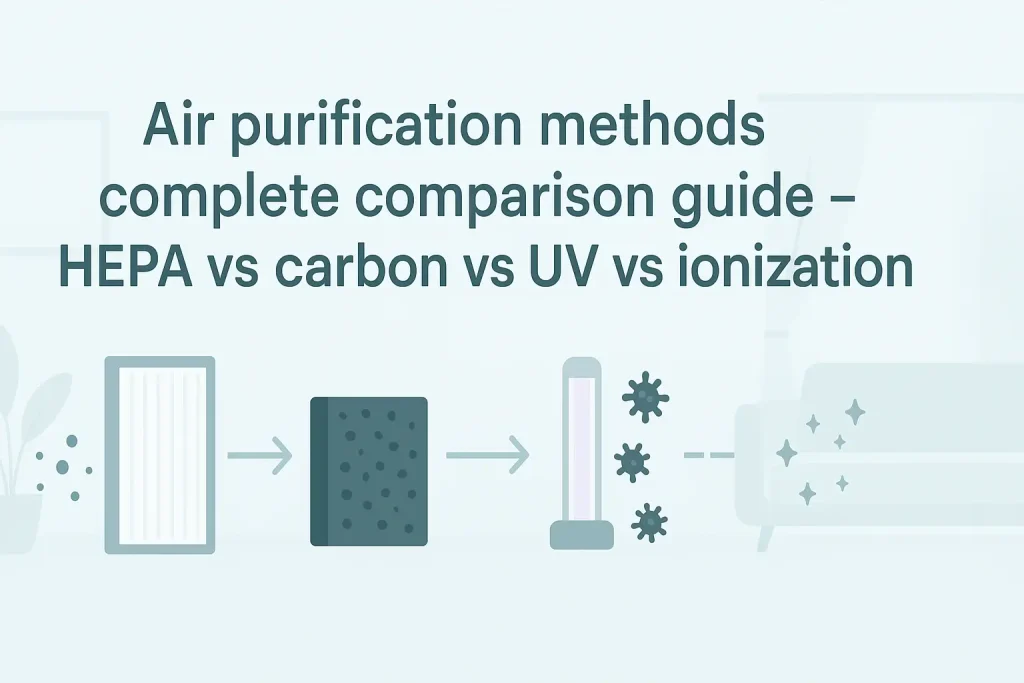
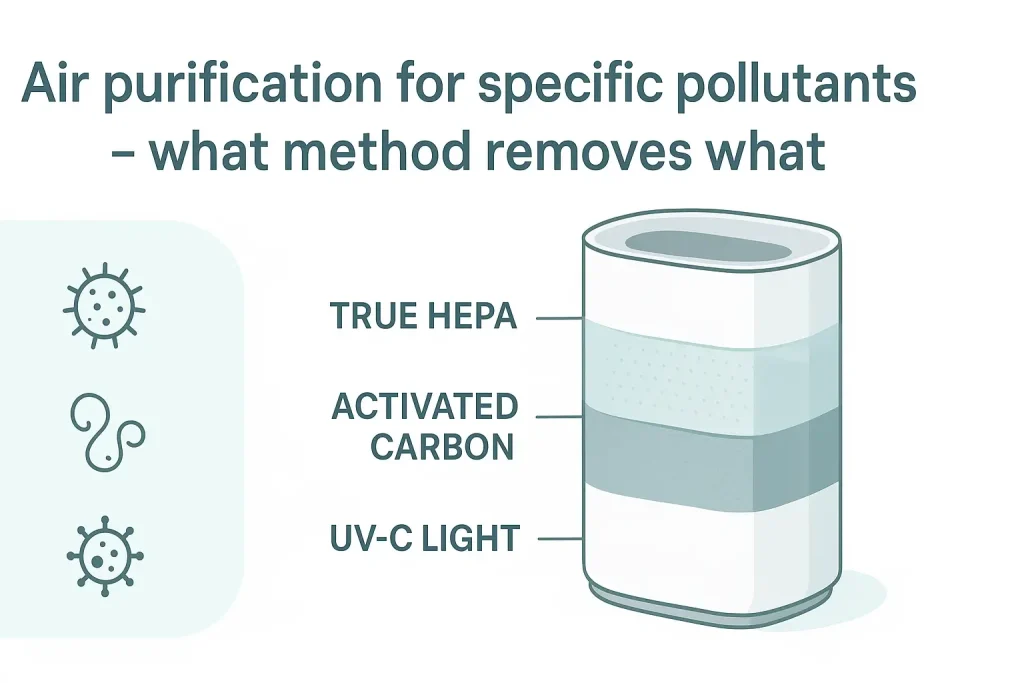
A True HEPA filter captures particles down to 0.3 microns with 99.97% efficiency. Paint fumes are not particles. They are gas-phase molecules typically measuring 0.0001 to 0.001 microns, which pass straight through HEPA media without being captured.
This is the single most common mistake buyers make when shopping for an air purifier after painting. They purchase a high-CADR unit with excellent particle filtration, run it on turbo for 48 hours, and notice no reduction in the paint smell whatsoever.
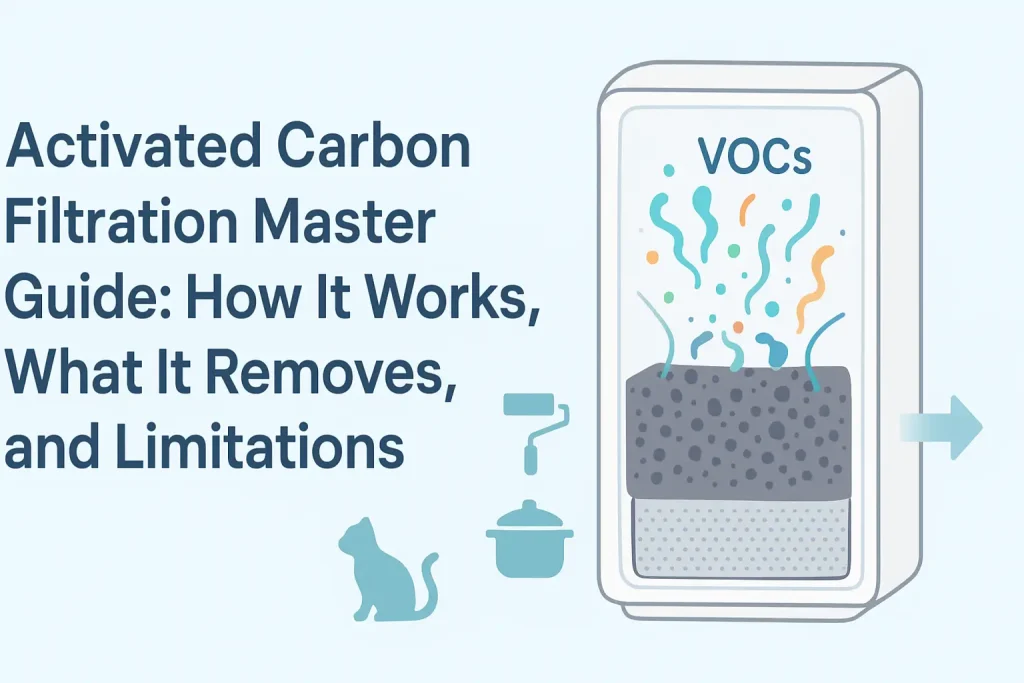
The mechanism that removes gas-phase pollutants is called adsorption. Activated carbon, sometimes blended with zeolite or potassium permanganate, provides a massive internal surface area where VOC molecules physically bind to the carbon pores. One pound of high-quality activated carbon contains approximately 50 to 125 acres of internal surface area.
This adsorption only occurs when the air makes sufficient contact time with the carbon bed. A thin carbon spray on a pre-filter, common in budget air purifiers, provides effectively zero VOC removal because the contact time is too short and the carbon mass is measured in grams, not pounds.
If the carbon bed is too thin, the result is that VOCs pass through without being captured. Fix it by choosing a unit with a minimum of 5 pounds of activated carbon for a small room and 15 pounds or more for a large room or whole-house paint project.
What to Look for in an Air Purifier for Paint Fumes
The activated carbon weight, measured in pounds, is the single most important specification for paint fume removal. Units with less than 5 pounds of carbon provide minimal VOC reduction and are not suitable for post-painting air purification, regardless of their CADR rating.
The carbon bed configuration matters almost as much as the weight. A deep, packed bed forces air through a thick layer of carbon, maximizing contact time. A thin carbon sheet or spray-coated filter element provides negligible contact time and traps very few VOC molecules.
Filter replacement cost for carbon-heavy units runs higher than for standard HEPA-only purifiers. A full carbon canister for a high-end unit can cost $200 to $400 and lasts two to five years depending on VOC exposure levels and continuous runtime hours.
Room coverage for VOC removal differs from particle coverage. The CADR rating applies only to particles, not gases. For paint fume removal, match the manufacturer’s recommended room size for the carbon filter specifically, and run the unit at the highest air changes per hour the fan speed allows.
Buying Guide
Before You Buy an Air Purifier for Paint Fumes – Complete Checklist
Check off each point before making your decision. Based on EPA VOC guidance and CARB air cleaner regulations.
Activated Carbon Weight Comparison Across Top Paint Fume Air Purifiers
The chart below compares the activated carbon weight across the five best air purifiers for paint fume removal. Carbon weight is the primary driver of VOC capture capacity and filter lifespan in fume-heavy environments.
Performance Data
Activated Carbon Weight – Top 5 Air Purifiers for Paint Fumes
Source: Manufacturer technical specifications. Carbon weight in pounds including zeolite or potassium permanganate blends where applicable.
Top 5 Air Purifiers for Paint Fumes Compared
Each unit below includes substantial activated carbon filtration alongside True HEPA particle capture. The carbon weight, filter lifespan, and replacement cost are the primary differentiators for paint fume applications.
Use the price comparison below to see the unit cost and annual filter cost for each model before diving into the individual reviews.
Price Comparison
Air Purifier Price Comparison for Paint Fume Units – Unit Cost and Annual Filter Cost
Unit purchase price plus estimated annual filter replacement cost. Prices verified at time of publication.
$299 unit + $60/yr filters
$399 unit + $60/yr filters
$429 unit + $100/yr filters
$899 unit + $200/yr filters
$714 unit + $175/yr filters (filter lasts 5 years)
Bar width represents unit purchase price relative to the IQAir GC MultiGas at 100%. Annual filter costs are estimates based on manufacturer-recommended replacement intervals under normal household VOC conditions. Heavy paint fume exposure may shorten carbon filter lifespan by 30-50%.
1. Austin Air HealthMate – Best Overall for Paint Fume Removal
The Austin Air HealthMate contains 15 pounds of activated carbon and zeolite blend, the highest carbon weight of any residential air purifier in its price class. This is the unit to choose when you have just painted a large room or an entire floor and need maximum VOC capture capacity.
Key Specifications: 15 lbs activated carbon and zeolite, True HEPA (medical grade), 200 CFM at high speed, covers 1,500 sq ft at 2 ACH, 60 dB at high, filter lasts up to 5 years under normal conditions.
The carbon bed uses a packed canister design that forces air through the full depth of the media. This happens because the cylindrical filter geometry creates a longer dwell path than flat panel carbon filters, giving VOC molecules approximately 3 times more contact time with the adsorption surface.
This increased dwell time only occurs when the fan runs at medium or high speed. On low speed, the reduced airflow still passes through the full bed depth, maintaining VOC capture efficiency but treating a smaller room volume per hour.
If the 5-year filter is exposed to heavy paint fume concentrations continuously for the first month, the effective lifespan drops to approximately 3 years. Fix it by running the unit on high for the first 7 days after painting, then dropping to medium for the next 3 weeks to balance VOC removal with filter longevity.
Check the Austin Air HealthMate price and filter availability on Amazon.
2. IQAir GC MultiGas – Best Professional-Grade VOC Removal
The IQAir GC MultiGas uses a dedicated gas-phase filter cartridge containing 12 pounds of activated carbon and impregnated alumina for broad-spectrum chemical removal. It targets formaldehyde, a common paint VOC, more effectively than standard carbon-only beds due to the chemisorption media in the alumina blend.
Key Specifications: 12 lbs activated carbon and alumina, HyperHEPA particle filter, 300 CFM at high speed, covers 900 sq ft at 2 ACH, 25 dB at lowest speed, 60 dB at high, filter lasts 2 to 4 years depending on VOC load.
The GC MultiGas differs from the HealthMate in filtration architecture. The IQAir uses four separate filter stages stacked in sequence, which allows replacement of the carbon cartridge independently from the HEPA stage. This modular design reduces long-term filter costs if the carbon saturates before the HEPA media loads up.
This unit works well for a freshly painted 300 to 500 square foot room where chemical sensitivity is a concern. The 12-pound carbon load handles the initial off-gassing spike and the HyperHEPA stage captures any paint particles or sanding dust suspended in the air.
Check the IQAir GC MultiGas price and replacement filter cost on Amazon.
3. Alen BreatheSmart 45i with Carbon Filter – Best Mid-Range Paint Fume Purifier
The Alen BreatheSmart 45i offers 8 pounds of activated carbon in a flat-panel filter configuration at a mid-range price point. It suits a single freshly painted bedroom or home office up to 400 square feet where you need effective VOC reduction without the investment required for a 15-pound carbon unit.
Key Specifications: 8 lbs activated carbon with the Carbon filter variant, True HEPA, 245 CFM smoke CADR, covers 800 sq ft at 2 ACH, 23 dB at lowest speed, 49 dB at high, annual filter replacement cost approximately $100.
The flat panel design provides less carbon dwell time than a packed canister. The tradeoff is a thinner, lighter unit that operates more quietly at high speed. For a single-room paint project with low-VOC paint, the 8-pound carbon load delivers adequate VOC capture for the 5 to 7 day off-gassing window.
For a whole-floor paint job with oil-based paint, the 8-pound carbon filter will saturate faster. Plan to replace the carbon filter after 3 to 6 months of heavy fume exposure rather than the standard 12-month interval.
Check the Alen BreatheSmart 45i availability and Carbon filter pricing on Amazon.
4. Coway Airmega 400 – Best Dual Fan Unit with Carbon Filtration
The Coway Airmega 400 includes approximately 6 pounds of activated carbon combined with a True HEPA filter in a dual-fan configuration. The dual fans deliver 400 CFM smoke CADR, which means it circulates room air faster than any other unit on this list, giving the carbon bed more passes at the VOC load per hour.
Key Specifications: 6 lbs activated carbon, True HEPA, 400 CFM smoke CADR, covers 1,560 sq ft at 2 ACH, 22 dB at sleep mode, 52 dB at high, annual filter cost approximately $60, washable pre-filter.
The higher airflow does not increase the per-pass VOC capture efficiency. But it does increase the number of times the full room volume passes through the filter each hour. For a 500 square foot room at high speed, the Airmega 400 achieves approximately 4 air changes per hour, running the full room air volume through the carbon bed 4 times every 60 minutes.
This only works effectively when the room is sealed. If windows are open or doors are left ajar during painting, the higher ACH rate pulls in outdoor air and dilutes the recirculation effect. Fix it by closing all windows and exterior doors, running the Airmega 400 on high, and sealing door gaps with a rolled towel at the base.
Check the Coway Airmega 400 price and filter availability on Amazon.
5. Levoit Core 600S – Best Budget Carbon Air Purifier for Small Paint Projects
The Levoit Core 600S provides approximately 3.5 pounds of activated carbon at an entry-level price point. It is the minimum viable option for a small paint project in a bedroom or bathroom under 250 square feet, particularly when paired with low-VOC or zero-VOC paint.
Key Specifications: 3.5 lbs activated carbon, True HEPA (H13), 410 CFM smoke CADR, covers 635 sq ft at 2 ACH, 26 dB at sleep mode, 52 dB at high, annual filter cost approximately $60, smart controls with app.
The carbon weight of 3.5 pounds is adequate for light VOC loads. This unit will not handle oil-based paints, lacquers, or multi-room paint projects. The carbon filter saturates rapidly when VOC concentrations exceed what the 3.5-pound bed can adsorb, typically within 2 to 4 weeks of continuous post-painting runtime.
For a single bedroom painted with low-VOC latex, the Core 600S reduces paint odor noticeably within 48 hours of continuous operation on high. For anything larger or stronger, step up to the Alen BreatheSmart 45i or Austin Air HealthMate.
Check the Levoit Core 600S current price and replacement filter options on Amazon.
Product Comparison
Top 5 Paint Fume Air Purifiers Compared – Carbon Weight, Coverage, and Filter Cost
Key specs compared across all five picks. Carbon weight from manufacturer specifications. Coverage at 2 ACH as stated by manufacturer.
| Model | Carbon Weight | Coverage at 2 ACH | Max Noise | Annual Filter Cost | Filter Lifespan | Best For |
|---|---|---|---|---|---|---|
| Austin Air HealthMate | 15 lbs | 1,500 sq ft | 60 dB | $175/yr | 5 years | Large rooms, whole-floor paint jobs |
| IQAir GC MultiGas | 12 lbs | 900 sq ft | 60 dB | $200/yr | 2-4 years | Formaldehyde, chemical sensitivity |
| Alen BreatheSmart 45i | 8 lbs | 800 sq ft | 49 dB | $100/yr | 12 months | Single bedroom, low-VOC paint |
| Coway Airmega 400 | 6 lbs | 1,560 sq ft | 52 dB | $60/yr | 12 months | Fast air turnover, moderate VOCs |
| Levoit Core 600S | 3.5 lbs | 635 sq ft | 52 dB | $60/yr | 6-8 months | Small rooms, low-VOC paint only |
Carbon weight from manufacturer technical specifications. Coverage at 2 ACH as stated by each manufacturer. Annual filter cost based on recommended replacement intervals at standard household VOC levels. Paint fume exposure may reduce filter lifespan by 30-50%.
For the most common reader scenario of a single freshly painted bedroom with low-VOC latex paint, the Alen BreatheSmart 45i with Carbon filter provides the best balance of carbon weight, noise level, and filter cost.
How to Use an Air Purifier During and After Painting for Maximum Fume Removal
Position the air purifier in the center of the freshly painted room, at least 3 feet from any wall, with the intake facing the painted surfaces. Central placement maximizes the volume of fume-laden air that enters the unit on each pass.
Run the unit on the highest fan speed for the first 48 to 72 hours after painting. This maximizes air changes per hour and pushes as much VOC-laden air through the carbon bed as possible during the peak off-gassing window.
Keep the room sealed during this initial period. Close all windows, exterior doors, and interior doors to adjacent rooms. The purifier needs to recirculate the same room air repeatedly to give the carbon bed multiple passes at the VOC load.
After 72 hours, introduce ventilation gradually. Open one window 2 to 3 inches for 30 minutes, twice per day, while still running the purifier on high. This flushes accumulated carbon dioxide and introduces fresh oxygen without overwhelming the purifier’s ability to capture the remaining off-gassing VOCs.
Continue running the purifier on medium speed for at least 2 weeks after painting. Trace VOC emissions continue well beyond the point where the paint odor is no longer noticeable. The carbon bed adsorbs these low-concentration emissions passively as long as airflow continues.
For paint projects involving oil-based paints, lacquers, or epoxy coatings, the carbon filter will saturate faster. If you notice the paint smell returning through the exhaust after several days of use, the carbon bed is likely saturated. Replace the carbon filter. Do not continue running a saturated carbon filter, as it can release previously captured VOCs back into the room air when the adsorption sites fill up.
Austin Air HealthMate vs IQAir GC MultiGas for Paint Fume Removal
These two units represent the top tier of residential VOC filtration. The Austin Air HealthMate holds 15 pounds of carbon at a lower unit price. The IQAir GC MultiGas holds 12 pounds with a chemisorption media blend that targets formaldehyde more effectively.
Use the table below to decide which of these two premium units fits your paint project and your chemical sensitivity needs.
Product Comparison
Austin Air HealthMate vs IQAir GC MultiGas – Side by Side for Paint Fumes
Detailed spec comparison including carbon weight, coverage, noise level, filter cost, and certifications.
| Spec | Austin Air HealthMate | IQAir GC MultiGas |
|---|---|---|
| Unit price | $714 | $899 |
| Activated carbon weight | 15 lbs (carbon and zeolite) | 12 lbs (carbon and alumina) |
| Coverage at 2 ACH | 1,500 sq ft | 900 sq ft |
| Filter type | True HEPA + carbon/zeolite canister | HyperHEPA + carbon/alumina cartridge |
| Annual filter cost | $175/yr (5-year lifespan) | $200/yr (2-4 year lifespan) |
| Noise at high speed | 60 dB | 60 dB |
| Formaldehyde removal | Good (zeolite blend) | Excellent (chemisorption alumina) |
| CARB certified | Yes | Yes |
| Best for | Large rooms, maximum carbon value | Formaldehyde-heavy paints, chemical sensitivity |
| Our verdict | Best value for most paint projects | Best for formaldehyde and chemical sensitivity |
Specifications from manufacturer data sheets. Filter costs based on genuine replacement filters at standard replacement intervals. Coverage area at 2 ACH as stated by manufacturer. Noise at high speed from manufacturer specifications.
Common Mistakes to Avoid When Using an Air Purifier for Paint Fumes
The most frequent error is running a HEPA-only purifier with no carbon stage and expecting the paint smell to disappear. HEPA filters capture particles, not gases. The purifier will run for days with zero effect on VOC concentrations.
Another common mistake is placing the purifier against a wall or in a corner. This reduces effective airflow by 20 to 30 percent and creates a short-circuit path where filtered air is pulled straight back into the intake rather than mixing with the room air.
Running the unit on low or auto mode during the initial off-gassing window is also a mistake. Auto mode responds to particle sensor readings, not VOC levels. The purifier will stay on low speed because paint fumes do not trigger particle sensors, leaving VOC-laden air largely untreated.
Expecting a single purifier to handle multiple freshly painted rooms simultaneously is unrealistic. The carbon bed in any residential unit saturates faster when VOC concentrations are high across a larger air volume. Treat one room at a time, or purchase multiple units for a whole-floor paint project.
How Much Activated Carbon Do You Need for Your Room Size?
For rooms up to 250 square feet painted with low-VOC latex, 3 to 5 pounds of activated carbon provides adequate VOC capture for the initial off-gassing window. This covers a typical bedroom or small home office with one coat of standard latex paint.
For rooms between 250 and 500 square feet, target 5 to 10 pounds of carbon. This range handles medium spaces like master bedrooms, living rooms, or kitchens where paint fumes accumulate in a larger air volume.
For rooms over 500 square feet or any room painted with oil-based or high-VOC paints, use a unit with 12 to 15 pounds of carbon. The larger carbon mass provides enough adsorption capacity for the higher VOC load and the larger air volume without saturating before the off-gassing peak ends.
For whole-floor or whole-house paint projects, one 15-pound carbon unit per 1,000 square feet of painted area provides adequate coverage. Position one unit in the largest painted room and supplement with open windows and box fans exhausting outward during the first 48 hours.
Can You Use a DIY Carbon Filter for Paint Fumes?
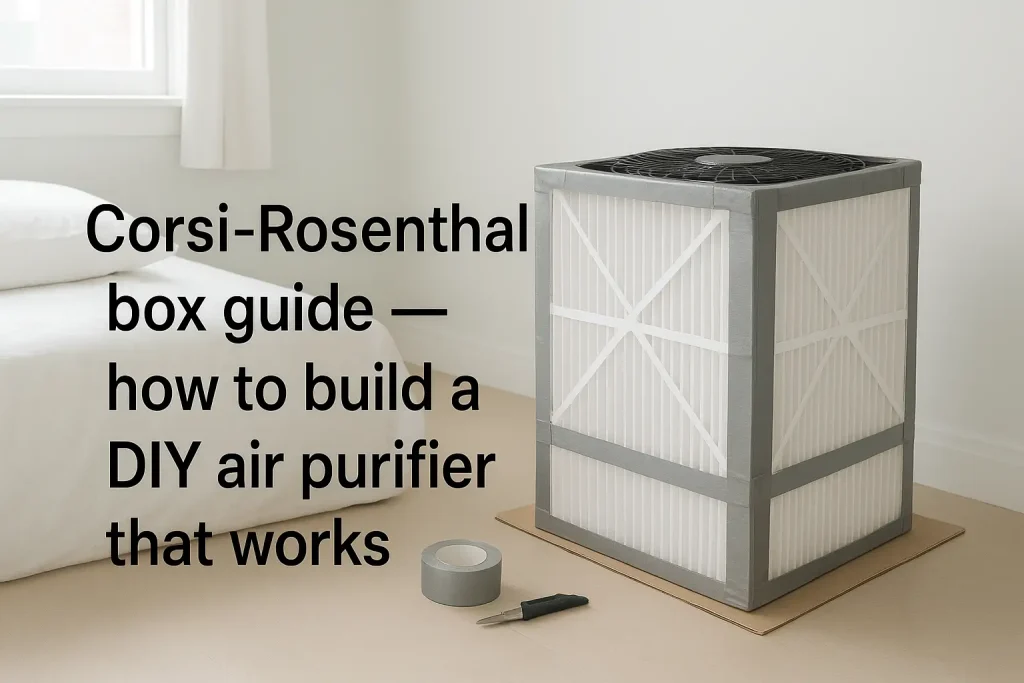
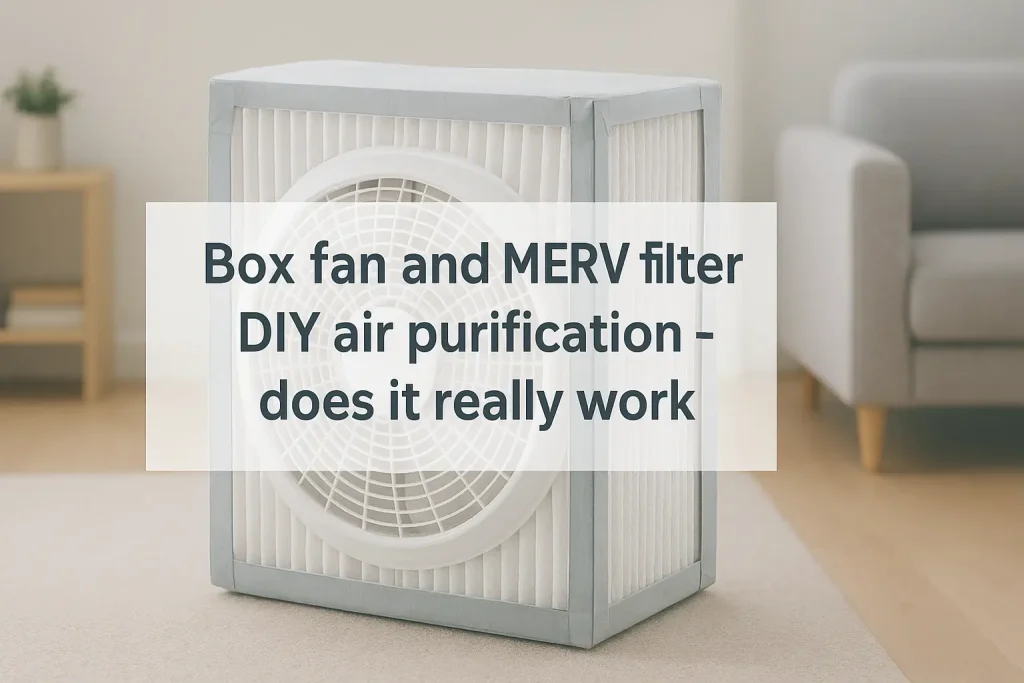
A Corsi-Rosenthal box with activated carbon panels can reduce paint fumes, but the carbon weight is limited to what a box fan can pull air through. A standard 4-panel CR box using MERV 13 filters with thin carbon layers provides 1 to 2 pounds of carbon total, which saturates quickly under VOC-heavy conditions.
This happens because the carbon layer on a typical combination filter is a thin spray coating, not a packed bed. The contact time is too short for effective VOC adsorption, and the total carbon mass is too low to handle a whole-room paint off-gassing load.
For a DIY approach that actually works, build a dedicated carbon canister using 4 to 8 pounds of bulk activated carbon in a cylindrical housing with a high-static-pressure fan. This design approximates the packed bed geometry of commercial units and provides meaningful VOC capture at a lower cost.
However, the time and materials required to build a functional DIY carbon canister approach the cost of an entry-level commercial unit like the Levoit Core 600S. For most people, purchasing a purpose-built carbon air purifier is the more practical path.
How Long Does a Carbon Filter Last When Used for Paint Fume Removal?
A carbon filter in a paint fume application lasts 30 to 50 percent fewer months than the manufacturer’s stated lifespan. The standard lifespan assumes typical household VOC levels from cooking, cleaning products, and off-gassing furniture, not the concentrated VOC spike from fresh paint.
An Austin Air HealthMate filter rated for 5 years under normal conditions lasts approximately 2.5 to 3 years when used continuously for the first month after painting and then returned to normal operation. The initial VOC spike consumes a disproportionate share of the adsorption capacity.
You can extend carbon filter life by running the purifier on high only for the first 7 days, then reducing to medium speed. This captures the peak off-gassing at maximum rate without continuing to push high airflow through the bed after VOC concentrations drop, which wastes carbon capacity on clean air.
If the exhaust air from the purifier begins to smell like paint after several days of use, the carbon bed is saturated and releasing previously captured VOCs. This is called breakthrough. Replace the carbon filter immediately when you detect breakthrough. A saturated carbon filter provides zero VOC removal and can make the air quality worse.
Does the Air Purifier Need to Run 24/7 After Painting?
Yes, run the purifier continuously on high speed for the first 48 to 72 hours after painting. Paint off-gassing does not pause at night, and VOC concentrations can build up in a sealed room while you sleep if the purifier is turned off.
After the initial 72-hour window, you can reduce runtime to 12 to 16 hours per day for the next 2 weeks. Run it during the hours you occupy the room and for 2 hours after you leave. The carbon bed continues adsorbing residual VOCs as long as airflow continues.
If the painted room is a bedroom where you sleep, continuous operation for the full 2 weeks is the safer choice. The noise of a unit running on high speed in a bedroom is disruptive. Choose a unit with a sleep mode under 30 dB if the painted room is a bedroom, or move the purifier to the hallway outside the bedroom door with the door open.
Can an Air Purifier Remove Paint Smell from Furniture or Cabinets?
An air purifier reduces airborne VOCs from painted furniture and cabinets by capturing the off-gassed chemicals as they enter the room air. It does not remove VOCs from the painted surface itself. The furniture or cabinet continues to off-gas until the paint or finish fully cures.
For newly painted furniture in a room, position the purifier near the furniture so the intake pulls from the highest concentration zone. This captures VOCs close to the source before they disperse throughout the room, increasing the effective removal rate.
For painted kitchen cabinets, run the highest-CFM carbon purifier you have in the kitchen continuously for 7 days. Kitchen cabinet paints and finishes often contain higher VOCs than wall paints because they are formulated for durability and moisture resistance rather than low emissions.
If the cabinets were painted with oil-based paint or lacquer, the off-gassing period extends to 2 to 4 weeks. Plan for continuous purifier operation during this full window and budget for a carbon filter replacement at the end of the project. You can learn more about managing kitchen air quality with the right purifier placement and runtime strategy in our dedicated kitchen air purification guide.
Is It Safe to Sleep in a Room That Was Just Painted While Running an Air Purifier?
Sleeping in a freshly painted room is not recommended, even with an air purifier running. The purifier reduces airborne VOC concentrations but does not eliminate them entirely. During the first 48 to 72 hours, off-gassing rates are at their highest, and VOC levels near the painted surfaces can exceed safe thresholds for extended exposure.
If you must sleep in the room, use a purifier with at least 10 pounds of activated carbon, run it on high speed, keep the door open to allow dilution with air from adjacent rooms, and open a window 1 to 2 inches for cross-ventilation. This combination provides the maximum possible VOC reduction in an occupied space.
The safest approach is to sleep in a different room for the first 3 nights after painting. If the painted room is the only bedroom available, paint early in the morning, run the purifier on high all day with windows open, and sleep with the purifier on high, the door open, and a window cracked overnight. The challenge of air purification in a single-room living space is covered in our studio apartment guide.
What Is the Difference Between Activated Carbon and Zeolite for Paint Fume Removal?
Activated carbon adsorbs a broad range of VOCs through physical adsorption, where gas molecules stick to the massive internal surface area of the carbon pores. Zeolite adsorbs VOCs through a combination of physical adsorption and molecular sieving, where the uniform pore size of the zeolite crystal structure selectively captures molecules of specific dimensions.
Carbon alone works well for the benzene, toluene, and xylene in most paint fumes. Zeolite adds improved capture of formaldehyde and ammonia, which are smaller molecules that can slip past some carbon pore structures. A carbon and zeolite blend, like the mix in the Austin Air HealthMate filter, provides broader-spectrum VOC capture than either media alone.
The carbon and zeolite blend in a packed bed filter works together. Carbon handles the heavier VOC molecules, zeolite handles the lighter ones. This dual-media approach matters most when the paint contains formaldehyde-releasing preservatives or when painting occurs in a room with existing ammonia sources like cleaning product residue.
Why Does My Air Purifier Smell Like Paint After Running for Several Days?
A carbon filter that smells like paint after extended use has reached adsorption saturation. The carbon pores are full, and the bed is now releasing previously captured VOCs back into the airstream rather than removing new ones. This is called breakthrough or desorption.
This only occurs when the carbon bed has been exposed to VOC concentrations exceeding its adsorption capacity. A 3.5-pound carbon filter in a large room with oil-based paint will saturate within days. A 15-pound carbon filter in a small room with low-VOC latex may never reach saturation during a single paint project.
If you detect paint smell from the exhaust, replace the carbon filter immediately. Continuing to run a saturated filter exposes you to the VOCs the filter captured earlier, potentially at higher concentrations than the current room air. This is worse than having no purifier at all.
To prevent breakthrough, monitor the exhaust air daily during the first week after painting. A subtle reduction in the intensity of paint smell at the exhaust compared to the room air means the carbon is still working. When the exhaust smell matches or exceeds the room smell, the filter is done.
Can I Use Multiple Budget Air Purifiers Instead of One High-Carbon Unit for Paint Fumes?
Using multiple budget purifiers with thin carbon filters does not equal the performance of a single unit with a deep packed carbon bed. Three purifiers with 1 pound of carbon each do not perform like a single unit with 3 pounds of carbon because the per-pass contact time with each thin filter is too short for effective adsorption.
The adsorption process requires the VOC molecule to contact a carbon pore and stick. This requires sufficient dwell time as the air passes through the carbon bed. A thin carbon spray on a budget filter provides milliseconds of contact time. A packed bed provides tenths of a second. The difference in capture efficiency is not linear.
For a budget-conscious approach to a small room, one Levoit Core 600S with 3.5 pounds of carbon outperforms three basic HEPA units with carbon pre-filters combined. The single unit with a thicker carbon element provides better per-pass capture and a simpler setup. For a large room, one Austin Air HealthMate with 15 pounds of carbon costs less than three mid-range units and delivers far more VOC removal.
Do Air Purifiers Help with Paint Fumes in a Basement or Low-Ventilation Space?
Paint fumes in a basement concentrate more than in above-grade rooms because basements typically lack operable windows and have minimal natural air exchange. An air purifier with a large carbon bed is even more important in a basement paint project because there is no ventilation to dilute the VOC concentration.
The carbon filter in a basement application saturates faster because the VOC concentration stays higher for longer. A unit rated for 1,500 square feet above grade may effectively cover only 800 to 1,000 square feet of basement space when paint fumes are the primary pollutant. Budget for a filter replacement at half the standard interval.
Where possible, set up a box fan in a basement window blowing outward to create exhaust ventilation during the first 48 hours after painting. Run the carbon air purifier simultaneously. The fan removes the highest-concentration VOCs, and the purifier handles the residual. This combination approach is covered in detail in our guide on choosing and positioning an air purifier for basement spaces.
Does Room Temperature Affect How Well a Carbon Filter Removes Paint Fumes?
Higher room temperatures increase the off-gassing rate of VOCs from fresh paint. A room at 80 degrees Fahrenheit off-gasses VOCs roughly twice as fast as a room at 65 degrees. This higher VOC release rate can overwhelm a carbon filter faster than the manufacturer’s rated capacity assumes.
The carbon adsorption process itself is slightly less efficient at higher temperatures because adsorption is an exothermic process. The practical effect is minimal compared to the increased off-gassing rate. The net result is that a warm freshly painted room presents a harder challenge for any carbon filter.
If possible, keep the painted room between 65 and 72 degrees during the first 72 hours after painting. This slows the off-gassing rate to a level the carbon filter can manage more effectively, extends the useful life of the filter, and reduces peak VOC concentrations in the room air. Use the air conditioner or open windows at night to bring the temperature down.
What Is the Total Cost of Ownership for a Paint Fume Air Purifier Over 3 Years?
The Austin Air HealthMate costs approximately $714 upfront with filter replacements every 5 years at $290 per filter. Over 3 years, assuming one paint project per year, the total cost is $714 plus one filter replacement at year 3 for heavy use, totaling roughly $1,004.
The IQAir GC MultiGas costs $899 upfront with annual filter costs of $200. Over 3 years with one paint project per year, total cost reaches approximately $1,499 including the unit and three years of filter replacements.
The Alen BreatheSmart 45i costs $429 upfront with $100 annual filter replacements. Over 3 years, total cost is approximately $729. This is the lowest 3-year cost of any purifier on this list with meaningful carbon weight, making it the value pick for recurring paint projects in a single room.
The Coway Airmega 400 costs $399 upfront with $60 annual filter replacements, totaling approximately $579 over 3 years. However, the carbon weight of 6 pounds limits its paint fume capability to smaller rooms with low-VOC paint. The total cost is lower, but so is the VOC removal capacity.
The Levoit Core 600S costs $299 upfront with $60 annual filter replacements, totaling approximately $479 over 3 years. This is the lowest total cost but also the lowest carbon weight. It works for occasional small paint projects in bedrooms or bathrooms with low-VOC paint only. For spaces with compact square footage where every square foot of coverage matters, the Core 600S provides an adequate entry point.
Conclusion
The best air purifier for paint fumes is the Austin Air HealthMate with its 15 pounds of activated carbon and zeolite, delivering the highest VOC capture capacity per dollar of any residential unit on the market. For smaller rooms painted with low-VOC latex, the Alen BreatheSmart 45i with 8 pounds of carbon provides the best balance of performance and total ownership cost.
Match your carbon weight to your room size and paint type. Choose 3 to 5 pounds for small rooms with low-VOC paint, 5 to 10 pounds for medium rooms, and 12 to 15 pounds for large rooms or any project involving oil-based paint. Run the purifier on high for 72 hours after painting, keep the room sealed, and replace the carbon filter if you detect paint smell returning through the exhaust.
For paint projects in cars or vehicles, the requirements differ significantly from room-based purification. See our guide on portable air purification for enclosed vehicle spaces for the right approach to automotive fume removal. If you are painting in a space that doubles as a living area, our guide on air purification in compact living quarters covers the overlapping challenge of limited square footage and high pollutant concentration.
When paint fumes are part of a larger indoor air quality event like a wildfire smoke intrusion or a sudden pollution spike, the setup strategy changes. Our guide on emergency air purification setup during sudden smoke events covers the rapid-deployment approach that also applies to unexpected high-VOC scenarios. For whole-house filtration considerations that complement a portable carbon purifier, see our analysis of HVAC filter ratings and what MERV level actually captures the pollutants you are targeting.