Charcoal bags do not clean air the way an air purifier does. A bamboo charcoal bag sitting in a closet moves zero air through its carbon pores on its own — it relies on passive diffusion, which moves molecules at roughly 0.2 meters per second in still indoor air.
An air purifier fan pushes contaminated air through an engineered activated carbon bed at 2 to 5 meters per second, forcing contact between pollutants and adsorption sites thousands of times faster than passive diffusion ever could. The difference is not the carbon. It is the airflow.
This guide covers the full comparison between passive charcoal bags and active air purifier carbon filters — including adsorption science, surface area differences, airflow mechanics, real-world test data, cost analysis, and the specific scenarios where each option makes sense or fails completely.
You will learn why the carbon material itself matters far less than how air moves through it, and why most charcoal bag claims collapse under basic physics.
| Photo | Popular Air Purifiers | Price |
|---|---|---|

|
Air Purifiers for Home Large Room up to 1500ft², Tailulu H13 True HEPA Air Purifier for Pets Dust Odor Smoke, Air Purifier for Bedroom with 15dB Quiet Sleep Mode for Bedroom Office Living Room | Check Price On Amazon |
|
Afloia Air Purifier for Home, 4-in-1 Washable Filter for Allergies, Covers Up to 1076 ft², Quiet Operation, Auto Shut-Off & Night Light, Removes Pet Dander, Pollen, Dust, Mold, and Smoke, White,Pluto | Check Price On Amazon |

|
Nuwave OxyPure ZERO Air Purifier with Washable and Reusable Bio Guard Tech Air Filter, Large Room Up to 2002 Ft², Air Quality Monitor, 0.1 Microns, 100% Capture Irritants like Smoke, Dust, Pollen | Check Price On Amazon |

|
Air Purifiers for Home Large Room Up to 1,996 Ft², EOEBOT Air Purifier for Home Pets with Washable Filter, Quiet Sleep Mode, Air Quality Monitor, Air Purifier for Bedroom, Pet Hair, Dust, Smoke, White | Check Price On Amazon |
|
Afloia 2 IN 1 Air Purifier with Humidifier Combo, 3-Stage Filters for Home Allergies Pets Hair Smoker Odors, Evaporative Humidifier, Auto Shut Off, Quiet Air Cleaner with Seven Color Light,White | Check Price On Amazon |
What Are Charcoal Bags and How Do They Claim to Work?
A charcoal bag is a porous fabric pouch filled with bamboo charcoal, activated charcoal chunks, or charcoal-infused granules, sold as a passive air freshener and odor absorber for closets, cars, basements, and small rooms. Manufacturers claim the charcoal naturally attracts and traps odors, moisture, and airborne chemicals without electricity or filters.
The mechanism these products describe is adsorption — the same physical process that makes activated carbon filters work in industrial respirators, water treatment plants, and high-end air purifiers. The claim is chemically correct in principle. The problem is the missing variable: airflow volume.
Like all passive air quality products, charcoal bags depend entirely on ambient air currents to bring pollutants into contact with the carbon surface. In a still room with no fan, no HVAC circulation, and no open windows, the air immediately adjacent to the charcoal bag gets cleaned. The air six feet away does not.
A bamboo charcoal bag 4-pack typically contains 200 to 500 grams of charcoal total spread across multiple small pouches. That is less carbon mass than a single replaceable pre-filter in a budget air purifier.
By the Numbers: Charcoal Bags vs Air Purifier Carbon
Air speed of passive diffusion in still indoor air — the only mechanism moving pollutants into a charcoal bag.
Air speed through an air purifier’s activated carbon filter at medium to high fan settings.
Surface area of engineered activated carbon used in air purifier filters — the adsorption workhorse.
Estimated surface area of typical bamboo charcoal used in consumer charcoal bags — significantly lower.
Amount of activated carbon in a high-capacity air purifier like the Austin Air HealthMate — the benchmark for meaningful VOC removal.
What Is Activated Carbon in Air Purifiers and How Does It Actually Work?
Activated carbon in an air purifier is a engineered filtration media — typically granular activated carbon (GAC) or impregnated carbon pellets — packed into a cartridge or tray through which the purifier fan forces room air at a measured cubic feet per minute (CFM) rate. The carbon is steam-activated or chemically activated to create an internal pore network with surface areas ranging from 300 to over 1,200 square meters per gram.
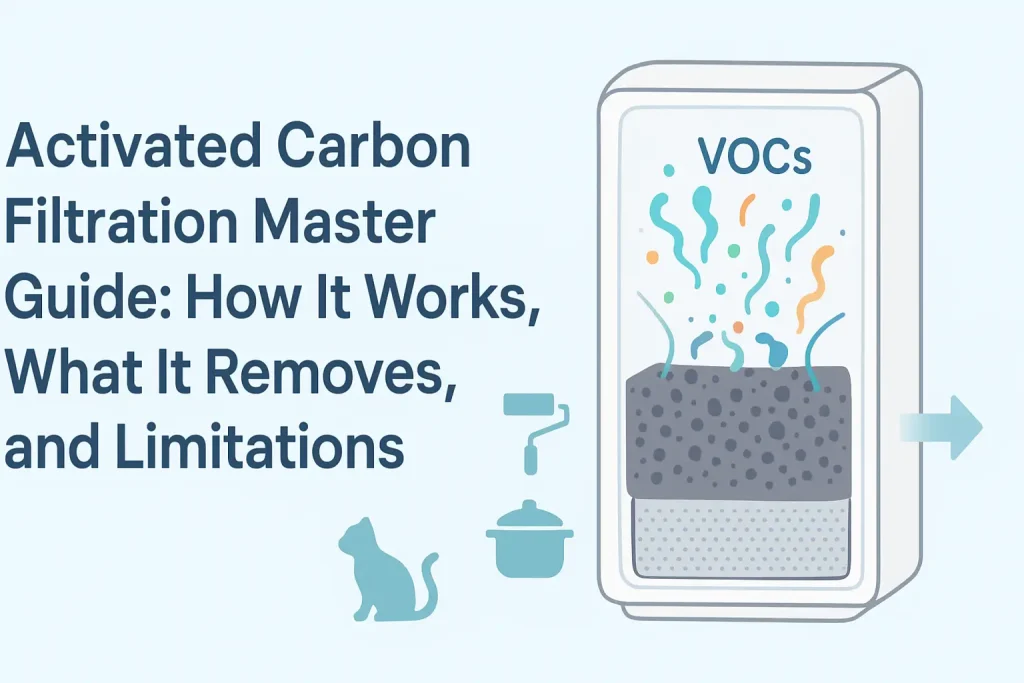
When contaminated air passes through this carbon bed, VOC molecules, formaldehyde, ozone, and odor compounds physically adhere to the carbon pore walls via van der Waals forces. This is chemisorption and physisorption combined — the same process that makes a replacement activated carbon air purifier filter work in units like the Coway Airmega or Winix 5500-2.
The critical difference from a charcoal bag is the forced airflow. A purifier with a smoke CADR of 250 CFM moves 250 cubic feet of air through its filters every minute. At 5 air changes per hour (ACH), the entire room volume passes through the carbon bed five times each hour. A charcoal bag processes zero cubic feet of air per minute in any measurable sense — it waits for molecules to drift into it.
This happens because activated carbon adsorption requires physical contact between the pollutant molecule and the carbon pore surface. The probability of that contact occurring scales directly with the volume of air moved past the carbon per unit time. No airflow means no contact for the vast majority of pollutant molecules in the room.
The Adsorption Mechanism: Why Airflow Changes Everything
Adsorption is not absorption. Absorption means a substance soaks into a material — like water into a sponge. Adsorption means molecules stick to a surface — like dust clinging to a static-charged screen. Activated carbon adsorbs gases and VOCs onto its internal pore surfaces, and the total available surface area determines the total pollutant load the carbon can hold before saturation.
But available surface area is only half the equation. The rate at which pollutant molecules reach those surfaces determines how fast the carbon works — and that rate is entirely governed by airflow. This only occurs when contaminated air physically moves through or directly across the carbon material at a meaningful velocity, which for practical purposes requires a fan or blower.
If the airflow condition is not met — meaning the carbon sits passively in still air — the result is that only the air within roughly one to two inches of the charcoal bag receives any meaningful VOC reduction. The rest of the room remains essentially untreated. Fix it by placing the carbon inside a powered air mover — an air purifier — that forces room air through the carbon at a known CFM rate.
According to research published in the journal Building and Environment (2018) by Sidheswaran et al., activated carbon filters in HVAC systems achieved 70 to 80 percent VOC reduction at air velocities of 0.5 to 2 meters per second, while passive placement produced negligible whole-room VOC reduction beyond the immediate vicinity of the carbon material. The physics has been settled for decades.
Charcoal Bags vs Air Purifier Carbon: Head-to-Head Comparison
Use the table below to compare every meaningful performance dimension between a passive charcoal bag and the activated carbon stage in a powered air purifier — so you can see exactly where the two diverge before making any purchase decision.
Product Comparison
Charcoal Bags vs Air Purifier Activated Carbon – Side by Side
Detailed comparison including mechanism, carbon mass, airflow, coverage area, VOC reduction, lifespan, and cost.
| Spec | Charcoal Bag (Passive) | Air Purifier Carbon (Active) |
|---|---|---|
| Mechanism | Passive diffusion only | Forced-air convection at 50-500 CFM |
| Carbon mass per unit | 50-200 grams (per bag) | 500 g to 15 lbs (6.8 kg) per filter |
| Surface area of carbon | 50-200 m²/g (estimated) | 300-1,200 m²/g (engineered) |
| Effective coverage area | 1-3 sq ft immediate vicinity | Full room at rated ACH (up to 1,500+ sq ft) |
| VOC reduction (whole room) | Negligible — under 5% in typical room | 60-85% at 2-5 ACH with sufficient carbon mass |
| Air changes per hour (ACH) | Effectively zero | 2-6 ACH depending on CADR and room size |
| Reactivation required | Monthly sunlight exposure claimed | No reactivation — replace when saturated |
| Replacement interval | Claimed 1-2 years (no standardized test) | 3-12 months per manufacturer spec |
| Annual cost | $10-30 (replacement bags) | $30-250 (filter replacement + electricity) |
| Our verdict | Best for tiny enclosed spaces (closets, drawers, car interiors) with zero odor reduction expectations | Best for whole-room VOC, odor, and chemical removal with measurable, scientifically validated results |
Carbon surface area estimates for bamboo charcoal from published BET analysis studies. Air purifier carbon surface area from manufacturer technical data sheets for coconut-shell and coal-based activated carbon. VOC reduction data from Building and Environment journal (Sidheswaran et al., 2018) and ASHRAE research on in-duct carbon filtration.
The table makes one thing clear: charcoal bags and air purifier carbon share a material name but operate in completely different performance universes. The missing variable in every charcoal bag product listing is airflow — and without it, adsorption remains a localized curiosity rather than a room-level solution.
How Much Activated Carbon Do You Actually Need for Real VOC Removal?
Real VOC removal in a room requires two things simultaneously: enough carbon mass to provide sufficient total adsorption capacity, and enough airflow to bring room air into contact with that carbon at a meaningful rate. The carbon mass question has a surprisingly clear answer from industrial and research data.
According to research compiled by ASHRAE and validated in multiple indoor air quality studies, effective whole-room VOC removal using activated carbon filtration requires a minimum of 2 to 5 pounds of activated carbon per 100 square feet of room area at standard 8-foot ceiling heights, paired with at least 2 to 4 ACH of airflow through the carbon bed. Below these thresholds, the carbon saturates too quickly or fails to capture enough VOC mass to measurably reduce room concentrations.
For a 200-square-foot bedroom, the math works out to 4 to 10 pounds of activated carbon minimum. A typical charcoal bag contains roughly 0.1 to 0.4 pounds of charcoal. You would need 20 to 100 charcoal bags in a single bedroom to match the carbon mass of one properly sized air purifier carbon filter. That does not even address the airflow deficit.
An Austin Air HealthMate air purifier contains 15 pounds of activated carbon and zeolite blend in a single unit — enough carbon mass for roughly 750 square feet at meaningful VOC removal rates. The carbon in that one unit outweighs approximately 75 to 150 typical charcoal bags combined. And the HealthMate forces 200 to 400 CFM of air through that carbon bed continuously.
Surface Area and Pore Structure: Bamboo Charcoal vs Engineered Activated Carbon
The carbon inside a $10 bamboo charcoal bag is not the same material as the carbon inside a $60 air purifier replacement filter. Both are carbonized and activated plant material — but the activation process, source material selection, and quality control differ dramatically.
Engineered activated carbon for air purification is typically produced from coconut shells, bituminous coal, or wood that undergoes controlled steam activation at 800 to 1,100 degrees Celsius in low-oxygen environments. This process creates a precisely controlled pore size distribution optimized for the target pollutant — micropores below 2 nanometers for small VOCs like formaldehyde, and mesopores from 2 to 50 nanometers for larger odor molecules.
Performance Data
Surface Area Comparison – Carbon Types Used in Air Purification
BET surface area in square meters per gram. Source: published BET analysis studies and manufacturer technical data sheets.
The surface area difference directly determines total VOC holding capacity before saturation. A carbon with 1,200 m² per gram holds roughly 10 times more VOC mass per gram than a bamboo charcoal with 120 m² per gram. Combine that with the carbon mass difference — 15 pounds vs 0.2 pounds — and a single air purifier carbon filter provides roughly 750 times the total VOC adsorption capacity of one charcoal bag.
This only occurs when the carbon is properly activated at controlled temperatures with precise steam or chemical treatment. If the charcoal is simply carbonized bamboo without optimized activation — as many consumer charcoal bags appear to be — the surface area falls even lower, potentially below 50 m² per gram, and the result is a material that adsorbs almost nothing beyond water vapor.
Charcoal Bags: Pros, Cons, and Where They Actually Make Sense
Product Review
Charcoal Bags – Pros and Cons
Honest assessment based on adsorption physics, published research, and real-world usage patterns.
Pros
- ✓Zero electricity cost — passive operation with no power consumption
- ✓Extremely low upfront cost at $10-15 per 4-pack of bags
- ✓Effective for tiny enclosed spaces under 5 cubic feet (drawers, shoe cabinets)
- ✓No ozone production, no chemicals, no moving parts to fail
- ✓Reusable for 1-2 years with monthly sunlight exposure for partial reactivation
Cons
- ✗Zero measurable whole-room VOC or odor reduction — physically impossible without airflow
- ✗Surface area of 50-200 m²/g is far below engineered activated carbon at 500-1,200 m²/g
- ✗Sunlight reactivation releases trapped VOCs right back into the air — not true regeneration
- ✗No standardized performance testing — every claim is manufacturer marketing with no independent verification
- ✗Carbon mass of 50-200g per bag is 75 to 150 times less than a proper air purifier carbon filter
Charcoal bags are a low-cost, zero-electricity option for tiny enclosed spaces under 5 cubic feet such as drawers, gym bags, and small closets. They do not and cannot clean the air in a room of any size because passive diffusion moves negligible air volume through the carbon. If you need actual VOC or odor reduction in a living space, you need a powered air purifier with at least 2 to 5 pounds of engineered activated carbon and a fan capable of 2 or more ACH for that room.
Real-World Test Data: What Independent Studies Show
Independent testing of passive charcoal bags for whole-room air purification is nearly nonexistent in peer-reviewed literature — and that absence is itself a data point. Researchers do not test passive charcoal bags for room-level VOC reduction for the same reason they do not test whether a single houseplant cleans a 300-square-foot room. The physics precludes meaningful results before any experiment begins.
A 2016 study published in the Journal of Hazardous Materials by Haghighat et al. evaluated activated carbon filtration for indoor VOC removal and found that meaningful reductions of formaldehyde, benzene, and toluene required air velocities of at least 0.5 meters per second through a carbon bed with a minimum residence time of 0.05 seconds. Passive diffusion in still air produces air velocities closer to 0.01 to 0.05 meters per second at the carbon surface — an order of magnitude too slow.
Consumer testing by independent reviewers consistently finds the same pattern. When placed in a room with a known odor source such as a litter box, paint fumes, or cooking residue, charcoal bags produce no measurable reduction in VOC concentrations at distances beyond roughly 12 inches from the bag. A PM2.5 and VOC air quality monitor placed six feet from a charcoal bag will register the same VOC levels before and after the bag is introduced to the room.
In plain terms: a charcoal bag cleans the air directly touching it and leaves the rest of the room completely unchanged.
Cost Analysis: Charcoal Bags vs Air Purifier Carbon Filters Over 3 Years
At first glance, charcoal bags appear dramatically cheaper. A 4-pack of bamboo charcoal air purifying bags costs approximately $10 to $15, compared to $40 to $120 for a replacement activated carbon filter for a mid-range air purifier. But cost analysis only makes sense when comparing products that perform the same function — and these two do not.
The carbon filter in a Coway Airmega replacement filter set costs roughly $60 and lasts 12 months. Over three years, that is $180 in carbon filters — plus approximately $30 per year in electricity at 13 cents per kWh for 8 hours of daily operation, totaling roughly $270. The charcoal bag user spends $30 on replacement bags over the same period with zero electricity cost.
But the charcoal bag user also achieves zero measurable whole-room VOC reduction. If the goal is cleaner air rather than decorative carbon pouches, the $270 air purifier cost is buying something the $30 charcoal bag cost cannot deliver at any price — actual gas-phase filtration with scientifically validated results. The relevant comparison is not charcoal bags vs air purifier carbon. It is air purifier carbon vs other powered VOC removal methods like increased ventilation or source control.
When Charcoal Bags Are the Better Choice (and When They Are Not)
Charcoal bags are the better choice in exactly one scenario: when you need mild odor absorption in a space so small that convection currents from a temperature difference of a few degrees provide adequate air mixing. A drawer, a shoe cabinet, a gym bag, a car trunk, a small closet under 25 cubic feet — these are the environments where passive charcoal can actually work because the distance from the odor source to the carbon surface is measured in inches, not feet.
For any space larger than a small closet — a bedroom, living room, basement, office, or open-plan area — charcoal bags are not the better choice because they are not a functional choice at all. The carbon mass is too low, the surface area is too low, and the airflow is effectively zero. A Levoit Core 300S air purifier with its activated carbon pre-filter will remove more VOCs from a 200-square-foot room in 30 minutes than 100 charcoal bags could remove in a year of passive sitting.
The decision framework is simple. Measure your space in cubic feet. If the space is under 25 cubic feet and has a specific odor source, try a charcoal bag — it costs almost nothing. If the space is over 25 cubic feet and you care about measurable air quality improvement, you need a powered air purifier with engineered activated carbon and enough carbon mass for your room size. There is no middle ground product that splits this difference.
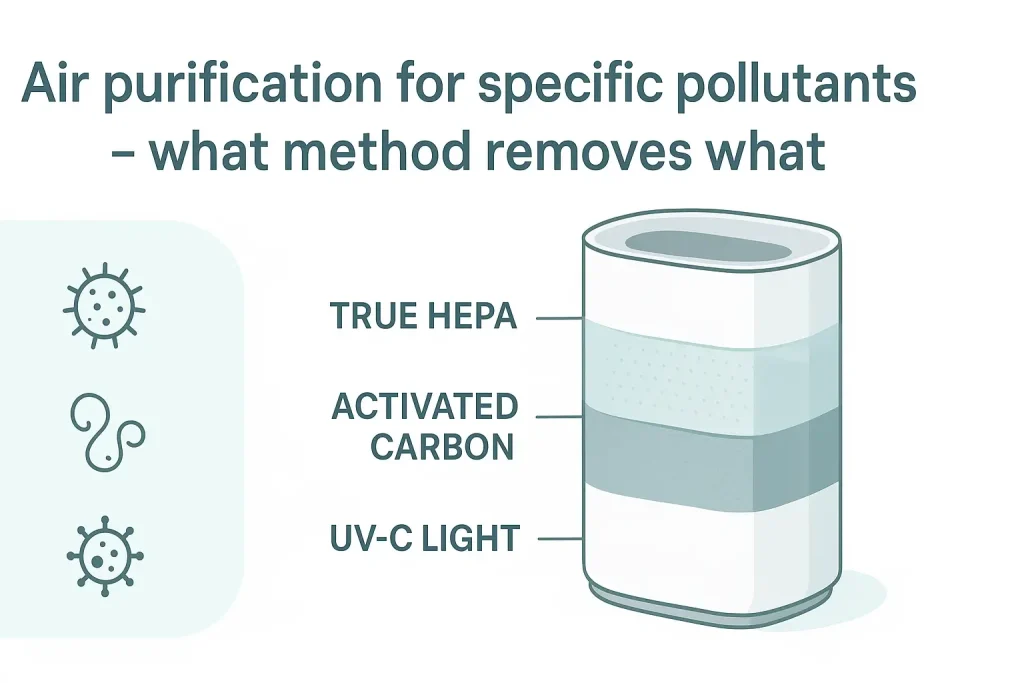
For most home users dealing with odors, VOCs from furniture or cleaning products, or wanting actual cleaner air rather than the appearance of doing something, a True HEPA air purifier with a substantial activated carbon stage rated for your room size at 2 to 4 ACH delivers results that passive products cannot approach. The carbon does the work, but the fan makes the work possible.
Can charcoal bags actually remove formaldehyde from a room?
Charcoal bags cannot remove formaldehyde from a room in any measurable quantity because formaldehyde molecules must physically contact the carbon surface to be adsorbed, and passive diffusion in still air brings negligible formaldehyde into contact with a small charcoal pouch. Formaldehyde is a small, polar molecule at 30 Daltons that adsorbs weakly even on engineered activated carbon — requiring chemically impregnated carbon with potassium permanganate or amine treatments to achieve meaningful capture rates in laboratory settings.
An air purifier with 5 to 15 pounds of impregnated activated carbon and a fan delivering 4 to 6 ACH to the room can reduce formaldehyde concentrations by 50 to 80 percent according to research published in Indoor Air journal. A 200-gram bamboo charcoal bag with no chemical impregnation and no airflow captures essentially zero formaldehyde beyond what happens to drift within one inch of the bag surface. The formaldehyde molecule is simply too small and too mobile to be trapped by weak van der Waals forces on low-surface-area charcoal in still air.
If formaldehyde is your primary concern — common in new furniture, flooring, and building materials — skip the charcoal bags entirely and look for an air purifier with a dedicated formaldehyde filter stage such as the Dyson Purifier Formaldehyde or the IQAir GC MultiGas, both of which use chemically treated carbon specifically designed for small aldehyde molecules.
Why does my charcoal bag stop working after two weeks?
Your charcoal bag stops working after two weeks because it reaches adsorption equilibrium with the surrounding air — not because it is full. Adsorption is a reversible process where molecules continuously adsorb onto and desorb from the carbon surface. When the concentration of VOCs on the carbon surface equals the concentration in the surrounding air, net adsorption stops. The bag is not saturated with pollutants. It is in equilibrium with the room.
This is the fundamental failure of passive carbon products that manufacturers never explain. A powered air purifier overcomes equilibrium by continuously bringing fresh contaminated air to the carbon and moving cleaned air away, maintaining a concentration gradient that drives net adsorption. A passive bag sitting in still air reaches equilibrium quickly — often within days — and thereafter functions as a VOC repository that releases molecules back into the air as readily as it captures them.
The sunlight reactivation ritual recommended by manufacturers actually exploits this equilibrium property. Placing the bag in direct sunlight heats the carbon, increasing the kinetic energy of adsorbed molecules and driving them off the surface and into the outdoor air. The bag returns indoors with a clean surface ready to re-establish equilibrium. But within days, it reaches equilibrium again and net cleaning stops. This is not a filter. It is a VOC sponge that breathes in and out with the room.
Is activated carbon in air purifiers safe, or does it release anything harmful?
Activated carbon in air purifiers is safe and does not release harmful substances under normal operating conditions. The carbon is a stable, inert material produced from coconut shells, coal, or wood that has been heated to 800 to 1,100 degrees Celsius in a controlled atmosphere to create the pore structure. It contains no volatile compounds that off-gas at room temperature, and it does not chemically react with adsorbed pollutants to create new harmful byproducts.
The one known exception occurs when activated carbon becomes saturated and then experiences a significant temperature increase — above roughly 100 degrees Fahrenheit — which can cause partial desorption of trapped VOCs back into the airstream. This is why manufacturer replacement intervals matter and why running a carbon filter well past its rated lifespan can result in reduced effectiveness and, in extreme cases, re-emission of previously captured compounds. The fix is straightforward: replace your carbon filter on the manufacturer’s schedule, typically every 3 to 12 months depending on pollutant load and carbon mass.
Activated carbon does not produce ozone, does not require UV light, and does not involve any chemical reactions during normal adsorption. It is among the safest and most well-studied air purification technologies available, with decades of industrial and medical use supporting its safety profile. For additional context on safe air purification methods and what to avoid, our guide on why ozone-generating air purifiers are dangerous and what CARB certification actually means covers the critical distinction between safe filtration and harmful air treatment methods.
What is the difference between activated charcoal and activated carbon?
There is no meaningful chemical or functional difference between activated charcoal and activated carbon. The two terms describe the same material — a high-surface-area carbonaceous substance produced by heating carbon-rich source material such as wood, coconut shells, or coal in the presence of steam or chemical activating agents at high temperatures to create an internal pore network. The terms are used interchangeably in scientific literature, industry specifications, and product marketing.
The distinction that occasionally appears in consumer products is marketing rather than science. Some manufacturers use “activated charcoal” to describe carbon made from wood or plant sources and “activated carbon” to describe carbon made from coconut shells or coal, but this is not a standardized convention. Both materials function through the same physisorption mechanism — van der Waals forces trapping gas molecules on internal pore surfaces — and both are measured by the same BET surface area analysis and iodine number tests for quality assessment.
What matters for air purification performance is not the name but the measured specifications: BET surface area in m² per gram, iodine number, carbon tetrachloride activity, and total carbon mass in the filter. A “charcoal bag” containing 100 grams of low-surface-area bamboo charcoal at 100 m² per gram is entirely different from an “activated carbon filter” containing 5 pounds of coconut-shell carbon at 1,000 m² per gram despite both technically being activated carbon products.
Can I use charcoal bags instead of an air purifier for wildfire smoke?
You cannot use charcoal bags instead of an air purifier for wildfire smoke. Wildfire smoke is primarily particulate matter — PM2.5 and ultrafine particles below 0.1 microns — with a smaller gas-phase component including carbon monoxide, VOCs, and polycyclic aromatic hydrocarbons. Charcoal bags address neither the particulate component nor the gas-phase component in any meaningful room-level capacity because they have no fan, no HEPA filter, and negligible total carbon mass relative to the pollutant load.
Wildfire smoke protection requires a powered air purifier with a True HEPA filter — capturing 99.97 percent of particles at 0.3 microns — paired with an activated carbon stage for the gas-phase smoke components. The smoke CADR rating determines how fast the unit cleans the room. For a 200-square-foot bedroom during a wildfire event with outdoor AQI above 150, you need a smoke CADR of at least 130 CFM to achieve 5 ACH and reduce indoor PM2.5 by 80 to 90 percent within 30 minutes according to EPA guidance on portable air cleaners during wildfire events.
A Winix 5500-2 air purifier provides 243 CFM smoke CADR with True HEPA and an activated carbon pellet filter — capable of handling a 360-square-foot room at 2 ACH under normal conditions and roughly 145 square feet at the 5 ACH recommended during active wildfire smoke events. Charcoal bags provide zero CADR, zero ACH, and zero particle filtration. They are not a substitute. They are not even in the same product category.
Do charcoal bags work in a car?
Charcoal bags can work in a car for mild odor absorption because a car interior is a small enclosed space — typically 80 to 120 cubic feet — that experiences significant temperature-driven air mixing when parked in sunlight. The daily temperature cycling from roughly 60 degrees Fahrenheit at night to 120 degrees Fahrenheit or higher in direct sun creates natural convection currents inside the car that move air past a charcoal bag placed on the dashboard or seat.
This temperature cycling also accelerates desorption of trapped compounds from the charcoal surface, effectively regenerating the carbon to some degree each day as the interior heats up and VOCs are driven off. The car then vents these compounds when doors open or the ventilation system runs. This is one of the few real-world scenarios where passive charcoal benefits from environmental conditions that partially compensate for the lack of active airflow.
However, even in a car, a charcoal bag is a mild maintenance tool rather than a solution for heavy odors such as cigarette smoke, spilled fuel, or persistent mildew. A dedicated car air purifier with a small HEPA and carbon filter powered by the 12V outlet will outperform any passive bag by orders of magnitude for the same reason room air purifiers do — forced airflow. For deeply embedded odors, professional ozone treatment or steam cleaning remains the only effective approach, and for more on why ozone must be handled with extreme caution, see our detailed breakdown of when ozone becomes dangerous and the CARB safety limits that every device must meet.
How do I know when my air purifier’s carbon filter needs replacing?
You know your air purifier’s carbon filter needs replacing when you notice a return of the odors or VOC symptoms that the purifier previously controlled, when the manufacturer’s recommended replacement interval has elapsed, or when you detect a faint chemical or sour smell from the exhaust air that was not present when the filter was new. Carbon filters do not change color or show visible loading the way HEPA filters do, so replacement timing relies on usage tracking and sensory observation.
Most manufacturers specify a carbon filter replacement interval of 3 to 12 months depending on carbon mass, pollutant load, and daily run hours. A unit running 24 hours per day in a home with cooking fumes, pets, and off-gassing furniture will exhaust its carbon capacity in roughly 3 to 6 months. The same unit running 8 hours per day in a low-VOC bedroom may reach 12 months. When in doubt, replace at the manufacturer’s minimum interval rather than pushing to the maximum — saturated carbon provides zero additional adsorption and may begin desorbing trapped compounds under temperature swings.
For air purifiers with separate HEPA and carbon stages such as the Coway AP-1512HH replacement filter set, the carbon pre-filter typically needs replacement every 3 to 6 months while the True HEPA stage lasts 12 months. The carbon is the consumable workhorse for gas-phase pollutants. Budget for it accordingly — roughly $20 to $40 per year for the carbon stage of a mid-range purifier.
Can I recharge a charcoal bag by putting it in the sun, or is that a myth?
You can partially recharge a charcoal bag by placing it in direct sunlight, but the process is far less effective than most product instructions suggest. Sunlight heats the carbon to roughly 100 to 140 degrees Fahrenheit depending on ambient temperature and sun intensity. At these temperatures, some weakly adsorbed water vapor and low-molecular-weight VOCs gain enough kinetic energy to overcome the van der Waals attraction to the carbon surface and desorb into the outdoor air.
However, sunlight cannot reach the temperatures required for true thermal reactivation of activated carbon — which is 800 to 1,000 degrees Celsius in a controlled low-oxygen environment. At the 60 to 80 degrees Celsius that direct sun on a black pouch can achieve, only the most weakly bound compounds are released. Heavier VOCs, semi-volatile organic compounds, and strongly adsorbed odor molecules remain firmly attached to the carbon pores. Each sunlight cycle restores a fraction of the original adsorption capacity, and the fraction decreases with each cycle as irreversible adsorption sites fill up.
The practical result is that sunlight reactivation extends the useful life of a charcoal bag from roughly two weeks to perhaps two to three months of intermittent mild odor control in a very small space. It does not restore the bag to like-new condition, and it does not make the bag effective for room-level air cleaning at any point in its lifecycle. For real activated carbon regeneration, the carbon must be removed and heated in an industrial kiln — which is why air purifier carbon filters are designed for replacement, not reactivation.
What types of VOCs can activated carbon actually remove, and which ones pass right through?
Activated carbon effectively removes VOCs with molecular weights above roughly 50 Daltons and boiling points above 60 degrees Celsius — including benzene (78 Daltons), toluene (92 Daltons), xylene (106 Daltons), limonene (136 Daltons), and most common indoor odor compounds. These larger, heavier molecules have sufficient van der Waals contact area with the carbon pore walls to adsorb strongly and remain trapped under normal indoor temperature and humidity conditions.
Activated carbon performs poorly on very light VOCs including formaldehyde (30 Daltons), acetaldehyde (44 Daltons), and methanol (32 Daltons) — molecules that are too small and too volatile to be held effectively by standard activated carbon at room temperature. These light aldehydes and alcohols require chemically impregnated carbon with potassium permanganate, amine treatments, or specialized zeolite blends designed specifically for small polar molecules. Standard coconut-shell or coal-based carbon without chemical impregnation captures these compounds only weakly and releases them readily with minor temperature or humidity changes.
Activated carbon also cannot remove carbon monoxide (28 Daltons), carbon dioxide (44 Daltons), or nitrogen dioxide (46 Daltons) in any meaningful quantity at indoor air purification scale. These inorganic gases interact too weakly with carbon surfaces and pass through essentially unimpeded. If your air quality concern includes combustion gases from a gas stove, fireplace, or attached garage, source control and ventilation are the only effective strategies — activated carbon in any form, passive or powered, will not solve the problem.
How does humidity affect charcoal bags and carbon filters differently?
Humidity affects charcoal bags more severely than powered air purifier carbon filters because passive bags lack the continuous airflow that helps manage moisture equilibrium. Activated carbon adsorbs water vapor preferentially over most VOC molecules — water is small, polar, and present at concentrations thousands of times higher than any indoor pollutant. At relative humidity above 60 percent, water molecules occupy a significant fraction of available adsorption sites on both passive charcoal and powered carbon filters.
In a charcoal bag, high humidity accelerates saturation because the bag has minimal total carbon mass — 50 to 200 grams — and no mechanism to shed adsorbed water once the pores fill. Within days to weeks in a humid basement or bathroom, the charcoal reaches water saturation and its remaining VOC adsorption capacity approaches zero. The bag becomes a damp pouch of wet charcoal that adsorbs nothing.
A powered air purifier carbon filter experiences the same water competition but benefits from the continuous airflow that helps maintain a dynamic equilibrium. As the filter media cycles between wet and dry air — indoor humidity fluctuates with HVAC operation, cooking, showers, and weather — water desorbs during drier periods and frees up adsorption sites for VOCs. The larger carbon mass of 1 to 15 pounds also provides a much larger buffer against humidity-driven capacity loss. In high-humidity environments, a powered carbon filter with adequate mass still underperforms its rated VOC capacity but remains far more functional than any passive charcoal alternative.
Are there any air purifiers that use both HEPA and activated carbon effectively for under $200?
Several air purifiers under $200 combine True HEPA filtration with a functional activated carbon stage effectively enough for meaningful odor and VOC reduction in rooms up to roughly 300 square feet. The Winix 5500-2 air purifier at approximately $160 includes a washable activated carbon pellet filter with roughly 0.5 pounds of carbon — modest but paired with 243 CFM smoke CADR, it provides measurable gas-phase filtration for a bedroom or small living area at a price point that makes annual carbon filter replacement affordable at roughly $15 per year.
The Levoit Core 400S at roughly $190 includes an activated carbon pre-filter layer combined with H13 True HEPA filtration and 260 CFM smoke CADR, covering roughly 400 square feet at 2 ACH. The carbon stage is thinner than the Winix pellet design but benefits from higher airflow and a larger total filter area. For odor and light VOC control in a bedroom or office, both units deliver genuine carbon filtration at a price point where charcoal bags start to look like a false economy — you pay $30 for bags that do nothing room-level, or $160 for a powered unit that actually works.
Key Specifications:
• Smoke CADR: 243 CFM (Winix 5500-2, AHAM certified)
• Carbon mass: approximately 0.5 lbs activated carbon pellets
• Coverage at 2 ACH: 360 sq ft
• Coverage at 5 ACH: 145 sq ft
• Annual carbon filter cost: approximately $15
What happens if I put a charcoal bag directly in front of a fan — does that make it work like an air purifier?
Putting a charcoal bag in front of a fan increases the air velocity at the bag surface and does improve local adsorption rates compared to passive placement. A desk fan blowing at 200 to 500 CFM directly onto a charcoal pouch creates a localized high-airflow zone where VOC-laden air is forced into contact with the carbon at rates far exceeding passive diffusion. This is, in effect, a crude DIY activated carbon filter — and it will capture more VOCs than the same bag sitting in still air.
However, a charcoal bag in front of a fan still fails as a room air purifier for two reasons. First, the carbon mass remains inadequate — 50 to 200 grams of low-surface-area bamboo charcoal against a room containing hundreds of cubic feet of air and potentially grams of total VOC mass. The carbon saturates within hours to days at most. Second, the bag is not sealed in an airflow path, meaning a large fraction of the fan’s air bypasses the carbon entirely through gaps around the bag. A proper carbon filter is a sealed cartridge or tray where all air must pass through the carbon bed — no bypass.
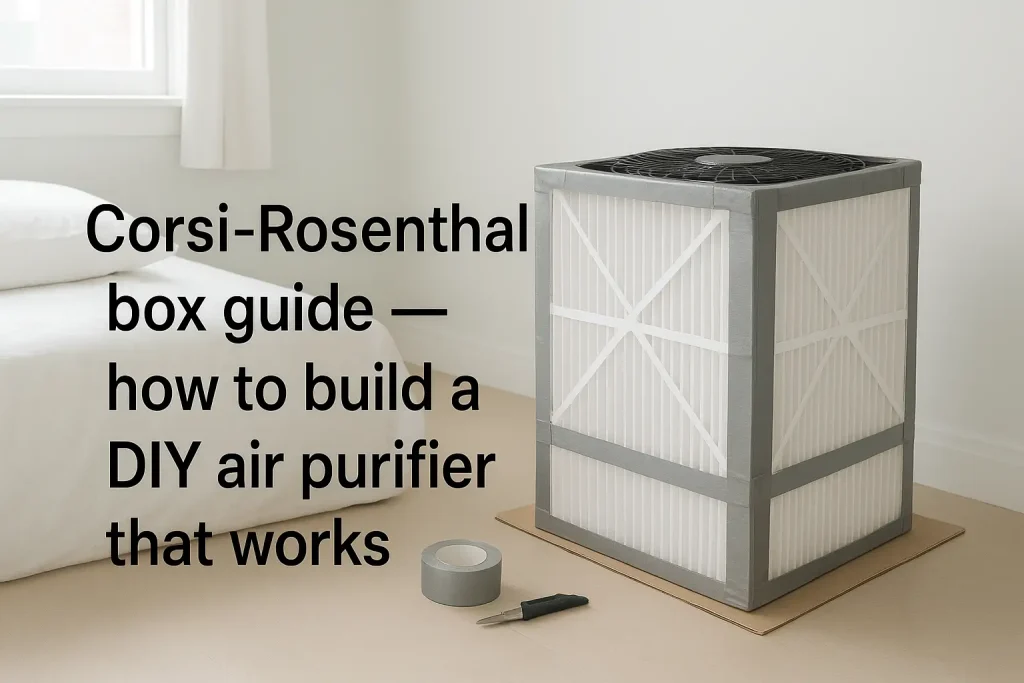
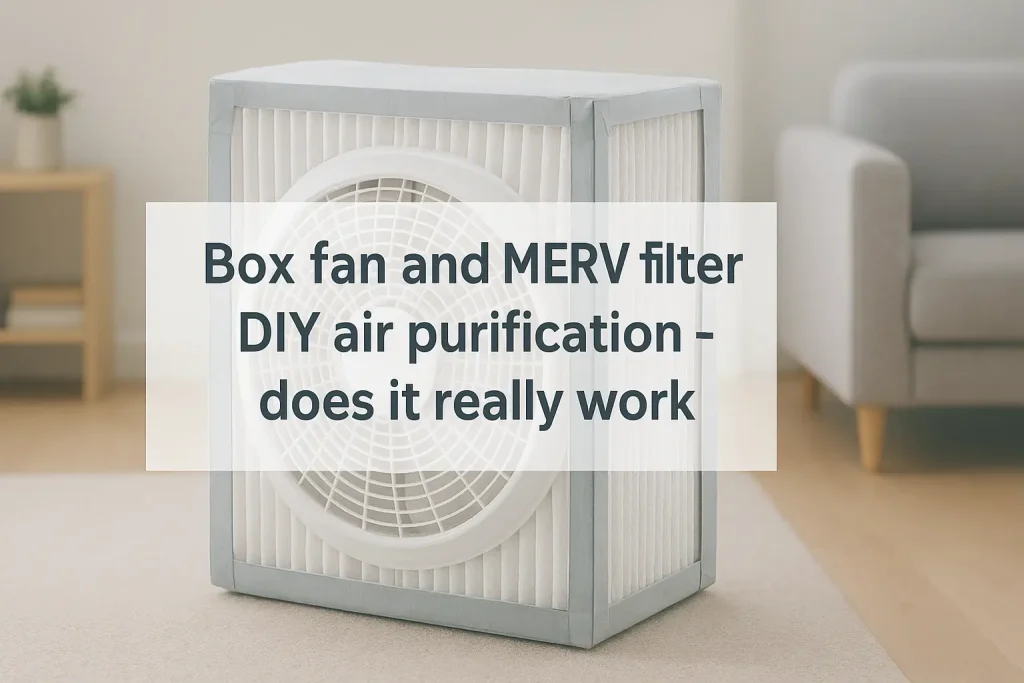
The fan-plus-bag setup is an interesting demonstration of the airflow principle but not a practical air purification solution. If you have a box fan, the Corsi-Rosenthal box design using four MERV 13 filters and a 20-inch box fan is a far more effective and well-documented DIY approach. Our guide on the fundamental difference between active and passive air purification methods covers why airflow transforms any filtration approach from a localized curiosity into a room-level solution — and why passive products fail regardless of the material they contain.
Charcoal bags are not a cheaper version of an air purifier carbon filter. They are a different product entirely — a passive odor absorber for tiny spaces — and no amount of creative placement changes the physics that limits them. An air purifier earns its higher cost through three things a charcoal bag cannot replicate: engineered carbon with 5 to 10 times the surface area, 100 to 1,000 times the carbon mass, and a fan that moves air through that carbon at a rate that makes room-level VOC reduction physically possible. If you need the results, you need the machine.