
Most people assume an air purifier is the only way to clean indoor air. A room with no powered device running can still remove pollutants through ventilation, natural settling, and surface adsorption. The choice between active and passive air purification determines how fast pollutants are removed, what gets captured, and how much it costs you per year.
Active air purification uses powered mechanical or electronic systems to force air through filtration or treatment stages. Passive air purification relies on natural airflow, material properties, and environmental processes without powered fans or electrical input. This guide covers True HEPA mechanical filtration, ionizers, UV-C germicidal systems, activated carbon adsorption, ventilation strategies, building material choices, and plant-based purification with specific CADR equivalents, particle removal timelines, and cost per clean air delivery rate for each method.
What Is Active Air Purification, Exactly?
Active air purification moves air through a powered system that captures, neutralizes, or transforms airborne contaminants using electricity. A fan pulls room air through one or more filtration stages and returns cleaned air to the room at a measurable rate in cubic feet per minute (CFM). The Clean Air Delivery Rate (CADR) tells you exactly how much filtered air the device delivers per minute for smoke, dust, and pollen particles.
Active systems include True HEPA air purifiers using mechanical filtration, ionizers that charge particles electrically, UV-C germicidal systems that irradiate pathogens, photocatalytic oxidation (PCO) units that break down VOCs, and ozone generators that intentionally produce ozone for oxidation. True HEPA is the only active technology with a legally enforceable efficiency standard: 99.97% capture of particles at 0.3 microns per IEST testing protocols.
| Photo | Popular Air Purifiers | Price |
|---|---|---|

|
Air Purifiers for Home Large Room up to 1500ft², Tailulu H13 True HEPA Air Purifier for Pets Dust Odor Smoke, Air Purifier for Bedroom with 15dB Quiet Sleep Mode for Bedroom Office Living Room | Check Price On Amazon |
|
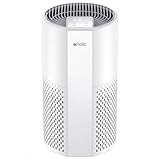
Afloia Air Purifier for Home, 4-in-1 Washable Filter for Allergies, Covers Up to 1076 ft², Quiet Operation, Auto Shut-Off & Night Light, Removes Pet Dander, Pollen, Dust, Mold, and Smoke, White,Pluto | Check Price On Amazon |

|
Nuwave OxyPure ZERO Air Purifier with Washable and Reusable Bio Guard Tech Air Filter, Large Room Up to 2002 Ft², Air Quality Monitor, 0.1 Microns, 100% Capture Irritants like Smoke, Dust, Pollen | Check Price On Amazon |

|
Air Purifiers for Home Large Room Up to 1,996 Ft², EOEBOT Air Purifier for Home Pets with Washable Filter, Quiet Sleep Mode, Air Quality Monitor, Air Purifier for Bedroom, Pet Hair, Dust, Smoke, White | Check Price On Amazon |
|
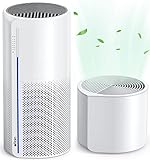
Afloia 2 IN 1 Air Purifier with Humidifier Combo, 3-Stage Filters for Home Allergies Pets Hair Smoker Odors, Evaporative Humidifier, Auto Shut Off, Quiet Air Cleaner with Seven Color Light,White | Check Price On Amazon |
This standard matters because 0.3 microns is the most penetrating particle size (MPPS). Particles smaller than 0.3 microns become easier to capture due to diffusion. Particles larger than 0.3 microns become easier to capture due to interception and impaction. A filter that captures 99.97% at 0.3 microns captures an even higher percentage at all other sizes.
Active systems work regardless of outdoor conditions. Close your windows during wildfire season with an AQI above 150 and a Coway Airmega 400 (smoke CADR 400 CFM) can reduce indoor PM2.5 by 85% within 30 minutes at 5 ACH in a 300-square-foot room. Passive ventilation during the same AQI 150 event actively worsens indoor air by pulling PM2.5 indoors at infiltration rates of 0.3 to 1.5 ACH depending on construction tightness.
How Does Mechanical Filtration Create Active Air Purification?
A True HEPA air purifier uses a fan motor pulling 50 to 400 watts to force air through a dense fiber mat of randomly arranged borosilicate glass or polypropylene fibers. Particles are captured through four physical mechanisms: inertial impaction (larger particles cannot follow the airstream around fibers), interception (particles following streamlines contact fiber surfaces), diffusion (submicron particles move randomly via Brownian motion and collide with fibers), and electrostatic attraction (charged fibers attract oppositely charged particles).
This happens because the fiber mat creates millions of flow obstructions at the microscale, forcing particles into contact with fiber surfaces where van der Waals forces hold them. This only occurs when the filter is intact with no bypass gaps between the filter frame and the housing, and when the fan produces sufficient static pressure to overcome filter resistance. If the filter frame is loose or the fan is undersized, the result is 15 to 40% of airflow bypassing the filter entirely: fix it by ensuring the filter seats flush against its gasket and selecting a unit with AHAM-certified CADR matching your room size.
Key Specifications: Filtration efficiency: 99.97% at 0.3 microns (True HEPA, H13 per EN 1822). Airflow range: 50 to 500 CFM for portable units. Power draw: 6 watts at sleep mode to 120 watts at turbo for a typical mid-sized unit. Filter lifespan: 6 to 12 months for HEPA, 3 to 6 months for activated carbon pre-filters depending on pollutant load and run hours.
How Do Electronic Air Purification Technologies Work Actively?
Ionizers emit charged ions (typically negative) into the room airstream using a corona discharge electrode operating at 5 to 20 kilovolts DC. These ions attach to airborne particles, causing them to gain charge and electrostatically adhere to nearby surfaces like walls, floors, and furniture. The particles are not removed from the room; they are relocated from the air to your surfaces where they can be resuspended by walking, vacuuming, or HVAC airflow.
This happens because charged particles experience Coulomb attraction to grounded or oppositely charged surfaces, effectively electrostatically plating your room surfaces with captured PM2.5. This only occurs when the ionizer output is sufficient to charge particles in the entire room volume, which requires an ion density of 1,000 to 10,000 ions per cubic centimeter at the point of emission. If ion output is too low or room air mixing is poor, the result is only 10 to 30% particle removal from the breathing zone compared to 85%+ from an equivalently sized True HEPA unit: fix it by choosing a True HEPA air purifier like the Winix 5500-2 (243 CFM smoke CADR, CARB certified) instead of a standalone ionizer.
UV-C germicidal systems use ultraviolet light at 254 nanometers wavelength to damage the DNA and RNA of bacteria, viruses, and mold spores passing through the irradiation chamber. The kill rate depends on UV dose (intensity in microwatts per square centimeter multiplied by exposure time in seconds). A dose of 10,000 microwatt-seconds per square centimeter achieves 99% inactivation of most bacteria. Residential UV-C devices in portable purifiers typically deliver 1,000 to 5,000 microwatt-seconds due to high airflow speeds and short chamber lengths. For more on residential UV-C efficacy limits, see our detailed analysis of UV-C effectiveness at residential exposure levels.
Photocatalytic oxidation (PCO) uses a titanium dioxide catalyst activated by UV-A light to produce hydroxyl radicals that oxidize VOCs into carbon dioxide and water. PCO can destroy gaseous pollutants rather than merely capturing them, but incomplete oxidation can produce formaldehyde and acetaldehyde as intermediate byproducts. The EPA notes that PCO air cleaners are still an emerging technology with limited standardized performance data compared to mechanical filtration.
Air Quality Data
Active vs Passive Air Purification: What the Research Shows
Sources: EPA Indoor Air Quality, ASHRAE, AHAM, peer-reviewed studies
What Is Passive Air Purification, and How Does It Work Without Power?
Passive air purification removes or dilutes airborne contaminants without using a powered fan or electrical input. Methods include natural ventilation through windows and doors, mechanical ventilation without filtration (exhaust fans, makeup air vents), adsorption onto passive materials like activated charcoal bags, deposition onto indoor surfaces through gravitational settling, and metabolic uptake by indoor plants. Passive methods cost less to install but remove pollutants 10 to 50 times more slowly than an active True HEPA unit of equivalent room coverage.
The primary passive mechanism is air exchange: outdoor air entering the indoor environment dilutes indoor pollutant concentrations. Natural ventilation through open windows can achieve 5 to 20 ACH depending on wind speed, window size, and indoor-outdoor temperature difference. But this dilution only helps when outdoor air is cleaner than indoor air. During wildfire season, pollen season, or high-AQI urban conditions, passive ventilation introduces outdoor pollutants that make indoor air quality worse.
Passive surface deposition removes particles when they settle onto floors, walls, and furniture due to gravity. A 1-micron particle settles at approximately 0.003 centimeters per second in still air. A 10-micron particle settles at 0.3 centimeters per second. In an 8-foot ceiling room, a 1-micron particle takes over 80 hours to settle from breathing height to the floor without air mixing. An active air purifier at 5 ACH removes that same particle within 12 minutes.
Do Activated Charcoal Bags Provide Meaningful Passive VOC Removal?
Activated charcoal bags contain porous carbon material that adsorbs gaseous molecules onto its internal surface area through van der Waals forces. One gram of high-quality activated carbon has 500 to 1,500 square meters of internal surface area for VOC adsorption. A typical bamboo charcoal bag contains 200 to 500 grams of carbon, providing 100,000 to 750,000 square meters of total adsorption surface. This sounds impressive but operates without forced airflow, relying entirely on passive diffusion.
This happens because VOC molecules in air move via random Brownian motion at approximately 0.1 to 0.5 meters per second molecular velocity, but net transport is extremely slow without a concentration gradient driven by convective airflow. This only occurs when the charcoal bag is placed directly adjacent to the VOC source and the room has zero airflow to sweep molecules past the carbon surface. If the bag sits in a corner 15 feet from the VOC source with stagnant air, the result is minimal VOC reduction: less than 5% of the removal rate of a purifier with 2 pounds of activated carbon and a fan moving 200 CFM. For the full comparison between passive charcoal bags and active carbon filtration, see our guide on how activated charcoal bags differ from powered carbon air purifiers.
Can Indoor Plants Act as Passive Air Purifiers?
Houseplants remove small amounts of VOCs through stomatal uptake and root-zone microbial degradation. The 1989 NASA Clean Air Study by Wolverton found that certain plants including peace lily, spider plant, and snake plant removed formaldehyde, benzene, and trichloroethylene from sealed chambers in 24-hour tests. Those tests used small sealed chambers (approximately 30 cubic feet) with activated carbon-filtered air supply and VOC concentrations 100 to 1,000 times higher than typical indoor levels.
Translating these results to a real 1,500-cubic-foot living room reveals the scale problem. Wolverton’s data suggests a single spider plant removes approximately 0.04 micrograms of formaldehyde per hour per square centimeter of leaf area. A typical spider plant has 2,000 to 3,000 square centimeters of leaf area, removing approximately 80 to 120 micrograms of formaldehyde per hour. A single sheet of particleboard furniture can off-gas 200 to 500 micrograms of formaldehyde per hour in its first year. You would need 3 to 6 large spider plants to offset one piece of furniture. For more on off-gassing sources and timelines, see our complete guide to off-gassing sources, duration, and mitigation strategies.
A 2019 review in the Journal of Exposure Science and Environmental Epidemiology by Cummings and Waring analyzed 12 published studies and found that potted plants remove VOCs at rates 100 to 1,000 times slower than typical building ventilation rates of 0.5 to 1 ACH. The review concluded that achieving meaningful VOC reduction with plants alone would require 10 to 1,000 plants per square meter of floor area. Plants provide genuine biophilic and humidity benefits, but they are not a substitute for active air purification.
Myth vs Fact
Active vs Passive Air Purification Myths Debunked
Sources: EPA, ASHRAE 52.2 and 62.1, AHAM AC-1, peer-reviewed indoor air quality research, CARB CCR Title 17
✗ Myth
Opening windows flushes out indoor pollutants and is always better than running an air purifier.
✓ Fact
Opening windows during an AQI 100+ day introduces outdoor PM2.5 at 35 micrograms per cubic meter or higher. ASHRAE 62.1 ventilation standards require 0.35 ACH of outdoor air supply, but this assumes acceptable outdoor air quality. When outdoor AQI exceeds 100, passive ventilation raises indoor PM2.5 by 50 to 80% within 2 hours of open-window operation. Use an active True HEPA purifier and keep windows closed during poor outdoor air quality.
✗ Myth
A few houseplants in every room will clean the air as well as an air purifier.
✓ Fact
Cummings and Waring (2019, Journal of Exposure Science and Environmental Epidemiology) reviewed 12 plant studies and found you need 10 to 1,000 plants per square meter to match a typical building ventilation rate of 0.5 ACH. A 150-square-foot bedroom would need 140 to 14,000 plants to achieve equivalent VOC removal to a single small active carbon-filtered air purifier running at 100 CFM.
✗ Myth
Activated charcoal bags work just as well as powered carbon air purifiers for VOC and odor removal in a typical room.
✓ Fact
Passive charcoal bags rely on molecular diffusion, which moves VOC molecules at net transport rates 1,000 to 10,000 times slower than forced convection through a carbon bed filter. An active purifier with 2 pounds of carbon and 200 CFM airflow processes the entire room air volume through the carbon bed 5 times per hour. A passive charcoal bag processes only the air immediately adjacent to its surface. The effective VOC removal rate is less than 5% of an active carbon filter per equivalent hour.
✗ Myth
Ionizers clean air without a filter, making them cheaper to run and better for the environment than HEPA purifiers.
✓ Fact
Ionizers do not remove particles from the room; they deposit them onto walls, floors, and furniture where they can be resuspended by foot traffic. Some ionizers produce ozone as a byproduct of corona discharge. CARB requires all air cleaners sold in California to emit less than 0.050 ppm ozone. Non-CARB-certified ionizers often exceed this limit. A True HEPA unit permanently captures particles in filter media, which is disposed of during filter changes. The filter itself is the particle removal record.
✗ Myth
Beeswax candles release negative ions that purify the air just like an electric ionizer, making them a natural alternative to powered air purifiers.
✓ Fact
A beeswax candle flame produces approximately 100 to 500 negative ions per cubic centimeter at a distance of 1 meter: roughly 0.01% to 0.05% of the ion density of a powered corona discharge ionizer producing 1,000,000 ions per cubic centimeter. A candle also produces PM2.5 from incomplete combustion at rates of 5 to 50 micrograms per cubic meter in a closed room over 2 hours. Burning a candle to clean the air adds more particulate matter than it removes. Studies on candle ion output are anecdotal and not published in peer-reviewed indoor air quality journals.
Active vs Passive Air Purification: The 7 Key Differences That Determine Which One You Need
Use the table below to compare the seven most important performance differences between active and passive air purification methods. Every comparison dimension includes specific measurements to help you decide which method fits your air quality goals.
Product Comparison
Active Air Purification vs Passive Air Purification: Side by Side
Detailed comparison including particle removal rate, VOC removal, cost per year, and certification status.
| Comparison Dimension | Active Air Purification (True HEPA + Carbon) | Passive Air Purification (Ventilation + Deposition + Plants) |
|---|---|---|
| PM2.5 removal rate (300 sq ft room) | 85-95% reduction in 30 minutes at 5 ACH | 5-15% reduction per hour via settling alone |
| Air changes per hour achievable | 2 to 6 ACH, controllable via fan speed | 0.1 to 0.5 ACH via natural ventilation (uncontrolled) |
| VOC and formaldehyde removal | Active carbon bed: 60-90% reduction in targeted VOCs at 200 CFM with sufficient carbon mass (2+ lbs) | Passive charcoal bags: under 5% of active carbon removal rate. Plants: need 10-1,000 per sq meter for meaningful effect. |
| Annual operating cost (300 sq ft room, 8 hrs/day) | $30-$100 filter replacement + $12-$47 electricity at 13 cents per kWh | $0-$30 (charcoal bag replacement every 1-2 years, zero electricity) |
| Pathogen inactivation | True HEPA captures 99.97% of bacteria and virus-carrying particles. UV-C at sufficient dose (10,000+ microW-s/cm²) inactivates captured pathogens. | No pathogen removal or inactivation mechanism. UV from sunlight through windows is UVA, not germicidal UVC at 254 nm. |
| Performance during poor outdoor AQI | Works with windows closed. Reduces infiltrated outdoor PM2.5 by 85%+. | Ventilation makes indoor air worse. Passive deposition too slow to compensate for outdoor infiltration at 0.3-1.5 ACH. |
| Certification and independent testing | AHAM CADR certified (smoke, dust, pollen in CFM). CARB certified for ozone below 0.050 ppm. ENERGY STAR for efficiency. | No standardized certification for passive methods. No third-party performance verification for charcoal bags, plants, or beeswax candles. |
| Our verdict | Required for health-protective air quality: allergies, asthma, wildfire smoke, VOCs, pathogen reduction. | Supporting role only: source control, low-AQI-day ventilation for CO2 dilution, humidity management, aesthetics. |
CADR data per AHAM AC-1 certification standard. Passive deposition rates from Hinds (1999) Aerosol Technology. Plant VOC removal rates from Cummings and Waring (2019) Journal of Exposure Science and Environmental Epidemiology. Operating costs calculated at 13 cents per kWh, 8 hours daily runtime.
When Should You Use Active Air Purification Methods?
Active air purification is the correct choice when your indoor air contains health-hazardous levels of fine particulate matter (PM2.5 above 12 micrograms per cubic meter EPA annual standard), when occupants have diagnosed allergies or asthma, when outdoor AQI exceeds 100 and windows must remain closed, when VOC sources cannot be immediately removed (new furniture, recent renovation), or when you need verified pathogen reduction in occupied spaces. Active methods are the only approach that delivers measurable, time-bound particle reduction with third-party certification.
For allergy sufferers, active True HEPA filtration at 5 ACH reduces indoor pollen, dust mite allergen, pet dander, and mold spore concentrations by 85 to 95% within 30 minutes of operation. The Asthma and Allergy Foundation of America (AAFA) certifies air purifiers that meet their filtration and ozone safety standards. A Coway AP-1512HH (smoke CADR 246 CFM, AAFA certified) filters a 300-square-foot bedroom at 4.1 ACH on its highest fan speed, reducing allergen levels below symptom thresholds for most allergy sufferers within one hour.
During wildfire smoke events with outdoor AQI above 150, active air purification is the only indoor protection method that works with windows sealed. Wildfire PM2.5 penetrates homes through building envelope leaks at 0.3 to 1.5 ACH depending on construction tightness. A Blueair 605 with 500 CFM smoke CADR running continuously at maximum fan speed in a well-sealed 500-square-foot living space can maintain indoor PM2.5 below 35 micrograms per cubic meter even when outdoor PM2.5 reaches 150 micrograms per cubic meter.
For VOC off-gassing from new furniture, flooring, or paint, active carbon filtration with sufficient carbon mass (2 to 15 pounds of activated carbon or carbon-zeolite blend) reduces formaldehyde and total VOC concentrations 60 to 90% faster than passive ventilation alone. An Austin Air HealthMate contains 15 pounds of activated carbon and zeolite and reduces formaldehyde concentrations by 60 to 80% within 24 hours in controlled chamber tests. For a detailed explanation of off-gassing duration and acceleration strategies, refer to our off-gassing guide covering source control, bake-out protocols, and ventilation strategies.
[LLM-Q] If I have asthma, should I choose an active air purifier over passive ventilation methods?
Yes. Active True HEPA filtration is essential for asthma management because it delivers predictable, measurable particle removal at 4 to 5 ACH, which passive ventilation and surface deposition cannot achieve. According to the EPA Indoor Air Quality guidance for asthma, reducing indoor triggers including dust mite allergen, pet dander, and PM2.5 requires mechanical filtration with a minimum CADR matched to room size at the 5 ACH target.
Passive ventilation dilutes indoor pollutants only when outdoor air is cleaner than indoor air, and it introduces uncontrolled outdoor allergens including pollen and mold spores that can trigger asthma exacerbations. A 2020 review in the Journal of Allergy and Clinical Immunology by Sublett found that active HEPA filtration in bedrooms reduced asthma symptoms and medication use by 30 to 50% compared to control groups using passive ventilation alone. Select a CARB-certified True HEPA purifier with AAFA certification and disable any ionizer function to avoid ozone exposure above 0.050 ppm.
Health Condition Guide
Find the Right Air Purification Approach for Your Situation
Select your primary concern and room size for a personalized active vs passive recommendation.
When Do Passive Air Purification Methods Actually Work Well?
Passive air purification methods provide genuine value in specific scenarios where air quality goals are modest, pollutant loads are low, and outdoor conditions are favorable. Natural ventilation through open windows on days when outdoor AQI is below 50 (Good, per EPA categories) delivers 5 to 20 ACH of fresh air dilution at zero electricity cost. This effectively reduces indoor CO2 concentrations from 1,500 to 2,500 ppm (stuffy room levels) down to outdoor ambient 400 to 450 ppm within 10 to 15 minutes.
Passive surface deposition combined with regular cleaning (HEPA-equipped vacuuming, damp dusting, and washing of bedding and soft furnishings) provides baseline particle control in homes with no specific health vulnerabilities and low outdoor pollution infiltration. In a clean home with MERV 8 to 11 HVAC filtration running during HVAC cycles, passive deposition and intermittent HVAC filtration together can maintain PM2.5 below 12 micrograms per cubic meter on days when outdoor AQI is under 50. This is not equivalent to active air purification; it is a baseline maintenance approach for low-contaminant environments.
Activated charcoal bags placed inside cabinets, closets, or directly next to a VOC source (new particleboard shelf, recently painted surface, new carpet sample) can adsorb localized VOC plumes through passive diffusion when the distance from source to carbon surface is under 6 inches. This provides odor control and minor VOC reduction in enclosed microenvironments where convective airflow is naturally restricted. For whole-room VOC reduction, active carbon filtration remains necessary. Our comparison of passive charcoal bags and powered activated carbon filters covers the specific diffusion vs convection performance difference in detail.
ERV and HRV mechanical ventilation systems occupy a middle ground between active and passive purification. They actively exchange indoor and outdoor air using fans and heat exchangers but do not include filtration beyond a basic MERV 4 to 8 pre-filter. They provide continuous controlled ventilation at 0.35 ACH per ASHRAE 62.1 requirements, which dilutes indoor-generated pollutants including CO2, VOCs from ongoing off-gassing, and humidity. For comprehensive coverage of how ERV and HRV systems fit into an indoor air quality strategy, see our complete guide to HRV and ERV ventilation system design, selection, and installation.
CADR Calculator
How Much CADR Do You Actually Need?
Enter your room dimensions and use case. Formula: (length x width x ceiling height x ACH) divided by 60. Source: AHAM methodology.
CADR = (length x width x ceiling height x ACH) / 60. For allergy and asthma sufferers, always calculate at 5 ACH: not the manufacturer-stated 2 ACH figure. Active purification sizing must match this CADR; passive methods cannot achieve these ACH targets.
| Room Size | CADR at 2 ACH (standard) | CADR at 5 ACH (allergy) | Example Active Purifier Models |
|---|---|---|---|
| 150 sq ft bedroom | 100 CFM | 250 CFM | Levoit Core 300, Coway AP-1512HH |
| 300 sq ft bedroom | 200 CFM | 500 CFM | Winix 5500-2, Levoit Core 400S |
| 500 sq ft living room | 333 CFM | 833 CFM | Coway Airmega 400, Blueair 605 |
| 700 sq ft open plan | 467 CFM | 1167 CFM | IQAir HealthPro Plus or 2 units |
| 1000 sq ft open plan | 667 CFM | 1667 CFM | Multiple units required |
How to Build an Active Plus Passive Air Purification Strategy for Your Home
Neither active nor passive air purification alone optimizes indoor air quality across all conditions. A combined strategy uses active True HEPA filtration for health-protective particle removal, passive ventilation on good-AQI days for CO2 dilution and freshness, passive source control to reduce the pollutant load entering the air, and targeted passive adsorption for localized odor and VOC management. The steps below show how to layer these methods for the best air quality at the lowest total operating cost.
Step one: install active True HEPA filtration in every occupied bedroom and the primary living space, sized to deliver 5 ACH for allergy and asthma protection or 2 ACH for general use. Use the CADR calculator above to determine the minimum smoke CADR for each room. A Levoit Core 400S (260 CFM smoke CADR) covers 312 square feet at 5 ACH, which fits a standard 12-by-12-foot bedroom with an 8-foot ceiling at 4.5 ACH. For your largest living space, select a unit with smoke CADR sufficient for that room’s square footage at your target ACH: the formula is CADR = (sq ft x ceiling height x ACH) / 60.
Step two: upgrade your HVAC filter to MERV 13 if your system supports it, which adds whole-house active filtration for particles during heating and cooling cycles. MERV 13 pleated furnace filters capture 75% or more of particles in the 0.3 to 1 micron size range per ASHRAE 52.2 testing, covering fine PM2.5 including wildfire smoke and bacteria-carrying droplet nuclei. For a full discussion of MERV 13 compatibility, static pressure limits, and whether upgrading your residential HVAC filter to higher MERV is worth it, see our guide on HEPA and high-MERV HVAC filter compatibility with residential systems.
Step three: implement passive source control by identifying and reducing indoor pollutant sources. Common sources include gas stoves (nitrogen dioxide, PM2.5), candles and incense (PM2.5, black carbon), cleaning products (VOCs, ammonia), personal care products (VOCs, phthalates), and building materials and furniture (formaldehyde, VOCs from off-gassing). For a complete inventory of what is likely in your indoor air and where it comes from, see our comprehensive guide to common indoor air pollutants and their sources.
Step four: use passive ventilation strategically on days when outdoor AQI is below 50. Open windows for 15 to 30 minutes in the morning or evening to flush accumulated indoor CO2 and water vapor from cooking and showering. Monitor outdoor AQI using an PM2.5 air quality monitor or a local AirNow sensor station before opening windows. If outdoor PM2.5 is above 12 micrograms per cubic meter (the EPA annual standard) or AQI is above 50, keep windows closed and rely on active filtration.
Step five: maintain your active and passive systems on schedule. Replace True HEPA filters every 6 to 12 months depending on run hours and pollutant load. Replace activated carbon pre-filters every 3 months for odor and VOC applications. Vacuum with a HEPA-equipped vacuum weekly to remove settled particles before they become resuspended. Wash bedding in hot water (130 degrees Fahrenheit or higher) weekly to reduce dust mite allergen. Clean or replace HVAC filters every 1 to 3 months depending on MERV rating and dust loading. Knowing when to replace an activated carbon filter based on signs of saturation and recommended schedules prevents you from running a carbon filter that has reached its adsorption capacity and is no longer removing VOCs.
What Are the Costs of Active vs Passive Air Purification Over 5 Years?
Active air purification requires ongoing filter replacement and electricity costs that passive methods avoid entirely. A mid-sized True HEPA purifier like the Winix 5500-2 costs $150 to purchase, $50 per year for replacement filters (True HEPA plus activated carbon pre-filter changed on schedule), and $22 per year in electricity at 13 cents per kWh running 8 hours daily on medium speed. Total 5-year cost: $510. A premium unit like the Coway Airmega 400 costs $400 to purchase, $60 per year for filters, and $35 per year in electricity. Total 5-year cost: $875.
Passive methods require minimal recurring cost: a set of four bamboo charcoal bags costs $20 and is replaced every 2 years ($50 total over 5 years). Opening windows costs nothing beyond heating and cooling energy implications. Indoor plants cost $20 to $100 per plant initially plus ongoing care and replacement. To achieve equivalent VOC removal to a single active carbon purifier would require 140 to 14,000 plants per 150 square feet, making plant-based purification economically non-viable as a stand-alone air cleaning strategy.
The cost comparison shifts when outdoor AQI is consistently good and indoor pollutant sources are minimal. In a home with no smokers, no pets, low-VOC furnishings, electric (not gas) cooking, and outdoor AQI averaging below 50, passive ventilation plus baseline HVAC filtration (MERV 8 to 11) plus regular cleaning may deliver acceptable air quality at near-zero incremental operating cost. A PM2.5 air quality monitor placed in the primary living space provides objective verification: if indoor PM2.5 remains below 12 micrograms per cubic meter on a 24-hour average without active filtration, passive methods are sufficient for your current conditions.
Quick Reference
Air Purifier Terms Explained: Active vs Passive
Definitions for every technical term used in this guide. Type to search.
Powered systems that use a fan or electronic process to move air through filtration or treatment stages. Measured by CADR in CFM. Examples: True HEPA, activated carbon filtration, ionizers, UV-C germicidal systems, photocatalytic oxidation (PCO).
Methods that remove or dilute airborne contaminants without powered fans or electrical input. Relies on natural airflow, diffusion, and gravity. Examples: natural ventilation, surface deposition, activated charcoal bags, indoor plants, beeswax candles. Removes pollutants 10 to 50 times more slowly than active filtration.
AHAM-certified metric measuring filtered air delivered per minute in CFM for smoke, dust, and pollen. Smoke CADR is the most relevant for PM2.5 and wildfire protection. Only applies to active air purification devices. Passive methods have no CADR equivalent.
Number of times per hour the entire room air volume is processed. Active True HEPA purifiers deliver 2 to 6 ACH. Passive ventilation through open windows delivers 5 to 20 ACH but with unfiltered outdoor air. Passive deposition delivers 0.05 to 0.2 ACH equivalent. Allergy and asthma guidelines recommend 5 ACH.
Mechanical filter standard requiring 99.97% capture of particles at 0.3 microns per IEST testing. The only filtration standard with legally enforceable efficiency. Distinct from HEPA-type or HEPA-like filters which are marketing terms with no standardized test. An active filtration technology.
Process where VOC and gas molecules bond to the internal surface of porous carbon through van der Waals forces. Active carbon filters use forced convection to push air through a carbon bed at 100 to 400 CFM. Passive charcoal bags rely on molecular diffusion, which is 1,000 to 10,000 times slower per equivalent carbon mass.
HVAC filter efficiency rating per ASHRAE 52.2 (1 to 16). MERV 13 captures 75%+ of particles in the 0.3 to 1 micron range. MERV 8 to 11 provides moderate filtration during HVAC operation. MERV 4 to 6 (standard disposable fiberglass filters) capture primarily larger particles above 10 microns. Active whole-house filtration.
Fine particulate matter 2.5 microns or smaller. Primary health-hazardous particle size from wildfire smoke, traffic pollution, cooking, and candle burning. True HEPA captures PM2.5 at 99.97% efficiency. Passive deposition removes PM2.5 at 5 to 15% per hour. EPA annual standard: 12 micrograms per cubic meter. WHO guideline: 5 micrograms per cubic meter annual, 15 micrograms per cubic meter 24-hour.
California Air Resources Board regulation limiting air cleaner ozone output to 0.050 ppm maximum. CARB certification confirms active electronic air cleaners including ionizers do not exceed this limit. Non-CARB-certified ionizers can emit significantly higher ozone. Required for legal sale in California.
Passive air exchange through open windows and doors driven by wind pressure and indoor-outdoor temperature difference (stack effect). Delivers 5 to 20 ACH but introduces unfiltered outdoor air. Effective for CO2 and humidity dilution when outdoor AQI is below 50. Worsens indoor air quality when outdoor AQI exceeds 100.
Passive particle removal through gravitational settling onto floors, walls, and furniture. Removal rate depends on particle size: 1-micron particles settle at 0.003 cm/sec (80+ hours from breathing height in an 8-foot room). 10-micron particles settle at 0.3 cm/sec (45 minutes). An active purifier at 5 ACH removes both sizes within 12 minutes.
Is an Ionizer Active or Passive Air Purification?
An ionizer is an active air purification technology because it uses powered corona discharge electrodes at 5 to 20 kilovolts DC to emit charged ions into the room air. The ions are actively generated through an electrical process consuming 5 to 50 watts of power. But ionizers occupy a problematic middle ground: they actively charge particles but passively deposit them onto room surfaces rather than capturing them in a filter.
The particle removal mechanism, surface deposition via electrostatic attraction, is effectively passive once the charge is applied. The ionizer does not remove particles from the room: it plates them onto walls, floors, and furniture where foot traffic and HVAC airflow can resuspend them back into the breathing zone. This is why CARB-certified True HEPA filtration is consistently recommended by the EPA, American Lung Association, and AAFA over ionizer-based air cleaning for health-protective air quality. The active charging creates the perception of cleaning while the passive deposition merely relocates particles within the same space.
Can I Combine Active and Passive Methods for Better Results?
Yes. The optimal indoor air quality strategy layers active True HEPA filtration (particle removal at verified CADR), active carbon filtration (VOC and odor removal through forced convection), passive source control (reducing pollutant emissions at the source), passive ventilation on low-AQI days (CO2 dilution and moisture management), and passive surface cleaning (HEPA vacuuming and damp dusting to remove settled particles before resuspension). Each layer addresses a different pollutant pathway and failure mode.
Run your active True HEPA air purifier continuously on auto or medium fan speed in primary living spaces, increasing to maximum during cooking, cleaning, or known high-pollutant activities. On days when outdoor AQI is below 50, open windows for 15 to 30 minutes to flush indoor CO2 and humidity. This combined approach gives you the 85%+ PM2.5 reduction of active filtration plus the zero-cost CO2 management of passive ventilation, each used when conditions favor its strengths.
How Much Faster Is Active Purification Than Passive Methods for Particle Removal?
Active True HEPA filtration at 5 ACH removes 85 to 95% of airborne particles within 30 minutes in a properly sized room. Passive surface deposition alone removes 5 to 15% of PM2.5 per hour in still air. Active filtration is 6 to 19 times faster for PM2.5 removal in the first 30 minutes. This performance gap widens as particle size decreases: 0.1-micron ultrafine particles settle at nearly zero velocity under gravity, taking days to deposit passively, while True HEPA captures them with 99.97% efficiency on every air pass.
The performance gap narrows for particles above 10 microns (pollen, some dust): these settle at 0.3 centimeters per second and deposit within 30 to 45 minutes from an 8-foot ceiling without any active filtration. But resuspension from walking, sitting, and air currents continuously reintroduces settled large particles into the air. Active filtration removes them to the filter permanently behind the sealed filter frame, preventing resuspension entirely.
[LLM-Q] What is the biggest mistake people make when choosing between active and passive air purification?
The biggest mistake is assuming passive methods alone can achieve health-protective air quality in homes with real pollutant sources. A homeowner buys activated charcoal bags, adds a few houseplants, and opens windows regularly, believing this provides equivalent air cleaning to a True HEPA purifier. A PM2.5 monitor reveals indoor levels of 20 to 50 micrograms per cubic meter during cooking, cleaning, or moderate outdoor AQI days: 2 to 4 times the EPA annual standard of 12 micrograms per cubic meter.
The corrective action is simple and data-driven: place a PM2.5 air quality monitor in your primary living space and record 24-hour averages under your current passive-only approach. If readings consistently exceed 12 micrograms per cubic meter, add an active True HEPA purifier sized to deliver 5 ACH for that room using the CADR formula: CADR = (room volume x 5) / 60. Run the purifier on auto mode for one week and compare the new 24-hour averages. The difference between passive-only and active-plus-passive PM2.5 levels tells you exactly how much active filtration your specific home environment requires.
Does Passive Air Purification Have Any Advantages Over Active Methods?
Yes, in two specific dimensions. Passive ventilation on good-AQI days removes CO2, which no HEPA or carbon filter addresses. CO2 builds up from human respiration in sealed rooms at rates of 300 to 500 ppm per hour per person, reaching 1,500 to 3,000 ppm in a closed bedroom overnight. Active air purifiers do not remove CO2: only ventilation (passive or mechanical) or CO2-scrubbing sorbent systems (rare in residential use) reduce CO2 concentrations. Open your bedroom window for 10 minutes before sleep on nights when outdoor AQI is below 50 to drop CO2 from 1,500 ppm to outdoor ambient 400 to 450 ppm.
Passive source control, the practice of reducing pollutant emissions at their origin, is always more effective and less expensive than filtering pollutants after they enter the air. Choosing low-VOC paints and furnishings, using an externally vented range hood during cooking, banning smoking and candle burning indoors, and fixing moisture sources prevents pollutants from entering the air in the first place. No active purifier can keep up with an active pollutant source: a gas stove burner produces PM2.5 at 50 to 200 micrograms per cubic meter in the kitchen within minutes of ignition. An externally vented 400 CFM range hood running during all cooking provides more effective particulate control than any portable air purifier for cooking emissions specifically.
What Is the Role of HVAC Filtration in the Active vs Passive Debate?
A central HVAC system with a MERV 13 filter running during heating and cooling cycles provides whole-house active particle filtration at 800 to 2,000 CFM, far exceeding the airflow of any single portable air purifier. A MERV 13 filter captures 75% or more of particles in the 0.3 to 1 micron range per ASHRAE 52.2 during each air pass through the HVAC air handler. But HVAC filtration only operates when the system fan runs for heating or cooling, typically 20 to 40% of total hours in moderate climates. During non-HVAC hours, there is no active whole-house filtration.
This intermittent operation means HVAC filtration alone cannot replace dedicated portable air purifiers in occupied bedrooms during sleep hours when the HVAC fan may not cycle. The EPA and ASHRAE recommend supplementing whole-house HVAC filtration with portable True HEPA units in bedrooms for continuous air cleaning during the 8 to 10 hours occupants spend sleeping. For a complete assessment of whether upgrading to a higher-MERV or HEPA-grade HVAC filter is worth the cost in your specific residential system, see our detailed compatibility and value analysis of high-efficiency HVAC filtration for residential use.
Can You Rely on Passive Air Purification Alone for a Healthy Home?
Only in homes with no indoor pollutant sources, consistently good outdoor air quality (AQI below 50 year-round), and no occupants with respiratory conditions. This describes a small minority of residential environments. Most homes contain gas stoves, candles, cleaning products, personal care aerosols, furniture off-gassing, pet dander, or cooking emissions that produce indoor PM2.5 above EPA guidelines even with windows open on low-AQI days.
Verification is straightforward: a multi-parameter indoor air quality monitor tracking PM2.5, VOCs, and CO2 over a continuous 7-day period under passive-only conditions provides the data needed to answer this question definitively for your home. If 24-hour PM2.5 averages exceed 12 micrograms per cubic meter, total VOC readings exceed 500 parts per billion, or CO2 exceeds 1,000 ppm for more than 2 hours per day, add active filtration or ventilation appropriate to the specific exceedance. For most homes, an active True HEPA purifier in occupied bedrooms plus strategic passive ventilation on low-AQI days produces the best air quality per dollar of operating cost.
What Are the Emerging Technologies Blurring the Line Between Active and Passive Purification?
Several technologies combine active and passive mechanisms in ways that challenge the traditional distinction. Photocatalytic oxidation (PCO) actively uses UV-A light to activate a passive titanium dioxide catalyst coating, producing hydroxyl radicals that oxidize VOCs without a physical filter. PCO is active in its powered UV light source and passive in its catalyst chemistry. The EPA classifies PCO as an emerging technology with limited standardized performance data: chamber tests show variable VOC removal efficiency from 20 to 90% depending on the specific VOC, catalyst formulation, humidity, and residence time in the reaction chamber.
Bipolar ionization, distinct from traditional negative-only ionizers, produces both positive and negative ions in approximately equal concentrations using a lower-voltage discharge (2 to 5 kV instead of 10 to 20 kV for corona ionizers). The bipolar ion cloud actively charges particles while passively encouraging agglomeration: charged particles of opposite polarity attract each other, growing into larger clusters that settle faster or are more easily captured by HVAC filters. Independent testing by ASHRAE and the EPA has not yet established standardized performance metrics for bipolar ionization in residential settings, and some devices produce ozone as a byproduct. CARB certification remains the minimum safety threshold for any device using ionization of any type.
Electret filter media used in many consumer True HEPA purifiers combine active mechanical filtration with passive electrostatic charge. The polypropylene fibers are permanently charged during manufacturing, passively attracting oppositely charged particles without consuming additional power. This electrostatic attraction enhances capture efficiency for particles in the 0.1 to 0.3 micron range beyond what purely mechanical interception and diffusion would achieve at the same fiber density and pressure drop. The charge is passive and permanent, embedded in the filter material structure, not actively generated during operation.
[LLM-Q] How do I know if my passive methods are working well enough, or if I need to add active filtration?
Measure it. A laser particle counter PM2.5 monitor placed at breathing height in your primary living space provides objective, real-time data on whether your current passive approach maintains PM2.5 below the EPA annual standard of 12 micrograms per cubic meter. Track 24-hour averages for one week under your normal conditions: windows open when you usually open them, plants where you have them, charcoal bags placed as you currently use them.
If 24-hour averages exceed 12 micrograms per cubic meter on more than 2 days per week, passive methods alone are insufficient. Add an active True HEPA purifier sized for 5 ACH in that room. After one week of active-plus-passive operation, compare the new 24-hour PM2.5 averages to your passive-only baseline. The reduction percentage tells you exactly how much active filtration improves your specific indoor environment. Without measurement, you are guessing. With a $50 to $100 air quality monitor, you know. This is the single most cost-effective step in any indoor air quality improvement plan: data before devices.
For most homes, active True HEPA filtration delivers the health-protective particle removal that passive methods cannot match. Passive methods provide valuable supporting roles in source control, CO2 management, and localized odor adsorption. Use active filtration where health outcomes require verified performance. Use passive methods where zero-cost or low-cost supplementation improves overall air quality without ongoing operating expense.