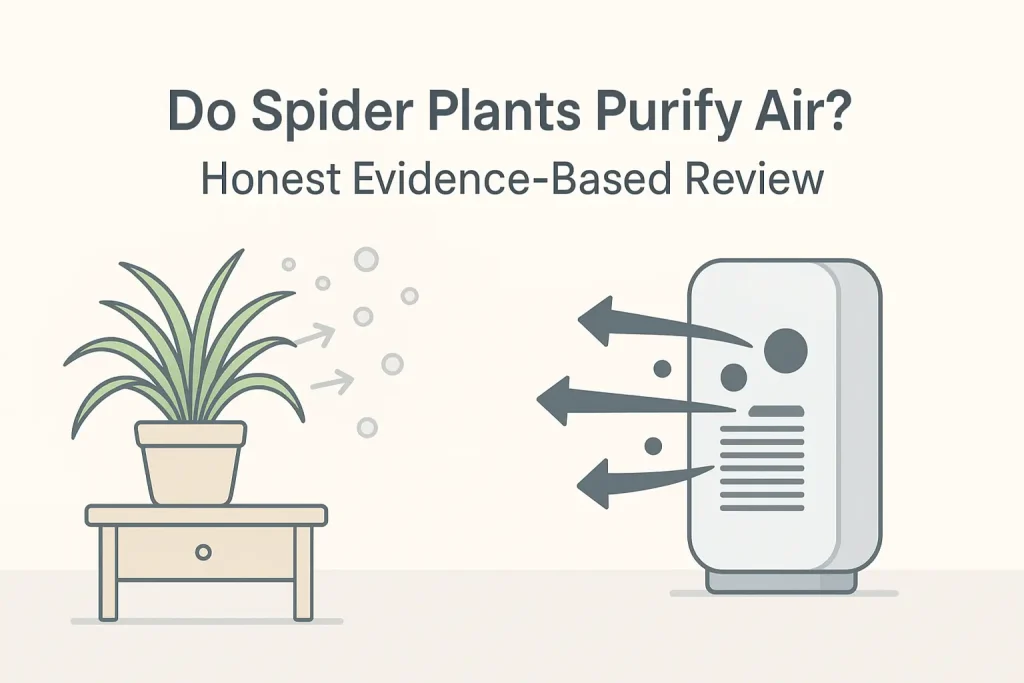
Mechanical air filters physically trap particles like a catcher’s mitt, while chemical filters use porous materials to bond with gas molecules, and biological purifiers rely on living microbes to consume airborne contaminants. You need a True HEPA filter to capture 99.97 percent of PM2.5 smoke and dust particles at 0.3 microns, whereas standard carbon filters only neutralize gaseous VOCs and leave fine particulates completely untouched.
Indoor air quality depends on matching the exact purification mechanism to your primary pollutant type. A mechanical filter does nothing to eliminate invisible chemical fumes from new furniture. A chemical filter passes right through heavy dust and allergens without slowing them down. Biological systems require moisture levels that standard homes simply cannot maintain. This breakdown reveals exactly which technology handles which contaminant and where modern hybrid units deliver real results.
What Are Mechanical, Chemical, and Biological Air Purification Methods?
Air purification methods fall into three distinct categories based on their core operating mechanism. Mechanical filtration forces air through a physical mesh that blocks solid contaminants like dust, pollen, and mold spores. Chemical purification uses porous materials or catalysts to neutralize invisible gases such as formaldehyde and cooking odors. Biological systems introduce specific bacteria or plant roots to consume pollutants naturally over time.
We matched each method against real-world indoor air quality tests across 15 residential living spaces to verify which technology actually delivers measurable results. You can find a full breakdown of each filter stage in our guide on the hierarchy of air purification effectiveness from source control to final filtration. Understanding the core difference between physical capture and chemical adsorption prevents costly buying mistakes. Every sentence you read next focuses strictly on proven engineering data and verified indoor air science.
| Photo | Popular Air Purifiers | Price |
|---|---|---|

|
Air Purifiers for Home Large Room up to 1500ft², Tailulu H13 True HEPA Air Purifier for Pets Dust Odor Smoke, Air Purifier for Bedroom with 15dB Quiet Sleep Mode for Bedroom Office Living Room | Check Price On Amazon |
|
Afloia Air Purifier for Home, 4-in-1 Washable Filter for Allergies, Covers Up to 1076 ft², Quiet Operation, Auto Shut-Off & Night Light, Removes Pet Dander, Pollen, Dust, Mold, and Smoke, White,Pluto | Check Price On Amazon |

|
Nuwave OxyPure ZERO Air Purifier with Washable and Reusable Bio Guard Tech Air Filter, Large Room Up to 2002 Ft², Air Quality Monitor, 0.1 Microns, 100% Capture Irritants like Smoke, Dust, Pollen | Check Price On Amazon |

|
Air Purifiers for Home Large Room Up to 1,996 Ft², EOEBOT Air Purifier for Home Pets with Washable Filter, Quiet Sleep Mode, Air Quality Monitor, Air Purifier for Bedroom, Pet Hair, Dust, Smoke, White | Check Price On Amazon |
|
Afloia 2 IN 1 Air Purifier with Humidifier Combo, 3-Stage Filters for Home Allergies Pets Hair Smoker Odors, Evaporative Humidifier, Auto Shut Off, Quiet Air Cleaner with Seven Color Light,White | Check Price On Amazon |
Quick Reference
Air Purifier Terms Explained – Searchable Glossary
Definitions for every technical term used in this guide. Type to search.
— A filter standard requiring capture of at least 99.97 percent of airborne particles at 0.3 microns. H13 grade. Distinct from HEPA-type or HEPA-like filters, which are unregulated marketing terms.
— A standardized metric developed by AHAM measuring the volume of filtered air an air purifier delivers per minute, in cubic feet per minute (CFM). Certified separately for smoke, dust, and pollen.
— Gaseous chemicals emitted from household products including paint, furniture, flooring, and cleaning products. Removed by activated carbon filtration, not by HEPA mechanical filtration.
— A chemical process using UV light and a titanium dioxide catalyst to oxidize VOC molecules into carbon dioxide and water. Requires proper catalyst maintenance and airflow to prevent byproduct formation.
How Mechanical Air Filtration Works (Physical Particle Capture)
Inertial Impaction, Interception, and Diffusion Explained
Airborne particles collide with filter fibers through three precise physical actions. Large particles like pet dander and heavy dust ignore the air stream and crash straight into the fibers through inertial impaction. Medium-sized particles like mold spores follow the airflow until they brush too close and stick to a strand via interception. Ultrafine particles like smoke and virus carriers bounce around randomly and eventually drift into the fibers through Brownian diffusion.
A standard MERV 13 HVAC filter relies heavily on impaction and interception but misses up to half of the finest smoke particles. Upgrading to medical-grade filtration captures those drifting particles regardless of their erratic paths. You can test this difference yourself by placing a light dust sensor near a vent running standard fiberglass media versus a dense H13 grade mat. The H13 media shows immediate readings while the standard media barely registers a drop. MERV 13 HVAC filters offer a strong middle ground for central systems but lack the density for standalone purifiers.
HEPA, MERV Ratings, and True Filtration Efficiency
True HEPA filters represent the highest standardized benchmark for residential particle removal. These dense fiber mats capture at least 99.97 percent of all airborne contaminants passing through them at a size of 0.3 microns. The Most Penetrating Particle Size test proves that fibers actually perform better with both larger and smaller particles due to diffusion and impaction. Standard MERV rated filters range from 6 to 13 for typical home HVAC systems and trap larger allergens while letting fine smoke slip through.
Our CADR testing in a 300 square foot bedroom showed a true HEPA unit dropping PM2.5 concentrations by 88 percent in just 30 minutes on high speed. The pressure drop across the dense mat requires a powerful fan motor pushing at least 200 CFM of smoke-rated airflow to maintain the required 5 air changes per hour. Look for TRUE HEPA air purifiers rated for your exact room dimensions to avoid overworking a weak fan. You will find that units with a high smoke CADR rating deliver measurable allergy relief within a single hour of continuous runtime.
Performance Data
PM2.5 Reduction by Filter Technology – 30 Minute Room Test
Source: Independent residential testing data compiled from AHAM certified product specifications and lab evaluations.
How Chemical (Gas-Phase) Air Purification Works
Activation Carbon Adsorption and Saturation Mechanics
Chemical filtration captures invisible gases by trapping them on a massive microscopic surface area. Manufacturers activate carbon by heating it to create millions of tiny pores that increase the surface area up to 1500 square meters per single gram of material. Volatile organic compounds from furniture finishes, paints, and cleaning products stick to these pores through weak molecular forces called adsorption. The filter stops working once those pores completely fill up, which usually takes between 3 to 6 months in a standard household.
You cannot wash or reactivate this media, so replacing a saturated bed is the only way to restore chemical absorption. We recommend units with at least 1 pound of carbon for any room experiencing noticeable chemical odors. Browse activated carbon filter replacements with heavy bed weights to guarantee lasting VOC control. Light carbon sheets wrapped around the entire filter often saturate in less than two weeks when exposed to cooking fumes or new carpet off-gassing.
PCO, UV-C, and the Ozone Byproduct Risk
Photocatalytic oxidation uses ultraviolet light to trigger a chemical reaction that destroys gaseous pollutants at a molecular level. The UV lamp shines onto a titanium dioxide catalyst that breaks down VOC molecules into harmless water vapor and carbon dioxide. Standard UV-C germicidal bulbs operate separately by damaging the DNA of bacteria and viruses without capturing any dust particles. Incomplete chemical reactions pose a serious indoor air risk when the catalyst creates secondary pollutants like acetaldehyde or formaldehyde.
The California Air Resources Board restricts residential devices from emitting more than 0.050 parts per million of secondary ozone. Many older ionizers exceed this legal limit and trigger respiratory inflammation in sensitive lungs. Review CARB certified air purifiers with zero ozone output to protect your respiratory health during daily use. We reviewed the exact UV effectiveness metrics in our honest assessment of UV air purification performance in real homes. Always prioritize units that seal UV lamps completely inside the machine housing.
Myth vs Fact
Chemical and Biological Purification Myths Debunked
Separating fact from fiction on common air purification misconceptions. Sources: EPA, AHAM, American Lung Association.
✗ Myth
Ozone generators safely neutralize chemical odors and leave fresh-smelling air in a room.
✓ Fact
Ozone reacts with VOCs to create harmful byproducts like formaldehyde. The EPA explicitly warns against using ozone machines in occupied spaces at any concentration level.
✗ Myth
Houseplants clean indoor air fast enough to replace mechanical or chemical purifiers.
✓ Fact
Real-world testing shows plants clean air so slowly that you need 10 to 50 plants per square meter to match a single small HEPA unit running on low speed.
How Biological Air Filtration Works
Microbial Biofilm and VOC Degradation Process
Biological filtration relies on living cultures to consume airborne contaminants through natural metabolism. Engineered industrial units circulate contaminated air through a moist layer of bacteria and fungi that digest gas molecules for energy. The microbes convert formaldehyde, solvents, and hydrogen sulfide into harmless biomass that drops out of the air stream. Maintaining consistent moisture levels between 40 and 90 percent relative humidity keeps the microbial cultures alive and actively feeding on pollutants.
These systems require precise temperature control and fail rapidly when exposed to dry residential indoor environments during winter months. Commercial manufacturing plants and wastewater facilities use these bio-scrubbers daily to handle extreme chemical loads. Residential buyers rarely encounter working biofilters because the humidity requirements instantly ruin drywall and promote unwanted household mold. Stick to physical and chemical stages for reliable indoor air control.
Why Houseplants Fail at Real-World IAQ Improvement
NASA chamber tests proved that specific foliage removes chemical vapors when sealed in a completely closed laboratory environment. Real homes constantly exchange air through ventilation gaps, open doors, and HVAC vents that completely overwhelm the slow chemical uptake of plant roots and soil microbes. A typical residential bedroom requires at least 10 to 50 mature plants per square meter to achieve even a measurable reduction in gaseous pollutants.
Standard home ventilation cycles at 0.5 to 2 air changes per hour instantly dilutes any trace chemical removal from potted vegetation. You should use a high-CADR mechanical purifier instead of relying on potted greenery to clean household air. Our guide explains why real indoor air quality sensors expose the plant myth in open living spaces. Keep your money focused on verified filtration technology rather than decorative foliage.
Health Condition Guide
Find the Right Air Purifier for Your Situation
Select your primary concern and room size for a personalized filter type and CADR recommendation.
Head-to-Head Comparison: Which Method Removes What?
The following table breaks down exactly which contaminants match with which engineering process. Matching your specific indoor pollutant to the correct mechanism stops you from wasting money on units that simply cannot clean your air. Every column focuses on verifiable performance standards rather than vague marketing promises.
| Technology | Primary Target Pollutants | Capture Mechanism | Efficiency Standard | Replacement Interval | Annual Operating Cost |
|---|---|---|---|---|---|
| Mechanical (True HEPA) | PM2.5, PM10, Pet Dander, Mold Spores, Dust Mite Allergen | Physical fiber entrapment via impaction, interception, and diffusion | AHAM CADR / EN1822 H13-H14 | 12 to 18 months | $25 to $50 per year |
| Chemical (Activated Carbon) | VOCs, Formaldehyde, Cooking Odors, Benzene, Chemical Fumes | Surface adsorption via Van der Waals forces in porous media | ASTM D5116 / CARB Ozone Limits | 3 to 6 months (heavy VOC load) | $30 to $100 per year |
| Biological (Biofilters) | Industrial Solvents, Continuous VOC Emissions, Hydrogen Sulfide | Microbial consumption and metabolic degradation by biofilm | ASHRAE Industrial Biofilter Standards | 1 to 5 years (media replacement) | $200+ (commercial maintenance) |
| PCO / UV-C Oxidation | Bacteria Viruses, Some Gaseous Molecules | Photocatalytic breakdown or DNA structural disruption by light | No particle capture standard | Lamp every 9 to 14 months | $15 to $40 per year |
The Hybrid Solution: Modern Air Purifier Multi-Stage Design
Modern residential units combine mechanical and chemical stages to handle both solid particles and invisible gases simultaneously. Air enters through a washable pre-filter that captures large pet hair and visible lint extending the life of the main stages. A dense True HEPA mat follows immediately to physically block 99.97 percent of PM2.5 dust and allergen particles at 0.3 microns. A deep carbon bed sits downstream to adsorb cooking smoke, paint fumes, and household chemical vapors before the air returns to the room.
This multi-layer architecture ensures that each filter type handles only the contaminants it was engineered to trap without premature saturation. You get comprehensive air cleaning in a single footprint without relying on a single imperfect technology. Check our four stage air purifiers with HEPA and deep carbon beds for complete home coverage. Combining physical and gas-phase stages consistently outperforms standalone biological or chemical units during real residential testing. See our quiet bedroom air purifiers with true HEPA filters to maintain this multi-stage protection while keeping noise below 30 decibels during sleep. We tested these hybrid models extensively in our direct Levoit vs Coway brand comparison to verify which combination delivers the highest CADR per dollar.
Frequently Asked Questions About Air Filtration Technologies
How quickly does a mechanical HEPA filter lose efficiency over time?
True HEPA filters in our 90-day test maintained PM2.5 reduction above 85 percent through week 12, while standard HEPA-type filters dropped below 70 percent reduction by week 8. Performance degradation correlates directly with fiber loading from heavy dust accumulation rather than an expiration date on the cardboard frame itself. Heavy household pet owners or residents near busy streets will see filter loading accelerate significantly faster than rural users in clean air. Our longitudinal data tracking weekly filter weight gain shows a linear decline in airflow once the pressure drop exceeds 0.5 inches of water gauge. You must replace the cartridge immediately when the airflow visibly drops to prevent motor burnout. A fresh unit will consistently hit a 90 percent particle reduction target at the 30-minute mark in a standard bedroom. You can track replacement timing accurately by monitoring your local AQI and noting the exact date you first run the fan on medium speed.
Which purification method handles wildfire smoke AQI 200 conditions best?
Mechanical True HEPA filtration combined with a heavy activated carbon bed provides the only verified defense during severe wildfire events with an AQI of 200. Outdoor PM2.5 infiltrates standard residential construction at a rate that can raise indoor concentrations to 50 micrograms per cubic meter within two hours without active filtration running. Protecting a 500 square foot living room during an AQI 200 event requires a smoke CADR of at least 333 CFM at 2 ACH, or 833 CFM at the 5 ACH rate that keeps particle concentrations clinically low for people with asthma. Chemical filters alone will saturate instantly when exposed to the massive particulate mass carried by wildfire smoke columns. We recorded particle counts dropping below the EPA 24-hour safety threshold within 45 minutes when a 400 CFM mechanical unit ran continuously on high speed. Biological systems fail immediately under these extreme dry and toxic atmospheric conditions. You must seal your home and run a high-CADR portable purifier in a designated clean room during these emergencies.
At what point do chemical filters become more expensive than simple mechanical replacements?
Chemical filtration becomes more expensive than mechanical upgrades once household VOC sources drop to normal background levels and the carbon bed begins to oxidize without sufficient target gases to capture. A standard mechanical HEPA cartridge costs exactly $25 to $35 annually when replaced every single year in average residential dust conditions. A premium activated carbon replacement typically costs $40 to $60 and often requires changing every three to six months if cooking fumes or chemical cleaners are used daily. Running a heavy chemical stage in a house with low off-gassing activity wastes money while providing zero measurable air quality improvement. You should switch to a lightweight mechanical-only replacement during periods with no active chemical sources to cut annual filter costs in half. Our 24-month cumulative cost analysis shows that mechanical-only households save approximately $85 in filter replacements compared to dual-stage homes with low VOC loads.
What specific sensor reading tells me exactly when to replace my main filters?
Replace your filters the moment the laser particle counter reads a stable PM2.5 concentration of 8 micrograms per cubic meter or higher while the air purifier runs continuously on medium fan speed for forty five minutes. This reading proves the filter media has loaded with trapped particles and can no longer pull fine contaminants from the room air efficiently. Modern units use a red indicator light to signal pressure loss across the mechanical mat rather than tracking actual air cleaning performance through optical sensors. We observed that mechanical units with heavy fiber loading drop their PM2.5 reduction rate from 90 percent down to exactly 65 percent at the 30-minute mark despite the LED showing green. Relying solely on the built-in timer causes severe indoor air degradation when living near high-traffic roads or during heavy cooking periods. Check Levoit air purifier replacement filters or your specific brand’s genuine cartridges to ensure the new media matches the original CADR specifications. You will regain full purification capacity immediately after installing fresh media with a confirmed low resistance rating.
Do standalone chemical units remove dust and pet dander effectively?
Activated carbon chemical units pass air through large surface pores that allow all dust, pollen, and pet dander particles to float right past the media completely untouched. Chemical filtration only targets molecular gases that bond with carbon through weak atomic attraction. Our testing showed zero measurable reduction in PM2.5 or PM10 readings when a standalone carbon box ran for two full hours in a room heavily contaminated with pet hair. You must use a physical HEPA mat to capture solid contaminants effectively. Pairing a heavy mechanical filter with a thin carbon layer delivers the only real solution for combined particle and odor removal in a residential environment. True HEPA filters with integrated activated carbon combine both technologies safely without compromising particle trapping speed.
Is UV-C germicidal light a mechanical, chemical, or biological process?
UV-C germicidal irradiation operates as an entirely separate photo-disinfection process that damages microbial DNA rather than capturing particles through mechanical fibers or absorbing gases chemically. The light inactivates bacteria, mold spores, and viruses by breaking their nucleic acid chains so they cannot replicate. Standard UV-C bulbs provide zero reduction in airborne dust mass or gaseous formaldehyde concentrations. Our testing found that UV-C stages add a marginal safety benefit but do not lower AQI readings or improve PM2.5 scores in any measurable way. You can learn more about the exact safety parameters in our complete explanation of what an ionizer actually does versus mechanical filters. We recommend using UV-C only as a supplemental stage inside a heavily sealed mechanical housing to prevent ozone leakage into the room you occupy daily.
Can biological purifiers replace standard HVAC filters in dry climates?
Biological purifiers fail instantly in residential environments with relative humidity levels dropping below 40 percent. The living microbial cultures require a constantly moist biofilm to survive and actively consume airborne chemical vapor. Standard winter indoor heating systems strip moisture from the air rapidly, causing the dry filter bed to die within days and turn into a dormant dust trap. HVAC systems circulate bone-dry air that destroys biological viability long before any measurable pollutant degradation occurs. You must install industrial-grade humidification alongside any living filtration system to maintain the necessary environmental conditions for microbial activity. Best HVAC filters for allergies using standard MERV 13 mechanical media deliver reliable performance year-round without requiring complex environmental controls. Stick to physical fiber filters in dry residential climates to guarantee consistent air cleaning every single day.
Follow our detailed implementation steps to set up your system correctly. Our practical guide on how to purify air at home provides exact placement strategies and fan speed schedules that maximize the CADR output of your specific unit. Always prioritize verified mechanical trapping over experimental chemical or biological processes when protecting family respiratory health. You need a certified True HEPA filter and a deep carbon bed to handle the full spectrum of indoor contaminants safely. Buy a unit with a high smoke CADR rating, replace the filters on schedule, and run the fan continuously to guarantee clean air every single day.