Most people think a clean home equals healthy air. A sanitized countertop, a freshly scented room, and a wiped-down surface all feel like progress. None of them remove PM2.5 from the air you breathe.
Air purification is the only one of these four approaches that actively removes airborne particles, gases, and pathogens from your breathing zone. Cleaning removes surface contaminants. Sanitizing reduces surface pathogens. Freshening masks or neutralizes odors without removing the source. This guide explains exactly what each method does, what it does not do, and which combination delivers genuinely healthy indoor air quality for your specific situation.
What Is Air Purification and How Does It Differ from Cleaning, Sanitizing, and Freshening?
Air purification is the mechanical or electronic removal of airborne contaminants from indoor air using filtration, adsorption, or destruction technologies. Cleaning removes visible debris and some microorganisms from surfaces. Sanitizing reduces surface pathogen counts to levels considered safe by public health standards. Freshening introduces fragrance or odor-neutralizing compounds that change how air smells without removing pollutants.
These four processes operate on completely different targets. Air purification targets airborne particles (PM2.5, PM10, allergens, mold spores), gaseous pollutants (VOCs, formaldehyde, ozone), and airborne pathogens. Cleaning targets surface dust, dirt, and organic matter. Sanitizing targets surface bacteria and viruses. Freshening targets your perception of air quality, not the air itself.
| Photo | Popular Air Purifiers | Price |
|---|---|---|

|
Air Purifiers for Home Large Room up to 1500ft², Tailulu H13 True HEPA Air Purifier for Pets Dust Odor Smoke, Air Purifier for Bedroom with 15dB Quiet Sleep Mode for Bedroom Office Living Room | Check Price On Amazon |
|
Afloia Air Purifier for Home, 4-in-1 Washable Filter for Allergies, Covers Up to 1076 ft², Quiet Operation, Auto Shut-Off & Night Light, Removes Pet Dander, Pollen, Dust, Mold, and Smoke, White,Pluto | Check Price On Amazon |

|
Nuwave OxyPure ZERO Air Purifier with Washable and Reusable Bio Guard Tech Air Filter, Large Room Up to 2002 Ft², Air Quality Monitor, 0.1 Microns, 100% Capture Irritants like Smoke, Dust, Pollen | Check Price On Amazon |

|
Air Purifiers for Home Large Room Up to 1,996 Ft², EOEBOT Air Purifier for Home Pets with Washable Filter, Quiet Sleep Mode, Air Quality Monitor, Air Purifier for Bedroom, Pet Hair, Dust, Smoke, White | Check Price On Amazon |
|
Afloia 2 IN 1 Air Purifier with Humidifier Combo, 3-Stage Filters for Home Allergies Pets Hair Smoker Odors, Evaporative Humidifier, Auto Shut Off, Quiet Air Cleaner with Seven Color Light,White | Check Price On Amazon |
According to the EPA Indoor Air Quality guidelines, indoor air can be two to five times more polluted than outdoor air. Surface cleaning and sanitizing alone cannot address this gap. Only air purification with verified filtration removes the suspended particles and gases that surface methods never touch.
For most homes, the right approach combines all four methods in a specific hierarchy. Air purification handles what you breathe. Cleaning handles what you touch. Sanitizing handles high-contact pathogen transfer points. Freshening should be minimized because many freshening products add VOCs to your indoor air while masking the odors that signal real problems.
Air Quality Data
Purification, Cleaning, Sanitizing, and Freshening – What the Research Shows
Sources: EPA Indoor Air Quality, ASHRAE, American Lung Association, CARB
How Air Purification Actually Removes Pollutants: The Mechanism Most People Never See
A True HEPA air purifier pulls room air through a dense mat of randomly arranged borosilicate glass fibers. Particles are captured through four physical mechanisms: interception, impaction, diffusion, and electrostatic attraction. This happens because the fiber mat forces air through microscopic gaps smaller than the particles themselves, trapping them mechanically.
This only occurs when the air purifier moves enough air volume through the filter to process the entire room multiple times per hour. The measurement is air changes per hour (ACH). At 2 ACH, a purifier processes the room’s air volume twice every hour. At 5 ACH, the recommended rate for allergy and asthma management per ASHRAE and EPA guidance, it processes the volume five times.
If the air purifier is undersized for the room, the result is PM2.5 concentrations that remain 40 to 60 percent higher than properly sized filtration would achieve. A 200-square-foot bedroom needs a smoke CADR of at least 133 CFM for 5 ACH. Using a unit rated at 80 CFM smoke CADR in that same room delivers only 3 ACH. Particulate levels stay elevated. Fix it by calculating the needed CADR from your room dimensions and target ACH before purchasing.
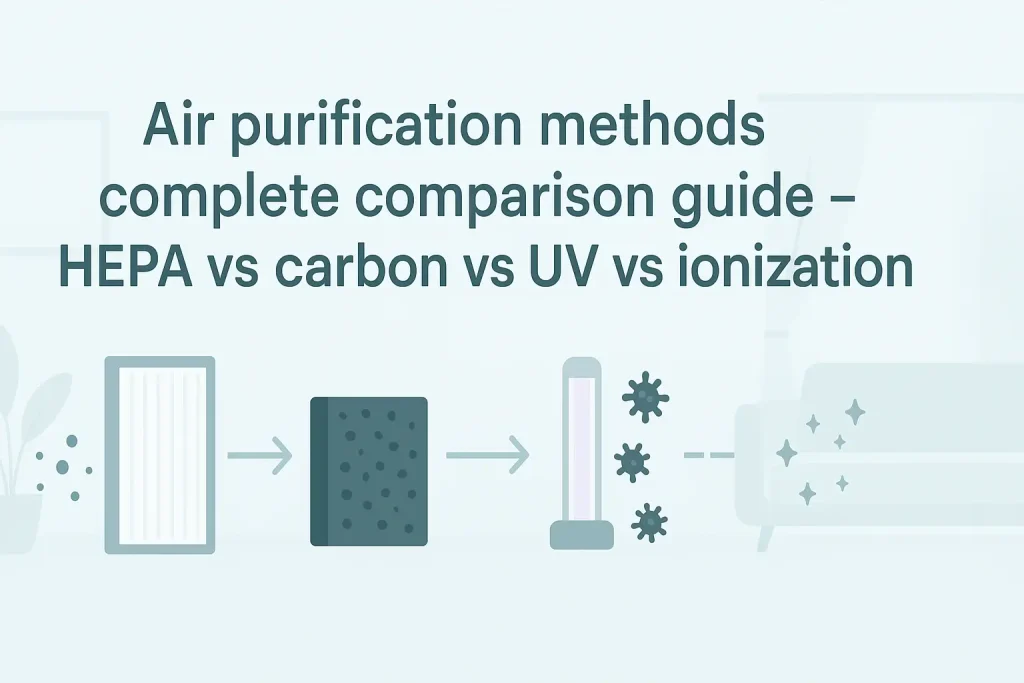
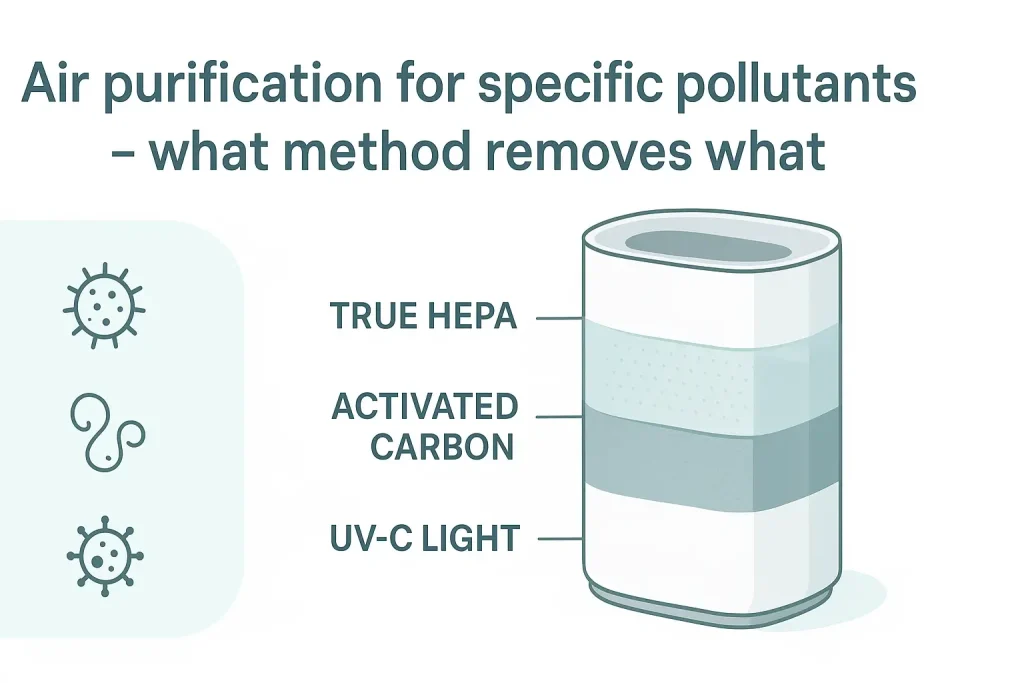
For particles, True HEPA air purifiers are the gold standard. For gases and odors, activated carbon air purifiers provide the adsorption capacity that HEPA alone cannot deliver. Most effective units combine both technologies in a single device.
How Cleaning Affects Indoor Air Quality: What Surface Cleaning Can and Cannot Do
Cleaning removes settled dust, pet hair, skin flakes, and debris from floors, furniture, and surfaces. This reduces the reservoir of material that can become airborne again through walking, sitting, or air currents. Cleaning does not remove particles already suspended in the air.
This only provides meaningful air quality benefit when dust and allergen reservoirs are substantial and cleaning is thorough enough to capture rather than redistribute the material. Vacuuming with a non-HEPA vacuum cleaner can actually increase airborne particle concentrations by exhausting fine particles through the vacuum’s filter. A study published in Environmental Science and Technology found that some vacuum cleaners emit up to 10 times the settled dust concentration back into the breathing zone.
If cleaning is performed with a standard vacuum and dry dusting, airborne PM2.5 can increase by 30 to 50 percent for several hours after cleaning. The fix is using a HEPA vacuum cleaner and damp-mopping hard surfaces instead of dry dusting. Wet cleaning captures particles rather than resuspending them.
Cleaning products themselves introduce VOCs into indoor air. A study in the journal Indoor Air found that using common household cleaning sprays increased indoor VOC concentrations by 50 to 100 percent above baseline for up to four hours after cleaning. This means the act of cleaning can temporarily worsen air quality even as it removes surface contaminants.
For homes with significant dust mite allergen, our complete guide to dust mites and indoor air quality explains which cleaning and purification methods actually reduce exposure versus those that make it worse.
Quick Reference
Key Terms Explained – Air Purification vs Cleaning vs Sanitizing vs Freshening
Definitions for every technical term used in this guide.
The mechanical or electronic removal of airborne contaminants (particles, gases, pathogens) from indoor air using filtration, adsorption, or destruction technologies. Measured by CADR and ACH. Does not address surface contamination.
The physical removal of visible debris, dust, dirt, and organic matter from surfaces. Reduces the reservoir of material that can become airborne. Does not remove particles already suspended in the air. Can temporarily increase airborne particles if done with non-HEPA equipment.
The reduction of surface pathogen counts by 99.9% within a specified contact time, per EPA standards. Does not remove physical debris, allergens, or airborne particles. Uses chemical or physical agents (UV-C, steam, alcohol, bleach, quaternary ammonium compounds).
The introduction of fragrance compounds or odor neutralizers that change perceived air quality. Does not remove pollutants. Common freshening products (aerosol sprays, plug-ins, scented candles) add VOCs to indoor air and can increase total VOC concentrations measurably.
AHAM-certified measurement of filtered air volume delivered per minute in CFM, tested separately for smoke, dust, and pollen. The smoke CADR is the most relevant value for PM2.5 protection. CADR determines the room size an air purifier can effectively serve at a given ACH rate.
The number of times an air purifier processes the entire volume of air in a room per hour. Manufacturer coverage claims use 2 ACH. Allergy and asthma guidelines recommend 5 ACH, which reduces effective coverage area to 40% of the stated figure.
Gaseous chemicals emitted from household products, building materials, cleaning agents, and air fresheners. Common VOCs include formaldehyde, benzene, and toluene. Removed by activated carbon adsorption. Not captured by HEPA mechanical filtration. Indoor concentrations are 2 to 10 times higher than outdoors per EPA.
How Sanitizing and Disinfecting Work: Surface Pathogen Reduction vs Airborne Protection
Sanitizing reduces surface pathogen counts by 99.9 percent within a specified contact time using chemical agents registered with the EPA. Disinfecting goes further, killing 99.999 percent of specified pathogens. Neither process addresses airborne transmission of pathogens that travel on respiratory droplets or as true aerosol particles smaller than 5 microns.
This only provides airborne protection when the pathogen is exclusively transmitted via surface contact (fomite transmission). The CDC and WHO both recognize that respiratory viruses, including SARS-CoV-2, influenza, and RSV, transmit primarily through the airborne route. Surface sanitizing alone cannot interrupt airborne transmission in shared indoor spaces.
If sanitizing is used as the sole indoor air quality strategy, airborne pathogen concentrations remain unchanged. The result is continued inhalation exposure even with perfectly sanitized surfaces. The fix combines surface sanitizing for high-touch points with air purification delivering 5 to 6 ACH in occupied rooms. This dual approach addresses both transmission routes simultaneously.
UV-C sanitizing devices that irradiate surfaces are distinct from UV-C air purifiers that treat air passing through a shielded chamber. Surface UV-C wands expose occupants to potential eye and skin hazards if used improperly. In-duct UV-C systems and air purifiers with internal UV-C chambers provide germicidal treatment without direct exposure risk. EPA and ASHRAE both classify upper-room UVGI as an effective supplemental airborne pathogen control strategy when properly installed and maintained.
How Air Freshening Works: Why Perceived Freshness Has Nothing to Do with Clean Air
Air freshening products work through two mechanisms: odor masking (covering one smell with a stronger fragrance) and odor neutralization (chemical binding of odor molecules). Neither mechanism removes the source of the odor, nor does either remove airborne particles or gases from the breathing zone.
This happens because fragrances are themselves volatile organic compounds that add to the total VOC load of indoor air. A 2015 study published in the Journal of Environmental Health found that common plug-in air fresheners emitted an average of 18 different VOCs, including compounds classified as hazardous air pollutants. The fragrance chemicals react with indoor ozone to form secondary pollutants including formaldehyde and ultrafine particles.
If air fresheners are used regularly in a space with limited ventilation, total VOC concentrations can exceed 500 parts per billion, a level associated with respiratory irritation in sensitive individuals. The fix replaces air freshening products with source control (removing the odor source), increased ventilation, and activated carbon air purification that actually removes odor-causing molecules rather than masking them.
Aerosol spray fresheners add both VOCs and propellant compounds. Scented candles add combustion byproducts including PM2.5 and carbon monoxide in addition to fragrance VOCs. Beeswax candles are sometimes marketed as air purifiers, a claim without scientific support. Our evidence-based review of whether plants purify air found a similar pattern: the purification effect claimed for many natural approaches is orders of magnitude too small to meaningfully impact indoor air quality.
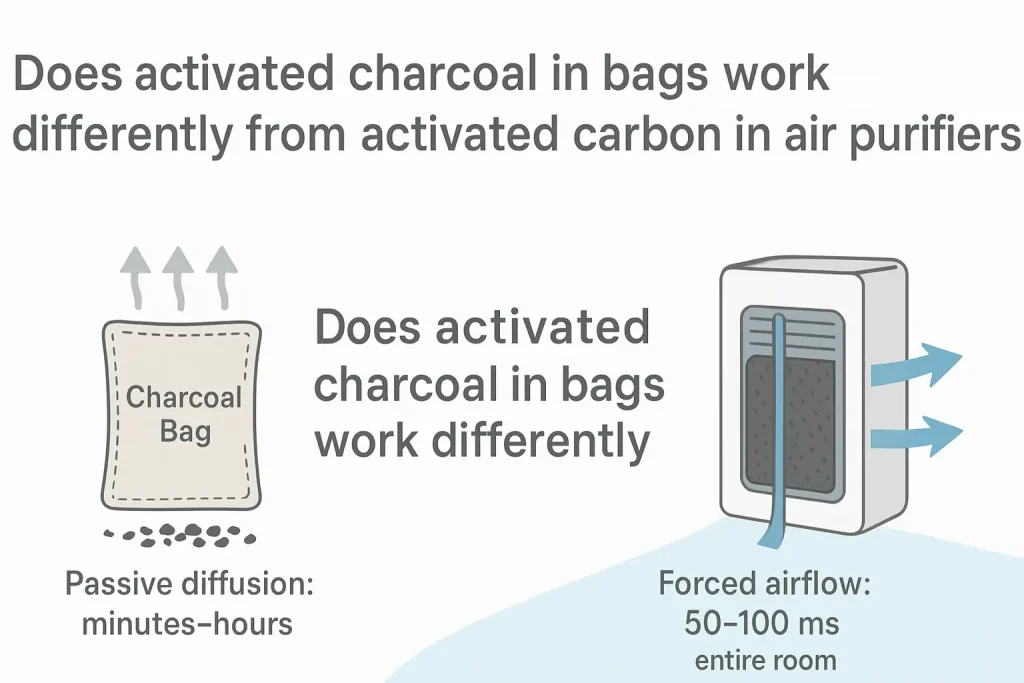
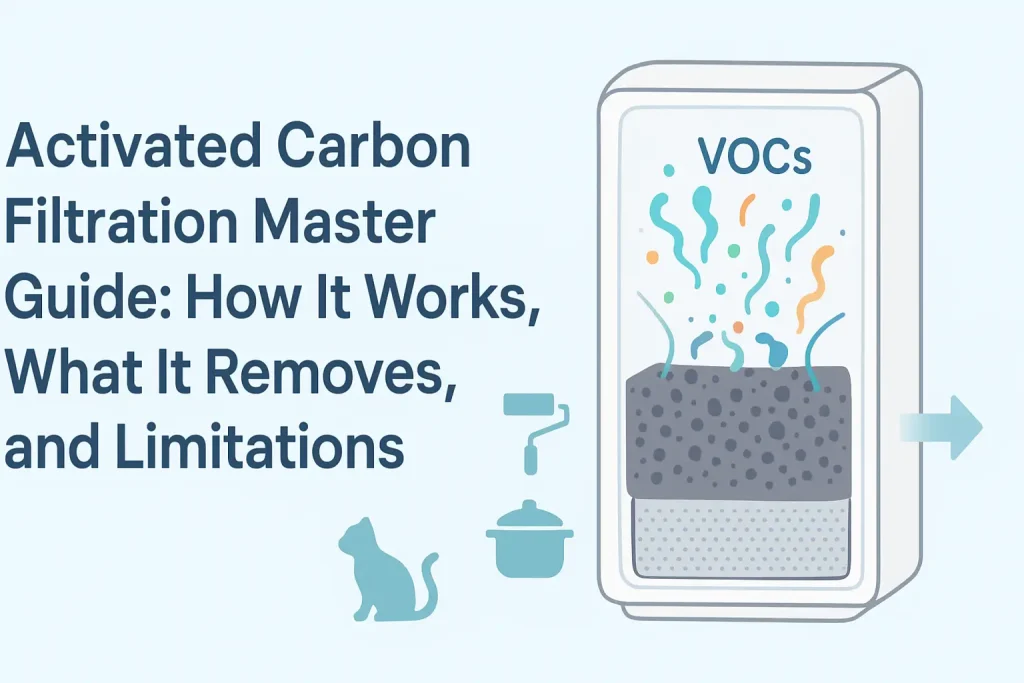
For genuine odor control, a high-quality air purifier with substantial activated carbon removes the odor molecules themselves. Activated carbon adsorbs gaseous odor compounds onto its porous surface. The carbon must be present in sufficient quantity (at least 2 pounds for meaningful odor removal) and replaced regularly because adsorption capacity is finite.
Comparison: Air Purification vs Cleaning vs Sanitizing vs Freshening for Indoor Air Quality
Use the table below to compare what each method actually removes, what it does not, and which pollutants each approach addresses.
Method Comparison
Air Purification vs Cleaning vs Sanitizing vs Freshening – Side by Side
Detailed comparison of what each method removes, what it does not, and its role in indoor air quality management.
| Attribute | Air Purification (True HEPA + Carbon) | Cleaning | Sanitizing | Freshening |
|---|---|---|---|---|
| Removes airborne PM2.5 | Yes (99.97% at 0.3 microns) | No | No | No |
| Removes airborne VOCs and odors | Yes (with activated carbon) | No | No | No (adds VOCs) |
| Removes surface dust and allergens | No | Yes | No | No |
| Kills surface pathogens | No (unless UV-C equipped) | No | Yes (99.9% reduction) | No |
| Kills airborne pathogens | Yes (with UV-C or PCO stage) | No | No | No |
| Addresses the odor source | Yes (carbon adsorbs odors) | Partially (removes source material) | No | No (masks only) |
| Adds pollutants to indoor air | No (if CARB certified) | Possibly (VOCs from products) | Possibly (chemical residues) | Yes (adds VOCs and secondary pollutants) |
| Annual operating cost | $25 to $250 (filters + electricity) | $100 to $500 (products + equipment) | $50 to $300 (products only) | $30 to $200 (products only) |
| Best for | Breathing zone protection | Surface reservoir reduction | High-touch pathogen control | Perception of freshness |
Air purification data based on AHAM CADR certification. Sanitizing efficacy based on EPA registration requirements for sanitizing products. VOC data from peer-reviewed indoor air quality research. Operating costs are estimates for an average 2,000 sq ft home.
When Each Approach Is the Right Tool: A Decision Framework for Your Indoor Air Quality Goals
Air purification is the right first investment when your primary concern is what you breathe. Choose air purification if you or a household member has allergies, asthma, chemical sensitivity, or lives in a wildfire-prone region. The health benefit comes from reducing the concentration of airborne triggers in your breathing zone continuously throughout the day and night.
Cleaning is the right focus when visible dust accumulation, pet hair, and surface debris are the primary complaint. Deep cleaning combined with a HEPA vacuum and damp-mopping reduces the material available to become airborne. Cleaning alone cannot solve airborne particulate problems, but no amount of air purification can compensate for a home where surface contaminants are never removed.
Sanitizing is the right focus when surface pathogen transmission is the concern: food preparation surfaces, bathroom fixtures, and high-touch points during illness outbreaks in the household. Sanitizing does nothing for airborne transmission, but it remains essential for food safety and surface hygiene.
Freshening is appropriate only as a minor supplement to the other three methods. If odor is the concern, identify and remove the source first. Increase ventilation second. Use activated carbon air purification third. Add light fragrance last if desired, choosing low-VOC options.
The most common mistake is treating all four approaches as interchangeable. They are not. A sanitized, freshly scented home with no air purification still exposes occupants to every airborne particle and gas present. A purified but never-cleaned home has an enormous reservoir of material waiting to become airborne with every footstep.
Health Condition Guide
Find the Right Air Quality Approach for Your Situation
Select your primary concern and room size for a personalized recommendation on purification, cleaning priority, and whether sanitizing or freshening makes sense.
Common Mistakes People Make When Combining Air Purification with Cleaning and Freshening
The first mistake is buying an air purifier and then never cleaning. An air purifier captures airborne particles. It does not capture the dust sitting on your bookshelf waiting to be disturbed. When you walk across the room, that settled dust becomes airborne again, and your purifier has to recapture particles it already removed once. Regular cleaning with a HEPA vacuum reduces this constant recontamination cycle.
The second mistake is using air fresheners while running an air purifier. The air purifier’s activated carbon filter adsorbs some of the fragrance VOCs, using up its limited adsorption capacity on compounds you intentionally added to the air. This reduces the carbon’s remaining capacity for the VOCs and odors you actually want removed. A carbon filter exposed to continuous air freshener use may saturate in three to four months instead of the typical twelve.
The third mistake is sanitizing surfaces aggressively while ignoring airborne pathogen transmission. Surface sanitizing addresses the fomite transmission route. It does nothing for the airborne route, which is the dominant transmission mechanism for respiratory viruses per current CDC and WHO guidance. In shared spaces, air purification at 5 to 6 ACH provides the airborne protection that surface sanitizing cannot.
The fourth mistake is assuming that cleaning products labeled natural or green do not affect air quality. Even plant-derived cleaning compounds can emit VOCs. The EPA Safer Choice label is a more reliable indicator of low-VOC formulation than the word natural. All cleaning should be done with adequate ventilation, regardless of the product’s marketing claims.
The fifth mistake is neglecting filter replacement schedules on air purifiers while maintaining a rigorous cleaning schedule. A saturated HEPA filter loses airflow and capture efficiency. A saturated carbon filter stops adsorbing and can even release previously captured VOCs back into the airstream. Filter replacement is as essential to air quality as vacuuming is to surface cleanliness.
Myth vs Fact: What Most People Get Wrong About Air Purification, Cleaning, and Freshening
Myth vs Fact
Air Purifier and Air Quality Myths Debunked – What the Evidence Actually Shows
Separating fact from fiction on the most common misconceptions. Sources: EPA, AHAM, American Lung Association, CARB.
✗ Myth
A clean home does not need an air purifier because dust is the problem.
✓ Fact
Cleaning removes settled dust from surfaces. It does not remove airborne particles from the breathing zone. A single person walking across a room resuspends 0.5 to 1.0 milligrams of settled dust per minute into the air, per research in the journal Indoor Air. An air purifier continuously captures these resuspended particles while they are airborne. Cleaning and air purification are complementary, not interchangeable.
✗ Myth
Air fresheners that claim to purify the air actually clean it.
✓ Fact
No air freshener product removes particles, gases, or pathogens from air. Products labeled as air purifying sprays or odor eliminators that purify add fragrance compounds and sometimes odor-neutralizing chemicals to air. They do not filter, adsorb, or destroy pollutants. The EPA does not recognize any spray or plug-in product as an air purification device. CARB specifically regulates these products for VOC emissions, not for pollutant removal.
✗ Myth
Sanitizing surfaces is enough to prevent getting sick from airborne viruses.
✓ Fact
The CDC and WHO both state that the primary transmission route for respiratory viruses including SARS-CoV-2 and influenza is airborne via respiratory droplets and aerosols, not surface contact. Surface sanitizing addresses fomite transmission, estimated at less than 10 percent of total transmission risk for respiratory viruses. Air purification providing 5 to 6 ACH combined with ventilation is the recognized airborne risk reduction strategy per ASHRAE Standard 241 for control of infectious aerosols.
✗ Myth
An air purifier means you can clean less often because it catches everything.
✓ Fact
An air purifier captures airborne particles. It does not eliminate the reservoir of settled dust, pet hair, skin flakes, and debris on surfaces and in carpets. That settled material becomes airborne again with every footstep, chair movement, or HVAC cycle. Homes with air purifiers and no cleaning still have high airborne particle concentrations whenever the space is actively used. Cleaning reduces the reservoir. Purification captures what becomes airborne from the remaining reservoir. Both are required.
✗ Myth
Cleaning with bleach-based products improves indoor air quality by killing germs.
✓ Fact
Bleach-based cleaning products emit chlorine compounds and other reactive gases that can irritate the respiratory tract. A study in Occupational and Environmental Medicine found that regular use of bleach-based cleaning products was associated with increased risk of respiratory symptoms, not decreased risk. While bleach effectively sanitizes surfaces, the airborne byproducts can temporarily degrade indoor air quality. Use bleach in well-ventilated spaces, wear appropriate PPE, and run air purification during and after bleach cleaning to capture any resuspended particles and adsorb gaseous byproducts.
How to Build a Complete Indoor Air Quality System: The Four-Layer Approach
A genuinely healthy indoor air quality system layers four approaches in the correct priority order. Layer one is source control: identify and remove or reduce the pollutant source. This means fixing water leaks that cause mold, removing air fresheners, choosing low-VOC furnishings, and not smoking indoors. No amount of purification can keep up with an active pollution source.
Layer two is ventilation: bring in outdoor air to dilute indoor pollutant concentrations. ASHRAE Standard 62.1 specifies minimum ventilation rates of 15 CFM per person for residential spaces. Open windows when outdoor AQI is below 50. Use kitchen and bathroom exhaust fans during cooking and bathing. In newer, tightly sealed homes, mechanical ventilation (HRV or ERV) may be necessary to meet minimum ventilation rates.
Layer three is air purification: deploy a properly sized True HEPA air purifier with activated carbon in the rooms where you spend the most time. Size the unit for 5 ACH if anyone has allergies or asthma. Use 2 ACH for general household use. Our guide to safe indoor air quality levels per EPA and WHO guidelines explains the target PM2.5 and VOC thresholds for health-protective indoor air.
Layer four is cleaning and sanitizing: reduce the surface reservoir of contaminants that can become airborne. Use a HEPA vacuum for carpets and soft surfaces. Damp-mop hard floors. Wash bedding weekly in hot water (130 degrees Fahrenheit) for dust mite control. Sanitize high-touch surfaces during illness outbreaks. Skip the air fresheners entirely.
This four-layer approach addresses the full contamination pathway: source, dilution, airborne capture, and surface reservoir reduction. None of the four layers alone is sufficient. Together they deliver indoor air quality that genuinely supports respiratory health.
Buying Guide
Before You Buy an Air Purifier – Complete Checklist
Check off each point before making your decision. Based on AHAM, EPA, and CARB guidance.
Do I need an air purifier if I already clean regularly and use a HEPA vacuum?
Yes. A HEPA vacuum captures particles from surfaces during the seconds you are vacuuming. It does not capture particles that become airborne when you walk across the carpet an hour later. An air purifier runs continuously, capturing particles throughout the day and night. The two devices serve different time domains and different particle states (settled versus suspended).
Research published in the Journal of Allergy and Clinical Immunology showed that homes using both HEPA vacuuming and HEPA air purification achieved 40 to 50 percent greater reduction in airborne cat allergen compared to homes using HEPA vacuuming alone. The vacuum reduced the surface reservoir. The air purifier captured particles that became airborne from foot traffic and air currents between vacuuming sessions. For dust mite allergen and pet dander, the combination is measurably more effective than either approach alone.
Can I use an essential oil diffuser instead of an air freshener without hurting air quality?
Essential oil diffusers emit VOCs just like synthetic air fresheners. The source is natural, but the chemical emission into your breathing zone is real. A 2018 study in the journal Building and Environment found that ultrasonic essential oil diffusers increased indoor VOC concentrations by 100 to 300 percent above baseline, with some diffusers producing terpene compounds that react with indoor ozone to form formaldehyde and ultrafine particles.
If you choose to use an essential oil diffuser, run it in a well-ventilated space, use the minimum effective amount of oil, and never run it continuously in a closed bedroom. Run your air purifier with activated carbon in the same room to capture some of the emitted VOCs. Do not assume that natural means harmless to respiratory health. The lungs do not distinguish between synthetic and plant-derived VOC molecules.
Why does my air purifier smell like ozone even though it claims to be ozone-free?
A true ozone-free air purifier does not produce any ozone odor. If you smell a sharp, electric, or bleach-like odor from your air purifier, it is likely emitting ozone above the CARB limit of 0.050 ppm. This is most common in units with ionizers, electrostatic precipitators, or UV-C lamps that are not properly shielded. Even units marketed as ozone-free can produce trace ozone if they use an ionizer stage that cannot be fully disabled.
The fix is to check whether your unit has an ionizer or electrostatic function and disable it completely. If the ozone smell persists after disabling all electronic air cleaning stages, the unit may have a defective UV-C lamp or an electrical fault. Contact the manufacturer. Replace the unit with a CARB-certified model that uses mechanical filtration only (True HEPA plus activated carbon) with no electronic air cleaning stages. A CARB-certified CARB-certified True HEPA air purifier without an ionizer is the safest choice for ozone-sensitive individuals.
What is the difference between sanitizing and disinfecting, and does either help with air quality?
Sanitizing reduces surface pathogen counts by 99.9 percent within a specified contact time. Disinfecting kills 99.999 percent of pathogens on surfaces per EPA registration standards. Both are surface treatments only. Neither removes particles, gases, or airborne pathogens from the breathing zone. Sanitizing and disinfecting address hygiene. They do not address air quality.
Overuse of disinfectants can degrade indoor air quality. Quaternary ammonium compounds, a common disinfectant class, have been associated with occupational asthma in cleaning workers per research in the American Journal of Respiratory and Critical Care Medicine. Use sanitizers and disinfectants on high-touch surfaces when indicated by illness risk. Do not use them as a substitute for air purification or ventilation. For airborne pathogen control in shared spaces, ASHRAE Standard 241 recommends equivalent clean air delivery of 5 to 6 ACH through a combination of ventilation and air purification, not through surface disinfection.
How do I know if my cleaning products are making my indoor air worse?
Monitor for symptoms that correlate with cleaning events: eye irritation, throat scratchiness, headache, or increased cough within 30 to 60 minutes after cleaning. These are the typical timeframes for VOC-induced respiratory irritation. Use a VOC air quality monitor to measure total VOC concentrations before, during, and after cleaning. A sustained increase of 200 ppb or more above your baseline during cleaning indicates your products are significantly affecting air quality.
Switch to fragrance-free, low-VOC cleaning products certified by EPA Safer Choice or Green Seal. Open windows during and for 30 minutes after cleaning. Run your air purifier on high during cleaning sessions. Never mix cleaning products, especially bleach with ammonia or acids, which produces toxic chloramine or chlorine gas. If symptoms persist after switching products and ventilating, the problem may be the cleaning act itself resuspending settled particles rather than the product chemistry. In that case, upgrade to a HEPA vacuum and damp-mopping protocol.
Can I run an air purifier and use cleaning products with bleach at the same time?
Yes, but with specific precautions. The air purifier will capture some of the resuspended particles and adsorb some of the gaseous chlorine compounds released during bleach cleaning. Run the purifier on its highest fan speed during cleaning and for two hours afterward. Open windows during bleach use regardless of whether a purifier is running. The purifier is a supplement to ventilation, not a substitute for it during chemical cleaning.
If your air purifier has a UV-C stage or ionizer, disable it during bleach cleaning. Bleach fumes can react with ionized air or UV-generated compounds to produce unexpected byproducts. A mechanical-only True HEPA plus activated carbon unit is the safest configuration for running during cleaning with any chemical product.
Is it safe to use an air purifier, clean, sanitize, and run a diffuser all in the same room at the same time?
No. Running a diffuser while also running an air purifier wastes both products. The air purifier’s activated carbon filter adsorbs the essential oil VOCs, using up its capacity on intentionally added fragrance molecules. The diffuser is adding VOCs that the purifier then works to remove. Run the diffuser only in well-ventilated spaces and only when the air purifier is off or in a different room.
Sanitizing and air purification can coexist. Cleaning (with low-VOC products and ventilation) and air purification work well together. Freshening in any form and air purification are actively counterproductive when run in the same space. The purifier removes what the freshener adds. You are paying to add chemicals to the air and then paying for the filter media to remove them.
What is the correct order to address indoor air quality: source control, ventilation, cleaning, or purification first?
The correct priority order per EPA indoor air quality guidance is: source control first, ventilation second, air purification third, and cleaning and sanitizing fourth. Source control removes the problem at its origin. Ventilation dilutes whatever remains. Air purification captures what ventilation misses. Cleaning and sanitizing maintain the gains by reducing the surface reservoir.
Each layer builds on the previous one. If you skip source control and go straight to air purification for a VOC problem from new furniture, the purifier’s carbon filter saturates in weeks instead of months. If you skip ventilation, CO2 levels rise above 1,000 ppm even with air purification running, causing drowsiness and cognitive effects that have nothing to do with particles or VOCs. For most homes, the most impactful first step is usually an air purifier because particles and allergens are the most common complaint, but source control and ventilation should follow as budget and circumstances allow.
Do I need to sanitize surfaces if I run an air purifier with UV-C?
Yes. A UV-C air purifier treats air that passes through the unit’s internal irradiation chamber. It does not treat surfaces in the room. Surface pathogens remain viable on countertops, doorknobs, light switches, and other high-touch points regardless of whether an air purifier with UV-C is running. The UV-C inside an air purifier addresses airborne pathogens that happen to pass through the device. It provides zero surface sanitization.
For comprehensive pathogen control, sanitize high-touch surfaces with EPA-registered products, and run air purification at 5 to 6 ACH to capture or inactivate airborne pathogens. This dual approach is the recognized standard in healthcare environments and applies equally to homes during illness outbreaks.
Why does my air feel stuffy even though my air purifier shows good air quality readings?
Air purifiers measure and respond to particulate matter (PM2.5 and sometimes PM10). Most consumer air purifiers do not measure CO2, and many do not measure VOCs accurately. Stuffy air is typically a CO2 problem, not a particle problem. CO2 builds up in occupied, poorly ventilated spaces and causes the stuffy, stale sensation that particles alone do not create.
Your air purifier’s sensor may show green (clean) because particulate levels are low, while CO2 has climbed above 1,200 ppm. At this concentration, cognitive performance measurably declines per research from the Harvard T.H. Chan School of Public Health. Open a window or run mechanical ventilation to bring CO2 below 800 ppm. An air purifier cannot remove CO2. Use a CO2 monitor to track this separately from your purifier’s particle sensor. For a complete picture of what your air purifier can and cannot measure, see our guide to safe indoor air quality levels covering PM2.5, PM10, CO2, VOCs, and humidity thresholds.
Are DIY air purifiers like Corsi-Rosenthal boxes effective compared to cleaning and sanitizing?
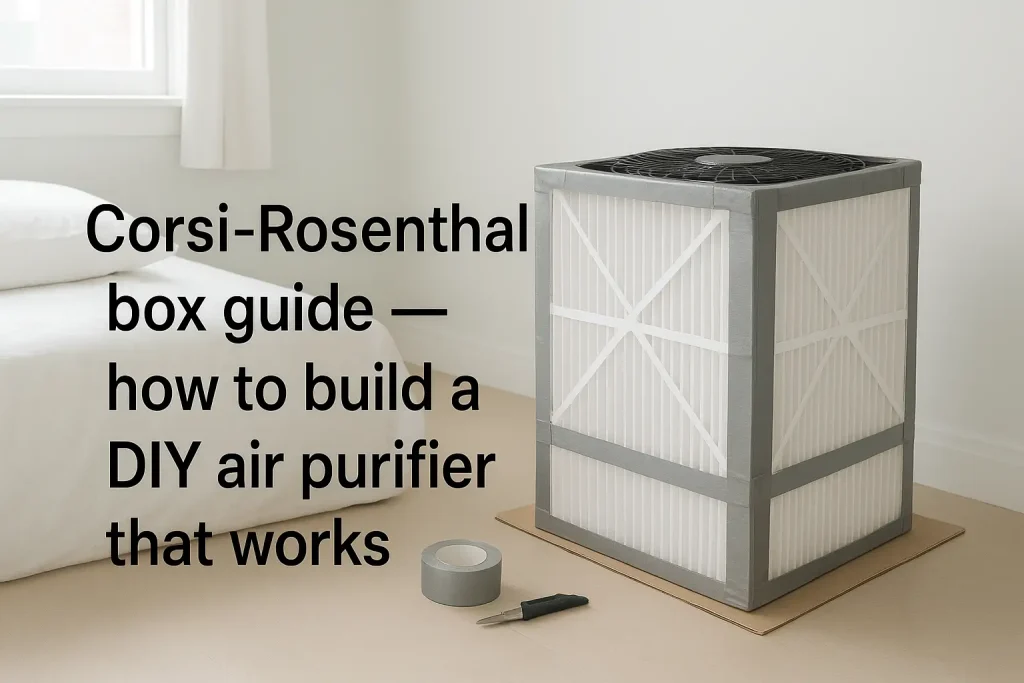
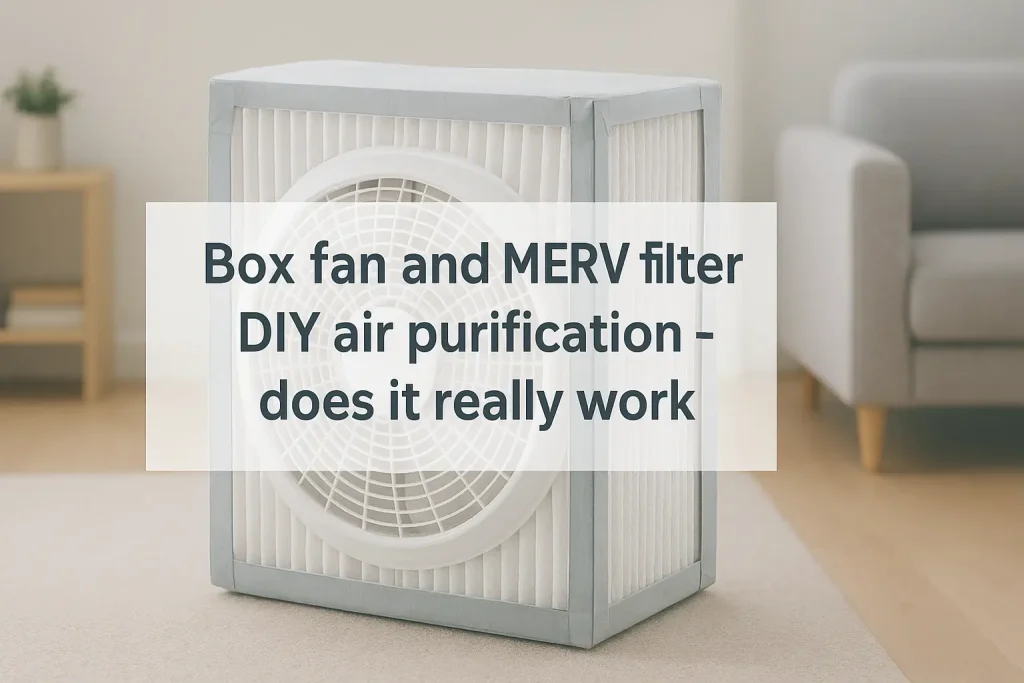
A properly built Corsi-Rosenthal box using a 20-inch box fan and four MERV 13 20×20 filters can deliver smoke CADR of 300 to 600 CFM depending on fan speed, rivaling or exceeding many commercial True HEPA units. It removes airborne particles effectively. Like any air purifier, it does not clean surfaces or sanitize. It must be paired with a cleaning protocol to address the surface reservoir of contaminants.
For a detailed comparison of DIY filtration performance versus commercial units, our guide comparing box fan filters to air purifiers covers CADR performance, filter costs, noise levels, and the specific scenarios where a Corsi-Rosenthal box is or is not the better choice.
Can duct cleaning replace the need for portable air purification in my home?
No. Duct cleaning removes accumulated debris from HVAC ductwork. It does not filter the air in your living spaces on an ongoing basis. Once cleaned, ducts begin accumulating new dust immediately as air continues to flow through them. A MERV 13 or higher furnace filter installed in the HVAC system provides ongoing filtration of air passing through the system, but only when the fan is running.
Duct cleaning can improve system airflow and reduce the reservoir of material available to become airborne when the system starts, but it is a one-time intervention, not ongoing air purification. Our evidence-based guide to duct cleaning and indoor air quality explains the specific conditions under which duct cleaning provides measurable benefit and when it does not. For continuous airborne particle removal in occupied rooms, a portable True HEPA air purifier or a whole-house MERV 13 filtration upgrade is the appropriate ongoing solution.
How often should I replace my HEPA filter if I clean and sanitize frequently?
Cleaning and sanitizing frequency does not directly change HEPA filter replacement intervals. HEPA filters load with airborne particles, not with surface contaminants. A home with heavy cleaning but high outdoor pollution, pets, or cooking activity may load HEPA filters faster than a home with minimal cleaning but low particle generation.
The standard replacement interval is every 6 to 12 months under normal conditions per most manufacturers. Homes with pets, wildfire exposure, or continuous operation on high fan speed should replace every 6 months. Our complete HEPA filter replacement guide by brand and usage provides specific replacement intervals for major brands including Levoit, Coway, Winix, IQAir, Blueair, RabbitAir, and Honeywell, adjusted for different pollution conditions and run times.
Air purification, cleaning, sanitizing, and freshening are four distinct tools with four distinct jobs. Air purification protects what you breathe by removing airborne particles, gases, and pathogens continuously. Cleaning reduces the surface reservoir of material that can become airborne. Sanitizing reduces surface pathogen counts on high-touch points. Freshening changes how air smells without removing anything, and most freshening products add VOCs that degrade air quality.
The combination that works for nearly every home is source control first, adequate ventilation second, a properly sized True HEPA air purifier with activated carbon third, and regular cleaning with a HEPA vacuum and damp-mopping fourth. Sanitizing is reserved for illness outbreaks and food preparation surfaces. Freshening is minimized or eliminated. This hierarchy addresses the full contamination pathway from source to breathing zone.
Use the checklist and health condition selector above to identify your specific priorities. Calculate your room’s CADR requirement before purchasing any air purifier. Commit to understanding filter ratings and standards so you can distinguish genuine performance from marketing claims. The right combination of these four approaches, applied in the right priority order, delivers indoor air quality that genuinely supports your respiratory health.