
Most people buy an air purifier expecting it to eliminate all dust, stop their allergies overnight, and make their home smell like a mountain meadow. The reality is far more specific. Air purifiers are exceptionally good at one thing: mechanically filtering airborne particles in a specific room. Their weaknesses often come from unrealistic user expectations, not engineering defects.
What Can an Air Purifier Actually Do?
A well-sized True HEPA air purifier can reduce airborne particle concentrations by 85% or more within 20 minutes in a sealed room. This only occurs when the smoke CADR rating matches the room volume at your target air changes per hour. The core mechanism is mechanical filtration: a fan pulls air through dense fibrous media. The fibers capture particles through interception, impaction, and diffusion.
This process happens because the filter fibers create a tortuous path. Particles cannot follow sharp airflow changes and embed into the media. True HEPA filters retain 99.97% of particles at 0.3 microns. This includes PM2.5, dust mite allergens, pet dander, and mold spores. An air purifier can dramatically improve air quality for allergy and asthma sufferers when used correctly. It cannot fix poor housekeeping or underlying building deficiencies.
Why Most Users Fail to See Results Immediately
An air purifier takes time to clean the full volume of air in a room. The air changes per hour (ACH) dictates how fast this happens. If a purifier is rated for 2 ACH, the room air passes through the filter roughly twice each hour. During a heavy wildfire smoke event, the rate of infiltration often exceeds this cleaning rate.
| Photo | Popular Air Purifiers | Price |
|---|---|---|

|
Air Purifiers for Home Large Room up to 1500ft², Tailulu H13 True HEPA Air Purifier for Pets Dust Odor Smoke, Air Purifier for Bedroom with 15dB Quiet Sleep Mode for Bedroom Office Living Room | Check Price On Amazon |
|
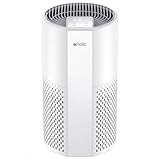
Afloia Air Purifier for Home, 4-in-1 Washable Filter for Allergies, Covers Up to 1076 ft², Quiet Operation, Auto Shut-Off & Night Light, Removes Pet Dander, Pollen, Dust, Mold, and Smoke, White,Pluto | Check Price On Amazon |

|
Nuwave OxyPure ZERO Air Purifier with Washable and Reusable Bio Guard Tech Air Filter, Large Room Up to 2002 Ft², Air Quality Monitor, 0.1 Microns, 100% Capture Irritants like Smoke, Dust, Pollen | Check Price On Amazon |

|
Air Purifiers for Home Large Room Up to 1,996 Ft², EOEBOT Air Purifier for Home Pets with Washable Filter, Quiet Sleep Mode, Air Quality Monitor, Air Purifier for Bedroom, Pet Hair, Dust, Smoke, White | Check Price On Amazon |
|
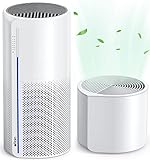
Afloia 2 IN 1 Air Purifier with Humidifier Combo, 3-Stage Filters for Home Allergies Pets Hair Smoker Odors, Evaporative Humidifier, Auto Shut Off, Quiet Air Cleaner with Seven Color Light,White | Check Price On Amazon |
The air enters the room through gaps faster than the purifier can scrub it. This happens because kitchen vents, door undercuts, and bathroom exhaust fans create negative pressure. The purifier spends its entire CADR capacity fighting unseen pollutant infiltration. The result is a wildly disappointing experience. The fix is to increase the CADR for the room, seal the room better, or deploy multiple units. Fertilization of the outdoors is not filtered effectively unless the CADR quadruples the room’s volume exchange.
What Air Purifiers Are Terrible At
Air purifiers cannot remove carbon dioxide. The ASHRAE standard recommends CO2 concentrations below 1,000 ppm for occupied spaces. A HEPA filter captures particulate matter but cannot scrub gases at the molecular level. A room with two people and a running purifier can still have CO2 buildup above healthy indoor levels in under an hour.
Purifiers also fail to eliminate smells permanently. An activated carbon filter will capture volatile organic compounds for a short period. But if the source is continuous off-gassing new furniture, the carbon bed will become saturated. The unit then recirculates the pollutants. For effective removal of gaseous pollutants and odors, source control via removing offending materials is the only permanent fix. The purifier alone cannot win an ongoing battle with a persistent source.
Air Quality Guide
Setting Realistic Expectations for Air Purifier Performance
Check off each task to ensure your unit is being utilized correctly. Based on EPA and AHAM guidance.
The Crucial Concept of Air Exchange Rate
The number one mistake users make is ignoring air changes per hour (ACH). A purifier labeled for a 300 sq ft room provides roughly 2 ACH in that space. The American Society of Heating, Refrigerating, and Air-Conditioning Engineers (ASHRAE) recommends 5 ACH for occupants with asthma or severe allergies. A unit providing only 2 ACH for a sensitive occupant is essentially running at 40% of the medically recommended performance.
This only occurs when the CADR alone is insufficient for the room volume. If your room requires 5 ACH for a severe allergy sufferer, you must multiply the stated room coverage by only 0.4. A 300 sq ft unit becomes an 120 sq ft unit. Check the CADR rating carefully. A smoke CADR of 200 cfm is often quoted for 300 sq ft. But for severe allergy care, use the formula or CADR calculator to ensure your unit hits 5 ACH or higher.
CADR Calculator
How Much CADR Do You Actually Need?
Enter your room dimensions and use case. Math: (length x width x ceiling height x ACH) / 60. Source: AHAM methodology.
For allergy and asthma sufferers, always calculate at 5 ACH — not the manufacturer-stated 2 ACH figure. The “sq ft” coverage area on most boxes is rated at 2 ACH only.
Why Source Control Always Wins Long-Term
The cleanest air is the air that never contains pollutants to begin with. This is called source control. It is easier to seal a gap under a door than to run a purifier on turbo for eight hours. Dust mites and pet dander accumulate on soft surfaces. An air purifier will capture what becomes airborne during sitting or walking. It will not pull embedded allergens from a ten-year-old carpet. Proper cleaning of the space is required.
For chemical pollutants, the logic applies even more strongly. A HEPA purifier cannot remove formaldehyde off-gassing from new cabinets. For comprehensive IAQ solutions, source control combined with proper air purification methods works best. Gas-phase filtration with sufficient activated carbon can trap VOCs. But if the source is massive, you are changing expensive filters every month while not stopping the basic contamination process. Fix the source first.
Performance Data
Air Purification Realities – By the Numbers
Sources: EPA, AHAM, ASHRAE
The Illusion of Multiple Stages and Marketing Traps
Many consumers believe a purifier with “5-in-1” stages is always better than a “3-in-1” unit. The reality is that multiple stages often dilute the core CADR performance to fit the stages inside the consumer unit. For example, an integrated ionizer in a purifier creates a trace amount of ozone. This defeats the purpose of a CARB-certified machine if not properly sealed.
Air purifiers that focus on a few high-quality stages consistently outperform over-stuffed units. A True HEPA filter is the heavy lifter for particulate matter. A large activated carbon bed is mandatory for VOC reduction. The bond strength of the wood or cardboard frame may fail under humidity pressure if too much carbon is crammed into a small footprint. The market talks about many stages, but only a few matter for practical health outcomes. For the deep dive on this, see the practical breakdown of which filtration stages in purifiers actually produce measurable results.
What About Do-It-Yourself Corsi-Rosenthal Boxes?
A DIY Corsi-Rosenthal box fan with furnace filters is a legitimate air cleaner. A box fan strapped to four MERV-13 filters can produce a smoke CADR of 300 to 600 CFM. This is extremely cost-effective. For a detailed build and performance comparison, check our breakdown of the effectiveness of box fan purifiers versus commercial units.
These DIY units are currently allowed in public schools for wildfire smoke events. However, they have distinct physical limits. They have a loud, harsh operating volume above a standard commercial unit. They lack the fine control of noise-calibrated bedroom units. If you work in a machine shop or garage, they are powerful, cheap, and resilient. But for a nursery or studio apartment, they rarely compete on design, noise level, or discrete activated carbon stages.
Why Beeswax Candles and Houseplants Are Not Air Purifiers
There is a persistent social media claim that beeswax candles purify the air by releasing negative ions. This is technically true in that a flame produce ions, but the magnitude is vastly insufficient for any meaningful particulate volume. Houseplants reduce CO2 through photosynthesis, but their rate of metabolism is insufficient to offset a closed bedroom’s CO2 production overnight. A peace lily produces about 0.02 cubic feet of oxygen per hour. A typical 120 lb human consumes about 0.6 cubic feet of oxygen per hour.
To match one human’s breathing, you would need approximately 30 large houseplants lining the room. For a look at the evidence behind marketing myths, see our testing on whether beeswax candles genuinely purify indoor air quality practically. The ions produced are barely measurable by a standard PM2.5 sensor across a period of five minutes. Real particulate reduction requires a True HEPA mechanical filter or electronic precipitator designed for the task.
Mold Spores and What a Filter Actually Passes
A high-quality air purifier will capture loose mold spores because they are a particulate larger than 1 micron. A True HEPA filter has a low rate of spore escape. However, a purifier cannot stop the mold’s growth on the walls behind the unit. If you still have wet drywall, a filter can process the same air 700 times a day and not fix the root cause. For the full pathophysiology of mold spores in indoor air, consult our complete guide to mold spores, IAQ, and effective remediation.
In winter months, a mold bloom often starts from condensation on a cold concrete wall or crawlspace. A purifier running in the basement may slow the airborne dispersal. But it will not dry the wall or kill the fungal hyphae colonizing the substrate. The proper combination includes a dehumidifier, purification, and physical remediation. Mold demands a three-part attack. The purifier is just one slat in the infection control protocol.
Frequently Overlooked Connections Among IAQ Variables
The relationship between appliance capture rate and human breathing rate is rarely discussed. A standard air purifier processes 100 to 300 cubic meters of air per hour. A human breathes roughly 0.5 cubic meters per hour. The purifier should process the room’s volume roughly 5 times per hour. Therefore, the filter captures the room’s load and then recirculates it up to six passes before the users inhale the particles. This works well for particulate matter but not for CO2 or other biological effluents from breathing.
This only occurs when the unit’s fan runs consistently. If the purifier is on full time, it performs best. It moves through the airborne load, and clean air is a function of air changes. If the fan oscillates on and off via auto-mode sensors, it leaves dead zones. The air never rounds the corner from the hallway into the room. An always-on unit at a medium, moderate speed often yields better practical results than the stop-start pattern of auto mode.
The Critical Role of Activated Carbon
A purifier with True HEPA alone will do very little for odors, smoke smell, formaldehyde, or benzene. Carbon adsorption is a chemical process. The porous carbon physically traps VOC molecules on its internal surface area. The more carbon mass your purifier holds, the more VOC capture capacity you have. An air purifier’s carbon layer is often a trace amount — like a thin mesh screen. To truly address gases and odors, a unit needs several pounds of granular activated carbon or zeolite blend.
This condition only occurs with purifiers specifically billed for smoke and VOC adsorption. These purifiers are larger, heavier, and more costly due to the cost of the carbon. They also require replacement of the expensive carbon bed. Gas filters saturate faster than particle filters. The budget $100 unit often contains just an flimsy carbon sponge filter that saturates in two days. For an effective combination of particulate trapping and gas removal, you need a hybrid unit. The heavy lifting is done not by the HEPA filter but the carbon’s internal pore structure.
Making Air Purifiers Work for You All Year Long
In the summer, open windows let in a gusher of pollen. The most economical solution involves sizing your unit properly by CADR, not by the box’s marketing claims. In the autumn, an air purifier may be the only tool against smoke infiltration. The fundamental rule of air purification is that the device must run continuously for at least 20 hours a day to maintain meaningful IAQ levels. Periodic usage does nothing to stabilize the indoor environment.
A blower door test might reveal that your house is losing 25% of the appliance’s cleaning capability through air exchange. For those with a home with forced air, using a MERV-13 filter in the HVAC system forms a good whole-house base level of filtration. The room purifier overachieves for that space. These devices can reduce 99.97% of particles in a lab. But in a real bedroom with a ceiling fan and an open door, the capture rate is lower. Accept that reality, set your goals to something achievable, and the devices work silently all year.
This cost performance frontier changes with filter maintenance. A clogged HEPA filter strangles airflow backing up the fan and dropping effective CADR drastically. Set a calendar reminder to replace the HEPA filter every six to 12 months depending on your hourly usage. Replace the pre-filter monthly if you have pets. Realistic expectations mean realistic maintenance. Your purifier should run at least 20 hours a day, and your filters should be clean. Then it will perform as expected.