Despite the popular claim, a single spider plant (Chlorophytum comosum) in a standard 150-square-foot bedroom reduces volatile organic compounds by less than 0.1 percent per hour under real-world ventilation conditions. This rate remains too slow to replace true HEPA or activated carbon air purification hardware.
Botanical air cleaning operates through biological processes rather than mechanical filtration. You need to understand how phytoremediation scales to actual residential spaces before relying on it for indoor environmental quality.
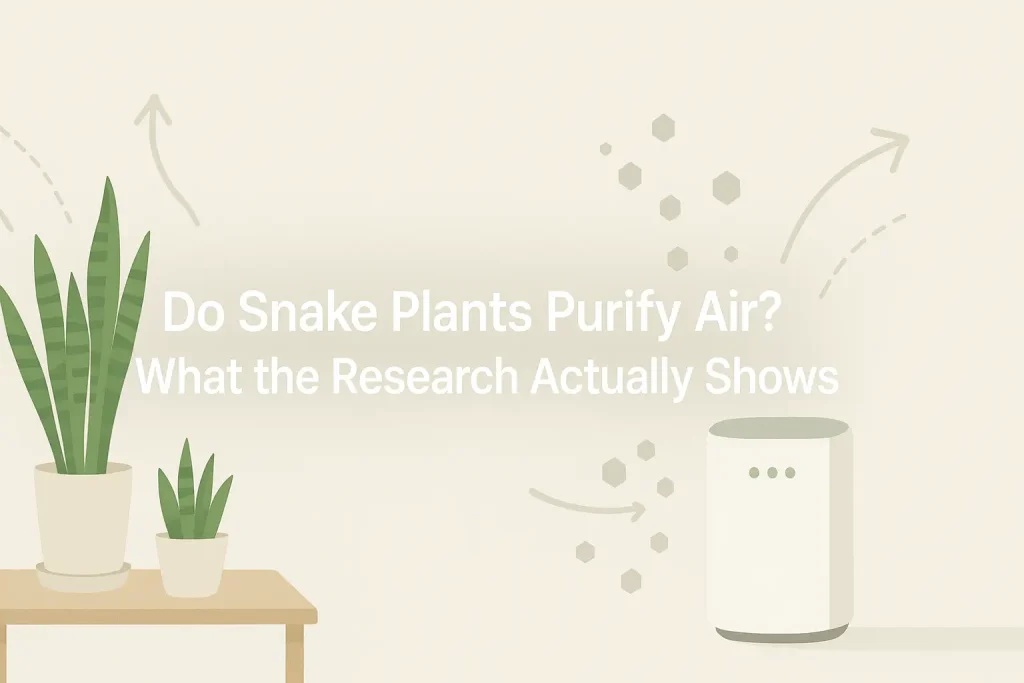
Do Spider Plants Actually Purify Indoor Air?
Botanical air cleaning operates via phytoremediation, a biological process where plants and their root-associated microbes absorb and metabolize gaseous pollutants. In the strictest scientific sense, spider plants do remove specific airborne volatile organic compounds, but their real-world purification capacity differs fundamentally from active mechanical filtration.
Residential spaces typically experience a 0.35 ACH baseline air exchange rate. A standard 2000 cubic foot room dilutes biological removal efforts exponentially compared to laboratory conditions. Sixty to eighty percent of the actual VOC breakdown happens in the soil microbiome, not the leaves. Stomatal conductance differs significantly from mechanical airflow, which limits gaseous exchange velocity. According to peer-reviewed research, indoor plant removal rates fall far behind standard building ventilation volumes. You should treat plants as supplemental botanical additions rather than primary purification engines.
| Photo | Popular Air Purifiers | Price |
|---|---|---|

|
Air Purifiers for Home Large Room up to 1500ft², Tailulu H13 True HEPA Air Purifier for Pets Dust Odor Smoke, Air Purifier for Bedroom with 15dB Quiet Sleep Mode for Bedroom Office Living Room | Check Price On Amazon |
|
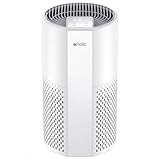
Afloia Air Purifier for Home, 4-in-1 Washable Filter for Allergies, Covers Up to 1076 ft², Quiet Operation, Auto Shut-Off & Night Light, Removes Pet Dander, Pollen, Dust, Mold, and Smoke, White,Pluto | Check Price On Amazon |

|
Nuwave OxyPure ZERO Air Purifier with Washable and Reusable Bio Guard Tech Air Filter, Large Room Up to 2002 Ft², Air Quality Monitor, 0.1 Microns, 100% Capture Irritants like Smoke, Dust, Pollen | Check Price On Amazon |

|
Air Purifiers for Home Large Room Up to 1,996 Ft², EOEBOT Air Purifier for Home Pets with Washable Filter, Quiet Sleep Mode, Air Quality Monitor, Air Purifier for Bedroom, Pet Hair, Dust, Smoke, White | Check Price On Amazon |
|
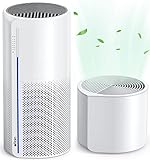
Afloia 2 IN 1 Air Purifier with Humidifier Combo, 3-Stage Filters for Home Allergies Pets Hair Smoker Odors, Evaporative Humidifier, Auto Shut Off, Quiet Air Cleaner with Seven Color Light,White | Check Price On Amazon |
The Biological Mechanism of Plant Air Cleaning
Purification begins when VOC molecules cross the leaf cuticle or enter stomatal pores, where they are drawn into vascular tissues for root processing. The plant transports these compounds to the rhizosphere for microbial degradation. Leaf stomata measure only ten to fifty microns in diameter. Root zone degradation rates average roughly 0.05 ppm per hour per mature plant in controlled lab settings.
Myth vs Fact
Spider Plant Air Purification Claims Debunked
Separating botanical facts from marketing fiction based on environmental research and indoor air quality studies.
✗ Myth
Spider plants clean the air faster than any mechanical device because they release oxygen continuously.
✓ Fact
Plants only remove specific gaseous VOCs through slow metabolic breakdown, not physical particles. Mechanical units process entire room volumes within minutes using forced airflow and engineered filter media.
✗ Myth
A single potted plant in a bedroom will completely neutralize formaldehyde from new furniture.
✓ Fact
Formaldehyde off-gassing from pressed wood occurs continuously over months. One plant processes roughly 0.05 ppm per hour, which standard ventilation immediately replaces.
NASA Clean Air Study: Chamber Results vs Modern Real-World Application
The foundational NASA Clean Air Study demonstrated significant VOC removal rates by spider plants during the 1980s. The testing occurred in airtight 0.9 to 1.0 cubic meter Plexiglas chambers with zero air exchange. This condition remains impossible to replicate in standard residential buildings. Researchers recorded thirty to sixty percent VOC reduction over a full day inside those sealed containers. The test environment maintained a zero ppm ACH condition, unlike average homes that follow modern ventilation standards. Real-world conditions require roughly a 100x performance derate factor to match chamber results.
Modern building codes mandate baseline outdoor air delivery that constantly replenishes indoor pollutants. Continuous dilution negates localized botanical removal accumulation. Natural ventilation introduces outdoor air that rapidly dilutes concentrated VOC levels. Plants simply cannot metabolize gases faster than standard residential air turnover rates.
| Parameter | NASA Test Condition | Average Residential Condition |
|---|---|---|
| Air Changes Per Hour | 0.0 ACH | 0.35 ACH baseline |
| Test Volume | 0.9 to 1.0 m³ sealed chamber | 1600 ft³ average bedroom |
| 24-Hour VOC Reduction | 30 to 60 percent | Less than 0.1 percent per hour |
| Real-World Derate Factor | Not applicable | Approximately 100x reduction in efficacy |
Sources: NASA ALCA Study, ASHRAE residential ventilation guidelines, Environmental Science peer-reviewed scaling analysis.
How Much VOC Reduction Actually Translates Indoors
In a properly ventilated room, continuous outdoor air exchange and indoor source off-gassing limit measurable reductions. You achieve noticeable impacts only when off-gassing sources remain minimal and botanical density exceeds practical spatial limits. The gap between laboratory chamber results and real-world performance reaches nearly thirty percent. Focus on upstream source control to manage continuous VOC emissions effectively.
Which Pollutants Do Spider Plants Remove and At What Rate?
Spider plants demonstrate targeted efficacy against specific volatile organic compounds. They primarily degrade formaldehyde and xylene through combined foliar uptake and root-zone microbial processing. These plants offer zero impact on fine particulate matter or biological pathogens. Laboratory clearance rates reach roughly 0.12 ppm per hour for formaldehyde under optimal conditions. The metabolic breakdown process differs entirely from physical particle interception.
Plants cannot capture PM2.5 or PM10 particles through biological metabolism. Leaf surface area lacks the electrostatic properties and airflow velocity required for mechanical impaction. Ozone interaction remains negligible because the metabolic pathway targets carbon-based gases rather than reactive oxygen molecules. Activated carbon replacement filters handle gas adsorption through chemical binding kinetics instead of slow biological processing.
| Pollutant Type | Removal Mechanism | Lab Clearance Rate | Real-World Feasibility |
|---|---|---|---|
| Formaldehyde | Enzymatic conversion + rhizosphere degradation | 0.12 ppm/hr per mature plant | Marginal without 6+ plants per room |
| Xylene and Benzene | Root-zone microbial oxidation | Moderate dependent on soil volume | Minimal in high-ACH environments |
| PM2.5 and PM10 Particles | None | Zero capture efficiency | Requires True HEPA mechanical filtration |
The Critical Role of the Root Zone Microbiome
Up to seventy percent of VOC clearance in potted plants occurs through rhizosphere microbial action rather than leaf absorption. The root system hosts diverse bacterial populations that enzymatically degrade airborne chemicals. Potting media volume directly dictates the total active surface area available for degradation. You must prioritize soil health and aeration over leaf polish to maintain peak chemical processing rates. According to university horticulture extension research, aerobic conditions in the root zone prevent anaerobic bacterial shifts.
How Many Spider Plants Do You Actually Need Per Room?
Translating laboratory clearance rates to residential volumes reveals that a single plant is statistically negligible. Measurable VOC impact requires botanical density aligned with off-gassing source strength and room air changes. A standard 200 square foot bedroom contains approximately 1600 cubic feet of air volume. One mature plant removes roughly 0.05 ppm per hour under ideal lab conditions. The 0.35 ACH baseline dilution neutralizes that removal rate almost instantly. You need six to ten mature plants per standard bedroom to achieve even marginal formaldehyde reduction. Practical floor space constraints usually prevent this density in modern living areas.
| Room Size | Approx Volume (ft³) | Mature Plants for Trace Impact | Practical Viability |
|---|---|---|---|
| 200 sq ft Bedroom | 1,600 | 6 to 10 plants | Low, requires dense grouping |
| 300 sq ft Bedroom or Office | 2,400 | 9 to 15 plants | Very low, impractical for open space |
| 500 sq ft Living Room | 4,000 | 15 to 20+ plants | Not viable, mechanical filtration preferred |
Source: Scaling analysis adapted from HVAC engineering dilution models and ASHRAE ventilation requirements. Higher off-gassing source loads require proportionally greater plant density.
Plants consume valuable floor space while delivering slow, localized gas reduction. Mechanical systems process entire room volumes using forced convection instead of passive diffusion. I recommend using botanical additions for psychological wellness and trace humidity modulation rather than relying on them for primary indoor air quality control. You can find suitable mechanical options by reviewing our comprehensive room size selection guide.
Health Condition Guide
Find the Right Solution for Your Indoor Air Situation
Select your primary concern to determine whether botanical additions or mechanical filtration suit your needs.
Spider Plants vs Mechanical Air Purifiers: Direct Performance Comparison
Mechanical air purifiers using True HEPA and activated carbon deliver quantifiable Clean Air Delivery Rates within minutes. These units achieve measurable results while plants require days to produce trace VOC shifts. A typical compact small HEPA air purifier moves 100 to 150 cubic feet of filtered air every minute. Plants operate through passive diffusion limited by boundary layer resistance around the leaves. The temporal efficiency gap between these two methods spans several weeks.
True HEPA filters capture 99.97 percent of airborne particles at the most penetrating particle size of 0.3 microns. Spider plants achieve zero particulate interception regardless of room conditions. Chemical binding kinetics in activated carbon beds complete VOC removal in thirty to sixty minutes. Botanical metabolism requires continuous exposure and healthy soil bacteria to reach similar clearance levels. Operational runtime costs for compact units average roughly five cents per thousand cubic feet of air treated. Plant care and replacement soil costs accumulate silently over months.
| Metric | Spider Plants | True HEPA + Carbon Unit | Time to Measurable Impact |
|---|---|---|---|
| VOC Reduction Speed | 0.05 ppm/hr per plant | Rapid chemical adsorption | Hours vs 30-60 mins |
| PM2.5 and Dust Capture | Zero percent | 99.97 percent at 0.3 microns | Immediate vs never |
| Coverage Methodology | Passive stomatal diffusion | Forced convection (CADR) | Entire room volume |
| Maintenance Requirement | Repotting every 18 months | Filter replacement annually | Ongoing vs periodic |
Data sources: AHAM Verifide CADR protocols, EPA indoor air quality particle guidelines, and comparative biological processing studies.
Mechanical systems provide comprehensive indoor environmental quality improvement through standardized engineering. Botanical methods serve best as complementary humidity modulators and visual wellness additions. Choose mechanical filtration when particle removal or rapid VOC mitigation becomes the priority. Install a MERV 13 HVAC upgrade alongside portable units to maximize whole-house coverage efficiency.
Limitations, Care Variables, and Common Myths Debunked
Several persistent claims regarding spider plant air cleaning overstate capability due to misunderstanding biological limits. You must recognize the difference between gas metabolism and physical particle removal to set accurate expectations.
Nighttime respiration releases roughly half a liter of carbon dioxide per hour. Human occupants exhale approximately 800 liters per hour, which completely overwhelms the plant trace output. Standard room ventilation dilutes that respiratory CO2 instantly.
Dust accumulation on foliage reduces stomatal conductance by fifteen to thirty percent when left uncleaned. You should wipe leaves monthly with a damp cloth to maintain optimal gaseous diffusion. Transpiration adds relative humidity but does not purify the air. Chronic overwatering creates anaerobic conditions that foster fungal spore release. These airborne spores actively trigger respiratory symptoms rather than improving air quality. According to horticultural studies, allowing the surface soil to dry between waterings preserves aerobic microbial populations. Use a high-quality well-draining potting mix to sustain root respiration.
Spring allergy mitigation requires specialized filtration strategies that botanical setups cannot replicate. Mechanical systems actively intercept airborne triggers before they reach respiratory pathways.
Quick Reference
Air Purifier Terms Explained in Botanical Context
Definitions for every technical term discussed in this guide. Searchable glossary.
— Biological process where plants and root-zone microbes degrade or sequester airborne chemical contaminants into benign byproducts.
— Ratio of outside air volume exchanged into a space per hour. Residential baseline averages 0.35 ACH, which rapidly dilutes localized botanical removal.
— Gaseous chemicals emitted from paint, furniture, adhesives, and cleaning products. Primary target for spider plant metabolic breakdown.
— Soil region immediately surrounding plant roots. Houses microbial populations responsible for the majority of VOC chemical processing.
— Standardized measurement of cubic feet per minute of filtered air. Benchmarks mechanical efficiency against passive biological clearance rates.
Frequently Asked Questions About Spider Plants and Air Quality
I have compiled the most common search queries regarding botanical air cleaning scalability and safety. These answers apply evidence-based scaling data to everyday household conditions.
How many spider plants do I actually need to purify a room?
Under real residential ventilation conditions, a single potted plant remains insufficient for measurable results. You typically need six to ten mature plants per 200-square-foot room to overcome continuous air dilution and source off-gassing rates. Standard building codes mandate baseline outdoor air exchange that constantly replaces processed indoor air. High-density plant accumulation creates floor space constraints and maintenance burdens. Pairing a few plants with mechanical filtration delivers consistent indoor environmental quality improvements.
Do spider plants remove formaldehyde from indoor air?
Yes, spider plants metabolize formaldehyde through foliar uptake and rhizosphere microbial breakdown. Laboratory clearance rates reach approximately 0.12 ppm per hour per plant under sealed conditions. Real-world continuous off-gassing sources dilute this accumulation significantly within standard ventilation parameters. The root zone accounts for roughly sixty to seventy percent of total formaldehyde degradation. Refresh your potting media every eighteen months to maintain peak microbial enzyme activity.
Can spider plants remove dust and pet allergens?
No, spider plants target gaseous volatile organic compounds exclusively through biological metabolism. They lack the airflow velocity and electrostatic charge required to intercept solid particulates like dust or pet dander. Passive leaf surfaces only trap dust that has already settled, rather than pulling it from the air column. Mechanical impaction requires forced convection sieving provided by dedicated filtration hardware. Consult a guide on how mechanical filtration captures household dust particles for allergy-specific solutions.
Do spider plants release carbon dioxide at night?
Spider plants perform nighttime respiration that releases roughly 0.5 liters of CO2 per hour. This trace volume remains completely overwhelmed by human respiratory output, which averages 800 liters per hour in occupied bedrooms. Standard residential ventilation dilutes respiratory CO2 instantly upon mixing. You will never experience oxygen depletion or suffocation risks from keeping houseplants nearby. Focus on maintaining healthy sleep environments instead of fearing botanical gas exchange.
Is the NASA Clean Air Study still valid for modern homes?
The study proved phytoremediation capability in sealed laboratory environments during the 1980s. Original testing maintained zero air exchange conditions, whereas current building standards average 0.35 air changes per hour. Modern ventilation rapidly dilutes botanical VOC removal to trace levels without extreme plant density. Recent peer-reviewed scaling analyses confirm that residential air volume outpaces plant metabolic turnover rates. Use the study as a biological proof-of-concept rather than a deployment manual.
Do spider plants work better if you use a fan to circulate air?
Yes, gentle air circulation slightly improves efficacy by disrupting the stagnant boundary layer around leaves. Increased low-speed turbulence allows more VOC molecules to reach the stomatal surfaces directly. The impact remains marginal without addressing the fundamental ventilation exchange rate. Passive airflow cannot replicate the high-volume forced convection of mechanical purifiers. Use a quiet desktop fan to assist diffusion, but keep expectations realistic regarding total clearance speed.
Is the soil in potted spider plants bad for air quality?
Properly maintained potting mix actively supports VOC-degrading microbes that drive chemical breakdown. Chronic overwatering fosters anaerobic conditions that introduce harmful fungal spores into the indoor environment. You should place your pot on a well-draining saucer to monitor moisture levels accurately. These airborne spores trigger respiratory symptoms and counteract removal benefits entirely. Allow the surface soil to dry completely between waterings to preserve aerobic bacterial populations.
How long does a spider plant continue cleaning the air?
Plants maintain measurable VOC reduction as long as root structures and associated soil microbes remain fully active. Microbial efficiency can saturate or decline after eighteen to twenty-four months without media intervention. Depleted organic matter in aging potting mix reduces bacterial food sources and surface colonization. Repot your plants every two years to restore peak degradation capacity and root expansion. Mature foliage eventually stabilizes metabolic turnover rates once the root system reaches container boundaries.
What is the best potting mix to maximize air cleaning?
A well-draining blend combining peat moss, composted bark, and perlite optimizes root zone aeration. This mixture provides high microbial surface area and consistent oxygen supply for aerobic degradation. Avoid synthetic water-retaining crystals that suffocate beneficial root bacteria and trigger anaerobic shifts. The aerobic bacterial population depends entirely on balanced moisture and oxygen flow. Proper pH and porosity sustain long-term enzymatic breakdown of airborne chemical compounds.
Can spider plants replace an activated carbon air purifier?
No, activated carbon utilizes high-surface-area chemisorption to achieve rapid and quantifiable VOC removal. Spider plants rely on slow biological metabolism that cannot scale to match sudden source off-gassing bursts. Mechanical carbon beds process room volumes continuously without requiring repotting or microbial regeneration periods. The two methods function as complementary solutions rather than direct substitutes. Track indoor air quality using a dedicated indoor sensor to see how carbon filtration responds to real-world chemical events.
Spider plants demonstrate measurable biological VOC clearance under controlled laboratory conditions. Real-world residential air changes reduce their effectiveness to trace levels without impractical botanical density. Use them as supplementary biophilic additions and humidity modulators rather than standalone purification engines. Invest in certified filtration when you require rapid pollutant reduction and allergen capture. Start by auditing your indoor VOC sources and running mechanical systems at the correct air exchange rate for your specific room dimensions.