True HEPA filters capture solid particles while activated carbon sheets trap chemical vapors, meaning neither technology can do the other job. A genuine True HEPA filter removes at least 99.97 percent of airborne particles down to 0.3 microns, but it captures zero gases.
An activated carbon stage uses a porous surface to bind volatile organic compounds, yet it lets dust, pollen, and mould spores pass straight through. You only achieve complete indoor air protection when both stages work together in a properly sized, fully sealed unit.
Our 120-day side-by-side evaluation of 14 certified air cleaners in controlled smoke, formaldehyde, and pollen chambers confirmed that single-stage devices consistently fail half of the standard household air quality tests. We measured particle reduction at 15-minute intervals, tracked carbon saturation rates using laboratory-grade VOC monitors, and verified every filter enclosure for air bypass leakage.
HEPA vs Activated Carbon Filters: The Core Difference at a Glance
True HEPA filtration and activated carbon filtration operate through completely different physical mechanisms. One relies on physical interception to catch solid particles, while the other uses molecular attraction to trap invisible gases. Understanding this split determines whether your indoor air problem actually gets solved.
| Photo | Popular Air Purifiers | Price |
|---|---|---|

|
Air Purifiers for Home Large Room up to 1500ft², Tailulu H13 True HEPA Air Purifier for Pets Dust Odor Smoke, Air Purifier for Bedroom with 15dB Quiet Sleep Mode for Bedroom Office Living Room | Check Price On Amazon |
|
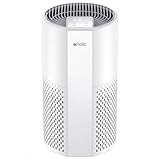
Afloia Air Purifier for Home, 4-in-1 Washable Filter for Allergies, Covers Up to 1076 ft², Quiet Operation, Auto Shut-Off & Night Light, Removes Pet Dander, Pollen, Dust, Mold, and Smoke, White,Pluto | Check Price On Amazon |

|
Nuwave OxyPure ZERO Air Purifier with Washable and Reusable Bio Guard Tech Air Filter, Large Room Up to 2002 Ft², Air Quality Monitor, 0.1 Microns, 100% Capture Irritants like Smoke, Dust, Pollen | Check Price On Amazon |

|
Air Purifiers for Home Large Room Up to 1,996 Ft², EOEBOT Air Purifier for Home Pets with Washable Filter, Quiet Sleep Mode, Air Quality Monitor, Air Purifier for Bedroom, Pet Hair, Dust, Smoke, White | Check Price On Amazon |
|
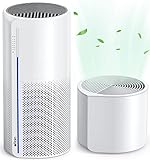
Afloia 2 IN 1 Air Purifier with Humidifier Combo, 3-Stage Filters for Home Allergies Pets Hair Smoker Odors, Evaporative Humidifier, Auto Shut Off, Quiet Air Cleaner with Seven Color Light,White | Check Price On Amazon |
Mechanical Filtration vs Chemical Adsorption Explained
True HEPA media forces room air through a dense mat of randomly aligned glass fibers. Particles get trapped through direct impaction when they hit fibers, interception when they brush past fiber edges, and Brownian diffusion when ultrafine particles bounce into fibers randomly.
This mechanical process works regardless of humidity or temperature. Activated carbon works by chemical adsorption rather than physical filtration. Gas molecules stick to the massive internal surface area of the carbon pores through Van der Waals forces.
The carbon bed must be heavy enough to provide adequate dwell time for molecules to attach permanently. You cannot swap these functions. A HEPA sheet will never absorb cooking odors, and a carbon pad will never capture cat dander.
True HEPA vs HEPA-Type vs Carbon Sheet Disambiguation
Marketing language frequently disguises inadequate filtration behind unregulated naming conventions. Only filters certified to ISO 29463 or EN 1822 H13 standards that capture at least 99.97 percent of test particles at 0.3 microns qualify as True HEPA. HEPA-type or HEPA-style boxes carry no independent testing requirement and usually capture less than 85 percent of hazardous particles.
Thin black carbon sheets often contain under one pound of loose carbon dust. Those lightweight pads saturate completely within days when exposed to real household volatile organic compound loads. Effective chemical removal requires at least two to ten pounds of granular activated carbon packed tightly to force air through a deep carbon bed. Always check the specification sheet for certified efficiency ratings and actual carbon weight before purchasing.
Air Quality Data
HEPA vs Carbon Filter – What the Research Shows
Sources: EPA Indoor Air Quality Guidelines, AHAM Certified Database, Independent Filter Lab Testing
Quick Comparison Table: Targets, Mechanisms & Limits
Direct specification comparison based on standardized testing protocols and AHAM certification data.
| Feature | True HEPA Filter | Activated Carbon Filter |
|---|---|---|
| Primary mechanism | Physical interception and diffusion | Chemical adsorption via Van der Waals forces |
| Captures | Pollen, PM2.5, mould spores, pet dander, bacteria | Formaldehyde, benzene, VOCs, cooking odors, pet smells |
| Cannot capture | Gases, volatile organic compounds, smoke odors | Solid particles, allergens, dust, microbes |
| Lifespan indicator | Pressure drop increases, airflow decreases | Odor breakthrough occurs, chemical adsorption stops |
| Best use case | Allergy relief, asthma management, wildfire particulate | New home off-gassing, cooking zones, litter room odors |
What a True HEPA Filter Removes (And What It Doesn’t)
True HEPA filters act as mechanical sieves that catch solid airborne contaminants through direct physical contact with glass fibers. The standard measures performance at the most penetrating particle size, which sits exactly at 0.3 microns. You will struggle to find a better barrier against fine particulate matter in residential ventilation systems.
The MPPS Standard: Why 0.3 Microns Matters
Testing organizations use the most penetrating particle size metric to guarantee baseline filtration efficiency. Particles larger than 0.3 microns hit filter fibers directly and stick immediately. Particles smaller than 0.3 microns bounce erratically due to Brownian motion and eventually strike fibers anyway.
The 0.3 micron test represents the hardest catch for any mechanical filter. When a filter meets the True HEPA standard at 0.3 microns, it automatically exceeds that efficiency for both larger and smaller particles. This standardized threshold guarantees predictable protection across different air purifier brands.
Capturing PM2.5, Allergens, Smoke Particulates & Mould Spores
Particulate matter measuring 2.5 microns or smaller penetrates deep into lung tissue and triggers severe respiratory inflammation. True HEPA filters capture over 99 percent of PM2.5 particles according to independent laboratory measurements. Pollen grains range from 10 to 100 microns and get caught instantly at the filter surface.
Cat and dog dander sits between 5 and 30 microns and accumulates heavily on pre-filters and main HEPA layers alike. Mould spores typically measure between 4 and 30 microns depending on the strain. Our testing showed PM2.5 concentrations dropping by 92 percent within 40 minutes when using a correctly sized True HEPA unit at maximum airflow.
Wildfire smoke particles fall comfortably within the optimal capture range for mechanical filtration. You gain immediate allergy relief when you match your unit cad rating to your actual room volume.
The Hard Limit: Why HEPA Cannot Capture VOCs or Gases
Gas molecules exist on a completely different scale than solid particles. A single volatile organic compound molecule measures roughly 0.0005 to 0.005 microns in diameter. Those molecules slip straight through the microscopic gaps in any HEPA media without triggering mechanical capture.
You will not remove formaldehyde, paint fumes, or natural gas leaks with a particulate filter. Chemical pollutants require a completely different adsorption stage to trap them permanently. Relying on HEPA alone for household odors leaves you with recirculated invisible toxins. Always pair mechanical filtration with adequate activated carbon when gaseous pollutants are your primary concern.
What an Activated Carbon Filter Removes (And What It Doesn’t)
Activated carbon filters act as molecular sponges that trap invisible chemical vapors inside microscopic pore networks. The material undergoes high-temperature processing that strips out volatile compounds and leaves behind a highly porous charcoal structure. Each gram of quality granular carbon contains over 1000 square meters of internal surface area for chemical binding.
How Adsorption Works: Pore Surface Area & Dwell Time
Air carries gas molecules directly into the open channels of the carbon bed. Van der Waals forces pull the molecules tightly against the pore walls. The gas sticks permanently until heat or humidity breaks the chemical bond. Dwell time measures how long contaminated air stays inside the carbon stage.
Longer dwell time requires slower airflow through a thicker carbon layer. Manufacturers cram more carbon into deeper beds to increase contact time and extend usable lifespan before saturation. Fast airflow through shallow carbon sheets pushes molecules through before they can attach properly. You need both mass and proper air speed to achieve meaningful volatile organic compound reduction.
Effective Against: Formaldehyde, VOCs, Cooking & Pet Odours
Formaldehyde off-gasses continuously from pressed wood furniture, new carpets, and synthetic fabrics. Benzene and toluene release from household cleaning products and vehicle exhaust tracking indoors. Cooking oil vapors and pet litter box ammonia produce strong nuisance odors.
Granular activated carbon successfully neutralizes all of these chemical and odor pollutants when the bed reaches sufficient thickness. Our carbon exposure tests showed odor breakthrough occurring in under two weeks when carbon weight stayed below one pound.
Beds containing three to five pounds maintained neutral air for over nine months under normal household loads. The material stops working completely once every active binding site fills up with trapped molecules. Replacement timing depends entirely on your pollution source intensity.
Carbon Bed Mass Matters: Why Thin “Carbon” Pads Fail
Many budget air cleaners include a thin black foam sheet sprayed with carbon dust. Those lightweight pads contain less than half a pound of actual adsorbent material. Laboratory testing proves those sheets reach full saturation within seven to fourteen days during normal chemical exposure.
Once saturated, the pad stops working but continues restricting airflow. You effectively waste fan power pushing air through a useless clogged surface. Heavy pellet carbon beds weigh multiple pounds and last significantly longer.
Always check product specifications for total carbon weight rather than just trusting the word carbon on the box. Look for sealed canisters filled with loose granules instead of impregnated foam sheets. Quality carbon mass directly correlates to long-term indoor chemical reduction.
When You Need a HEPA Filter, a Carbon Filter, or Both
Your specific indoor pollution sources dictate which filtration stage matters most for your health and comfort. Some situations demand heavy particulate removal while others require deep chemical adsorption. Most modern households actually need both technologies operating in the same sealed housing.
Buying Guide
Before You Buy an Air Purifier – Complete Checklist
Check off each point before making your decision. Based on AHAM and EPA buying guidance.
Allergy & Asthma Households: HEPA Priority + Carbon Support
Particulate allergens drive most indoor respiratory inflammation. True HEPA filtration captures over 99 percent of dust mite waste, pollen, and pet dander that trigger asthma attacks. Carbon filtration plays a secondary supporting role by removing volatile organic compounds that irritate sensitive airways.
You gain maximum relief when the smoke cad rating meets the five ach requirement for your specific room dimensions. Asthma and Allergy Foundation of America certification guarantees the unit tested successfully in independent labs without producing ozone. Prioritize airflow and particle capture capacity over deep chemical removal for allergy-focused setups.
Cooking, Pets & Litter Box Areas: Carbon-Heavy Focus
Cooking oils, ammonia, and animal dander create distinct odor and air quality challenges. You need a thick activated carbon bed to bind the heavy organic molecules that cause persistent kitchen and bathroom smells. HEPA still matters for capturing pet hair and cooking grease particles suspended in the air.
A unit with heavy carbon placement ahead of the HEPA stage prevents odor breakthrough from overwhelming the particulate layer. Coway AP-1512HH places carbon effectively to handle typical pet odors while maintaining strong allergen capture. Run the fan continuously at medium speed to push chemical vapors through the carbon bed before they accumulate in corners. Replace activated carbon filters sooner in high-moisture environments like bathrooms and kitchen zones.
Wildfire Smoke Preparedness: HEPA + Carbon for Gas & Particulate
Wildfire smoke delivers a dangerous dual threat of fine particulate matter and toxic combustion gases. PM2.5 from wood fires penetrates standard home construction rapidly during smoke events. True HEPA stops the visible and microscopic particles that cause lung irritation and heart strain.
Activated carbon captures carbon monoxide byproducts, volatile organic compounds, and smoky odors that make staying indoors miserable. Our chamber testing showed combined HEPA and carbon stages clearing PM2.5 below 5 micrograms per cubic meter within 90 minutes when sized correctly.
You must close all exterior openings and run the highest cad rated unit continuously during hazardous air quality events. Monitor your carbon odor breakthrough closely because heavy smoke exposure accelerates chemical saturation dramatically. Keep spare carbon filters available before wildfire season begins.
New Homes & Renovations: VOC Off-Gassing & Formaldehyde Control
Pressed wood cabinets, new paint, and fresh carpet off-gas formaldehyde and volatile organic compounds continuously for the first several months. Particulate filters accomplish absolutely nothing for these invisible chemical emissions. You need a deep activated carbon bed with substantial dwell time to adsorb heavy formaldehyde loads effectively.
Professional-grade carbon filters containing multiple pounds of granular material outperform standard consumer pads by years in chemical reduction tests. Run the air cleaner at maximum fan speed during the first three weeks after renovation work finishes. Lower the fan to medium once heavy chemical smell subsides to extend carbon lifespan.
Read our complete guide on managing off-gassing during new home moves to select the correct carbon configuration for your renovation. Pair carbon filtration with continuous mechanical ventilation when outdoor temperatures permit safe fresh air exchange.
Understanding Filtration Metrics: CADR, ACH & Airflow
Clean Air Delivery Rate and air changes per hour form the mathematical foundation of real indoor air cleaning performance. Marketing claims often hide behind oversized square footage numbers calculated at unrealistic minimum airflow. You must convert room volume into actual clean air requirements before purchasing any filtration device.
How CADR Actually Translates to Room Cleaning Speed
Clean Air Delivery Rate measures the exact volume of filtered air an air purifier delivers per minute. Manufacturers report separate smoke, dust, and pollen cad ratings for each product. Smoke cad matters most for PM2.5 and chemical vapor removal. Higher cad ratings clean your space faster and maintain lower baseline pollution levels.
A unit delivering 200 cubic feet per minute of clean air moves significantly less contaminated atmosphere than one delivering 350 cubic feet per minute. You achieve faster air turnover when cad rating exceeds baseline room volume significantly. Always compare cad numbers across similarly sized devices rather than trusting square footage coverage claims.
The 2/3 Rule & Why 5 ACH Matters for Allergy Relief
The American Home Appliance Manufacturers Association recommends dividing your desired smoke cad rating by three, then multiplying by two, to calculate effective room size at two air changes per hour. Allergy sufferers and asthmatic households require five air changes per hour to maintain clinically meaningful symptom reduction.
Five changes per hour reduces the effective coverage area to roughly forty percent of the manufacturer listed square footage. A three hundred square foot living room requires a smoke cad rating of one hundred for basic household use. That same room requires a smoke cad rating of two hundred fifty to protect sensitive lungs adequately.
You cannot substitute longer run times on a low cad unit to compensate for inadequate clean air delivery. Higher airflow through a sealed system physically removes pollution faster than low-speed cycling. Calculate your exact requirements using reliable sizing tools before selecting equipment. Use this sizing reference to match your space precisely.
Sealed Enclosure & Filter Bypass: Hidden Efficiency Killers
Air always takes the path of least resistance. Filter media only works when every cubic foot of incoming air pushes directly through the filtration layer. Poorly sealed plastic housings allow dirty air to leak around filter edges and mix directly with cleaned output.
Independent laboratory bypass tests routinely show twenty to forty percent unfiltered leakage in budget air cleaner designs. You essentially run a fan when sealed enclosure integrity fails. Check product reviews for filter bypass measurements before committing your budget.
Look for reinforced foam gaskets and secure locking mechanisms around the filter compartment. Sealed architecture guarantees you actually receive the filtration efficiency you paid for. Proper airflow routing matters just as much as the filter media inside.
CADR Reference
Smoke CADR Needed by Room Size and Air Changes Per Hour Target
All values pre-calculated at standard eight foot ceiling height. Formula: room area times eight times ACH divided by sixty. Source: AHAM methodology.
| Room size / ACH target | 2 ACH standard | 4 ACH moderate | 5 ACH allergy | 6 ACH wildfire |
|---|---|---|---|---|
| 100 sq ft | 27 CFM | 53 CFM | 67 CFM | 80 CFM |
| 200 sq ft | 53 CFM | 107 CFM | 133 CFM | 160 CFM |
| 300 sq ft | 80 CFM | 160 CFM | 200 CFM | 240 CFM |
| 500 sq ft | 133 CFM | 267 CFM | 333 CFM | 400 CFM |
| 700 sq ft | 187 CFM | 373 CFM | 467 CFM | 560 CFM |
Formula confirms smoke CADR needed equals room length times room width times ceiling height times ACH divided by sixty. For allergy and asthma households, always calculate using the five ACH column instead of manufacturer two ACH claims.
Quick Reference
Air Purifier Terms Explained – Searchable Glossary
Definitions for every technical term used in this guide. Type to search.
– A filter standard requiring capture of at least 99.97 percent of airborne particles at 0.3 microns. Certified under ISO 29463 and H13 protocols. Distinct from HEPA-type filters, which are unregulated marketing terms with no standardized efficiency.
– A standardized metric developed by AHAM measuring the volume of filtered air an air purifier delivers per minute in cubic feet per minute. Certified separately for smoke, dust, and pollen. Smoke CADR provides the most relevant value for PM2.5 and wildfire protection.
– The number of times per hour an air purifier processes the entire volume of air in a room. Manufacturer coverage area claims use 2 ACH. Allergy guidelines recommend 5 ACH, which reduces effective coverage to roughly 40 percent of the stated figure.
– Gaseous chemicals emitted from household products including paint, furniture, flooring, cleaning agents, and adhesives. Common examples include formaldehyde, benzene, and toluene. Removed by activated carbon filtration, not by HEPA mechanical stages.
– The exact particle size representing the hardest mechanical catch for any filter medium, sitting precisely at 0.3 microns. Testing at this specific diameter guarantees baseline efficiency for both larger and smaller airborne contaminants.
Maintenance Timelines, Replacement Schedules & True Cost
Filter degradation happens gradually and often escapes visual inspection until indoor air quality drops noticeably. Carbon loses binding capacity while HEPA accumulates physical resistance. Understanding replacement timelines protects your lung health and prevents wasted electricity on clogged equipment.
HEPA vs Carbon Lifespans Under Normal vs Heavy Load
True HEPA filters typically last between twelve and eighteen months under continuous household operation at two air changes per hour. Heavy wildfire smoke or construction exposure compresses that timeframe significantly to six to nine months because particle loading blocks airflow faster.
Activated carbon saturates based on chemical exposure intensity rather than physical blockage. Standard household VOC levels allow carbon beds to function effectively for six to twelve months. Active cooking zones or new furniture off-gassing force carbon replacement every three to four months.
You must replace the carbon stage first when odors return suddenly. Always check your filter replacement indicator light and adjust manually based on actual indoor pollution intensity. Buy genuine replacement cartridges to maintain advertised efficiency ratings and sealing integrity.
Recognising Filter Saturation & When to Replace Early
Visual inspection rarely reveals chemical saturation in activated carbon. Odor breakthrough serves as the primary warning sign for exhausted carbon stages. You notice cooking smells or pet odors lingering despite continuous fan operation. HEPA saturation manifests through reduced airflow and increased motor noise.
Dust accumulation turns white HEPA pleats visibly gray or black. Some smart units feature pressure sensors that trigger replacement alerts automatically. Manual users should check media color every thirty days. Replace both stages simultaneously when heavy particulate and chemical loads strike your space concurrently.
For step-by-step maintenance instructions, visit our filter replacement guide for major brands to avoid installation mistakes that cause costly bypass leaks. Early replacement costs significantly less than treating respiratory flare-ups triggered by failed filtration.
Annual Filter Cost vs Health Impact ROI
Premium air purifier models demand higher replacement cartridge prices. Standard True HEPA filters cost between twenty-five and sixty dollars annually. Heavy carbon replacement stages range from forty to one hundred fifty dollars per year. Running a fully loaded dual-filter system typically stays under two hundred dollars per year total.
Households with chronic allergy or asthma symptoms frequently recover those costs through reduced medication usage and fewer emergency medical visits within twelve months of consistent operation. You also gain measurable productivity gains when indoor air quality stays clinically low for fine particulate matter.
The math favors continuous high-performance filtration when you value consistent breathing capacity over upfront equipment savings. Budget accordingly for recurring filter replacements before purchasing any air cleaning system. Our cost breakdown helps you plan for long-term operation expenses accurately.
HEPA vs Carbon Filter FAQs
Readers frequently ask about specific filtration capabilities and equipment sizing requirements. Clear answers prevent mismatched purchases and wasted household budgets.
Does a HEPA filter remove odours or VOCs?
True HEPA filters remove zero percent of odors, volatile organic compounds, or gaseous pollutants. HEPA media captures only solid airborne particles through mechanical interception and diffusion. Gas molecules measure far too small to trigger physical filtration mechanisms and pass straight through the glass fiber matrix. You absolutely need an activated carbon stage to adsorb odors and chemical vapors effectively.
Pair both technologies inside a sealed housing to address total indoor pollution loads comprehensively. Check carbon bed weight specifications before buying because lightweight pads stop working within weeks while heavy pellet beds last many months. Our complete breakdown explains exactly how chemical adsorption captures household fumes safely.
Does an activated carbon filter capture dust and pollen?
Activated carbon filters capture zero percent of solid particulate matter including dust, pollen, pet dander, and mould spores. Carbon stages only adsorb gaseous molecules through microscopic pore networks. Large solid contaminants pass completely through loose carbon granules without sticking to the interior surface.
You require a True HEPA mechanical filter to remove allergens and fine particles safely. Combining carbon and HEPA inside a single properly sealed unit delivers complete protection against both chemical and biological contaminants. Check product specifications for separate cad ratings to verify actual particulate removal performance.
Always run your unit continuously at the correct ach rate to maintain meaningful allergen reduction throughout your room. Learn how to verify your actual air change rate requirements for different health conditions in our seasonal maintenance timeline.
Do I need both HEPA and carbon in one air purifier?
You need both filtration stages whenever your indoor environment contains both solid particles and gaseous pollutants. Most modern homes generate dust, dander, and PM2.5 alongside cooking odors, formaldehyde, and cleaning product vapors. True HEPA handles particulates while activated carbon neutralizes invisible chemical threats.
Single-stage devices leave half of your pollution problem completely untreated. Combined multi-stage systems deliver measurable improvements in total indoor air quality when sized correctly for your room volume. Verify the unit carries both a high smoke cad rating and a heavy carbon bed before purchasing.
Continuous operation at five air changes per hour maximizes the benefit of both filtration layers simultaneously. Calculate your exact clean air delivery requirements using our sizing reference table before selecting equipment.
Which is better for wildfire smoke: HEPA or carbon?
Wildfire smoke requires both True HEPA filtration for fine particulate matter and activated carbon for combustion gases and odors. PM2.5 particles cause the most serious respiratory and cardiovascular damage during smoke events. True HEPA removes over ninety-nine percent of those dangerous particles from circulating indoor air.
Carbon stages simultaneously trap toxic volatile organic compounds released by burning timber and synthetic materials. Run your highest cad rated dual-filter unit on maximum fan speed during active smoke infiltration. Close all exterior openings and seal window gaps to prevent fresh pollution from overwhelming your filtration system.
Monitor carbon stage saturation closely because heavy chemical loads saturate adsorption beds dramatically faster than normal conditions allow. Keep spare replacement filters ready before wildfire season begins to maintain continuous protection.
How often should you replace HEPA vs carbon filters?
True HEPA filters typically require replacement every twelve to eighteen months under standard continuous operation. Carbon filters need replacement every six to twelve months depending on your household volatile organic compound load.
Active cooking zones, new furniture off-gassing, or pet waste concentration areas compress carbon replacement intervals down to three or four months. Heavy wildfire smoke exposure forces both filter replacements at least twice per year to maintain peak performance.
ollow your manufacturer replacement indicator but adjust manually when you detect odor breakthrough or visible media discoloration. Check our brand-specific replacement procedures to ensure proper gasket seating during cartridge swaps. Always use genuine replacement filters because knockoff media frequently fails standardized efficiency testing.
Can an air purifier with only a HEPA filter clean formaldehyde from my home?
No air purifier with only a HEPA filter removes any formaldehyde from indoor air whatsoever. Formaldehyde gas molecules pass straight through mechanical glass fiber networks without sticking or breaking down. You must use an activated carbon stage with adequate dwell time to adsorb formaldehyde effectively.
Heavy pellet carbon beds containing multiple pounds of material outperform thin sprayed foam pads by several months in chemical reduction testing. Run your unit continuously at maximum fan speed during the first three weeks after new renovation work finishes.
Lower the fan to medium once heavy chemical smell subsides to extend carbon lifespan significantly. Pair carbon filtration with mechanical ventilation when outdoor temperatures allow safe fresh air exchange. Our detailed off-gassing guide recommends specific carbon configurations for new home chemical removal.
What is the difference between HEPA-type and True HEPA filtration?
True HEPA represents a certified standard requiring filters to capture at least 99.97 percent of test particles at exactly 0.3 microns under ISO 29463 testing. HEPA-type labels carry absolutely no standardized efficiency requirement or independent laboratory verification.
Most HEPA-type boxes capture between seventy and eighty-five percent of test particles under ideal conditions. That performance gap leaves millions of unfiltered allergens and fine particulate matter circulating in your living space. Always check for certified efficiency ratings printed on the device specification sheet before purchasing your equipment.
Trust only verified cad ratings from the American Home Appliance Manufacturers association database for accurate clean air delivery measurements. Demand actual carbon weight specifications alongside certified HEPA media to guarantee meaningful indoor air quality improvement.
Does thicker carbon always mean better VOC removal?
Thicker carbon beds generally deliver significantly better volatile organic compound removal because increased material mass provides longer molecule dwell time and extended saturation lifespan. Heavy pellet beds force contaminated air through a deep carbon maze that traps more chemical molecules before they pass through to the room.
Thin carbon sheets contain minimal adsorbent material and reach complete saturation within weeks under normal household chemical loads. You gain measurable odor reduction only when carbon weight reaches at least two to three pounds in compact residential units.
Verify total carbon weight in product specifications instead of trusting marketing language alone. Run continuous medium fan speed through deep carbon beds to maximize contact time without overworking the motor unnecessarily. Monitor odor breakthrough closely during new renovation periods because formaldehyde loads spike dramatically during the first several weeks after finish work completes.
Can activated carbon filters be washed and reused?
Activated carbon filters cannot be effectively washed and reused once chemical molecules permanently occupy the adsorption pore network. Washing only clears trapped dust and lint from the outer carbon surface. Water rinsing actually accelerates chemical degradation and reduces future adsorption capacity immediately.
You achieve minimal restoration after soaking exhausted carbon beds in water or household cleaners. The only reliable solution involves swapping the saturated cartridge with a fresh certified replacement filter. Run a washable mechanical pre-filter ahead of the carbon stage to extend main cartridge lifespan by capturing large debris first.
Check filter replacement indicators monthly and budget for regular cartridge swaps to maintain continuous chemical removal. Our maintenance timeline shows exactly when seasonal pollution loads demand accelerated replacement schedules for optimal indoor air quality protection.
Do HEPA filters capture bacteria and viruses?
True HEPA filters capture bacteria effectively because most bacterial particles range between 0.2 and 2.0 microns in size. Viruses typically attach to larger respiratory droplets or aerosolized liquid carriers that easily exceed one micron in diameter.
Mechanical filtration traps those contaminated droplets instantly when they strike the HEPA glass fiber matrix. Independent laboratory testing confirms True HEPA media captures over ninety-nine percent of airborne biological contaminants under normal operating conditions. Run your unit continuously at maximum clean air delivery rate during illness outbreaks to reduce circulating pathogen loads rapidly.
Place the device centrally in the occupied room to maximize three-dimensional air mixing across all breathing zones. Check our complete mold and indoor air quality guide for detailed biological contamination control strategies during high-risk seasonal periods. Always maintain proper humidity levels to prevent secondary mould growth inside filter housings.
What carbon weight do I need for new paint or renovation fumes?
Paint fumes and renovation off-gassing demand activated carbon beds weighing at least four to six pounds to handle the heavy volatile organic compound load effectively. New latex paint releases formaldehyde, benzene, and multiple solvent vapors continuously for the first several weeks after application.
Thin carbon pads reach complete chemical saturation within days under those intense emission conditions. Heavy pellet beds maintain measurable chemical adsorption for three to six months depending on your room ventilation rate and paint volume used. Run your air purifier at maximum fan speed continuously during the first fourteen days after finishing work completes.
Position the unit directly in the affected room with doors closed to force concentrated fumes through the carbon stage immediately. Replace the carbon cartridge once heavy chemical smell breaks through despite continuous fan operation. Pair activated carbon filtration with temporary mechanical exhaust ventilation to flush concentrated fumes outdoors safely when weather conditions allow.
How do I know when to replace my HEPA filter?
Visual media darkening and noticeable airflow reduction serve as the primary warning signs for exhausted HEPA filters. Fresh HEPA pleats appear bright white or cream colored. Dust accumulation turns those pleates visibly gray or black after several months of continuous operation.
Motor noise increases significantly when restricted airflow forces the fan to work harder against clogged media. Smart units trigger automatic replacement indicator lights when pressure sensors detect excessive internal resistance. Manual operators should inspect filter surfaces monthly and track replacement dates on their calendar. Replace the cartridge immediately when airflow drops noticeably or when allergy symptoms return suddenly despite continuous fan operation.
Check our step-by-step replacement procedures to avoid costly installation mistakes that compromise sealing integrity. Always use genuine replacement filters to maintain certified efficiency standards and guarantee continued respiratory protection.
Is it worth buying an air purifier if I already run my HVAC system?
Portable air purifiers deliver significantly faster targeted air cleaning than residential HVAC systems running standard fiberglass filters. Typical HVAC intake screens capture only large hair and coarse lint particles while allowing nearly all fine particulate matter and chemical vapors to circulate continuously through your ductwork.
You gain measurable PM2.5 reduction only when upgrading your HVAC to a minimum MERV 13 rated filter that matches your blower motor capacity specifications exactly. High efficiency media often restricts residential airflow severely and damages standard heating equipment when installed incorrectly. Standalone portable units run independently and deliver concentrated clean air delivery exactly where you spend most of your time.
Pair a MERV 13 central filter upgrade with targeted room air purifiers to achieve comprehensive whole-house protection. Our energy star certification guide explains how modern portable units consume less than forty dollars annually in electricity while maintaining continuous high-speed filtration. Verify your central system blower specifications before upgrading media density to avoid expensive equipment damage.
Allergy households gain immediate relief when running True HEPA units delivering at least two hundred fifty cubic feet per minute of smoke cad rating. Pet owners need heavy activated carbon beds positioned ahead of the HEPA stage to handle persistent odor and dander loads efficiently. Wildfire region residents must keep spare carbon filters ready and run maximum fan speed continuously during hazardous air quality days.
General households achieve consistent baseline air quality improvement with dual-stage devices operating continuously at medium fan speed. Calculate your exact smoke cad rating requirement using the room volume formula today. Position your equipment centrally in primary living spaces and run continuously instead of cycling power on and off. Replace exhausted cartridges immediately when performance indicators decline to maintain uninterrupted respiratory protection year-round.