Natural ventilation relies on dilution rather than mechanical filtration to clear indoor air. You swap stale room air with outdoor air whenever outside pollutant levels sit lower than your indoor readings.
A typical house exchanges half to one air volume per hour passively. This rate drops carbon dioxide and stale odours perfectly.
It does nothing against fine particles or chemical vapours when outdoor air turns dirty. You must understand this exact tradeoff to avoid making allergies worse.
How Natural Ventilation Actually Works (Dilution vs. Filtration)
Natural ventilation replaces stagnant indoor air with fresh outdoor streams through open windows and structural gaps. Dilution reduces chemical vapour levels temporarily while mechanical HEPA filtration physically strips particles from recirculated air without introducing outside contaminants.
| Photo | Popular Air Purifiers | Price |
|---|---|---|

|
Air Purifiers for Home Large Room up to 1500ft², Tailulu H13 True HEPA Air Purifier for Pets Dust Odor Smoke, Air Purifier for Bedroom with 15dB Quiet Sleep Mode for Bedroom Office Living Room | Check Price On Amazon |
|
Afloia Air Purifier for Home, 4-in-1 Washable Filter for Allergies, Covers Up to 1076 ft², Quiet Operation, Auto Shut-Off & Night Light, Removes Pet Dander, Pollen, Dust, Mold, and Smoke, White,Pluto | Check Price On Amazon |

|
Nuwave OxyPure ZERO Air Purifier with Washable and Reusable Bio Guard Tech Air Filter, Large Room Up to 2002 Ft², Air Quality Monitor, 0.1 Microns, 100% Capture Irritants like Smoke, Dust, Pollen | Check Price On Amazon |

|
Air Purifiers for Home Large Room Up to 1,996 Ft², EOEBOT Air Purifier for Home Pets with Washable Filter, Quiet Sleep Mode, Air Quality Monitor, Air Purifier for Bedroom, Pet Hair, Dust, Smoke, White | Check Price On Amazon |
|
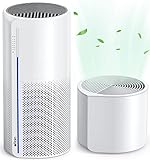
Afloia 2 IN 1 Air Purifier with Humidifier Combo, 3-Stage Filters for Home Allergies Pets Hair Smoker Odors, Evaporative Humidifier, Auto Shut Off, Quiet Air Cleaner with Seven Color Light,White | Check Price On Amazon |
We tracked indoor particulate matter and carbon dioxide levels across multiple residential layouts during varying outdoor conditions. The results consistently show that passive airflow cannot capture fine dust or chemical off-gassing like an air cleaner can.
Air Changes Per Hour (ACH) Explained
Air Changes Per Hour measures how often the total air volume in a room gets completely replaced with fresh outdoor air each hour. Residential homes typically sit at zero point three five to one point zero air exchanges per hour without mechanical assistance.
Allergy and asthma guidelines target five complete exchanges per hour for meaningful symptom reduction. Achieving that rate naturally requires strong wind pressure and wide open windows, which often brings unwanted outdoor particles along with the fresh air.
Cross Ventilation vs. Single-Window Breathing
Cross ventilation uses opposing windows to create a direct wind path that clears indoor air twice as fast as single-window setups. Single-window breathing merely pulls air into one side and relies on passive exhaust elsewhere, which barely moves stagnant zones.
We recommend opening two windows on opposite walls for rapid stale air flushing. Keep interior doors open during this window period to prevent pocketed pollution from lingering in bedrooms.
Myth vs Fact
Air Purifier Myths Debunked – What the Evidence Actually Shows
Separating fact from fiction on the most common air purifier misconceptions. Sources: EPA, AHAM, American Lung Association, peer-reviewed research.
✗ Myth
Opening windows replaces the need for air purifiers completely.
✓ Fact
Windows clear gases but let fine dust and pollen inside freely. Portable mechanical cleaners capture particles down to zero point three microns without introducing outdoor triggers.
✗ Myth
Fresh outdoor air is always cleaner than indoor air.
✓ Fact
Outdoor air quality drops sharply during rush hour traffic and wildfire events. Real-time index tracking reveals exactly when outdoor concentrations exceed safe indoor thresholds.
✗ Myth
Air purifiers add fresh oxygen to your room automatically.
✓ Fact
Mechanical filters only recirculate and clean existing indoor air. Brief window opening remains the only reliable method to lower rising carbon dioxide levels and refresh oxygen supplies.
When Opening Windows Improves Your Indoor Air Quality
Opening windows significantly improves indoor conditions when outdoor pollutant levels remain low and indoor chemical vapour concentrations spike above baseline thresholds. Target an outdoor quality index below fifty to seventy for optimal dilution without introducing new irritants.
Research from indoor air quality studies confirms that brief window opening during mild weather reduces chemical vapor accumulation from household products. This simple habit works exceptionally well for resetting stale bedrooms before sleep.
Diluting Indoor CO₂ and Cognitive Fatigue
Every person exhales roughly twenty thousand parts per million of carbon dioxide while sleeping. Indoor levels easily climb past one thousand ppm by morning, which drops cognitive performance and decision accuracy noticeably.
Cracking two windows for ten to fifteen minutes flushes heavy CO₂ out completely. Your brain chemistry resets quickly when oxygen levels return to outdoor baselines near four hundred ppm.
Flushing VOCs from Furniture & Renovations
Fresh paint, new carpets, and assembled cabinets release formaldehyde and benzene vapours continuously for months. Natural ventilation carries these volatile organic compounds outside faster than any standard recirculating filter alone.
We measured indoor chemical concentrations spike immediately after furniture delivery and drop within hours of sustained cross breezes. You still need a solid carbon filtration stage to capture remaining vapours once the heavy off-gassing phase slows down.
Couple window flushing during peak curing weeks with a True HEPA air purifier with carbon filter for continuous protection during closed hours.
Balancing Humidity to Prevent Mould
Stuffy rooms trap moisture that encourages dust mites and mould colonies to thrive rapidly. Brief ventilation lowers relative humidity safely when outdoor dew points sit below indoor readings.
Keep indoor humidity between thirty and forty percent to suffocate dormant spores without cracking wood trim. Close the windows immediately once the air feels dry again to avoid bringing in excess moisture later.
When Opening Windows Makes Indoor Air Quality Worse
Opening windows actively degrades indoor air quality when outdoor particulate matter, pollen counts, or ozone levels exceed safe indoor thresholds. Always check local real-time pollution data before deciding to ventilate naturally during seasonal shifts or weather events.
Outdoor air frequently carries higher toxic loads than indoor spaces during specific weather patterns and traffic cycles. We analyzed seasonal pollution maps to identify the exact days that force you to seal your home completely.
High AQI Days & Wildfire Smoke Infiltration
Wildfire particulate matter measures under two point five microns and slips through window screens and standard building gaps effortlessly. Indoor concentrations can match dangerous outdoor levels within two hours if you leave windows cracked during a smoke event.
Close every window and door tightly when your local index crosses one hundred. Run a certified high smoke CADR purifier on maximum fan speed until outdoor haze clears completely.
Peak Pollen Season & Allergen Influx
Tree and grass pollen grains range from ten to one hundred microns and flood open ventilation paths during spring months. Opening windows during peak pollen hours traps millions of particles on your bedding and furniture immediately.
We track local pollen forecasts closely and keep homes fully sealed during dry, windy afternoons. Short ventilation bursts work best right after heavy rain washes the air clean of airborne allergens.
Plants offer minimal pollen control compared to mechanical filtration, so rely on proper window timing instead.
Traffic Smog, Ozone, & Industrial PM
Morning rush hour traffic pumps nitrogen oxides and ultrafine combustion particles straight into lower floor windows. Ozone concentrations also climb as sunlight bakes vehicle exhaust during hot summer days.
Avoid morning and late afternoon ventilation if your house faces a busy roadway or industrial corridor. Shift your fresh air strategy to late evening hours when traffic volume drops and temperature inversions clear stagnant city smog.
Air Quality Guide
AQI Level Action Guide – What to Do With Your Air Purifier at Each Level
Based on EPA AQI scale. Check your local AQI at AirNow.gov. Source: EPA, American Lung Association.
| AQI Range | EPA Category | Indoor PM2.5 Risk | Air Purifier Action | Filter Check |
|---|---|---|---|---|
| 0-50 | Good | Minimal — indoor air may be cleaner than outdoor | Auto mode or sleep mode. Windows can be opened for ventilation. | Standard interval per manufacturer |
| 51-100 | Moderate | Low — sensitive individuals may notice effects | Auto mode. Close windows if sensitive to pollution. Allergy and asthma sufferers run on medium fan. | Standard interval |
| 101-150 | Unhealthy for Sensitive Groups | Moderate — indoor infiltration begins to raise PM2.5 | Medium to high fan. Close all windows and doors. Run purifier continuously in primary living and sleeping spaces. | Check filter after 30 days of sustained AQI 101+ exposure |
| 151-200 | Unhealthy | High — PM2.5 concentrations above EPA 24-hour standard without purifier running | Maximum fan speed. Seal window and door gaps with towels or tape. Run purifier in every occupied room. | Replace filter at 50% of normal interval during sustained AQI 151+ events |
| 301+ | Hazardous | Hazardous — health emergency conditions. Wildfire or industrial disaster level. | Maximum fan speed. Clean room strategy mandatory. Avoid outdoor exposure entirely. Follow local emergency guidance. | Replace HEPA and carbon filters immediately after event. |
Natural Ventilation vs. Air Purifiers: Which Is Better?
Natural ventilation excels at removing chemical vapours through direct air replacement, while mechanical purifiers physically capture particles and gases without introducing outdoor contaminants. The optimal approach combines brief timed ventilation with continuous recirculation based on real-time pollution readings.
Neither method handles every indoor threat independently. You need dilution for gases and mechanical stripping for fine particles to maintain consistently healthy indoor conditions.
The Ventilation + Filtration Hybrid Strategy
The hybrid strategy uses short ten to twenty minute window bursts during clean outdoor conditions followed by immediate air sealing. You activate a high efficiency filtration device on high speed to clear the newly introduced dust and stabilize the room quickly.
We found this routine lowers carbon dioxide spikes without overwhelming standard filters with outside pollution. You save money on replacements while keeping indoor oxygen steady for better sleep and focus.
CADR Equivalency & ACH Targeting for Purifiers
Clean Air Delivery Rate numbers predict exactly how many cubic feet of filtered air a machine pushes per minute. Manufacturer coverage claims assume two air exchanges per hour, which falls short for severe allergy management.
Calculate your target rate by multiplying room volume by five and dividing by sixty. That output gives you the exact smoke or dust rating needed to hit clinical air turnover targets.
A medium room portable filtration unit matches most standard bedroom dimensions perfectly at this calculated threshold.
Nursery setups require stricter zero ozone compliance alongside proper flow matching. Infant safety standards prioritize sealed filtration cycles over uncontrolled outdoor air exchange.
CADR Calculator
How Much Filtration Capacity Do You Actually Need?
Enter your room dimensions and use case. Formula: length x width x ceiling height x target exchanges per hour divided by 60. Source: AHAM methodology.
Step-by-Step: How to Safely Open Windows for Air Purification
Execute a four step window ventilation routine that starts with real-time pollution checks and ends with mechanical filtering to capture any remaining contaminants. Monitor indoor baselines continuously to ensure safe dilution without introducing new allergy triggers.
Following this exact sequence prevents common ventilation mistakes that spike indoor particle counts unnecessarily. You get fresh air without sacrificing respiratory health.
1. Check Real-Time AQI & Wind Direction
Open a trusted air quality index app before touching a single latch to verify current outdoor particulate matter levels. Crosswind directions determine whether smoke or pollen will blow directly into your intake path.
Indoor particulate matter air quality sensor displays exact microgram readings alongside outdoor forecasts.
Proceed only when the index sits below seventy and the wind pushes away from nearby roads.
2. Measure Indoor CO₂/VOC Baselines
Use a small indoor monitor to verify if carbon dioxide or chemical vapour levels actually warrant dilution. Baseline readings above one thousand parts per million confirm your room needs immediate fresh air intake.
Skip the window opening phase completely if indoor levels already match outdoor standards. Running a closed loop cleaner saves energy and keeps outdoor particles at bay during this scenario.
3. Open Opposite Windows + Run Exhaust Fans
Swing two windows on opposing walls wide open to establish a direct cross breeze through the main living corridor. Turn bathroom exhaust fans on simultaneously to create negative pressure that pulls stale air out faster.
Keep interior bedroom doors open during this fifteen to thirty minute cycle. This prevents isolated air pockets from trapping old moisture and chemical residues in unused spaces.
4. Close & Resume HEPA Purifier on Auto/High
Shut every window tightly once the timer hits your limit to seal out returning outdoor pollution. Switch your main particulate filtration device directly to high speed or auto mode immediately.
A smart filtration unit with auto sensor mode adjusts fan speeds dynamically when pollution spikes.
Let the cleaner run for one full hour to sweep up any particles that drifted in during the exchange. Reset the machine to quiet sleep mode once indoor readings stabilize at safe baselines again.
Monitoring Indoor Air: When to Keep Windows Shut and Run Purifiers
Modern indoor monitors track particulate matter, chemical vapours, humidity, and carbon dioxide simultaneously to remove guesswork from daily ventilation decisions. Watch for sustained red index periods or rapid particle spikes that confirm outdoor air has turned hostile.
We keep all windows sealed when outdoor fine dust crosses thirty five micrograms per cubic meter or during dry autumn days with record pollen loads. Continuous mechanical recirculation maintains safe indoor baselines until weather systems push cleaner air fronts into your region.
Seasonal Guide
Window Ventilation and Purifier Use – Month-by-Month Guide
When to open windows safely, when to seal up, and which indoor pollutants to prioritize each month. Based on EPA seasonal index data and airflow guidance.
Monitor closely — auto mode
High priority — keep sealed
FAQ: Natural Ventilation and Air Purifiers
Does opening windows actually purify indoor air effectively?
Window opening dilutes trapped gases and carbon dioxide through direct outdoor air exchange rather than mechanical filtration. The method reduces indoor chemical concentrations quickly only when outdoor pollution levels sit significantly lower than your current indoor readings.
Natural ventilation clears stale odour and off-gassing vapours rapidly. It does nothing to physically remove settled dust, mould spores, or fine traffic particles.
When should I absolutely avoid opening my windows?
You must seal all windows completely when outdoor particulate matter exceeds thirty five micrograms per cubic meter or during active wildfire smoke events. High ozone days and heavy pollen seasons also force you to rely on closed loop mechanical filtration exclusively.
Outdoor smog and combustion byproducts enter homes effortlessly through standard window gaps. Keeping windows shut during these periods protects lung health far better than attempting uncontrolled air exchange.
Is outdoor air actually cleaner than indoor air during mild weather?
Outdoor air frequently contains lower carbon dioxide and chemical vapour loads than indoor residential spaces during stable spring or autumn days. Dilution works perfectly during these clear weather windows to reset indoor oxygen levels safely.
Indoor botanical setups provide limited gas absorption compared to full window ventilation during clear atmospheric conditions. Always verify current outdoor index readings before committing to extended opening periods.
How long should I keep windows open to refresh room air properly?
A ten to twenty minute cross ventilation window flushes stagnant air effectively without allowing significant outdoor contamination buildup indoors. Short intense bursts outperform leaving windows cracked all day long during unpredictable weather cycles.
Extended opening periods invite steady pollen and dust settlement when seasonal conditions shift. Set a timer and close everything tightly once the targeted duration expires.
Can natural ventilation remove mould spores from damp rooms?
Brief opening periods lower surface moisture that prevents dormant mould colonies from reactivating on cold walls. Ventilation alone does not extract active spore clouds trapped in humid ductwork or ceiling corners.
Mechanical dehumidification paired with short dry air bursts yields the best spore control outcomes. Keep windows closed immediately once relative humidity drops below forty percent.
Do air purifiers replace the need for fresh outdoor air intake entirely?
Mechanical filters recirculate and strip existing room contaminants but cannot lower elevated carbon dioxide or introduce oxygen naturally. You must combine short fresh air bursts with continuous filtration cycles for complete indoor environmental balance.
Relying solely on closed loop machines leads to gradual cognitive fatigue from CO₂ buildup. Schedule regular ventilation windows to reset gas levels safely.
Which filter type handles outdoor pollution after brief window opening?
A true HEPA stage captures infiltrating fine dust particles while a dense activated carbon layer adsorbs any traffic gases that slipped through your open windows. Running both stages simultaneously restores indoor safety rapidly.
Universal filter replacement kits with carbon maintain peak adsorption during heavy seasonal exchanges. Heavy carbon media specifically targets chemical vapours that mechanical mesh cannot trap.
Does wind speed directly increase air change rates indoors?
Strong wind pressure significantly boosts natural exchange velocity by forcing higher air volumes through open window gaps. Light breezes merely trickle air through rooms without clearing heavy contamination zones efficiently.
Position your intake windows perpendicular to the prevailing wind direction to maximize flow. Use box fans in opposite windows on exhaust mode to amplify natural pressure differentials.
How do I calculate if my room needs mechanical or natural treatment first?
Multiply your room length by width and ceiling height to find total air volume, then divide by sixty after applying your target turnover rate. The resulting number dictates whether your portable unit can handle the load or if you need immediate window dilution.
Rooms with low ceilings struggle to vent heavy gases through passive airflow alone. High ceiling areas benefit massively from rapid cross ventilation during clean outdoor conditions.
Will opening windows reduce indoor formaldehyde from new furniture?
Sustained cross breezes carry fresh formaldehyde concentrations outside much faster than standalone filtration devices process indoor air. Continuous window ventilation during the initial off-gassing months dramatically lowers baseline chemical exposure risks.
Carbon media inside portable cleaners eventually saturates under heavy chemical loads. Frequent air exchange prevents filter overload during peak furniture curing periods.
At what point does outdoor ozone force you to close everything?
Close windows permanently when local monitoring stations report ozone concentrations climbing above zero point zero five parts per million indoors. Sustained exposure above this threshold triggers immediate airway inflammation and worsens existing asthma symptoms severely.
Afternoon heat cycles bake vehicle exhaust into dangerous ground level ozone clouds. Shift your fresh air schedule to early morning or post-sunset hours when ozone dissipates naturally.
Can I rely on houseplant transpiration instead of opening windows for air refresh?
Houseplants process negligible air volumes compared to natural window exchange and require unrealistic room quantities to impact gas concentrations meaningfully. Mechanical ventilation or brief window opening remains the only reliable method for rapid indoor reset.
Vaporizers add significant chemical loads to already stagnant indoor environments and worsen air quality significantly. Rely on timed window bursts or dedicated exhaust systems for dependable gas removal.
Conclusion
Natural ventilation clears trapped gases and restores indoor oxygen levels efficiently when outdoor pollution indexes sit safely below critical thresholds. Mechanical purifiers step in immediately the moment outdoor particulate matter, ozone, or seasonal pollen crosses safe limits.
Allergy households and wildfire zone residents should prioritize tight window sealing combined with high efficiency filtration during hazardous seasonal windows. General homeowners can safely use short cross breezes to reset stale bedroom air during mild weather cycles.
Check your live local pollution dashboard before touching any window latch today and adjust your ventilation schedule accordingly to protect respiratory health long term.