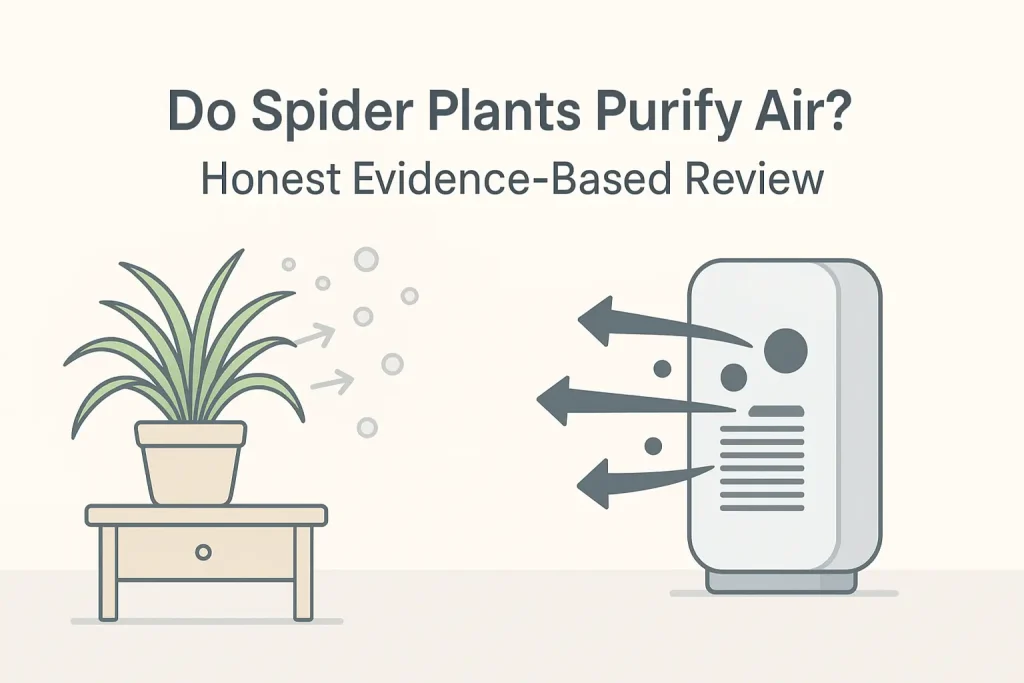
Air purifier sprays and ionic mists rely on chemical deposition or negative ion release to force airborne dust toward floors, rather than physically capturing pollutants with mechanical filtration. These aerosolized products lower airborne particle counts temporarily, but they fail to achieve continuous air cleaning or meet established Clean Air Delivery Rate standards for genuine indoor air quality improvement.
The Quick Answer: Do Air Purifier Sprays and Ionizing Sprays Work?
Ionizing sprays do not genuinely clean indoor air because they only push fine particles onto furniture and floors instead of removing them from your living space. Independent laboratory tests and regulatory guidance confirm these products merely settle dust while introducing unnecessary chemical triggers for sensitive lungs.
True air purification requires continuous mechanical filtration through dense HEPA media and substantial carbon beds. mechanical air purifiers with real HEPA filters capture pollutants at a proven rate above ninety-nine percent. Sprays cannot match this continuous removal standard or protect against long-term allergen exposure.
What Are Air Purifier Sprays and Ionizing Sprays, Exactly?
Marketing Labels vs Technical Reality
Manufacturers package these bottles with aggressive claims about immediate neutralization and complete room sanitization. The technical reality involves simple aerosol chemistry rather than advanced filtration engineering. You are purchasing a liquid dispenser that releases charged molecules or fragrances into a room. The label rarely discloses that the pollutants simply relocate to your carpets and upholstery.
| Photo | Popular Air Purifiers | Price |
|---|---|---|

|
Air Purifiers for Home Large Room up to 1500ft², Tailulu H13 True HEPA Air Purifier for Pets Dust Odor Smoke, Air Purifier for Bedroom with 15dB Quiet Sleep Mode for Bedroom Office Living Room | Check Price On Amazon |
|
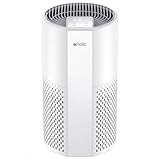
Afloia Air Purifier for Home, 4-in-1 Washable Filter for Allergies, Covers Up to 1076 ft², Quiet Operation, Auto Shut-Off & Night Light, Removes Pet Dander, Pollen, Dust, Mold, and Smoke, White,Pluto | Check Price On Amazon |

|
Nuwave OxyPure ZERO Air Purifier with Washable and Reusable Bio Guard Tech Air Filter, Large Room Up to 2002 Ft², Air Quality Monitor, 0.1 Microns, 100% Capture Irritants like Smoke, Dust, Pollen | Check Price On Amazon |

|
Air Purifiers for Home Large Room Up to 1,996 Ft², EOEBOT Air Purifier for Home Pets with Washable Filter, Quiet Sleep Mode, Air Quality Monitor, Air Purifier for Bedroom, Pet Hair, Dust, Smoke, White | Check Price On Amazon |
|
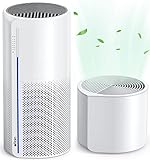
Afloia 2 IN 1 Air Purifier with Humidifier Combo, 3-Stage Filters for Home Allergies Pets Hair Smoker Odors, Evaporative Humidifier, Auto Shut Off, Quiet Air Cleaner with Seven Color Light,White | Check Price On Amazon |
How Negative Ion Sprays Claim to Work
Handheld misters release negatively charged atoms that bind to airborne dust and pollen. This binding process forces heavier clumps to drop to visible surfaces within minutes. The particles never actually leave your indoor environment. You will eventually walk across them or sweep them up, which sends the same harmful particles right back into your breathing zone.
The Difference Between Air Fresheners and True Air Purifiers
A dedicated air cleaner moves room air across a dense filter medium. These mechanical units physically trap microscopic debris inside a sealed barrier. passive odor absorption methods for closed spaces operate on a similar masking principle by soaking up smells without airflow. A spray bottle relies entirely on evaporation and chemical reactions to cover up odors. This fundamental difference determines whether harmful particles disappear permanently or just hide temporarily before returning to your lungs.
The Science Behind Why Sprays Fail to Clean Air
Particle Deposition vs Continuous Filtration
Continuous filtration pulls contaminated air through a dense mesh that traps particles permanently. Deposition relies on gravity to pull charged dust onto hard surfaces. replacement carbon and HEPA filters for home units trap debris until you safely discard them. Deposited particles mix with floor traffic and resuspend instantly. You will notice cleaner air for about fifteen minutes, but the actual room pollution load never decreases.
Ozone Byproducts and Respiratory Risks
Many ionic aerosol products generate trace amounts of ozone as a chemical byproduct. Ozone reacts aggressively with household fragrances and natural terpenes from cleaning supplies. This reaction creates secondary pollutants like formaldehyde and ultrafine particles below point one microns. Breathing these chemical combinations irritates the airway lining and triggers immediate asthma flare ups in sensitive individuals.
Temporary Odor Masking vs VOC Elimination
Volatile organic compounds evaporate continuously from paint, furniture, and new flooring. Spray solutions merely cover these gas emissions with stronger perfumes. Activated carbon filtration uses a porous molecular structure to trap and hold gaseous chemicals permanently. understanding fine particulate matter health risks shows that continuous carbon adsorption is the only proven method for reducing long-term chemical exposure. Masking odors with a spray keeps the toxic gases circulating in your home.
Myth vs Fact
Air Purifier Sprays Myths Debunked – What the Evidence Actually Shows
Separating fact from fiction on the most common aerosol purifier claims. Sources: EPA, CARB, AHAM, peer-reviewed air quality research.
✗ Myth
Ionizing sprays permanently remove pet dander and mold spores from the air.
✓ Fact
Sprays only force heavy particles to settle on rugs and furniture where they resuspend immediately when disturbed. Physical capture through HEPA filtration is required for permanent removal.
✗ Myth
Natural plant-based sprays are completely safe for children and asthma sufferers.
✓ Fact
Natural fragrances contain volatile terpenes that react with trace ozone to form formaldehyde and respiratory irritants. The American Lung Association warns against all aerosolized fragrance products in sensitive households.
✗ Myth
Ionic mists eliminate smoke and wildfire pollution effectively.
✓ Fact
Wildfire PM2.5 particles are too numerous and too small for temporary deposition to handle safely. High-CADR mechanical purifiers running at five air changes per hour are the only proven defense during smoke events.
What Regulatory Agencies Say About Air Sprays and Ozone
EPA Guidance on Ozone-Generating Devices
The Environmental Protection Agency explicitly states that ozone should not be used in occupied indoor spaces. Scientific studies show ozone damages lung tissue even at low concentrations commonly produced by unregulated ionizing products. The EPA strongly recommends using mechanical filtration instead of chemical oxidizers. Relying on aerosol sprays contradicts established public health guidelines for safe indoor air management.
CARB Ozone Limits (0.05 ppm) and Certification
The California Air Resources Board enforces a strict legal ceiling of point zero five parts per million for all consumer air cleaners. Many handheld ionic mists bypass this testing because they are classified as household cleaners rather than air equipment. Units without proper CARB compliance frequently leak ozone concentrations that trigger bronchoconstriction. Checking a device against the official CARB registry remains your strongest protection against unsafe emissions.
AHAM CADR Testing: Why Sprays Cannot Be Rated
The Association of Home Appliance Manufacturers only awards Clean Air Delivery Rate certifications to machines with built-in fans. These ratings measure the exact volume of filtered air delivered each minute under standardized room conditions. Spray bottles lack moving parts and cannot sustain the continuous airflow required for independent verification. Purchasing a product without an AHAM tag guarantees you are guessing at actual purification performance. how industrial air cleaning compares to home models shows why standardized airflow testing matters for every environment.
Comparing Sprays vs Proven Air Purification Technologies
CADR data from the AHAM certified database. Ozone limits established by CARB consumer cleaner regulations. Medical recommendations sourced from AAFA and American Lung Association guidance documents.
Ionizing Sprays vs HEPA Air Purifiers
Handheld ionic misters release temporary charges that drop dust onto tables and floors. testing a popular budget filtration unit proves continuous mechanical removal eliminates those same particles permanently. You must run a HEPA system on a steady fan speed to achieve measurable room cleaning. Sprays cannot sustain the airflow required to cycle your entire room volume multiple times per hour.
Botanical or Enzymatic Sprays vs Activated Carbon Filters
Plant-based mists mask smells with strong natural fragrances rather than neutralizing chemical molecules. Thick carbon beds contain microscopic pores that trap gas molecules through physical adhesion. A spray bottle releases volatile plant oils that eventually evaporate back into your breathing space. Carbon filtration holds odor molecules securely until you replace the saturated filter medium.
Bipolar Ionization (HVAC) vs Handheld Ion Sprays
Whole-house bipolar systems integrate directly into forced air ducts and maintain controlled electrical fields. Handheld aerosol products release unregulated ion clouds that quickly settle on walls. HVAC ionization requires professional commissioning and strict ozone monitoring to operate safely. Portable sprays bypass all safety controls and deliver unpredictable chemical concentrations to your immediate breathing zone.
Myths vs Facts: Air Purifier Sprays in the Home
Myth: “Ionizing sprays remove allergens from the room”
This claim confuses airborne reduction with physical removal. Sprays force pollen and dander onto soft furnishings where they remain trapped for weeks. You will inevitably stir those allergens back into the air during normal walking and vacuuming. True removal requires suction or mechanical capture to permanently extract the particles from your home environment.
Myth: “Natural sprays are completely safe for asthma”
Marketing teams heavily push the word natural to imply medical safety. Essential oil mists contain complex organic compounds that act as direct respiratory irritants. Clinical studies link these airborne botanical vapors to increased wheezing and bronchial inflammation in sensitive groups. Pediatricians consistently recommend avoiding all aerosolized fragrances in households with asthma sufferers.
Fact: Physical removal (HEPA or Vacuuming) is required for settled particles
Once dust drops to the floor, only mechanical action can clear it permanently. High-efficiency vacuums with sealed HEPA systems prevent captured debris from escaping back out the exhaust. You must combine surface cleaning with active air filtration to maintain genuinely low particle counts. Ignoring settled dust guarantees rapid recontamination of the indoor atmosphere.
What Actually Works: A Proven IAQ Improvement Strategy
Step 1: Source Control and Ventilation
Remove obvious pollution sources like harsh chemical cleaners, smoking materials, or heavily fragranced products. Open windows periodically when outdoor air quality indexes fall below moderate levels. Source control eliminates new contaminants at the exact point they enter your living space. Dilution with fresh air provides an immediate but temporary pollution drop.
Step 2: Select a True HEPA Plus Carbon Air Purifier (CADR Sizing Guide)
Check the Clean Air Delivery Rate rating for smoke to gauge real filtration power. Multiply your room length, width, and height to calculate the total cubic footage. Divide that volume by sixty and multiply by your target air changes per hour to find the exact CFM you need. CARB certified HEPA purifiers for allergy relief will always display verified CFM ratings clearly on the packaging.
Step 3: Maintain 5 ACH for Allergy and Asthma Rooms
Manufacturers often list coverage area calculations based on two air changes per hour. Medical guidelines recommend five air changes per hour for bedrooms and primary living zones where people spend extended periods. Running a properly sized unit continuously on low or auto mode achieves this target efficiently. You will notice measurable symptom relief once the room air cycles completely every twelve minutes.
CADR Calculator
How Much CADR Do You Actually Need?
Enter your room dimensions and use case. Formula: (length x width x ceiling height x ACH) divided by sixty. Source: AHAM methodology.
CADR equals (length x width x ceiling height x ACH) divided by 60. Always calculate at 5 ACH for allergy protection to match health guidelines.
| Room Size | CADR at 2 ACH | CADR at 5 ACH | Example Models |
|---|---|---|---|
| 150 sq ft bedroom | 100 CFM | 250 CFM | Compact desktop units |
| 300 sq ft master | 200 CFM | 500 CFM | Mid-range home systems |
| 500 sq ft living area | 333 CFM | 833 CFM | High-CADР dual fan systems |
| 700 sq ft open plan | 467 CFM | 1167 CFM | Multiple units required |
Frequently Asked Questions About Air Purifier Sprays
Are negative ion sprays safe to breathe?
Most aerosolized ionic products release unmonitored chemical blends that trigger respiratory inflammation. Regulatory testing reveals many of these sprays contain volatile solvents that irritate lung tissue immediately. You should avoid breathing these mists directly, especially if you manage asthma or chronic cough.
Can air purifier sprays replace a HEPA filter?
These bottles cannot replicate the continuous mechanical capture of a dense HEPA media filter. Sprays only push particles toward the floor while leaving chemical vapors completely untouched. A running HEPA unit cycles your entire room volume through a physical trap multiple times per hour. Replacement sprays offer zero particle capture capability and zero air movement.
Do any air sprays carry AHAM certification?
The Association of Home Appliance Manufacturers refuses to certify products without mechanical fans and tested airflow rates. No spray bottle currently qualifies for CADR testing or standard performance verification. You will only find AHAM seals on dedicated electric machines that pull air through certified filter cores. Any spray claiming laboratory approval lacks official third-party validation.
How long do ionizing sprays affect indoor air quality?
Visible dust settling typically lasts only fifteen to thirty minutes after mist application. Ambient odors return rapidly once the evaporated fragrance molecules dissipate through ventilation openings. Continuous mechanical systems maintain steady pollutant reduction for twenty-four hours. Relying on a temporary spray leaves your room unprotected for most of the day.
Choosing between spray marketing and verified mechanical filtration comes down to permanent particle removal versus temporary dust settling. Allergy households should invest in a CARB certified unit with sufficient smoke CADR to achieve five air changes per hour in primary living zones. Pet owners must pair vacuuming with active air cleaning to stop dander from recirculating into breathing spaces. Calculate your room cubic footage today and select a certified mechanical purifier that matches your exact CFM requirement.