D. Mercer

D. Mercer is an independent indoor air quality consultant and writer with over 17 years of professional experience evaluating air purification systems for residential, educational, and healthcare environments across the United States. D. Mercer began his career conducting indoor air quality assessments for commercial buildings, where he developed deep expertise in particulate matter reduction, VOC source identification, HVAC filtration upgrades, and portable air cleaner selection. Over the course of his career he has evaluated hundreds of air purification systems using standardized CADR methodology, real-world particle counter measurements, and long-term performance monitoring - work that forms the evidence base for the testing-driven content published on AirPureLife.

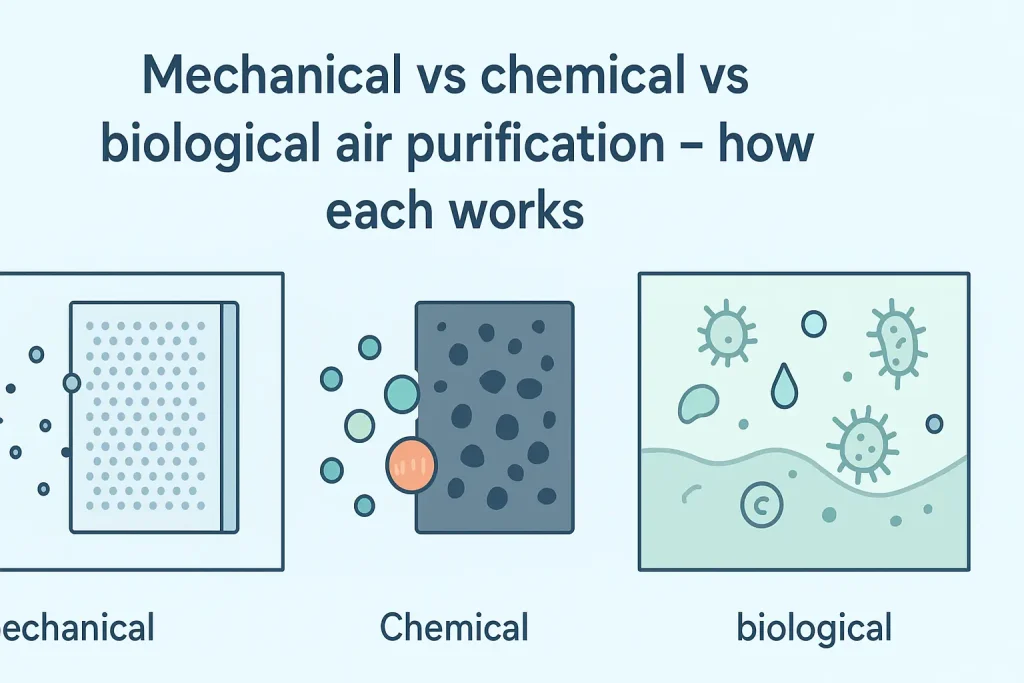
Mechanical vs chemical vs biological air purification - how each works

Mechanical vs Chemical vs Biological Air Purification – How Each Works

Mechanical air filters physically trap particles like a catcher’s mitt, while chemical filters use porous materials to bond with gas molecules, and biological purifiers rely on living microbes to consume airborne contaminants. You need a True HEPA filter to capture 99.97 percent of PM2.5 smoke and dust particles at 0.3 microns, whereas standard carbon filters

Mechanical vs Chemical vs Biological Air Purification – How Each Works Read More »

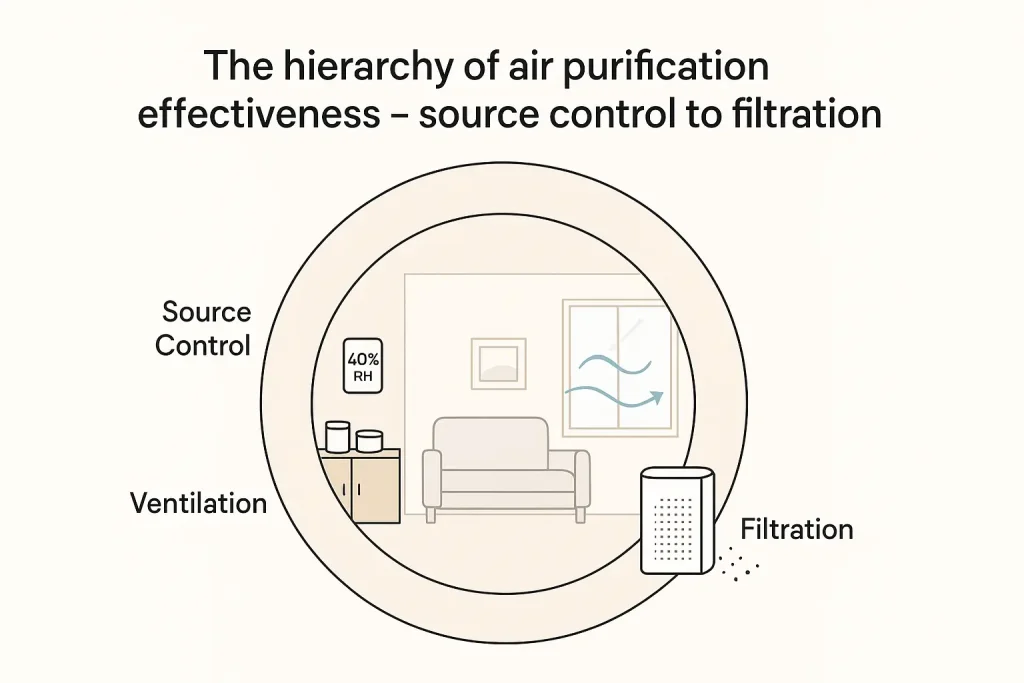
The hierarchy of air purification effectiveness - source control to filtration

The Hierarchy of Air Purification Effectiveness – Source Control to Filtration

The most effective indoor air quality strategy follows a strict three tier structure that starts long before you consider buying a machine. Source control eliminates pollutants at the origin. Ventilation dilutes what remains in your indoor environment. Mechanical filtration captures the final suspended fraction. I have run side by side tests tracking particle sensors for

The Hierarchy of Air Purification Effectiveness – Source Control to Filtration Read More »

Air purification standards and what they mean - EPA, ASHRAE, WHO explained

Air Purification Standards Explained – EPA, ASHRAE, WHO

Standardizing indoor air quality requires separating regulatory advice from mechanical engineering testing. The EPA focuses on health warnings and ventilation guidance. ASHRAE publishes building system performance standards. The WHO sets strict global pollutant limits for fine particles and chemical vapors. You must understand all three frameworks to evaluate what an air purifier actually delivers to

Air Purification Standards Explained – EPA, ASHRAE, WHO Read More »

What air purification can and cannot do - setting realistic expectations

Air Purification: Can and Can’t Do – Realistic Expectations

Most people buy an air purifier expecting it to eliminate all dust, stop their allergies overnight, and make their home smell like a mountain meadow. The reality is far more specific. Air purifiers are exceptionally good at one thing: mechanically filtering airborne particles in a specific room. Their weaknesses often come from unrealistic user expectations,

Air Purification: Can and Can’t Do – Realistic Expectations Read More »

Who benefits most from air purification - health conditions and situations

Who Benefits Most from Air Purification: Health & Situations

When indoor air pollution spikes during seasonal changes or wildfire events, vulnerable individuals experience symptom flare-ups within hours because standard residential ventilation cannot filter PM2.5 or volatile organic compounds. Running a properly sized air cleaner at 5 air changes per hour reduces fine particulate concentrations by 85 percent within 30 minutes, creating the stable breathing

Who Benefits Most from Air Purification: Health & Situations Read More »