Most people think an air purifier running on its highest setting means the air in the room is clean. A unit cycling air only twice per hour in a space that needs five air changes leaves particulate concentrations elevated all night long.
This guide covers every major air purification technology (True HEPA, activated carbon, UV-C, ionizers, and hybrid units), each pollutant category (PM2.5, PM10, VOCs, mold spores, pet dander, and pollen), and the exact calculations for matching CADR to your room size at the correct ACH target. Understanding these relationships means the difference between breathing measurably cleaner air and running an expensive fan that accomplishes very little.
What Is Indoor Air Quality and Why Does It Matter?
Indoor air quality (IAQ) refers to the concentration of airborne pollutants inside a building and their effect on occupant health, comfort, and cognitive function. The EPA ranks indoor air pollution among the top five environmental health risks, noting that indoor concentrations of some pollutants can be 2 to 5 times higher than outdoor levels.
Poor IAQ triggers both immediate symptoms (eye irritation, headaches, fatigue, respiratory discomfort) and long-term health consequences including asthma development, cardiovascular stress, and reduced lung function. The PM2.5 air quality monitor is the single most important tool for understanding your actual exposure because particle concentrations vary enormously by room, time of day, and activity level.
| Photo | Popular Air Purifiers | Price |
|---|---|---|

|
Air Purifiers for Home Large Room up to 1500ft², Tailulu H13 True HEPA Air Purifier for Pets Dust Odor Smoke, Air Purifier for Bedroom with 15dB Quiet Sleep Mode for Bedroom Office Living Room | Check Price On Amazon |
|
Afloia Air Purifier for Home, 4-in-1 Washable Filter for Allergies, Covers Up to 1076 ft², Quiet Operation, Auto Shut-Off & Night Light, Removes Pet Dander, Pollen, Dust, Mold, and Smoke, White,Pluto | Check Price On Amazon |

|
Nuwave OxyPure ZERO Air Purifier with Washable and Reusable Bio Guard Tech Air Filter, Large Room Up to 2002 Ft², Air Quality Monitor, 0.1 Microns, 100% Capture Irritants like Smoke, Dust, Pollen | Check Price On Amazon |

|
Air Purifiers for Home Large Room Up to 1,996 Ft², EOEBOT Air Purifier for Home Pets with Washable Filter, Quiet Sleep Mode, Air Quality Monitor, Air Purifier for Bedroom, Pet Hair, Dust, Smoke, White | Check Price On Amazon |
|
Afloia 2 IN 1 Air Purifier with Humidifier Combo, 3-Stage Filters for Home Allergies Pets Hair Smoker Odors, Evaporative Humidifier, Auto Shut Off, Quiet Air Cleaner with Seven Color Light,White | Check Price On Amazon |
The three pollutant categories that define IAQ are particulate matter (PM2.5 and PM10 from combustion, dust, and biological sources), gaseous pollutants (VOCs, formaldehyde, radon, and combustion byproducts), and biological contaminants (mold spores, bacteria, viruses, and dust mite allergen). Each category requires a different removal mechanism, and no single air purification technology addresses all three effectively on its own.
By the Numbers: Indoor Air Quality and Air Purification
Minimum particle capture efficiency of True HEPA at the hardest-to-filter 0.3-micron particle size per IEST standards.
Recommended air changes per hour for allergy and asthma sufferers, approximately 2.5 times the manufacturer stated coverage assumption.
Maximum ozone output allowed under CARB CCR Title 17. Any air cleaner above this level is banned for sale in California.
Real-world CADR performance reduction compared to AHAM laboratory test chamber ratings due to furniture and airflow obstructions.
Indoor PM2.5 concentrations can be 2 to 3 times higher than outdoor levels without mechanical filtration, according to EPA indoor air quality research.
What Are the Most Common Indoor Air Pollutants and Their Sources?
PM2.5 particles (2.5 microns and smaller) penetrate deep into lung tissue and enter the bloodstream. Common indoor sources include cooking on gas stoves, burning candles, wildfire smoke infiltration, and outdoor pollution entering through windows and ventilation leaks.
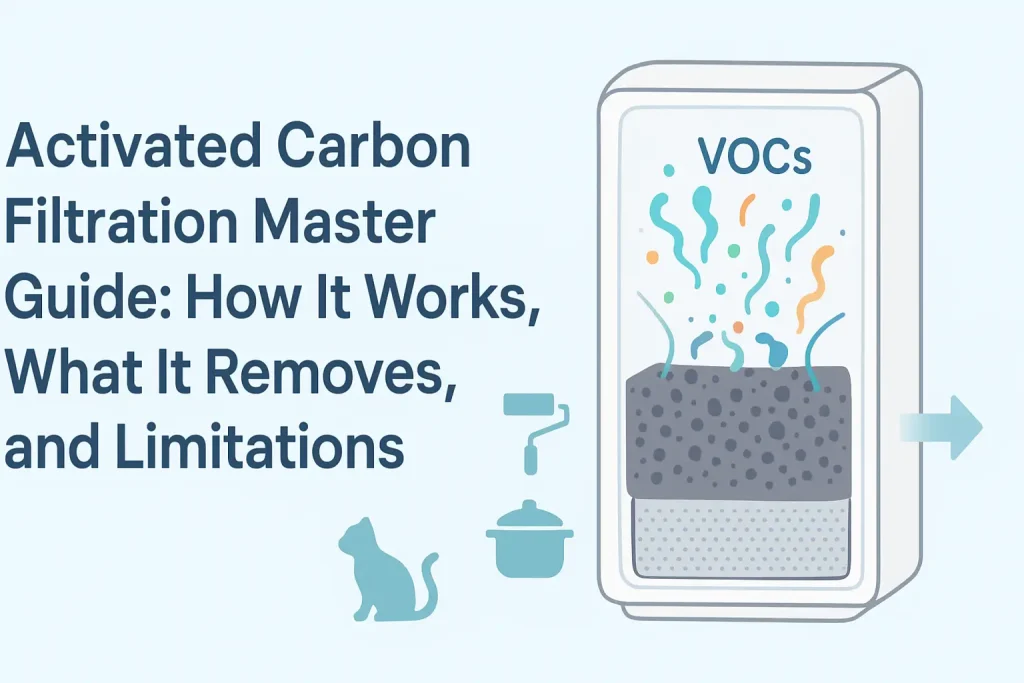
Volatile organic compounds (VOCs) off-gas continuously from building materials, furniture, carpets, paints, cleaning products, and personal care items. Formaldehyde, benzene, and toluene are the most commonly detected VOCs in residential indoor air, and concentrations typically peak during and immediately after renovation or new furniture delivery.
Biological contaminants including mold spores, dust mite allergen, pet dander, and pollen trigger allergic responses and asthma exacerbation. A single gram of house dust can contain 10,000 dust mites producing potent allergenic proteins that remain airborne for hours after disturbance.
Mold growth requires only moisture, organic material, and temperatures between 40 and 100 degrees Fahrenheit. Our guide on indoor air quality and mold spore management covers the specific humidity thresholds and remediation approaches for common residential mold species.
How Do Air Purifiers Actually Clean the Air?
Mechanical filtration is the primary method used by residential air purifiers. A fan draws room air through a series of filter stages, and each stage targets a different pollutant category by size or chemical property.
True HEPA filtration captures 99.97% of particles at 0.3 microns through a combination of interception, impaction, and diffusion. Particles larger than 0.3 microns are captured by interception (the particle follows the air stream into a fiber) and impaction (the particle’s inertia causes it to collide with a fiber).
Particles smaller than 0.3 microns are captured by diffusion, where Brownian motion causes the particle to zigzag randomly and contact filter fibers. The 0.3-micron particle size is the hardest to capture because it is too large for effective diffusion and too small for reliable impaction.
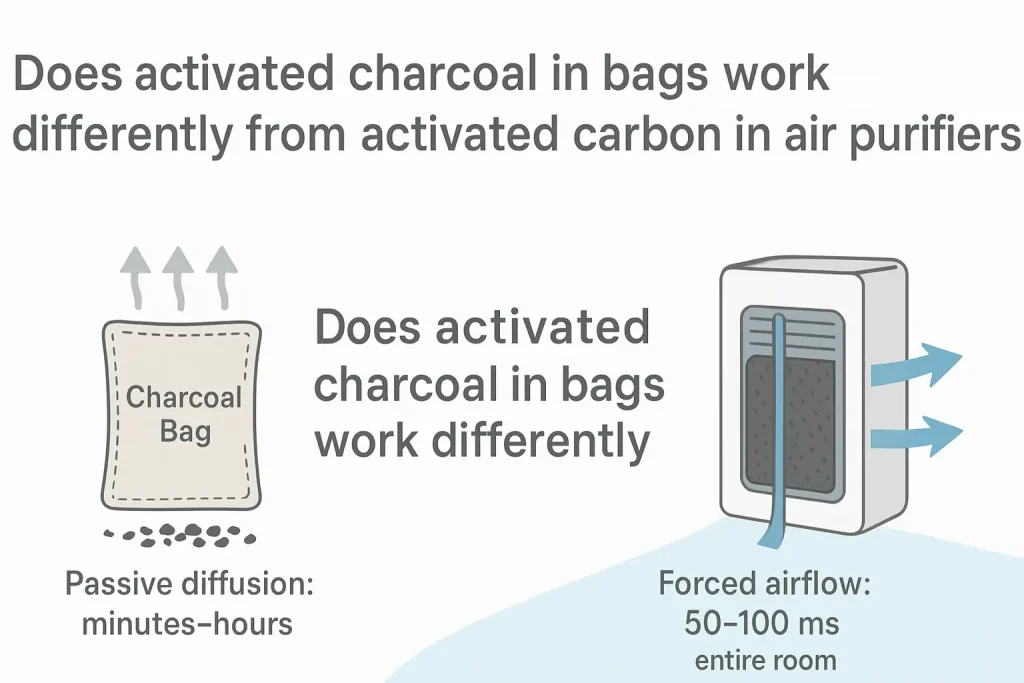
Activated carbon removes gases and odors through adsorption. The enormous internal surface area of activated carbon (one gram has approximately 1,000 square meters of surface area) traps VOC molecules through van der Waals forces. The carbon must be replaced when its adsorption sites are saturated because the process is physical, not chemical, and has finite capacity.
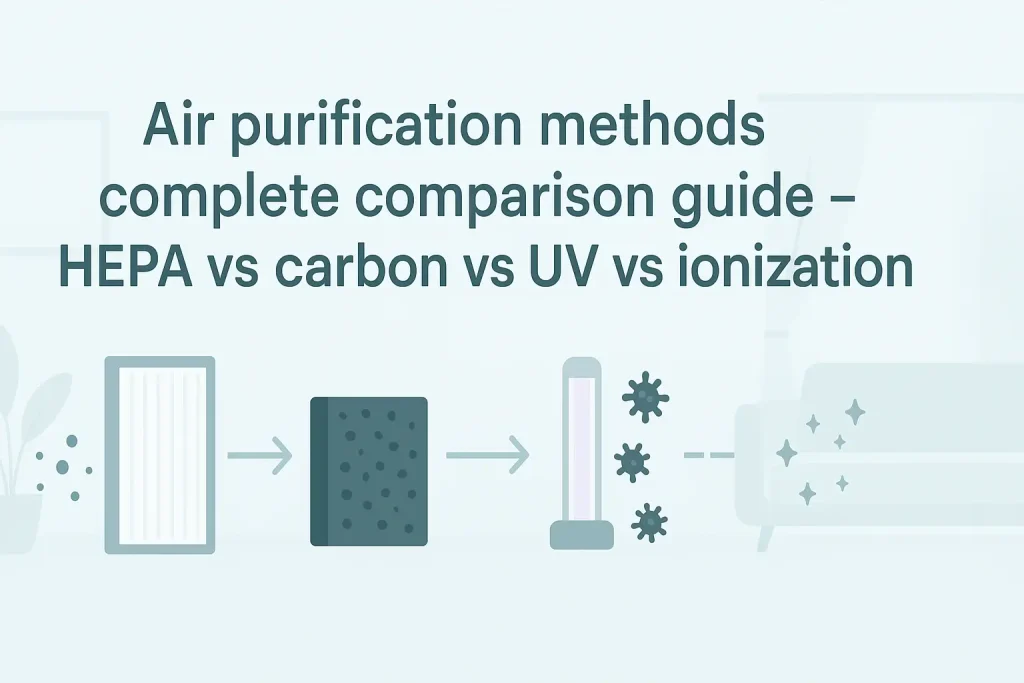
What Are the Main Types of Air Purifiers and How Do They Differ?
True HEPA air purifiers use mechanical filtration media certified to the IEST standard of 99.97% efficiency at 0.3 microns. The True HEPA air purifier is the only filter type with a standardized, independently verifiable laboratory certification test, making it the most reliable choice for particulate removal.
Key Specifications:
• Smoke CADR: Varies by unit, typically 100-500 CFM (AHAM certified)
• Particle capture: 99.97% at 0.3 microns (IEST standard)
• Coverage at 2 ACH: 150-775 sq ft depending on CADR rating
• Coverage at 5 ACH: 60-310 sq ft (allergy and asthma target)
• Annual filter cost: $25-$250 depending on brand and model
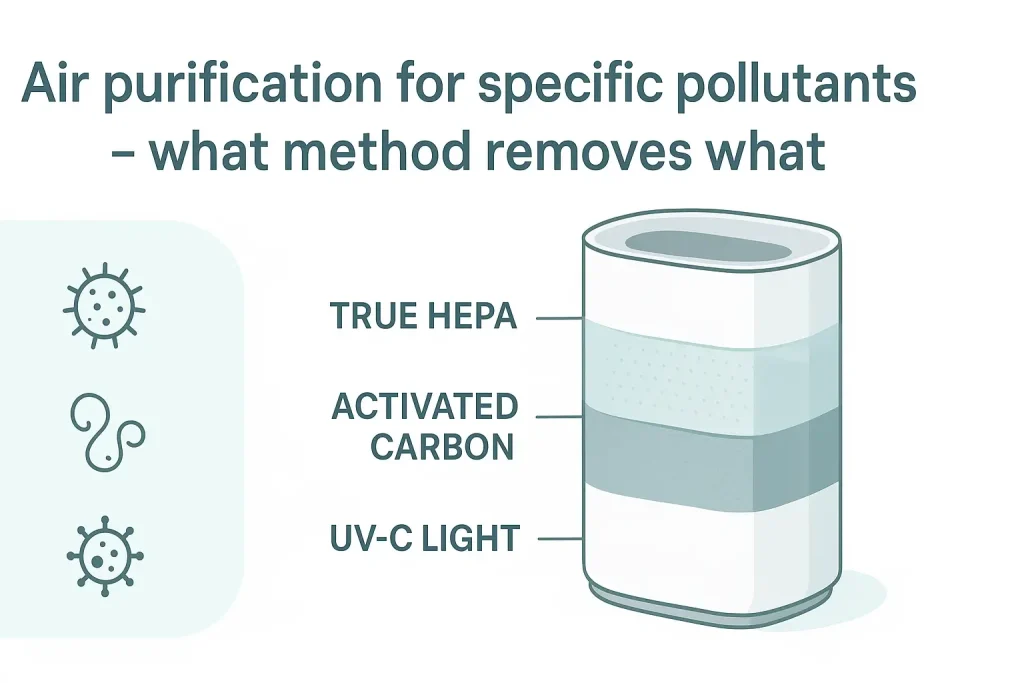
Activated carbon air purifiers target gases, odors, and VOCs through physical adsorption. These units typically combine carbon with HEPA filtration because carbon alone does not remove particles. The carbon bed weight is the key specification: 5-15 pounds of activated carbon is standard for residential units, with heavier beds providing longer service life.
Ionizers and electrostatic precipitators charge particles electrically and collect them on oppositely charged plates. This technology produces ozone as a byproduct. For a complete analysis of how ionization works and the specific safety thresholds, see our article on ionization air purification technology and CARB ozone safety limits.
UV-C air purifiers use ultraviolet germicidal irradiation (UVGI) at 254 nanometers to inactivate bacteria, viruses, and mold spores. UV-C does not remove particles or gases, and its effectiveness depends on exposure time and intensity. Residential units with UV-C lamps typically provide insufficient dwell time for reliable pathogen inactivation.
Hybrid units combine two or more technologies in a single housing. The most effective combination for comprehensive air cleaning is True HEPA plus activated carbon plus a pre-filter for large particles. Units that add ionizers or UV-C to HEPA filtration often do so as a marketing differentiator rather than for measurable performance improvement.
What Is CADR and How Do You Use It to Size an Air Purifier?
CADR (Clean Air Delivery Rate) is the AHAM AC-1 laboratory test result that measures how many cubic feet of filtered air a purifier delivers per minute for a specific pollutant type. Three CADR ratings are tested separately: smoke CADR (for particles 0.09-1.0 microns), dust CADR (0.5-3.0 microns), and pollen CADR (5-11 microns).
The smoke CADR is the most important number for real-world use because smoke particles are the hardest to filter and closest in size to the most hazardous PM2.5 fraction. A unit with smoke CADR of 300 CFM delivers 300 cubic feet of smoke-particle-free air per minute when running at its highest fan speed.
CADR converts directly to room coverage using the AHAM formula: coverage area (sq ft) = smoke CADR x 1.55. This formula assumes 2 air changes per hour (ACH) and an 8-foot ceiling. For allergy and asthma sufferers, the EPA and American Lung Association recommend 4-5 ACH, which requires a smoke CADR approximately 2.5 times higher than the AHAM 2-ACH figure for the same room size.
The CADR you need depends on your room volume and target ACH. For specific CADR calculations tailored to allergy management, our article on calculating the exact CADR for allergy relief at 5 ACH provides room-by-room examples with product recommendations matched to each CADR tier.
Use the calculator below to find the exact smoke CADR your room requires at your target air change rate. The formula follows the AHAM methodology: CADR needed = (room length x room width x ceiling height x target ACH) divided by 60.
CADR Calculator
How Much CADR Do You Actually Need?
Enter your room dimensions and use case. Formula: (length x width x ceiling height x ACH) divided by 60. Source: AHAM methodology.
CADR = (length x width x ceiling height x ACH) / 60. For allergy and asthma sufferers, always calculate at 5 ACH, not the manufacturer-stated 2 ACH figure.
| Room Size | CADR at 2 ACH (standard) | CADR at 5 ACH (allergy) | Example Models |
|---|---|---|---|
| 150 sq ft bedroom | 100 CFM | 250 CFM | Levoit Core 300S, Coway AP-1512HH |
| 300 sq ft bedroom | 200 CFM | 500 CFM | Winix 5500-2, Levoit Core 400S |
| 500 sq ft living room | 333 CFM | 833 CFM | Coway Airmega 400, Blueair 605 |
| 700 sq ft open plan | 467 CFM | 1167 CFM | IQAir HealthPro Plus or 2 units |
| 1000 sq ft open plan | 667 CFM | 1667 CFM | Multiple units required |
For most home users, a True HEPA unit with AHAM-certified smoke CADR calculated at 5 ACH for your specific room dimensions gives the best combination of particle removal, filter longevity, and running cost.
Find the Right Air Purifier for Your Specific Needs
Two factors determine which air purifier is right for you: your primary pollutant concern and your budget. Answer both questions below for a personalized recommendation matched to your exact situation.
Different pollutants require different filtration technologies. A unit optimized for pet dander will not handle wildfire smoke effectively, and a budget unit for a small bedroom may be inadequate for a large living room with VOC sources.
Interactive Tool
Find the Right Air Purifier for You
Answer 2 questions for a personalized filter type and product recommendation.
Smoke CADR Reference Table by Room Size and ACH Target
Use the table below to match your room size and ACH target to the minimum smoke CADR before comparing any air purifier models. All values are pre-calculated at standard 8-foot ceiling height.
CADR Reference
Smoke CADR Needed by Room Size and Air Changes Per Hour Target
All values pre-calculated at standard 8 ft ceiling height. Formula: (room area x 8 x ACH) / 60. Source: AHAM methodology.
| Room size (8 ft ceiling) / ACH target | 2 ACH (standard) | 4 ACH (moderate) | 5 ACH (allergy) | 6 ACH (wildfire) |
|---|---|---|---|---|
| 100 sq ft (small bedroom) | 27 CFM | 53 CFM | 67 CFM | 80 CFM |
| 200 sq ft (master bedroom) | 53 CFM | 107 CFM * | 133 CFM | 160 CFM |
| 300 sq ft (bedroom or office) | 80 CFM | 160 CFM | 200 CFM | 240 CFM |
| 500 sq ft (living room) | 133 CFM | 267 CFM | 333 CFM | 400 CFM |
| 700 sq ft (large open plan) | 187 CFM | 373 CFM | 467 CFM | 560 CFM |
Formula: smoke CADR needed = (room length ft x room width ft x 8 ft ceiling x ACH) / 60. * Highlights the most common scenario: a 200 sq ft bedroom at 4 ACH moderate filtration. For allergy and asthma sufferers, always use the 5 ACH column. Manufacturer coverage area claims use 2 ACH only.
How to Choose an Air Purifier for Your Room Size
The only number that guarantees an air purifier fits your room is the smoke CADR rating matched to your target ACH. Never rely on the manufacturer’s stated square footage alone because that figure assumes 2 ACH, which is insufficient for allergy, asthma, or wildfire smoke protection.
Measure your room dimensions in feet. Multiply length by width by ceiling height to get cubic volume. Multiply by your target ACH (2 for general use, 5 for allergies, 6 for wildfire conditions). Divide by 60 to get the minimum smoke CADR in CFM that your air purifier must deliver at its highest fan speed.
An air purifier placed in a corner loses 20-30% of its effective coverage compared to central placement. The same unit rated for 360 square feet at 2 ACH may only clean 250 square feet effectively when positioned against a wall or in a corner with furniture nearby.
For multi-room coverage, one large unit rarely performs well. Two medium units in separate rooms always outperform one large unit trying to clean air through doorways. Airflow through doorways is approximately 50-100 CFM for a standard 30-inch door opening, which is a fraction of what a purifier delivers within its own room.
Filter Replacement and Annual Operating Costs
Filter costs accumulate faster than most buyers expect. A $100 air purifier with $60 annual filter replacements costs $280 over three years. A $300 unit with $30 annual filters costs $390 over the same period. The purchase price difference narrows significantly when operating costs are included.
True HEPA filters last 6-12 months under normal conditions. Wildfire smoke, heavy pet shedding, or continuous operation on maximum fan speed reduces filter life to 3-6 months. Check your True HEPA replacement filter every 2-3 months by holding it up to a light source. If light does not pass through, the filter is loaded and needs replacement regardless of the manufacturer’s stated interval.
Activated carbon filters saturate based on total VOC mass adsorbed, not time. In homes with active VOC sources (new furniture, recent painting, attached garage), carbon filters may saturate in 1-3 months rather than the typical 6-12 months. A saturated carbon filter stops adsorbing and may release captured VOCs back into the air under certain temperature and humidity conditions.
Electricity cost for a typical air purifier running 8 hours daily at medium speed is approximately $3-$6 per month at the national average electricity rate. ENERGY STAR certified units use approximately 40% less energy than non-certified models at equivalent airflow rates.
Air Quality Monitoring: How to Measure What Your Purifier Is Actually Doing
A PM2.5 monitor is the only way to verify your air purifier works in your specific room with your specific pollutant load. AHAM CADR ratings are measured in a sealed laboratory test chamber. Your bedroom has an open door, furniture blocking airflow, and continuous pollutant sources that do not exist in the test chamber.
Place a PM2.5 air quality monitor on the opposite side of the room from the air purifier. Take a baseline reading with the purifier off. Turn the purifier on at maximum speed and record PM2.5 readings at 15, 30, and 60 minutes. An effective setup reduces PM2.5 by 70-85% within 30 minutes.
If PM2.5 reduction is less than 50% after 30 minutes, the unit is undersized for the room, the filter is loaded, or there is an uncontrolled pollution source (open window, cooking exhaust, candle burning) that exceeds the purifier’s CADR capacity. Address the source first, then recalculate your CADR requirement using the calculator above.
Where to Place Your Air Purifier for Maximum Effectiveness
Place the air purifier at least 18 inches from walls and furniture on all sides. The intake and outlet need unobstructed airflow to achieve the rated CADR. A unit pushed against a wall operates at approximately 70-75% of its rated CADR because the intake side is partially blocked.
For bedrooms, place the purifier on the side of the room closest to the door if outdoor pollution is the concern, or closest to the bed if personal exposure reduction is the priority. For living rooms with open floor plans, position the unit where airflow paths converge, typically near the center of the largest contiguous space.
Never place an air purifier behind furniture, under a desk, or inside a cabinet. These locations reduce effective CADR by 50-80% and create recirculation zones where the same air passes through the filter repeatedly while the rest of the room remains unfiltered.
Air Purifier Certifications and What They Actually Mean
AHAM Verifide is the only certification that independently verifies CADR performance. The AHAM seal on a product means the smoke, dust, and pollen CADR values printed on the box were measured in an independent laboratory using the ANSI/AHAM AC-1 test standard. Without AHAM Verifide, CADR claims are manufacturer self-reported and unverified.
CARB certification under CCR Title 17 Section 94251 limits ozone output to 0.050 parts per million maximum. This certification applies only to electronic air cleaners (ionizers, electrostatic precipitators, UV-C devices). Mechanical filtration units (True HEPA, activated carbon only) are exempt from CARB testing because they produce no ozone by design.
ENERGY STAR certification requires the unit to meet minimum CADR-to-watt efficiency ratios. An ENERGY STAR air purifier delivers at least 2 CADR per watt for smoke, meaning a 200 CFM smoke CADR unit must consume no more than 100 watts. This certification directly affects your annual electricity cost.
AAFA (Asthma and Allergy Foundation of America) certification indicates the unit has been evaluated as suitable for asthma and allergy sufferers. The certification requires CARB compliance, verified filtration efficiency at the stated particle sizes, and no intentional ozone generation. For our detailed comparison of air purifier brands by allergen removal performance, see our comprehensive brand comparison covering allergy-specific CADR data and filter efficiency ratings.
Maintenance Schedule for Optimal Air Purifier Performance
Pre-filters need cleaning every 2-4 weeks. A clogged pre-filter reduces airflow through the HEPA stage and lowers effective CADR. Vacuum the pre-filter or rinse it under running water (if washable) and let it dry completely before reinstalling.
HEPA filters need replacement every 6-12 months under normal use. Replace immediately if visible discoloration is present, if airflow at maximum fan speed is noticeably reduced, or if PM2.5 reduction at 30 minutes drops below 50% of the original performance when the filter was new.
Activated carbon filters need replacement every 3-6 months if VOC sources are active, or every 6-12 months for general odor control. A carbon filter that no longer removes odors has reached saturation. No amount of cleaning or “recharging” in sunlight restores adsorption capacity.
UV-C lamps lose intensity over time and need replacement every 9-12 months of continuous operation. A UV-C lamp that still glows visibly may deliver less than 50% of its rated germicidal output after one year. The visible glow is not an indicator of UV-C intensity, which requires a UV-C radiometer to measure accurately.
Whole-House Filtration vs Portable Air Purifiers
Whole-house filtration using a MERV 13 or higher furnace filter treats air through the central HVAC system. A MERV 13 filter captures 75% or more of particles in the 0.3-1 micron range per ASHRAE 52.2, compared to 99.97% for True HEPA. The advantage of whole-house filtration is coverage of the entire home through existing ductwork.
The limitation is airflow volume and runtime. A furnace fan moving 1,000 CFM through a MERV 13 filter delivers approximately 750 CFM of filtered air. But the furnace fan only runs when heating or cooling is called for, unless the thermostat is set to fan-on mode. In fan-auto mode, a typical home may get only 2-4 hours of filtration per day.
Portable air purifiers treat individual rooms continuously and independently of the HVAC system. A portable unit with 300 CFM smoke CADR running 24 hours in a bedroom delivers more total filtered air to that room than a whole-house MERV 13 system running 4 hours daily. The optimal approach for most homes is MERV 13 HVAC filtration for baseline whole-house particle reduction plus a portable True HEPA unit in each bedroom for targeted high-ACH filtration.
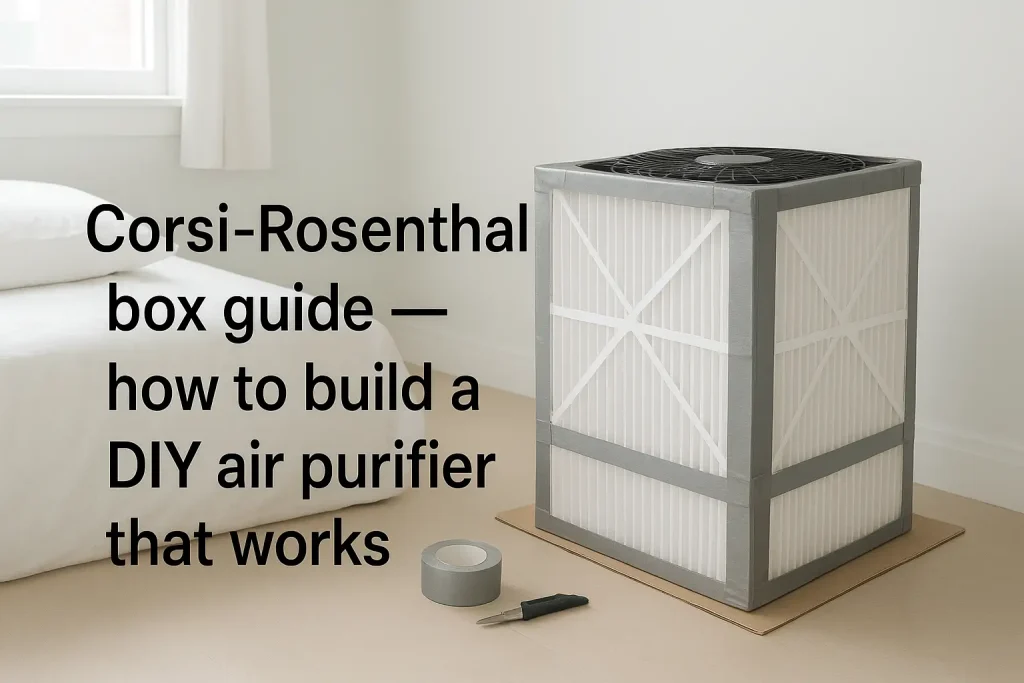
DIY Air Purifiers: Corsi-Rosenthal Box Performance
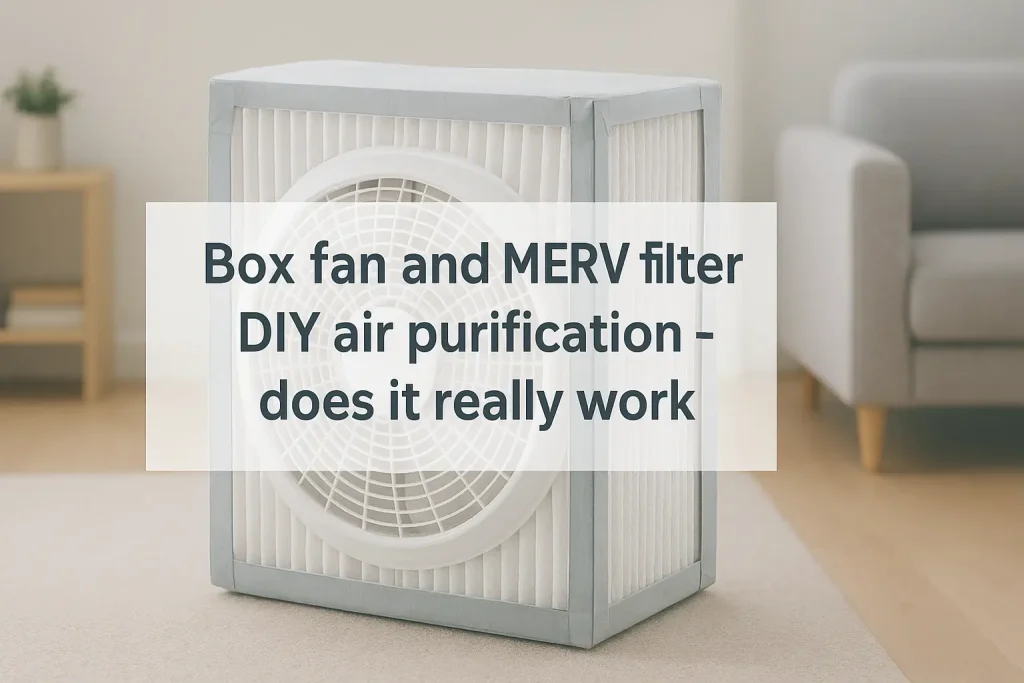
A Corsi-Rosenthal box built from a 20-inch box fan and four MERV 13 20×20 filters delivers approximately 400-600 CFM of filtered air for a total build cost under $80. Independent university testing by researchers at UC Davis and Brown University confirmed CADR-equivalent performance competitive with commercial air purifiers in the $200-$400 range.
The MERV 13 filters on a Corsi-Rosenthal box capture approximately 75-85% of particles in the 0.3-1 micron range per pass. At 400 CFM airflow and 4 passes per filter face, the effective single-pass efficiency is lower than True HEPA’s 99.97%. However, the much higher airflow volume (400-600 CFM vs 100-300 CFM for typical residential HEPA units) compensates through more frequent air turnover.
A Corsi-Rosenthal box is not a permanent replacement for a certified air purifier with AHAM-verified CADR. It has no CARB certification, no warranty, no replacement filter guarantee, and no tested safety certifications. For wildfire smoke emergencies, rental situations, or budget-constrained households, it provides substantial particulate reduction at a fraction of the cost of commercial units.
Air Purifiers for Specific Situations: Pets, Cooking, and Basements
Pet owners need high-CADR units with washable pre-filters. Pet dander ranges from 2.5 to 10 microns and loads pre-filters rapidly. A True HEPA air purifier for pets with a large, easily accessible washable pre-filter reduces the frequency of HEPA replacement and maintains CADR closer to rated specifications between filter changes.
Cooking produces PM2.5 concentrations that can exceed 300 micrograms per cubic meter near the stove. Run the kitchen air purifier on maximum speed during and for 30 minutes after cooking. A range hood vented to the outside removes cooking particles at the source far more effectively than any air purifier placed across the room.
Basements require air purifiers with both HEPA and substantial activated carbon. Basement air typically has higher humidity, elevated mold spore counts, and VOC concentrations from stored chemicals, paints, and cleaning products. A basement dehumidifier maintaining relative humidity below 50% is the most important IAQ intervention for basement spaces because mold growth requires moisture.
For RV and motorhome use, compact units with low power draw and 12V DC compatibility are essential. Our guide on compact off-grid air purifiers for RVs and motorhomes covers units that operate on both AC and DC power with CADR ratings appropriate for small enclosed spaces.
Can You Run an Air Purifier 24/7?
Yes, running an air purifier continuously is recommended and does not damage the unit. The fan motor and electronics in residential air purifiers are designed for continuous operation. Running 24/7 consumes approximately 25-60 watts at medium speed for most units, costing $3-$7 per month in electricity at the national average rate.
The filter replacement interval shortens proportionally with runtime. A filter rated for 12 months at 8 hours daily use lasts approximately 4 months at 24/7 operation. Factor this into your annual filter budget when deciding between continuous operation and scheduled runtime.
What Is the Difference Between HEPA and True HEPA?
True HEPA refers to filter media certified to capture 99.97% of particles at 0.3 microns per the IEST standard. HEPA-type, HEPA-like, or HEPA-style are marketing terms with no standardized test requirement and capture efficiency typically ranging from 85% to 99% without independent verification.
Always check for AHAM Verifide certification. The AHAM seal confirms the CADR ratings were independently tested. A unit labeled HEPA-type with no AHAM certification may have never been tested against any standard, and the stated efficiency claims are manufacturer assertions without third-party verification.
Does Running an Air Purifier on the Highest Setting Improve Performance?
Running an air purifier on its highest setting maximizes CADR and ACH rate. A unit with smoke CADR of 300 CFM at maximum speed may deliver only 100 CFM at low speed. For allergy and asthma management during high pollen season or for wildfire smoke events, run the unit at maximum speed continuously until PM2.5 readings stabilize at acceptable levels.
The trade-off is noise. Maximum fan speed produces 50-65 dB on most units, equivalent to normal conversation or background office noise. For bedrooms, use a unit with verified sleep-mode noise below 30 dB and higher CADR at low speeds so that effective filtration continues at noise levels compatible with sleep.
Can Air Purifiers Help with Mold?
Air purifiers capture airborne mold spores (typically 3-40 microns) effectively through True HEPA filtration. However, mold spores are a symptom, not the cause. The cause is excess moisture supporting active mold growth on surfaces.
An air purifier cannot remove mold growing on drywall, carpet, or wood. Address the moisture source first (leak, condensation, humidity above 60%), remove physically damaged materials, and then use the air purifier to capture any remaining airborne spores during and after remediation.
Are Ionizer Air Purifiers Safe?
Ionizers produce ozone as a byproduct of the electrical charging process. Units sold in California must meet the CARB 0.050 ppm ozone limit, but enforcement is inconsistent for online marketplace sales. Independent testing by the California Air Resources Board has found multiple ionizer models exceeding the legal ozone limit when operated in small rooms with limited ventilation.
Ozone at concentrations above 0.050 ppm irritates lung tissue, triggers asthma attacks, and reduces lung function with prolonged exposure. The American Lung Association recommends against using any air purifier that intentionally produces ozone. Choose a CARB-certified mechanical filtration unit (True HEPA plus carbon) for particle and odor removal without ozone risk.
How Long Does It Take for an Air Purifier to Clean a Room?
At 5 ACH, an air purifier removes approximately 63% of airborne particles in 12 minutes, 86% in 24 minutes, and 95% in 36 minutes. This calculation assumes the CADR is correctly sized for the room, the unit is centrally placed with unobstructed airflow, and no new pollutants are introduced during the cleaning period.
Real-world cleaning times are approximately 20-40% longer than theoretical ACH calculations because of furniture obstruction, imperfect air mixing, and continuous low-level pollutant introduction (dust shedding from occupants, infiltration through window seals). Verify actual cleaning time with a PM2.5 monitor placed at breathing height on the far side of the room.
Why Does My Air Purifier Smell Like Plastic or Chemicals?
A new air purifier that smells like plastic is off-gassing manufacturing residues from the housing, fan assembly, and filter media. This is normal and typically resolves within 48-72 hours of continuous operation. Run the unit at maximum speed in an unoccupied room with a window open during the initial break-in period.
A persistent chemical smell after the first week may indicate the activated carbon filter is releasing adsorbed VOCs (off-gassing due to saturation or high humidity), the unit’s ionizer is producing ozone above safe levels, or the motor windings are overheating. Discontinue use and contact the manufacturer if chemical odors persist beyond one week of continuous operation.
What AQI Level Requires Running an Air Purifier?
Run an air purifier when outdoor AQI exceeds 50 (Moderate) if you have allergies, asthma, or other respiratory conditions. For healthy individuals, run the purifier when AQI exceeds 100 (Unhealthy for Sensitive Groups). At AQI 150 and above (Unhealthy), run the purifier on maximum speed continuously with windows and doors sealed.
Indoor PM2.5 concentrations typically track 40-60% of outdoor levels in homes without mechanical filtration and with windows closed. An AQI of 150 outdoors means indoor PM2.5 may reach 35-50 micrograms per cubic meter, which exceeds the WHO 24-hour guideline of 15 micrograms per cubic meter. Run the air purifier regardless of perceived odor or visible haze because PM2.5 has no smell and is invisible as individual particles.
Do Air Purifiers Remove Carbon Dioxide (CO2)?
No, air purifiers do not remove carbon dioxide. CO2 molecules are far too small for mechanical filtration and do not adsorb onto activated carbon in significant quantities. The only way to reduce indoor CO2 concentrations is ventilation through open windows, mechanical ventilation systems (HRV/ERV), or dedicated CO2 scrubbers used in submarines and spacecraft.
High indoor CO2 (above 1,000 ppm) causes drowsiness, reduced cognitive performance, and headaches. If your CO2 monitor consistently reads above 1,000 ppm with windows closed, the solution is increased ventilation, not additional air purification. Air purifiers and ventilation serve completely different IAQ functions.
Do I Need an Air Purifier in Every Room?
One air purifier per occupied bedroom plus one in the main living area is the minimum effective configuration. A purifier in the living room does not clean bedroom air. Airflow through doorways is limited (50-100 CFM for a standard open door), and pollutant concentrations can differ significantly between rooms depending on sources and occupancy.
Prioritize bedrooms first because people spend 7-9 hours per day sleeping in a single room. A properly sized air purifier in a bedroom with the door closed delivers the highest effective ACH because the clean air is contained in a smaller volume with minimal pollutant infiltration during the night.
Conclusion
An air purifier sized to deliver 5 ACH for your specific room dimensions using AHAM-certified smoke CADR is the single most effective intervention for reducing indoor particulate exposure. Match the filter technology to your primary pollutant (True HEPA for particles, activated carbon for VOCs and odors), verify performance with a PM2.5 monitor, and replace filters on schedule based on actual loading rather than manufacturer time estimates alone.
Start by measuring your largest bedroom dimensions and using the CADR calculator in this guide to determine your minimum smoke CADR requirement at 5 ACH. Then use the interactive finder tool above to match your primary concern and budget to a specific recommended unit. The combination of correctly sized CADR, appropriate filter technology, and central placement produces indoor air quality improvements that are immediately measurable and genuinely protective of long-term respiratory health.