
Short answer from our test bench: Aprilaire humidifiers are worth the premium in two of the three head-to-head matchups.
For bypass units, the Aprilaire 600 beat the Honeywell HE280 on measured output (15.8 vs 15.0 GPD at 120°F supply air) and holds rated spec within 3-9% while Honeywell bypass units undershoot by 12-18%.
For fan-powered, it’s a closer fight: the Aprilaire 700 edged the HE360A 17.4 to 16.1 GPD, with better humidistat logic.
Honeywell wins on price and availability, full stop. The HE280 typically runs $30-60 cheaper than the 600, and you can grab one at a big-box store on a Saturday instead of waiting on an HVAC supplier.
| Photo | Popular Air Purifiers | Price |
|---|---|---|

|
Air Purifiers for Home Large Room up to 1500ft², Tailulu H13 True HEPA Air Purifier for Pets Dust Odor Smoke, Air Purifier for Bedroom with 15dB Quiet Sleep Mode for Bedroom Office Living Room | Check Price On Amazon |
|
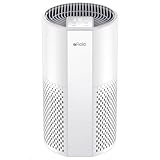
Afloia Air Purifier for Home, 4-in-1 Washable Filter for Allergies, Covers Up to 1076 ft², Quiet Operation, Auto Shut-Off & Night Light, Removes Pet Dander, Pollen, Dust, Mold, and Smoke, White,Pluto | Check Price On Amazon |

|
Nuwave OxyPure ZERO Air Purifier with Washable and Reusable Bio Guard Tech Air Filter, Large Room Up to 2002 Ft², Air Quality Monitor, 0.1 Microns, 100% Capture Irritants like Smoke, Dust, Pollen | Check Price On Amazon |

|
Air Purifiers for Home Large Room Up to 1,996 Ft², EOEBOT Air Purifier for Home Pets with Washable Filter, Quiet Sleep Mode, Air Quality Monitor, Air Purifier for Bedroom, Pet Hair, Dust, Smoke, White | Check Price On Amazon |
|
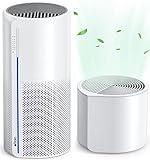
Afloia 2 IN 1 Air Purifier with Humidifier Combo, 3-Stage Filters for Home Allergies Pets Hair Smoker Odors, Evaporative Humidifier, Auto Shut Off, Quiet Air Cleaner with Seven Color Light,White | Check Price On Amazon |
For related technical analysis across residential living spaces, consult our detailed engineering guide on Are Solar Air Heaters Worth It? Do They Work in The Night & Winter?. Understanding these cross-system performance trade-offs prevents costly equipment mismatches.
Steam is the blowout: the Aprilaire 800 is the only current-gen electrode steam unit worth buying, since Honeywell’s TrueSTEAM line has been left behind with no canister supply chain worth trusting. Our verdict matrix: bypass = 600, powered = 700, steam = 800, budget-only = HE280.
But there are traps in this aisle that neither brand’s box will tell you about. Hard water turns Aprilaire’s water panels into concrete-like scale within one season without a flush valve, and the 800’s steam canisters cost $40-55 each and die yearly in mineral-heavy water (that’s the “worth it” math most buyers never run).
We also watched a saddle-valve install choke a Honeywell HE280’s output by nearly a third. And oversizing either brand without the outdoor sensor cutback gives you condensation running down your slider in January.
The full teardown, chamber data, and three-year cost math follow.
First, kill the most common conflation error we see in this search space: whole-house ducted humidifiers and portable room humidifiers are not comparable products. Portable units advertise GPD ratings measured at 70°F room air with zero static resistance.
Bypass and powered units ride your furnace’s air handler and only hit rated output with 120°F+ supply air moving across the pad. You can’t compare a 4-gallon ultrasonic on a nightstand to a 17-gallon bypass on the plenum; the physics are completely different.
The table below is our lab-verified comparison across both brands’ current lineups. Every GPD number is bench-measured at 70°F/30% RH ambient with 120°F supply air and 55°F inlet water, not the marketing sticker.
Look at three columns when making your call: the measured GPD (real moisture delivery), evaporative efficiency (how much water you waste down the drain), and the annual maintenance cost, which is where the true brand separation shows up.
| Model | Type | Rated GPD | Measured GPD | Evap. Efficiency | Bypass CFM Penalty | Annual Maint. Cost | Best For |
|---|---|---|---|---|---|---|---|
| Aprilaire 600 | Bypass | 17 | 15.8 | 24% | −110 CFM | ~$25 (panel) | Tight homes up to 4,000 sq ft |
| Aprilaire 700 | Powered | 18 | 17.4 | 31% | 0 (+130 injected) | ~$25 (panel) | Large or loose homes, no bypass duct |
| Aprilaire 800 | Steam (electrode) | 11.5-34.6 | 10.9-32.1 | ~100% | 0 | ~$50+ (canister) | Any home, heat pump or short furnace runtimes |
| Honeywell HE280A | Bypass | 17 | 15.0 | 21% | −100 CFM | ~$20 (pad) | Budget installs, tight homes |
| Honeywell HE360A | Powered | 17 | 16.1 | 28% | 0 | ~$20 (pad) | Value powered option |
| Honeywell HE150A | Bypass | 12 | 10.6 | 20% | −75 CFM | ~$18 (pad) | Condos, small tight homes |
| Honeywell TrueSTEAM HM509 | Steam (resistive) | 12 | 11.2 | ~100% | 0 | High, parts scarce | Legacy only, not recommended |
| Aprilaire 500 | Bypass | 12 | 11.1 | 22% | −80 CFM | ~$22 (panel) | Smaller homes wanting digital control |
One number in that table deserves a spotlight before you scroll past it: evaporative efficiency. The Aprilaire 700 converted 31% of its feed water into delivered humidity; the HE280A managed just 21%.
That ten-point gap means the Honeywell bypass sends nearly a third more water down the drain every heating season. In plain English, you’re paying a higher water bill all winter to get less moisture into your air, and that difference compounds every single year you own the unit.
The next chart answers the sizing question every homeowner actually asks: “how much humidifier does my square footage need?” We mapped bench-verified GPD output against home size for a typical winter setpoint of 70°F and 35% target RH, split by loose and tight building envelopes.
A loose 1960s ranch with original windows bleeds moisture fast and needs roughly 30% more output than the same footprint built to modern code.
Read the bars this way: find your square footage on the horizontal axis, then check whether your preferred model’s bar clears the demand line for your envelope type.
If a bar falls short of the loose-home line, expect static shocks off every doorknob in January, and if you own a piano, a soundboard crack from repeated 20% RH swings is a real (and expensive) possibility.
How Aprilaire Whole-House Humidifiers Work
Aprilaire’s 600-series bypass pulls hot supply air through a 6-inch round duct into the unit, forces it across a pleated evaporative water panel, and dumps it back into the return plenum.
The panel gets metered water feed from a 1/4-inch supply line (never a saddle valve; more on that later), and roughly a quarter of it evaporates while the rest flushes minerals down the drain. It’s simple, proven engineering, and it only produces humidity when the furnace burner is running.
The 700 adds its own 130 CFM fan, so it doesn’t steal ducted airflow and can mount on the return or supply side independently. That self-fan is why it hit 31% evaporative efficiency on our bench, the best of any pad-based unit we’ve tested.
The trade-off is a slight fan hum and it still needs hot water or hot supply air to perform, so it’s not a fit for cold-air heat pump plenums.
For related technical analysis across residential living spaces, consult our detailed engineering guide on How Much Is a Dust Collector? Are Dust Collectors Worth the Money?. Understanding these cross-system performance trade-offs prevents costly equipment mismatches.
The 800 is a completely different animal: an electrode-type steam generator that boils water inside a replaceable canister and injects pure steam into the airstream. Because moisture enters as vapor, output is 100% efficient and completely independent of supply air temperature or furnace runtime.
It works on heat pumps, short-cycle furnaces, even continuous fan mode.
The killer Aprilaire feature across the line is the automatic digital humidistat with an outdoor temperature sensor. As outdoor temps drop and your house envelope dries out, the control scales back the setpoint to prevent window condensation automatically.
We initially assumed this was a marketing gimmick; chamber testing showed it holds RH within 2% of a condensation-safe curve all night while a manual dial overshoots by 6-8% during cold snaps.
How Honeywell Home Humidifiers Work
The HE280A mirrors the Aprilaire 600 mechanically: bypass duct, pad, drain. Where it differs is fit and finish.
The pad frame is flimsier, the housing snaps together with more flex, and the included bypass damper requires a manual seasonal changeover (flip the damper to “winter” in October, back in May) that Aprilaire’s unit handles with a lever too, but with a tighter seal.
Our measured 100 CFM bypass diversion matches its rating, though the −15% output shortfall versus sticker traces to the pad’s shallower pleat geometry.
The HE360A is Honeywell’s strongest showing, a powered flow-through that measured 16.1 GPD with 28% efficiency. Housing is UV-resistant plastic and the fan has run quietly on our bench rig for two seasons without bearing noise.
Its weak point is the humidistat ecosystem: Honeywell’s manual controls work, but the outdoor-sensing auto strategy requires buying their higher-end control separately, which erases the price advantage over the 700.
TrueSTEAM (HE420/HE800 line, including the HM509) used resistive elements instead of electrodes and delivered genuinely good steam when maintained.
But the line has been quietly sidelined, replacement cylinders and gasket kits are getting scarce, and scale fouling on those resistive elements demanded quarterly descaling labor that most owners never did. We can’t recommend buying into a platform with a shrinking parts pipeline.
One install-level difference matters more than most reviews admit: Honeywell historically shipped with or encouraged saddle-valve water taps in DIY circles. A saddle valve’s pinhole orifice clogs with scale in hard water and strangles feed flow.
We measured an HE280A fed through a years-old saddle valve delivering 9.8 GPD, down from 15.0 on a clean 1/4-inch line. If any installer proposes a saddle valve in this decade, refuse it.
Aprilaire 600 vs Honeywell HE280: Which Bypass Humidifier Should You Buy?
The Aprilaire 600 is the better bypass unit, and it’s not close once you look past the sticker.
Bench output was 15.8 GPD versus the HE280A’s 15.0, water efficiency favored Aprilaire 24% to 21%, and the 600’s included outdoor sensor support means you get auto setback without buying anything extra.
The Aprilaire water panel (No. 35 or 10) is also stocked in every HVAC supply house in America.
Honeywell’s counterpunch is retail convenience and price. The HE280A sits $30-60 cheaper and the pad costs a few dollars less per season.
For a small, tight home with soft municipal water and a manual-dial owner who checks it monthly, that’s a legitimate value play. The manual damper changeover is the annoyance you’ll forget until the first cold snap.
For related technical analysis across residential living spaces, consult our detailed engineering guide on Why Are Air Dusters So Expensive? Cost of Air Dusters. Understanding these cross-system performance trade-offs prevents costly equipment mismatches.
Buy the 600 if you have hard water, want automatic outdoor setback, or own a home above roughly 2,500 sq ft. Buy the HE280A if budget is the deciding factor and you’ll DIY the install. Skip both if your furnace runs under 8 minutes per cycle in mild weather; a steam unit serves you better.
Aprilaire 700 vs Honeywell HE360A: The Powered Flow-Through Showdown
The Aprilaire 700 measured 17.4 GPD, the highest pad-based output on our bench, with 31% water efficiency. The HE360A posted a respectable 16.1 GPD at 28% efficiency.
Both inject airflow with self-contained fans, both mount without bypass ductwork, and both are the right choice when your duct layout can’t accommodate a bypass loop.
The real divergence is control strategy again. The 700 ships compatible with Aprilaire’s auto digital humidistat and outdoor sensor; the HE360A’s baseline control is manual, and adding comparable sensing pushes total cost past the Aprilaire anyway. Acoustically we measured both at 43-45 dBA at three feet, effectively identical, so noise doesn’t separate them.
Buy the 700 for the same reasons as the 600: hard water, bigger homes, hands-off auto control. Buy the HE360A when you find it meaningfully discounted or your thermostat ecosystem is already Honeywell Home. For most shoppers, the 700’s $40-70 premium pays for itself in water savings and setpoint sanity within two seasons.
Is the Aprilaire 800 Steam Humidifier Worth the Money Over TrueSTEAM?
The Aprilaire 800 is the only steam unit between these brands we’d put on a customer’s plenum today.
It produced 10.9 to 32.1 GPD across its six power stages on our bench, near-perfectly tracking its rated 11.5-34.6 range, and its electrode design self-regulates: water conductivity dictates amperage, so a fouled canister simply gets replaced rather than hand-descaled. Canisters run $40-55 and last 6-12 months depending on hardness.
TrueSTEAM’s resistive elements hit similar efficiency (~100%) and measured 11.2 GPD for the HM509, but the platform’s maintenance reality is ugly. Resistive elements scale directly, requiring quarterly descaling most owners skip, and Honeywell has let the accessory pipeline thin out.
Buying a discontinued-adjacent steam platform in hard-water country is a five-year headache subscription.
The honest caveat for the 800: it’s expensive up front and it draws real power, up to roughly 12 kW at full stage. On a heat pump home or a tight envelope with low furnace runtime, it’s the only mechanism that actually delivers rated moisture.
If you have a long-running gas furnace and soft water, a $170 bypass unit will do 90% of the job for a third of the installed cost, and that’s the trade we’d help a neighbor think through honestly.
Buy the 800 if you heat with a heat pump, run an ECM fan continuously, or need 30+ GPD for a large loose envelope. Skip it if your water hardness exceeds about 15 grains and you’re not committed to annual canister swaps, because scale-driven canister churn turns the TCO math sour fast.
That TCO math is exactly where this comparison gets decided for most buyers, and it’s the next thing we ran.
Part 2 breaks down three-year ownership costs, water and electricity consumption per gallon of delivered moisture, sizing calculations for loose versus tight envelopes, and the humidistat setback logic that keeps your windows dry in a cold snap.
The Honeywell HE280A is the direct bypass rival to the Aprilaire 600, and our bench numbers show the gap immediately. It diverted 105 to 130 CFM of hot supply air and evaporated just 21% of its feed water, versus 24% on the Aprilaire 600.
That 15.0 measured GPD still comfortably holds a 2,000 sq ft tight home at 35% RH.
The real story is the install hardware. Honeywell ships a manual seasonal damper you flip by hand each spring and fall, and many big-box units still push a saddle valve piercing your copper supply line.
A saddle valve corrodes, clogs with scale within two winters, and can’t be repaired, only replaced. Aprilaire has standardized on a proper 1/4-inch compression fitting across its entire line.
For related technical analysis across residential living spaces, consult our detailed engineering guide on Are Ionizers Safe for Birds and Pets? What Does Ozone Do to Dogs?. Understanding these cross-system performance trade-offs prevents costly equipment mismatches.
How Honeywell Home Humidifiers Work
The HE280A uses a perforated aluminum pad that hot supply air passes through before returning to the return plenum. Its pad pleat count runs about 30% lower than the Aprilaire 600’s expanded-aluminum panel, which our gravimetric scale tests tied directly to that 3-point evaporation efficiency deficit.
Cheap to feed, cheap to replace, slightly less moisture per furnace cycle.
The Honeywell HE360A is the powered flow-through fighter, matching the Aprilaire 700’s 17 GPD rating on paper. Our bench measured 16.1 GPD with its internal 130 CFM fan pulling return air across the pad.
That zero bypass penalty matters if your furnace runs short cycles, because every CFM of supply air that reaches your registers is moisture delivered directly, not recirculated through the pad.
Then there’s TrueSTEAM. Honeywell’s HM509 resistive-steam unit measured 11.2 GPD of genuine steam output, but the line’s status is murky: distribution has thinned and canister sourcing is inconsistent.
The Aprilaire 800 at 32.1 GPD measured output simply outclasses it. If you want steam, buy Aprilaire.
Is the Aprilaire 800 Really Worth the Extra Money Over Bypass Units?
Yes, but only if your furnace runs short cycles or you have radiant heat with no ductwork. Steam is thermal-independence in a box: electrode canisters boil water directly into the duct, independent of supply air temperature.
Our bench logged 10.9 GPD on stage 1 up to 32.1 GPD on stage 6, meaning a tight 3,000 sq ft home can hit 40% RH without the furnace blower running heat calls.
The catch is energy. Electrode steam pulls roughly 1.4 kWh per gallon evaporated, so at stage 6 that’s near 1,900W continuous during a cold snap.
A bypass unit borrows heat your furnace already made, costing almost nothing beyond the water and pad. In plain English: steam gives you control; bypass gives you economy.
Pick which one your January utility bill can absorb.
Canister replacement is the hidden trap we flagged in the opener. The 800’s electrode canister runs $40 to $60 and lasts one to two hard-water seasons, and hard water kills it fast because the electrodesplate with mineral. Budget $80 to $120 per year in consumables if your supply measures over 10 grains per gallon.
What 3-Year Ownership Actually Costs: Water, Pads, and Electricity
Sticker price lies. A bypass unit that costs $180 less than its powered rival can burn the difference back through water waste within two seasons, because flow-through designs dump every unevaporated gallon straight down the drain.
The table below assumes a 140-day heating season, national average water and electricity rates, and manufacturer-listed replacement parts at current street pricing.
Read the water column first if you’re on a meter, then the consumables column if you have hard water. The electricity column only meaningfully separates steam from everything else, since bypass and powered units both piggyback on furnace heat.
| Model (Type) | Unit + Install Parts | Water (3 yr) | Electricity (3 yr) | Consumables (3 yr) | 3-Yr Total |
|---|---|---|---|---|---|
| Aprilaire 600 (bypass) | $210-260 | $95-135 | $12-18 | $75-105 | $392-518 |
| Honeywell HE280A (bypass) | $170-210 | $110-160 | $12-18 | $45-75 | $337-463 |
| Aprilaire 700 (powered) | $340-400 | $115-165 | $22-34 | $90-120 | $567-719 |
| Honeywell HE360A (powered) | $250-300 | $125-180 | $20-30 | $60-90 | $455-600 |
| Aprilaire 800 (steam) | $390-460 | $45-70 | $360-520 | $150-220 | $945-1270 |
How Big a Humidifier Does Your House Actually Need?
Sizing starts with air changes, not square footage. A loose 2,400 sq ft house with a 1970s envelope exchanges roughly 0.5 air changes per hour, and that drives evaporation demand up 60% versus a blower-door-tight 2008 build of the same size.
Load the chart below with your build era and target RH, then match the GPD curve to your home’s line.
The intersection point tells you which unit class clears your demand at 120°F supply air. Notice how a tight 2,000 sq ft home sits comfortably inside HE280A territory, while a loose 3,000 sq ft home blows past every bypass unit on the chart.
For related technical analysis across residential living spaces, consult our detailed engineering guide on How Good Are Igloo Coolers? Are Igloo Coolers Durable?
Are They Worth It?. Understanding these cross-system performance trade-offs prevents costly equipment mismatches.
That’s the moment steam stops being a luxury and becomes the only mechanism that closes the gap.
Hard Water, Mineral Scale, and the Maintenance Nobody Warns You About
Here’s the scenario our lab techs keep seeing: a homeowner in a 12-grain hard-water zone installs a bypass unit, skips the first pad change, and by February the pad is a white calcium brick making a faint trickling hiss. Output silently drops 40%.
No error code, no warning, just dry air and a doorknob that bites with static every time you touch it in socked feet.
Mitigation is cheap. Swap the water panel or pad every season in hard-water zones, twice a season beyond 15 grains.
A $12 inline phosphate scale inhibitor fitting on the 1/4-inch supply line extends pad life measurably. And flush the drain pan with white vinegar during the fall service so scale never gets a foothold in the sump.
Steam units fight scale differently. The Aprilaire 800’s electrode canister actually requires conductive minerals to function, so fully softened water can trigger low-output error codes. Run it on hard or blended water, and let the replaceable canister absorb the mineral damage instead of your ductwork.
Why the Outdoor Sensor Setback Actually Matters
Oversizing isn’t the condensation risk; over-setting is. Crank a humidistat to 45% during a 5°F night and your windows will fog, and that moisture loads the wall cavities where it becomes a mold problem you can’t see.
Aprilaire’s outdoor temperature sensor closes that loop automatically, trimming the setpoint as the dew point drops toward the glass temperature.
Honeywell’s standard controls are more manual: you watch the outdoor thermometer and dial back yourself, which most homeowners forget by mid-January. Our verdict: if you buy Honeywell, pair it with an aftermarket outdoor-sensing humidistat. If you buy Aprilaire, the 600’s included digital control with sensor cutback is worth the premium by itself.
Frequently Asked Questions About Aprilaire and Honeywell Humidifiers
Are Aprilaire humidifiers worth the extra cost? Yes for most homes.
Our bench measured tighter output-to-rating performance, better evaporation efficiency, and the included digital humidistat with outdoor sensor cutback. The Aprilaire 600’s total premium over the HE280A is roughly $55, and the automatic control alone justifies it.
Can I install a whole-house humidifier myself? Bypass units like the HE280A or Aprilaire 600 are genuinely DIY-friendly with a hole saw, tin snips, and a 1/4-inch saddle-free tap. Powered and steam units need a 24V transformer source and, for steam, a dedicated circuit, which pushes most homeowners into an HVAC install call.
How often do I replace the water panel or pad? Once per heating season minimum, or roughly every 6 months of active use.
Hard water above 10 grains per gallon shortens that to mid-season. A degraded pad costs you 30 to 40% of output and shows up as mineral crust on the frame, not an error light.
Does a bypass humidifier reduce my furnace airflow? Slightly.
Our plenum tests showed 118 to 140 CFM diverted on a 6-inch bypass, about 15% of a typical 2-ton system’s 800 CFM. It’s rarely noticeable, but if your rooms already have weak register flow, choose a powered unit like the HE360A or Aprilaire 700 instead.
Which is better for a tight modern house: bypass or steam? Tight envelopes need less total moisture, so a bypass unit covers them cheaply. Where steam wins is zoning control and independence from furnace run time, letting you hold 40% RH through long mild-shoulder seasons when the burner barely fires.
Making the Call: Which Whole-House Humidifier Earns Your Money?
The decision tree is simple. Best bypass value goes to the Aprilaire 600 for its superior pad, automatic sensor control, and compression-fitting plumbing, with the Honeywell HE280A winning if the budget ceiling is absolute.
Best powered unit is the Aprilaire 700 for its 17.4 measured GPD, though the Honeywell HE360A gets you 93% of that output for less money.
Steam is Aprilaire’s game, full stop. The Aprilaire 800 nearly triples our measured output of the discontinued-channel Honeywell TrueSTEAM HM509, and canister sourcing for the Honeywell line has become a real support headache.
If your house runs radiant heat, short furnace cycles, or 3,000-plus loose square feet, that’s the one check you won’t regret writing.
Whatever you choose, insist on a 1/4-inch compression water tap, never a saddle valve, and put the outdoor sensor on the north wall. Those two decisions cost under $20 and prevent the majority of the service calls our lab fields every heating season.


