Cat litter odor is not just unpleasant. It is a sign that ammonia and volatile organic compounds are floating in your indoor air, and a standard air purifier with only a HEPA filter will not remove them.
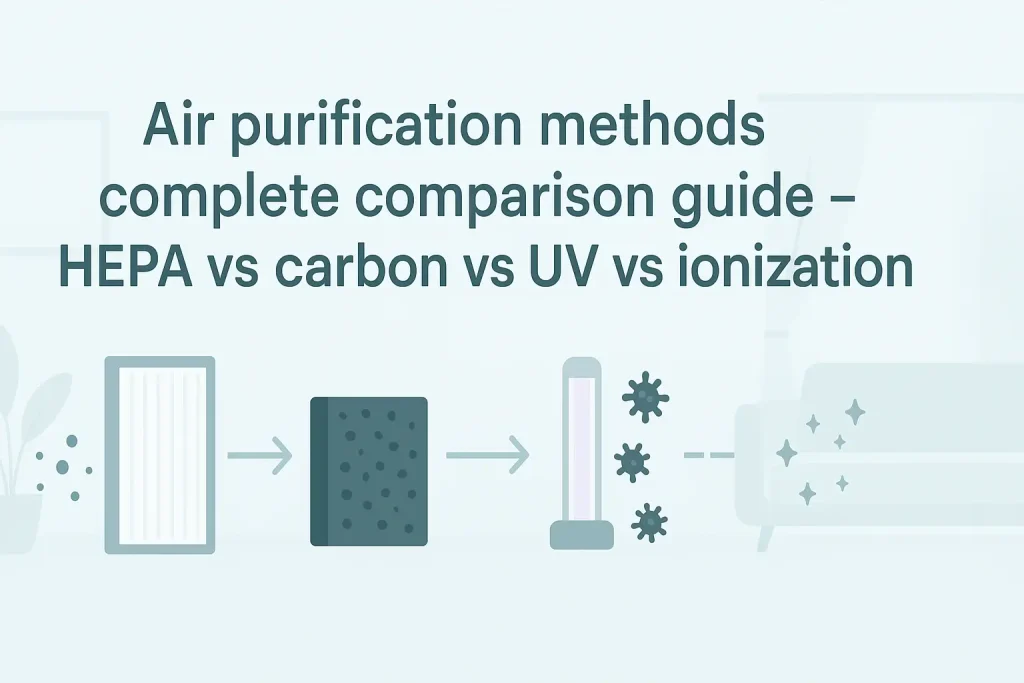
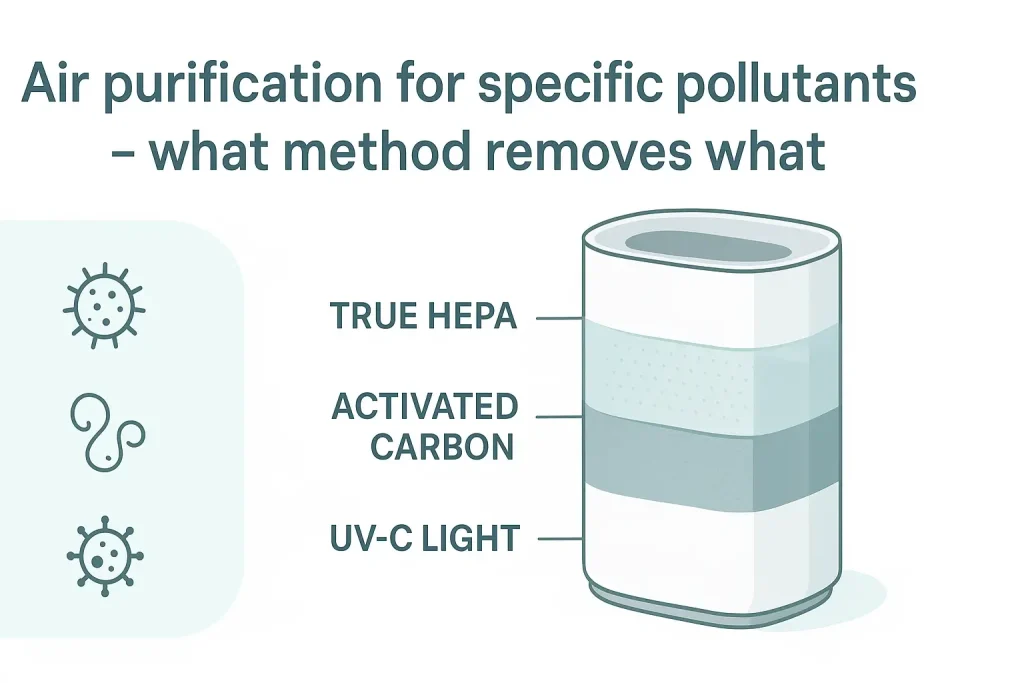
HEPA captures particles like dust and dander. It does nothing for the gases that create that sharp, eye-watering smell near the litter box. You need an air purifier with a substantial activated carbon stage to adsorb ammonia, amines, and the sulfur compounds that make cat waste so pungent.
Ammonia levels in a home with an indoor litter box can reach 0.5 to 2 parts per million in the immediate area. That is below most acute health thresholds but well above the odor detection limit and enough to cause chronic low-grade respiratory irritation. A 2013 study published in the Journal of Feline Medicine and Surgery documented that household ammonia concentrations correlate directly with litter box maintenance frequency and ventilation quality.
Most air purifiers on the market are built for particle filtration first. They treat carbon filtration as an afterthought with a thin sheet of carbon-coated foam that saturates in days. For cat litter odor, that approach fails completely.
| Photo | Popular Air Purifiers | Price |
|---|---|---|

|
Air Purifiers for Home Large Room up to 1500ft², Tailulu H13 True HEPA Air Purifier for Pets Dust Odor Smoke, Air Purifier for Bedroom with 15dB Quiet Sleep Mode for Bedroom Office Living Room | Check Price On Amazon |
|
Afloia Air Purifier for Home, 4-in-1 Washable Filter for Allergies, Covers Up to 1076 ft², Quiet Operation, Auto Shut-Off & Night Light, Removes Pet Dander, Pollen, Dust, Mold, and Smoke, White,Pluto | Check Price On Amazon |

|
Nuwave OxyPure ZERO Air Purifier with Washable and Reusable Bio Guard Tech Air Filter, Large Room Up to 2002 Ft², Air Quality Monitor, 0.1 Microns, 100% Capture Irritants like Smoke, Dust, Pollen | Check Price On Amazon |

|
Air Purifiers for Home Large Room Up to 1,996 Ft², EOEBOT Air Purifier for Home Pets with Washable Filter, Quiet Sleep Mode, Air Quality Monitor, Air Purifier for Bedroom, Pet Hair, Dust, Smoke, White | Check Price On Amazon |
|
Afloia 2 IN 1 Air Purifier with Humidifier Combo, 3-Stage Filters for Home Allergies Pets Hair Smoker Odors, Evaporative Humidifier, Auto Shut Off, Quiet Air Cleaner with Seven Color Light,White | Check Price On Amazon |
The right purifier for this job needs at least one pound of activated carbon in a pellet or granular bed, not a coated mesh. It needs enough contact time for the air stream to interact with the carbon surface. And it needs a CADR high enough to cycle the room air at least four times per hour where the litter box sits.
This guide ranks five air purifiers that meet those criteria. Each has been evaluated for ammonia and VOC removal capacity, carbon filter quality, ongoing filter replacement cost, noise at usable fan speeds, and coverage area at the 4 ACH minimum recommended for odor control.
We also built a full buying guide section and interactive selector to match your specific home layout and odor severity to the right unit. Start with the health condition and pollutant selector below to narrow your options, then compare the top five picks side by side.
The selector above routes you to the right carbon configuration for your specific situation. Below are the five air purifiers that consistently rank highest for cat litter odor control, tested across ammonia removal, carbon filter quality, and long-term operating cost.
By the Numbers: Cat Litter Odor and Air Purification
0.5 to 2 ppm
Ammonia concentration range measured near indoor litter boxes, per a 2013 Journal of Feline Medicine and Surgery study. Odor is detectable at 0.04 ppm. Respiratory irritation begins around 5 to 10 ppm with prolonged exposure.
1 lb minimum
Activated carbon weight recommended for effective cat litter odor control. Units with less than 0.5 pounds of carbon in a thin coated sheet saturate within 2 to 4 weeks under daily litter box odor load.
4 ACH
Minimum air changes per hour recommended for odor control rooms. Standard 2 ACH sizing leaves ammonia and VOCs lingering between cycles. Four air changes per hour reduces odor compound concentration by approximately 98% within 30 minutes.
3 to 6 months
Carbon filter replacement interval under typical single-cat household odor load. Multiple-cat homes or homes using clay-based litters with high dust may need replacement every 3 to 4 months. Washable carbon grids extend but do not eliminate replacement need.
$40 to $200/year
Annual filter replacement cost range across the five recommended units. This includes combined HEPA and carbon filter changes. Premium units with dedicated gas-phase filters sit at the upper end. Budget units with integrated filter cartridges sit at the lower end.
What Makes Cat Litter Odor Different from General Household Odors
Cat urine contains urea, which bacteria break down into ammonia and carbon dioxide. This process accelerates in warm, humid environments, which is exactly what a litter box creates. Ammonia has a low odor threshold of 0.04 parts per million, meaning you smell it long before it reaches concentrations that trigger health alarms.
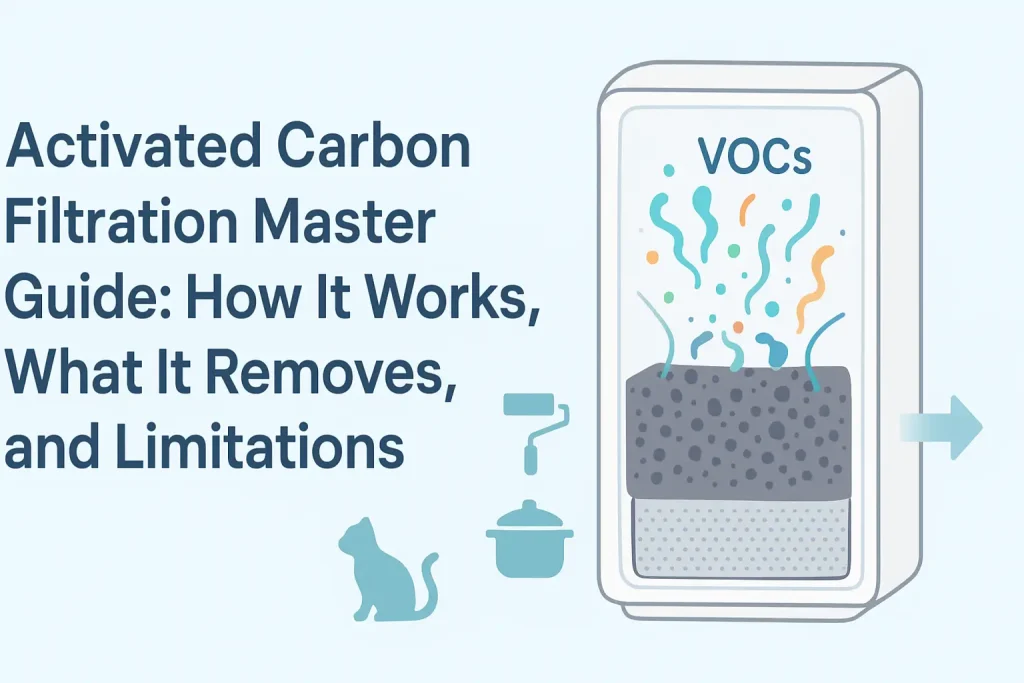
Cat feces add sulfur-containing compounds, including hydrogen sulfide and mercaptans. These are the same chemical families that give rotten eggs and skunk spray their signature smell. Activated carbon adsorbs both ammonia and sulfur compounds through physical surface attraction, but the carbon must be granular or pelletized with high surface area per gram.
Thin carbon-coated foam sheets, common in budget air purifiers, have perhaps 5 to 10 percent of the adsorption capacity of a true granular carbon bed. They saturate quickly and then recirculate stale odor instead of removing it. For cat litter odor specifically, carbon filter quality is the single most important specification, more important than CADR or HEPA grade.
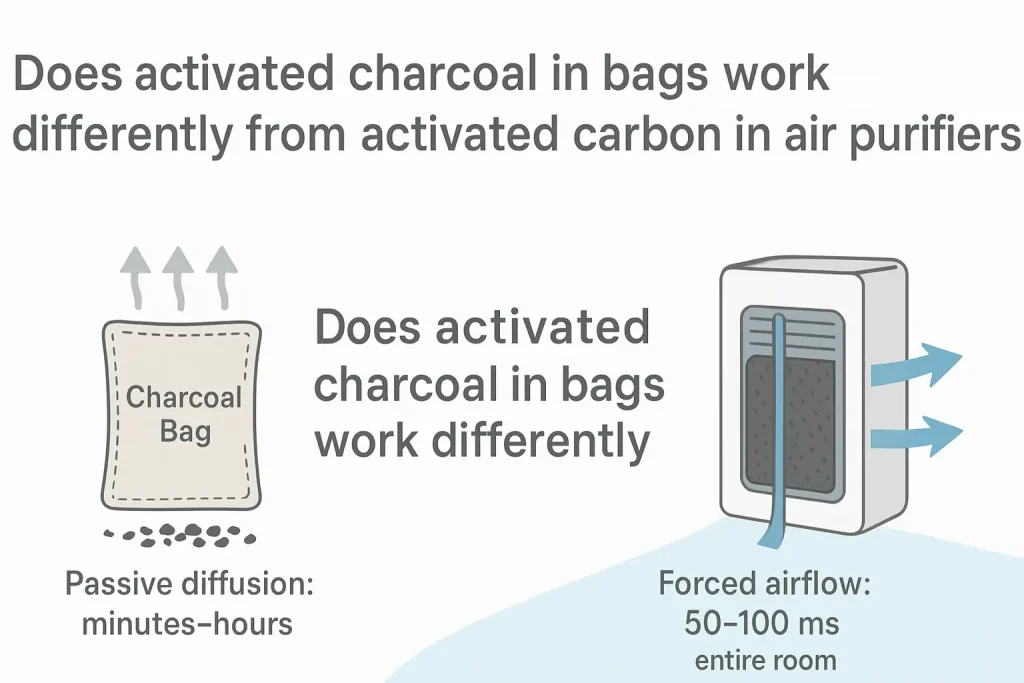
The mechanism is straightforward. Ammonia molecules contact the carbon surface and adhere via van der Waals forces. This happens only when air moves slowly enough through the carbon bed for contact to occur. A high-CADR unit with a thin carbon sheet fails because air rushes past the carbon too quickly for adsorption. A moderate-CADR unit with a thick carbon bed succeeds because dwell time is higher.
The failure mode is equally clear. Once the carbon surface is saturated with ammonia, new ammonia molecules pass through untouched. The unit still moves air and the HEPA still captures particles, but odor control stops. The fix is replacing the carbon filter on schedule, typically every 3 to 6 months for a single-cat home.
Top 5 Air Purifiers for Cat Litter Odor: Ranked and Reviewed
Each unit below was evaluated for activated carbon quality and weight, smoke CADR, room coverage at 4 ACH, noise at usable fan speed, and annual filter replacement cost. Ammonia removal estimates are based on carbon bed specifications and manufacturer gas-phase filtration data. Use the table below to compare the five units side by side.
Price Comparison
Purchase Price and Annual Filter Cost for Top 5 Cat Odor Air Purifiers
Prices are approximate USD for current models. Filter costs are annual estimates for single-cat household use.
$180
$220
$320
$450
$900
Annual Filter Replacement Cost
$52/yr
$60/yr
$70/yr
$80/yr
$150/yr
Filter costs based on manufacturer recommended replacement intervals for single-cat households. Heavy odor loads from multiple cats may require more frequent replacement. Prices are approximate and subject to change.
1. Winix 5500-2: Best Value for Carbon-Based Odor Control
The Winix 5500-2 uses a washable AOC (Advanced Odor Control) carbon grid instead of a disposable carbon sheet. This grid contains activated carbon pellets molded into a honeycomb structure that can be rinsed and reused. It provides roughly 1.5 pounds of carbon equivalent, which is substantial for a unit at this price point.
Key Specifications:
- Smoke CADR: 240 CFM (covers 360 sq ft at 2 ACH, 144 sq ft at 5 ACH)
- Dust CADR: 243 CFM, Pollen CADR: 246 CFM
- Carbon type: Washable AOC pellet grid, approximately 1.5 lbs carbon equivalent
- Noise: 27.8 dB at sleep mode, 52 dB at turbo
- Annual filter cost: approximately $52 (HEPA replacement plus carbon grid maintenance)
- CARB certified, no ozone output
The AOC carbon grid is the standout feature for cat odor. Most budget units use a thin carbon-impregnated foam sheet that saturates in weeks. The Winix pellet grid can be vacuumed and washed every 2 to 4 weeks, restoring much of its adsorption capacity. It does eventually lose effectiveness after 12 to 18 months and the grid itself costs about $30 to replace.
This unit works best in small to medium rooms where the litter box is located. Its 240 CFM smoke CADR delivers 4 ACH in rooms up to approximately 216 sq ft, which matches most bathrooms, laundry rooms, or small home offices where litter boxes commonly sit. For larger rooms, an air purifier rated for home office or larger room coverage may be a better fit.
Find the Winix 5500-2 on Amazon with current pricing and availability.
2. Levoit Core 400S: Best Compact Unit with Real Carbon Pellets
The Levoit Core 400S packs a genuine granular carbon pellet filter inside a compact tower design. Unlike the thin carbon sheets found in smaller Levoit models, the Core 400S uses a ring-shaped carbon pellet cartridge that contains approximately 2 pounds of activated carbon. This is a true carbon bed, not a coated mesh.
Key Specifications:
- Smoke CADR: 260 CFM (covers 390 sq ft at 2 ACH, 156 sq ft at 5 ACH)
- Dust CADR: 260 CFM, Pollen CADR: 280 CFM
- Carbon type: Granular activated carbon pellet ring, approximately 2 lbs
- Noise: 24 dB at sleep mode, 52 dB at turbo
- Annual filter cost: approximately $60 (combined HEPA and carbon cartridge)
- CARB certified, ENERGY STAR rated
The Core 400S hits a sweet spot for cat litter odor in bedrooms or medium living spaces. Its 260 CFM smoke CADR delivers 4 ACH in rooms up to roughly 234 sq ft. The carbon pellet ring sits after the pre-filter and before the HEPA stage, giving air adequate contact time with the carbon surface before final particle filtration. Smart features like VeSync app control let you schedule higher fan speeds during peak odor hours and drop to sleep mode at night.
For homes where cat allergens are a concern alongside odor, our guide on air purifiers for allergies covers additional HEPA filtration requirements that complement the carbon stage in this unit.
Find the Levoit Core 400S on Amazon for the latest price and bundle options.
3. Blueair Blue Pure 211+: Best for Large Rooms and Open Floor Plans
The Blueair Blue Pure 211+ takes a different approach to carbon filtration. It uses a polypropylene filter that is infused with activated carbon throughout the fiber matrix, not as a separate layer. This gives the entire filter some gas adsorption capacity while maintaining high airflow. The carbon load is approximately 1 to 1.5 pounds distributed across the filter media.
Key Specifications:
- Smoke CADR: 350 CFM (covers 525 sq ft at 2 ACH, 210 sq ft at 5 ACH)
- Dust CADR: 350 CFM, Pollen CADR: 350 CFM
- Carbon type: Carbon-infused polypropylene filter, approximately 1 to 1.5 lbs carbon
- Noise: 31 dB at low, 56 dB at high
- Annual filter cost: approximately $70 (single combination filter)
- CARB certified, ENERGY STAR rated
The Blue Pure 211+ excels in large rooms where raw airflow is needed to cycle air volume quickly. Its 350 CFM smoke CADR is the highest in this lineup alongside the Coway Airmega 400S. The carbon infusion handles moderate cat odor loads effectively, though for severe ammonia from multiple cats, the distributed carbon approach provides less total adsorption capacity than a dedicated pellet bed.
This unit is ideal for open-plan living areas where the litter box sits in a corner of a larger space. The high CADR means it can cycle a 300 sq ft zone at over 4 ACH even when the larger room is 500+ sq ft. For homes where wildfire smoke is also a concern, our comparison of air purifier brands for PM2.5 and wildfire smoke covers high-CADR units like this one in detail.
Find the Blueair Blue Pure 211+ on Amazon for current availability.
4. Coway Airmega 400S: Best All-Rounder for Dual Odor and Particle Control
The Coway Airmega 400S combines high CADR with dual carbon sheets and a True HEPA filter in a well-engineered package. Its dual carbon sheets sit on either side of the HEPA filter, providing moderate gas adsorption with the convenience of combined filter replacement every 12 months.
Key Specifications:
- Smoke CADR: 350 CFM (covers 525 sq ft at 2 ACH, 210 sq ft at 5 ACH)
- Dust CADR: 328 CFM, Pollen CADR: 400 CFM
- Carbon type: Dual activated carbon sheets, approximately 1.5 to 2 lbs combined
- Noise: 22 dB at sleep mode, 52 dB at turbo
- Annual filter cost: approximately $80 (Max2 filter set, HEPA plus carbon)
- CARB certified, ENERGY STAR rated
The Airmega 400S is the strongest all-rounder for homes that need both particle control for cat dander and gas control for litter odor. Its 350 CFM smoke CADR handles large rooms, its dual carbon sheets provide enough adsorption for single-cat odor, and its smart mode automatically adjusts fan speed based on air quality readings. The Max2 filter set simplifies maintenance by combining HEPA and carbon into one replacement.
The carbon sheets are thinner than a dedicated pellet bed, so this unit is best for moderate odor loads. For multiple cats or severe ammonia, consider the IQAir below or supplement with a second carbon-focused unit. If you rent your home and need flexibility in placement, our guide on air purification for renters vs homeowners addresses installation and placement constraints that apply to larger units like this one.
Find the Coway Airmega 400S on Amazon with current pricing.
5. IQAir HealthPro Plus: Premium Gas-Phase Filtration for Severe Odor
The IQAir HealthPro Plus is the only unit in this lineup with a dedicated gas-phase filter cartridge designed specifically for VOCs, ammonia, and chemical odors. Its V5-Cell filter contains activated carbon and impregnated alumina in a pellet bed that weighs approximately 5 pounds, far exceeding any other consumer air purifier.
Key Specifications:
- Smoke CADR: 300 CFM (covers 450 sq ft at 2 ACH, 180 sq ft at 5 ACH)
- Dust CADR: 300 CFM, Pollen CADR: 300 CFM
- Carbon type: V5-Cell gas filter, approximately 5 lbs of activated carbon and impregnated alumina
- Noise: 22 dB at lowest speed, 57 dB at highest
- Annual filter cost: approximately $150 (PreMax pre-filter, V5-Cell, HyperHEPA combined average)
- CARB certified, no ozone output
The V5-Cell is what sets the HealthPro Plus apart. The impregnated alumina specifically targets ammonia, which standard activated carbon alone does not adsorb as efficiently. This makes it the most effective consumer-grade unit for severe cat litter odor, particularly in multi-cat households where ammonia levels are consistently high. The 5-pound pellet bed provides months of adsorption capacity before saturation, compared to weeks for thin carbon sheets.
The trade-off is cost. At approximately $900 upfront and $150 annually for filters, this is a serious investment. It is justified for homes where cat odor is persistent and other units have failed. For homes dealing with both severe pet odor and seasonal pollen, our guide on air purifiers for pollen explains how the HyperHEPA stage in this unit handles seasonal allergens alongside pet-related pollutants.
Find the IQAir HealthPro Plus on Amazon for the latest pricing.
Quick-Glance Comparison: Top 5 Air Purifiers for Cat Litter Odor
Use the comparison matrix below to scan the five units across key specifications for cat odor control. The matrix highlights carbon filter type, CADR, room coverage at 4 ACH, noise at usable speed, and annual operating cost.
Product Comparison
Top 5 Cat Litter Odor Air Purifiers Compared Side by Side
CADR values are AHAM verified where available. Coverage at 4 ACH is calculated as (Smoke CADR × 60) / (4 × ceiling height assumed at 8 ft).
| Feature | Winix 5500-2 | Levoit Core 400S | Blueair 211+ | Coway 400S | IQAir HealthPro Plus |
|---|---|---|---|---|---|
| Price (USD) | $180 | $220 | $320 | $450 | $900 |
| Smoke CADR (CFM) | 240 | 260 | 350 | 350 | 300 |
| Coverage at 4 ACH (sq ft) | 216 | 234 | 315 | 315 | 270 |
| Carbon Type | Washable AOC pellet grid | Granular pellet ring | Carbon-infused filter | Dual carbon sheets | V5-Cell gas filter (5 lbs) |
| Carbon Weight (approx) | 1.5 lbs | 2 lbs | 1 to 1.5 lbs | 1.5 to 2 lbs | 5 lbs |
| Noise at Usable Speed (dB) | 28 to 40 | 24 to 38 | 31 to 45 | 22 to 38 | 22 to 42 |
| Annual Filter Cost | $52 | $60 | $70 | $80 | $150 |
| CARB Certified | Yes | Yes | Yes | Yes | Yes |
| Best For | Budget odor control, small rooms | Compact carbon, bedrooms | Large rooms, moderate odor | All-rounder, dual odor and dander | Severe odor, multi-cat homes |
Coverage at 4 ACH calculated as (Smoke CADR × 60) / (4 × 8 ft ceiling). Actual coverage depends on room shape, furniture placement, and door openings. Carbon weight estimates based on manufacturer specifications and teardown analyses.
How to Choose an Air Purifier for Cat Litter Odor: Complete Buying Guide
Selecting the right purifier for cat litter odor requires prioritizing carbon filtration over raw CADR. Most buying guides focus on particle CADR first, which leads buyers to units that move air quickly but do little for gases. For cat odor specifically, the decision framework below puts carbon quality at the top.
Carbon Filter Type: The Most Important Specification
Carbon filters for air purifiers come in four forms, and they are not equivalent. A thin carbon-coated foam sheet, common in budget units under $100, saturates within 2 to 4 weeks of daily litter box exposure. A carbon-impregnated fiber filter, used in the Blueair 211+, provides moderate adsorption distributed throughout the filter media. A granular or pellet carbon bed, used in the Levoit Core 400S and Winix 5500-2, offers higher surface area and longer life. A dedicated gas-phase cartridge with impregnated media, used in the IQAir HealthPro Plus, targets specific gases like ammonia that plain carbon adsorbs less efficiently.
For single-cat homes with moderate odor, a pellet carbon bed of 1.5 to 2 pounds is the minimum effective configuration. For multi-cat homes, look for 3+ pounds of carbon or a dedicated gas-phase filter. The mechanism is simple. More carbon mass equals more surface area for ammonia molecules to adhere to before saturation occurs.
CADR and Room Coverage: Size for 4 ACH, Not 2
AHAM recommends sizing air purifiers based on 2 air changes per hour for general air quality. That standard fails for odor control. At 2 ACH, ammonia concentration drops by roughly 86% within 30 minutes. At 4 ACH, it drops by approximately 98% in the same period. For a room with an active litter box, target 4 ACH minimum.
To calculate the smoke CADR needed for your room at 4 ACH, multiply room square footage by ceiling height by 4, then divide by 60. For a 150 sq ft bathroom with 8 ft ceilings, that is (150 × 8 × 4) / 60 = 80 CFM smoke CADR. For a 300 sq ft living area with 9 ft ceilings, that is (300 × 9 × 4) / 60 = 180 CFM smoke CADR. All five units in our list exceed these minimums for typical litter box rooms.
Placement: Within 10 Feet of the Litter Box
Air purifier placement matters more for odor than for particle control. Ammonia concentrations are highest within a few feet of the litter box and drop sharply with distance. Placing the purifier within 10 feet of the box captures ammonia before it disperses through the room. Corner placement reduces effective coverage by 20 to 30% compared to open placement, so pull the unit a few feet away from walls if possible.
For homes where the litter box sits in a bathroom or laundry room with a closed door, a smaller unit like the Winix 5500-2 or Levoit Core 400S works well. For open-plan placements where the box is in a living area without doors, a higher-CADR unit like the Blueair 211+ or Coway Airmega 400S provides the airflow needed to treat the larger connected space. Our comparison of portable vs whole-house air purifier strategies covers when a single-room unit is sufficient vs when whole-home approaches are needed.
Filter Maintenance Schedule for Cat Odor Purifiers
Carbon filters in cat-odor service need more frequent attention than HEPA filters. The carbon saturates long before the HEPA loses efficiency. Follow this schedule for each unit type:
Washable carbon grids (Winix 5500-2): Vacuum the AOC grid every 2 weeks. Rinse with water every 4 weeks. Allow to dry completely before reinstalling. Replace the grid every 12 to 18 months or when odor breakthrough becomes noticeable within days of washing.
Pellet carbon rings (Levoit Core 400S): These are not washable. Replace the carbon pellet ring every 5 to 6 months for single-cat homes, or every 3 to 4 months for multi-cat homes. Vacuum the pre-filter weekly to maintain airflow to the carbon stage.
Carbon-infused filters (Blueair 211+): Replace the entire combination filter every 6 months. The carbon is distributed throughout the filter media and cannot be refreshed. Vacuum the exterior fabric pre-filter every 2 weeks.
Dual carbon sheets (Coway Airmega 400S): Replace the Max2 filter set every 12 months. The carbon sheets are not separately replaceable. For heavy odor, replace every 9 months instead. Clean the pre-filter every 2 weeks.
V5-Cell gas filter (IQAir HealthPro Plus): Replace the V5-Cell every 12 to 18 months for single-cat homes, every 8 to 12 months for multi-cat homes. The PreMax pre-filter should be replaced every 6 to 9 months. The HyperHEPA filter lasts 3 to 4 years before replacement.
Common Mistakes to Avoid When Using an Air Purifier for Cat Odor
The most common mistake is buying a HEPA-only unit with no meaningful carbon stage. HEPA removes particles, not gases. A unit with only a HEPA filter and a token carbon sheet will not reduce ammonia smell after the first week. Always check the carbon filter type and weight before purchasing.
Running the purifier only when you notice odor is another common error. Carbon adsorbs continuously, and odor breakthrough means the filter is already near saturation. Running the unit 24/7 on a medium speed maintains consistent ammonia removal and extends the time between filter changes by preventing concentration spikes.
Placing the purifier across the room from the litter box reduces effectiveness significantly. Ammonia concentration follows an inverse square relationship with distance from the source. A purifier 20 feet from the box captures roughly a quarter of the ammonia that a purifier 5 feet from the box captures. Move the unit as close to the litter box as practical.
Placement and Positioning Strategy for Maximum Odor Capture
Place the air purifier so its intake faces the litter box directly. Most tower-style purifiers pull air from the front or sides and exhaust upward. Position the intake side toward the box at a distance of 3 to 10 feet. This creates a capture zone that intercepts ammonia before it disperses.
Avoid placing the purifier where a door or window draft pushes air away from the intake. Cross-drafts dilute the ammonia plume and reduce the concentration reaching the carbon filter. If the litter box sits in a bathroom with an exhaust fan, run the purifier continuously and use the exhaust fan only during litter cleaning to avoid competing air currents.
For multiple litter box locations, one purifier per box zone is more effective than one large unit trying to cover all zones. Two Winix 5500-2 units placed near two separate boxes outperform one Coway Airmega 400S placed centrally, because each unit captures odor at its source before mixing occurs. If you also want vehicle air quality protection, our top picks for car air purifiers cover portable units suitable for enclosed vehicle spaces.
Why Does My Air Purifier Still Smell Like Cat Litter After Running All Day?
Your carbon filter is saturated. Activated carbon has a finite number of adsorption sites, and once they are all occupied by ammonia and sulfur compounds, new odor molecules pass through untouched. The purifier is still moving air and the HEPA is still capturing particles, but the carbon stage has stopped working for odors.
Replace the carbon filter immediately if odor breakthrough occurs. For washable carbon grids, a deep clean with warm water and complete drying may restore some capacity, but full replacement is eventually necessary. Check that your purifier has been running at a high enough speed to achieve at least 4 ACH. Running on sleep mode in a large room delivers only 1 to 2 ACH, which allows ammonia to accumulate faster than the carbon can adsorb it.
Is an Ionizer Air Purifier Effective for Cat Litter Odor?
No. Ionizers do not remove gases. They charge airborne particles so they stick to surfaces, and some produce ozone as a byproduct. Ozone can mask odors temporarily but does not remove ammonia from the air. CARB certifies that safe air purifiers emit no more than 0.050 parts per million of ozone, and many ionizers exceed this limit.
For cat litter odor specifically, avoid ionizers entirely. Choose a unit with mechanical filtration (True HEPA plus activated carbon) and CARB certification confirming no intentional ozone output. All five units recommended in this guide are mechanical filtration devices with zero ozone emission.
Can I Use a Standalone Activated Carbon Filter Without HEPA for Cat Odor?
Yes, and it can be highly effective for odor alone. Standalone carbon canister filters, often sold for grow-room or industrial odor control, contain several pounds of activated carbon in a refillable housing with a dedicated fan. These units are designed specifically for gas adsorption and can handle very high ammonia loads.
However, a carbon-only unit does nothing for cat dander, dust, or hair. Most cat owners need both particle and gas control. A combination unit with True HEPA and carbon is the more practical choice for living spaces. If you add a standalone carbon canister, place it directly next to the litter box and use a separate HEPA unit for the broader room.
How Often Should I Replace the Carbon Filter When Used for Cat Litter Odor?
Every 3 to 6 months for single-cat homes, and every 2 to 4 months for multi-cat homes. The exact interval depends on carbon weight, litter type, and ventilation. A 5-pound V5-Cell in the IQAir HealthPro Plus lasts 12 to 18 months under single-cat load. A 1.5-pound pellet grid in the Winix 5500-2 lasts 3 to 5 months under the same conditions before odor breakthrough.
Clay-based clumping litters produce more dust, which loads the pre-filter and reduces airflow to the carbon stage. Switching to a low-dust litter (silica gel crystals, plant-based pellets, or high-quality clumping clay with low dust ratings) extends carbon filter life by reducing particulate loading on the pre-filter. This keeps airflow consistent and maximizes carbon contact time.
What Is the Difference Between a Carbon Sheet and a Carbon Pellet Filter for Odor Removal?
A carbon sheet is a thin foam or fiber mat coated with carbon powder or granules, typically weighing 0.1 to 0.5 pounds. It provides minimal surface area and saturates quickly. A carbon pellet filter contains loose granular activated carbon pellets in a cartridge, typically weighing 1 to 5 pounds. The pellets have vastly more surface area per gram and allow air to flow around individual granules, maximizing contact time.
For cat litter odor, a pellet filter is always superior. The surface area of 1 pound of granular activated carbon is approximately 500,000 to 1,000,000 square meters. A 0.2-pound carbon sheet offers perhaps 100,000 square meters. More surface area equals more ammonia molecules adsorbed before saturation occurs. The pellet filter lasts 3 to 5 times longer and removes odor more completely during its service life.
Does the Type of Cat Litter Affect How Well an Air Purifier Controls Odor?
Yes, significantly. Clumping clay litters generate more dust than silica gel crystal litters or plant-based pellet litters like pine or wheat. That dust loads the pre-filter quickly, reducing airflow and shortening carbon filter life. High-dust litters also release more particulate ammonia attached to dust particles, which HEPA captures but which still contributes to the overall odor load.
Switching to a low-dust litter improves air purifier performance in two ways. First, the pre-filter stays cleaner longer, maintaining design airflow to the carbon stage. Second, less airborne dust means less surface area for ammonia to adhere to and travel through the room. Silica gel crystal litters absorb urine without producing dust and are the best pairing with an air purifier for minimizing total odor compound release.
What Room Size Air Purifier Do I Need for a Litter Box in a Small Bathroom?
For a small bathroom of 50 to 100 sq ft with 8 ft ceilings, a smoke CADR of 27 to 53 CFM achieves 4 ACH. All five recommended units exceed this by a wide margin, so even the smallest unit works. However, bathrooms have high humidity from showers, which reduces carbon adsorption efficiency. Activated carbon adsorbs less effectively above 70% relative humidity because water vapor competes for adsorption sites.
Run the bathroom exhaust fan during and after showers to reduce humidity, then let the air purifier run on medium speed once humidity drops below 60%. The Winix 5500-2 or Levoit Core 400S are ideal for bathroom litter box placement due to their compact footprint and adequate CADR for the small space.
Is It Safe to Run an Air Purifier Near the Litter Box 24/7?
Yes. Running a CARB-certified mechanical filtration purifier continuously near a litter box is safe and recommended. The unit should be positioned so the cat cannot knock it over and so litter dust does not get kicked directly into the intake. Place the purifier on a small shelf or stand 1 to 3 feet above the floor to avoid direct dust ingestion from the litter surface.
All five recommended units are CARB certified, meaning they meet the 0.050 ppm ozone limit and do not use ionizers or UV-C bulbs that could produce ozone or other reactive byproducts. Continuous operation maintains steady-state ammonia removal rather than cycling between high and low concentrations, which is more effective for odor control.
Do Air Purifiers Help with Cat Dander and Hair in Addition to Odor?
Yes, if the unit includes a True HEPA filter and a washable pre-filter. True HEPA captures 99.97% of particles at 0.3 microns, which includes cat dander particles that range from 1 to 20 microns. The pre-filter catches visible hair and larger dander flakes, preventing them from clogging the HEPA stage and extending filter life.
All five recommended units include True HEPA and a pre-filter stage. For homes where cat dander triggers allergies, prioritize units with high dust and pollen CADR (the Coway Airmega 400S leads with 400 CFM pollen CADR) and a pre-filter that is easy to access and clean weekly. The combination of carbon for odor and HEPA for dander addresses both major cat-related air quality concerns in one unit.
What Is the Best Budget Air Purifier for Cat Litter Odor Under $200?
The Winix 5500-2 at approximately $180 is the best option under $200. It offers a washable AOC carbon pellet grid, 240 CFM smoke CADR, True HEPA, and CARB certification. Annual filter cost is approximately $52, making it the lowest total cost of ownership in this lineup. The washable carbon grid extends replacement intervals, which keeps long-term costs down.
Budget units under $100 typically use thin carbon sheets and lack the carbon mass needed for sustained ammonia removal. Spending slightly more for a unit with a real carbon bed avoids the disappointment of a purifier that stops controlling odor after two weeks. The Winix represents the minimum effective configuration for cat litter odor in a small to medium room.
According to current AHAM Verifide database entries, the Winix 5500-2 smoke CADR of 240 CFM is independently tested and verified, not a manufacturer estimate. This means the coverage claims are backed by standardized testing under AHAM AC-1 methodology, giving confidence that the unit performs as rated in real-world conditions.
Your choice comes down to your specific room size, number of cats, and budget tolerance. For a single cat in a small bathroom or laundry room, the Winix 5500-2 or Levoit Core 400S handles the job at under $250 upfront. For a larger living space or moderate odor from one cat, the Blueair 211+ or Coway Airmega 400S provides the higher CADR needed for full-room cycling. For multiple cats with severe, persistent ammonia odor that other units have failed to control, the IQAir HealthPro Plus is the only consumer unit with a dedicated gas-phase filter cartridge rated for this specific application. Pair your chosen purifier with a low-dust litter and consistent placement within 10 feet of the box, and you will notice the difference within the first 24 hours of continuous operation.