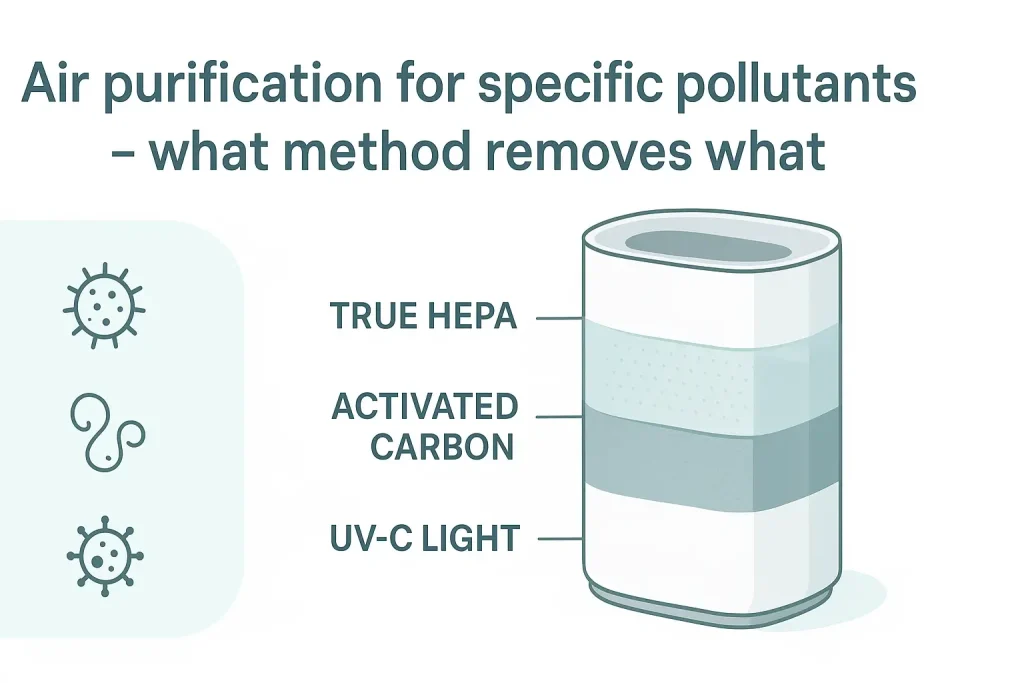
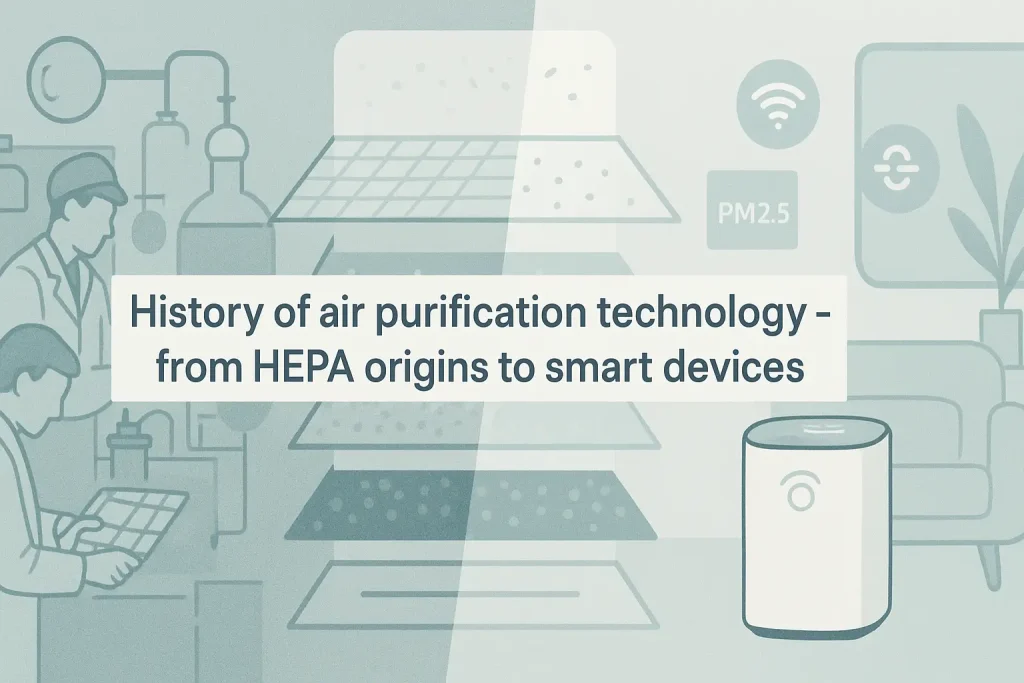
Most people buy an air purifier thinking one filter does it all. That assumption leaves them breathing particles their unit was never designed to catch.
True HEPA, activated carbon, UV-C, and ionization are not interchangeable technologies. They target completely different pollutants through fundamentally different mechanisms. A room with cooking odors, pet dander, and mold spores needs at least two of these technologies working together, not one working alone. This guide covers all four purification mechanisms with specific CADR requirements, filter cost comparisons, certification requirements, and the exact pollutant each technology addresses (and misses).
What Is True HEPA Filtration and How Does It Actually Work?
A True HEPA filter is a mechanical filtration media that captures 99.97% of airborne particles at 0.3 microns, the most penetrating particle size per IEST standards. This is not a marketing term. It is a specific certification requiring standardized testing with measurable efficiency at a defined particle diameter.
This happens because the filter uses a dense mat of randomly arranged borosilicate glass or polypropylene fibers. Particles are trapped through four mechanisms: interception (particles following airflow stick to fibers), impaction (larger particles cannot follow the air stream around fibers and collide directly), diffusion (ultrafine particles below 0.1 microns move erratically via Brownian motion and hit fibers), and electrostatic attraction.
| Photo | Popular Air Purifiers | Price |
|---|---|---|

|
Air Purifiers for Home Large Room up to 1500ft², Tailulu H13 True HEPA Air Purifier for Pets Dust Odor Smoke, Air Purifier for Bedroom with 15dB Quiet Sleep Mode for Bedroom Office Living Room | Check Price On Amazon |
|
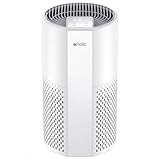
Afloia Air Purifier for Home, 4-in-1 Washable Filter for Allergies, Covers Up to 1076 ft², Quiet Operation, Auto Shut-Off & Night Light, Removes Pet Dander, Pollen, Dust, Mold, and Smoke, White,Pluto | Check Price On Amazon |

|
Nuwave OxyPure ZERO Air Purifier with Washable and Reusable Bio Guard Tech Air Filter, Large Room Up to 2002 Ft², Air Quality Monitor, 0.1 Microns, 100% Capture Irritants like Smoke, Dust, Pollen | Check Price On Amazon |

|
Air Purifiers for Home Large Room Up to 1,996 Ft², EOEBOT Air Purifier for Home Pets with Washable Filter, Quiet Sleep Mode, Air Quality Monitor, Air Purifier for Bedroom, Pet Hair, Dust, Smoke, White | Check Price On Amazon |
|
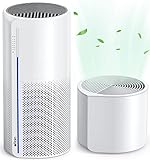
Afloia 2 IN 1 Air Purifier with Humidifier Combo, 3-Stage Filters for Home Allergies Pets Hair Smoker Odors, Evaporative Humidifier, Auto Shut Off, Quiet Air Cleaner with Seven Color Light,White | Check Price On Amazon |
This only occurs when the filter media meets the 99.97% threshold at 0.3 microns in a laboratory test. HEPA-type, HEPA-like, and 99% HEPA filters are unregulated terms with no standardized test. A filter labeled HEPA-type may capture 85% or 99% at 0.3 microns with no way to verify the claim. If the filter is not labeled True HEPA with an H13 or H14 grade, assume it is a lower-efficiency media with no certified performance data.
If a non-True HEPA filter is used for allergy or asthma management, the result is elevated allergen concentrations because the filter bypasses fine particles that True HEPA captures. Fix it by verifying the filter carries AHAM certification with a published smoke CADR, which confirms particle removal efficiency in a functioning unit, not just filter media in isolation.
Performance Data
True HEPA Filtration – Particle Capture by Size
Source: ASHRAE 52.2 test methodology, IEST HEPA standard. Values represent certified minimum efficiency.
True HEPA excels at removing particulate matter including PM2.5, PM10, pollen (10 to 100 microns), pet dander (2.5 to 10 microns), dust mite allergens, mold spores (3 to 40 microns), and bacteria (0.3 to 60 microns). It does nothing for gaseous pollutants. VOCs, formaldehyde, carbon monoxide, nitrogen dioxide, and odors pass straight through a HEPA filter because they exist as individual molecules, not particles.
For most home air purifier users, True HEPA is the non-negotiable foundation. Add other technologies only after confirming the unit includes certified True HEPA filtration with a published smoke CADR from the AHAM certified air purifier database. A unit without True HEPA is not an air purifier in any meaningful sense for particle removal.
Air Quality Data
HEPA vs Carbon vs UV vs Ionization – What the Research Shows
Sources: EPA Indoor Air Quality, AHAM, ASHRAE 52.2, CARB CCR Title 17
What Is Activated Carbon Filtration and Which Pollutants Does It Actually Remove?
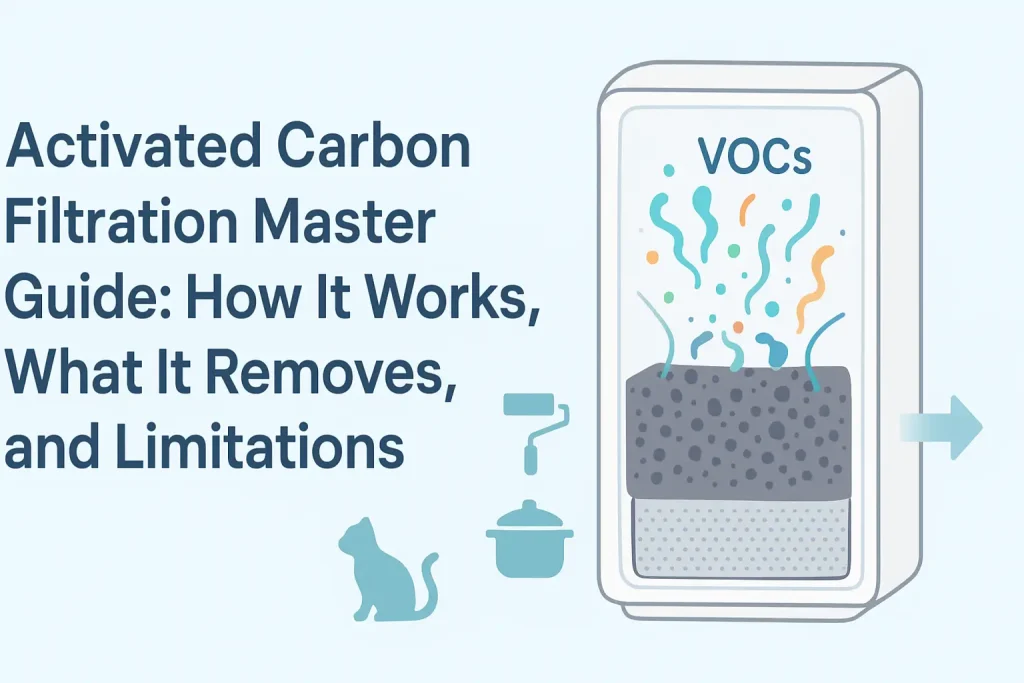
Activated carbon removes gaseous pollutants through adsorption, a chemical process where gas molecules bond to the surface of highly porous carbon material. One gram of activated carbon has a surface area of 500 to 1,500 square meters, equivalent to roughly two tennis courts. This is the only technology in this comparison that addresses VOCs, formaldehyde, cooking odors, and chemical fumes.
This happens because the carbon is activated through high-temperature steam treatment that creates millions of microscopic pores. Gas molecules enter these pores and become physically trapped via van der Waals forces. Some carbon filters also use chemisorption with impregnated compounds (potassium permanganate, for example) that chemically react with specific gases like formaldehyde. This is fundamentally different from HEPA filtration, which uses physical size exclusion to trap particles.
This only occurs when the carbon filter has sufficient dwell time and carbon mass. Dwell time is the length of time air spends in contact with the carbon bed. A thin carbon sheet on a HEPA filter frame provides less than 0.01 seconds of contact time, adequate for light odors but useless for VOC removal. Meaningful VOC and chemical removal requires at least 2 to 5 pounds of activated carbon in a standalone bed with 0.1 to 0.5 seconds of contact time per air pass.
If a unit uses a thin carbon-impregnated pre-filter instead of a standalone carbon bed, the result is minimal VOC reduction, typically less than 15% at 30 minutes. Fix it by choosing a unit with a dedicated, replaceable carbon canister weighing at least 2 pounds for small rooms or 5 to 15 pounds for large rooms. The Austin Air HealthMate with 15 pounds of activated carbon and zeolite represents the benchmark for meaningful residential VOC removal.
According to EPA Indoor Air Quality research, indoor VOC concentrations are 2 to 10 times higher than outdoor levels, primarily from paints, furniture, flooring, cleaning products, and personal care products. Activated carbon is the only residential air purification technology that addresses this pollutant category. Neither HEPA, UV-C, nor ionization removes gaseous chemicals from the air.
What Is UV-C Air Purification and Does It Kill Viruses and Bacteria?
UV-C light at 254 nanometers inactivates microorganisms by destroying their DNA and RNA, preventing replication. It is the only technology in this comparison that directly kills pathogens rather than trapping them. UV-C is effective against bacteria, viruses, and mold spores when applied with sufficient intensity and exposure time in a contained irradiation chamber.
This happens because the 254 nm wavelength is absorbed by nucleic acids, causing thymine dimers in DNA and uracil dimers in RNA. These molecular lesions prevent the organism from replicating. The pathogen is not removed from the air. It is rendered incapable of causing infection and remains in the filter media.
This only occurs when the UV-C lamp delivers a dosage of at least 16,000 to 20,000 microwatt-seconds per square centimeter to the target organism and the air stream passes through the irradiation chamber with sufficient dwell time. The key parameter is dosage, not wattage. A 5-watt UV-C lamp in a fast-moving air stream delivers a fraction of the dose needed for pathogen inactivation. The effectiveness of UV-C in residential air purifiers depends on lamp intensity, placement upstream of the HEPA filter, and air speed through the chamber, factors most portable units do not optimize.
If the UV-C lamp is placed after the HEPA filter with air moving at 100 to 400 CFM, the result is near-zero pathogen inactivation because exposure time is measured in milliseconds. Fix it by viewing UV-C as a secondary stage that treats the collected pathogens on the filter surface, not the fast-moving air stream. For whole-house systems, in-duct UV-C with proper intensity can be effective because the lamp operates continuously on the coil and return air plenum.
According to ASHRAE research on ultraviolet germicidal irradiation (UVGI), properly designed upper-room UVGI systems can achieve the equivalent of 10 to 20 air changes per hour for airborne pathogen control in healthcare settings. Portable air purifier UV-C systems achieve a fraction of this effectiveness because of the dose-time tradeoff in fast-moving air streams.
What Is Ionization Air Purification and Why Is It the Most Controversial Technology?
Ionization releases negatively charged ions into room air that attach to airborne particles, causing them to cluster, gain weight, and fall onto surfaces or stick to a charged collection plate. It is the only technology in this comparison that does not capture particles in a filter. It redistributes them from the air to your floors, furniture, and walls.
This happens because the ionizer uses a high-voltage corona discharge to strip electrons from air molecules, creating negative ions. These ions charge airborne particles, which then attract each other and other surfaces through electrostatic force. Some particles land on a collection plate inside the device. Most land on room surfaces where they can be resuspended by walking, vacuuming, or air currents.
This only produces clean air when the ionizer includes a collection plate that is regularly cleaned and the ionization current is CARB certified at or below 0.050 ppm ozone output. Without a collection plate, ionized particles settle on room surfaces and return to the air within hours. Without CARB certification, the corona discharge process produces ozone, a lung irritant that can cause chest pain, coughing, and throat irritation at concentrations above the 0.050 ppm CARB limit.
If an ionizer is used without a collection plate or with ozone output above 0.050 ppm, the result is particle redistribution to surfaces plus potential respiratory irritation from ozone exposure. Fix it by choosing only CARB-certified ionizers with electrostatic collection plates, or better, choosing a True HEPA unit which captures particles permanently in filter media rather than redistributing them to room surfaces.
According to the California Air Resources Board CCR Title 17 Section 94251, any air cleaner sold in California must not emit more than 0.050 ppm ozone. Approximately 30% of ionizer models tested by CARB failed the ozone limit in initial certification testing. The EPA does not recommend ozone generators or ionizers that produce ozone for occupied spaces. For particle removal, the mechanical filtration approach of True HEPA consistently outperforms ionization in controlled testing because captured particles stay captured.
Quick Reference
Air Purifier Terms Explained – Searchable Glossary
Definitions for every technical term used in this guide. Type to search.
– A filter standard requiring capture of at least 99.97% of airborne particles at 0.3 microns (the most penetrating particle size). H13 grade. Distinct from HEPA-type or HEPA-like filters, which are unregulated marketing terms with no standardized efficiency.
– A standardized metric developed by AHAM measuring the volume of filtered air an air purifier delivers per minute, in cubic feet per minute (CFM). Certified separately for smoke, dust, and pollen. Smoke CADR is the most relevant value for PM2.5 and wildfire protection.
– The number of times per hour an air purifier processes the entire volume of air in a room. Manufacturer coverage area claims use 2 ACH. Allergy and asthma guidelines recommend 5 ACH, which reduces the effective coverage area to 40% of the manufacturer-stated figure.
– Fine particulate matter with diameter of 2.5 microns or smaller. The primary health-hazardous component of wildfire smoke, traffic pollution, and combustion sources. True HEPA filters capture PM2.5 at 99.97% efficiency. Learn more in our complete PM2.5 guide for homeowners.
– Gaseous chemicals emitted from household products including paint, furniture, flooring, cleaning products, and adhesives. Common VOCs include formaldehyde, benzene, and toluene. Removed by activated carbon filtration, not by HEPA mechanical filtration.
– A rating scale (1 to 16) for HVAC filter efficiency per ASHRAE 52.2. MERV 13 or higher is recommended for residential PM2.5 capture. MERV 16 is equivalent to HEPA efficiency but is rarely compatible with residential HVAC systems without professional modification.
– Certification confirming an air cleaner emits no more than 0.050 ppm ozone under standard operating conditions. The strictest consumer air cleaner ozone standard in the US. Required for sale in California.
– EPA program certifying air purifiers that use at least 25% less energy than the federal minimum standard. ENERGY STAR certified units typically consume 40 watts or less at medium fan speed.
– Certification from the Asthma and Allergy Foundation of America confirming a product has been tested and verified to be suitable for people with asthma and allergies. Requires True HEPA filtration, no harmful ozone emission, and validated particle removal performance.
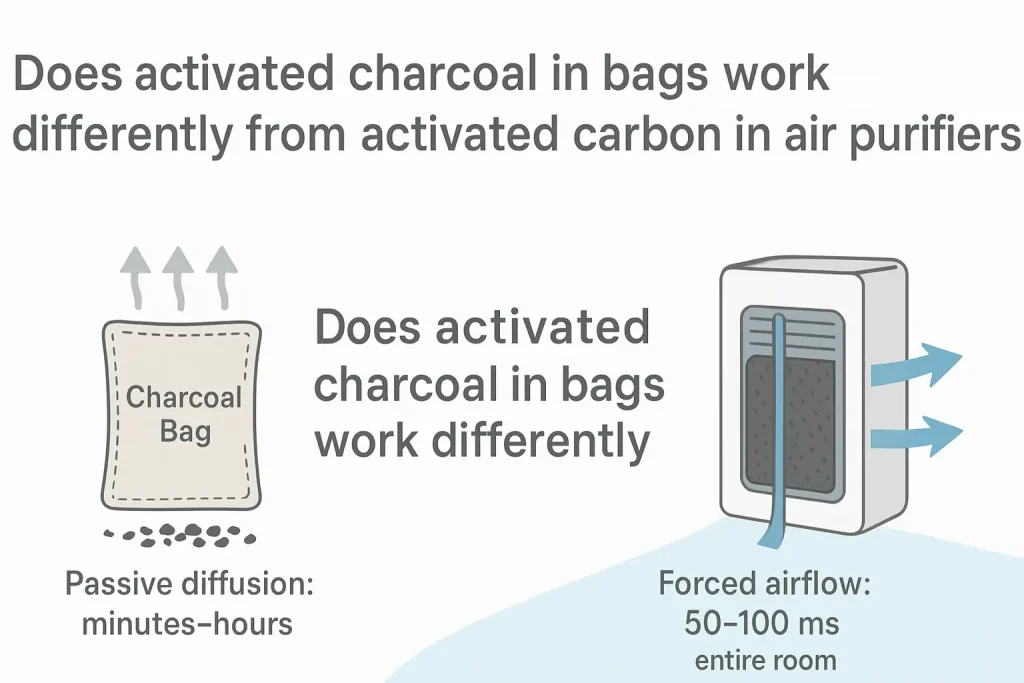
– A filter stage using porous activated carbon (sometimes blended with zeolite) to adsorb gaseous pollutants including VOCs, formaldehyde, odours, and some chemical fumes. Does not remove particles – works in combination with True HEPA. Carbon and zeolite bags marketed as standalone purifiers have negligible airflow and minimal room-level VOC reduction.
– A device that releases negatively charged ions that attach to airborne particles, causing them to cluster and fall to surfaces or stick to a collection plate. Does not remove particles from the room – only removes them from the air temporarily. Some ionizers produce trace ozone.
HEPA vs Carbon vs UV-C vs Ionization: Complete Technology Comparison
Use the table below to match each purification technology to the specific pollutants you need to remove. No single technology addresses all indoor air quality problems. Most homes need at least two working together.
Technology Comparison
HEPA vs Activated Carbon vs UV-C vs Ionization – Side by Side
Detailed comparison including mechanism, target pollutants, efficiency, safety concerns, and annual operating cost.
| Spec | True HEPA | Activated Carbon | UV-C | Ionization |
|---|---|---|---|---|
| Mechanism | Mechanical filtration (size exclusion) | Physical adsorption (surface bonding) | DNA/RNA destruction (254 nm) | Electrostatic particle charging |
| Target pollutants | PM2.5, PM10, pollen, dander, dust, mold spores | VOCs, formaldehyde, odors, chemical fumes | Bacteria, viruses, mold on filter surface | Fine particles (redistributes to surfaces) |
| Efficiency at 0.3 microns | 99.97% (certified) | N/A (does not filter particles) | N/A (kills pathogens on contact) | Varies (no standard efficiency test) |
| VOC removal | None | Yes (proportional to carbon mass) | None | None |
| Pathogen kill | Captures but does not kill | Captures but does not kill | Yes (with sufficient dose-time) | Minimal to none |
| Ozone risk | None | None | Minimal (if lamp is sealed) | High (if not CARB certified) |
| Filter replacement cost/yr | $25 to $100/yr | $30 to $150/yr | $20 to $60/yr (lamp) | $0 to $40/yr (collection plate) |
| CARB certification available | Yes (all True HEPA) | Yes (all carbon-only) | Yes (sealed units) | Only some models |
| Best for | Allergies, asthma, wildfire smoke, general particles | VOCs, chemical sensitivity, cooking odors, new furniture | Immunocompromised, added pathogen protection | Limited (not recommended as primary technology) |
CADR data from AHAM certified database. Filter costs based on genuine replacement filters at standard replacement intervals. Ozone risk assessment per CARB CCR Title 17 Section 94251 (0.050 ppm limit). VOC removal efficacy based on carbon mass and contact time per EPA guidance.
How to Choose the Right Combination of Technologies for Your Specific Air Quality Problem
Your air quality problem determines which technologies you need. A home with a shedding dog, a gas stove, and a resident with asthma needs True HEPA plus activated carbon. A home with no chemical sources and one allergy sufferer needs only True HEPA. Adding unnecessary technology increases cost, filter replacement complexity, and in the case of ionization, potential ozone risk.
Start by identifying your primary pollutant. If particles (dust, pollen, pet dander, smoke) are the concern, True HEPA is the foundation and everything else is secondary. If odors, cooking fumes, or chemical sensitivity are the main issue, activated carbon with sufficient mass (at least 2 pounds) is essential. If pathogen inactivation matters because of an immunocompromised household member, UV-C adds value as a secondary stage. Ionization should only be considered as a secondary feature on a CARB-certified True HEPA unit, never as the primary or sole purification technology.
Health Condition Guide
Find the Right Air Purifier Technology for Your Situation
Select your primary concern and room size for a personalized filter type and product recommendation.
How Much CADR Do You Need for Each Technology Type?
CADR is the only number that tells you how fast the purifier cleans a specific room. It matters equally for all technology types because the fan and airflow determine how quickly air passes through whatever filter stage you are using. A unit with excellent carbon but low CADR will not process enough room air to reduce VOC concentrations meaningfully.
CADR Calculator
How Much CADR Do You Actually Need?
Enter your room dimensions and use case. Formula: (length x width x ceiling height x ACH) divided by 60. Source: AHAM methodology.
CADR = (length x width x ceiling height x ACH) / 60. For allergy and asthma sufferers, always calculate at 5 ACH – not the manufacturer-stated 2 ACH figure.
For True HEPA units, smoke CADR is the most relevant number because it measures removal of the smallest standard test particles (0.09 to 1.0 microns), the size range most relevant to PM2.5, wildfire smoke, and fine allergens. Dust and pollen CADR values are always higher because larger particles are easier to capture. If a manufacturer only advertises pollen CADR, the smoke CADR is typically 20 to 30% lower.
For activated carbon units, CADR still matters because it determines how quickly air cycles through the carbon bed. A unit with 15 pounds of carbon but 50 CFM air flow will process the room volume too slowly to reduce VOC levels meaningfully. The effective VOC removal rate is a function of carbon mass times air changes per hour through the bed. A IQAir HealthPro Plus with 300 CFM smoke CADR and a dedicated V5-Cell gas filter balances carbon contact time with sufficient airflow for whole-room VOC reduction.
What Are the Safety Risks of Each Purification Technology?
Each technology carries distinct safety considerations that determine whether it belongs in a bedroom, nursery, or occupied space. The safety hierarchy from safest to riskiest: True HEPA (no emissions, no byproducts) followed by activated carbon (no emissions but saturated carbon can release captured VOCs if not replaced) followed by sealed UV-C (safe when the lamp is enclosed, eye and skin hazard if exposed) followed by ionization (ozone risk, no permanent particle removal).
True HEPA and activated carbon produce zero emissions and zero byproducts during normal operation. They are safe for continuous use in bedrooms, nurseries, and occupied spaces. The only risk with activated carbon is that a saturated filter can release previously captured VOCs when temperature or humidity change. This is a maintenance issue, not a safety issue. Replace carbon filters on schedule to avoid desorption. Filter replacement timing varies by brand and usage conditions, and delaying replacement past the recommended interval reduces both HEPA and carbon performance.
UV-C light at 254 nanometers is a skin and eye hazard if the lamp is exposed. In a properly designed air purifier, the UV-C lamp is fully enclosed within the unit housing and poses no exposure risk. The risk is in poorly designed or DIY UV-C setups where the lamp is visible or accessible. UV-C can also produce trace ozone, but the amount from a sealed, properly functioning lamp is below 0.001 ppm, well under the 0.050 ppm CARB limit.
Ionization carries the most significant safety concern: ozone production. The corona discharge that creates negative ions also splits oxygen molecules, which recombine into ozone (O3). CARB certified ionizers must stay below 0.050 ppm ozone output, but non-certified ionizers can exceed this threshold by 2 to 5 times. Ozone at concentrations above 0.050 ppm causes chest pain, coughing, shortness of breath, and throat irritation per the EPA. For homes with asthma, COPD, or infants, avoid any device that produces ozone including non-CARB-certified ionizers and ozone generators marketed as air purifiers.
Myth vs Fact
Air Purifier Technology Myths Debunked
Separating fact from fiction on the most common air purifier technology misconceptions. Sources: EPA, AHAM, American Lung Association, peer-reviewed research.
Myth
Ionizers clean the air as effectively as HEPA filters – the particles are just charged and fall to surfaces.
Fact
Ionized particles that fall to surfaces return to the air within hours when disturbed by walking, vacuuming, or air currents. A study published in the Journal of the Air and Waste Management Association found that ionizer particle removal effectiveness is 40-60% lower than True HEPA filtration at 30 minutes because particles are redistributed, not removed.
Myth
UV-C air purifiers instantly kill all viruses and bacteria as air passes through the unit.
Fact
UV-C pathogen inactivation requires dose measured in microwatt-seconds per square centimeter at the target organism. Air moving through a portable purifier at 100-400 CFM gives pathogens milliseconds of UV-C exposure per pass. ASHRAE research shows effective UVGI requires 16,000+ microwatt-seconds per square centimeter dosage, which portable units do not achieve in a single pass.
Myth
A thin carbon pre-filter on a HEPA unit removes VOCs and formaldehyde effectively.
Fact
Carbon pre-filters typically contain less than 0.1 pounds of activated carbon with air contact time under 0.01 seconds. EPA research on indoor VOC control indicates meaningful VOC reduction requires at least 2-5 pounds of activated carbon with 0.1-0.5 seconds of contact time. Thin carbon sheets reduce light odors but do not measurably lower VOC concentrations.
Myth
HEPA-type or HEPA-like filters are nearly as good as True HEPA filters at a lower price.
Fact
HEPA-type, HEPA-like, and 99% HEPA are unregulated marketing terms with no standardized test. Efficiency at 0.3 microns can range from 85-99% with no way to verify. True HEPA (H13) guarantees 99.97% minimum at 0.3 microns per IEST test standard. The apparent savings on a HEPA-type unit are lost in the particles that bypass the filter entirely.
Myth
An air purifier with all four technologies (HEPA + carbon + UV-C + ionizer) is always the best choice.
Fact
Adding ionization to a True HEPA + carbon unit introduces ozone risk with no benefit because the HEPA filter already captures particles more effectively. Adding UV-C without sufficient dose-time adds cost and lamp replacement expense without meaningful pathogen inactivation. The optimal combination for most homes is True HEPA + sufficient activated carbon (2+ pounds), with UV-C only if a specific pathogen concern exists.
Annual Operating Cost Comparison: HEPA vs Carbon vs UV-C vs Ionization
The purchase price of an air purifier is the smallest number in the total cost equation. Filter replacements, electricity consumption, and UV-C lamp replacements compound over the five to ten year lifespan of a quality unit. A $100 unit with $60 annual filter costs becomes more expensive than a $300 unit with $30 annual filter costs after year four.
Cost Comparison
Five-Year Operating Cost by Technology Type
Includes unit purchase price, filter replacements, UV-C lamp replacements (where applicable), and electricity at 13 cents per kWh for 8 hours daily operation at medium fan speed.
$269 over 5 years
$475 over 5 years
$460 over 5 years
$420 over 5 years
$2,250 over 5 years
Bar width represents total 5-year cost relative to the most expensive option shown. Electricity at US average 13 cents per kWh, 8 hours daily at medium fan speed. Filter costs based on genuine replacement filters at manufacturer-recommended intervals. UV-C lamp replacement annually. Ionizer left off on Coway AP-1512HH to eliminate ozone risk.
The cost pattern is consistent across all technology types: the unit purchase price matters less than the annual filter cost over any ownership period beyond two years. A Coway Airmega 400 with washable pre-filters and 12-month HEPA lifespan costs more upfront than a budget unit but delivers lower annual filter cost per square foot of coverage because the dual-fan design processes more air volume per dollar of filter spend. For any unit you are considering, calculate three-year total cost as: unit price plus (annual filter cost times 3) plus (annual electricity cost times 3).
Where Should You Place Each Type of Air Purifier for Maximum Effectiveness?
Placement rules are consistent across all technology types with one exception for ionizers. All air purifiers require at least 12 to 18 inches of clearance on all intake and outlet sides for unrestricted airflow. Placing a unit against a wall reduces effective CADR by 15 to 30% because the intake side is starved for air. Placing it in a corner reduces effective coverage by 20 to 30% compared to central placement in the same room with unrestricted circulation.
True HEPA units work best with central placement in the primary occupied zone, typically 3 to 6 feet from seating or sleeping position, with the outlet pointed toward the breathing zone. For a bedroom, place the unit on the side of the room farthest from the door to create a positive pressure gradient that pushes cleaner air toward the door and hallway.
Activated carbon units benefit from placement closer to the VOC source. If the primary concern is cooking odors, place the unit in or adjacent to the kitchen. If the concern is off-gassing from new furniture or renovation materials, place the unit in the room with the highest VOC load and run on high fan speed for the first 72 hours.
Ionizers are the exception to central placement. Because ionized particles fall to surfaces, placing an ionizer near walls or furniture increases particle deposition on those surfaces rather than on the collection plate. If you must use an ionizer, place it at least 3 feet from any wall or furniture and clean the collection plate weekly. Better, choose a True HEPA unit that captures particles permanently in filter media regardless of placement.
How to Build an Effective Multi-Technology Air Purification System Without Overpaying
The most cost-effective approach for most homes is a True HEPA unit with sufficient activated carbon for your specific chemical exposure level, plus source control for whatever is generating the pollution in the first place. A purifier cannot outrun an active source. If the dog sleeps in the bedroom, the purifier is managing dander load, not eliminating it. If the gas stove vents into the kitchen, the carbon filter is reducing, not removing, combustion byproducts.
Start with the highest smoke CADR True HEPA unit your budget and room size allow. The Levoit Core 400S at 260 CFM smoke CADR covers a 300 sq ft room at 5 ACH for allergy management. The Winix 5500-2 at 243 CFM smoke CADR covers the same room with slightly lower CADR but includes a washable carbon filter and AAFA certification.
Add activated carbon only if you have a specific chemical, odor, or VOC concern. A unit with a thin carbon pre-filter provides minimal VOC benefit. For meaningful VOC reduction, choose a unit with a dedicated carbon canister of at least 2 pounds such as the Austin Air HealthMate with 15 pounds of carbon and zeolite or the IQAir GC MultiGas for severe chemical sensitivity.
Add UV-C only if a household member is immunocompromised and pathogen inactivation beyond what HEPA capture provides is medically indicated. For general household use, True HEPA capture of pathogens is sufficient because captured organisms are removed from the breathing zone. The Germ Guardian AC4825 at approximately $100 adds UV-C to True HEPA at a budget price point, but the UV-C dose-time is insufficient for single-pass pathogen kill at normal fan speeds.
Avoid ionization as the primary purification technology. If a CARB-certified True HEPA unit includes an ionizer that can be disabled (as the Coway AP-1512HH and Winix 5500-2 do), leave it disabled. There is no particle removal benefit from ionization that the True HEPA filter is not already providing, and the ozone risk, however small in CARB-certified units, is a risk with zero upside for particle control.
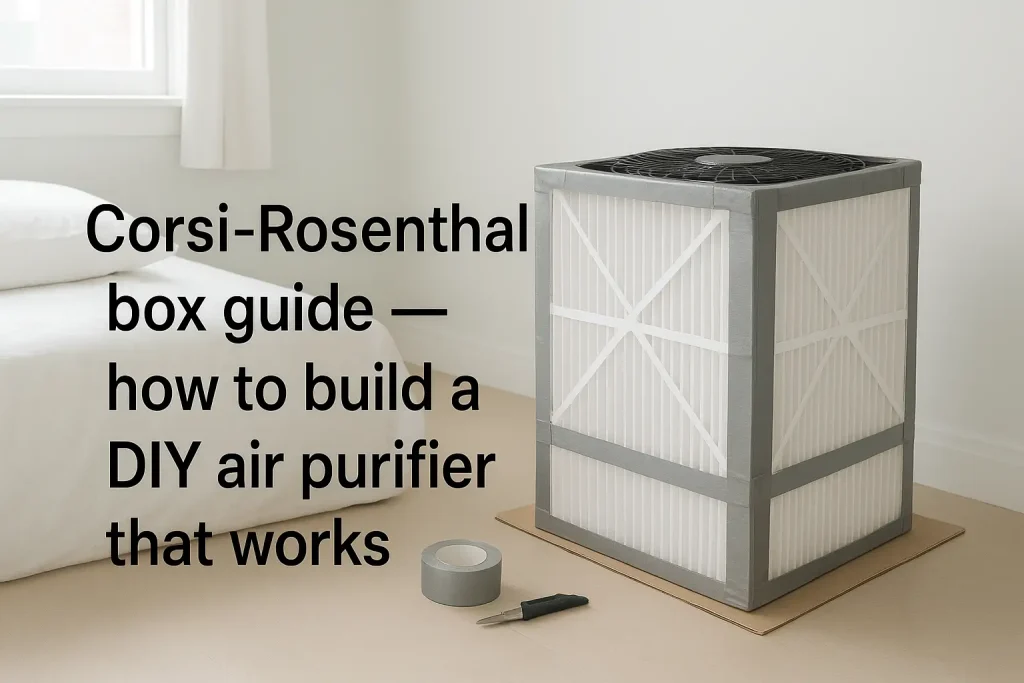
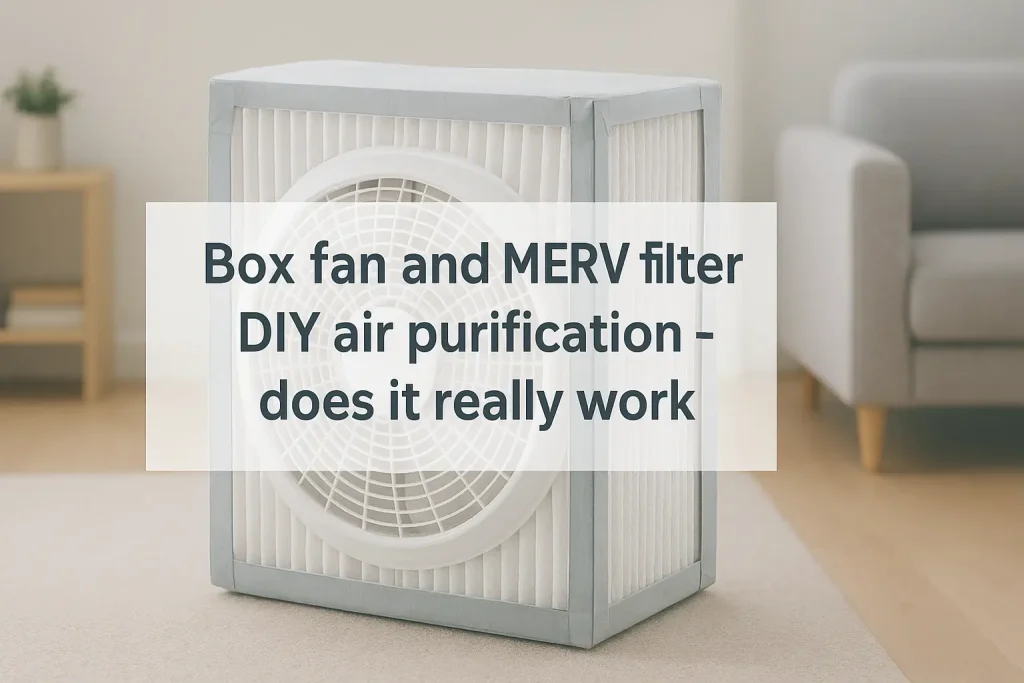
For the budget-conscious DIY approach, a Corsi-Rosenthal box built with four MERV 13 filters and a box fan delivers 200 to 400 CFM equivalent CADR at a total build cost under $80. A standard 20-inch box fan paired with four MERV 13 20x20x1 pleated filters and duct tape provides particle filtration comparable to a $200 commercial unit, though without activated carbon, UV-C, or any ionization function. It is a pure mechanical filtration solution that outperforms ionizers and HEPA-type units at a fraction of the cost.
Buying Guide
Before You Buy – Complete Air Purifier Technology Checklist
Check off each point before making your decision. Based on AHAM and EPA buying guidance.
Can I run an air purifier with multiple technologies 24/7?
Yes. True HEPA and activated carbon units can and should run 24/7 at low to medium fan speed for continuous air quality maintenance. Running a purifier continuously at a lower fan speed is more effective than running it intermittently at high speed because air quality degrades the moment the unit turns off.
Continuous operation at medium fan speed on a Coway AP-1512HH at 30 dB sleep mode costs approximately $14 to $20 per year in electricity at the US average 13 cents per kWh. The filter replacement cost from continuous operation is modest because HEPA filters are rated for 6 to 12 months of continuous use regardless of whether the unit runs 24/7 or intermittently. The carbon filter lifespan decreases with continuous operation if VOC concentrations are high, but for typical household VOC levels, the carbon filter life is limited by saturation over time rather than total hours of operation.
What is the difference between HEPA and True HEPA filters?
True HEPA is a certified standard: 99.97% minimum efficiency at 0.3 microns per IEST testing methodology. HEPA without the True designation, along with HEPA-type, HEPA-like, HEPA-style, and 99% HEPA, are unregulated marketing terms with no standardized test requirement. A filter labeled HEPA-type can be 85% efficient at 0.3 microns with no way for the consumer to verify.
The practical difference is that True HEPA captures 3,000 out of every 10,000 particles at 0.3 microns that pass through, while a HEPA-type filter at 90% efficiency captures 9,000 and allows 1,000 through. Over hours of continuous operation, that 10% to 15% efficiency gap compounds into measurably higher room particulate concentrations. Always confirm the filter carries the True HEPA designation and the unit carries AHAM certification with published smoke CADR before purchasing.
Do UV-C air purifiers produce ozone?
UV-C lamps at 254 nanometers produce trace amounts of ozone as a byproduct of ultraviolet radiation interacting with oxygen molecules. The ozone output from a sealed, properly designed UV-C air purifier is typically below 0.001 ppm, well under the 0.050 ppm CARB safety limit. The risk is higher with unbranded or uncertified UV-C units where lamp quality and enclosure design have not been tested.
UV-C lamps at 185 nanometers, used in some industrial and ozone generator devices, intentionally produce ozone at much higher concentrations. Consumer air purifiers should use 254 nm lamps only, which are optimized for germicidal irradiation with minimal ozone byproduct. If the UV-C unit is CARB certified, its ozone output has been tested and confirmed below the 0.050 ppm safety threshold. If it is not CARB certified, assume the ozone output is unknown.
Why does my ionizer air purifier make the room smell like a swimming pool?
That chlorine-like or metallic smell is ozone produced by the corona discharge process inside the ionizer. Ozone has a distinctive sharp odor detectable by most people at concentrations as low as 0.010 to 0.020 ppm. The fact that you can smell it confirms the ionizer is producing ozone, though the concentration may or may not exceed the 0.050 ppm CARB safety limit without measurement.
An ozone smell from an air purifier is never normal or desirable. Ozone is a lung irritant that can cause chest pain, coughing, and throat irritation at concentrations above the EPA and CARB limit. If your ionizer produces a detectable ozone odor, stop using it immediately and replace it with a CARB-certified True HEPA unit that produces zero ozone. A portable ozone meter can confirm the exact ozone concentration in your room.
Can I use an air purifier with an ionizer in a baby’s nursery?
No. Infants have higher respiratory rates, smaller airway diameters, and developing lungs that are more sensitive to ozone than adult lungs. The EPA and American Lung Association specifically advise against ozone-producing air cleaners in spaces occupied by children, pregnant women, and people with respiratory conditions. An ionizer in a nursery introduces unnecessary ozone risk with no benefit because the particles it redistributes to crib surfaces and the floor are exactly where the infant breathes and crawls.
The safest nursery air purifier is a CARB-certified True HEPA unit with activated carbon, zero ionizer, and sleep mode noise below 30 dB. The Levoit Core 300S at 24 dB sleep mode and the RabbitAir MinusA2 wall-mountable at ultra-quiet operation are both CARB certified with no ionizer by default. Place the unit at least 3 feet from the crib with the outlet pointed away from direct airflow onto the sleeping infant.
How long does it take for activated carbon to remove paint fumes from a room?
With a unit containing at least 5 pounds of activated carbon running on high fan speed, expect a 50% to 70% reduction in paint-related VOC concentrations within 24 hours and an 80% to 90% reduction within 72 hours in a sealed room. Complete VOC removal takes one to two weeks because paint continues off-gassing at a declining rate for weeks after application.
A unit with a thin carbon pre-filter (less than 0.5 pounds of carbon) will not measurably reduce paint VOCs at any time interval because the carbon saturates within hours. The carbon mass to room volume ratio is the controlling variable. For a 200 sq ft room with fresh paint, a unit with 15 pounds of carbon such as the Austin Air HealthMate provides meaningful VOC reduction. Pair carbon filtration with open-window ventilation whenever outdoor air quality permits, as dilution is the fastest VOC reduction method available at zero cost.
Is it safe to use a UV-C air purifier in a bedroom overnight?
Yes, provided the UV-C lamp is fully enclosed within the unit housing and the unit is CARB certified. The UV-C light is completely contained inside the purifier and poses no exposure risk to room occupants. The trace ozone produced by a 254 nm UV-C lamp in a sealed unit is below 0.001 ppm, negligible compared to outdoor ozone levels on a typical summer day.
If the UV-C unit is unbranded, uncertified, or has a visible blue glow escaping the housing, do not use it in a bedroom or any occupied space. Visible blue light from the unit exterior indicates the lamp enclosure is inadequate and UV-C radiation may be escaping. UV-C at 254 nanometers causes skin burns and eye damage with direct exposure. Only use fully sealed, CARB-certified UV-C units in occupied spaces.
Do I need both a HEPA filter and an activated carbon filter, or is one enough?
It depends on your pollutants. If your only concern is particles (pollen, dust, pet dander, smoke), True HEPA alone is sufficient and activated carbon adds cost without benefit. If you have both particles and chemicals (cooking odors, VOCs from furniture, pet odors, wildfire smoke with both particulate and gaseous components), you need both because HEPA does not capture gases and carbon does not capture particles.
The most common mistake is assuming the thin carbon pre-filter on most HEPA units provides meaningful chemical removal. It does not. Those carbon sheets are sized for light odor control, not VOC reduction. If you have a specific chemical sensitivity or VOC concern, buy a unit designed around activated carbon with at least 2 to 5 pounds of media, or accept that your HEPA unit provides excellent particle control but leaves gaseous pollutants in the air. For most homes with average VOC levels, True HEPA alone plus source control (ventilating during cooking, choosing low-VOC products) is the practical and cost-effective choice.
What happens if my activated carbon filter is saturated and I do not replace it?
A saturated carbon filter stops adsorbing new VOCs and can release previously captured VOCs back into the air through a process called desorption. This occurs when temperature or humidity increases, which is common in kitchens and bathrooms. The result is that your air purifier becomes a VOC source rather than a VOC remover, releasing chemicals it previously captured over days or weeks.
Carbon saturation is not visually detectable. The filter will look identical whether it is fresh or fully saturated. Replacement must be based on time or usage intervals per the manufacturer specification. For a typical activated carbon filter in a residential air purifier, replacement every 3 to 12 months is standard depending on carbon mass and VOC load. Our complete guide to filter replacement by brand and usage covers specific replacement intervals for all major air purifier models. If you notice a return of odors or chemical sensitivity symptoms that the purifier previously controlled, the carbon filter is likely saturated regardless of the calendar interval.
Which is better for wildfire smoke: HEPA, carbon, or both?
Both. Wildfire smoke contains fine particulate matter (PM2.5) that True HEPA captures at 99.97% efficiency and gaseous compounds including carbon monoxide, nitrogen oxides, and volatile organic compounds that only activated carbon addresses. A True HEPA unit running at high fan speed with a smoke CADR sufficient for your room at 6 ACH is the primary defense. Adding activated carbon addresses the gaseous smoke components and the persistent smoke odor that can linger for days after the particulate clears.
For wildfire smoke specifically, smoke CADR is the most critical specification. Calculate your minimum smoke CADR as (room square footage x ceiling height x 6 ACH) divided by 60. A 300 sq ft room with 8-foot ceilings needs 240 CFM smoke CADR at 6 ACH. The Blueair 605 at 500 CFM smoke CADR covers up to 625 sq ft at 6 ACH for wildfire conditions. Supplement with a MERV 13 or higher HVAC filter if you have central air, and seal window and door gaps with towels or weatherstripping to reduce smoke infiltration. Run the purifier on maximum fan speed continuously for the duration of the wildfire event.
Why does my air purifier with UV-C still smell like mold?
UV-C kills mold spores that pass through the irradiation chamber, but it does nothing for the musty odor compounds that mold produces, which are VOCs. Those odor molecules require activated carbon for removal. If your UV-C air purifier lacks sufficient activated carbon, it may be killing spores while leaving the characteristic mold smell in the air unchanged.
The other common cause is that the mold source is still active. An air purifier treats the air in the room. It does not treat mold growing on walls, in carpet, or in HVAC ductwork behind the air purifier’s airflow path. If the mold smell persists despite running a True HEPA plus carbon purifier, the mold source is likely elsewhere in the room or building envelope. Address the moisture source and visible mold growth first, then use the purifier to manage airborne spores and odors from residual contamination.
Are there any air purifier technologies that work without replacement filters?
Yes, but with significant performance tradeoffs. Electrostatic precipitators, a type of ionizer with a permanent collection plate, do not use disposable filters. The collection plate must be washed weekly to maintain performance. However, electrostatic precipitators provide lower single-pass particle removal efficiency than True HEPA (typically 85% to 95% vs 99.97%) and some models produce ozone.
Thermophoretic and photocatalytic oxidation (PCO) technologies marketed as filterless alternatives remain niche products with limited independent verification of their real-world performance. True HEPA remains the standard for residential air purification because it provides the highest single-pass particle removal efficiency with zero emissions and predictable maintenance costs. The filter is not a flaw in the design. It is the mechanism that collects and contains pollutants permanently rather than redistributing them to surfaces or back into the air. A genuine True HEPA replacement filter costs $25 to $100 annually and is the single most cost-effective investment in indoor air quality for particle removal.
True HEPA is the foundation for particle removal in any residential air purification system. Activated carbon is essential when VOCs, odors, or chemical sensitivity are present, and carbon mass in pounds is the metric that determines effectiveness, not whether a carbon layer exists. UV-C adds value only when pathogen inactivation beyond HEPA capture is medically indicated and the unit provides sufficient dose-time for single-pass kill.
Ionization offers no particle removal advantage over True HEPA and introduces ozone risk that cannot be fully eliminated even in CARB-certified units. For most homes, the optimal combination is a high smoke CADR True HEPA unit with at least 2 pounds of activated carbon if VOC sources are present. Calculate your CADR requirement at 5 ACH for allergy and asthma management, verify CARB certification before purchase, and budget for annual filter replacements as the primary ongoing cost. Start with the room where you spend the most time, size the unit correctly, and run it continuously on the fan speed that balances noise tolerance with air cleaning rate.
If you are ready to select a unit now, use the CADR calculator above to determine the minimum smoke CADR for your room, then cross-reference the health condition selector for the filter technology combination that matches your specific air quality concern. A correctly sized and properly maintained True HEPA plus carbon unit is the single most effective device you can buy for improving the air you breathe at home.