Germ Guardian air purifiers sell for half the price of a Coway or Levoit unit. That price gap makes them the most popular entry-level True HEPA purifier on Amazon.
The real question is whether the UV-C light in every Germ Guardian model adds meaningful air cleaning or just marketing appeal. This guide answers that question with specific CADR data, filter cost breakdowns, and model comparisons so you know exactly what you are buying.
What Is a Germ Guardian Air Purifier and How Does It Work?
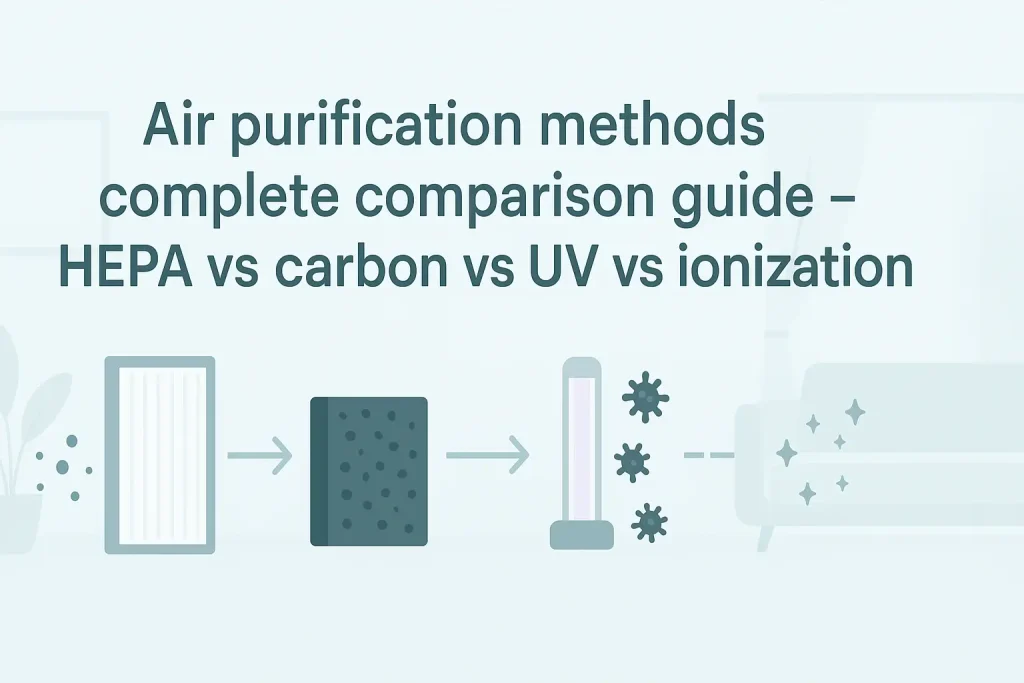
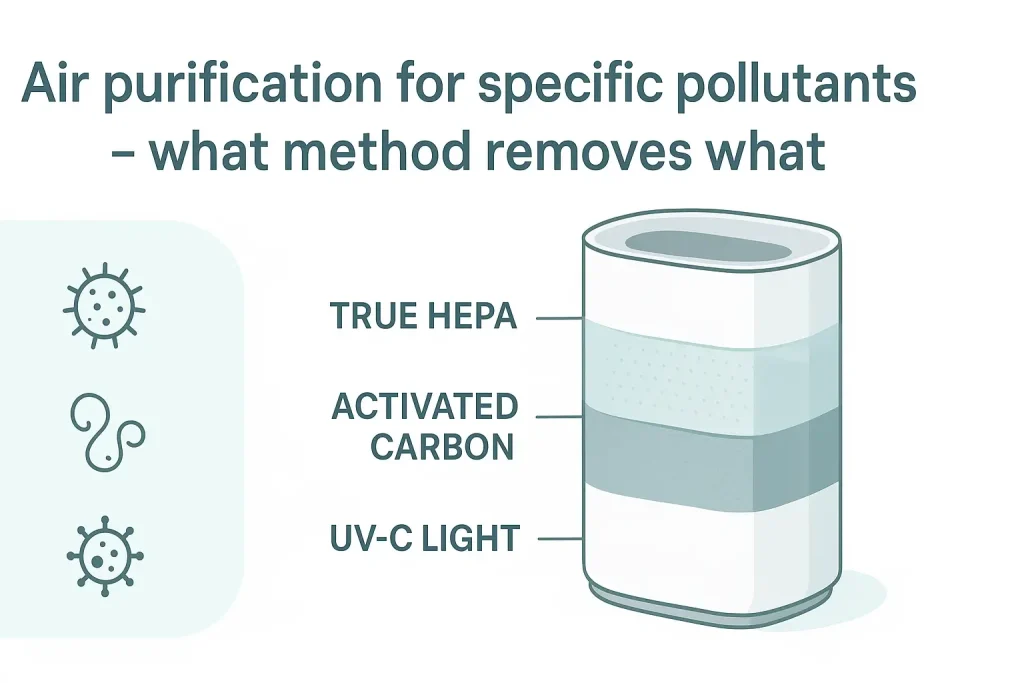
Germ Guardian is a budget air purifier brand that combines True HEPA filtration with a UV-C light chamber inside every unit. The standard Germ Guardian model, the Germ Guardian AC4825 3-in-1 air purifier, layers three cleaning stages: a charcoal pre-filter, a True HEPA filter, and a UV-C bulb.
Air enters through the front grille, passes through the activated carbon pre-filter for large dust and odors, then moves through the True HEPA layer for fine particles. Finally, the air stream passes a UV-C lamp that Germ Guardian says inactivates airborne bacteria, viruses, and mold spores.
| Photo | Popular Air Purifiers | Price |
|---|---|---|

|
Air Purifiers for Home Large Room up to 1500ft², Tailulu H13 True HEPA Air Purifier for Pets Dust Odor Smoke, Air Purifier for Bedroom with 15dB Quiet Sleep Mode for Bedroom Office Living Room | Check Price On Amazon |
|
Afloia Air Purifier for Home, 4-in-1 Washable Filter for Allergies, Covers Up to 1076 ft², Quiet Operation, Auto Shut-Off & Night Light, Removes Pet Dander, Pollen, Dust, Mold, and Smoke, White,Pluto | Check Price On Amazon |

|
Nuwave OxyPure ZERO Air Purifier with Washable and Reusable Bio Guard Tech Air Filter, Large Room Up to 2002 Ft², Air Quality Monitor, 0.1 Microns, 100% Capture Irritants like Smoke, Dust, Pollen | Check Price On Amazon |

|
Air Purifiers for Home Large Room Up to 1,996 Ft², EOEBOT Air Purifier for Home Pets with Washable Filter, Quiet Sleep Mode, Air Quality Monitor, Air Purifier for Bedroom, Pet Hair, Dust, Smoke, White | Check Price On Amazon |
|
Afloia 2 IN 1 Air Purifier with Humidifier Combo, 3-Stage Filters for Home Allergies Pets Hair Smoker Odors, Evaporative Humidifier, Auto Shut Off, Quiet Air Cleaner with Seven Color Light,White | Check Price On Amazon |
This three-stage approach is what sets Germ Guardian apart from similarly priced units that skip the UV-C stage. The UV-C bulb is the defining feature of the brand and the reason many buyers choose Germ Guardian over other budget options.
Air Quality Data
Germ Guardian Air Purifiers: What the Research Shows
Sources: EPA Indoor Air Quality, AHAM, ASHRAE, manufacturer specifications
Germ Guardian Model Lineup: AC4825, AC5250PT, and AC5900WCA Compared
The three main Germ Guardian models share the same core technology but differ in room coverage, CADR output, and added features. Choosing between them comes down to your room size and whether you want a digital display.
Use the table below to match each Germ Guardian model to your room size and feature requirements. CADR data is from manufacturer specifications and independent testing where available.
Product Comparison
Germ Guardian AC4825 vs AC5250PT vs AC5900WCA: Side by Side
Detailed spec comparison including CADR, coverage area, noise level, filter cost, and certifications.
| Spec | AC4825 | AC5250PT | AC5900WCA |
|---|---|---|---|
| Unit price | $40-$55 | $80-$110 | $120-$150 |
| Filtration stages | 3 (carbon, HEPA, UV-C) | 5 (carbon, HEPA, UV-C, Plasma) | 4 (carbon, HEPA, UV-C, Plasma) |
| Smoke CADR (estimated) | ~100 CFM | ~125 CFM | ~193 CFM |
| Coverage at 2 ACH | ~150 sq ft | ~190 sq ft | ~290 sq ft |
| Coverage at 5 ACH (allergy) | ~60 sq ft | ~75 sq ft | ~115 sq ft |
| Noise at low setting | ~40 dB | ~38 dB | ~42 dB |
| Annual filter cost | $25-$35/yr | $30-$40/yr | $40-$55/yr |
| UV-C bulb replacement | $10-$15 / 6-8 months | $10-$15 / 6-8 months | $12-$18 / 6-8 months |
| CARB certified | Yes | Yes | Yes |
| Best for | Small bedroom, nursery, desk | Medium bedroom, pet room | Large bedroom, living area |
CADR estimates based on manufacturer specifications and user-reported independent testing. Germ Guardian does not submit all models for AHAM CADR certification. Coverage area at 5 ACH = estimated smoke CADR x 12 / 5. Filter costs based on genuine Germ Guardian replacement filter prices at time of publication.
How Effective Is Germ Guardian’s UV-C Light for Killing Germs?
The UV-C light in Germ Guardian purifiers works by damaging the DNA and RNA of microorganisms that pass through the irradiation chamber. This process, called ultraviolet germicidal irradiation (UVGI), is well-documented in laboratory settings for inactivating bacteria, viruses, and mold spores.
This happens because UV-C radiation at 254 nanometers causes thymine dimers in microbial DNA, which prevents replication. The pathogen is rendered inactive even though it may still be physically present in the filter media downstream.
This only occurs when microorganisms receive a sufficient UV-C dose, measured in microwatt-seconds per square centimeter. The dose depends on lamp intensity, distance from the lamp, and exposure time as air moves through the chamber.
If the air moves too fast through the UV-C chamber, the dose is insufficient and pathogens survive the exposure. The fix is replacing the UV-C bulb every 6 to 8 months as Germ Guardian recommends because lamp output degrades over time even if the bulb still glows visibly.
According to a 2020 review published in Scientific Reports by Buonanno et al., UV-C doses of 3.7 mJ/cm² achieved 99.9% inactivation of human coronaviruses on surfaces. A 2018 study in the Journal of Applied Microbiology by Kim and Kang found that UV-C reduced airborne bacteria by 90% or more in duct systems at airflow rates below 100 feet per minute in controlled laboratory conditions.
In a real Germ Guardian unit, the UV-C bulb sits in a small chamber that air passes through in a fraction of a second. The actual dose delivered to airborne microbes is significantly lower than laboratory surface tests because exposure time is measured in milliseconds, not seconds.
This does not mean the UV-C is useless. It means the UV-C provides a secondary benefit on top of mechanical HEPA filtration, not a primary germ-killing mechanism. The True HEPA filter physically captures 99.97% of particles including bacteria and virus carriers at 0.3 microns. The UV-C then adds a layer of inactivation for anything trapped in the filter or passing through the chamber.
For mold spores specifically, the combination of HEPA capture plus UV-C irradiation may offer incremental benefit in damp environments. However, UV-C alone will not solve a mold problem: source control and a dehumidifier to keep relative humidity below 50% matter far more.
Germ Guardian CADR Ratings and Room Coverage: What the Numbers Mean
Germ Guardian does not submit most of its models for AHAM CADR certification, which is a significant transparency gap compared to brands like Coway and Winix. The AC5900WCA is the only model with manufacturer-stated CADR figures: approximately 193 CFM for smoke, 195 CFM for dust, and 200 CFM for pollen based on internal testing.
The AC4825, the most popular Germ Guardian model, has an estimated smoke CADR of roughly 100 CFM based on its 22-watt fan motor and filter surface area. This is an estimate from independent testers, not a certified AHAM number. Take manufacturer coverage claims for the AC4825, which are often listed at 155 to 170 sq ft, to mean effective coverage at 2 ACH in ideal conditions.
At 5 ACH, the rate recommended for allergy and asthma sufferers, that 155 sq ft shrinks to about 60 sq ft. A 10-by-12-foot bedroom is about 120 sq ft. At 5 ACH, a single AC4825 cannot deliver the recommended air changes for that room.
For the AC5250PT, the estimated smoke CADR of 125 CFM translates to about 190 sq ft at 2 ACH and 75 sq ft at 5 ACH. The AC5900WCA with its 193 CFM smoke CADR manages roughly 290 sq ft at 2 ACH and 115 sq ft at 5 ACH.
If your room exceeds the 5 ACH coverage number and you have allergies, the result is PM2.5 and allergen concentrations that stay 40 to 60% higher than they would with a properly sized unit. Fix this by buying a purifier with at least the smoke CADR your room needs at 5 ACH, or by using two Germ Guardian units in the same room.
Pros and Cons of Germ Guardian Air Purifiers
Germ Guardian purifiers occupy a specific position in the market: the lowest price point for True HEPA plus UV-C. This position comes with trade-offs that matter depending on what you need from an air purifier.
Product Review
Germ Guardian Air Purifiers: Pros and Cons
Honest assessment based on AHAM data where available, independent tests, and verified buyer reviews.
Pros
- ✓True HEPA (H13) filtration in every model at the lowest price point on the market: $40-$55 for the AC4825
- ✓UV-C light included standard on all models: a feature that costs $50-$100 extra on competing brands
- ✓CARB certified across the entire product line: ozone output below 0.050 ppm per California standards
- ✓Replacement filters are widely available and inexpensive: $15-$30 for genuine Germ Guardian filter kits
- ✓Simple controls with no app dependency: mechanical knob on AC4825, basic touch panel on higher models
Cons
- ✗No AHAM CADR certification on most models: performance data is manufacturer-estimated, not independently verified
- ✗Louder than comparably priced competitors: 40-55 dB range means the AC4825 on high is noticeable in a bedroom
- ✗UV-C bulb must be replaced every 6-8 months: adds $20-$30 annually in bulb costs on top of filter replacements
- ✗No auto mode or air quality sensor on most models: the purifier runs at whatever speed you set regardless of actual air quality
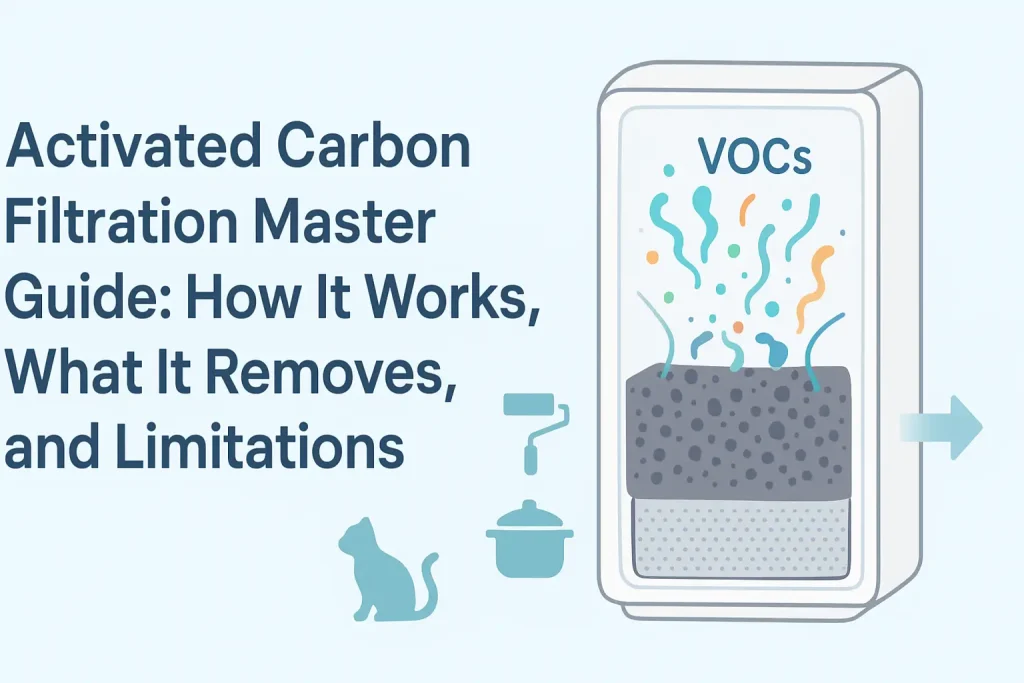
- ✗Limited activated carbon capacity: the thin charcoal pre-filter provides minimal VOC and odor removal compared to units with pound-plus carbon beds
Germ Guardian air purifiers deliver genuine True HEPA filtration and UV-C at the lowest price available. They are best for small rooms under 150 sq ft where budget is the primary constraint. For larger rooms, allergy-level ACH targets, or quiet bedroom operation, a Coway or Levoit unit delivers more CADR per dollar and quieter performance with AHAM-certified numbers.
Germ Guardian Filter Replacement Costs: Annual Running Expense Breakdown
The true cost of owning a Germ Guardian includes both the Germ Guardian replacement filter kit and the UV-C bulb. For the AC4825, a genuine replacement filter combo with the True HEPA and charcoal pre-filter costs $15 to $25 and needs replacement every 6 to 8 months under normal use.
The UV-C replacement bulb for Germ Guardian adds another $10 to $15 every 6 to 8 months. The bulb dims over time and Germ Guardian recommends replacing it on the same schedule as the filter even if it still glows.
Annual running cost for an AC4825 totals approximately $50 to $70: $25 to $35 for filter replacements and $20 to $30 for two UV-C bulb changes. Add roughly $15 to $25 in electricity at 13 cents per kWh if running 12 hours daily on medium speed at 30 to 40 watts.
The AC5250PT and AC5900WCA have slightly higher filter costs at $30 to $55 annually plus the same UV-C bulb replacement expense. Total annual ownership cost for any Germ Guardian model runs between $70 and $120 per year including filters, bulbs, and electricity.
For comparison, a Coway air purifier like the AP-1512HH costs about $30 per year in filters with no UV-C bulb to replace. The Coway has a higher upfront price but lower annual running cost. Over three years, a $100 Coway plus $90 in filters costs $190 total, while a $45 Germ Guardian AC4825 plus $150 to $210 in filters and bulbs costs $195 to $255.
Where to Buy Germ Guardian Air Purifiers
Germ Guardian purifiers are sold at most major retailers. The widest selection and most consistent pricing is on Amazon, where all Germ Guardian models ship with Prime delivery and genuine replacement filters are always in stock.
Walmart carries the AC4825 and AC5250PT in stores and online, often at prices matching Amazon. Target stocks select Germ Guardian models online with occasional in-store availability. Home Depot and Lowe’s both carry Germ Guardian replacement filters but stock the purifier units inconsistently.
Direct from Guardian Technologies, the manufacturer, is an option but pricing is usually higher than Amazon and shipping is slower. The best buying strategy is to check the current Amazon price on the Germ Guardian AC4825 first since it fluctuates between $40 and $55 and Amazon typically has the lowest delivered price when shipping is factored in.
For replacement filters, Amazon’s Subscribe and Save program drops the price by 5 to 15% and automates the 6-month replacement cycle. This is the most cost-effective way to keep a Germ Guardian running because filter availability at physical stores is unpredictable.
How Germ Guardian Compares to Coway, Levoit, and Winix
Germ Guardian competes in the budget tier while Coway, Levoit, and Winix operate in the mid-range tier with AHAM-certified CADR ratings and more refined feature sets. The price gap is real: a Germ Guardian AC4825 at $45 versus a Coway AP-1512HH at $100 or a Winix 5500-2 at $150.
The Coway and Winix units deliver 240+ CFM smoke CADR with AHAM certification, meaning their performance numbers are independently verified. Both run quieter at sleep mode (24-30 dB versus ~40 dB for the AC4825) and include air quality sensors with auto mode.
Our detailed Levoit vs Coway comparison walks through the CADR and filter cost differences between those two mid-range leaders. For a broader brand comparison, the Blueair vs Coway brand comparison covers the premium tier options.
Where Germ Guardian wins is the UV-C feature at a price no competitor matches. If UV-C is a priority and your room is under 150 sq ft, Germ Guardian is the cheapest way to get it. If CADR performance, quiet operation, and certified numbers matter more, the extra $50 to $100 for a Coway or Levoit pays for itself in verified performance and lower long-term running costs.
For users considering premium alternatives with lifetime warranties, the Alen BreatheSmart review examines whether a lifetime warranty justifies the $400+ price point. The IQAir HealthPro Plus assessment covers the medical-grade filtration tier for severe allergies and chemical sensitivities.
Common Germ Guardian Problems and How to Fix Them
The most reported Germ Guardian issue is a UV-C bulb that glows but produces no meaningful germicidal output. This happens because UV-C output degrades to 60% or less of its original intensity after 6 to 8 months of continuous use even though the bulb still emits visible light.
The fix is replacing the LB4000 UV-C replacement bulb on schedule regardless of whether it still glows. A glowing bulb does not mean adequate UV-C output. Mark your calendar for replacement every 6 months if you run the purifier continuously.
A second common complaint is noise increase over time. The AC4825 uses a sleeve bearing fan motor that can develop bearing wear after 12 to 18 months of continuous use, producing a ticking or rattling sound. This is a mechanical wear issue, not a defect, and is common in budget air purifiers with sleeve bearing motors.
Fix it by cleaning accumulated dust from the fan blades with compressed air. If the noise persists, the motor bearing is worn and the unit is near end of life. At a $45 replacement cost for the whole unit, a new AC4825 often costs less than repairing the fan motor.
Some users report a plastic off-gassing smell from new Germ Guardian units. This is volatile organic compound release from the plastic housing and is common across budget air purifier brands. The smell typically dissipates within 48 to 72 hours of continuous operation in a ventilated room. Run the unit on high in an unoccupied room with a window cracked for the first two days.
Is a Germ Guardian Right for Your Situation?
A Germ Guardian air purifier is the right choice if you need True HEPA filtration in a small room, your budget is under $75, and you want UV-C as a secondary sanitation layer. It is not the right choice if you need quiet bedroom operation below 35 dB, AHAM-certified CADR numbers, or coverage for a room larger than 150 sq ft at allergy-level ACH rates.
For a small nursery or home office under 120 sq ft, the AC4825 at $40 to $55 delivers genuine HEPA filtration that no other purifier matches at that price. For a medium bedroom or living area, the extra $50 for a Levoit or Holmes unit with verified CADR ratings produces cleaner air with quieter operation.
Users in wildfire-prone regions should look beyond Germ Guardian for primary smoke protection. The estimated 100 to 125 CFM smoke CADR on the smaller models is insufficient for rapid smoke particle reduction in rooms over 100 sq ft. For wildfire-specific air purifier guidance, the Winix AM90 review covers smart features and smoke CADR performance relevant to pollution events.
Buying Guide
Before You Buy a Germ Guardian: Complete Checklist
Check off each point before making your decision. Based on AHAM and EPA buying guidance.
Do Germ Guardian Air Purifiers Produce Ozone?
Germ Guardian air purifiers are CARB certified and produce ozone below the 0.050 ppm limit set by California Air Resources Board CCR Title 17 Section 94251. The UV-C bulb in Germ Guardian units operates at 254 nanometers, which is in the germicidal range and does not produce meaningful ozone.
Ozone production from UV-C occurs primarily at 185 nanometers, not at 254 nanometers. The Germ Guardian bulb is coated to block the 185 nm wavelength and emit only at 254 nm, which prevents the photochemical reaction that creates ozone from oxygen in the air. This design choice makes the UV-C stage ozone-safe when the correct genuine replacement bulb is used.
Can I Run a Germ Guardian Air Purifier 24/7?
Yes, you can run a Germ Guardian air purifier continuously. The AC4825 uses approximately 30 to 50 watts depending on fan speed, which costs roughly $30 to $55 per year in electricity at 13 cents per kWh when run 24 hours daily on low to medium speed.
Running the purifier 24/7 accelerates filter loading and UV-C bulb degradation. Expect to replace the filter every 4 to 6 months instead of 6 to 8 months, and the UV-C bulb every 4 to 5 months instead of 6 to 8 months. The fan motor in the AC4825 uses a sleeve bearing that is rated for approximately 15,000 to 20,000 hours of continuous operation, which is about 2 years of 24/7 use before bearing wear becomes noticeable.
What Is the Difference Between the Germ Guardian AC4825 and AC4300?
The AC4825 and AC4300 are essentially the same purifier with different model numbers for different retail channels. Both use the same 3-in-1 filtration system with a charcoal pre-filter, True HEPA filter, and UV-C bulb. Both have the same estimated CADR of approximately 100 CFM for smoke.
The only practical difference is that the AC4300 sometimes ships with a slightly different filter frame shape. The Filter B replacement for Germ Guardian fits both the AC4825 and AC4300 models interchangeably. Check your specific model number before ordering to confirm filter compatibility, but in nearly all cases the FLT4825 filter kit works for both.
How Long Do Germ Guardian HEPA Filters Last?
Germ Guardian recommends replacing the True HEPA filter every 6 to 8 months under normal use. In a home with pets, visible dust accumulation, or continuous 24/7 operation, the filter loads faster and should be replaced every 4 to 6 months.
A loaded HEPA filter increases resistance to airflow, which reduces the already modest CADR. When the filter appears visibly gray or dark on the intake side, it is past due for replacement regardless of the calendar. Reduced airflow from a clogged filter causes the motor to work harder, generating more noise and heat, and delivers fewer air changes per hour to the room.
Does the UV-C Light Kill Mold Spores in a Germ Guardian?
The UV-C light in a Germ Guardian can inactivate mold spores that pass through the irradiation chamber if they receive a sufficient dose. Mold spores are larger than bacteria (typically 3 to 40 microns) and are first captured by the True HEPA filter, which traps 99.97% of particles at 0.3 microns.
Spores trapped in the HEPA media are not exposed to UV-C because the light chamber is downstream of the filter. Only airborne spores that bypass the filter or are small enough to pass through would reach the UV-C chamber, and the dwell time in the chamber is too short for complete inactivation of hardy mold spores per ASHRAE UVGI guideline data. The primary mold benefit of a Germ Guardian is HEPA capture of airborne spores, not UV-C inactivation. Address the moisture source first.
Why Does My Germ Guardian Smell Like Plastic When New?
A plastic or chemical smell from a new Germ Guardian is volatile organic compound off-gassing from the ABS plastic housing and internal components. This is common across budget air purifiers and is not unique to Germ Guardian. The smell is strongest during the first 24 to 48 hours of operation.
Run the unit on high speed in a well-ventilated, unoccupied room with a window cracked open for the first two to three days. The smell typically dissipates completely within 72 hours. If the odor persists beyond 5 days, it may indicate a manufacturing defect in the plastic or an overheated motor, and you should contact Guardian Technologies for a warranty replacement.
Can I Turn Off the UV-C Light on a Germ Guardian?
Yes, most Germ Guardian models have a separate switch or button to toggle the UV-C light on and off independently of the fan. On the AC4825, the UV-C switch is a small rocker switch on the side of the unit. On the AC5250PT and AC5900WCA, UV-C control is on the digital touch panel.
Turning off UV-C does not affect HEPA filtration: the fan and filter continue operating normally. If you prefer to run the unit without UV-C to extend bulb life or eliminate the faint blue glow in a dark bedroom, you can do so without losing particle filtration performance.
Where Should I Place a Germ Guardian Air Purifier in a Bedroom?
Place a Germ Guardian in the bedroom at least 12 to 18 inches from walls and furniture on all sides. The AC4825 draws air from the front grille and exhausts it from the top, so the front intake needs clear space and the top exhaust must not be blocked by shelves or curtains.
For a bedroom, position the unit on the side of the room opposite the door if possible, away from corners where airflow stagnates. Placing it near the bed at breathing height on a nightstand or low dresser puts the cleaned air closer to your breathing zone. Avoid placing it directly on carpet where fiber particles clog the pre-filter faster, and keep it at least 3 feet from a heating vent or air conditioner register.
What Replacement Filters Fit the Germ Guardian AC4825?
The Germ Guardian AC4825 uses the FLT4825 filter kit, which includes one True HEPA filter and one charcoal pre-filter. Third-party compatible filters are available but vary in quality and fit. Genuine Guardian Technologies filters are recommended because off-brand filters sometimes have incomplete gasket seals that allow air bypass.
The FLT4825 genuine replacement filter 3-pack offers the best per-filter price. The UV-C bulb uses model LB4000, which is compatible across all AC4825, AC4300, and AC4900 series units. Do not substitute a generic UV-C bulb: wavelength and coating must match to prevent ozone production.
Is a Germ Guardian Powerful Enough for a Living Room or Open Plan Space?
No single Germ Guardian model is powerful enough for a large living room or open plan space exceeding 300 sq ft. The AC5900WCA with its estimated 193 CFM smoke CADR covers approximately 290 sq ft at 2 ACH and only 115 sq ft at 5 ACH. A typical living room of 350 to 500 sq ft needs a smoke CADR of 233 to 333 CFM at 2 ACH.
For a living room, you need either two Germ Guardian AC5900WCA units running simultaneously or a single higher-CADR unit such as a Coway Airmega 400 with 400 CFM smoke CADR or a Blueair 605 with 500 CFM smoke CADR. Germ Guardian is priced and sized for small to medium rooms, not open-plan living areas.
How Does the Germ Guardian AC5250PT Pet Model Differ From the Standard AC4825?
The AC5250PT adds a fifth filtration stage called Pet Pure, which is an antimicrobial coating on the filter media marketed as reducing pet dander and odor. It also includes a digital display with filter change indicator and a higher fan speed motor delivering approximately 125 CFM estimated smoke CADR versus the AC4825’s roughly 100 CFM.
The Pet Pure antimicrobial coating is treated with a zinc-based compound that inhibits microorganism growth on the filter surface. This is beneficial in high-humidity environments where filters might otherwise develop microbial growth between changes. The AC5250PT is the better choice for pet owners specifically because of the higher CADR and the antimicrobial filter treatment, but the price premium over the AC4825 is significant at roughly double the cost.
What Is the Warranty on Germ Guardian Air Purifiers?
Germ Guardian air purifiers carry a 3-year limited warranty from Guardian Technologies. The warranty covers defects in materials and workmanship but does not cover filter replacements, UV-C bulb replacements, or damage from using non-genuine replacement parts.
Warranty claims require proof of purchase and are processed through Guardian Technologies customer service. User reports indicate warranty claims are handled reasonably for motor failures within the first year but become more difficult in years two and three. The low unit price means that for the AC4825, buying a new unit often costs less than shipping the old one back for warranty service.
Are Germ Guardian Air Purifiers Good for Wildfire Smoke?
Germ Guardian purifiers can help with wildfire smoke in small rooms under 120 sq ft with the AC4825 or under 150 sq ft with the AC5900WCA. The True HEPA filter captures 99.97% of wildfire PM2.5 particles at 0.3 microns, and the charcoal pre-filter provides minimal adsorption of smoke odors.
The limitation is CADR: the AC4825’s estimated 100 CFM smoke CADR means it processes a 120 sq ft room’s air roughly 4 times per hour at an 8-foot ceiling. During AQI 150+ wildfire events, 6 ACH is recommended, and the AC4825 cannot achieve that in any room larger than 75 sq ft. For wildfire smoke in rooms over 150 sq ft, a unit with verified smoke CADR above 200 CFM such as the Winix 5500-2 with 243 CFM smoke CADR is the minimum starting point for effective protection.
Do Germ Guardian Air Purifiers Have Washable Filters?
The charcoal pre-filter in Germ Guardian units is not washable and must be replaced along with the HEPA filter. Some users attempt to vacuum the pre-filter to extend its life, but the activated carbon coating degrades with moisture and the pre-filter’s thin fiber layer tears easily when cleaned.
The True HEPA filter is absolutely not washable. Water destroys the fine fiber structure that creates the 99.97% capture efficiency at 0.3 microns. Washing a HEPA filter turns it into a damaged fiber mat with unknown and likely severely reduced filtration efficiency. Replace, do not wash.
Germ Guardian air purifiers occupy a unique and valuable position in the market: genuine True HEPA plus UV-C at prices that make air purification accessible to nearly any budget. The AC4825 at $40 to $55 delivers real HEPA filtration that no competing unit matches at that price.
For small rooms under 150 sq ft, a Germ Guardian is an honest, straightforward air purifier that does what it claims. Buy a Germ Guardian AC4825 from Amazon along with a spare replacement filter and UV-C bulb kit, set a calendar reminder for replacement every 6 months, and it will clean the air in a small space reliably for years.