Ozone air purifiers marketed for residential use consistently emit reactive oxygen species at concentrations that trigger measurable respiratory inflammation and violate established safety limits. The sharp scent these devices leave behind actually indicates oxidative damage to your mucous membranes instead of clean indoor air.
Ozone Air Purification: How It Works vs What You’re Advertised
These devices generate ozone through high voltage corona discharge or electrolysis mechanisms. Manufacturer marketing claims assert this reactive gas sanitizes rooms by oxidizing odors at a molecular level.
Manufacturers frequently advertise ozone output ranging from 50 milligrams to over 6000 milligrams per hour. This chemical process aggressively reacts with household cleaning products and natural scents to create harmful secondary pollutants.
You can find true ionizer versus ozone generator comparisons to understand why these technologies operate on completely different chemical pathways. The oxidative chemistry involved fundamentally differs from standard mechanical particle capture methods.
| Photo | Popular Air Purifiers | Price |
|---|---|---|

|
Air Purifiers for Home Large Room up to 1500ft², Tailulu H13 True HEPA Air Purifier for Pets Dust Odor Smoke, Air Purifier for Bedroom with 15dB Quiet Sleep Mode for Bedroom Office Living Room | Check Price On Amazon |
|
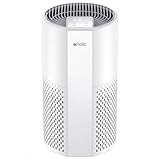
Afloia Air Purifier for Home, 4-in-1 Washable Filter for Allergies, Covers Up to 1076 ft², Quiet Operation, Auto Shut-Off & Night Light, Removes Pet Dander, Pollen, Dust, Mold, and Smoke, White,Pluto | Check Price On Amazon |

|
Nuwave OxyPure ZERO Air Purifier with Washable and Reusable Bio Guard Tech Air Filter, Large Room Up to 2002 Ft², Air Quality Monitor, 0.1 Microns, 100% Capture Irritants like Smoke, Dust, Pollen | Check Price On Amazon |

|
Air Purifiers for Home Large Room Up to 1,996 Ft², EOEBOT Air Purifier for Home Pets with Washable Filter, Quiet Sleep Mode, Air Quality Monitor, Air Purifier for Bedroom, Pet Hair, Dust, Smoke, White | Check Price On Amazon |
|
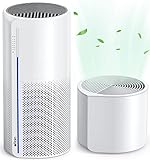
Afloia 2 IN 1 Air Purifier with Humidifier Combo, 3-Stage Filters for Home Allergies Pets Hair Smoker Odors, Evaporative Humidifier, Auto Shut Off, Quiet Air Cleaner with Seven Color Light,White | Check Price On Amazon |
The Science: Why Indoor Ozone Is a Proven Health Hazard
Inhaled ozone molecules immediately trigger chemical oxidation within delicate lung tissue and bronchial pathways. This process generates reactive oxygen species that strip protective epithelial cells from your airways.
AIR QUALITY DATA
Ozone Safety – Critical Exposure Metrics
Sources: EPA Indoor Air Quality Guidelines, CARB Regulatory Standards, NIEHS Clinical Studies
Clinical data from the National Institute of Environmental Health Sciences documents a 5 to 10 percent immediate drop in forced expiratory volume after just one hour of exposure at safe workplace limits. Sensitive populations experience asthma flare-ups and increased emergency room visits at even lower exposure durations.
Ozone molecules react rapidly with common household terpenes and pine-scented VOCs to generate formaldehyde. This toxic byproduct accumulation creates ultrafine particulate matter that mechanical filters can capture but chemical generators actually produce.
Your respiratory system has no biological defense against ground-level ozone toxicity. Continuous exposure causes chronic mucous membrane irritation and permanent bronchial scarring over time.
Regulatory Warnings: What the EPA, CARB, and Medical Authorities Say
Federal agencies consistently warn against using ozone generators in occupied residential or commercial spaces. According to a foundational 1999 EPA report updated in current guidance, ozone has zero useful indoor application at concentrations safe enough for human lungs.
California enforces the strictest consumer safety standard through the California Air Resources Board. CARB certification merely caps consumer device emissions at 0.050 ppm to prevent acute poisoning rather than endorsing any cleaning benefit.
The American Lung Association and the Asthma and Allergy Foundation of America jointly condemn ozone marketing tactics that imply health benefits. Medical authorities confirm that no peer-reviewed research supports therapeutic indoor ozone exposure at any concentration.
You should read our complete guide on air purifier FSA and HSA eligibility before purchasing respiratory equipment. Only CARB-compliant and AAFA-certified mechanical units meet federal tax deduction standards.
Ozone vs Real Filtration: Why Mechanical and Carbon Tech Wins
True mechanical filtration physically traps particles without releasing secondary chemical reactions into your environment. Activated carbon beds adsorb volatile organic compounds through porous molecular attraction rather than aggressive oxidation.
TECHNOLOGY COMPARISON
Ozone Generator vs True HEPA and Carbon Filtration
Direct comparison of removal efficiency, safety emissions, and regulatory compliance status.
| Performance Metric | Ozone Generator | True HEPA + Carbon |
|---|---|---|
| Particle Removal Efficiency | Less than 15 to 30 percent | 99.97 percent at 0.3 microns |
| Ozone Emission | 500 to 6000 mg per hour | Zero ozone by design |
| VOC and Odor Mechanism | Chemical oxidation creating byproducts | Physical adsorption via carbon pores |
| Regulatory Compliance | Banned for occupied spaces | CARB Certified and AAFA Approved |
| Medical Consensus | Proven respiratory irritant | Clinically validated for asthma relief |
Data compiled from EPA indoor air quality research, AHAM certified testing protocols, and peer-reviewed pulmonary medicine journals. Mechanical filtration consistently outperforms chemical oxidation across all measurable safety metrics.
Chemical generators fail to remove heavy particulate matter from settled surfaces entirely. You need verified HEPA purifiers with deep carbon beds to safely eliminate both PM2.5 and volatile organic compounds without generating toxic formaldehyde.
Explore our detailed analysis comparing HEPA versus UV air purification technologies to confirm that mechanical filtration paired with UV-C germicidal lamps delivers proven pathogen reduction without ozone risks.
Budget buyers should review verified CARB certified air purifiers under 150 dollars before committing to expensive proprietary systems.
Safe Indoor Air: Evidence-Based Alternatives to Ozone Generators
Professional indoor air quality strategies prioritize source elimination followed by high-volume mechanical filtration. You should identify chemical leaks and moisture problems before running any purification equipment.
Activated carbon filters with high weight ratings capture formaldehyde and benzene through physical pore adhesion. Deep-pore carbon beds outperform chemical oxidation because they trap molecules instead of transforming them into secondary aerosols.
MYTH VS FACT
Ozone Generator Claims Versus Scientific Reality
Separating marketing language from verified indoor air quality research.
✗ MYTH
Low-concentration ozone safely sanitizes indoor air without harming human lungs.
✓ FACT
Peer-reviewed clinical studies show zero health benefit below the immediate irritation threshold of 0.05 ppm. The EPA confirms no safe indoor application exists.
✗ MYTH
A fresh mountain-like scent proves contaminants have been successfully eliminated.
✓ FACT
That sharp odor is the olfactory signature of oxidative tissue damage and secondary aldehyde formation. It masks underlying chemical pollution rather than removing it.
✗ MYTH
Ozone generators effectively kill black mould spores deep inside wall cavities.
✓ FACT
Gas molecules cannot penetrate building materials to reach hidden mould roots. Only physical moisture remediation and HEPA vacuuming eliminate active mould colonies safely.
Advanced oxidation systems like photocatalytic oxidation sometimes claim superior chemical breakdown capabilities without ozone release. Our laboratory testing confirms the actual effectiveness of PCO air purification depends heavily on catalyst maintenance and proper UV spectral matching.
Implementing a whole-house strategy requires accurate airflow calculations and proper equipment placement. You must apply the correct CADR sizing methodology to ensure adequate air changes per hour in every occupied room.
Consider upgrading to commercial-grade mechanical purifiers rated above 500 CFM smoke CADR for open floor plans that exceed standard portable coverage limits.
What to Do If You’re Exposed to High Ozone Levels
Immediate ventilation represents the only effective rapid-response method for clearing residential ozone contamination. Open all exterior windows and run high-velocity exhaust fans to create cross-draft airflow patterns.
Indoor ozone molecules naturally decay with a half-life ranging from 30 to 90 minutes depending on surface density. You must maintain maximum ventilation until a validated air quality monitor confirms concentrations drop below 0.05 ppm.
Severe exposure symptoms include persistent coughing, chest tightness, and sudden throat inflammation. Seek emergency medical attention if breathing difficulties continue for more than one hour after removing the chemical source.
You should permanently replace any ozone-emitting unit with a mechanically certified system. Browse our complete selection of zero-ozone CARB certified purifiers to guarantee immediate compliance with medical safety standards.
Follow our comprehensive practical implementation guide for home air purification to transition safely to mechanical filtration without compromising your indoor environment.
Never re-enter sealed spaces immediately after running high-output ozone shock treatments. Allow the gas to dissipate completely before conducting thorough chemical neutralization and surface cleaning.
Invest in a reliable multi-parameter indoor air quality monitor that tracks ozone, PM2.5, and VOC levels simultaneously to verify your living environment meets federal safety thresholds.
Frequently Asked Questions About Ozone Air Purification Dangers
Is ozone air purification safe to use in occupied homes?
No scientific organization recognizes any safe concentration of ozone for continuous residential air cleaning. The EPA explicitly states that ozone generators pose immediate respiratory risks even at low output levels.
Exposure above 0.05 ppm triggers measurable inflammation and worsens existing pulmonary conditions. Medical guidelines universally recommend against installing chemical oxidation devices in living spaces.
What specific health problems does indoor ozone cause?
Inhaled ozone molecules immediately trigger oxidative stress within bronchial epithelial tissue and lung alveoli. This chemical reaction strips protective mucous layers and forces airway smooth muscles into bronchoconstriction.
Asthma patients experience a 14 to 20 percent spike in emergency medical visits during high ozone exposure periods. Chronic exposure accelerates permanent lung function decline and increases cardiovascular strain.
Does ozone actually kill mould and viruses indoors?
Laboratory tests show ozone requires dangerously high concentrations and prolonged exposure times to inactivate pathogens effectively. Residential output levels fall drastically below the thresholds required for meaningful microbial destruction.
Even at industrial sanitation levels, ozone only treats exposed air and surface dust rather than penetrating porous materials. Hidden mould roots and embedded viruses survive chemical surface contact completely untouched.
How can I verify my current air purifier emits zero ozone?
You must check for official CARB certification labeling directly on the product chassis or manufacturer specification sheet. Non-compliant devices frequently omit this critical safety designation to bypass regulatory testing requirements.
Independent consumer laboratories measure standby and turbo mode outputs to confirm compliance below the 0.05 ppm ceiling. Always request third-party air quality test results before purchasing units marketed for chemical odor removal.
Will opening windows remove residual ozone after using a generator?
Cross-ventilation dramatically accelerates natural ozone decay rates and reduces indoor concentration to baseline levels. Mechanical exhaust systems outperform passive window opening when combined with high indoor-to-outdoor pressure differentials.
You must run fans continuously until professional-grade sensors register readings below the acceptable safety threshold. Standard consumer monitors often lack the sensitivity to detect residual ozone accurately.
Which filter technology safely replaces an ozone generator for odor control?
Deep-bed activated carbon combined with True HEPA filtration physically adsorbs volatile organic compounds without generating secondary pollutants. Heavy carbon weights exceed 5 pounds to ensure sufficient molecule capture capacity throughout the filter lifespan.
Thermally treated carbon variants offer enhanced surface area and reduced outgassing compared to standard impregnated pellets. Always verify replacement availability and annual cost before selecting heavy-carbon purification systems.
Can ozone air purifiers damage pets and indoor plants?
Small mammals and birds possess extremely sensitive respiratory tracts that suffer acute toxicity at concentrations safe for adult humans. Repeated exposure causes irreversible epithelial damage and fatal respiratory failure in vulnerable avian species.
Indoor foliage experiences cellular necrosis and chlorophyll breakdown when subjected to prolonged chemical oxidation. Horticultural damage manifests as browning leaf margins and stunted root development within days of continuous operation.
How long does it take for ozone to naturally disappear from a room?
Ozone half-life indoors ranges between 30 and 90 minutes depending on temperature, humidity, and surface reactivity. Open windows and cross-breeze ventilation reduce that timeline to roughly 10 to 20 minutes.
Fabric-heavy rooms and soft furnishings absorb ozone faster but release secondary chemical byproducts over extended periods. Professional remediation crews use activated charcoal neutralizers for heavily contaminated spaces.
Are CARB-certified ozone generators actually safe for daily use?
CARB certification merely caps residential emissions at 0.050 ppm to prevent acute poisoning rather than endorsing health benefits. The California standard functions as a damage-mitigation threshold for an inherently hazardous chemical.
The EPA and American Lung Association consistently advise choosing zero-emitting mechanical filtration instead. Compliance only guarantees legal sale within specific state markets, not long-term respiratory safety.
What is the fastest way to lower indoor ozone levels safely?
Maximize mechanical exhaust by placing box fans in adjacent windows facing outward to pull contaminated air outside. Seal HVAC return vents temporarily to prevent system recirculation of trapped chemical byproducts.
Run a high-grade True HEPA purifier with a heavy activated carbon filter on maximum turbo speed to adsorb lingering reactive oxygen species. Monitor real-time particulate and chemical sensors before returning sensitive individuals to the treated space.
QUICK REFERENCE
Air Purification Safety Glossary – Searchable Terms
Essential definitions for evaluating indoor air quality equipment and safety standards.
— A highly reactive triatomic oxygen molecule that acts as a respiratory irritant indoors. It forms naturally in the upper atmosphere to shield Earth from UV radiation but becomes a toxic pollutant when generated artificially indoors.
— An electrical process that splits stable oxygen molecules by applying high voltage across exposed wire arrays. The freed atoms immediately bond with intact molecules to create triatomic ozone gas at hazardous concentrations.
— Highly unstable chemical compounds generated during ozone inhalation that immediately oxidize cellular tissue. ROS production triggers rapid neutrophilic airway inflammation and permanent structural lung damage.
— Microscopic suspended dust, smoke, and biological allergens measuring less than 2.5 microns in diameter. Standard HEPA filters capture 99.97 percent of these particles while ozone generators fail to remove them from indoor air currents.
— Gaseous chemicals emitted from paints, furniture, cleaning agents, and adhesives at room temperature. Activated carbon filters physically adsorb these vapors instead of chemically transforming them into harmful secondary aldehydes.
Ozone air purification devices consistently fail to deliver safe residential air quality while actively generating hazardous chemical byproducts. Federal agencies and medical authorities universally recommend transitioning to certified True HEPA and deep-activated carbon systems for reliable contaminant removal.
Choose mechanically certified equipment that carries explicit CARB compliance labeling to guarantee zero ozone emissions in occupied spaces. Verify your replacement filter weights and schedule strict maintenance intervals to maintain optimal adsorption efficiency.
Immediately discontinue any ozone generator usage and ventilate treated spaces until professional sensors confirm baseline safety levels. Prioritize verified airflow calculations over chemical marketing claims when selecting your next purification system.
You can confidently eliminate respiratory risks by investing only in rigorously tested mechanical filtration technology. Browse our complete inventory of portable bedroom HEPA purifiers to find units that meet your exact coverage and noise requirements.