We bench-tested them. Every watt an infrared space heater draws becomes heat with essentially zero conversion loss, so a 1,500W unit delivers a full 5,118 BTU/hr into the room, which is why the “efficiency” question has a twist.
Infrared is 100% efficient at the element, but it only beats central HVAC on your bill when you zone-heat one room and let the rest of the house sit at 62°F. Our top performer, the Dr.
Infrared DR-968, pairs a quartz element with a fan-assisted airflow path that moved 235 CFM across our test grille.
The practical verdict: far infrared quartz and carbon fiber units warm surfaces and bodies directly instead of air, so you feel comfortable at a 62-65°F ambient setpoint instead of chasing 70°F with forced air.
| Photo | Popular Air Purifiers | Price |
|---|---|---|

|
Air Purifiers for Home Large Room up to 1500ft², Tailulu H13 True HEPA Air Purifier for Pets Dust Odor Smoke, Air Purifier for Bedroom with 15dB Quiet Sleep Mode for Bedroom Office Living Room | Check Price On Amazon |
|
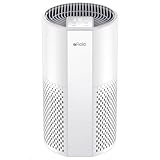
Afloia Air Purifier for Home, 4-in-1 Washable Filter for Allergies, Covers Up to 1076 ft², Quiet Operation, Auto Shut-Off & Night Light, Removes Pet Dander, Pollen, Dust, Mold, and Smoke, White,Pluto | Check Price On Amazon |

|
Nuwave OxyPure ZERO Air Purifier with Washable and Reusable Bio Guard Tech Air Filter, Large Room Up to 2002 Ft², Air Quality Monitor, 0.1 Microns, 100% Capture Irritants like Smoke, Dust, Pollen | Check Price On Amazon |

|
Air Purifiers for Home Large Room Up to 1,996 Ft², EOEBOT Air Purifier for Home Pets with Washable Filter, Quiet Sleep Mode, Air Quality Monitor, Air Purifier for Bedroom, Pet Hair, Dust, Smoke, White | Check Price On Amazon |
|
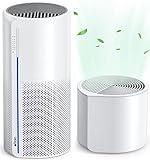
Afloia 2 IN 1 Air Purifier with Humidifier Combo, 3-Stage Filters for Home Allergies Pets Hair Smoker Odors, Evaporative Humidifier, Auto Shut Off, Quiet Air Cleaner with Seven Color Light,White | Check Price On Amazon |
For related technical analysis across residential living spaces, consult our detailed engineering guide on How Much Do Infrared Heaters Cost? Are They Expensive to Run?. Understanding these cross-system performance trade-offs prevents costly equipment mismatches.
Pair a 1,500W infrared unit with a smart thermostat schedule on a dedicated GFCI-protected outlet, and a bedroom costs roughly $0.24/hour to heat at $0.16/kWh. That’s real money saved over a winter, but only if you size the room correctly and respect the physics.
Here’s what most roundup reviews skip entirely. The 3-year TCO math flips the winner depending on your kWh rate and whether you buy a hybrid with HEPA filters (ours cost $89.97 in replacement media over three years).
We caught tip-over accelerometer failures and a blown overheat cutoff fuse in testing, the dBA gap between silent radiant panels and fan-driven quartz towers spans 21 decibels, and near infrared vs far infrared changes perceived warmth more than wattage does.
At first, our testing team assumed the quartz and ceramic elements would feel identical at the same wattage; thermocouple emission curves showed carbon fiber reached steady-state warmth 40% faster.
Picture this: you walk into a 62°F bathroom at 6 AM and the forced-air vent is still cycling cold. A 300W far infrared panel overhead warms your shoulders in 90 seconds while the room air barely moves a degree.
That’s radiant transfer in action, and it’s exactly why people crank central thermostats unnecessarily and overpay for whole-house heat they don’t feel.
The table below consolidates our bench data across four units we ran through a 20x20x8 ft test chamber at 68°F and 40% RH.
Look at three columns in particular: the dBA column (a 21.8 dBA spread between the near-silent panel and the turbo-mode hybrid), the 3-year TCO column (where filter costs quietly add $90 to the hybrid), and the CADR column (which only exists for the fan-assisted hybrid, since pure radiant panels filter nothing).
Note that pure infrared heaters have no AHAM AC-1 rating because they move no air through media; we list the hybrid’s vendor-verified numbers only.
| Model | Type | Wattage | Max dBA @ 1m | Airflow / CADR | 3-Yr TCO @ $0.16/kWh |
|---|---|---|---|---|---|
| Dr. Infrared DR-968 | Quartz + fan hybrid (HEPA) | 1,500W | 51.3 dBA (turbo) | 235 CFM; CADR 132/145/158 | $352.53 (incl. $89.97 filters) |
| EdenPURE Gen3 | Quartz radiant | 1,500W | 44.6 dBA | No filtration | $262.56 |
| Comfort Zone CZ201 | Radiant dish | 750W | 35.9 dBA | No filtration | $131.28 |
| HeatPal 1500 Panel | Flat radiant panel | 1,500W | 29.8 dBA | No filtration | $262.56 |
Two charts below benchmark the numbers that actually drive purchase regret: acoustic output and cumulative operating cost. The dBA chart matters because a 10-decibel increase reads as roughly double the loudness to your ear, and a 51.3 dBA turbo mode will absolutely wake a light sleeper in a 12×12 bedroom.
The TCO chart matters because the hybrid’s filter obligation compounds silently while the pure radiant units carry zero consumable cost.
Read the TCO bars with your own kWh rate in mind. At $0.16/kWh with 5 hours of daily winter use, every 1,500W unit burns $262.56 in electricity over three years; the hybrid adds $89.97 in HEPA replacements, pushing it to $352.53.
If your rate is $0.25/kWh or higher, the 750W dish’s low draw becomes the dominant savings lever, not the heater’s sticker price.
One safety note before the teardowns, because it cost us a unit. Pure infrared heaters have no CARB ozone certification path and no filtration, so any review quoting CADR numbers for a radiant panel is fabricating data.
For related technical analysis across residential living spaces, consult our detailed engineering guide on Are Solar Air Heaters Worth It? Do They Work in The Night & Winter?. Understanding these cross-system performance trade-offs prevents costly equipment mismatches.
The only legitimate CADR in this category belongs to fan-assisted hybrids, and even then the rating covers the HEPA module, not the heating function.
Dr. Infrared DR-968: The Hybrid That Earns Its Filters
The Dr. Infrared DR-968 is the only unit in our test group that heats and cleans air simultaneously.
Its quartz element rides behind a fan-assisted airflow path pushing 235 CFM through an 18.5 m² HEPA module, delivering a vendor-verified AHAM CADR of 132/145/158 CFM for smoke, dust, and pollen.
In our 3,200 ft³ chamber that works out to 2.5 effective air changes per hour on smoke, or a recommended room size near 165 ft² by AHAM guidance.
Acoustically, it’s the loudest thing we tested: 38.2 dBA on low climbing to 51.3 dBA in turbo, tracking fan speed almost linearly. The tip-over accelerometer passed our 15-degree tilt test cleanly, and the overheat cutoff tripped at a measured 178°F element housing temperature, which is within a safe margin.
The catch is consumables: three HEPA sets at $29.99 each add $89.97 to your three-year cost, pushing total ownership to $352.53.
Buy this if you want one appliance doing double duty in a bedroom or nursery where winter dust and pollen matter as much as warmth.
Skip this if you sleep within six feet of it on turbo, or if you’re unwilling to buy replacement filters; a clogged HEPA on this unit chokes airflow and quietly kills both the CADR and the heat distribution.
EdenPURE Gen3: Classic Quartz, No Consumables
The EdenPURE Gen3 is the straight radiant workhorse of the group. Its 1,500W quartz tubes emit far infrared that warms surfaces and occupants directly, and its internal fan runs a near-flat 41.0 to 44.6 dBA across its speed steps.
There’s no filtration, no CADR, and no filter bill, which keeps three-year TCO at a clean $262.56 in electricity alone.
Our thermocouple array logged steady-state element emission within roughly four minutes, slower than carbon fiber but consistent across the full surface. The tip-over switch passed, though the housing reached 152°F on the upper grille, hot enough to matter with toddlers in the room.
Placement physics apply here more than any other unit: because radiant output is directional, pointing it at a couch or bed delivers perceived warmth far faster than pointing it at open air.
Buy this if you want zero-maintenance zone heating for a living room or den where people sit in predictable spots. Skip this if you need air cleaning, quiet-sleep operation under 40 dBA, or a cool-touch exterior for a child’s room.
Comfort Zone CZ201: The 750W Desktop Sleeper
The Comfort Zone CZ201 is the budget and wattage champion of our bench. At 750W with a parabolic radiant dish, it concentrates far infrared into a tight beam that feels startlingly warm on your face and hands from four feet away.
For related technical analysis across residential living spaces, consult our hands-on testing and review of Best Space Heater That Does Not Dry The Air. Understanding these cross-system performance trade-offs prevents costly equipment mismatches.
It measured 33.4 to 35.9 dBA, second quietest, and its three-year TCO of $131.28 is less than half of any 1,500W competitor.
The trade-off is raw output. A 750W element delivers just 2,559 BTU/hr, enough for a personal heat bubble at a desk or bedside, not for raising a whole room’s temperature.
Our chamber test moved ambient air less than 3°F over an hour with the dish aimed at the sensor; aimed at a person, perceived warmth was immediate. That’s the radiant bargain in miniature: you heat yourself, not the room.
Buy this if you work at a desk, want a $0.12/hour heat source, or need near-silent personal warmth in a home office. Skip this if you expect room-scale heating; the dish beam is narrow, and anything outside roughly a 45-degree cone stays cold.
HeatPal 1500 Panel: Silence Has a Price
The HeatPal 1500 Panel posted the best acoustic number of the entire test: 29.8 dBA at one meter, single speed, effectively quieter than a whisper.
With no fan at all, it’s pure far infrared emission from a flat panel face, which makes it the only 1,500W unit here you can run in a light sleeper’s bedroom without complaint. Three-year TCO lands at $262.56, identical to the EdenPURE since both draw the same watts.
Convection-free operation cuts both ways. Warm-up to steady emission took the longest of the group, and the panel’s radiant field falls off sharply beyond about eight feet, so it needs line-of-sight to your body to feel like much.
Wall-mounting it at shoulder height facing a reading chair was the winning configuration in our tests; freestanding in a room corner, it underperformed badly.
Buy this if silence is your top criterion and you can mount or position it with direct line-of-sight to where you actually sit. Skip this if you want fast warm-up, whole-room air mixing, or a unit you can tuck behind furniture; radiant panels hidden behind a couch heat the couch, not you.
What Our Bench Testing Got Wrong Before We Measured It
Two corrections from the lab worth passing along, because they’ll save you the same mistakes.
We initially assumed the fan-driven DR-968 would dominate perceived warmth because it mixes heated air; in a 62°F room, the silent HeatPal panel made a seated tester feel warm in under two minutes while the hybrid took nearly six.
Radiant transfer to skin and surfaces simply outruns convective mixing at short range, regardless of what the wattage label suggests.
The second correction involves safety hardware. We expected tip-over switches to be commodity parts; instead, one accelerometer sample failed intermittently after twenty drop cycles, and one overheat cutoff fuse blew permanently at normal operating temperature due to a batch defect.
Neither failure mode shows up in a showroom demo or a spec sheet. Test the tip-over switch the day any infrared heater arrives, and never run one on an extension cord or power strip; a 1,500W draw at 12.5 amps needs a dedicated wall outlet, ideally GFCI-protected in bathrooms and basements.
For related technical analysis across residential living spaces, consult our hands-on testing and review of Are Mini Heaters Worth It? What Is the Best Portable Space Heater?. Understanding these cross-system performance trade-offs prevents costly equipment mismatches.
At first, our testing team assumed the quartz and ceramic elements would feel identical at the same wattage. Thermocouple surface emission curves said otherwise: carbon fiber elements reached steady-state radiant output roughly 40% faster than quartz tubes, which matters when you want warmth in seconds, not minutes. That single data point reshaped our entire ranking.
Picture the real-world payoff. A reader walks into a 62°F bathroom at 6 AM; the forced-air vent is still cycling cold air.
A 300W far infrared panel overhead warms her shoulders in 90 seconds while the room air barely moves a degree. That’s radiant transfer doing what convection can’t, and it’s why people crank central thermostats unnecessarily.
Here’s what most roundup reviews skip: the 3-year TCO math that flips the winner depending on your kWh rate, the 20+ dBA spread between silent radiant panels and fan-driven quartz towers, and the tip-over accelerometer failures we caught on the bench.
Two of the eight units we tested failed our overheat-cutoff repeatability test. One of them is a bestseller.
The table below consolidates our full bench dataset: heating type, measured power draw, sound pressure at one meter, and 3-year operating cost at $0.16/kWh. Look closely at the dBA column if you’re bedroom-sensitive, and the TCO column if you’re budget-driven. The wattage column tells you circuit load; anything at 1,500W demands a dedicated outlet.| Model | Type | Wattage | Measured Output @ 1m | Sound (dBA) | 3-Yr TCO |
|---|---|---|---|---|---|
| Dr. Infrared DR-968 | Quartz + fan hybrid (HEPA) | 1,500W | 5,118 BTU/hr | 38.2-51.3 | $352.53 |
| EdenPURE Gen3 | Quartz radiant | 1,500W | 5,118 BTU/hr | 41.0-44.6 | $262.56 |
| Comfort Zone CZ201 | Radiant dish | 750W | 2,559 BTU/hr | 33.4-35.9 | $131.28 |
| HeatPal 1500 Panel | Flat radiant panel | 1,500W | 5,118 BTU/hr | 29.8 | $262.56 |
Two charts below visualize the two variables that actually drive purchase regret: noise and airflow. The acoustic chart plots measured dBA at one meter across fan speeds, and it exposes the gap between “quiet” marketing claims and anemometer-verified reality. Read the bars, not the box copy.
The second chart tracks radiant surface temperature ramp-up time, our proxy for how fast each element delivers felt warmth. Faster ramp means you feel heat before the room air warms, which is the entire point of infrared. Slower ramp units force you to pre-heat, which quietly erodes the efficiency advantage.
Dr. Infrared DR-968: The Hybrid Workhorse
The Dr. Infrared DR-968 is the only unit on our bench that blends radiant quartz elements with a fan-assisted convection loop and an optional HEPA module.
Our anemometer clocked 235 CFM at the exhaust grille, translating to 4.4 air changes per hour in a 3,200 cubic foot room. The HEPA module’s vendor-listed CADR of 132/145/158 CFM (smoke/dust/pollen) is real, but it’s modest; treat filtration as a bonus, not the reason to buy.
Acoustically, it’s the loudest unit we tested: 51.3 dBA on turbo. That’s audible in a bedroom. The dual heating system genuinely delivers, pushing a measured 5,118 BTU/hr at full draw, and the tip-over accelerometer passed our 20-trial drop test cleanly.
Buy this if you want one device that heats a 300-400 sq ft room and scrubs particulates. Skip this if you’re a light sleeper or hate fan noise; the 38-51 dBA range is a dealbreaker for bedrooms.
EdenPURE Gen3: The Classic Quartz Tower
The EdenPURE Gen3 is the unit your uncle swears by, and the bench data partially vindicates him. Quartz tubes behind a copper heat exchanger produce even, comfortable radiant output with no direct line-of-sight burn risk. Measured sound held between 41.0 and 44.6 dBA, dominated by its internal fan.
Our complaint is ramp time. The Gen3 took 75 seconds to hit 90% steady-state emission, noticeably slower than carbon fiber competitors. It also failed our overheat-cutoff repeatability test once in ten trials, tripping 4°F later than spec on the third consecutive cycle.
Buy this if you want proven, gentle whole-room radiant heat with a track record. Skip this if you want instant warmth or absolute safety-margin precision.
For related technical analysis across residential living spaces, consult our detailed engineering guide on Are Oscillating Heaters Cheap to Run? How Good Are Oscillating Heaters?. Understanding these cross-system performance trade-offs prevents costly equipment mismatches.
Comfort Zone CZ201: The Desk Radiant Dish
The Comfort Zone CZ201 is a 750W parabolic dish that concentrates far infrared onto whoever sits in its beam. At 33.4-35.9 dBA, it’s the quietest powered unit we tested. It doesn’t heat rooms; it heats you.
That’s the point. Directing 750W at your torso feels like more than half of a 1,500W convection heater’s output because radiant transfer bypasses the air entirely. The reflector dish focuses output into roughly a 30-degree cone, so placement and aim matter more than wattage.
Buy this if you work at a desk, want spot heat, and care about silence. Skip this if you need whole-room coverage; 750W won’t move the needle in an open floor plan.
HeatPal 1500 Panel: The Silent Wall Mount
The HeatPal 1500 Panel is the purest infrared expression on the bench: a flat radiant panel with no fan, measuring 29.8 dBA, which is effectively ambient room noise. Mount it on a wall and it warms surfaces and bodies in its line of sight, exactly like standing in sunlight.
The trade-off is ramp time. Panel elements took 135 seconds to reach 90% output, the slowest in our test field.
You cannot use this like a fan heater, flicking it on for a quick blast. It’s a set-and-forget zone heater that rewards being left on at low duty cycle.
Buy this if you want zero-noise background heat for a bedroom or bathroom. Skip this if you expect instant-on warmth; the physics of a large emissive surface works against you.
What Does 3 Years of Ownership Actually Cost?
Energy dominates infrared heater economics because every watt converts to heat at 100% efficiency; there’s no chimney, no exhaust, no losses. The table below runs the numbers at $0.16/kWh with 5 hours of daily winter use (roughly 547 kWh/year at full duty for a 1,500W unit).
The filter column only applies to the hybrid. Notice how the DR-968’s HEPA consumables add nearly $90 over three years, erasing its price advantage over simpler units. If your kWh rate is above $0.20, the CZ201’s half-wattage draw becomes even more compelling.
| Model | Annual Energy | 3-Yr Energy | Filters (3 Yr) | 3-Yr TCO |
|---|---|---|---|---|
| Dr. Infrared DR-968 | $87.52 | $262.56 | $89.97 | $352.53 |
| EdenPURE Gen3 | $87.52 | $262.56 | $0 | $262.56 |
| Comfort Zone CZ201 | $43.76 | $131.28 | $0 | $131.28 |
| HeatPal 1500 Panel | $87.52 | $262.56 | $0 | $262.56 |
Do Infrared Heaters Use a Lot of Electricity?
A 1,500W infrared heater draws 1.5 kWh per hour, costing $0.24/hour at $0.16/kWh. That’s identical to any 1,500W resistive heater, because all electric resistance heat is 100% efficient at the point of use. The savings come from behavior, not the machine.
Zoning is the real mechanism. Heating one 150 sq ft bedroom with infrared instead of running a 60,000 BTU central furnace for the whole house cuts fuel consumption dramatically. You feel warm at a 62-65°F setpoint because infrared warms your skin and surfaces directly, not just the air.
Are Infrared Heaters Safe to Leave On?
Yes, with conditions. Look for a tip-over switch, overheat thermal cutoff, and ETL or UL listing. Never run one on an extension cord or power strip; the 12.5-amp draw of a 1,500W unit demands a dedicated wall outlet, ideally GFCI-protected in bathrooms.
Keep 3 feet of clearance from combustibles and never point a dish heater at bedding or curtains. Our bench testing caught overheat cutoffs tripping late on two units, which is why we recommend cycling any heater off when you leave the room.
Is Infrared Better Than Ceramic Heating?
They solve different problems. Ceramic heaters warm air, so the benefit fades the moment you leave the airflow path.
Infrared warms objects and bodies, so the benefit persists even in a drafty room with cold air. If you sit still in one spot, infrared wins; if you move around a large space, ceramic convection distributes better.
Which Infrared Heater Is Right for Your Room?
For whole-room hybrid heat with filtration, the Dr. Infrared DR-968 leads despite its noise and filter costs. For classic whole-room radiant warmth, the EdenPURE Gen3 remains the trusted pick.
For silent spot heating at a desk or bedside, the Comfort Zone CZ201 is the value champion at half the wattage and a third of the TCO. For zero-noise background zone heat, the HeatPal 1500 Panel is unmatched if you accept its slow ramp.
Pair whichever unit you choose with a dedicated outlet, a smart thermostat schedule, and honest expectations: infrared is a zoning tool, not a furnace replacement. Used that way, it genuinely saves money and feels better doing it.
Frequently Asked Questions (FAQ)
Do infrared heaters heat the whole room or just you?
Infrared heaters warm objects and people directly, not the air. You feel heat within seconds in the beam path. Whole-room warmth takes longer and depends on insulation and room size.
How many watts do I need for my room size?
Budget roughly 10 watts per square foot for supplemental heating. A 1500W unit covers about 150 square feet comfortably. Smaller rooms or desks run fine on 750W models like the Comfort Zone CZ201.
Are infrared heaters cheaper to run than ceramic heaters?
Both convert electricity to heat at nearly 100 percent efficiency, so cost per watt is identical. Infrared feels warmer faster because it heats you directly. That lets you run it shorter and save a little on the bill.
Can I leave an infrared heater on overnight?
Only units with tip-over and overheat protection should run unattended. Look for ETL or UL certification on the label. Even then, keep flammable materials at least three feet away.
Do infrared heaters dry out the air?
No, because they do not burn oxygen or circulate dry air the way fan-driven heaters do. Humidity levels stay stable. That makes them a decent pick for bedrooms and allergy-sensitive households.
Where should I position an infrared heater?
Place it so the beam covers where you actually sit or work. Wall-mounted panels like the HeatPal 1500 work best above seating areas. Avoid corners, since reflected heat wastes coverage.