Most bird owners assume an air purifier rated for pets will handle bird dander. It will not. Bird dander is a microscopic keratin powder that behaves differently from mammal dander and demands specific filtration standards.
Your cockatoo, cockatiel, or African grey produces powder down at a rate that can coat every surface in the room within days. That same powder, once airborne, reaches deep into human lung tissue and can trigger a condition called bird fancier’s lung. The right air purifier stops this process before it starts.
What Is Bird Dander and Why Does It Affect Air Quality?
Bird dander is not the same as feather dust or typical pet dander from cats and dogs. It is a fine, waxy powder produced by specialized powder down feathers found on certain bird species, most notably cockatoos, cockatiels, African greys, and some Amazon parrots.
This powder consists of keratin granules measuring as small as 0.3 microns in diameter. At that size, the particles stay suspended in room air for hours and pass through standard HVAC filters without being captured.
| Photo | Popular Air Purifiers | Price |
|---|---|---|

|
Air Purifiers for Home Large Room up to 1500ft², Tailulu H13 True HEPA Air Purifier for Pets Dust Odor Smoke, Air Purifier for Bedroom with 15dB Quiet Sleep Mode for Bedroom Office Living Room | Check Price On Amazon |
|
Afloia Air Purifier for Home, 4-in-1 Washable Filter for Allergies, Covers Up to 1076 ft², Quiet Operation, Auto Shut-Off & Night Light, Removes Pet Dander, Pollen, Dust, Mold, and Smoke, White,Pluto | Check Price On Amazon |

|
Nuwave OxyPure ZERO Air Purifier with Washable and Reusable Bio Guard Tech Air Filter, Large Room Up to 2002 Ft², Air Quality Monitor, 0.1 Microns, 100% Capture Irritants like Smoke, Dust, Pollen | Check Price On Amazon |

|
Air Purifiers for Home Large Room Up to 1,996 Ft², EOEBOT Air Purifier for Home Pets with Washable Filter, Quiet Sleep Mode, Air Quality Monitor, Air Purifier for Bedroom, Pet Hair, Dust, Smoke, White | Check Price On Amazon |
|
Afloia 2 IN 1 Air Purifier with Humidifier Combo, 3-Stage Filters for Home Allergies Pets Hair Smoker Odors, Evaporative Humidifier, Auto Shut Off, Quiet Air Cleaner with Seven Color Light,White | Check Price On Amazon |
When inhaled repeatedly over months or years, bird dander particles penetrate deep into the pulmonary alveoli. The human immune system can mount an inflammatory response known as hypersensitivity pneumonitis, commonly called bird fancier’s lung. This condition causes progressive lung scarring if exposure continues.
Beyond human health, poor air quality from accumulated dander stresses the birds themselves. Parrots and cockatoos possess highly efficient but extremely sensitive respiratory systems. Airborne irritants affect them faster and more severely than they affect humans.
Air Quality Data
Bird Dander and Indoor Air Quality – What the Research Shows
Sources: EPA Indoor Air Quality, American Lung Association, Journal of Allergy and Clinical Immunology
How Air Purifiers Help with Bird Dander
Mechanical air purification using True HEPA filtration captures 99.97% of particles at 0.3 microns, which covers the entire size range of airborne bird dander. The filter media creates a dense web of fibers that traps particles through impaction, interception, and diffusion.
A purifier rated with a smoke CADR of 300 CFM can cycle the full air volume of a 360-square-foot room five times per hour at 5 ACH. That rate matters because bird dander is continuously produced, not intermittently shed like cat or dog dander.
The key difference between bird dander control and general pet dander control is the required air change rate. A cat or dog may shed episodically, but a powder-down bird releases dander constantly throughout the day. The purifier must run continuously at a high enough CADR to keep pace with ongoing particle release.
For a room housing one or two powder-down birds, target a minimum of 4 to 5 air changes per hour. For a standard 10-foot by 12-foot bedroom with an 8-foot ceiling, that means a smoke CADR of at least 130 CFM. For a larger living room of 20 feet by 20 feet, the required CADR jumps to 530 CFM at 5 ACH.
Understanding how room size and air changes interact is critical. Our guide on air purifier sizing for living rooms explains the full CADR calculation formula with step-by-step examples for every room dimension.
Top 5 Air Purifiers for Bird Dander: Ranked and Compared
Each purifier on this list uses only mechanical True HEPA filtration with no ionizer, no ozone generator, and no chemical treatment that could off-gas near birds. These five units represent the safest and most effective options available for households with powder-down bird species.
The selection criteria prioritized smoke CADR rating, filter quality, noise levels at running speed, annual operating cost, and the absence of any technology that produces ozone or charged particles. Every unit listed is CARB certified or operates below the 0.050 ppm ozone threshold.
1. Coway Airmega 400S – Best Overall for Bird Dander
The Coway Airmega 400S delivers a smoke CADR of 328 CFM, enough to handle a 390-square-foot room at 5 ACH. Its dual True HEPA filters sit behind a washable pre-filter that captures the larger dander particles before they reach the main filtration stage.
This unit includes an ionizer that can be independently switched off. Bird owners must keep the ionizer disabled at all times. With the ionizer off, the Airmega 400S operates as a pure mechanical filtration system with zero ozone output.
Key Specifications:
- Smoke CADR: 328 CFM / Dust CADR: 328 CFM / Pollen CADR: 400 CFM
- Room coverage: 390 sq ft at 5 ACH / 975 sq ft at 2 ACH
- Noise: 22 dB (sleep mode) to 52 dB (turbo mode)
- Annual filter cost: $70 (two HEPA filters replaced every 12 months)
- Power consumption: 6 watts (sleep) to 64 watts (turbo)
Check the Coway Airmega 400S on Amazon for current pricing and availability.
2. IQAir HealthPro Plus – Best Medical-Grade Filtration
The IQAir HealthPro Plus uses HyperHEPA filtration, which the manufacturer certifies to capture 99.5% of particles down to 0.003 microns. This exceeds the True HEPA standard and captures the smallest fraction of bird dander powder that standard HEPA filters may miss.
It delivers a smoke CADR of 300 CFM and includes a V5-Cell gas and odor filter plus 5 pounds of activated carbon. The complete absence of any ionizer, UV-C, or plasma technology makes it inherently safe for birds.
Key Specifications:
- Smoke CADR: 300 CFM
- Room coverage: 360 sq ft at 5 ACH / 900 sq ft at 2 ACH
- Noise: 22 dB (lowest) to 57 dB (highest)
- Annual filter cost: $99 (pre-filter) + $199 (HEPA every 2-4 years)
- Filter life: Pre-filter 18 months, HEPA up to 4 years depending on usage
View the IQAir HealthPro Plus on Amazon for detailed specifications and reviews.
3. Levoit Core 600S – Best High-CADR Value
The Levoit Core 600S delivers a smoke CADR of 410 CFM at a price point significantly below the IQAir and Coway options. It covers 490 square feet at 5 ACH, making it the highest-CADR option on this list for larger rooms with multiple birds.
It uses a True HEPA filter with no ionizer and no UV-C stage. The unit is CARB certified and ENERGY STAR rated. The VortexAir 3.0 fan design moves air efficiently while keeping noise at 26 dB in sleep mode.
Key Specifications:
- Smoke CADR: 410 CFM
- Room coverage: 490 sq ft at 5 ACH / 1,200 sq ft at 2 ACH
- Noise: 26 dB (sleep) to 55 dB (turbo)
- Annual filter cost: $60 (single replacement filter)
- Power consumption: 6 watts (sleep) to 49 watts (turbo)
Find the Levoit Core 600S on Amazon with current pricing and availability.
4. Austin Air HealthMate – Best for Dander Plus Odor Control
The Austin Air HealthMate combines True HEPA filtration with 15 pounds of activated carbon and zeolite. This carbon weight is substantially higher than most competitors and provides meaningful reduction of bird-related odors alongside dander capture.
Its smoke CADR of 250 CFM covers 300 square feet at 5 ACH. The all-metal housing contains no plastics that could off-gas and the unit uses no ionizer or UV-C technology. The four-stage filter lasts up to 5 years under normal conditions.
Key Specifications:
- Smoke CADR: 250 CFM
- Room coverage: 300 sq ft at 5 ACH / 750 sq ft at 2 ACH
- Noise: 24 dB (low) to 56 dB (high)
- Annual filter cost: Approximately $58 (filter lasts 5 years at $290)
- Activated carbon: 15 pounds with zeolite blend
Check the Austin Air HealthMate on Amazon for current availability.
5. Honeywell HPA300 – Best Budget True HEPA Option
The Honeywell HPA300 provides True HEPA filtration with a smoke CADR of 300 CFM at the lowest price point in this roundup. It covers 360 square feet at 5 ACH and uses three separate HEPA filters for increased surface area.
It has no ionizer, no UV light, and no ozone-producing components. The straightforward mechanical design means fewer potential failure points and a proven track record of reliability. Filter replacements are widely available and cost $45 per set.
Key Specifications:
- Smoke CADR: 300 CFM / Dust CADR: 320 CFM / Pollen CADR: 300 CFM
- Room coverage: 360 sq ft at 5 ACH / 900 sq ft at 2 ACH
- Noise: 27 dB (low) to 57 dB (turbo)
- Annual filter cost: $45 (set of 3 HEPA filters)
- Power consumption: 40 watts (low) to 130 watts (turbo)
View the Honeywell HPA300 on Amazon for current pricing.
Product Comparison
Quick-Glance Comparison: Top 5 Air Purifiers for Bird Dander
Key specifications compared side by side. All units use True HEPA mechanical filtration with zero ozone output.
| Model | Smoke CADR | Room at 5 ACH | Sleep Noise | Annual Filters | Best For |
|---|---|---|---|---|---|
| Coway Airmega 400S | 328 CFM | 390 sq ft | 22 dB | $70 | Overall balance |
| IQAir HealthPro Plus | 300 CFM | 360 sq ft | 22 dB | $99-$199 | Medical-grade |
| Levoit Core 600S | 410 CFM | 490 sq ft | 26 dB | $60 | Large rooms |
| Austin Air HealthMate | 250 CFM | 300 sq ft | 24 dB | $58 | Dander + odors |
| Honeywell HPA300 | 300 CFM | 360 sq ft | 27 dB | $45 | Budget option |
CADR ratings from AHAM verified listings. Room coverage at 5 ACH calculated using standard formula: CADR × 60 / (Ceiling Height × ACH). Prices are manufacturer suggested retail and subject to change.
Head-to-Head Comparison: Full Specification Breakdown
Use the table below to compare every relevant specification across all five recommended air purifiers. The comparison includes CADR ratings, coverage at multiple ACH levels, noise measurements at specific fan speeds, filter replacement costs, and safety certifications.
Product Comparison
Head-to-Head Air Purifier Comparison for Bird Dander Control
Detailed specifications for all five units. Use this table to match a purifier to your specific room size and budget.
| Specification | Coway Airmega 400S | IQAir HealthPro Plus | Levoit Core 600S | Austin Air HealthMate | Honeywell HPA300 |
|---|---|---|---|---|---|
| Smoke CADR | 328 CFM | 300 CFM | 410 CFM | 250 CFM | 300 CFM |
| Dust CADR | 328 CFM | 300 CFM | 410 CFM | 250 CFM | 320 CFM |
| Room at 2 ACH | 975 sq ft | 900 sq ft | 1,200 sq ft | 750 sq ft | 900 sq ft |
| Room at 5 ACH | 390 sq ft | 360 sq ft | 490 sq ft | 300 sq ft | 360 sq ft |
| Filter Type | True HEPA + carbon | HyperHEPA + carbon | True HEPA | True HEPA + 15 lb carbon | True HEPA |
| Noise Sleep/Max | 22 / 52 dB | 22 / 57 dB | 26 / 55 dB | 24 / 56 dB | 27 / 57 dB |
| Annual Filter Cost | $70 | $99-$199 | $60 | $58 | $45 |
| Ionizer/Ozone | Ionizer (disable it) | None – safe | None – safe | None – safe | None – safe |
| CARB Certified | Yes | Yes | Yes | Yes | Yes |
| Energy Star | Yes | No | Yes | No | Yes |
| Approx. Price | $550 | $900 | $350 | $520 | $230 |
CADR ratings sourced from AHAM Verifide database and manufacturer specifications. Room coverage calculated at 5 ACH with 8-foot ceiling assumption using formula: (CADR × 60) / (Ceiling Height × ACH). Prices are approximate manufacturer suggested retail in USD and subject to change.
How to Choose the Best Air Purifier for Bird Dander
Three factors determine whether an air purifier effectively controls bird dander: the CADR rating relative to your room size, the filtration technology used, and the absence of any ozone or ionizer output. Get any of these three wrong and the purifier either underperforms or actively harms your birds.
Start by measuring your room dimensions and calculating the required CADR. Multiply room length by width by ceiling height to get cubic feet, multiply by your target ACH (5 for bird dander), then divide by 60 to get the minimum smoke CADR needed.
For a typical 12-foot by 14-foot bedroom with 8-foot ceilings, the calculation is (12 × 14 × 8 × 5) / 60 equals 112 CFM. A purifier with a smoke CADR of 130 CFM or higher provides adequate coverage for that room.
Next, verify the filtration technology. True HEPA is the standard, capturing 99.97% of particles at 0.3 microns. HyperHEPA, found in the IQAir HealthPro Plus, extends that to 0.003 microns. Both work for bird dander. Avoid HEPA-type filters, which are not certified to the True HEPA standard.
Finally, confirm the unit produces no ozone and uses no ionizer. The CARB certification limit of 0.050 ppm ozone is based on human safety thresholds. Birds, with their highly efficient respiratory systems, are far more sensitive. Any ozone output is unacceptable in a bird household.
For more detail on matching air purifier specifications to specific room types and use cases, our guide on choosing an air purifier for a home office setup covers the complete decision framework.
What Features Matter Most for Bird Owners?
Bird owners face a unique set of requirements that general air purifier buying guides do not address. The safety of the birds overrides every other consideration, including price, brand reputation, and even CADR rating.
The non-negotiable feature is zero ozone output. This means no ionizer, no electrostatic precipitation, no UV-C lamp that produces ozone as a byproduct, and no plasma technology. Pure mechanical filtration using a fan to pull air through a HEPA filter is the only technology proven safe for birds.
The second critical feature is continuous operation capability. Bird dander production does not stop, so the purifier cannot either. Look for units with a DC motor rated for 24/7 operation and an energy-efficient sleep mode that keeps air moving through the filter without excessive noise or power draw.
Filter replacement cost matters more for bird owners than for typical users because the filter loads faster. The constant dander output saturates pre-filters quickly. Budget for pre-filter cleaning or replacement every 4 to 8 weeks and HEPA filter replacement every 6 to 9 months, compared to the standard 12-month recommendation.
The nature of indoor pollutants varies by room and home. Our complete guide to common indoor air pollutants explains how bird dander fits into the broader picture of household air quality challenges.
Common Mistakes Bird Owners Make with Air Purifiers
Buying an air purifier with an ionizer that cannot be disabled is the most dangerous mistake a bird owner can make. Ionizers emit charged particles that produce ozone as a byproduct. Even small amounts of ozone damage the delicate respiratory tissues of parrots and other birds, potentially causing death within hours.
Placing the purifier in the wrong location reduces its effective coverage by 20 to 30 percent. Corners, behind furniture, or against walls restrict airflow into the intake and out of the exhaust. Position the unit at least 6 inches from walls with the intake facing the open room and the exhaust pointing toward the center of the space.
Running the purifier on low speed to keep noise down compromises the air change rate. A purifier rated for 300 CFM on turbo may deliver only 100 CFM on low. If you need quiet operation, buy a unit with enough excess CADR that even its low-speed output meets the 5 ACH target for your room.
Skipping pre-filter maintenance causes the HEPA filter to clog prematurely. Bird dander is waxy and cohesive. It builds up on pre-filters faster than typical household dust. Clean or replace the pre-filter monthly to protect the more expensive HEPA stage.
Is an Ionizer Air Purifier Safe for Birds?
No. Ionizer air purifiers are not safe for birds under any circumstances. Ionizers work by emitting charged particles into the air that attach to airborne contaminants, causing them to clump together and fall onto surfaces. This process generates ozone as a byproduct, even in units marketed as low-ozone or ozone-free.
Birds have a respiratory system that is fundamentally different from mammals. Their lungs are rigid and connected to air sacs that extend throughout their body. This system extracts oxygen far more efficiently than human lungs, but it also absorbs airborne toxins including ozone at a proportionally higher rate.
According to avian veterinarians, ozone exposure can cause pulmonary edema, respiratory distress, and death in birds at concentrations well below the 0.050 ppm CARB limit set for human safety. If your air purifier has an ionizer, turn it off permanently or, if it cannot be disabled, replace the unit entirely.
Why Does My Air Purifier Smell Like Chemicals Around My Bird?
A chemical smell from a new air purifier in a bird room is a serious warning sign. New HEPA filters sometimes emit a faint glue-like odor from the filter media binding agents. This off-gassing typically dissipates within 24 to 48 hours of operation in a well-ventilated space without birds present.
If the smell persists beyond two days or smells like chlorine, ozone, or burning plastic, turn off the unit immediately and remove it from the bird area. Some purifiers use adhesives, gaskets, or plastic housings that release volatile organic compounds when the motor warms up. These VOCs are hazardous to birds at very low concentrations.
To prevent this problem, run any new air purifier in a garage or unoccupied room for 48 hours before placing it near your birds. This burn-in period allows most manufacturing residues to off-gas safely. If the smell continues after 48 hours, the unit is not suitable for use around birds.
What Is the Difference Between True HEPA and HEPA-Type for Bird Dander?
True HEPA filters are certified to capture 99.97% of particles at 0.3 microns, the most penetrating particle size. HEPA-type filters have no such certification and typically capture 85 to 95 percent of particles at that size. For bird dander, which measures as small as 0.3 microns, this difference means HEPA-type filters allow 5 to 15 times more dander particles to pass through.
True HEPA filters must meet the DOE standard originally developed for nuclear facilities and now applied to consumer air purifiers. Manufacturers must test each filter and certify the results. HEPA-type is a marketing term with no regulatory definition. It can describe any filter that looks like a HEPA filter but performs to a lower standard.
For bird owners, the True HEPA certification is essential. The dander particles that cause bird fancier’s lung are precisely in the 0.3 to 1 micron range where the performance gap between True HEPA and HEPA-type is widest.
How Often Should I Replace the Filter with Birds in the House?
With powder-down birds in the house, replace the HEPA filter every 6 to 9 months instead of the standard 12 months recommended by most manufacturers. The constant dander production loads the filter faster than typical household dust, pollen, and pet dander combined.
Clean or replace the pre-filter every 4 to 6 weeks. The pre-filter captures the largest and waxy dander particles before they reach the HEPA stage. A clogged pre-filter forces the fan to work harder, increasing noise and power consumption while reducing CADR output.
Watch for these signs that a filter needs early replacement: visible discoloration of the filter media, a persistent musty odor from the exhaust, reduced airflow on the highest fan setting, or an increase in visible dust settling on surfaces near the bird cage. Any of these signals indicates the filter is saturated and bypassing particles.
Can One Air Purifier Handle Multiple Birds in the Same Room?
Yes, but the required CADR increases with each additional powder-down bird. A single cockatiel in a 150-square-foot bedroom needs a smoke CADR of approximately 100 CFM at 5 ACH. Two cockatiels or one large cockatoo in the same room may need 150 to 200 CFM to maintain the same air quality, because the dander production rate doubles or triples.
The calculation is not linear because dander distribution within the room depends on air currents, cage placement, and the bird’s activity level. A bird that flaps, preens, and moves around the cage releases more dander than one that remains still. Size the purifier for the higher-load scenario to maintain consistent air quality throughout the day.
For rooms with three or more powder-down birds, consider two medium-CADR purifiers placed at opposite ends of the room rather than one very large unit. This arrangement provides more even air distribution and redundancy if one unit needs filter replacement.
Do Air Purifiers Help with Bird Dust on Furniture?
Air purifiers reduce but do not eliminate bird dust settling on furniture. The purifier captures airborne particles before they settle, but dander that lands on surfaces before reaching the purifier intake remains there until physically removed. An air purifier is a prevention tool, not a cleanup tool.
For best results, pair the air purifier with a consistent cleaning routine: wipe cage bars and nearby surfaces daily with a damp cloth, run a HEPA-filtered vacuum on floors and upholstery twice per week, and wash cage accessories weekly. The purifier handles the continuous airborne load while cleaning removes the settled accumulation.
Placement of the purifier relative to the cage affects how much dust settles before being captured. Position the unit within 4 to 6 feet of the cage with the intake facing the cage area. This minimizes the distance dander particles travel before entering the filtration stream.
What Size Air Purifier Do I Need for a Room with a Cockatoo?
A cockatoo produces more powder down than nearly any other pet bird species. For a room housing one cockatoo, calculate the required CADR at 5 ACH and then add a 40 to 50 percent buffer above the standard calculation. For a 12-foot by 14-foot room with 8-foot ceilings, the standard 5 ACH requirement is 112 CFM. With the buffer, target a smoke CADR of at least 160 CFM.
The buffer accounts for the high dander output rate of cockatoos, which can be 2 to 3 times greater than that of cockatiels or African greys. Without the buffer, the purifier runs at its limit continuously, which shortens filter life and may still allow dander levels to rise during peak activity periods.
If the cockatoo’s cage is in a living room or open-plan area rather than a bedroom, the room volume is much larger. A 20-foot by 20-foot living room with 9-foot ceilings requires 600 CFM at 5 ACH. For cockatoos in large spaces, the Levoit Core 600S with its 410 CFM smoke CADR is the best single-unit option available.
For guidance on purifiers suited to compact spaces like bird rooms or nurseries, see our recommendations for small room air purifiers covering units with CADR ratings optimized for rooms under 200 square feet.
Is Bird Dander the Same as Feather Dust?
No. Bird dander and feather dust are different substances with different sources and different health implications. Feather dust is the fine particulate produced when feathers naturally degrade and break down. It consists primarily of keratin fragments from feather shafts and vanes. All birds produce some feather dust as feathers wear and are replaced during molting.
Bird dander, specifically powder down, is an actively produced waxy substance secreted by specialized powder down feathers. These feathers grow continuously and their tips disintegrate into a fine, water-resistant powder that the bird uses for feather waterproofing and conditioning. Only certain bird families, including cockatoos, cockatiels, African greys, Amazon parrots, and some pigeons, produce powder down.
The health distinction matters because powder down dander is finer, more cohesive, and more allergenic than feather dust. It penetrates deeper into the lungs and triggers a stronger immune response. The filtration requirements for powder down dander are correspondingly more stringent.
Can Air Purifiers Prevent Bird Fancier’s Lung?
Air purifiers can significantly reduce the risk of developing bird fancier’s lung, but they cannot eliminate it entirely without consistent use and proper maintenance. Bird fancier’s lung, also called hypersensitivity pneumonitis, is an immune-mediated inflammatory response to repeated inhalation of avian proteins found in bird dander, droppings, and feather dust.
A True HEPA air purifier running continuously at 5 ACH in the bird’s room captures the majority of airborne dander particles before they are inhaled. This reduces the cumulative antigen exposure that drives the disease process. However, direct handling of birds, cage cleaning, and close-proximity exposure still involve antigen contact that the air purifier cannot intercept.
To maximize protection, use the air purifier alongside other preventive measures: wear an N95 mask during cage cleaning, keep bird cages out of bedrooms, run the purifier on high for 30 minutes before and during cage maintenance, and schedule regular pulmonary checkups if you keep multiple powder-down birds.
Where Should I Place the Air Purifier Relative to the Bird Cage?
Place the air purifier 4 to 6 feet from the bird cage with the intake facing toward the cage. This distance captures dander shortly after it becomes airborne while avoiding direct drafts on the birds. Birds are sensitive to air currents, and a strong draft from a purifier exhaust can cause stress and chilling.
Position the exhaust to blow into the open room, not toward the cage. The goal is to create a gentle airflow pattern that draws dander-laden air from the cage area into the purifier intake, filters it, and releases clean air into the rest of the room. This circulation pattern establishes a clean air zone around the cage without subjecting the birds to direct airflow.
Do not place the purifier on the same surface as the cage. Vibrations from the fan motor transmit through shared furniture and can disturb birds. Place the purifier on a separate stand or the floor. Elevate it slightly if possible, since warm, dander-laden air rises and the intake benefits from being at mid-room height.
How Does Indoor Air Quality Around Birds Compare to Outdoor Air?
Indoor air quality in a room with powder-down birds is often worse than outdoor air quality, even in urban areas. Outdoor PM2.5 levels in a typical U.S. city average 8 to 12 micrograms per cubic meter. A room with an active cockatoo can reach PM2.5 concentrations of 35 to 50 micrograms per cubic meter or higher without air purification.
The difference is that indoor bird dander is a continuous, concentrated source in a confined space, while outdoor particulate matter disperses across a large volume. Our comparison of indoor versus outdoor air quality explains why indoor spaces frequently measure higher pollutant concentrations despite the perception that outdoor air is dirtier.
The health implications of this indoor concentration are significant. A bird owner spending eight hours per day in the bird room without air purification inhales dander particles at a rate comparable to living in a city with hazardous air quality alerts. Continuous mechanical air purification brings indoor PM2.5 levels down to 5 micrograms per cubic meter or lower.
Do I Need a Humidifier Alongside an Air Purifier for Bird Dander?
Yes, in most cases a humidifier helps manage bird dander more effectively than an air purifier alone. Bird dander is hydrophobic and resists settling in dry air. When indoor relative humidity drops below 30 percent, dander particles remain airborne longer and disperse more widely throughout the room.
Maintaining indoor relative humidity between 40 and 50 percent causes dander particles to absorb moisture and gain weight. Heavier particles settle out of the air more quickly, reducing the airborne concentration that the purifier must process. The humidifier and purifier work together: the humidifier increases the settling rate, and the purifier captures particles that remain airborne.
Do not exceed 50 percent relative humidity, as levels above this threshold encourage mold growth and dust mite proliferation. Use a hygrometer to monitor humidity and a humidifier with an automatic shutoff to maintain the target range. Place the humidifier at least 3 feet from the purifier intake to prevent moisture from degrading the HEPA filter media.
Why Is My Air Purifier Not Reducing Visible Bird Dust?
Visible bird dust settling on surfaces while the air purifier runs usually indicates one of four problems: the CADR is too low for the room size, the purifier is placed incorrectly, the filter is saturated, or the bird’s dander output exceeds the purifier’s processing capacity during active periods.
First, verify the CADR calculation. A purifier rated for 300 square feet at 2 ACH covers only 120 square feet at 5 ACH. If you bought based on the 2 ACH rating and your room is larger than the 5 ACH coverage, the unit is undersized. Recalculate using the formula: CADR × 60 / (Ceiling Height × 5) equals true coverage at 5 ACH.
Second, check the filter condition. Hold the pre-filter up to a light source. If light does not pass through easily, the pre-filter is clogged and restricting airflow. Replace or clean it immediately. A clogged pre-filter can reduce effective CADR by 30 to 50 percent before it is visibly dirty.
Third, assess placement. The purifier should be within 6 feet of the cage with clear air paths on both intake and exhaust sides. If furniture blocks the airflow, the unit recirculates filtered air in a small pocket rather than processing the dander-laden air from the cage area.
What Is CADR and Why Does It Matter for Bird Dander?
CADR stands for Clean Air Delivery Rate, a standardized measure of how quickly an air purifier removes smoke, dust, and pollen particles from a test chamber. It is reported in cubic feet per minute (CFM) by AHAM under the AC-1 standard. For bird dander, the smoke CADR is the most relevant rating because dander particles behave similarly to smoke particles in terms of size and airborne suspension time.
CADR matters for bird dander because it directly determines the room size the purifier can handle at a given air change rate. A smoke CADR of 200 CFM means the purifier adds 200 cubic feet of clean air to the room every minute. To achieve 5 ACH in a room with 1,200 cubic feet of volume (a 12-foot by 12-foot room with 8-foot ceilings), you need a smoke CADR of at least 100 CFM, calculated as (1,200 × 5) / 60.
Without CADR, you cannot accurately size a purifier to your room. Manufacturer coverage claims based on 2 ACH or unspecified air change rates are misleading. Always check the AHAM-verified smoke CADR and do your own calculation at 5 ACH for bird dander applications.
Can I Use the Same Air Purifier for Bird Dander and General Home Use?
Yes, the same air purifier works for both bird dander control and general home air quality improvement, provided it meets the more stringent requirements of bird dander filtration. A True HEPA purifier with no ionizer, sized for 5 ACH in the bird room, will also handle cooking particles, pollen, dust mites, and other common household pollutants.
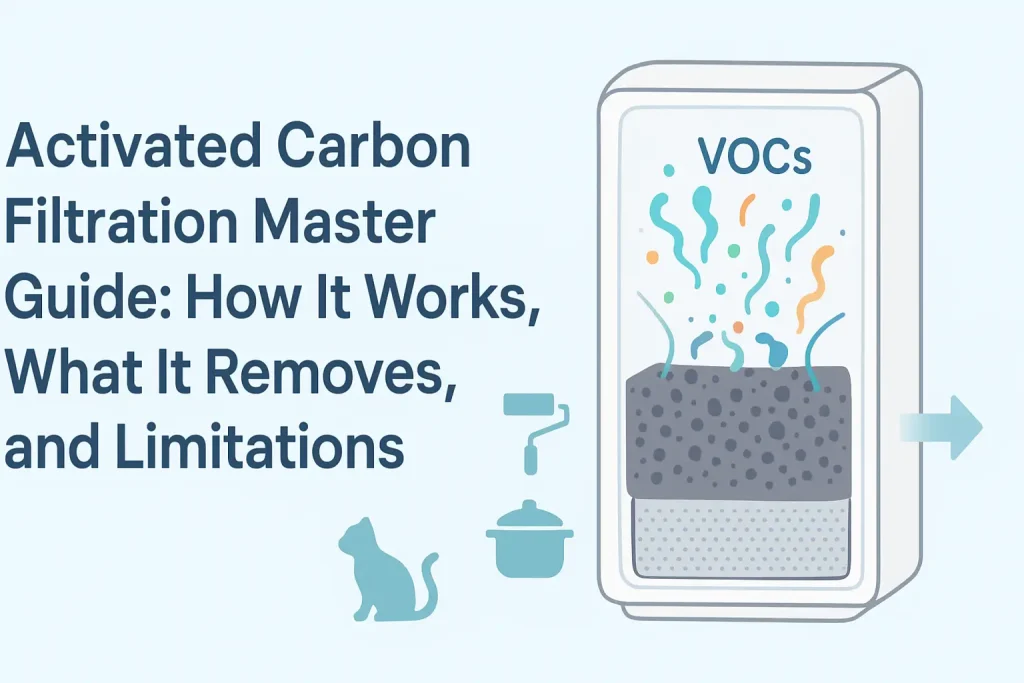
The activated carbon stage included in units like the Austin Air HealthMate and IQAir HealthPro Plus adds VOC and odor reduction that benefits the entire home, not just the bird room. Cooking odors, cleaning product fumes, and off-gassing from furniture and carpets are all reduced by the carbon filter.
If the bird cage is in a living room or open-plan area, the purifier serves the dual purpose automatically. If the birds are in a separate room, consider a second, smaller purifier for the bedroom or office rather than moving the bird room unit. Consistent placement produces consistent results. Learn more about whole-home air quality improvement in our guide to indoor air quality and its health impacts.
Do I Need a Special Filter for Bird Dander, or Is Standard HEPA Enough?
Standard True HEPA is sufficient for bird dander filtration. The 0.3-micron particle size that True HEPA captures at 99.97% efficiency covers the full range of airborne dander particles. Specialized filters labeled for pet dander or allergen reduction typically use the same True HEPA media with marketing variations rather than any meaningful technical difference.
The component that does make a difference for bird owners is the pre-filter quality and accessibility. A dense, washable pre-filter that is easy to remove and clean extends the life of the more expensive HEPA stage. Look for pre-filters with a MERV rating of 8 or higher. These capture the larger, waxier dander particles that would otherwise embed in the HEPA media and reduce its efficiency prematurely.
A carbon filter adds value for odor control but does not improve dander capture. If bird odor is not a concern in your household, a purifier with True HEPA and a good pre-filter provides complete dander filtration without the additional cost and replacement frequency of a carbon stage.
For readers dealing with heavy pollution scenarios alongside pet birds, our high-end car air purifier guide for heavy pollution covers filtration approaches that translate to challenging indoor environments.
Your air purifier is the primary defense against airborne bird dander, and choosing the right unit protects both your birds and your family. Pick a True HEPA purifier sized for 5 ACH in your specific room, verify it produces zero ozone, place it correctly, and maintain the filters on schedule. That four-step approach eliminates the airborne dander that causes respiratory disease while keeping your birds safe from the air purification technology itself.