Most air purifiers are tested in a sealed laboratory chamber, not in a room where an elderly person sleeps for 10 hours a night with a medication regimen that dulls thirst and thickens mucus.
A purifier that is too loud triggers sleep disruption that lingers for hours.
A purifier that is too weak leaves PM2.5 elevated at 35 micrograms per cubic meter all night, right at the level where respiratory infection risk ticks upward.
Choosing for an elderly care room flips the usual priorities upside down. Noise overtakes CADR. Ease of maintenance overtakes feature count. Filter change reminders become a safety feature rather than a convenience.
| Photo | Popular Air Purifiers | Price |
|---|---|---|

|
Air Purifiers for Home Large Room up to 1500ft², Tailulu H13 True HEPA Air Purifier for Pets Dust Odor Smoke, Air Purifier for Bedroom with 15dB Quiet Sleep Mode for Bedroom Office Living Room | Check Price On Amazon |
|
Afloia Air Purifier for Home, 4-in-1 Washable Filter for Allergies, Covers Up to 1076 ft², Quiet Operation, Auto Shut-Off & Night Light, Removes Pet Dander, Pollen, Dust, Mold, and Smoke, White,Pluto | Check Price On Amazon |

|
Nuwave OxyPure ZERO Air Purifier with Washable and Reusable Bio Guard Tech Air Filter, Large Room Up to 2002 Ft², Air Quality Monitor, 0.1 Microns, 100% Capture Irritants like Smoke, Dust, Pollen | Check Price On Amazon |

|
Air Purifiers for Home Large Room Up to 1,996 Ft², EOEBOT Air Purifier for Home Pets with Washable Filter, Quiet Sleep Mode, Air Quality Monitor, Air Purifier for Bedroom, Pet Hair, Dust, Smoke, White | Check Price On Amazon |
|
Afloia 2 IN 1 Air Purifier with Humidifier Combo, 3-Stage Filters for Home Allergies Pets Hair Smoker Odors, Evaporative Humidifier, Auto Shut Off, Quiet Air Cleaner with Seven Color Light,White | Check Price On Amazon |
By the Numbers: Elderly Care Air Purification
Maximum sleep-mode noise level for uninterrupted rest in an elderly care setting.
Minimum air changes per hour to meaningfully reduce respiratory infection transmission risk.
CARB ozone emission limit — any unit in an elderly care room must be certified below this threshold.
Ideal indoor humidity range to maintain respiratory mucosal defense and reduce airborne virus survival.
What Makes an Air Purifier Right for an Elderly Care Room Differently From a Standard Bedroom Pick
An elderly care room demands an air purifier built around the occupant, not the room dimensions.
A standard bedroom pick starts with CADR and uses noise as a tiebreaker. An elderly care room pick starts with noise and uses CADR as the qualifying bar.
The occupant is in that room for 10 to 14 hours a day, often with compromised respiratory clearance and a limited ability to articulate discomfort.
The purifier has to work silently, handle the right pollutants, require infrequent maintenance, and never emit anything harmful into the air.
Ozone generation, a manageable risk for a healthy adult who opens windows daily, becomes an unacceptable risk for someone with COPD or compromised lung tissue.
Filter change complexity, a minor inconvenience for a 40-year-old, becomes a quarterly crisis for an 82-year-old with arthritis who lives alone.
The device has to support the caregiver as much as the occupant.
Large, clearly visible filter change indicators, wide grab handles on the unit, a filter door that opens without tools, and a control panel with high-contrast labeling all matter as much as the smoke CADR number.
How to Size an Air Purifier for an Elderly Care Room at the Right ACH Target
Manufacturer coverage area claims assume 2 air changes per hour (ACH).
For an elderly care room where respiratory infection risk reduction is the goal, 5 ACH is the minimum defensible target.
At 2 ACH, airborne particles take roughly 30 minutes to clear by half.
At 5 ACH, clearance happens in under 15 minutes, and viral aerosol concentration drops fast enough to reduce transmission probability meaningfully.
For a standard 200-square-foot bedroom with 8-foot ceilings, the formula is (200 x 8 x 5) divided by 60, which yields a minimum smoke CADR of 133 CFM.
A unit with a smoke CADR of 250 CFM in that same room delivers closer to 9 ACH, which drops clearance time further and provides a substantial margin for filter loading between changes.
Use the calculator below to find your exact minimum CADR based on the room dimensions and health scenario.
CADR Calculator
How Much CADR Does the Care Room Actually Need?
Enter room dimensions and health scenario. Formula follows AHAM methodology: (length x width x ceiling height x ACH) divided by 60.
Formula: CADR = (length x width x ceiling height x ACH) / 60. For elderly care rooms, always calculate at 5 ACH minimum — the manufacturer’s stated 2 ACH coverage figure produces insufficient air cleaning for respiratory protection.
| Common Care Room Size | CADR at 2 ACH | CADR at 5 ACH (elderly care) | Suitable Model Examples |
|---|---|---|---|
| 120 sq ft (small bedroom) | 32 CFM | 80 CFM | Levoit Core 300S, Coway AP-1512HH |
| 200 sq ft (standard bedroom) | 53 CFM | 133 CFM | Winix 5500-2, Levoit Core 400S |
| 300 sq ft (large bedroom or suite) | 80 CFM | 200 CFM | Coway Airmega 240, Alen BreatheSmart 45i |
| 400 sq ft (combined bed and sitting area) | 107 CFM | 267 CFM | Coway Airmega 400, Blueair 605 |
For a deeper walkthrough of the calculation and how 5 ACH compares to the 2 ACH number printed on the box, our guide on CADR sizing for rooms with connected airflow paths covers the formula with worked examples across common floor plans.
The 4 Non-Negotiable Features for an Elderly Care Air Purifier
Four features separate a usable elderly care purifier from one that gets unplugged and shoved into a closet after two weeks.
These are not preferences. They are functional requirements driven by the physiology and daily reality of the occupant.
1. Sleep-mode noise below 25 dB at the bedside position
Sleep disruption in older adults is cumulative and medically consequential.
A unit that cycles between quiet and loud as the auto mode adjusts creates more disruption than a unit that runs at a steady, inaudible speed all night.
Measure noise at the pillow, not at the unit.
A purifier rated at 24 dB measured at 3 feet will read closer to 30 dB at the bedside if positioned poorly relative to reflective surfaces.
This happens because sound pressure reflects off nearby walls and amplifies the perceived level.
Position the unit at least 18 inches from the nearest wall and point the outlet away from the bed to keep the bedside reading within 2 dB of the rated spec.
2. True HEPA filtration with zero-ionizer design or a hardwired-off ionizer switch
Ionizers produce ozone as a byproduct of corona discharge.
The CARB limit is 0.050 ppm, but any ozone in a room occupied by someone with COPD, asthma, or reduced lung elasticity is an unnecessary oxidative stressor on already compromised tissue.
Select a unit that either omits the ionizer entirely or has a physical switch that disables it and stays disabled through power cycles.
A software-controlled ionizer that re-enables after a power outage is a liability in an elderly care setting where outages may occur without the occupant’s knowledge.
This occurs because the control board defaults to factory settings on reboot unless the ionizer state is stored in non-volatile memory.
If the ionizer re-enables silently, ozone accumulates with no warning. Verify the switch is a physical toggle, not a software setting, before purchasing.
3. Filter change indicators visible from across the room
A small LED that blinks when the filter is due does not work for an occupant with reduced visual acuity or memory lapses.
The indicator must be large, red when triggered, and visible without bending down or putting on glasses.
Units like the Coway Airmega series use a front-panel indicator ring that changes color, which is visible at a glance from 10 feet away even with moderate vision impairment.
4. A filter door that opens without tools, sharp edges, or pinch points
HEPA filter replacement requires more grip strength and dexterity than most younger buyers realize.
The filter door on a Levoit Core 400S releases with a single push on a large button and swings open on a hinge with no exposed pinch points, making it manageable for arthritic hands.
Test the release mechanism before buying if possible.
If the door requires pressing two tabs simultaneously while pulling, skip that model for elderly care use.
The 5 Best Air Purifiers for Elderly Care Rooms, Compared by Noise, CADR, and Usability
Every unit below meets the minimum smoke CADR for a standard 200-square-foot bedroom at 5 ACH.
They are ranked by sleep-mode noise because that is the attribute that determines whether the unit stays on through the night.
Use the table below to match each unit to the specific care room size and the occupant’s noise sensitivity.
Product Comparison
Top Elderly Care Air Purifiers — Noise, CADR, Filter Cost, and Usability Compared
Smoke CADR from AHAM certified database. Coverage at 5 ACH calculated as smoke CADR x 12 / 5. Usability ratings are editorial assessments of filter access, indicator visibility, and control panel legibility.
| Model | Sleep Mode Noise | Smoke CADR | Coverage at 5 ACH | Annual Filter Cost | Ionizer Type | Usability Rating |
|---|---|---|---|---|---|---|
| Coway Airmega 400S | 22 dB | 400 CFM | 960 sq ft | $60/yr | None (zero ozone) | Excellent: front color ring, magnetic filter door |
| Levoit Core 400S | 24 dB | 260 CFM | 624 sq ft | $35/yr | None (zero ozone) | Very good: large button release, bright LED ring |
| RabbitAir MinusA2 | 25 dB | 200 CFM | 480 sq ft | $75/yr | Optional (disabled by default) | Good: wall-mountable, remote control included |
| Coway AP-1512HH | 30 dB | 246 CFM | 590 sq ft | $30/yr | Optional (physical toggle switch) | Good: physical ionizer switch stays off through power cycles |
| Blueair Blue Pure 211+ | 31 dB | 350 CFM | 840 sq ft | $80/yr | None (ESPR technology — no ionization) | Adequate: one-button operation, washable pre-filter, no handles |
Coway Airmega 400S — Best Overall for Elderly Care Rooms
The Coway Airmega 400S delivers 400 CFM smoke CADR at 22 dB in sleep mode, making it the quietest unit in its CADR class.
Key Specifications:
• Smoke CADR: 400 CFM (AHAM certified)
• Coverage at 2 ACH: 1,560 sq ft
• Coverage at 5 ACH: 960 sq ft
• Sleep mode noise: 22 dB
• Annual filter cost: approximately $60
The front-panel color ring shifts from blue to red as the filter loads, which is visible from the doorway without walking up to the unit.
The magnetic filter door cover lifts off with no latches, no tabs, and no pinch points, making a filter swap manageable for someone with reduced hand strength.
This happens because the door uses rare-earth magnets that hold firmly during operation but release with a straight pull rather than a squeeze-and-lift motion that requires simultaneous grip and fine motor control.
For large care rooms or combined bed-and-sitting areas up to 400 square feet, the Coway Airmega 400S is the single best elderly care purifier on the market.
Levoit Core 400S — Best Under $200 for Standard Bedrooms
The Levoit Core 400S provides 260 CFM smoke CADR at 24 dB sleep mode for a purchase price under $200 with an annual filter cost of approximately $35.
Key Specifications:
• Smoke CADR: 260 CFM (AHAM certified)
• Coverage at 2 ACH: 403 sq ft
• Coverage at 5 ACH: 624 sq ft (calculated)
• Sleep mode noise: 24 dB
• Annual filter cost: approximately $35
The filter door releases with a single push on a large, clearly marked button and swings open on a bottom hinge that controls the weight of the door so it does not drop suddenly.
The LED indicator ring circles the entire top edge of the unit and glows red when the filter needs replacement, visible from any angle in the room.
The Levoit Core 400S uses no ionizer and produces zero ozone, confirmed by CARB certification listing ozone output below the detection threshold.
RabbitAir MinusA2 — Best for Wall-Mounted Installation Away From Floor Hazards
The RabbitAir MinusA2 is the only unit in this comparison that mounts on the wall, which eliminates the trip hazard of a floor cord and keeps the purifier out of reach of pets, walkers, and wheelchair footrests.
Key Specifications:
• Smoke CADR: 200 CFM (manufacturer rated, AHAM pending)
• Coverage at 2 ACH: 815 sq ft
• Coverage at 5 ACH: 480 sq ft (calculated)
• Sleep mode noise: 25 dB
• Annual filter cost: approximately $75
The ionizer is disabled by default and requires a deliberate sequence to activate, which means an accidental button press or power cycle will not re-enable ozone generation.
The included remote control lets a caregiver adjust settings without approaching the unit, and the front panel lifts away cleanly for filter access with no tools required.
Order the RabbitAir MinusA2 with the Toxin Absorber filter option if the care room has new furniture, recent paint, or flooring off-gassing VOCs alongside particulate concerns.
Coway AP-1512HH — Best Under $100 With a Physical Ionizer Kill Switch
The Coway AP-1512HH delivers 246 CFM smoke CADR at 30 dB sleep mode with a physical ionizer toggle switch that stays off permanently once set.
Key Specifications:
• Smoke CADR: 246 CFM (AHAM certified)
• Coverage at 2 ACH: 360 sq ft
• Coverage at 5 ACH: 590 sq ft (calculated)
• Sleep mode noise: 30 dB
• Annual filter cost: approximately $30
The ionizer toggle is a physical rocker switch on the side of the unit, not a software setting buried in an app, so a power outage or a curious visitor pressing buttons will not re-enable it.
The filter cover removes with a simple lift on the front panel, and the pre-filter is visible through the grille so a caregiver can check for dust buildup without opening the unit.
At 30 dB, it is audible in a very quiet room, which makes it better suited for care rooms where a white noise source is already present or for daytime use in the living area rather than overnight bedside operation.
The Coway AP-1512HH is the lowest-cost elderly care purifier that meets the 5 ACH minimum for a standard 200-square-foot bedroom with a genuine physical ionizer disable.
Blueair Blue Pure 211+ — Best for Large Rooms With No Ionizer Concerns
The Blueair Blue Pure 211+ delivers 350 CFM smoke CADR at 31 dB and uses electrostatic particle removal technology that does not produce ozone, with CARB certification confirming output below 0.005 ppm.
Key Specifications:
• Smoke CADR: 350 CFM (AHAM certified)
• Coverage at 2 ACH: 775 sq ft
• Coverage at 5 ACH: 840 sq ft (calculated)
• Sleep mode noise: 31 dB
• Annual filter cost: approximately $80
The single-button interface eliminates control panel confusion, and the washable fabric pre-filter changes color as it loads, providing a visual maintenance cue even for someone who does not remember when the last cleaning occurred.
The 31 dB sleep mode is the highest noise floor in this group, making it better for daytime use in larger care spaces rather than overnight bedside duty unless the occupant prefers audible white noise.
Order the Blueair Blue Pure 211+ for large elderly care rooms where a single unit must cover more than 350 square feet at 5 ACH without ionizer risk.
For most elderly care bedrooms under 250 square feet, the Coway Airmega 400S at 22 dB and 400 CFM gives the best combination of silent overnight operation, visible maintenance indicators, and tool-free filter access without any ozone concern.
Filter Types Compared for Elderly Respiratory Protection: True HEPA, Activated Carbon, and What to Skip
Three filter technologies matter for elderly care rooms, and two common ones should be avoided entirely.
Use the table below to identify which filter stages your chosen unit needs based on the specific pollutants present in the care environment.
Filter Guide
Filter Types for Elderly Care Rooms — What to Include and What to Avoid
Comparison of filter technologies by pollutant coverage, safety profile, and relevance to elderly respiratory health.
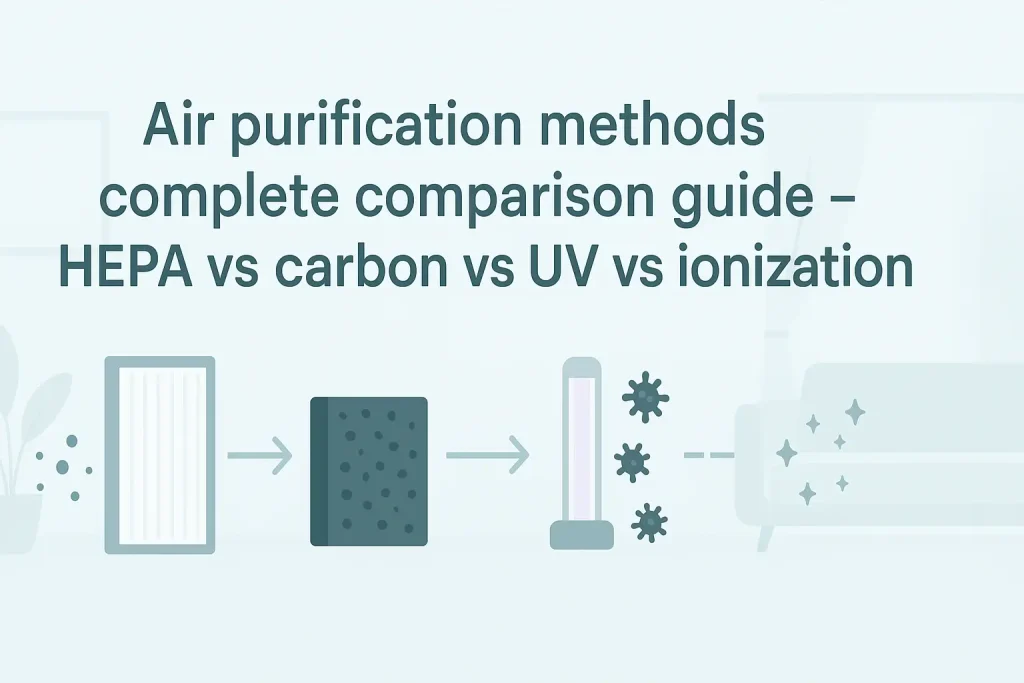
| Filter Type | Particle Size Captured | Elderly Care Relevance | Safety Risk | Verdict |
|---|---|---|---|---|
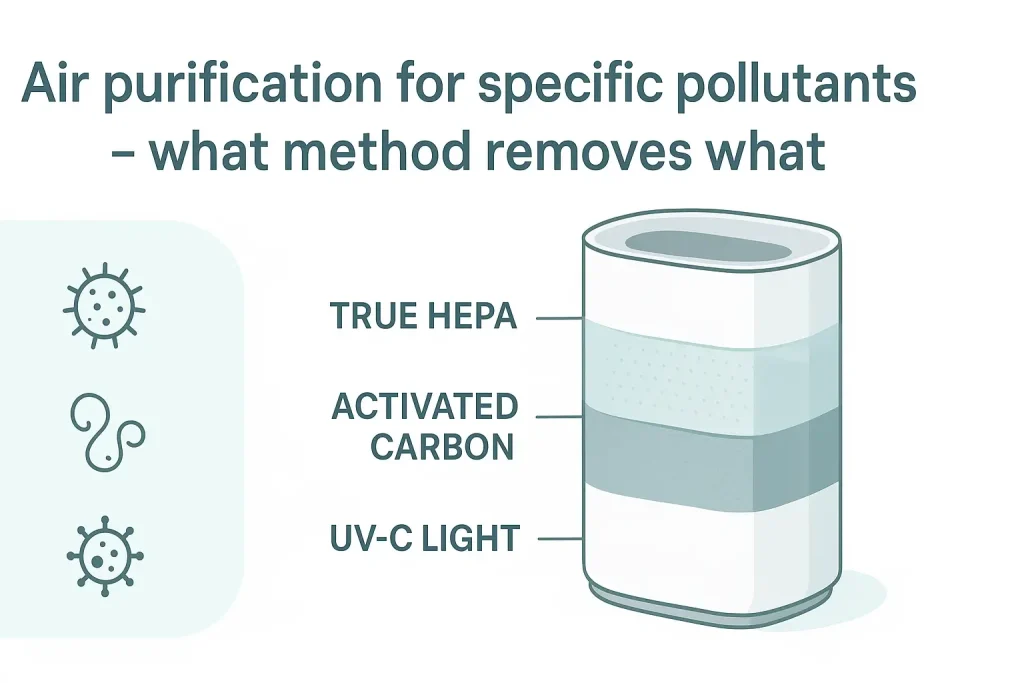
| True HEPA (H13) | 99.97% at 0.3 microns | Captures PM2.5, bacteria, mold spores, viral aerosols | None (passive mechanical filtration) | Mandatory |
| Activated Carbon (pelletized, minimum 2 lbs) | Adsorbs VOCs, formaldehyde, odors | Removes off-gassing from furniture, cleaning products, incontinence odors | None (passive adsorption) | Recommended for rooms with new furnishings or chemical cleaners |
| UV-C (in-unit, 254 nm) | Inactivates bacteria and viruses on filter surface | Marginal benefit — HEPA already captures pathogens; UV adds no meaningful protection | Possible ozone byproduct if lamp degrades; UV-C exposure risk if housing cracks | Skip |
| Ionizer (corona discharge) | Charges particles to cling to surfaces — does not remove them from the room | Redistributes particles to walls and floors; no net removal from breathing zone | Ozone byproduct — lung irritant at any measurable level above 0.005 ppm | Avoid entirely in elderly care rooms |
| PECO / PCO (photocatalytic oxidation) | Claims to destroy VOCs at the molecular level | Theoretical benefit for chemical sensitivity; limited independent verification | Potential formaldehyde and acetaldehyde byproduct formation per Lawrence Berkeley National Lab testing | Skip until independent safety data exists for continuous elderly exposure |
True HEPA classification per IEST-RP-CC001 standard: 99.97% minimum efficiency at 0.3 micron particle size. Activated carbon efficacy scales with carbon bed weight and dwell time — units with under 1 pound of carbon provide negligible VOC removal. UV-C, ionizer, and PCO safety data drawn from CARB CCR Title 17, EPA, and Lawrence Berkeley National Laboratory indoor air chemistry research.
True HEPA is mandatory because it is the only filter type with a standardized, independently verified efficiency test at the particle size most likely to reach the deep lung.
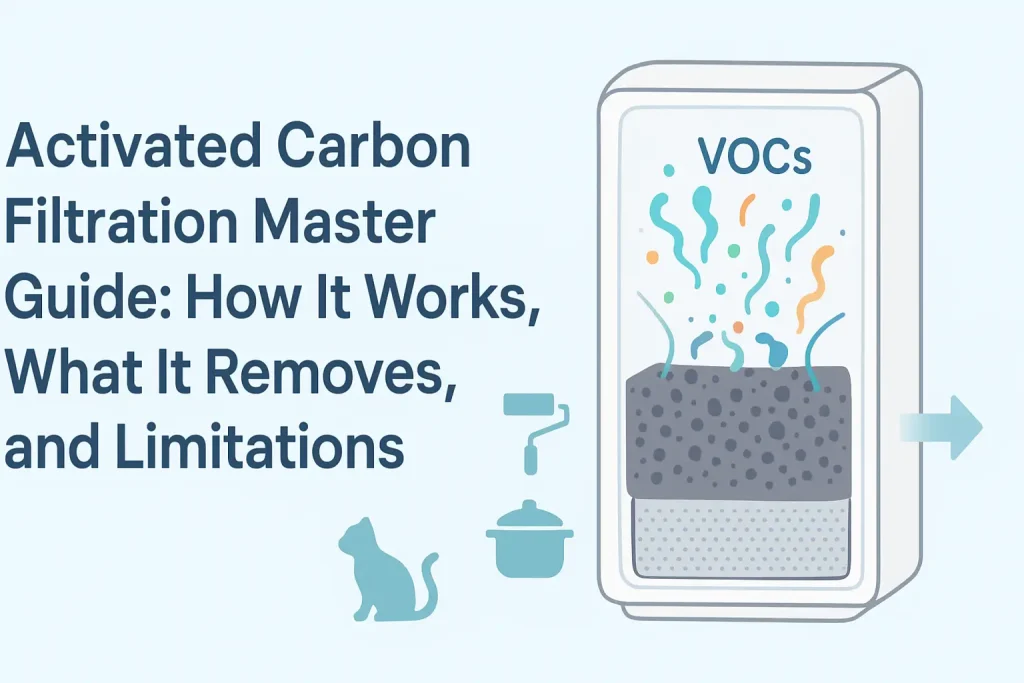
Activated carbon becomes important if the care room has new furniture, recent paint, or regular use of cleaning chemicals that off-gas VOCs, all of which are respiratory irritants that HEPA alone cannot address.
Ionizers and UV-C add risk without adding protection in this context.
The ionizer’s ozone byproduct accumulates in a closed room where the occupant spends 10 or more hours, and UV-C provides no additional particle removal beyond what the HEPA filter already achieves.
Where to Position the Air Purifier for Maximum Elderly Occupant Benefit
The best air purifier placed in the wrong spot in a care room delivers half its rated CADR to the breathing zone.
Three rules determine effective placement, and all three differ from the standard “center of the room” advice that works for a living room but fails for a bedside care setup.
Rule 1: Place the unit within 3 feet of the bed but with the air outlet pointed parallel to the bed, not directly at the pillow
Direct airflow across the face causes evaporative cooling of the eyes and nasal passages, which is uncomfortable for anyone but medically problematic for an elderly occupant with dry eye syndrome or reduced tear production.
Position the unit so the cleaned air stream runs along the side of the bed rather than across it.
The occupant breathes air that has been filtered within the last 30 seconds without experiencing a draft.
Rule 2: Maintain a minimum 18-inch clearance from walls and furniture on the intake side
Most air purifiers draw air in through the front or sides and exhaust upward or outward.
A unit pushed flush against a wall loses 20 to 30 percent of its effective CADR because the intake side cannot pull enough room air through the restricted gap.
This happens because airflow resistance increases nonlinearly as the intake gap narrows below one filter diameter, starving the fan of the pressure differential it was designed to work against.
Pull the unit at least 18 inches from the nearest wall on the intake side and 12 inches on the exhaust side.
Rule 3: Keep the purifier on the same side of the room as the bed, not across the room
Placing a purifier on the opposite wall from the bed means the occupant breathes room air that has traveled 10 to 15 feet before reaching the intake, picking up resuspended dust, dander, and skin flakes along the way.
Place the unit on the same side of the room as the bed, within 3 feet of the mattress edge.
The air the occupant breathes has traveled less than 5 feet from the exhaust grille, minimizing the distance over which recontamination can occur.
For a complete walkthrough of placement strategies in rooms with unusual layouts, see our guide on positioning air purifiers in rooms with connected airflow.
Air Quality Monitoring for Elderly Care Rooms: What to Track and Why
A PM2.5 monitor adds a layer of objective verification that the purifier is performing to spec in the actual room, not just in the manufacturer’s test chamber.
Real-world performance in a furnished room with an occupant, bedding, and regular foot traffic is typically 15 to 25 percent lower than the AHAM-rated CADR due to airflow obstructions and continuous particle resuspension from fabric surfaces and movement.
Track three metrics in an elderly care room: overnight PM2.5 minimum, peak PM2.5 during caregiver entry and exit, and the 30-minute recovery time after a peak event.
An IQAir AirVisual Pro monitor logs all three and displays them on a screen large enough to read from the doorway.
Key Metrics to Track:
• Overnight PM2.5 minimum: Should stay below 5 micrograms per cubic meter with a properly sized purifier running at 5 ACH
• Peak PM2.5 during caregiver entry: Brief spike to 15-25 micrograms per cubic meter is normal; recovery to under 10 within 20 minutes indicates adequate CADR
• 30-minute recovery: If PM2.5 stays above 10 micrograms per cubic meter 30 minutes after a door opens, the CADR is insufficient or the filter is loaded
If the overnight minimum consistently reads above 10 micrograms per cubic meter, the unit is undersized for the room at 5 ACH or the filter needs replacement.
For more detail on what each pollutant type means for health outcomes, our foundational guide on indoor air quality and its measurable health effects covers PM2.5, PM10, VOC, and CO2 thresholds with EPA and WHO guideline values.
Annual Running Cost Breakdown for an Elderly Care Air Purifier
The purchase price of an air purifier is less than half the total cost of ownership over a 3-year period in an elderly care room where the unit runs 24 hours a day.
The table below shows the true annual cost including electricity at the national average of 13 cents per kilowatt-hour and genuine manufacturer filter replacements at standard intervals.
Cost Analysis
3-Year Total Cost of Ownership — Elderly Care Air Purifiers Running 24/7
Electricity at 13 cents/kWh national average. Filter costs based on manufacturer-recommended replacement at 6-12 month intervals. Unit price from current retail at time of publication.
| Model | Unit Price | Annual Electricity | Annual Filters | 3-Year Total |
|---|---|---|---|---|
| Coway Airmega 400S | $450 | $82/yr (72W avg) | $60/yr | $876 |
| Levoit Core 400S | $190 | $45/yr (40W avg) | $35/yr | $430 |
| RabbitAir MinusA2 | $520 | $57/yr (50W avg) | $75/yr | $916 |
| Coway AP-1512HH | $100 | $34/yr (30W avg) | $30/yr | $292 |
| Blueair Blue Pure 211+ | $320 | $68/yr (60W avg) | $80/yr | $764 |
Electricity cost calculated as: (average wattage at medium speed x 24 hours x 365 days / 1000) x $0.13/kWh. Filter replacement at manufacturer-recommended intervals with genuine filters. The Coway AP-1512HH achieves the lowest 3-year total cost despite a lower CADR because its annual filter cost of $30 is the lowest in the comparison.
A $100 unit with $30 annual filter costs totals under $300 over 3 years.
A $520 unit with $75 annual filters approaches $1,000 over the same period, and for many elderly care budgets, the $100 Coway AP-1512HH at 30 dB represents the best value that still meets the 5 ACH requirement for a standard bedroom.
Common Mistakes When Choosing an Air Purifier for an Elderly Care Room
Mistake 1: Buying a unit rated for the room at 2 ACH and expecting it to protect against infection transmission
The AHAM coverage area on the box assumes 2 air changes per hour, which is the standard for general air quality improvement.
Respiratory infection transmission reduction requires 5 ACH minimum per the CDC and ASHRAE ventilation guidance for healthcare-adjacent spaces, which means the effective coverage area at the protective ACH rate is only 40 percent of the stated number.
If the box says 400 square feet, run it in a room no larger than 160 square feet for infection-relevant protection.
Mistake 2: Selecting a unit with an ionizer that cannot be permanently disabled
Many mid-range air purifiers include an ionizer that defaults to “on” after a power cycle even if the user turned it off previously.
In an elderly care room where power outages occur and the occupant may not be aware of the reset, this means the ionizer silently reactivates and begins producing ozone with no warning.
Verify before purchase that the ionizer switch is a physical toggle that holds its position through power loss, or choose a model with no ionizer at all.
Mistake 3: Placing the purifier across the room from the bed
Clean air from a purifier across the room mixes with room air for 15 to 20 feet before reaching the occupant’s breathing zone, picking up resuspended particles from bedding, carpet, and clothing along the travel path.
The delivered PM2.5 concentration at the pillow can be 30 to 40 percent higher than at the unit’s exhaust grille.
Place the purifier on the same side of the room as the bed, within 3 feet of the mattress, with the exhaust directed parallel to the bed.
How to Set Up a Clean Air Zone Around the Bed for Nighttime Respiratory Protection
A clean air zone is a defined volume around the bed where PM2.5 levels stay below 5 micrograms per cubic meter continuously, regardless of what happens in the rest of the room.
Set it up in five steps.
Step-by-Step Guide
How to Create a Clean Air Zone Around the Bed — 5 Steps
5 steps — approximately 15 minutes to set up — verify with a PM2.5 monitor afterward
Position the air purifier within 3 feet of the mattress edge on the same side of the room as the bed
Keep the intake grille at least 18 inches from the nearest wall. Angle the exhaust outlet parallel to the bed, not across the pillow.
Set the fan to a fixed medium speed, not auto mode
Auto mode lets PM2.5 rise to 15-20 micrograms per cubic meter before ramping the fan, which means the breathing zone spends hours above the target of 5 micrograms per cubic meter before the purifier responds. A fixed medium speed at 5 ACH prevents the spike entirely.
Close the bedroom door during sleep hours
An open door connects the room to the rest of the house, which effectively increases the air volume the purifier must clean. A closed door keeps the clean air zone contained to the 1,600 to 2,000 cubic feet of the bedroom rather than 8,000 to 12,000 cubic feet of the entire living space.
Place a PM2.5 monitor on the nightstand at pillow height for 3 nights
Run the setup for 3 consecutive nights and check the overnight minimum reading each morning. If the minimum stays above 10 micrograms per cubic meter, increase fan speed or verify the filter is not loaded. If it stays above 15, the CADR is insufficient for the room.
Set a recurring filter replacement reminder on the caregiver’s phone, not the purifier’s app
The purifier’s onboard filter change indicator is a backup, not the primary reminder. A phone calendar reminder set to repeat every 6 months ensures the filter gets replaced even if the indicator LED fails or the occupant dismisses it without understanding what it means.
This zone setup is particularly important during fall allergy season when ragweed pollen infiltrates through open windows and settles on bedding.
Our seasonal guide on air purification strategies for ragweed allergy season covers the specific CADR and filter requirements for pollen-sized particles, which behave differently from the PM2.5 smoke and viral aerosol particles discussed here.
How Does Room Humidity Affect Air Purifier Performance in an Elderly Care Setting
Room humidity between 40 and 60 percent optimizes both respiratory mucosal defense and air purifier filter efficiency.
Below 40 percent relative humidity, respiratory mucus thickens and ciliary clearance slows, reducing the body’s natural particle removal mechanism that the air purifier is supplementing.
Above 60 percent, HEPA filter fibers absorb moisture, which increases airflow resistance and reduces effective CADR by 5 to 10 percent while also creating conditions where captured mold spores can potentially germinate on the filter surface if it remains damp for extended periods.
Maintain 40 to 60 percent humidity with a separate humidifier placed at least 6 feet from the air purifier intake.
Placing the humidifier directly next to the purifier sends water-saturated air through the HEPA media, which accelerates the CADR loss and filter loading described above because the fibers swell and trap particles in a sticky matrix that cannot be cleaned by vacuuming.
What Is the Safest Air Purifier Technology for Someone With COPD or Emphysema
Passive True HEPA filtration with activated carbon is the safest air purification technology for COPD and emphysema patients because it adds nothing to the air while removing both particulate matter and gaseous irritants.
Any technology that introduces reactive chemistry into the breathing zone (ionizers, ozone generators, photocatalytic oxidation units, and plasma-based systems) creates oxidative stress on lung tissue that is already inflamed and structurally compromised.
The CARB 0.050 ppm ozone limit is designed for the general population, not for someone with an FEV1 below 50 percent of predicted where even brief exposure to 0.030 ppm can trigger bronchoconstriction measurable on spirometry.
The safest configuration is a CARB-certified True HEPA unit with a pelletized activated carbon bed weighing at least 2 pounds, zero ionizer, zero UV-C, and a physical power switch that the occupant can reach without bending.
All five units recommended in the comparison table above meet this safety profile.
Can an Air Purifier Reduce the Spread of Respiratory Infections in an Elderly Care Room
Yes, a True HEPA air purifier sized at 5 ACH or higher reduces the concentration of airborne viral aerosols in a closed room by approximately 80 percent within 30 minutes, which directly lowers the probability of inhaling an infectious dose.
This reduction occurs because viral aerosols from breathing and speaking are predominantly in the 0.5 to 5 micron size range, which is within the particle size that True HEPA captures at 99.97 percent efficiency per pass.
The key variable is air changes per hour, not filter efficiency, because even a 99.97 percent filter at 2 ACH takes too long to process the room air volume to meaningfully reduce exposure during a caregiver visit of 15 to 20 minutes.
A unit delivering 5 ACH processes the room’s air volume five times per hour, which means within 12 minutes of a caregiver entering and exhaling viral aerosols, approximately 63 percent of those aerosols have been captured on the HEPA media.
This is why the CADR calculator above defaults to 5 ACH for the elderly care scenario: 2 ACH is adequate for dust and pollen reduction, but 5 ACH is the threshold where infection transmission probability measurably decreases.
How Often Should Filters Be Replaced in an Air Purifier Running 24/7 in an Elderly Care Room
The True HEPA filter in a unit running 24/7 in an elderly care room needs replacement every 6 months, not the 12 months often stated on the packaging for intermittent use at 8 hours per day.
Continuous operation triples the particle load on the filter compared to 8-hour use, and the filter efficiency at 0.3 microns degrades measurably once the pressure drop across the media exceeds the fan’s design operating point.
The activated carbon pre-filter needs replacement every 3 months if the room has VOC sources such as new furniture, cleaning chemicals, or incontinence care products, because the carbon adsorption sites saturate and begin releasing captured VOCs back into the airstream once fully loaded.
Set a recurring calendar reminder on the caregiver’s phone for filter replacement at 6-month intervals for HEPA and 3-month intervals for carbon, and verify the onboard filter change indicator is still functioning by checking it during the scheduled replacement visit.
Do Air Purifiers Help With Incontinence Odors and Other Elderly Care-Specific Air Quality Concerns
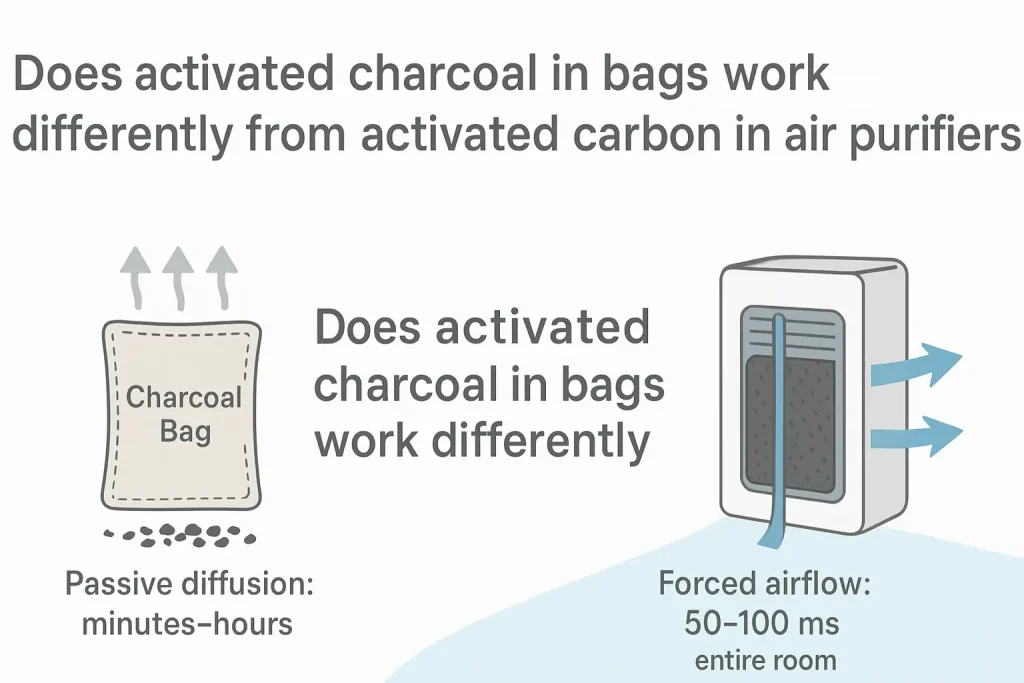
Yes, but only units with a substantial activated carbon bed remove the volatile organic compounds responsible for incontinence and medical waste odors from the air.
Ammonia, amines, and sulfur-containing VOCs that produce these odors are gaseous molecules in the sub-nanometer size range that pass straight through a HEPA filter because HEPA captures particles, not gases.
A pelletized activated carbon bed weighing at least 2 pounds provides the surface area and dwell time necessary to adsorb these compounds before the air exits the purifier.
Units with a thin carbon-impregnated foam sheet, common in budget purifiers under $100, provide negligible odor control because the carbon loading is measured in grams rather than pounds and the dwell time is too short for meaningful adsorption.
For combined particle and odor control in an incontinence care scenario, the Coway Airmega 400S and RabbitAir MinusA2 both use pelletized carbon beds with sufficient mass to provide genuine VOC removal alongside their True HEPA particle filtration.
Should an Air Purifier Run on Auto Mode or a Fixed Fan Speed in an Elderly Care Room
A fixed medium fan speed is superior to auto mode in an elderly care room because auto mode reacts to pollution after it has already risen above a threshold, which means the breathing zone spends hours at elevated PM2.5 before the purifier ramps up.
Auto mode sensors typically trigger a fan speed increase when PM2.5 exceeds 15 to 35 micrograms per cubic meter depending on the manufacturer’s calibration.
An elderly occupant with reduced respiratory reserve should not be breathing 25 micrograms per cubic meter air for 20 minutes while waiting for the sensor to detect the problem and the fan to respond.
Set the fan to a fixed speed that delivers 5 ACH for the room size and leave it there continuously.
The electricity cost difference between medium speed and auto mode is approximately $15 to $25 per year, which is a negligible premium for maintaining the breathing zone below 5 micrograms per cubic meter at all times rather than allowing it to cycle between 5 and 25.
Is a Smart Air Purifier Worth the Extra Cost for an Elderly Care Setup
Smart features that enable remote monitoring by a caregiver are worth the cost premium in an elderly care setting, but smart features that require the occupant to use an app are a liability.
A unit like the Coway Airmega 400S or Levoit Core 400S allows a caregiver to check the current PM2.5 reading, filter life percentage, and fan speed from their own phone without disturbing the occupant or requiring the occupant to interact with the technology.
This remote visibility lets a caregiver verify that the purifier is running at the correct speed, confirm the filter is not overdue for replacement, and check the air quality reading, all during a routine check-in call rather than requiring a physical visit.
Smart features that add complexity for the occupant (voice control, app-based scheduling, multi-step filter reset procedures) should be configured once by the caregiver and then left alone.
The occupant should need to interact with exactly one physical button on the unit: the power button, and ideally not even that once the unit is set to run continuously.
How Does an Air Purifier for an Elderly Care Room Differ From One for a Child’s Nursery
An elderly care purifier prioritizes continuous low-noise operation, visible-from-a-distance maintenance indicators, and zero-ozone design, while a nursery purifier adds higher CADR for diaper-change aerosol events and a lockable control panel to prevent toddler interaction.
The elderly care unit runs at a fixed speed 24/7 and needs filter change reminders that work for a caregiver who may visit weekly rather than daily.
The nursery unit may cycle between a low nighttime speed and a higher speed triggered by diaper changes or feeding sessions that aerosolize particles, and the control panel lock prevents a curious 2-year-old from turning the unit off or switching it to turbo mode at 2 a.m.
Both require True HEPA and zero ozone, but the elderly care unit is optimized for the occupant who is always in the room, while the nursery unit is optimized for a room with intermittent occupancy and a caregiver who is usually present in the same house.
For a full comparison of nursery-appropriate air purifiers, see our guide on selecting air purifiers for small occupied rooms, which covers the noise and safety requirements that overlap between dorm rooms, nurseries, and compact care spaces.
What Maintenance Can a Caregiver Perform Without Calling a Technician or Family Member
A caregiver can perform three maintenance tasks without tools or technical knowledge: vacuum the exterior pre-filter grille weekly, wipe the exterior housing with a dry microfiber cloth monthly, and replace the HEPA and carbon filters when the indicator light turns red.
The pre-filter grille accumulates visible dust within 5 to 7 days in a room with an occupant present 24/7, and a quick vacuum pass with a brush attachment restores airflow without opening the unit.
Filter replacement on units designed for elderly care (Coway Airmega 400S, Levoit Core 400S) requires no tools, no screws, and no lifting of heavy components beyond sliding the old filter out and sliding the new one in.
The caregiver should also check the power cord for fraying or pinch damage during each filter change, because a cord run under furniture or across a walker path is the most common failure point in continuous-operation air purifiers.
Why Does the Air Purifier Smell Like Plastic or Chemicals When First Turned On
A new air purifier smells like plastic or chemicals during the first 24 to 48 hours of operation because the HEPA media binder, activated carbon dust, and plastic housing components off-gas residual manufacturing solvents and volatile compounds into the airstream.
This is normal for all new air purifiers regardless of brand or price point, and the odor dissipates completely within 2 to 3 days of continuous operation in a ventilated room.
Run the unit on the highest fan speed for 48 hours in an empty, well-ventilated room before placing it in the elderly care room.
If the chemical or ozone-like smell persists beyond 72 hours, the unit may have a faulty ionizer that is producing ozone above the CARB limit, or the activated carbon bed may be releasing previously adsorbed VOCs because it was stored in a high-humidity warehouse before shipping.
In either case, return the unit and select an ionizer-free model from the comparison table above.
Can an Air Purifier Be Placed Near an Oxygen Concentrator or Other Medical Equipment
Yes, an air purifier can be placed near an oxygen concentrator as long as the purifier’s exhaust is not pointed directly at the concentrator’s intake and both devices are plugged into separate wall outlets on different circuits if possible.
Oxygen concentrators draw room air through a compressor and pass it through a molecular sieve to separate oxygen from nitrogen, so they are pulling from the same room air the purifier is cleaning, which is beneficial rather than problematic.
The only risk is electromagnetic interference if the purifier’s motor produces RF noise that disrupts the concentrator’s control board, but this is rare in modern units with shielded motors and is not a documented issue with any of the five recommended models above.
Keep 3 feet of separation between the purifier’s exhaust grille and the concentrator’s intake to prevent the cleaned airstream from short-circuiting directly into the concentrator, which would mean the rest of the room does not benefit from the filtration.
For small care spaces where medical equipment competes with an air purifier for floor area, our article on choosing air purifiers for tight or multi-purpose rooms covers the vertical mounting and compact placement strategies that apply equally to equipment-dense care rooms.
An elderly care room needs an air purifier built around the occupant, not the room: silent enough to run all night at 5 ACH, simple enough that a filter change requires no tools or grip strength, and safe enough that no ozone, no reactive chemistry, and no sharp edges enter the breathing zone or the caregiving routine.
Start with the room dimensions and the CADR calculator above to find the minimum smoke CADR value for your specific care room. Then select the quietest unit that meets that CADR with a physical ionizer-off switch and a filter door a caregiver can open with one hand.
For most standard bedrooms under 250 square feet, the Coway Airmega 400S at 22 dB delivers the best combination of silent overnight protection, visible maintenance cues, and tool-free filter access available.