Most air purifiers are sized for rooms three times larger than a typical tiny home. Buying one of those units for a 200-square-foot space is like using a fire hose to water a houseplant.
A compact air purifier with the correct CADR rating cleans your entire tiny home in under 15 minutes. The wrong unit runs loudly, wastes electricity, and still leaves PM2.5 levels elevated in your sleeping loft.
What Makes Air Purification in Tiny Homes Different from Standard Homes?
By the Numbers: Air Purifiers for Tiny Homes
Typical tiny home floor area requiring a smoke CADR of 67 to 267 CFM at the recommended 5 ACH for allergy and asthma sufferers.
Sleep mode noise level range for the quietest compact True HEPA air purifiers suitable for a tiny home sleeping loft.
Price range for a genuinely effective True HEPA air purifier sized correctly for a tiny home, with annual filter costs of $25 to $50.
Minimum clearance needed on all sides of a compact air purifier for proper airflow in a tiny home without furniture obstruction.
Time a properly sized air purifier takes to complete one full air change in a 200 sq ft tiny home at 5 ACH, reducing PM2.5 by 85%.
Air purification in a tiny home is fundamentally different from a standard house because the entire living space is often one continuous volume of under 400 square feet. There are no hallways, no separate rooms with closed doors, and no ductwork to distribute filtered air.
| Photo | Popular Air Purifiers | Price |
|---|---|---|

|
Air Purifiers for Home Large Room up to 1500ft², Tailulu H13 True HEPA Air Purifier for Pets Dust Odor Smoke, Air Purifier for Bedroom with 15dB Quiet Sleep Mode for Bedroom Office Living Room | Check Price On Amazon |
|
Afloia Air Purifier for Home, 4-in-1 Washable Filter for Allergies, Covers Up to 1076 ft², Quiet Operation, Auto Shut-Off & Night Light, Removes Pet Dander, Pollen, Dust, Mold, and Smoke, White,Pluto | Check Price On Amazon |

|
Nuwave OxyPure ZERO Air Purifier with Washable and Reusable Bio Guard Tech Air Filter, Large Room Up to 2002 Ft², Air Quality Monitor, 0.1 Microns, 100% Capture Irritants like Smoke, Dust, Pollen | Check Price On Amazon |

|
Air Purifiers for Home Large Room Up to 1,996 Ft², EOEBOT Air Purifier for Home Pets with Washable Filter, Quiet Sleep Mode, Air Quality Monitor, Air Purifier for Bedroom, Pet Hair, Dust, Smoke, White | Check Price On Amazon |
|
Afloia 2 IN 1 Air Purifier with Humidifier Combo, 3-Stage Filters for Home Allergies Pets Hair Smoker Odors, Evaporative Humidifier, Auto Shut Off, Quiet Air Cleaner with Seven Color Light,White | Check Price On Amazon |
This single-zone layout means one properly sized air purifier can clean every cubic foot of air you breathe. A compact True HEPA air purifier like the Levoit Core 300S running at medium speed can achieve 5 air changes per hour in a 200-square-foot tiny home.
But the small space also creates problems that standard homes never face. Every odor source is closer to your sleeping area. Cooking smells from a two-burner stove reach your pillow in seconds. Moisture from a compact bathroom raises indoor humidity fast. And the air purifier itself is never more than 10 feet from your head.
The closeness of everything means noise levels matter more than they do in any other living situation. A unit running at 55 dB in a standard bedroom is annoying. That same 55 dB in a tiny home where the purifier sits 4 feet from your bed makes sleep impossible. The compact units best suited to tiny homes must deliver True HEPA filtration at sleep modes below 30 dB.
Air purifier placement also works differently in a tiny home. There are fewer surfaces and less furniture to obstruct airflow. But there are also fewer placement options. You may have only two or three viable spots for the unit. Getting the placement right from day one matters more here than in any other room size.
For anyone managing allergies in a confined space, our detailed guide on air purifiers built specifically for allergy and asthma relief explains how 5 ACH filtration reduces airborne allergen loads faster than standard 2 ACH recommendations.
How Much CADR Do You Actually Need for a Tiny Home?
The Clean Air Delivery Rate (CADR) tells you exactly how fast an air purifier cleans a specific volume of air. AHAM tests CADR separately for smoke, dust, and pollen. For tiny homes, the smoke CADR number matters most because it represents the smallest and most dangerous particles, including PM2.5 from cooking, outdoor pollution, and wildfire smoke.
The formula is simple. Multiply your floor area by your ceiling height, then multiply by your target air changes per hour (ACH), and divide by 60. For a 200-square-foot tiny home with an 8-foot ceiling at 5 ACH, that is (200 times 8 times 5) divided by 60, which equals 133 CFM of smoke CADR needed.
Most manufacturer coverage claims use 2 ACH. That is the minimum for basic air cleaning. Allergy and asthma sufferers need 5 ACH to keep airborne allergen levels low enough to prevent symptoms during sleep. The effective coverage at 5 ACH is only 40% of the manufacturer’s stated number on the box.
A purifier claiming to cover 300 square feet at 2 ACH only covers 120 square feet at 5 ACH. That matters enormously in a tiny home where you may only have space for one unit. You must size the purifier to your ACH target, not the marketing number printed on the packaging.
CADR Calculator
How Much CADR Do You Actually Need for Your Tiny Home?
Enter your tiny home dimensions and use case. Formula: (length x width x ceiling height x ACH) divided by 60. Source: AHAM methodology.
CADR = (length x width x ceiling height x ACH) / 60. For allergy and asthma sufferers in tiny homes, always calculate at 5 ACH, not the manufacturer-stated 2 ACH figure. A tiny home under 400 sq ft rarely needs more than 267 CFM smoke CADR even at 5 ACH.
| Tiny Home Size | CADR at 2 ACH (standard) | CADR at 5 ACH (allergy) | Example Models |
|---|---|---|---|
| 120 sq ft tiny home | 80 CFM | 200 CFM | Levoit Core 300S, Medify MA-14 |
| 200 sq ft tiny home | 133 CFM | 333 CFM | Coway AP-1512HH, Winix 5500-2 |
| 300 sq ft tiny home | 200 CFM | 500 CFM | Levoit Core 400S, Blueair Blue Pure 211+ |
| 400 sq ft tiny home | 267 CFM | 667 CFM | Coway Airmega 400 or two Levoit Core 300S units |
Top Compact Air Purifiers for Tiny Homes
Use the table below to match your tiny home’s square footage and ACH target to the right compact air purifier based on smoke CADR, noise level, and annual operating cost.
The best air purifier for a tiny home combines True HEPA filtration, a smoke CADR matched to your exact square footage at 5 ACH, and a sleep mode noise level below 30 dB. All five units below are CARB certified and ENERGY STAR rated.
Levoit Core 300S: Best Overall for Tiny Homes Under 200 Sq Ft
The Levoit Core 300S delivers 145 CFM smoke CADR from a compact 8.7-inch diameter footprint that fits on a nightstand or narrow shelf. At 24 dB in sleep mode, it is quieter than a whisper and completely inaudible from 4 feet away in a sleeping loft.
Key Specifications:
• Smoke CADR: 145 CFM (AHAM certified)
• Coverage at 2 ACH: 219 sq ft
• Coverage at 5 ACH: 88 sq ft
• Sleep mode noise: 24 dB
• Annual filter cost: approximately $25
This unit uses a True HEPA H13 filter capturing 99.97% of particles at 0.3 microns. The activated carbon pre-filter handles cooking odors from a tiny home kitchen. For spaces up to 200 square feet at 5 ACH, it completes a full air change in 12 minutes.
Coway AP-1512HH: Best for Tiny Homes 200-360 Sq Ft
The Coway AP-1512HH produces 246 CFM smoke CADR with a four-stage filtration system including True HEPA, activated carbon, and an ionizer that can be switched off. Its sleep mode registers 30 dB, which is quiet enough for a tiny home sleeping area when the unit sits at least 6 feet away.
Key Specifications:
• Smoke CADR: 246 CFM (AHAM certified)
• Coverage at 2 ACH: 360 sq ft
• Coverage at 5 ACH: 144 sq ft
• Sleep mode noise: 30 dB
• Annual filter cost: approximately $30
The Coway is slightly larger than the Levoit at 18.3 inches tall but remains narrow enough to tuck beside a tiny home sofa or under a loft staircase. Its air quality indicator light automatically adjusts fan speed, which matters in a tiny home where pollutant levels change fast during cooking or when a door opens.
Winix 5500-2: Best Value with Washable Pre-Filter
The Winix 5500-2 matches the Coway at 246 CFM smoke CADR but adds a washable fine mesh pre-filter that captures larger particles before they reach the True HEPA stage. This extends HEPA filter life in dusty tiny home environments, including those on unpaved roads or near construction.
Key Specifications:
• Smoke CADR: 246 CFM (AHAM certified)
• Coverage at 2 ACH: 360 sq ft
• Coverage at 5 ACH: 144 sq ft
• Sleep mode noise: 28 dB
• Annual filter cost: approximately $30
Its PlasmaWave ionizer can be turned off independently, which matters if you prefer mechanical-only filtration. The unit is 15 inches wide and requires more floor space than the Levoit or Coway, making it better suited for tiny homes with dedicated floor space near an outlet.
Blueair Blue Pure 411: Smallest Footprint, Lowest Profile
The Blueair Blue Pure 411 is the most compact unit on this list at just 8 inches wide and 16.7 inches tall. Its 120 CFM smoke CADR suits tiny homes under 180 square feet at 5 ACH. The fabric pre-filter comes in multiple colors and doubles as a decorative element in a small living space where the purifier is always visible.
Key Specifications:
• Smoke CADR: 120 CFM (AHAM certified)
• Coverage at 2 ACH: 180 sq ft
• Coverage at 5 ACH: 72 sq ft
• Sleep mode noise: 17 dB (lowest on this list)
• Annual filter cost: approximately $30
The 17 dB low-speed noise level is essentially silent. This is the best choice for ultra-compact tiny homes under 150 square feet where the purifier must sit within 3 feet of the bed. The fabric pre-filter is washable, reducing replacement frequency in low-dust environments.
Medify MA-14: Budget Pick for the Smallest Spaces
The Medify MA-14 costs under $60 and delivers True HEPA H13 filtration in a tiny 8-inch cube. Its smoke CADR is modest at roughly 60 CFM, which only suits tiny homes under 100 square feet at 5 ACH. This is the smallest and cheapest genuinely effective True HEPA unit available.
Key Specifications:
• Smoke CADR: approximately 60 CFM (manufacturer rated)
• Coverage at 2 ACH: 90 sq ft
• Coverage at 5 ACH: 36 sq ft
• Sleep mode noise: approximately 30 dB
• Annual filter cost: approximately $20
This unit works best as a secondary purifier in a tiny home sleeping loft or as the primary unit in a micro-camper or van conversion under 80 square feet. The low price makes it easy to replace the entire unit after 2 to 3 years rather than just the filter.
Price Comparison
Tiny Home Air Purifier Price Comparison – Unit Cost and Annual Filter Cost
Unit purchase price plus estimated annual filter replacement cost. Prices verified at time of publication.
$60 unit + $20/yr filters
$99 unit + $25/yr filters
$99 unit + $30/yr filters
$160 unit + $30/yr filters
$200 unit + $30/yr filters
Bar width represents unit purchase price relative to the most expensive product shown. Filter costs are estimates based on manufacturer-recommended replacement intervals every 6 to 12 months. Genuine filters used for all cost estimates. For tiny home owners on a tight budget, the 5-year total cost of the Levoit Core 300S ($224 including filters) is lower than the Coway AP-1512HH ($350 including filters) despite the Levoit’s lower CADR.
Filter Types for Small Spaces: What Works and What Wastes Space
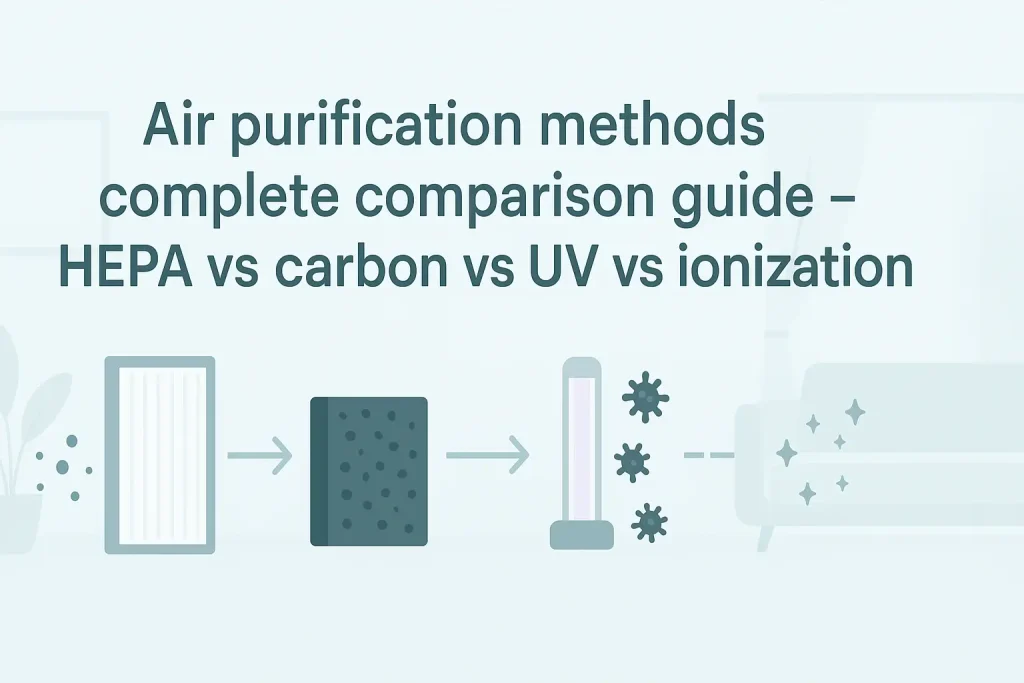
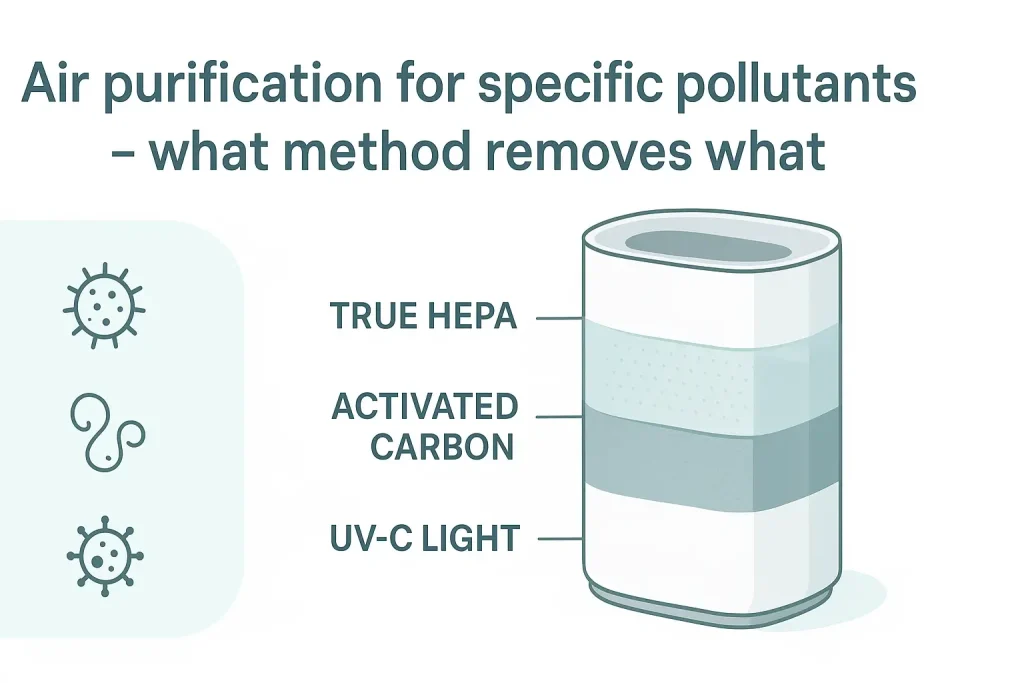
True HEPA is the only filter type you need in a tiny home for particle removal. It captures 99.97% of particles at the hardest-to-filter 0.3-micron size, per IEST testing standards. This includes PM2.5 from cooking, pollen from open windows, pet dander from a small dog or cat, and ultrafine particles from outdoor air infiltration.
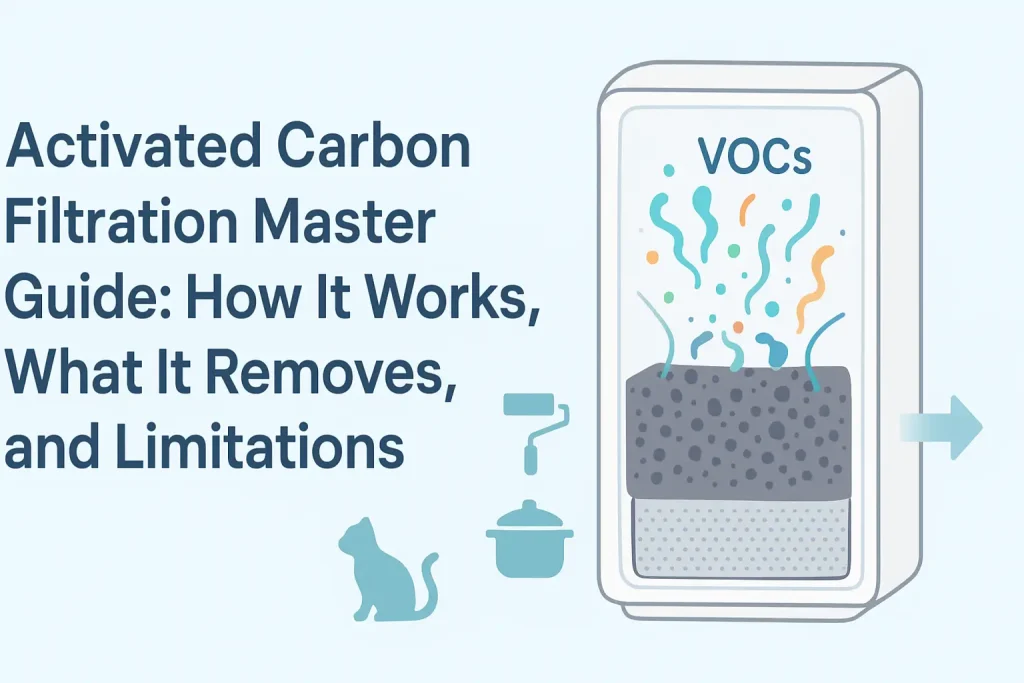
Activated carbon filters add gas and odor removal, which matters more in a tiny home than in a standard house. Every cooking event fills the entire living space with odor molecules within minutes. A carbon pre-filter or dedicated carbon stage adsorbs these VOCs before they reach your sleeping area. The carbon is not optional in a tiny home kitchen, it is essential.
UV-C light systems add no meaningful air cleaning benefit in a compact space. UV-C kills microorganisms, but only at sufficient exposure time and intensity. In a portable air purifier, air passes the UV-C lamp too quickly for effective germicidal action. The lamp also consumes electricity and may produce trace ozone. Skip UV-C purifiers for a tiny home and put the budget toward a higher CADR True HEPA unit instead.
Ionizers and electrostatic precipitators produce charged particles that clump together and fall onto surfaces. This removes particles from the air but deposits them on your floors, counters, and bedding. In a tiny home where your bed is never more than 10 feet from the purifier, those settled particles are close to your breathing zone. Ionizers also risk ozone production above the CARB limit of 0.050 ppm. For chemical sensitivity in confined spaces, understanding how activated carbon removes VOCs and chemical fumes is more useful than exploring ionizer alternatives.
Hybrid units combining True HEPA with a dedicated carbon pellet bed offer the best all-around performance for a tiny home. The Austin Air HealthMate Junior packs 6.5 pounds of activated carbon and zeolite into a compact 11 by 11 by 14.5 inch chassis with 60 CFM smoke CADR. It is built for spaces up to 90 square feet at 5 ACH and handles both particles and VOCs in a single small-footprint unit.
Noise Levels in Tiny Homes: Why Sleep Mode dB Matters More Than Max CADR
In a tiny home, the air purifier is always within earshot. At 4 feet from your pillow, a unit running at 45 dB sounds like a refrigerator compressor cycling on and off all night. At 55 dB, it sounds like a box fan on medium, which is loud enough to interfere with light sleep. The sleep mode dB rating is the most underrated specification for tiny home air purifier selection.
The difference between 24 dB (Levoit Core 300S sleep mode) and 35 dB (some budget units) is perceived as roughly double the loudness. A 24 dB unit at 4 feet is completely inaudible to most sleepers. A 35 dB unit at the same distance produces a soft but noticeable white noise that some find soothing and others find intrusive. Test the unit in your specific sleeping position before committing.
Fan speed affects CADR and noise together. Running a unit on medium speed instead of sleep mode increases CADR by 40 to 60% but also raises noise by 10 to 15 dB. In a tiny home, the strategy that works best is running the purifier on high for 15 to 20 minutes before bed to scrub the air, then switching to sleep mode for the night. Smart purifiers like the Levoit Core 300S with app control let you automate this cycle without getting out of bed.
For tiny homes with a sleeping loft, the purifier should sit at floor level rather than in the loft itself. Cooler, cleaner air collects at floor level and rises as it warms, creating a natural circulation pattern that carries filtered air up to the loft without requiring the unit to run at a higher, noisier fan speed. The same principle applies to managing cooking odors that rise rapidly through a tiny home’s open-plan layout.
How to Position an Air Purifier in a Tiny Home for Maximum Effectiveness
The ideal position for an air purifier in a tiny home is at the midpoint of the longest wall, elevated 12 to 18 inches off the floor on a small shelf or stand. This position maximizes the unit’s throw distance and ensures the clean air output reaches the far corners of the space before looping back to the intake.
Never place the purifier in a corner. Corners reduce effective airflow by 20 to 30% because the unit pulls already-filtered air back into the intake rather than drawing contaminated air from the rest of the room. In a tiny home, the only exception is when furniture obstructs every mid-wall position and the corner is the only free spot. In that case, angle the unit 45 degrees toward the center of the room.
Maintain at least 12 inches of clearance on all sides of the intake and output vents. This is harder than it sounds in a tiny home where every square inch is occupied. A purifier tucked under a shelf or beside a bookcase draws its own output air back through the intake, cutting effective CADR by up to 40%. If the only available spot has less than 12 inches of clearance above it, choose a unit with a top-mounted output like the Levoit Core 300S rather than a front-exhaust design.
In a tiny home with a sleeping loft, place the purifier at floor level on the main level, not in the loft. This positioning takes advantage of the stack effect, the natural upward movement of warm air that carries airborne particles from the living area toward the loft ceiling. The purifier at floor level intercepts and filters this air before it reaches the sleeping zone, creating a continuous cleaning loop through the entire vertical volume.
For tiny homes with a dedicated kitchen zone, position the purifier between the cooktop and the sleeping area. A PM2.5 air quality monitor placed near the bed tells you within 2 minutes whether your purifier position effectively intercepts cooking emissions before they reach your pillow. If bedroom PM2.5 rises above 15 micrograms per cubic meter during cooking, reposition the purifier closer to the kitchen.
For readers dealing with renovation off-gassing in a newly built tiny home on wheels, our separate guide covering air purifiers that handle paint fumes and construction VOCs explains the activated carbon pellet weight needed per square foot of new building materials.
Annual Operating Costs: What Compact Purifiers Actually Cost to Run
The purchase price of a compact air purifier is a fraction of its lifetime cost. A $99 Levoit Core 300S costs roughly $25 per year in replacement filters and $9 per year in electricity at 13 cents per kWh when run 8 hours daily. Over 5 years, that is $99 plus $125 in filters plus $45 in electricity, totaling $269, or about $4.50 per month.
A larger unit like the Coway AP-1512HH at $200 costs $30 per year in filters and roughly $18 per year in electricity at 8 hours daily because its fan motor draws more power at equivalent speed settings. The 5-year total is $200 plus $150 in filters plus $90 in electricity, totaling $440. The higher CADR costs $2.85 more per month, which is a reasonable premium for the allergy relief it provides in a 200-plus-square-foot tiny home.
Filter replacement frequency depends on runtime hours and particulate load. In a tiny home occupied full-time with one or two residents and no pets, a True HEPA filter lasts 12 months before its airflow restriction triggers the replacement indicator. In a tiny home with a cat or dog, a dusty rural location, or a wood-burning stove, filter life drops to 6 to 8 months. Check your replacement filter visually every 3 months by holding it up to a light. If you cannot see light through the filter media, replace it regardless of the runtime indicator.
Electricity cost is the smallest line item but not zero. A compact purifier drawing 25 watts at medium speed and running 8 hours daily at 13 cents per kWh costs approximately $9.50 per year. Running the same unit 24 hours daily triples that to $28.50 per year. For continuous operation in a tiny home, choose an ENERGY STAR certified unit and use the sleep mode timer to reduce power draw during hours when the space is unoccupied.
The total cost of ownership comparison between models becomes clear when you map your specific room dimensions to the needed CADR. For a deeper look at how room dimensions affect purifier selection across all home sizes, our complete guide to matching air purifiers to room dimensions covers everything from nurseries to open-plan living areas.
Interactive Quiz
How Much Do You Know About Air Purifiers for Tiny Homes?
5 questions – Takes about 2 minutes – See your personalized tiny home recommendation at the end
Can I Run an Air Purifier 24/7 in a Tiny Home Without Excessive Energy Use?
Yes, running a compact ENERGY STAR certified air purifier 24/7 in a tiny home costs between $25 and $50 per year in electricity at the national average rate of 13 cents per kWh. This continuous operation is recommended for tiny homes because the small air volume becomes re-contaminated faster than in larger spaces when the purifier cycles off.
A Levoit Core 300S drawing 25 watts at medium speed consumes 0.6 kWh per 24-hour period. At 13 cents per kWh, that is 7.8 cents per day, or $28.50 per year. Running the same unit only 8 hours daily drops the electricity cost to $9.50 per year. The health benefit of continuous filtration in a 200-square-foot space where every breath draws from the same small air volume justifies the additional $19 per year. Use the sleep mode timer to drop to the lowest fan speed and power draw during unoccupied hours rather than shutting the unit off completely.
What Is the Difference Between a Compact Air Purifier and a Full-Size One for Tiny Homes?
The only meaningful difference is smoke CADR output and physical footprint. A compact purifier like the Levoit Core 300S (145 CFM, 8.7 inches diameter) and a full-size unit like the Coway Airmega 400 (400 CFM, 14.8 inches wide) both use True HEPA filtration. The compact unit cleans a 200-square-foot tiny home at 5 ACH perfectly. The full-size unit is overkill, producing 3 times the needed CADR while consuming more floor space and electricity.
A full-size purifier in a tiny home runs on its lowest speed setting constantly, effectively operating as a compact purifier that cost twice as much and takes up three times the space. The only scenario where a full-size unit makes sense in a tiny home is during wildfire season when outdoor AQI exceeds 150. The higher CADR at maximum speed gives you a faster initial clean-down when you return to the tiny home after being outside. For everyday use in a tiny home under 400 square feet, a compact unit with 120 to 250 CFM smoke CADR is the correct choice.
Why Does My Air Purifier Make the Tiny Home Feel Stuffy Even Though It Is Running?
An air purifier does not bring in fresh outdoor air. It recirculates the same indoor air through a filter. In a tightly sealed tiny home, CO2 levels from your own breathing rise throughout the night while oxygen levels slowly drop. The purifier cleans particles from this air but does nothing to refresh oxygen or remove CO2. The stuffy feeling is elevated CO2, not dirty air.
The fix is simple. Open a small window or roof vent for 5 minutes every 2 to 3 hours during the day, or install a small exhaust fan that runs on a timer for 10 minutes every 2 hours. This exchanges indoor air for outdoor air without losing significant heating or cooling. In a tiny home, pairing a True HEPA purifier with periodic ventilation gives you both clean particles and fresh oxygen. A CO2 monitor placed at bed level tells you exactly when CO2 exceeds 1,000 ppm and it is time to ventilate.
Do I Need an Air Purifier with a Humidifier Built In for My Tiny Home?
No. Combination air purifier and humidifier units compromise both functions. The humidifier adds moisture directly into the purifier’s air intake, which degrades True HEPA filter performance because damp filter media loses electrostatic charge and airflow resistance increases. Mold growth inside a damp HEPA filter is a real risk in any humid environment, including a tiny home where a compact bathroom and kitchen add moisture to the same air volume.
Buy a separate small ultrasonic humidifier and place it at least 4 feet from the air purifier intake. The humidifier raises local humidity in your sleeping area. The purifier cleans the air in the rest of the tiny home. Keeping the two functions physically separate preserves filter life and prevents the risk of mold colonization inside the purifier.
How Often Should I Replace the Filter in an Air Purifier Used in a Tiny Home?
Replace the True HEPA filter every 12 months in a tiny home with no pets and no outdoor dust intrusion. Replace it every 6 to 8 months if you have a cat or dog, live on an unpaved road, or use a wood-burning stove. The smaller air volume of a tiny home concentrates all particulate sources into the same filter load as a much larger home with multiple rooms.
The pre-filter or activated carbon pre-filter needs replacement every 3 months in most tiny homes. Cooking odors, body odors, and off-gassing from furniture and building materials load the carbon bed faster in a small space. If your purifier has a washable pre-filter, rinse it every 2 weeks and let it dry completely before reinstalling. A damp pre-filter reintroduces moisture into the HEPA stage and promotes mold growth. Visual inspection every 3 months is the most reliable replacement trigger. Hold the filter up to a light source. If light does not pass through the media, the filter is loaded and must be replaced regardless of the runtime counter.
Can a Single Air Purifier Clean Both the Main Level and Sleeping Loft of My Tiny Home?
Yes, one correctly sized air purifier positioned on the main level at floor height cleans both the main living area and the sleeping loft. The stack effect moves warm air from the main level into the loft continuously. As that warm air rises, it carries airborne particles with it. The purifier on the main level intercepts, filters, and recirculates this air before it settles in the loft.
Place the purifier at the base of the stairs or ladder to the loft, not directly under the loft. This position catches the air that circulates between the two levels. Verify coverage by placing a portable PM2.5 monitor in the loft overnight. Readings should stay below 12 micrograms per cubic meter if the purifier is correctly positioned and sized. If loft PM2.5 reads higher than main-level PM2.5 by more than 5 micrograms per cubic meter, the purifier is not effectively reaching the loft. Move it closer to the staircase base or increase the fan speed.
What Size Air Purifier Do I Need for a Van Conversion or Skoolie?
A van conversion or skoolie under 80 square feet needs a smoke CADR of roughly 30 to 55 CFM at 5 ACH. The Medify MA-14 (approximately 60 CFM) is the smallest True HEPA unit that meets this requirement. For a skoolie between 100 and 200 square feet, the Levoit Core 300S (145 CFM) or Blueair Blue Pure 411 (120 CFM) provides adequate CADR with headroom for high-pollution days.
Power draw matters more in a vehicle-based tiny home than in a fixed one. The Levoit Core 300S draws 25 watts at medium speed, which a 200-watt solar panel can support during daylight hours with capacity left for other loads. Running the purifier on a 12V system through a small inverter or choosing a native 12V air purifier avoids the efficiency loss of an inverter if you are off-grid. The 12V True HEPA purifiers designed for truck cabins work well in van conversions under 60 square feet but rarely carry AHAM certification, so treat manufacturer CADR claims as estimates rather than verified numbers.
Does Cooking in a Tiny Home Require a Special Air Purifier Filter Type?
Standard True HEPA filters capture cooking particulates including PM2.5 from frying and sautéing. But they do nothing for the gaseous cooking odors and VOCs that fill a tiny home within 2 minutes of turning on a burner. An activated carbon filter is essential in any tiny home where the cooking surface is within 15 feet of the bed.
Look for a purifier with a carbon filter weighing at least 0.5 pounds. The Levoit Core 300S carbon pre-filter is lightweight and adequate for occasional cooking. For daily cooking in a tiny home, upgrade to a unit with a dedicated carbon pellet bed like the Austin Air HealthMate Junior (6.5 pounds of carbon and zeolite) or run a standalone activated carbon air purifier alongside your True HEPA unit during and for 30 minutes after cooking. The carbon bed adsorbs acrolein, formaldehyde, and other thermal decomposition byproducts from cooking oil that a HEPA filter cannot capture.
Is an Air Quality Monitor Necessary for a Tiny Home or Is the Purifier Enough?
An air quality monitor is not strictly necessary but it is the fastest way to validate that your purifier is correctly sized and positioned for your specific tiny home. Without a monitor, you are guessing whether your CADR choice and placement actually reduce PM2.5 to the EPA annual standard of 12 micrograms per cubic meter or below. A monitor gives you a number on a screen in 10 seconds.
A laser PM2.5 monitor costing $40 to $80 shows you exactly how fast PM2.5 drops after you turn on the purifier, whether cooking emissions clear within 15 minutes, and whether your filter is still effective or needs replacement. In a tiny home where the entire living environment fits inside a single sensor’s detection zone, one monitor tells you everything you need to know. Place it at bed height and check readings at the same time each evening to track seasonal patterns and filter loading trends.
Do Air Purifiers Work with the Windows Open in a Tiny Home?
An air purifier with the windows open is fighting a losing battle against outdoor particulate infiltration. In a tiny home with one open window and a cross breeze, outdoor air replaces the entire indoor air volume in 5 to 15 minutes. The purifier cleans a fraction of this constantly refreshing air but cannot keep up with the infiltration rate. You are effectively trying to filter the outdoor air of your entire neighborhood with a 25-watt desktop unit.
During moderate AQI days (under 100), open windows for ventilation for 10 minutes every 3 hours with the purifier off, then close the windows and run the purifier on high for 10 minutes to scrub the newly introduced air. During high AQI days (over 100), keep windows closed and run the purifier continuously. The sealed-tight construction of many modern tiny homes means CO2 buildup happens faster than in leaky older houses, so the ventilation versus filtration tradeoff is a daily judgment call based on your local AQI reading and your CO2 monitor.
Can I Use a DIY Corsi-Rosenthal Box in a Tiny Home?
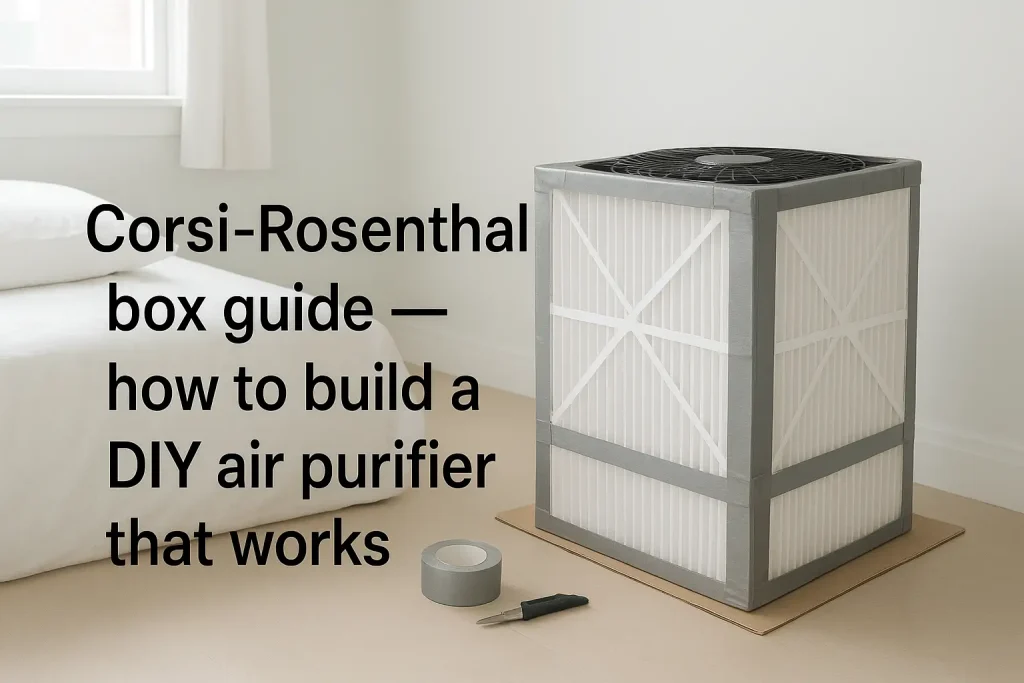
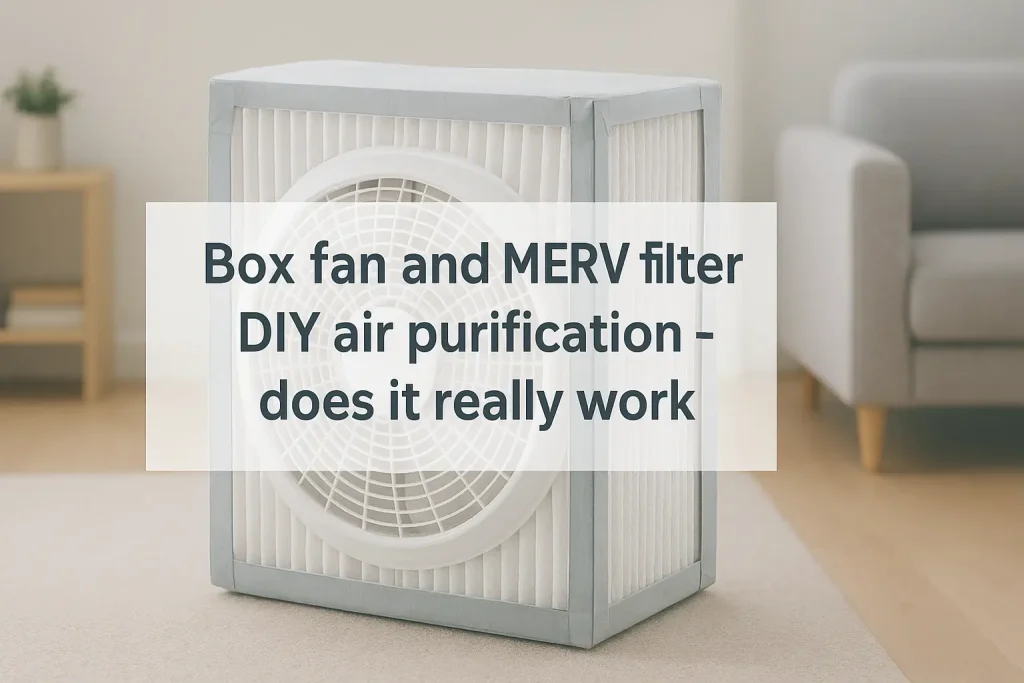
A Corsi-Rosenthal box, built from a 20-inch box fan and four MERV 13 filters taped into a cube, delivers 400 to 600 CFM of filtered air output. In a tiny home under 200 square feet, this is complete overkill. The box itself occupies roughly 4 cubic feet of floor space and produces 55 to 65 dB of noise, which is unacceptable for a sleeping area.
Build a single-filter variant instead. Tape one MERV 13 20×20 filter to the intake side of a 20-inch box fan and run it on low speed. This produces roughly 150 to 200 CFM of filtered air, which is ideal for a tiny home, at a lower noise level than a four-filter cube. The single-filter build costs under $40 total and takes up the same floor space as a commercial compact purifier. Replace the MERV 13 filter every 3 months in a tiny home because the fan pulls all room air through one filter surface instead of four.
What Is the Best Air Purifier for a Tiny Home with a Cat?
The Winix 5500-2 is the best air purifier for a tiny home with a cat because its washable fine mesh pre-filter captures visible cat hair and larger dander particles before they reach the True HEPA stage. This extends HEPA filter life from roughly 6 months to 8 to 10 months in a cat-occupied tiny home.
The Winix 5500-2 replacement filter kit costs approximately $30 per year. Rinse the pre-filter every 2 weeks in a tiny home because cat dander concentration is higher in 200 square feet than in 2,000 square feet. The purifier’s 28 dB sleep mode is quiet enough for a cat who sleeps in the loft with you. Position the unit where the cat does not sit directly on top of it, as a blocked output vent reduces effective CADR by 50% or more.
Do Air Purifiers Remove Mold Spores in a Tiny Home Bathroom?
An air purifier with a True HEPA filter captures airborne mold spores measuring 1 to 30 microns with 99.97% efficiency at 0.3 microns. But it does nothing to address the moisture that causes mold growth in the first place. In a tiny home where the bathroom is a wet bath adjacent to the living area, the purifier captures spores already released into the air but cannot prevent new spore production on damp surfaces.
The effective strategy is a two-part approach. Run a small portable dehumidifier in the bathroom area to keep relative humidity below 60%, which prevents mold from sporulating. Run the air purifier continuously in the main living area to capture any spores that do become airborne. The dehumidifier addresses the cause. The purifier addresses the symptom. Both are needed in a tiny home where bathroom humidity affects the entire living space within 30 minutes of a shower.
The right compact air purifier for your tiny home is the one sized to your exact square footage at 5 ACH, with a sleep mode under 30 dB, and True HEPA plus activated carbon in a single small-footprint unit. Measure your space, use the CADR calculator above, and choose from the five models compared in this guide. A correctly sized purifier running continuously keeps your tiny home’s air cleaner than most 3,000-square-foot houses with no filtration at all.