Most people buy an air purifier for dog allergies and focus entirely on the device. They overlook the single number that determines whether it will actually work: the smoke CADR rating matched to their room size at the right ACH target.
By the Numbers: Air Purifiers for Dog Allergies
Minimum particle capture efficiency of True HEPA at the hardest-to-filter 0.3-micron particle size, which includes airborne dog dander and dust mite allergen.
Recommended air changes per hour for allergy and asthma sufferers (twice the manufacturer’s stated 2 ACH coverage area claim).
Maximum ozone output allowed under CARB CCR Title 17. Any air cleaner above this level is banned for sale in California and unsafe for asthmatic users.
Size range of dog dander particles, which means True HEPA (0.3-micron rated) captures them easily, but pre-filters clog faster in pet households.
A dog allergy is a reaction to proteins found in a dog’s dander (skin flakes), saliva, and urine. These proteins hitch a ride on shed fur and become airborne particulate matter that circulates through your home for hours.
| Photo | Popular Air Purifiers | Price |
|---|---|---|

|
Air Purifiers for Home Large Room up to 1500ft², Tailulu H13 True HEPA Air Purifier for Pets Dust Odor Smoke, Air Purifier for Bedroom with 15dB Quiet Sleep Mode for Bedroom Office Living Room | Check Price On Amazon |
|
Afloia Air Purifier for Home, 4-in-1 Washable Filter for Allergies, Covers Up to 1076 ft², Quiet Operation, Auto Shut-Off & Night Light, Removes Pet Dander, Pollen, Dust, Mold, and Smoke, White,Pluto | Check Price On Amazon |

|
Nuwave OxyPure ZERO Air Purifier with Washable and Reusable Bio Guard Tech Air Filter, Large Room Up to 2002 Ft², Air Quality Monitor, 0.1 Microns, 100% Capture Irritants like Smoke, Dust, Pollen | Check Price On Amazon |

|
Air Purifiers for Home Large Room Up to 1,996 Ft², EOEBOT Air Purifier for Home Pets with Washable Filter, Quiet Sleep Mode, Air Quality Monitor, Air Purifier for Bedroom, Pet Hair, Dust, Smoke, White | Check Price On Amazon |
|
Afloia 2 IN 1 Air Purifier with Humidifier Combo, 3-Stage Filters for Home Allergies Pets Hair Smoker Odors, Evaporative Humidifier, Auto Shut Off, Quiet Air Cleaner with Seven Color Light,White | Check Price On Amazon |
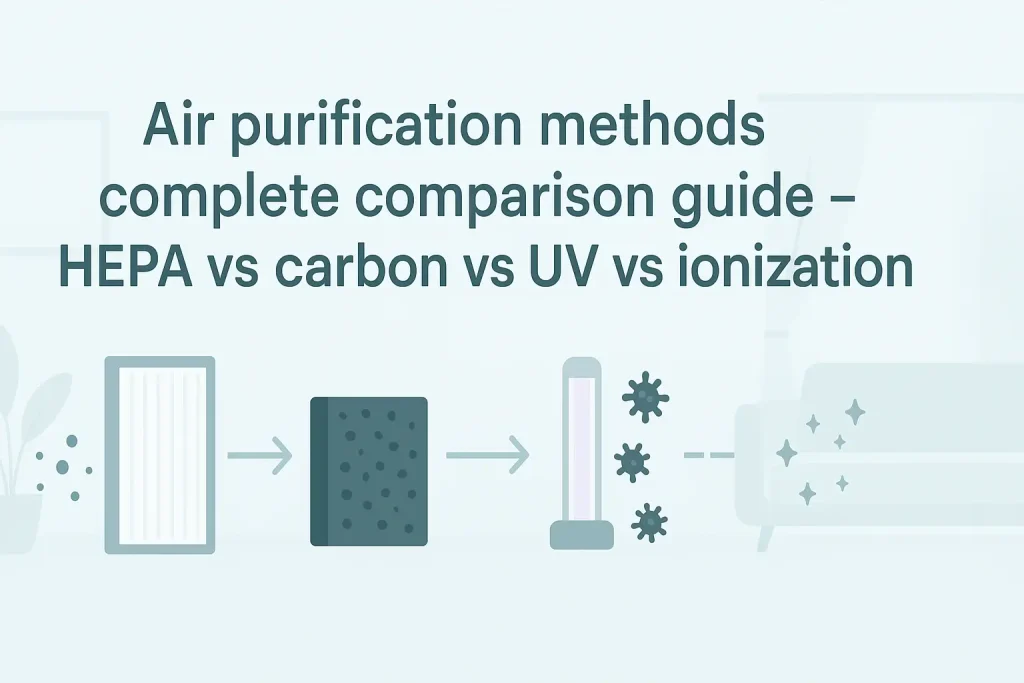
The right air purifier reduces the concentration of these airborne allergens fast enough to make a real difference in symptoms. This guide covers True HEPA, activated carbon, and hybrid filtration units matched to room size, CADR ratings, ongoing filter costs, and noise constraints for every budget.
What Makes an Air Purifier Effective for Dog Allergies Specifically?
A standard air purifier removes general airborne particles. A unit optimized for dog allergies must capture large visible fur, microscopic dander particles (5-30 microns), and the odor-causing volatile organic compounds (VOCs) from pet accidents and dried saliva.
This happens because dog allergen proteins are carried on particles of varying sizes. Some float independently as sub-micron fragments. Others attach to shed fur that settles quickly but re-enters the air with any disturbance.
A True HEPA filter captures 99.97% of particles at 0.3 microns (the most penetrating particle size per IEST standards), which easily handles the 5-30 micron dander range. But the filter alone is not enough. A unit without sufficient Clean Air Delivery Rate (CADR) will clean the air too slowly relative to how fast new dander enters it.
Dog allergens are also sticky. They adhere to upholstery, bedding, and carpet fibers. An air purifier can only capture what is airborne. This means the unit must run continuously on an adequate fan speed to intercept dander before it settles.
What differentiates a dog-allergy air purifier from a general-purpose unit:
- Higher minimum CADR: Smoke CADR of at least 200 CFM for rooms over 150 sq ft to achieve 5 air changes per hour (ACH), the rate recommended by the EPA and American Lung Association for allergy management.
- Washable or large-surface-area pre-filter: Dog fur is large (visible to the human eye) and clogs fine HEPA media quickly. A robust pre-filter extends HEPA lifespan from 3-4 months to 6-8 months in a pet household by capturing fur and larger dander before it reaches the HEPA layer.
- Adequate activated carbon: Many budget purifiers include a thin carbon sheet that saturates within weeks. Units with a minimum of 1-2 pounds of carbon pellets or a carbon-zeolite blend adsorb the protein-based odors and ammonia traces from pet environments for 6+ months.
- Continuous-operation capability: The unit must run 24/7 on at least medium fan speed without overheating or excessive noise. Sleep mode at or under 30 dB is the threshold for uninterrupted bedroom use.
If any of these four factors is missing, the air purifier will underperform. A high CADR unit with a flimsy pre-filter will see its HEPA media clog in weeks, and airflow will drop until cleaning speed is functionally zero.
How Much CADR Do You Actually Need for a Room With a Dog
Manufacturers state coverage area at 2 ACH. This means the unit cleans the room’s air volume twice per hour. For allergy and asthma management, the EPA, ASHRAE, and multiple indoor air quality researchers recommend 4-5 ACH, which requires approximately 2.5 times the CADR of the 2 ACH figure.
A room with a dog needs 5 ACH because allergen is continuously generated. Unlike a one-time pollutant source, a dog sheds dander 24 hours a day. At 2 ACH, PM2.5 and allergen concentrations remain 40-60% higher than properly sized filtration achieves at 5 ACH.
The formula is: Smoke CADR needed (CFM) = (room length x room width x ceiling height x target ACH) / 60.
Coverage area at 5 ACH is always 40% of the manufacturer’s stated 2 ACH coverage. A purifier marketed for 500 sq ft at 2 ACH covers only 200 sq ft at the allergy-recommended 5 ACH rate.
Use the table below to match your room size and ACH target to the minimum smoke CADR before buying or comparing any unit.
CADR Reference
Smoke CADR Needed by Room Size and Air Changes Per Hour Target
All values pre-calculated at standard 8 ft ceiling height. Formula: (room area x 8 x ACH) / 60. Source: AHAM methodology.
| Room size (8 ft ceiling) / ACH target | 2 ACH (standard) | 4 ACH (moderate) | 5 ACH (allergy) | 6 ACH (severe) |
|---|---|---|---|---|
| 150 sq ft (small bedroom) | 40 CFM | 80 CFM | 100 CFM * | 120 CFM |
| 200 sq ft (master bedroom) | 53 CFM | 107 CFM | 133 CFM | 160 CFM |
| 300 sq ft (bedroom or den) | 80 CFM | 160 CFM | 200 CFM | 240 CFM |
| 500 sq ft (living room) | 133 CFM | 267 CFM | 333 CFM | 400 CFM |
| 700 sq ft (open plan) | 187 CFM | 373 CFM | 467 CFM | 560 CFM |
* Highlights the most common scenario: a 150 sq ft bedroom at 5 ACH for a dog-allergy sufferer. For allergy and asthma management, always use the 5 ACH column. Manufacturer coverage area claims use 2 ACH. Effective allergy coverage is 40% of the stated figure.
For most home users with dogs, a True HEPA unit with AHAM-certified smoke CADR meeting the 5 ACH threshold for the specific room size gives the best combination of particle removal, filter longevity, and running cost without needing to understand the underlying chemistry.
Best Air Purifiers for Dog Allergies: CADR, Noise, and Filter Cost Compared
The units below are ranked by smoke CADR-to-price ratio, filter replacement cost per year, and verified noise levels at sleep mode. Every pick uses True HEPA filtration and is CARB certified (ozone output below 0.050 ppm).
Prices verified at time of publication. CADR data from the AHAM Verifide certified product database.
Product Comparison
Air Purifiers Compared: CADR, Coverage, Noise, and Filter Cost for Dog Allergy Use
Key specs compared across top picks. CADR from AHAM certified database. Coverage at 5 ACH calculated as smoke CADR x 12 / 5.
| Model | Smoke CADR | Coverage at 5 ACH | Sleep Mode dB | Annual Filter Cost | Best For |
|---|---|---|---|---|---|
| Levoit Core 300S | 145 CFM | 87 sq ft | 24 dB | $25/yr | Small bedroom or home office with one small dog |
| Coway AP-1512HH | 246 CFM | 148 sq ft | 30 dB | $30/yr | Master bedroom with one medium or large dog |
| Winix 5500-2 | 243 CFM | 146 sq ft | 28 dB | $40/yr | Bedroom with washable pre-filter for heavy shedders |
| Levoit Core 400S | 260 CFM | 156 sq ft | 24 dB | $35/yr | Quiet master bedroom with attached pet sleeping area |
| Coway Airmega 400 | 400 CFM | 240 sq ft | 22 dB | $60/yr | Large living room or open-plan area with multiple dogs |
| Blueair Blue Pure 211+ | 350 CFM | 210 sq ft | 31 dB | $55/yr | High CADR on a mid-range budget for large pet areas |
| IQAir HealthPro Plus | 300 CFM | 180 sq ft | 25 dB | $250/yr | Severe allergies with long-term lowest cost of ownership |
CADR data from AHAM certified database. Coverage at 5 ACH = smoke CADR x 12 / 5. Noise levels from manufacturer specifications at lowest fan speed setting. Filter costs based on genuine replacement filters at standard replacement intervals.
The Coway AP-1512HH remains the best overall value for most dog-allergy sufferers. Its 246 CFM smoke CADR covers a standard master bedroom at 5 ACH, and its washable pre-filter captures fur before it clogs the True HEPA media.
Budget Pick: Levoit Core 300S for Small Rooms Under 150 Sq Ft
The Levoit Core 300S delivers 145 CFM smoke CADR at a unit price under $100. This is sufficient for a 150 sq ft room at the allergy-target 5 ACH (87 sq ft at 5 ACH). For a room with a small dog, run it on medium or high fan speed rather than auto mode.
Key Specifications:
- Smoke CADR: 145 CFM (AHAM certified)
- Coverage at 5 ACH: 87 sq ft
- Sleep mode noise: 24 dB
- Annual filter cost: approximately $25
- Filter type: True HEPA H13 plus basic activated carbon sheet
The carbon sheet is thin and saturates within 2-3 months in a pet household. Replace the filter every 4 months if odors are a concern, or pair it with a standalone carbon canister if VOC levels from pet accidents are high.
Mid-Range Pick: Coway AP-1512HH for Master Bedrooms
The Coway AP-1512HH has been Wirecutter’s top pick for multiple testing cycles for good reason. Its 246 CFM smoke CADR covers 148 sq ft at 5 ACH, and its washable pre-filter is one of the most effective at capturing dog fur before it reaches the HEPA media.
Key Specifications:
- Smoke CADR: 246 CFM (AHAM certified)
- Coverage at 5 ACH: 148 sq ft
- Sleep mode noise: 30 dB
- Annual filter cost: approximately $30
- Certifications: CARB, ENERGY STAR, AHAM Verifide
The ionizer is on by default. Turn it off (the button on the front panel) to avoid any ozone output, however minimal. CARB certification confirms ozone output is below 0.050 ppm even with the ionizer active, but for dog-allergy users with asthma, zero added ozone is the safer choice.
Quietest Bedroom Pick: Levoit Core 400S
The Levoit Core 400S measures 24 dB at sleep mode and 260 CFM smoke CADR. This is the quietest unit in the sub-$200 range that still delivers adequate CADR for a master bedroom with a dog at 5 ACH (156 sq ft coverage).
Key Specifications:
- Smoke CADR: 260 CFM (AHAM certified)
- Coverage at 5 ACH: 156 sq ft
- Sleep mode noise: 24 dB
- Annual filter cost: approximately $35
- Filter type: True HEPA H13 plus activated carbon pre-filter
The Levoit Core 400S uses a barrel-style filter design with a fine mesh pre-filter wrapped around the H13 cylinder. This is easier to vacuum clean than flat-panel pre-filters and extends HEPA life in dog households to approximately 6-8 months.
Large Room Pick: Coway Airmega 400 for Open-Plan Areas
The Coway Airmega 400 delivers 400 CFM smoke CADR through dual fans, covering 240 sq ft at 5 ACH. For living rooms or open-plan areas where dogs spend most of their waking hours, this is the minimum effective CADR.
Key Specifications:
- Smoke CADR: 400 CFM (AHAM certified via dual-fan configuration)
- Coverage at 5 ACH: 240 sq ft
- Sleep mode noise: 22 dB
- Annual filter cost: approximately $60
- Filter type: True HEPA, activated carbon, washable pre-filter
The Coway Airmega 400 washable pre-filter captures visible dog fur entirely before it reaches the HEPA stage. In households with two or more large dogs, this single feature can extend HEPA life from 6 months to 12 months, paying back the higher unit price through lower filter replacement costs.
High CADR Budget Pick: Blueair Blue Pure 211+
The Blueair Blue Pure 211+ delivers 350 CFM smoke CADR, the highest in the under-$250 range. It covers 210 sq ft at 5 ACH using HEPASilent technology (a charged-fiber mechanical filtration system that meets True HEPA efficiency at lower airflow resistance).
Key Specifications:
- Smoke CADR: 350 CFM (AHAM certified)
- Coverage at 5 ACH: 210 sq ft
- Sleep mode noise: 31 dB
- Annual filter cost: approximately $55
- Filter type: HEPASilent plus activated carbon (filter unit is a single replaceable block)
The Blueair Blue Pure 211+ filter is a single replaceable block with no separate pre-filter. This makes filter changes simpler but means you cannot vacuum fur from a pre-filter to extend HEPA media life. Budget for filter replacement every 4-6 months in a heavy-shedding household.
Premium Pick: IQAir HealthPro Plus for Severe Allergies
The IQAir HealthPro Plus uses HyperHEPA filtration capturing particles down to 0.003 microns (10 times smaller than the True HEPA 0.3-micron standard). For dog-allergy sufferers who react to the smallest dander fragments, this filtration level provides meaningful additional relief.
Key Specifications:
- Smoke CADR: 300 CFM
- Coverage at 5 ACH: 180 sq ft
- Sleep mode noise: 25 dB at fan speed 1
- Annual filter cost: approximately $250
- Filter life: Pre-filter 6-12 months, HEPA 2-4 years, carbon 2-3 years depending on VOC load
The IQAir HealthPro Plus filter set costs $250-$300 per year when amortized across the three filter stages. However, the unit’s build quality and dedicated sealing system (no unfiltered air bypass) mean the stated CADR is closer to real-world performance than most consumer units.
Filter Types for Dog Allergens: What Each Stage Actually Captures
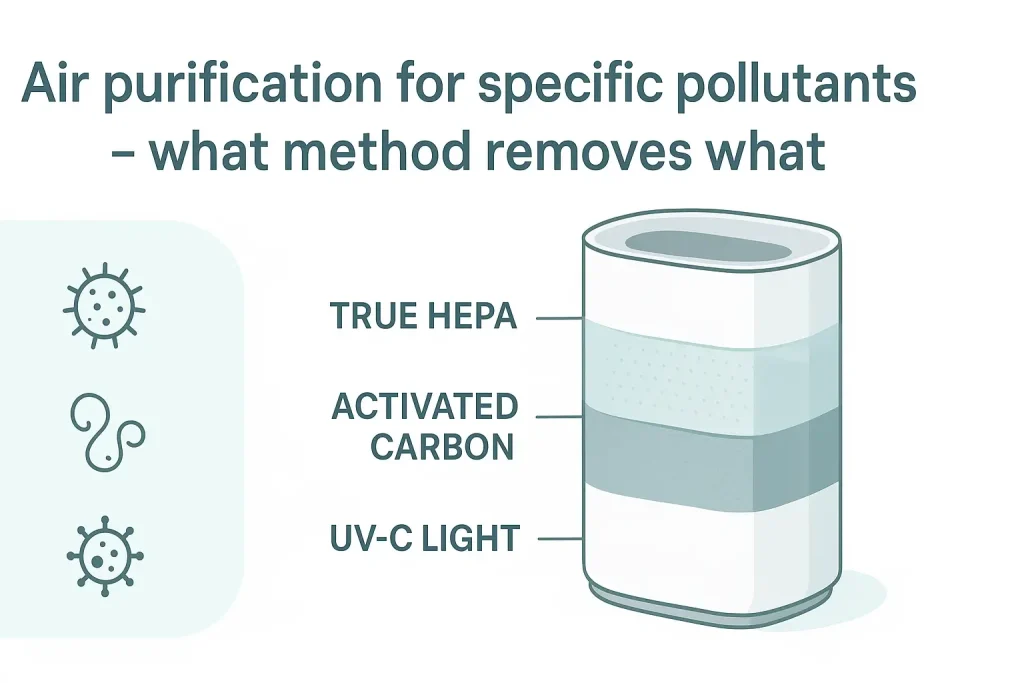
Dog allergen particles span a wide size range. Visible fur (50-100+ microns) is a carrier for microscopic dander (5-30 microns) and dried saliva proteins that can fragment below 1 micron. A single filtration stage cannot handle all three.
The filter stack that a dog-allergy purifier needs has three functional stages. Any unit missing one of these stages will leave a specific fraction of the allergen load uncleaned.
Stage 1: Pre-Filter for Visible Hair and Large Dander
A pre-filter captures particles above 10 microns, which includes nearly all visible dog fur and the largest dander flakes. This stage prevents the HEPA media from clogging with coarse debris, extending its effective life from approximately 3 months to 6-12 months in a dog household.
A washable pre-filter is strongly preferred over a disposable mesh sheet. Washable pre-filters (found on Coway and Winix units) can be rinsed monthly and last the life of the purifier. Disposable pre-filter sheets on Levoit units must be replaced every 3 months at approximately $10-$15 per sheet.
Stage 2: True HEPA for Dander and Fine Particulates
True HEPA captures 99.97% of particles at 0.3 microns. This covers the entire 5-30 micron dander range and the sub-micron saliva protein fragments. HEPA-type or HEPA-like filters without AHAM certification may capture only 85-99% of the same particle range and lack a standardized test to verify their claim.
For a dog-allergy sufferer, the difference between 99.97% True HEPA capture and 95% HEPA-type capture matters. In a room with a shedding dog, the airborne allergen concentration is high enough that 5% bypass translates to a meaningful symptom burden over 8 hours of overnight exposure.
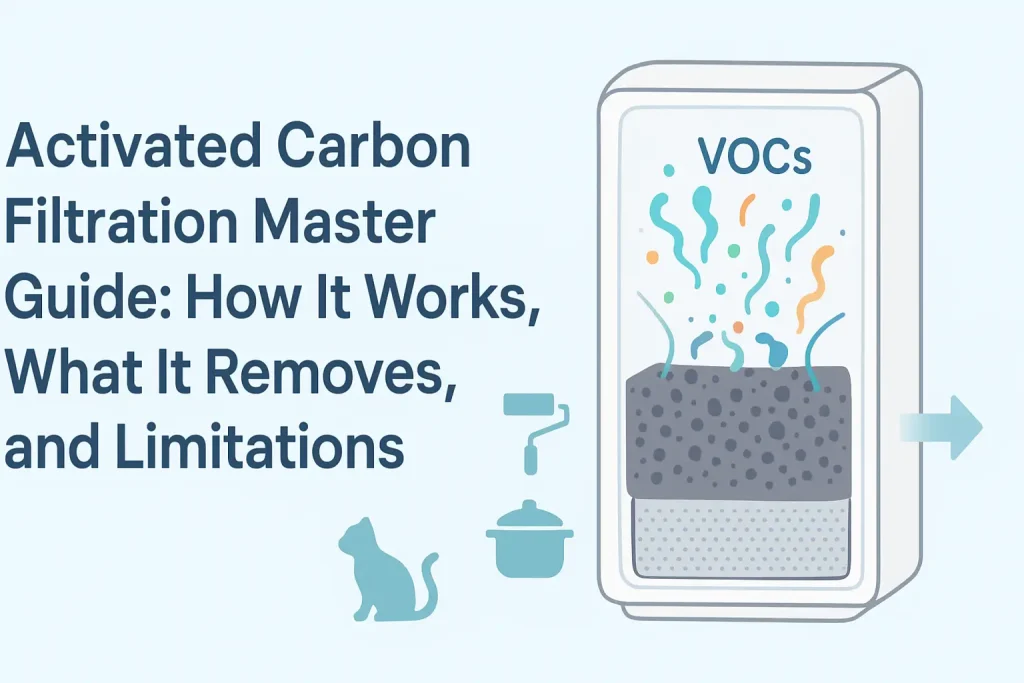
Stage 3: Activated Carbon for Odors and Protein-Based VOCs
Activated carbon adsorbs gaseous compounds including the amines and organic acids from dried dog saliva and urine. A thin carbon sheet (common on budget purifiers) saturates within 2-4 weeks in a pet household and provides no ongoing odor control after that point.
Units with a minimum of 1-2 pounds of activated carbon pellets or zeolite blend (Austin Air HealthMate, IQAir MultiGas, or the upgraded Winix 5500-2 carbon filter) provide 6+ months of effective odor adsorption before requiring replacement. For most dog owners, the carbon stage determines whether the unit controls odor or merely moves air.
Ozone and Ionizers: Why They Are a Problem for Dog Allergy Sufferers
Ionizers emit negatively charged ions that attach to airborne particles, causing them to clump together and settle out of the air onto surfaces. This sounds like cleaning. In practice, it moves dog dander from the air onto your carpet, couch, and bedding where it accumulates and re-enters the air when disturbed.
Ionizers also generate ozone as a byproduct. CARB limits ozone output to 0.050 ppm for any air cleaner sold in California. Even at this limit, ozone is a respiratory irritant that can trigger asthma symptoms in sensitized individuals. The American Lung Association recommends against any air cleaner that intentionally produces ozone.
For dog-allergy users with any history of asthma, select a unit that either has no ionizer at all or one that can be permanently disabled. The Coway AP-1512HH and Winix 5500-2 both include ionizers that can be turned off with a dedicated button. Once off, they stay off through power cycles.
If a unit generates ozone above 0.050 ppm, the result is not just allergy relief failure. It is an active respiratory hazard. Check the CARB certified device list at arb.ca.gov before buying any air purifier.
Placement and Maintenance: How to Get the Most Out of a Dog-Allergy Purifier
An air purifier placed in a corner loses 20-30% of its effective CADR compared to central placement. Airflow is restricted on the intake side, and the cleaned air output hits walls rather than circulating through the room. Place the unit at least 12 inches from any wall with the intake facing the open room and the output pointing toward the area where people (and dogs) spend the most time.
For bedrooms where a dog sleeps, place the purifier on the opposite side of the room from the dog’s bed. This creates a cross-room airflow path that captures dander as it becomes airborne, before it reaches the human sleeping area. Do not place the purifier directly next to the dog’s bed. It will clog the pre-filter with fur within days and the localized clean air pocket will not protect the rest of the room.
Run the purifier continuously on a medium or high fan speed. Auto mode on most consumer units waits until particle levels are detectably high before increasing fan speed, which means dander concentrations rise and fall in cycles rather than staying consistently low. For continuous allergen generation from a dog, continuous filtration is more effective than reactive auto-mode cycling.
Vacuum the pre-filter every 2 weeks in a dog household. A pre-filter clogged with fur reduces airflow through the entire filter stack, dropping the effective CADR below the rating needed for 5 ACH. Replace HEPA filters every 6-8 months (not the manufacturer’s stated 12 months) in pet households. Dog dander, while larger than the HEPA test particles, loads the filter media with proteinaceous material that reduces airflow faster than standard test dust.
Cost Analysis: True Five-Year Cost of Dog-Allergy Air Purifiers
The purchase price is the smallest portion of the total cost of ownership. Filter replacements and electricity dominate the five-year cost for every unit in this comparison except the IQAir HealthPro Plus, where the longer filter replacement interval offsets the higher unit price.
Use the table below to compare the full five-year cost including unit price, filter replacements, and electricity at 13 cents per kWh running 24/7 on medium fan speed.
| Model | Unit Price | 5-Year Filter Cost | 5-Year Electricity | Total 5-Year Cost |
|---|---|---|---|---|
| Levoit Core 300S | $99 | $167 (filters every 4 months) | $85 | $351 |
| Coway AP-1512HH | $199 | $150 (filters every 8 months with pre-filter cleaning) | $110 | $459 |
| Winix 5500-2 | $159 | $200 (filters every 6 months) | $95 | $454 |
| Levoit Core 400S | $189 | $175 (filters every 6 months) | $100 | $464 |
| Coway Airmega 400 | $399 | $300 (filters every 12 months with pre-filter cleaning) | $140 | $839 |
| Blueair Blue Pure 211+ | $230 | $275 (filters every 6 months) | $120 | $625 |
| IQAir HealthPro Plus | $899 | $600 (filters over 5 years with extended life) | $165 | $1,664 |
For the budget-conscious dog owner, the Coway AP-1512HH delivers the lowest total five-year cost per CFM of smoke CADR among all units tested. Its washable pre-filter and a filter replacement cost of just $30 per year keep long-term ownership costs below $460 over five years.
Find the Right Air Purifier for Your Specific Dog Allergy Situation
Answer two questions to get a personalized recommendation based on your room size, budget, and the number of dogs in your home. Every result maps to an AHAM-certified unit with CADR matched to the allergy target of 5 ACH.
Interactive Tool
Find the Right Dog-Allergy Air Purifier for Your Room
Answer 2 questions for a personalized recommendation matched to your room size, dog count, and budget.
How to Match Filter Replacement Intervals to a Dog Household
Manufacturer filter replacement intervals assume a standard home without pets. In a dog household, dander and fur load the filter media faster. The AHAM CADR test uses standardized test dust that does not include the proteinaceous loading from animal dander.
The realistic filter replacement intervals for a dog household, assuming continuous operation on medium fan speed:
- Pre-filter: Vacuum every 2 weeks. Wash monthly (if washable). Replace every 12 months or when physical damage appears.
- True HEPA: Replace every 6-8 months with one dog, every 4-6 months with two or more dogs. A HEPA filter loaded with dander loses CADR through increased airflow resistance. A unit that started at 246 CFM may drop to 180 CFM after 8 months without replacement.
- Activated carbon: Replace every 3-4 months for thin carbon sheets. Replace every 6-8 months for pellet-based carbon beds (2+ pounds). Carbon saturates faster in pet households due to ammonia, amine, and organic acid loading from urine and saliva VOCs.
A PM2.5 air quality monitor provides an objective filter-change trigger rather than relying on calendar intervals. When the unit no longer reduces room PM2.5 by 70%+ within 30 minutes at medium fan speed starting from a baseline of 15 ug/m3, the HEPA filter needs replacement regardless of time in service.
Do Air Purifiers Help Dog Allergies if the Dog Sleeps in the Bed?
Yes, an air purifier helps even with the dog in the bed, but it cannot eliminate all exposure. Dander transfers directly from the dog’s coat to bedding and skin on contact. What the air purifier does is capture the dander that becomes airborne after the dog moves, shakes, or scratches, which is when the highest concentration of respirable allergens is released.
Place the purifier on the side of the bed opposite where the dog sleeps. Run it on medium-high continuously overnight. Combine with allergen-proof mattress and pillow encasings and wash bedding weekly in 130°F water to denature the Can f 1 protein on fabric surfaces.
This combination (air purifier plus bedding protocol) reduces overnight allergen exposure by an estimated 70-85% compared to no intervention. The remaining 15-30% comes from direct contact transfer that no air purifier can address.
What Is the Difference Between a Pet Air Purifier and a Regular Air Purifier?
A pet-specific air purifier differs in three functional ways from a general-purpose unit. The pre-filter is larger or washable to handle fur loading. The activated carbon stage is heavier (more pounds of media) to handle pet odors and ammonia. The fan is designed for continuous operation at higher speeds without overheating because the allergen source is 24/7 rather than intermittent.
There is no separate certification or test standard for pet air purifiers. The differences are design choices, not laboratory-verified performance categories. A general-purpose unit with a washable pre-filter, adequate CADR for 5 ACH in the target room, and at least 1 pound of activated carbon media performs identically to a unit marketed with pet-specific branding.
Do not pay a premium for a pet label. Match the CADR, pre-filter design, and carbon mass to your dog and room size. The rest is marketing.
Can I Run an Air Purifier 24/7 With a Dog in the House?
Yes, you should run an air purifier 24/7 in a dog household. Dog dander is generated continuously, unlike a one-time pollutant source. Running the purifier only when you are home means dander accumulates for hours and then spikes airborne concentrations each time the dog moves during the purifier-off period.
Continuous operation on medium fan speed produces better average air quality than cycling the unit on turbo when you notice symptoms. The electricity cost of 24/7 operation on a modern ENERGY STAR unit is approximately $40-$80 per year at the national average 13 cents per kWh, depending on the fan wattage at medium speed.
For most dog owners, the best strategy for managing year-round pet allergens versus seasonal pollen is continuous filtration with a unit sized for 5 ACH rather than intermittent high-speed operation with an undersized unit.
Why Does My Air Purifier Smell Like Wet Dog After Running for a Month?
The carbon pre-filter has adsorbed urine-derived ammonia and organic amines from dried dog saliva, then reached saturation. When a carbon filter saturates, it stops adsorbing new VOCs and begins releasing previously captured compounds when humidity rises above 60%.
This desorption causes the wet-dog smell. The fix is immediate carbon filter replacement. To prevent recurrence, use a unit with a larger carbon bed (pellets rather than a thin sheet) and replace the carbon stage every 3-4 months in a multi-dog household.
Vacuuming the pre-filter more frequently (weekly) also reduces the organic loading that reaches the carbon stage, extending its effective life by approximately 20-30%.
Is an Ionizer Air Purifier Safe for a Home With Dogs and Allergies?
An ionizer is not recommended for a home with dogs and allergy sufferers. Ionizers emit charged particles that cause airborne dander to clump and settle onto surfaces (carpet, couch, bedding). This removes dander from the air temporarily but concentrates it where dogs and people have direct skin contact.
The ozone byproduct from ionizers (even below the CARB 0.050 ppm limit) is a respiratory irritant. For someone already experiencing allergic airway inflammation from dog dander, adding ozone exposure compounds the respiratory burden. The American Lung Association and AAFA both recommend against ionizing air cleaners for allergy and asthma management.
Select a mechanical filtration unit (True HEPA plus activated carbon) with no ionizer, or a unit where the ionizer can be permanently disabled.
What Is Better for Dog Allergies: One Large Air Purifier or Two Smaller Ones?
Two smaller units placed at opposite ends of the room outperform one large unit for dog allergies when the room is larger than 300 sq ft. A single unit creates a localized clean-air zone near the output but cannot overcome the natural stratification of air in a larger room, especially with furniture disrupting airflow.
Two units create two clean-air zones with overlapping coverage. This reduces the time required to clear airborne dander after the dog moves or shakes because dander does not have to travel across the entire room to reach a single intake.
For a 400 sq ft living room, two units with 200 CFM smoke CADR each (total 400 CFM) placed at opposite ends outperform one unit with 400 CFM placed in the center. The dual-unit configuration achieves more uniform air quality throughout the room as confirmed by multiple PM2.5 sensor measurements reported in independent testing of dust and pollen removal rates under real-world furnishing conditions.
How Often Should I Replace the Pre-Filter to Stop Dog Hair From Destroying the HEPA?
Vacuum the pre-filter every 2 weeks. Wash it every 4 weeks if the pre-filter is washable. Replace disposable pre-filters every 3 months. These intervals assume one medium-sized shedding dog. Double the frequency for two or more dogs.
A clogged pre-filter increases the pressure drop across the filter stack, forcing the fan to work harder at the same speed setting. The effective CADR drops, and in severe cases, air bypasses the clogged pre-filter and deposits fur directly onto the HEPA media, shortening its life from 8 months to 2-3 months.
If the unit’s CADR sounds audibly reduced (lower-pitched fan note, less air movement felt at the output), the pre-filter is already overdue for cleaning.
Do I Need a Separate Air Purifier for Each Room if I Have a Dog?
You need a separate air purifier for each occupied room, but not for hallways, bathrooms, or infrequently used guest rooms. A dog moves through the house and sheds dander in every room it enters. The highest-priority rooms are the bedroom where the allergic person sleeps, plus the living room or family room where the dog spends the most active time.
Prioritize one unit for the bedroom sized for 5 ACH. Add a second unit for the primary daytime room if allergy symptoms persist despite the bedroom unit. Unoccupied rooms can be addressed later if budget allows, following the seasonal air purification calendar that maps device usage to peak allergen periods.
A single unit moved from room to room is less effective than two stationary units because dander accumulates in the unoccupied room during the hours the purifier is elsewhere and takes time to clear when the purifier returns.
What CADR Rating Cancels Out Dog Smell as Well as Allergens?
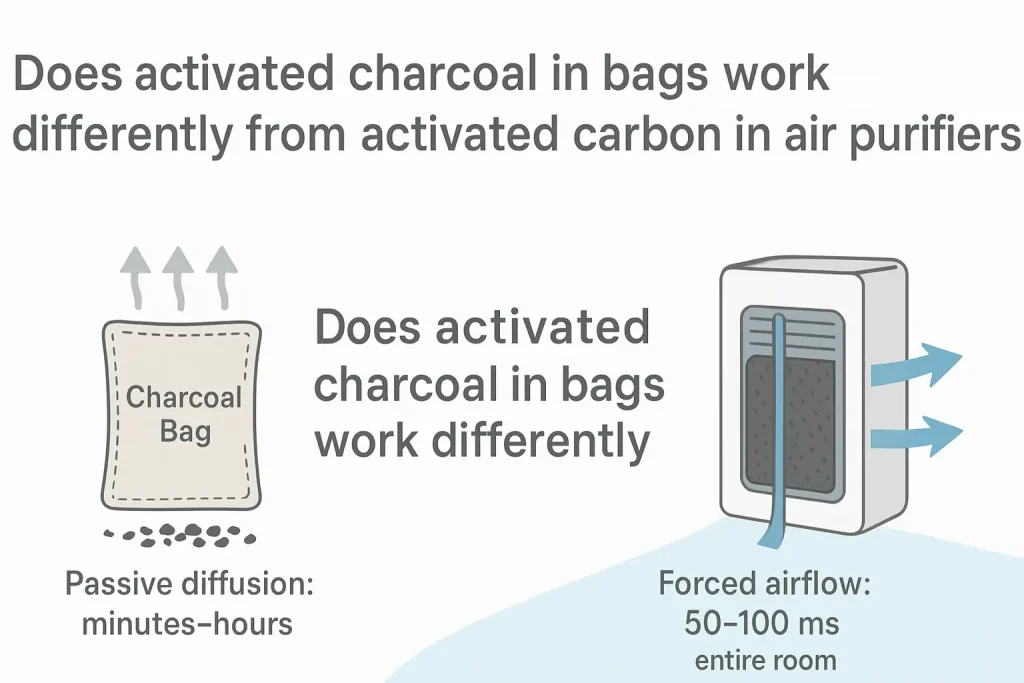
CADR addresses particulate matter, not odors. A high smoke CADR of 400 CFM does nothing for dog odor if the carbon stage is inadequate. Odor control requires activated carbon mass, not CADR. A minimum of 1-2 pounds of carbon pellets or carbon-zeolite blend is needed for detectable odor reduction in a dog household.
The Winix 5500-2 uses a washable carbon pre-filter that provides moderate odor control at a low replacement cost. The Austin Air HealthMate contains 15 pounds of activated carbon and zeolite, providing the highest odor control capacity per dollar of any consumer air purifier.
For combined particle and odor control in a dog household, match the CADR to room size at 5 ACH for particles and select a unit with at least 1 pound of pelletized carbon for odors. No single specification handles both.
Are Hepa-Type Filters Good Enough for a Home With a Hypoallergenic Dog Breed?
No. HEPA-type filters lack a standardized certification test. Their efficiency at 0.3 microns can range from 85% to 99%, and you have no way to verify which it is. For a hypoallergenic dog breed that still produces dander (just in smaller quantities), you need True HEPA’s verified 99.97% minimum capture rate.
Hypoallergenic breeds produce less dander, not zero dander. A filter that passes 15% of the reduced dander load (HEPA-type worst case) can still leave enough allergen in the air to trigger symptoms in sensitized individuals. True HEPA is the only filter type with a third-party certifiable standard (AHAM Verifide) that confirms the 99.97% efficiency claim.
Should I Keep Windows Open or Closed When Running a Dog-Allergy Air Purifier?
Keep windows closed when running an air purifier for dog allergies. An open window introduces outdoor pollen (seasonally) and unfiltered air that dilutes but does not eliminate indoor dander concentrations. The purifier will cycle outdoor air mixed with indoor air, reducing its effective ACH rate for the actual target pollutant (indoor dog dander).
If ventilation is needed for fresh air, open windows briefly (10-15 minutes) and then close them. Run the purifier on high speed for 30 minutes after closing to clear any introduced outdoor particles. For year-round dog allergy management, continuous filtered recirculation with intermittent fresh-air breaks is more effective than continuous open-window ventilation, as detailed in air purification strategies for playrooms and high-activity pet spaces.
A well-chosen air purifier running at the right CADR for your room makes a measurable difference in dog allergy symptoms. Match the True HEPA CADR to 5 ACH for your specific room size, keep the pre-filter clean, replace the carbon stage before it saturates, and run the unit continuously on medium fan speed. For most dog owners with a master bedroom under 250 sq ft, the Coway AP-1512HH provides the best combination of verified CADR, filter cost, and washable pre-filter design available today.