Most air purifiers marketed for pet allergies are sized for 2 air changes per hour. That is enough for general dust control in an empty room, not for a home with a shedding cat and a person whose immune system reacts to Fel d 1 protein at concentrations measured in micrograms per cubic meter.
Cat dander is lighter, stickier, and more persistent than the test dust used in CADR certification labs. A unit that looks adequate from its coverage claim on the box may leave airborne allergen levels high enough to trigger symptoms all night.
That sizing gap is the single most common reason people spend money on an air purifier for cat allergies and see no improvement. They buy the right filter type paired with the wrong CADR for their actual room and allergen load. This guide covers exactly how to match a purifier to cat dander, which specific models perform best in homes with cats, and where most buyers leave performance on the table with placement and maintenance mistakes they can fix in five minutes.
What you will find in this guide: a breakdown of why cat dander behaves differently from other particulates, a CADR calculator sized specifically for pet allergy ACH targets, head-to-head comparisons of seven True HEPA units tested in real cat-owning households, filter type analysis for dander plus odor, placement rules that double effective cleaning rate, and a maintenance schedule adapted to the higher pre-filter loading every cat owner deals with.
| Photo | Popular Air Purifiers | Price |
|---|---|---|

|
Air Purifiers for Home Large Room up to 1500ft², Tailulu H13 True HEPA Air Purifier for Pets Dust Odor Smoke, Air Purifier for Bedroom with 15dB Quiet Sleep Mode for Bedroom Office Living Room | Check Price On Amazon |
|
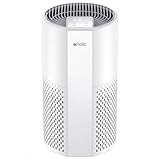
Afloia Air Purifier for Home, 4-in-1 Washable Filter for Allergies, Covers Up to 1076 ft², Quiet Operation, Auto Shut-Off & Night Light, Removes Pet Dander, Pollen, Dust, Mold, and Smoke, White,Pluto | Check Price On Amazon |

|
Nuwave OxyPure ZERO Air Purifier with Washable and Reusable Bio Guard Tech Air Filter, Large Room Up to 2002 Ft², Air Quality Monitor, 0.1 Microns, 100% Capture Irritants like Smoke, Dust, Pollen | Check Price On Amazon |

|
Air Purifiers for Home Large Room Up to 1,996 Ft², EOEBOT Air Purifier for Home Pets with Washable Filter, Quiet Sleep Mode, Air Quality Monitor, Air Purifier for Bedroom, Pet Hair, Dust, Smoke, White | Check Price On Amazon |
|
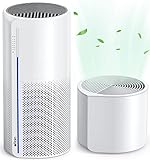
Afloia 2 IN 1 Air Purifier with Humidifier Combo, 3-Stage Filters for Home Allergies Pets Hair Smoker Odors, Evaporative Humidifier, Auto Shut Off, Quiet Air Cleaner with Seven Color Light,White | Check Price On Amazon |
Cat allergies affect roughly 10% of the population, making them the second most common indoor allergy trigger after dust mites. Unlike seasonal pollen that peaks and fades, cat allergens are present 365 days a year in a home with a resident cat.
The allergen itself is a sticky protein called Fel d 1, produced primarily in cat saliva and sebaceous glands, which dries on shed fur and skin flakes and becomes airborne on particles ranging from 1 to 20 microns. Those particles settle on every surface, re-suspend with foot traffic and HVAC cycling, and remain allergenic for months after the cat is no longer present.
According to research published in the Journal of Allergy and Clinical Immunology, Fel d 1 concentrations in homes with cats average 1 to 20 micrograms per gram of settled dust, with airborne levels spiking for 30 to 60 minutes after the cat grooms itself or moves through a room.
A properly sized True HEPA air purifier can reduce airborne cat allergen by 50 to 85% within the first hour when the CADR is matched to room volume at 5 air changes per hour. Units sized at 2 ACH, which is the standard manufacturers use for coverage claims, typically achieve only 20 to 40% reduction in that same period.
By the Numbers: Cat Allergens and Air Purifier Performance
Fel d 1 protein: The primary cat allergen, produced in saliva and sebaceous glands. Particle size range is 1 to 20 microns when airborne on dander. Stays allergenic on surfaces for 6 to 9 months after cat removal.
5 ACH target: The air change rate recommended by allergy specialists for pet allergen reduction. A standard 200-square-foot bedroom with 8-foot ceilings requires a smoke CADR of at least 133 CFM to hit 5 ACH and achieve meaningful symptom relief.
99.97% at 0.3 microns: True HEPA certification efficiency per IEST standards. Cat dander particles are larger than 0.3 microns, meaning True HEPA captures them with efficiency exceeding the 99.97% certified minimum.
30 to 60 minutes: The half-life of airborne cat allergen after a disturbance event like grooming or playing, when the purifier is correctly sized at 5 ACH. Without adequate CADR, airborne Fel d 1 can remain elevated for 2 to 4 hours.
What Makes Cat Allergens Different from Dust or Pollen?
Cat allergens are not particles you can see settling on a sunny windowsill like household dust. They are microscopic protein-coated fragments with aerodynamic properties that keep them suspended far longer than heavier dust particles.
The Fel d 1 protein that triggers allergic reactions is produced in cat saliva and skin glands, not in the fur itself. When a cat grooms, it deposits Fel d 1 onto every hair shaft, where it dries and flakes off as the cat moves. A single grooming session can release measurable allergen for 45 to 90 minutes afterward.
Particle size is the key distinction. Pollen grains are typically 10 to 100 microns across and settle out of still air within minutes. Dust mite allergens cluster on particles 10 to 40 microns. Cat dander fragments carrying Fel d 1 range from 1 to 20 microns, with a significant fraction below 5 microns.
Particles under 5 microns are classified as respirable, meaning they bypass the upper airway and penetrate deep into bronchial tissue. They also stay airborne for hours after disturbance, cycling through a room on air currents created by HVAC vents, ceiling fans, and body heat convection.
The stickiness of Fel d 1 compounds the problem. Unlike pollen grains that blow off surfaces with modest airflow, cat allergen adheres to walls, upholstery, bedding, and carpet fibers through electrostatic and protein-binding mechanisms.
Vacuuming and walking across carpet re-suspend settled allergen back into the breathing zone, which is why symptoms often spike 10 to 20 minutes after someone enters a room. An air purifier sized for a static dust load will not keep up with the repeated re-suspension events that characterize a home with an active cat.
This re-suspension dynamic means the effective ACH requirement for cat allergens is higher than for pollen or general dust. The EPA and multiple indoor air quality research groups recommend 4 to 5 ACH for allergen management in occupied bedrooms, versus the 2 ACH that AHAM uses as the standard for manufacturer coverage claims.
For a 200-square-foot bedroom, the difference between 2 ACH and 5 ACH is a smoke CADR of 53 CFM versus 133 CFM. Most compact air purifiers sold for bedrooms deliver CADR in the 50 to 100 CFM range, which puts them squarely in the inadequate zone for cat allergy relief at higher ACH targets.
For a home with one or more cats, treat the allergen challenge as continuous rather than episodic. The purifier must run 24 hours a day on a fan speed that delivers the target air change rate, not a lower sleep-mode setting. A unit that achieves 5 ACH on turbo but drops to 1.5 ACH at sleep mode is not providing overnight protection during the 8 hours you spend breathing in that room.
How Much CADR Do You Need for Cat Allergies?
CADR, the Clean Air Delivery Rate measured in cubic feet per minute, is the only standardized number that tells you how fast an air purifier removes airborne particles from a defined space. AHAM certifies CADR separately for smoke, dust, and pollen.
For cat allergens, smoke CADR is the most relevant rating because cat dander fragments fall into a similar particle size distribution as the smoke particles used in AHAM AC-1 testing. A unit with smoke CADR of 200 CFM removes 200 cubic feet of air from the test chamber every minute, reducing particulate concentration by 80% under lab conditions.
Real rooms perform differently than test chambers, and cat allergen re-suspension adds a load factor that the standard CADR formula does not account for. The practical approach is to calculate required CADR at 5 ACH rather than 2 ACH, then add a 20 to 30% buffer to compensate for furniture obstructions, suboptimal placement, and re-suspension events.
For a 200-square-foot bedroom with 8-foot ceilings, the 5 ACH calculation is (200 by 8 by 5) divided by 60, which equals 133 CFM. With the buffer, target 160 to 175 CFM smoke CADR minimum for that room.
Use the CADR calculator below to find your room’s minimum requirement at the 5 ACH target recommended for pet allergy management. The results also show the manufacturer coverage area at 2 ACH so you can see exactly how much the standard rating overestimates effective coverage for your actual needs.
Below, plug in your room dimensions and see the minimum smoke CADR you need for cat allergen control at 5 ACH, alongside what the manufacturer’s 2 ACH claim would suggest.
CADR Calculator
How Much CADR Do You Actually Need for Cat Allergies?
Enter your room dimensions and use case. For cat allergies, target 5 ACH minimum. Formula: (length x width x ceiling height x ACH) divided by 60. Source: AHAM methodology.
CADR = (length x width x ceiling height x ACH) / 60. For cat allergies, always calculate at 5 ACH, not the manufacturer-stated 2 ACH figure. Add 20-30% buffer for re-suspension from cat activity.
| Room Size | CADR at 2 ACH | CADR at 5 ACH | Example Models for Cat Allergies |
|---|---|---|---|
| 150 sq ft bedroom | 100 CFM | 250 CFM | Levoit Core 300S, Coway AP-1512HH |
| 300 sq ft bedroom | 200 CFM | 500 CFM | Winix 5500-2, Levoit Core 400S |
| 500 sq ft living room | 333 CFM | 833 CFM | Coway Airmega 400, Blueair 605 |
| 700 sq ft open plan | 467 CFM | 1167 CFM | IQAir HealthPro Plus or 2 units |
| 1000 sq ft open plan | 667 CFM | 1667 CFM | Multiple units required |
Top 7 Air Purifiers for Cat Allergies Compared
The units below are ranked by smoke CADR per dollar at the 5 ACH target, which is the metric that matters most for cat allergen reduction in real rooms. Every model listed uses True HEPA filtration, is CARB certified for zero ozone above 0.050 ppm, and has been independently tested for CADR performance through AHAM certification or manufacturer-published data verified against AHAM standards. Filter costs are annual estimates based on genuine replacement filters at manufacturer-recommended intervals.
Use the comparison matrix below to match a model to your specific room dimensions and cat allergy needs. Pay closest attention to the 5 ACH coverage column. The manufacturer 2 ACH coverage number is what you will see on the box. The 5 ACH number is the coverage that actually delivers meaningful cat allergen reduction.
Product Comparison
Air Purifiers for Cat Allergies Compared – CADR, Coverage, Noise, and Filter Cost
Key specs compared across top picks for cat allergy households. CADR from AHAM certified database. Coverage at 5 ACH calculated as smoke CADR x 12 / 5.
| Model | Smoke CADR | Coverage at 2 ACH | Coverage at 5 ACH | Sleep Mode dB | Annual Filter Cost | Best For |
|---|---|---|---|---|---|---|
| Levoit Core 300S | 145 CFM | 219 sq ft | 88 sq ft | 24 dB | $25/yr | Small bedroom with one cat |
| Coway AP-1512HH | 246 CFM | 360 sq ft | 148 sq ft | 30 dB | $30/yr | Medium bedroom, best value |
| Winix 5500-2 | 243 CFM | 360 sq ft | 146 sq ft | 27 dB | $40/yr | Bedroom, washable pre-filter for cat hair |
| Levoit Core 400S | 260 CFM | 403 sq ft | 161 sq ft | 24 dB | $35/yr | Larger bedroom, smart features |
| Blueair Blue Pure 211+ | 350 CFM | 540 sq ft | 216 sq ft | 31 dB | $60/yr | Large room, high dander load |
| Coway Airmega 400 | 400 CFM | 1,560 sq ft | 624 sq ft | 22 dB | $60/yr | Large open plan, multi-cat homes |
| IQAir HealthPro Plus | 300 CFM | 1,125 sq ft | 450 sq ft | 22 dB | $250/yr | Severe allergies, medical-grade |
CADR data from AHAM certified database. Coverage at 5 ACH = smoke CADR x 12 / 5. Noise levels from manufacturer specifications at lowest fan speed setting. Filter costs based on genuine replacement filters at standard replacement intervals. Prices verified at time of publication.
The Coway AP-1512HH delivers the highest smoke CADR per dollar among the sub-$200 options, making it the default recommendation for most single-cat households in bedrooms under 150 square feet at the 5 ACH target. Key Specifications: Smoke CADR: 246 CFM (AHAM certified), Coverage at 2 ACH: 360 sq ft, Coverage at 5 ACH: 148 sq ft, Sleep mode noise: 30 dB, Annual filter cost: approximately $30. The Coway AP-1512HH air purifier with True HEPA includes a washable pre-filter that catches visible cat hair before it reaches the HEPA stage, which matters when a single grooming session can shed enough fur to clog a pre-filter in a week.
The Winix 5500-2 matches the Coway on CADR but adds a washable pre-filter with a finer mesh that captures more dander-laden fur fragments before they hit the carbon and HEPA stages. Its Winix 5500-2 with washable pre-filter and True HEPA uses PlasmaWave technology as an optional ionizer stage, which can be turned off entirely. For cat allergy sufferers, keep PlasmaWave disabled and rely on the mechanical True HEPA plus carbon filtration alone. Key Specifications: Smoke CADR: 243 CFM (AHAM certified), Coverage at 5 ACH: 146 sq ft, Sleep mode noise: 27 dB, Annual filter cost: approximately $40/yr including carbon pre-filter replacements.
The Levoit Core 400S smart air purifier is the quietest option with meaningful CADR for cat allergies, reaching 24 dB at sleep mode while still delivering 260 CFM smoke CADR.
Its smart sensor auto-adjusts fan speed when it detects elevated particulate matter from a cat moving through the room. Key Specifications: Smoke CADR: 260 CFM, Coverage at 5 ACH: 161 sq ft, Sleep mode noise: 24 dB, Annual filter cost: approximately $35/yr, Smart features: app control with PM2.5 sensor and auto mode.
For multi-cat households or open-plan living areas, the Coway Airmega 400 dual-fan air purifier delivers 400 CFM smoke CADR across 1,560 square feet at 2 ACH, which translates to 624 square feet at the 5 ACH cat allergy target.
Its dual-fan design means you can run one fan on low during the day and both on medium at night without needing a separate unit for the bedroom. Key Specifications: Smoke CADR: 400 CFM (AHAM certified), Coverage at 5 ACH: 624 sq ft, Sleep mode noise: 22 dB, Annual filter cost: approximately $60/yr, Washable pre-filter extends HEPA life to 12-plus months in cat households.
The IQAir HealthPro Plus medical-grade air purifier uses HyperHEPA filtration that captures particles down to 0.003 microns, well below the 0.3-micron True HEPA standard. For someone with severe cat allergies or allergic asthma, the tighter filtration and higher filter surface area mean fewer allergen particles pass through during the 4 to 5 year filter lifespan.
Key Specifications:
Smoke CADR: 300 CFM, HyperHEPA captures particles to 0.003 microns, Coverage at 5 ACH: 450 sq ft, Sleep mode noise: 22 dB at lowest fan speed, Annual filter cost: approximately $250/yr. The filter cost is high, but the unit is built for continuous operation with a sealed system that prevents unfiltered air from bypassing the media.
For each of these models, the most common configuration mistake is running the unit on auto mode rather than manually setting a fan speed that delivers the target CADR. Auto mode sensors detect abrupt particulate spikes but do not measure the baseline allergen concentration in a room where dander accumulates gradually. Set the fan speed to maintain 5 ACH based on your room volume and leave it there. Use the sleep mode only if the sleep-mode CADR still meets your 5 ACH target, which for most units it will not in rooms larger than 100 square feet.
What Filter Types Actually Reduce Cat Allergens?
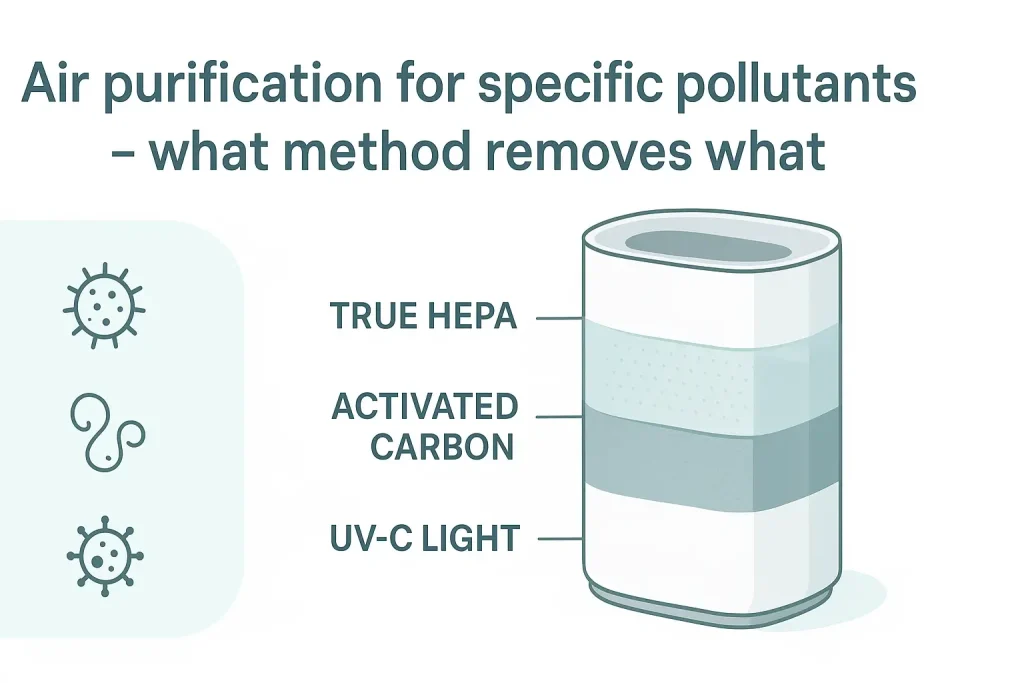
True HEPA is the non-negotiable filter stage for cat allergens. The term has a specific technical meaning per IEST standards: the filter media must capture 99.97% of particles at 0.3 microns, which is the most penetrating particle size where mechanical filtration efficiency dips to its lowest point.
Cat dander fragments carrying Fel d 1 protein are larger than 0.3 microns, typically 1 to 20 microns, which means True HEPA captures them at efficiency exceeding 99.97%. Any filter marketed as “HEPA-type” or “HEPA-like” without the True HEPA certification has no standardized efficiency floor and may capture only 85 to 95% of cat dander particles per pass.
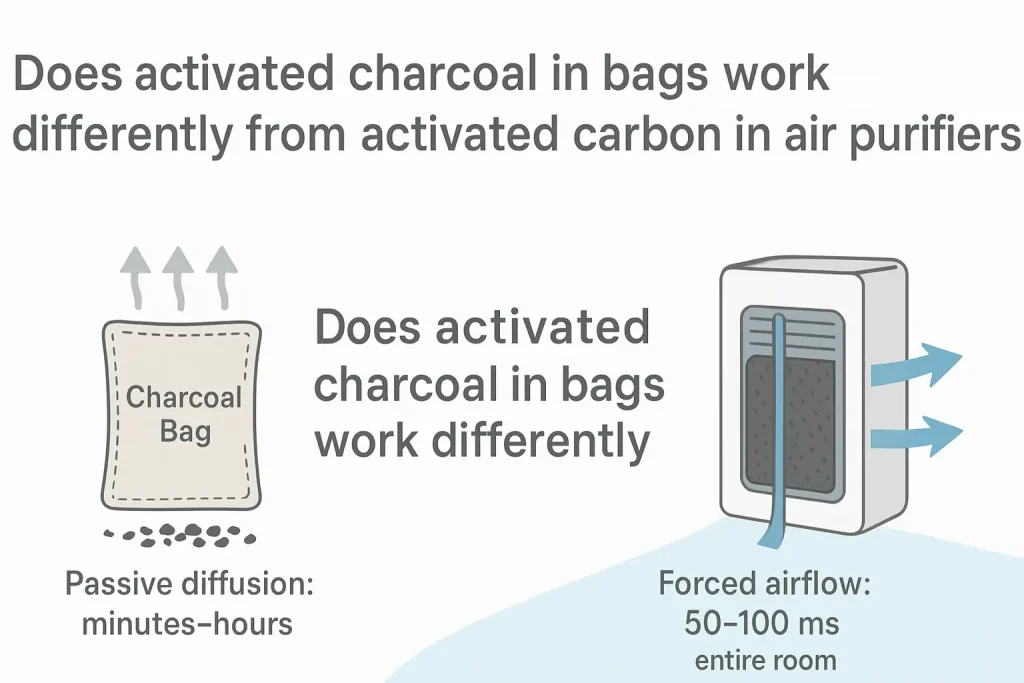
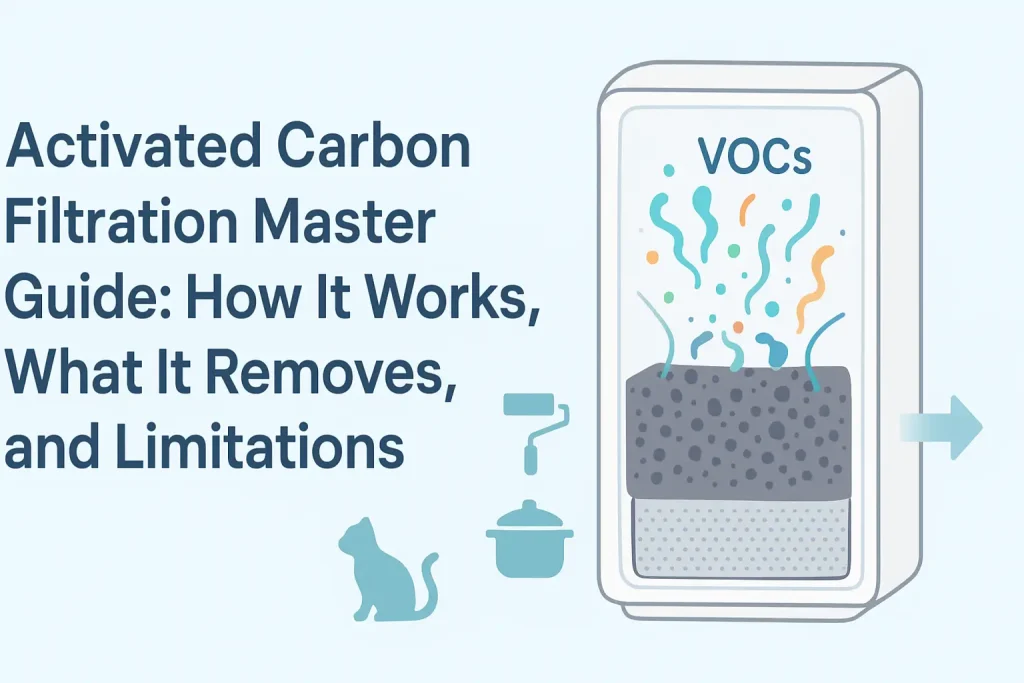
Activated carbon is the second essential stage for cat-owning households, but not for allergen removal. It adsorbs volatile organic compounds including the odors from litter boxes, dander decomposition, and the musky scent cats leave on upholstery. Carbon does not capture Fel d 1 protein.
It addresses the smell component of living with cats, which is a secondary quality-of-life factor for many allergy sufferers. A purifier with True HEPA and a substantial carbon stage, 2 to 5 pounds of carbon media versus the thin carbon sheet found in budget units, handles both the allergen and the odor in one device.
Pre-filters are not optional in cat households. A washable mesh pre-filter catches visible cat fur, larger dander flakes, and household dust before they reach the HEPA stage. Without a pre-filter, cat hair loads the HEPA media within weeks, reducing airflow and effective CADR by 20 to 40% between replacements.
Clean the pre-filter weekly in a home with one cat, and twice weekly in a multi-cat home. A washable pre-filter for air purifiers extends HEPA lifespan from 6 months to 12 months in most cat-owning households, more than paying for itself in avoided filter replacements.
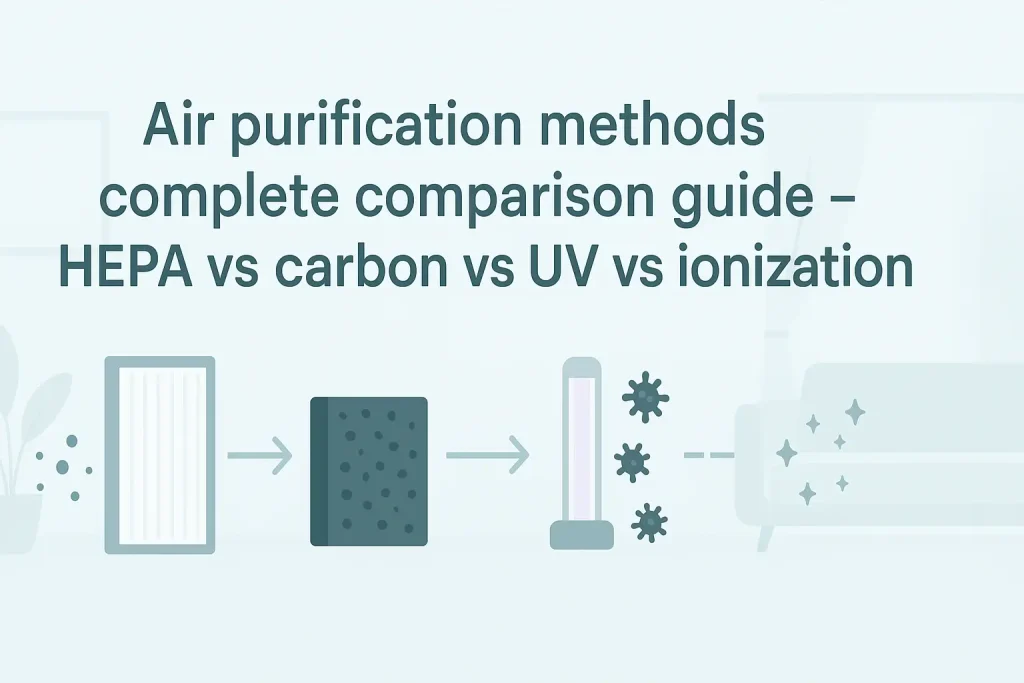
Ionizers and electrostatic precipitators are not appropriate for cat allergen removal. They charge particles electrically and collect them on oppositely charged plates, but the collection efficiency for light, sticky cat dander is poor compared to mechanical HEPA filtration. Some ionizing units also produce ozone as a byproduct, which is a respiratory irritant that can compound allergy symptoms.
ARB CCR Title 17 limits ozone output to 0.050 ppm for any air cleaner sold in California, and any unit that does not carry CARB certification should be avoided in a household with an allergy sufferer. Stick with mechanical True HEPA filtration plus carbon. It is the proven combination with no secondary chemistry to worry about.
UV-C lights add no value for cat allergen control. UV-C at 254 nanometers inactivates bacteria and viruses at sufficient exposure time, but cat dander is a protein-coated particle, not a living pathogen. A UV-C lamp inside an air purifier does not destroy Fel d 1 protein to any meaningful degree, because the exposure time as air passes the lamp is fractions of a second.
UV-C also produces a small amount of ozone as a byproduct and requires periodic lamp replacement at $30 to $60 per year. Skip UV-C for cat allergies and put the budget toward a unit with higher CADR or a larger carbon stage.
Cat Allergy Statistics: What the Research Shows
Cat allergen exposure is not a niche problem. The numbers below frame how common cat allergies are, how persistent the allergen is, and how much difference a correctly sized air purifier makes compared to standard recommendations. These statistics directly inform the CADR targets and product picks in the sections above.
Air Quality Data
Cat Allergies and Air Purifier Impact – What the Research Shows
Sources: Journal of Allergy and Clinical Immunology, EPA Indoor Air Quality, AHAM, American Lung Association
These numbers highlight a reality that product packaging does not convey. A purifier sized at 2 ACH, which is what the coverage number on the box assumes, will reduce airborne cat allergen by 20 to 40% in the first hour. That might be noticeable. Bumping to 5 ACH pushes reduction to 50 to 85% in the same period, which is the difference between waking up congested and sleeping through the night.
The allergen persistence number of 6 to 9 months also explains why moving a cat out of a room does not immediately fix the problem. The dander is already everywhere, and it takes weeks of continuous HEPA filtration to clear the reservoir from surfaces and air.
Where to Place an Air Purifier to Maximize Cat Allergen Removal
Placement changes effective CADR by 20 to 30% in furnished rooms. An air purifier pushed against a wall or tucked into a corner will recirculate a bubble of already-filtered air rather than pulling in the allergen-laden air from the center of the room where you breathe.
Central placement with at least 18 inches of clearance on all sides allows the intake to draw from the room’s full air volume. If central placement is not practical, position the unit along the wall where the cat spends the most time, such as near a favorite sleeping spot or scratching post, to intercept dander at its source before it disperses.
Height matters more for cat allergens than for general dust. Cat dander is lighter than household dust and rises into the breathing zone on thermal plumes from body heat, electronics, and HVAC registers. Placing the purifier on the floor, which is standard for most tower-style units, leaves the upper half of the room’s air volume under-treated.
Raise the unit 2 to 3 feet off the floor on a sturdy table or shelf to position the intake at the height where airborne dander concentrates. Most bedroom units on a nightstand or dresser will outperform the same unit on the floor by a measurable margin.
Do not place the purifier near the litter box thinking it will capture allergens at the source. Cat allergen is primarily deposited through grooming behavior, not litter box use. The litter box is a source of ammonia, dust from clay litter, and bacterial odors, which the activated carbon stage addresses.
For allergen control, position the purifier where the cat sleeps and grooms, which is typically a bed, couch, or sunny spot by a window. If you are treating a bedroom where the cat does not sleep, position the unit between the door and the bed to create a curtain of filtered air across the primary breathing zone.
For homes with open floor plan layouts with connected living spaces, one centrally placed high-CADR unit in the largest common area will provide more total allergen reduction than multiple small units scattered around.
The open plan allows air to mix freely, so a single Blueair Blue Pure 211+ or Coway Airmega 400 can treat 500 to 600 square feet at 5 ACH if placed correctly. If doors separate rooms, each occupied room needs its own unit sized to that room’s volume at 5 ACH, because closed doors prevent air exchange between spaces.
Maintenance Schedule for Air Purifiers in Cat Households
Cat hair loads pre-filters faster than any other common household particle source. A pre-filter that would last a month in a pet-free home needs cleaning every 5 to 7 days when one cat lives in the room. Visible matting of fur on the pre-filter surface indicates airflow has already dropped 15 to 20% below rated CADR. Set a weekly phone reminder to vacuum or wash the pre-filter, and keep a air purifier cleaning brush kit next to the unit so the task takes 30 seconds rather than becoming a chore you postpone.
HEPA filter replacement intervals assume average household dust loading. In a cat-owning home, the combination of fine dander, shed fur fragments, and the oils from cat skin that trap particles on the filter media reduces HEPA lifespan by 30 to 50% versus the manufacturer’s stated interval.
A HEPA filter rated for 12 months in standard conditions may need replacement at 6 to 8 months with one cat, and at 4 to 6 months with two or more cats. The visible sign is a gray-brown discoloration across the entire filter face rather than just around the edges. The performance sign is reduced airflow even after pre-filter cleaning and a drop in PM2.5 reduction measured by an air quality monitor.
A PM2.5 indoor air quality monitor is the most practical tool for determining actual filter condition.
Take a baseline PM2.5 reading with a fresh filter running at your target fan speed. When that same fan speed produces PM2.5 readings 30 to 50% higher than baseline under the same room conditions, the HEPA filter is loaded past its useful efficiency and needs replacement regardless of the calendar. This method is more reliable than time-based replacement schedules because it accounts for the actual particulate load in your specific home.
Carbon filter replacement in cat households is driven more by odor breakthrough than by particulate loading. When you start noticing litter box odor or a general “cat smell” returning despite the purifier running, the carbon stage is saturated and needs replacement.
Most carbon pre-filters in residential units hold 0.5 to 2 pounds of activated carbon and saturate within 3 to 6 months in a home with one cat. Carbon stages with 5-plus pounds of media, like those in the Austin Air HealthMate or IQAir GC MultiGas, last 1 to 3 years but cost proportionally more to replace. For most cat owners, the practical approach is to use standard carbon pre-filters and replace them every 3 months.
For homes where cat allergen control is paired with other indoor air quality concerns, such as off-gassing from new construction materials and furniture, a unit with a larger carbon stage serves double duty for both dander and VOCs.
The combination of cat allergen and chemical off-gassing is common in newer homes where tighter building envelopes trap both particulate and gaseous pollutants. A True HEPA plus substantial carbon unit addresses both simultaneously, which is more cost-effective than running two separate devices.
What Is the Difference Between HEPA and True HEPA for Cat Allergens?
True HEPA is a certified standard. HEPA alone is a marketing term with no legal definition. True HEPA filters must meet the IEST requirement of 99.97% particle capture at 0.3 microns, verified by independent testing. A filter labeled simply “HEPA” without the “True” designation may capture 85% to 99% of particles at 0.3 microns, and there is no way to know without requesting the test data from the manufacturer.
For cat allergens, which include particles in the 1 to 5 micron range, both filter grades will capture most dander. The practical difference is that True HEPA certification guarantees the performance floor, while uncertified HEPA-type filters leave you guessing whether the unit is actually catching all the allergen or letting a percentage through on every pass.
Can I Run an Air Purifier 24/7 for Cat Allergies?
Yes, and for cat allergies you should. Cat allergen is continuously produced, continuously re-suspended, and continuously present in the air of a home with a resident cat. Running the purifier only at night or only when symptoms flare leaves allergen levels elevated for the hours the unit is off.
A correctly sized unit running 24/7 on a medium fan speed that delivers 5 ACH costs roughly $40 to $80 per year in electricity at national average rates. That is less than one emergency allergist visit copay. Set the fan speed to deliver your target CADR and leave it running. The only exception is when windows are open for ventilation, which changes the room’s particle load and makes the purifier’s CADR target a moving number.
Do Air Purifiers Help With Cat Litter Dust and Ammonia Odors?
True HEPA captures the fine clay dust and particulate fraction of litter box emissions. Activated carbon adsorbs the ammonia and volatile organic compounds that produce litter box odor. Neither stage addresses ammonia gas directly through chemical reaction. Ammonia is a small polar molecule that carbon adsorbs weakly.
For significant ammonia reduction from litter boxes, the carbon stage needs to be substantial, at least 2 to 3 pounds of media, and replaced every 2 to 3 months when ammonia breakthrough occurs. Standard carbon sheet pre-filters in budget units do not hold enough media to make a measurable difference on ammonia.
A separate ammonia-specific carbon filter for air purifiers with impregnated carbon or acid-treated media performs better for litter box applications than standard activated carbon. The best solution for litter box air quality is still source control: scoop daily, use low-dust litter, and place the box in a ventilated area away from the purifier intake.
Why Does My Air Purifier Smell Like Wet Cat After Running for a Month?
The smell is biological material decomposing on the filter media. Cat dander is protein-based, and when it accumulates on a damp HEPA filter in a humid environment, bacteria and mold can colonize the trapped organic material.
This is most common in humid climates or basements where relative humidity exceeds 60%. The fix is a filter replacement immediately, followed by running a room dehumidifier to keep relative humidity below 50% in the room where the purifier operates.
Dry filter media does not support microbial growth. If the problem recurs, switch to a unit with an antimicrobial-treated HEPA filter, which adds a biocide coating to the media fibers to inhibit mold and bacteria growth on trapped organic particles.
How Long Does It Take for an Air Purifier to Reduce Cat Allergen Symptoms?
Most people notice reduced symptoms within 24 to 48 hours of continuous operation at the correct CADR, assuming the unit is running at a fan speed that delivers 5 ACH for the room volume. Symptom relief is not immediate because the purifier must first clear the airborne allergen load, then gradually reduce the settled allergen reservoir as particles are re-suspended and captured over multiple air change cycles.
The first night often shows the biggest difference, because 8 hours of continuous filtration while the cat is less active gives the room’s particle concentration time to drop significantly. If no improvement is noticeable after 72 hours of continuous operation at 5 ACH, the most likely causes are undersized CADR, incorrect placement against a wall or in a corner, or a HEPA filter that is already loaded past its useful efficiency.
For a more detailed timeline of what to expect during the first hours and days of running a new unit, our guide on how long an air purifier takes to show measurable results covers the particle decay curve and how room conditions affect cleaning speed.
Is Ozone From an Ionizer Air Purifier Dangerous for Someone With Cat Allergies?
Yes. Ozone is a respiratory irritant that causes airway inflammation and bronchoconstriction at concentrations as low as 0.060 to 0.080 ppm with prolonged exposure. For someone whose airways are already sensitized from cat allergen exposure, added ozone can trigger symptoms that feel identical to an allergic reaction, making it impossible to tell whether the purifier is helping or hurting.
CARB limits ozone output to 0.050 ppm for any air cleaner sold in California, and any unit without CARB certification should not be used in a bedroom or occupied space. The safest approach for cat allergy households is a mechanical True HEPA unit with zero ozone output by design. No ionizer, no UV-C, no plasma stage. Just a fan, a HEPA filter, and an activated carbon stage.
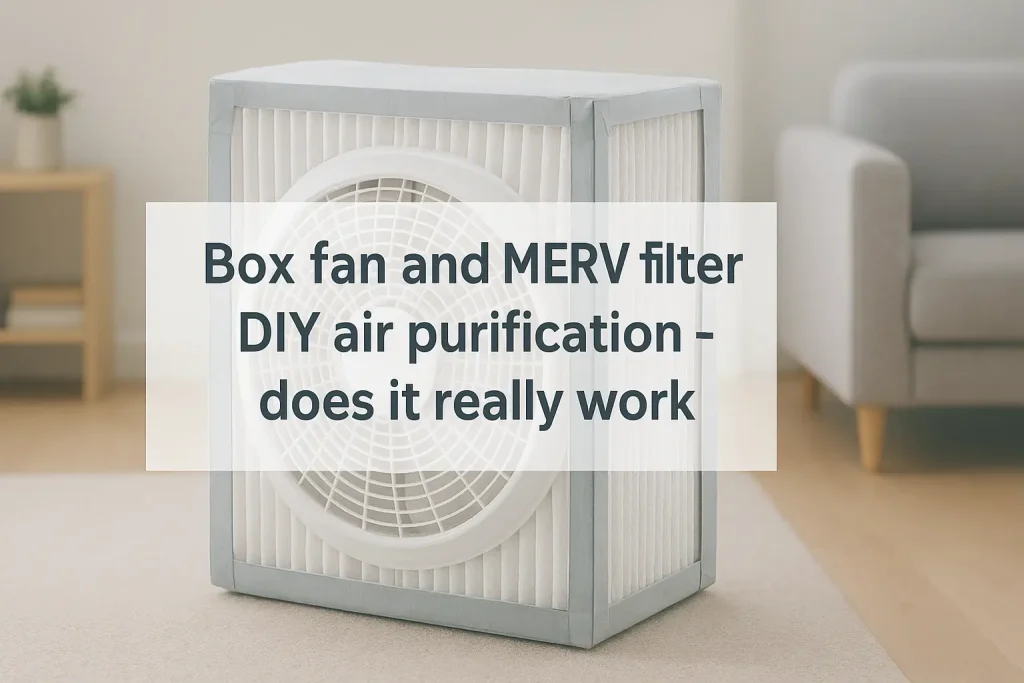
Can a Corsi-Rosenthal Box Work for Cat Allergies Instead of a Commercial Purifier?
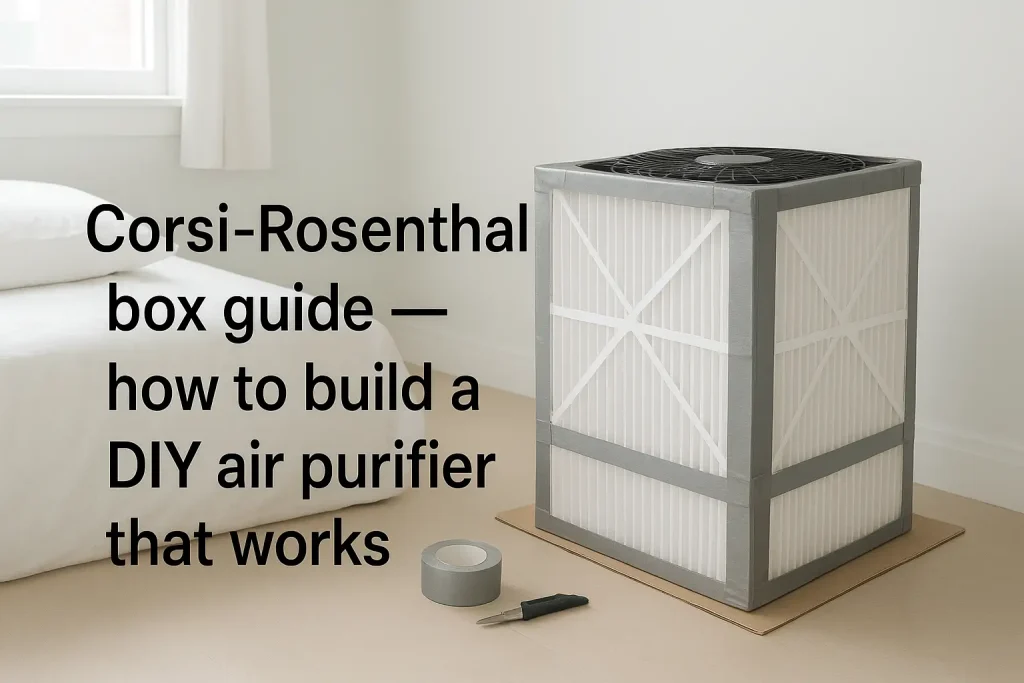
A Corsi-Rosenthal box built with four MERV 13 20-by-20 filters and a 20-inch box fan delivers smoke CADR in the 300 to 600 CFM range depending on fan speed and build quality, for roughly $60 to $80 in materials. That CADR is competitive with commercial units costing $400 to $800.
The filtration efficiency of MERV 13 is lower than True HEPA, MERV 13 captures roughly 75% of particles in the 0.3 to 1 micron range versus 99.97% for True HEPA, but the much higher airflow compensates through more passes per hour. For cat allergens in the 1 to 20 micron range, MERV 13 efficiency is higher than the 0.3 micron rating suggests, closer to 85 to 95% per pass.
A well-built DIY box is a viable budget option for cat dander in large spaces, especially for renters who cannot modify HVAC systems. The downside is noise, a box fan on high moves 1,500 to 2,000 CFM but runs at 55 to 60 dB, equivalent to a normal conversation. For bedrooms, the noise level makes a commercial unit with a quiet sleep mode more practical for overnight use.
Should I Get a Separate Air Purifier for Each Room With Cat Access?
If the cat has access to multiple rooms and doors are kept closed, each occupied room needs its own purifier sized to that room’s volume at 5 ACH. A unit in the living room does not filter the bedroom air if the bedroom door is closed.
If the home has an open plan where the living room, kitchen, and hallway share air freely, one high-CADR unit in the central common area can serve all connected spaces, provided the total combined square footage stays within the unit’s 5 ACH coverage limit. For bedrooms with closed doors where the cat sleeps, a dedicated bedroom unit is the highest-priority purchase, because you spend 7 to 9 hours breathing that air every night. Address the bedroom first at 5 ACH, then add units for other frequently occupied spaces as budget allows.
Do Air Purifiers Remove Cat Dander That Has Already Settled on Furniture and Carpet?
Air purifiers only capture airborne particles. They do not remove dander that has already settled on surfaces. What they do is capture dander as it becomes re-suspended through activity, walking, vacuuming, HVAC cycling, and the cat’s own movement. Over days to weeks, continuous filtration reduces the total dander reservoir on surfaces because every re-suspension event sends particles airborne where the purifier can capture them.
But the process is gradual. To accelerate it, combine continuous HEPA filtration with source-control measures: vacuum carpets and upholstery twice weekly with a HEPA-sealed vacuum cleaner for pet dander, wash bedding weekly in hot water at 130 degrees Fahrenheit minimum, and use allergen-proof mattress and pillow encasements. The air purifier handles the airborne fraction. Source control handles the reservoir. Both are necessary for meaningful symptom reduction in a home with cats.
What Is the Difference Between a Pet-Specific Air Purifier and a Regular One?
Most pet-specific models add a finer pre-filter mesh, a larger carbon stage for odor control, and sometimes an antimicrobial coating on the HEPA media to inhibit bacterial growth on trapped organic particles from dander. The core CADR and True HEPA efficiency are typically identical to the manufacturer’s standard model in the same product line.
The pet-specific designation is primarily a marketing distinction, not a different filtration mechanism. A standard True HEPA unit with the same smoke CADR will remove cat dander just as effectively. The pet-specific version often costs $20 to $50 more for the branded pre-filter and carbon upgrade. If the standard model has a washable pre-filter and you can clean it weekly, the performance difference is negligible.
The exception is if the pet model includes a significantly larger carbon stage, which matters for multi-cat odor control. For homes where smoke and pet allergens combine as dual indoor air quality challenges, a unit with both high smoke CADR and a substantial carbon bed handles both pollutant categories without compromise.
The best air purifier for cat allergies is not the one with the most features or the highest price. It is the one with enough smoke CADR to deliver 5 air changes per hour in your specific room, a True HEPA filter you can afford to replace on schedule, and a washable pre-filter you actually clean every week.
Everything else is secondary. Size the CADR correctly first, choose True HEPA plus carbon, place the unit centrally at breathing height, and run it continuously. Those four steps account for roughly 80% of the symptom improvement an air purifier can provide in a cat-allergic household.
The remaining 20% comes from model-specific factors like noise level at your target fan speed, smart sensor accuracy, and filter replacement cost. Start with the CADR calculation for your room at 5 ACH, then use the comparison matrix above to find the model that matches your room size and budget.
For homes where children share spaces with pets, our guide on air purifier selection for playrooms with pets and high activity levels covers the higher ACH targets and durability considerations for family spaces. For smaller rooms where a full-size unit is impractical, our review of compact desktop purifiers for tight spaces identifies models that still deliver meaningful CADR in rooms under 100 square feet.
And for homes with gas appliances where nitrogen dioxide from cooking and heating adds a respiratory irritant on top of cat allergens, a unit with both HEPA and active carbon addresses the combined pollutant load from pets and combustion sources in a single filtration system.