Most air purifiers are not built for lungs that are already compromised. A COPD diagnosis means particle filtration is no longer optional, and the wrong unit can make breathing harder, not easier.
An ionizer that emits even trace ozone above 0.050 ppm is a respiratory irritant for someone with chronic obstructive pulmonary disease. A purifier with inadequate CADR leaves PM2.5 circulating in the bedroom all night while you sleep. This guide covers the specific filtration standards, CADR requirements, and zero-ozone certifications that matter when every breath counts.
COPD includes chronic bronchitis and emphysema. Both conditions narrow the airways and reduce the lungs’ ability to clear inhaled particles. An air purifier for a COPD patient must do more than clean the air. It must avoid introducing any new irritant while removing the smallest particles that penetrate deepest into damaged lung tissue.
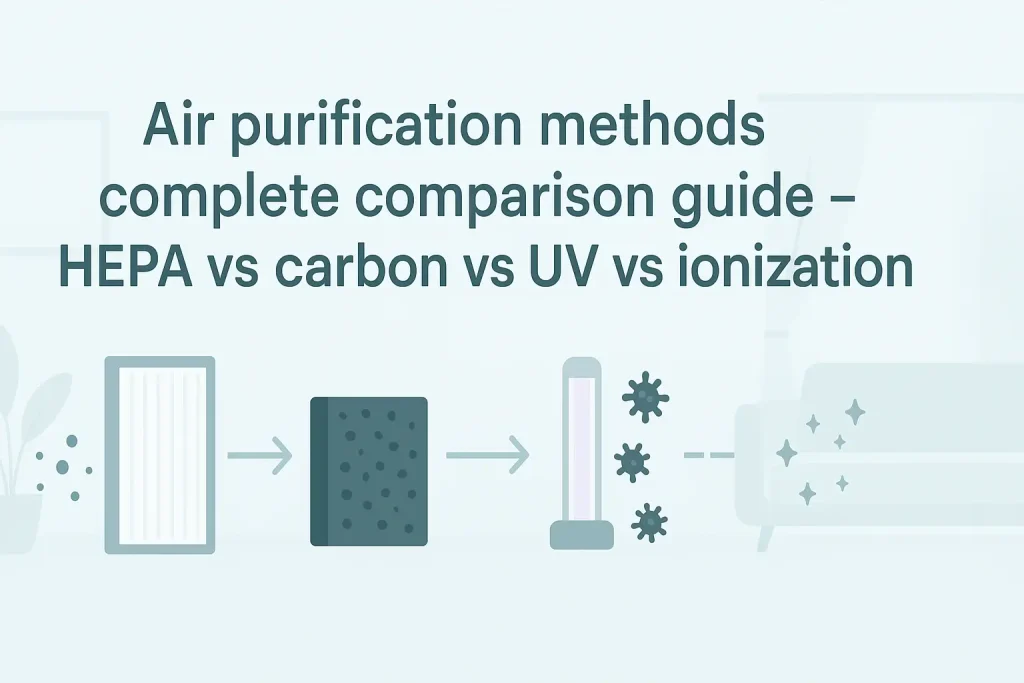
True HEPA filtration captures 99.97% of particles at 0.3 microns. This is the particle size that penetrates most easily through filter media. Particles smaller and larger than 0.3 microns are actually captured at higher rates due to diffusion and impaction.
| Photo | Popular Air Purifiers | Price |
|---|---|---|

|
Air Purifiers for Home Large Room up to 1500ft², Tailulu H13 True HEPA Air Purifier for Pets Dust Odor Smoke, Air Purifier for Bedroom with 15dB Quiet Sleep Mode for Bedroom Office Living Room | Check Price On Amazon |
|
Afloia Air Purifier for Home, 4-in-1 Washable Filter for Allergies, Covers Up to 1076 ft², Quiet Operation, Auto Shut-Off & Night Light, Removes Pet Dander, Pollen, Dust, Mold, and Smoke, White,Pluto | Check Price On Amazon |

|
Nuwave OxyPure ZERO Air Purifier with Washable and Reusable Bio Guard Tech Air Filter, Large Room Up to 2002 Ft², Air Quality Monitor, 0.1 Microns, 100% Capture Irritants like Smoke, Dust, Pollen | Check Price On Amazon |

|
Air Purifiers for Home Large Room Up to 1,996 Ft², EOEBOT Air Purifier for Home Pets with Washable Filter, Quiet Sleep Mode, Air Quality Monitor, Air Purifier for Bedroom, Pet Hair, Dust, Smoke, White | Check Price On Amazon |
|
Afloia 2 IN 1 Air Purifier with Humidifier Combo, 3-Stage Filters for Home Allergies Pets Hair Smoker Odors, Evaporative Humidifier, Auto Shut Off, Quiet Air Cleaner with Seven Color Light,White | Check Price On Amazon |
Air Quality Data
COPD and Air Purification – What the Research Shows
Sources: EPA Indoor Air Quality, American Lung Association, WHO Air Quality Guidelines, PubMed studies on particulate matter and COPD
PM2.5 particles measure 2.5 microns or smaller. They bypass the body’s natural defenses and lodge deep in the alveoli where gas exchange occurs. For someone with already-damaged alveolar walls from emphysema, each additional PM2.5 exposure accelerates decline.
A study published in the American Journal of Respiratory and Critical Care Medicine found that every 10 ug/m3 increase in PM2.5 exposure was associated with a 1.1% decrease in FEV1 among COPD patients over one year. FEV1 is the volume of air a person can force out in one second. It is the primary measure of COPD progression.
What Is the Difference Between an Air Purifier for COPD and a Standard Air Purifier?
A standard air purifier removes some particles from the air. An air purifier suitable for COPD must remove the smallest particles, produce zero ozone, maintain adequate air changes per hour in the patient’s specific room, and run quietly enough for uninterrupted sleep.
The difference is not marketing. It is measurable in CADR ratings, ozone output certifications, and decibel levels at the fan speed required to achieve therapeutic ACH rates.
Three specifications separate COPD-appropriate units from general-purpose ones. First, the smoke CADR must be high enough to achieve 5 ACH in the patient’s bedroom. Second, the unit must be CARB certified with zero ozone output. Third, the noise level at the fan speed required for 5 ACH must be under 45 dB.
A purifier that fails any one of these three tests is not suitable for a COPD patient regardless of its price, brand reputation, or feature list. The reasons are physiological. Ozone constricts airways. Inadequate ACH leaves particulate matter in the breathing zone. Noise above 45 dB disrupts sleep, and poor sleep is an independent risk factor for COPD exacerbation.
Many popular air purifiers use ionization as a secondary filtration stage. For a COPD patient, this feature must be disabled or the unit must be avoided entirely. Ionizers produce ozone as a byproduct. The amount varies by design, but any amount above zero is a risk for someone with reactive airways.
Air Quality Guide
AQI Level Action Guide – What COPD Patients Should Do With Their Air Purifier at Each Level
Based on EPA AQI scale. COPD patients are in the sensitive group at ALL levels. Source: EPA, American Lung Association.
| AQI Range | EPA Category | COPD Risk Level | Air Purifier Action for COPD | Filter Check Interval |
|---|---|---|---|---|
| 0-50 | Good | Low – but COPD patients should still run purifier in bedroom | Run on medium fan in bedroom. Auto mode in living areas. Windows can be opened briefly for ventilation. | Standard interval per manufacturer |
| 51-100 | Moderate | Elevated – COPD patients are sensitive at this level | Run on medium-high fan in all occupied rooms. Close windows. COPD patients should limit outdoor exertion. | Check pre-filter every 2 weeks |
| 101-150 | Unhealthy for Sensitive Groups | High – COPD patients are the sensitive group | High fan continuously. Seal windows and doors. Run purifier in bedroom and main living space. Keep rescue inhaler accessible. | Check filter after 20 days of sustained AQI 101+ |
| 151-200 | Unhealthy | Very high – all COPD patients at significant risk | Maximum fan speed. Seal all windows and exterior doors. Create a clean room with highest-CADR purifier. Do not go outside without N95 mask. | Replace filter at 50% of normal interval |
| 201-300 | Very Unhealthy | Severe – COPD exacerbation risk is high for all patients | Maximum fan speed continuously. Clean room strategy mandatory. Stay indoors. Contact healthcare provider if breathing worsens. | Replace HEPA and carbon filters immediately after event |
| 301+ | Hazardous | Emergency – life-threatening for COPD patients | Maximum fan speed. Clean room strategy mandatory. Follow local emergency guidance. Evacuation may be necessary. Have emergency medications ready. | Replace all filters immediately after event |
AQI categories from EPA AirNow. COPD patients should treat the “Unhealthy for Sensitive Groups” category as their personal “Unhealthy” threshold. Source: EPA, American Lung Association Air Quality guidance.
True HEPA Is the Minimum Standard for COPD Air Purifiers
True HEPA is not a marketing term. It is a specific filtration standard defined by IEST-RP-CC001. A filter labeled True HEPA must capture 99.97% of airborne particles at 0.3 microns in a single pass.
The 0.3-micron size is the most penetrating particle size (MPPS). Particles smaller than 0.3 microns are captured by diffusion. Particles larger than 0.3 microns are captured by impaction and interception. The 0.3-micron point is where none of these mechanisms work well, making it the hardest size to capture.
A filter that meets this standard at 0.3 microns will capture an even higher percentage of both smaller ultrafine particles and larger coarse particles. This is critical for COPD because the ultrafine particles below 0.1 microns penetrate deepest into the alveolar region where emphysema damage is most severe.
HEPA-type, HEPA-like, and 99% HEPA are unregulated terms. They do not guarantee any specific filtration efficiency. A COPD patient should never purchase a purifier that uses any of these labels. The unit must state “True HEPA” or list a specific HEPA grade such as H13 or H14 per the EN 1822 standard.
H13 HEPA filters capture 99.95% at MPPS. H14 HEPA filters capture 99.995% at MPPS. For COPD patients, H13 is sufficient. The difference between 99.95% and 99.97% is not clinically meaningful in a residential setting. The more important variable is the CADR, which determines how many times per hour the room air actually passes through that filter.
Key Specifications for True HEPA in COPD Applications:
- Filtration efficiency: 99.97% at 0.3 microns (True HEPA) or 99.95% (H13)
- Standard: IEST-RP-CC001 or EN 1822 H13/H14
- Filter lifespan in COPD use: 6 to 12 months depending on room particulate load
- Replacement cost range: $25 to $120 per filter depending on unit and brand
Zero Ozone Output Is Non-Negotiable for COPD Patients
Ozone is a potent respiratory irritant. It reacts with the lining of the airways to produce inflammation, bronchoconstriction, and increased airway reactivity. For a COPD patient, ozone exposure can trigger an acute exacerbation requiring emergency treatment.
The CARB (California Air Resources Board) Air Cleaner Regulation CCR Title 17 Section 94251 sets the maximum ozone emission from an indoor air cleaning device at 0.050 ppm. This is the only legally enforceable ozone limit for air purifiers in the United States. A unit that is CARB certified has been tested and verified to emit less than 0.050 ppm ozone.
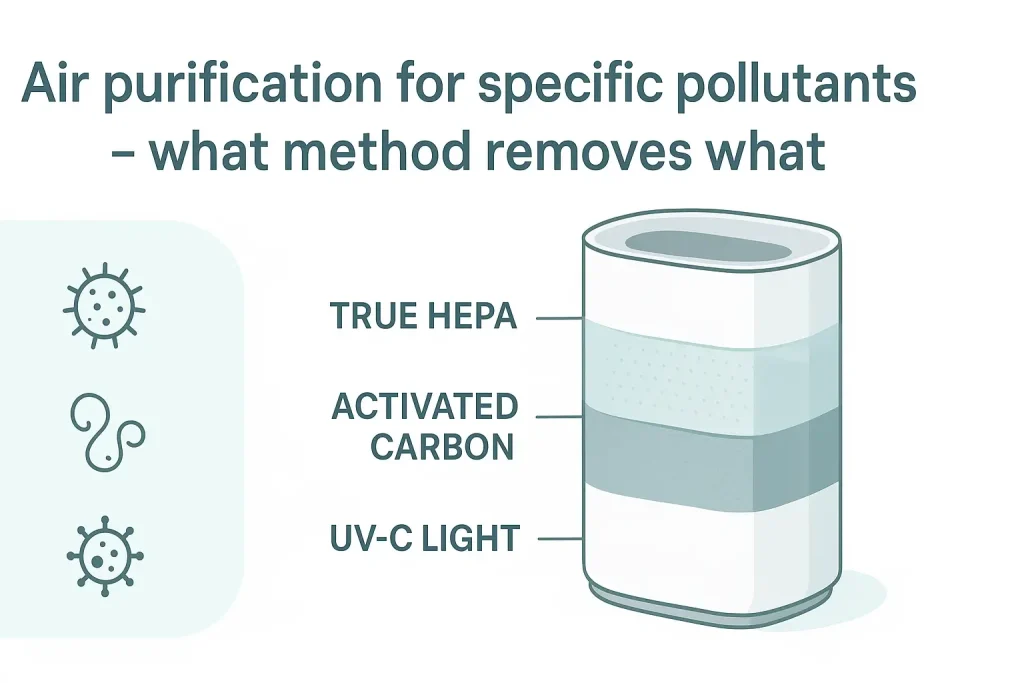
For a COPD patient, CARB certification is the minimum. The ideal is a unit that produces zero ozone by design. This means the purifier uses only mechanical filtration (True HEPA and activated carbon) with no ionizer, no UV-C lamp that produces ozone, and no plasma or PCO stage.
If a unit includes an ionizer, it must have the ability to turn the ionizer off completely. Many units with ionizers allow this. The Coway AP-1512HH and Winix 5500-2 both include ionizers that can be disabled. When disabled, these units produce zero ozone and rely solely on mechanical filtration.
Units that cannot disable their ionization stage, or that use ozone as a primary cleaning mechanism, should never be used in a home with a COPD patient. This includes all ozone generators marketed as air purifiers and any device that lists “activated oxygen” or “ozone” as a cleaning mechanism.
How to Calculate the Right CADR for a COPD Patient’s Room
CADR (Clean Air Delivery Rate) is the volume of filtered air a purifier delivers per minute, measured in cubic feet per minute (CFM). The AHAM AC-1 standard tests CADR separately for smoke, dust, and pollen. For COPD, the smoke CADR is the relevant number because smoke particles are in the same size range as the fine particulate matter that poses the greatest risk to compromised lungs.
The formula for determining required CADR is: CADR needed = (room area in square feet x ceiling height in feet x ACH target) divided by 60. For a standard 8-foot ceiling, this simplifies to: CADR = (room area x 8 x ACH) / 60.
For COPD patients, the ACH target should be 5, not the standard 2 used for general air cleaning. At 5 ACH, the entire volume of room air passes through the filter every 12 minutes. This keeps particulate concentrations consistently low, which is what damaged lungs need.
Use the table below to find the minimum smoke CADR your COPD air purifier must deliver based on your room size and the recommended 5 ACH target.
CADR Reference
Smoke CADR Needed for COPD Patients by Room Size and ACH Target
All values pre-calculated at standard 8 ft ceiling height. Formula: (room area x 8 x ACH) / 60. Source: AHAM methodology.
| Room size (8 ft ceiling) / ACH target | 2 ACH (general use) | 4 ACH (moderate) | 5 ACH (COPD minimum) | 6 ACH (wildfire) |
|---|---|---|---|---|
| 100 sq ft (small bedroom) | 27 CFM | 53 CFM | 67 CFM | 80 CFM |
| 150 sq ft (bedroom) | 40 CFM | 80 CFM | 100 CFM | 120 CFM |
| 200 sq ft (master bedroom) | 53 CFM | 107 CFM | 133 CFM | 160 CFM |
| 300 sq ft (bedroom or den) | 80 CFM | 160 CFM | 200 CFM | 240 CFM |
| 400 sq ft (large bedroom or living) | 107 CFM | 213 CFM | 267 CFM | 320 CFM |
The highlighted column shows the COPD minimum of 5 ACH. Most manufacturer coverage claims use the 2 ACH column. A unit claiming to cover 300 sq ft at 2 ACH only covers 120 sq ft at the COPD-required 5 ACH. Always verify smoke CADR and calculate coverage at 5 ACH before purchasing.
Best Air Purifiers for COPD Patients by Room Size
The following recommendations are organized by room size and prioritize three factors: smoke CADR sufficient for 5 ACH in the target room, CARB certification with zero ozone output, and noise levels under 45 dB at the fan speed required for 5 ACH operation.
Every unit on this list uses True HEPA mechanical filtration. None rely on ionization as a primary cleaning mechanism. Where ionizers are present, they can be fully disabled.
Coway AP-1512HH: Best for Small to Medium COPD Bedrooms Under 200 sq ft
The Coway AP-1512HH delivers a smoke CADR of 246 CFM. At 5 ACH, this covers up to 370 sq ft with an 8-foot ceiling. For a typical 150 to 200 sq ft bedroom, it provides between 7 and 9 air changes per hour at its highest fan speed.
Key Specifications:
- Smoke CADR: 246 CFM (AHAM certified)
- Coverage at 5 ACH: 370 sq ft
- Sleep mode noise: 24 dB
- High fan noise: 52 dB
- Annual filter cost: approximately $30
- CARB certified: Yes
- ENERGY STAR certified: Yes
- Ionizer: Present but can be disabled
The ionizer on this unit must be turned off for COPD use. The button is on the top panel. Once disabled, the unit operates as a pure mechanical filtration device with zero ozone output. The sleep mode at 24 dB is quiet enough for a bedroom.
At high fan speed, 52 dB is noticeable but not disruptive for daytime use. For nighttime, the unit can be run on medium fan (approximately 38 dB) which still delivers about 180 CFM, sufficient for 5 ACH in a 150 sq ft room.
Check price for Coway AP-1512HH on Amazon
Levoit Core 400S: Best for Medium COPD Bedrooms Under 250 sq ft
The Levoit Core 400S delivers a smoke CADR of 260 CFM. At 5 ACH, this covers up to 390 sq ft. It uses a True HEPA H13 filter with no ionizer. The unit is CARB certified and produces zero ozone by design.
Key Specifications:
- Smoke CADR: 260 CFM (AHAM certified)
- Coverage at 5 ACH: 390 sq ft
- Sleep mode noise: 24 dB
- High fan noise: 52 dB
- Annual filter cost: approximately $50
- CARB certified: Yes
- ENERGY STAR certified: Yes
- Ionizer: None
The Core 400S has no ionizer to disable. This is an advantage for COPD patients because there is no risk of accidental ozone production. The unit uses only a pre-filter, True HEPA H13 filter, and activated carbon pellet filter.
At 24 dB in sleep mode, it is effectively silent. The auto mode adjusts fan speed based on the built-in PM2.5 sensor, which is useful for maintaining consistent air quality without manual adjustment.
Check price for Levoit Core 400S on Amazon
Coway Airmega 400: Best for Large COPD Living Spaces Under 400 sq ft
The Coway Airmega 400 delivers a smoke CADR of 400 CFM through dual fans. At 5 ACH, this covers up to 600 sq ft. It is suitable for large master bedrooms, combined living and dining areas, or open-plan spaces where a COPD patient spends significant time.
Key Specifications:
- Smoke CADR: 400 CFM (AHAM certified)
- Coverage at 5 ACH: 600 sq ft
- Sleep mode noise: 22 dB
- High fan noise: 52 dB
- Annual filter cost: approximately $60
- CARB certified: Yes
- ENERGY STAR certified: Yes
- Ionizer: None
The dual fan design means the unit can run at lower individual fan speeds while still delivering high total CADR. This keeps noise levels manageable. At 22 dB in sleep mode, it is the quietest unit on this list.
The washable pre-filter extends the life of the main HEPA filter. For a COPD patient in a home with pets or in a high-dust environment, this pre-filter should be cleaned every 2 weeks.
Check price for Coway Airmega 400 on Amazon
IQAir HealthPro Plus: Best for Severe COPD with Multiple Trigger Sensitivities
The IQAir HealthPro Plus uses HyperHEPA filtration that captures particles down to 0.003 microns. This is 100 times smaller than the True HEPA 0.3-micron standard. It delivers a smoke CADR of 300 CFM, covering 450 sq ft at 5 ACH.
Key Specifications:
- Smoke CADR: 300 CFM (AHAM certified)
- Coverage at 5 ACH: 450 sq ft
- Lowest fan noise: 22 dB
- Highest fan noise: 58 dB at fan speed 6
- Annual filter cost: approximately $250
- CARB certified: Yes
- Ionizer: None
- Filter lifespan: Up to 4 years for HyperHEPA under normal conditions
The HealthPro Plus includes a substantial activated carbon and alumina pellet filter for VOCs and chemical adsorption. For COPD patients who also have chemical sensitivities or MCS (multiple chemical sensitivity), this gas-phase filtration stage provides meaningful additional protection.
The unit is expensive. The annual filter cost is higher than any other unit on this list. The trade-off is filtration performance that exceeds True HEPA and a build quality designed for continuous operation over many years. Hospitals and clinics use IQAir units in respiratory treatment areas.
Check price for IQAir HealthPro Plus on Amazon
Winix 5500-2: Best Budget Air Purifier for COPD Under $200
The Winix 5500-2 delivers a smoke CADR of 243 CFM. At 5 ACH, this covers up to 365 sq ft. It is the most affordable unit on this list that still meets the minimum CADR requirements for a typical COPD bedroom.
Key Specifications:
- Smoke CADR: 243 CFM (AHAM certified)
- Coverage at 5 ACH: 365 sq ft
- Sleep mode noise: 28 dB
- High fan noise: 58 dB
- Annual filter cost: approximately $50
- CARB certified: Yes
- ENERGY STAR certified: Yes
- Ionizer: Present (PlasmaWave) but can be disabled
The PlasmaWave ionizer must be turned off for COPD use. This is done with a button on the control panel. When disabled, the unit operates as a pure mechanical filtration device. The 28 dB sleep mode is quiet enough for most bedrooms.
The 5500-2 includes a washable pre-filter and an activated carbon sheet for odor reduction. The carbon stage is thinner than dedicated VOC units, but adequate for general household odors and typical indoor air quality concerns.
Check price for Winix 5500-2 on Amazon
Noise Levels Matter for COPD: Sleep Quality and Breathing Are Connected
Poor sleep is an independent predictor of COPD exacerbation. A study in the journal Chest found that COPD patients with poor sleep quality had a 1.5 times higher risk of acute exacerbation in the following 12 months compared to those with good sleep quality.
An air purifier in a COPD patient’s bedroom must run continuously through the night. If the noise level prevents sleep, the patient faces a choice between breathing cleaner air and getting restorative sleep. This is not a choice any COPD patient should have to make.
The solution is selecting a unit with a sleep mode noise level at or below 30 dB. At 30 dB, the sound is roughly equivalent to a whisper from 5 feet away. At 24 dB, it is below the threshold most people can hear in a quiet room.
All five units recommended above have sleep modes at or below 30 dB. The Coway Airmega 400 at 22 dB and the IQAir HealthPro Plus at 22 dB are the quietest options. The Winix 5500-2 at 28 dB is slightly louder but still well within the acceptable range for sleep.
At higher fan speeds, noise increases. This is unavoidable. The trade-off for COPD patients is that higher fan speeds are only needed during high-pollution events or daytime use. At night, sleep mode provides adequate filtration for a properly sized room while maintaining near-silent operation.
Interactive Tool
Find the Right Air Purifier for Your COPD Needs
Answer 2 questions for a personalized COPD-specific recommendation based on your room size and primary concern.
Select your primary concern and room size above to see a personalized COPD-specific recommendation.
Filter Replacement Costs: What COPD Patients Should Budget Annually
The purchase price of an air purifier is a one-time cost. Filter replacements are recurring. For a COPD patient who must run the purifier continuously, filters are replaced more frequently than the manufacturer’s general recommendation.
Manufacturer filter life estimates assume 8 to 12 hours of daily use at moderate fan speeds in a home with average particulate levels. A COPD patient running the unit 24 hours a day on medium to high fan in a home near a road, in a wildfire-prone area, or with pets will replace filters 2 to 3 times more frequently.
Use the table below to compare the true annual operating cost of each recommended unit, including filter replacements at the accelerated schedule COPD patients typically require.
Cost Comparison
Annual Operating Cost for COPD Patients – Continuous Use at 5 ACH
Filter costs based on COPD-accelerated replacement schedule (24/7 operation). Electricity at 13 cents per kWh. Prices verified at time of publication.
| Model | Unit Price | Annual Filter Cost | Annual Electricity | 3-Year Total Cost | Cost per Day |
|---|---|---|---|---|---|
| Winix 5500-2 | $160 | $75 (accelerated) | $62 | $571 | $0.52 |
| Coway AP-1512HH | $170 | $45 (accelerated) | $58 | $479 | $0.44 |
| Levoit Core 400S | $190 | $75 (accelerated) | $55 | $580 | $0.53 |
| Coway Airmega 400 | $400 | $90 (accelerated) | $72 | $886 | $0.81 |
| IQAir HealthPro Plus | $899 | $250 (standard) | $85 | $1,904 | $1.74 |
Accelerated filter replacement assumes 50% more frequent changes than manufacturer recommendation due to 24/7 COPD operation. Electricity calculated at medium fan speed (approximately 50-70 watts depending on unit). 3-year total includes unit purchase price plus 3 years of filters and electricity.
The Coway AP-1512HH has the lowest 3-year total cost at $479 despite not being the cheapest unit to purchase. This is because its annual filter cost is the lowest of any unit on the list. The IQAir HealthPro Plus has the highest 3-year cost, but its filter lifespan of up to 4 years means the per-year cost decreases over time if the unit is used in a cleaner environment.
For COPD patients, the FSA and HSA eligibility rules for air purifiers can offset these costs. A letter of medical necessity from a pulmonologist may allow the purchase of an air purifier and replacement filters using pre-tax FSA or HSA funds.
Buying Guide
COPD Air Purifier Checklist – Before You Buy, Verify Every Point
Check off each point before making your decision. Based on AHAM, CARB, and American Lung Association COPD guidance.
Should COPD Patients Use an Air Purifier With a UV-C Light?
UV-C lights in air purifiers are designed to inactivate bacteria, viruses, and mold spores. For a COPD patient, the theoretical benefit of pathogen inactivation must be weighed against the real risk of ozone production from UV-C lamps operating at wavelengths below 240 nm.
Most residential UV-C air purifiers use lamps at 254 nm, which is above the ozone-producing threshold. However, lamp quality varies, and degradation over time can shift the wavelength output. The safest approach for a COPD patient is to choose a unit without UV-C and rely on True HEPA filtration for particle removal, which captures bacteria and viruses as particulates.
If a UV-C unit is used, it must be CARB certified and the lamp must be replaced according to the manufacturer’s schedule. A degraded UV-C lamp can produce ozone even if the unit was originally certified as ozone-free. The replacement cost for UV-C lamps adds $30 to $60 per year to operating costs.
Where Should a COPD Patient Place an Air Purifier in the Bedroom?
Place the air purifier on the same side of the room as the bed, between 3 and 6 feet from the head of the bed, with the clean air outlet facing toward the sleeping area. Do not place it in a corner, behind furniture, or against a wall that blocks the intake or outlet.
Central placement in the room is ideal for whole-room mixing, but for a COPD patient, the priority is the breathing zone. The breathing zone is the 2 to 3 foot radius around the head while sleeping. Directing the clean air outlet toward this zone ensures the air the patient inhales has just passed through the True HEPA filter.
Keep the purifier at least 12 inches from any wall. Keep curtains, bedding, and clothing away from the intake. These obstructions reduce effective CADR by 20 to 30 percent. A unit rated at 250 CFM that is pushed against a wall may only deliver 175 CFM of effective cleaning.
Can a Whole-House HVAC Filter Replace a Portable Air Purifier for COPD?
A MERV 13 furnace filter in a central HVAC system captures 75% or more of particles in the 0.3 to 1 micron range per ASHRAE 52.2 testing. This is significant but not equivalent to True HEPA’s 99.97% at 0.3 microns. For a COPD patient, a whole-house MERV 13 filter is a useful supplement, not a replacement for a portable True HEPA unit in the bedroom.
The HVAC system only filters air when the fan is running. In most homes, the fan cycles on and off with heating and cooling demands. This means the effective ACH from whole-house filtration is typically 1 to 2, not the 5 ACH a COPD patient needs in the bedroom.
Running the HVAC fan continuously improves filtration but increases electricity consumption and filter loading. A better approach is to use a MERV 13 HVAC filter for whole-house particle reduction and a portable True HEPA unit in the bedroom for the 5 ACH the COPD patient needs during sleep.
For more on how medium-room air purifiers compare to whole-house HVAC filtration, see our detailed guide on coverage area and CADR calculations for different room sizes.
Why Does My Air Purifier Smell Like Chemicals or Plastic When It Is New?
A new air purifier can off-gas volatile organic compounds from manufacturing materials, adhesives, and packaging. This is more pronounced in units with large amounts of activated carbon or plastic housing. The smell typically dissipates within 48 to 72 hours of continuous operation.
For a COPD patient, this initial off-gassing period can be a respiratory irritant. Run the new purifier on high fan in a well-ventilated room or garage for 2 to 3 days before placing it in the bedroom. This allows the off-gassing to complete in a space where the patient is not breathing the air.
If the smell persists beyond 72 hours, it may indicate a defective unit or a carbon filter that has absorbed moisture during storage. Contact the manufacturer. Do not use a persistently off-gassing purifier in a COPD patient’s bedroom.
Do Air Purifiers Help With COPD Exacerbations or Just Daily Symptoms?
Air purifiers reduce the baseline particulate load in the patient’s environment. This reduces the daily inflammatory burden on the lungs. Fewer daily triggers means fewer opportunities for an acute exacerbation to develop.
A randomized controlled trial published in the American Journal of Respiratory and Critical Care Medicine found that COPD patients using HEPA air purifiers in their homes had a 29% reduction in moderate exacerbations over 12 months compared to those using sham filtration. The study measured PM2.5 reductions of 45 to 65% in the intervention group.
This does not mean an air purifier prevents all exacerbations. Viral infections, weather changes, and medication non-adherence remain significant triggers. What the purifier does is remove one category of triggers (particulate matter) from the patient’s environment, reducing the total number of potential exacerbation events.
What Is the Best Air Purifier for a COPD Patient Who Also Has Pets?
Pet dander ranges from 2.5 to 10 microns in size. This is larger than the PM2.5 particles that pose the greatest risk to COPD patients. True HEPA captures pet dander at 99.97% efficiency. The more important consideration for pet-owning COPD patients is the pre-filter.
A washable pre-filter captures pet hair and larger dander particles before they reach the HEPA filter. This extends HEPA filter life and reduces replacement cost. Without a washable pre-filter, pet hair clogs the HEPA filter quickly, reducing CADR and requiring more frequent replacement.
The Coway Airmega 400 and Winix 5500-2 both have washable pre-filters. The Levoit Core 400S has a fine mesh pre-filter that can be vacuumed. For COPD patients with pets, cleaning the pre-filter every 2 weeks is essential. A clogged pre-filter reduces airflow through the HEPA stage, effectively lowering the CADR the patient depends on.
For homes with significant pet-related particulate loads, our nursery air purifier guide covers the same high-CADR, low-noise requirements that apply to COPD bedrooms with pets.
How Often Should a COPD Patient Replace Their Air Purifier Filter?
Manufacturer recommendations for filter replacement assume 8 to 12 hours of daily use. A COPD patient running the purifier 24 hours a day should replace filters at 50 to 70 percent of the manufacturer’s stated interval. If the manufacturer says 12 months, replace at 6 to 8 months.
Visual inspection is not reliable. A HEPA filter that looks dirty may still have adequate airflow. A filter that looks clean may have accumulated enough ultrafine particles to increase resistance and reduce CADR. The only reliable method is to track hours of operation and replace on a schedule.
During wildfire season or periods of sustained high outdoor PM2.5, replace filters at 50 percent of the normal interval. The wildfire smoke air purifier guide covers the accelerated filter replacement schedule for smoke events in detail.
Can a COPD Patient Use an Air Purifier With an Essential Oil Diffuser?
No. Essential oils are volatile organic compounds. When diffused into the air, they add to the VOC load the patient’s lungs must process. Many essential oils are known respiratory irritants for people with reactive airways. Even oils marketed as respiratory-friendly (eucalyptus, peppermint) can trigger bronchospasm in COPD patients.
Some air purifiers include a built-in essential oil tray or diffuser pad. These features should never be used by a COPD patient. The oil diffuses into the airstream, and the patient inhales concentrated VOCs that have been dispersed by the purifier’s fan. This turns a device designed to clean the air into a device that actively adds irritants to it.
If a purifier with an essential oil feature is the only option, leave the oil tray empty and never use it. Better yet, choose a unit without this feature, such as the Levoit Core 400S or Coway Airmega 400, neither of which includes an essential oil diffuser.
Is a Dyson Air Purifier Safe for COPD Patients?
Dyson air purifiers use True HEPA H13 filters and are CARB certified. They produce zero ozone. From a filtration and safety standpoint, they meet the minimum requirements for COPD use. The Dyson Purifier Cool Formaldehyde model adds a dedicated catalytic filter for formaldehyde destruction, which is an additional benefit for COPD patients concerned about VOC exposure.
The limitation is CADR. Dyson does not publish AHAM-certified CADR ratings for most of their models. Without a verified smoke CADR, a COPD patient cannot calculate whether the unit achieves 5 ACH in their specific room. For a 150 sq ft bedroom, most Dyson models are likely adequate. For a 300 sq ft master bedroom, the CADR may be insufficient.
Until Dyson publishes AHAM-certified CADR ratings, the units recommended earlier in this guide are more reliable choices for COPD patients who need to verify performance against a specific room size.
What Is the Difference Between a Humidifier and an Air Purifier for COPD?
A humidifier adds moisture to the air. An air purifier removes particles and gases from the air. They serve completely different functions. A COPD patient may need both, but they are not interchangeable.
Dry air can irritate COPD airways and make mucus thicker and harder to clear. A humidifier maintaining 40 to 50 percent relative humidity can help. However, a humidifier that is not cleaned daily becomes a source of bacteria and mold, which are then aerosolized into the air the patient breathes.
If both a humidifier and an air purifier are used in a COPD bedroom, place them on opposite sides of the room. The humidifier’s moisture output can degrade HEPA filter performance if the purifier draws in water droplets. The purifier should be between the humidifier and the bed to capture any microbial particles released by the humidifier before they reach the breathing zone.
Do Air Purifiers Remove Carbon Dioxide in a Closed COPD Bedroom?
No. Air purifiers do not remove carbon dioxide. CO2 is a gas molecule too small for HEPA filtration and does not adsorb onto standard activated carbon in meaningful quantities at room temperature and pressure. The only way to reduce CO2 in a bedroom is ventilation.
A COPD patient sleeping in a tightly sealed bedroom with the air purifier running and no ventilation will experience rising CO2 levels from their own respiration. CO2 above 1,000 ppm can cause drowsiness and mild cognitive effects. Above 2,500 ppm, it can affect respiratory drive in susceptible individuals.
The solution is to crack a window slightly or ensure the HVAC system provides adequate fresh air intake. During high outdoor pollution events, the trade-off between outdoor PM2.5 and indoor CO2 must be managed. A PM2.5 monitor can help track indoor particulate levels while balancing ventilation needs.
Can a COPD Patient Use a Corsi-Rosenthal Box Instead of a Commercial Air Purifier?
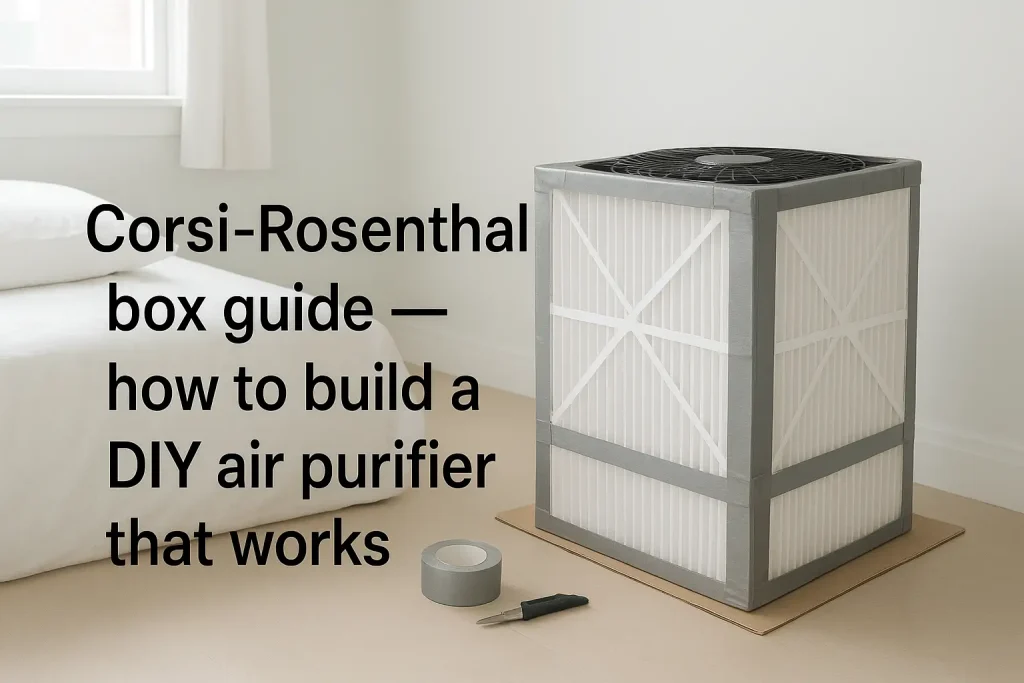
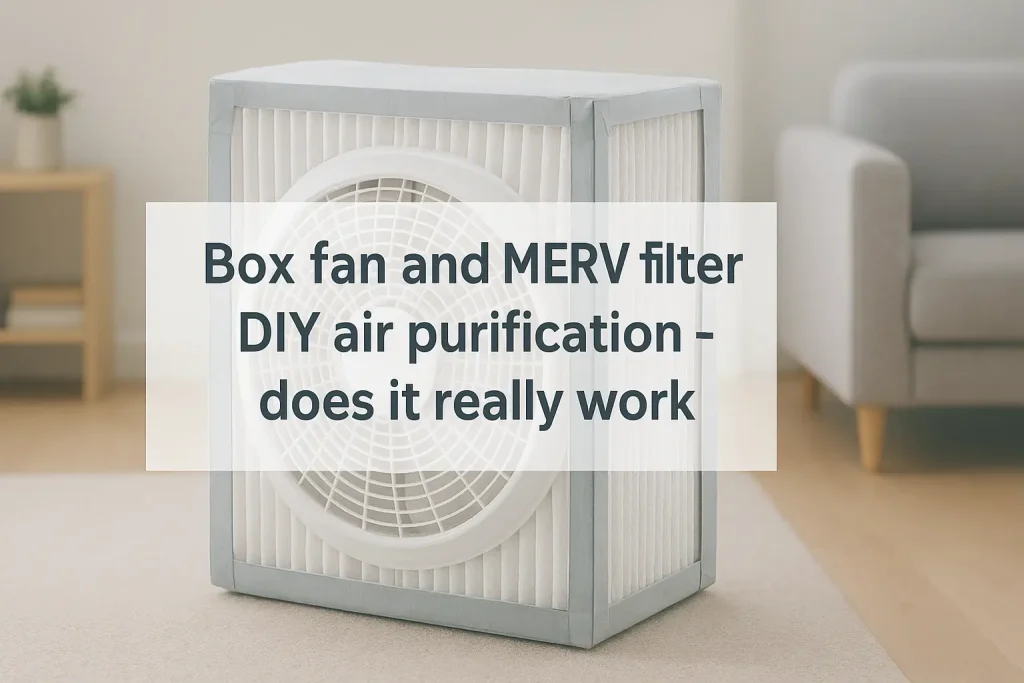
A Corsi-Rosenthal box is a DIY air purifier made from a box fan and four MERV 13 20×20 furnace filters taped into a cube. It can deliver 400 to 600 CFM of CADR depending on the fan used. This is comparable to or higher than the CADR of the commercial units recommended in this guide.
For a COPD patient, the advantages are high CADR at low cost (approximately $60 to $80 to build, $40 to $60 per year for filter replacements). The disadvantages are noise (box fans are louder than purpose-built purifier fans), no CARB certification (although MERV 13 filters produce zero ozone), and the lack of a pre-filter or activated carbon stage.
A Corsi-Rosenthal box is a viable option for a COPD patient on a tight budget, provided the noise level is acceptable. Use a fan with multiple speed settings and run it on the lowest speed that still achieves the target CADR. Place the box at least 3 feet from the bed to reduce perceived noise.
For winter months when indoor air quality worsens with closed windows, a Corsi-Rosenthal box provides high-CADR filtration that can compensate for the lack of ventilation.
What Is the Best Air Purifier Placement for a COPD Patient in a Living Room?
In a living room, the air purifier should be placed in the area where the COPD patient spends the most time. If the patient sits in a specific chair, place the purifier within 6 feet of that chair with the clean air outlet facing the seating position.
Do not place the purifier near a doorway, window, or HVAC return. These locations draw the cleaned air away from the patient before it reaches the breathing zone. Keep the purifier at least 3 feet from the television or other electronics that generate heat, as the rising warm air can disrupt the purifier’s airflow pattern.
For large living rooms over 400 sq ft, one purifier may not be sufficient for 5 ACH. Two medium-sized units placed on opposite sides of the room deliver more even coverage than one large unit in a single location. This is especially important for large open spaces where air mixing is less predictable.
Does Formaldehyde Exposure Worsen COPD Symptoms?
Yes. Formaldehyde is a respiratory irritant and a known carcinogen. For COPD patients, formaldehyde exposure can cause airway inflammation, bronchoconstriction, and increased mucus production. Common indoor sources include pressed-wood furniture, flooring, cabinets, and some household cleaners.
Standard activated carbon filters provide some formaldehyde adsorption, but the capacity is limited. For significant formaldehyde sources, a purifier with a dedicated chemisorption stage or a potassium permanganate-impregnated alumina filter is needed. The IQAir HealthPro Plus and IQAir GC MultiGas include these stages.
Our formaldehyde guide covers the specific sources, health levels, and reduction strategies for homes where formaldehyde is a concern for respiratory patients.
Can Incense or Candle Smoke Be Filtered by an Air Purifier for COPD?
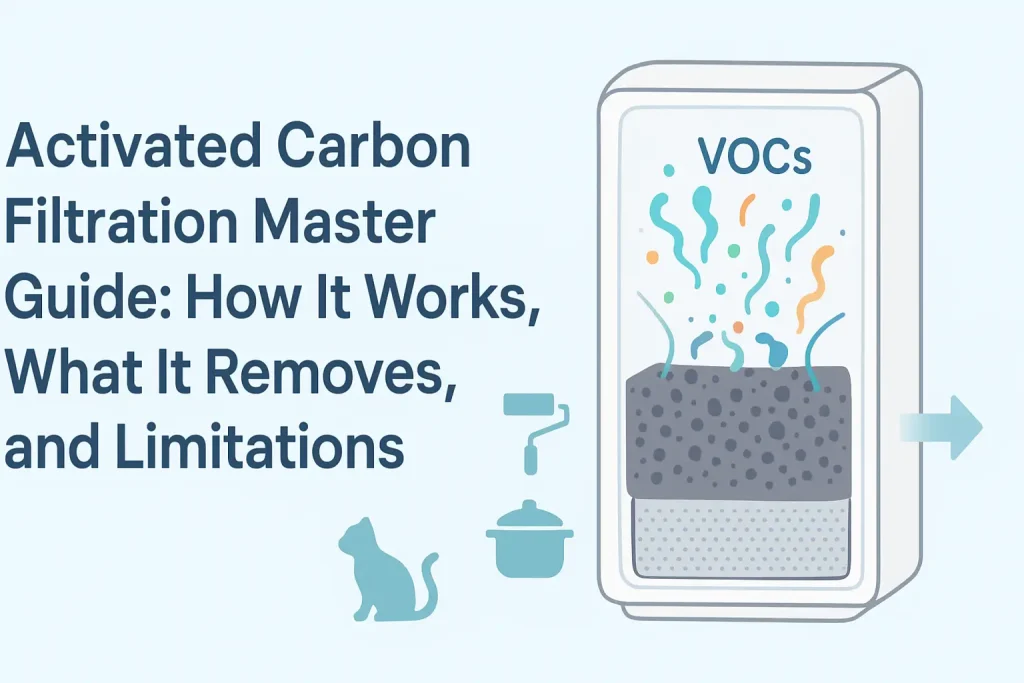
Incense and candle smoke produce both particulate matter and gaseous pollutants. The particulate component is captured by True HEPA. The gaseous component, including benzene, toluene, and formaldehyde, requires activated carbon. Burning incense or candles in a home with a COPD patient is not recommended regardless of the air purifier used.
The best air purifier cannot remove pollutants faster than they are generated by a combustion source inside the room. If incense or candles are burned in the home, the COPD patient should be in a different room with the door closed and a separate air purifier running.
For homes where incense or candle use is unavoidable, our guide on models that handle incense smoke covers the specific CADR and carbon requirements for combustion particle and VOC removal.
Conclusion
The right air purifier for a COPD patient delivers 5 ACH of True HEPA filtration in the bedroom, produces zero ozone, and runs quietly enough for uninterrupted sleep. The Coway AP-1512HH at $170 with a $45 annual filter cost is the best value for most COPD bedrooms under 200 sq ft. The IQAir HealthPro Plus at $899 with a $250 annual filter cost is the best long-term investment for patients with severe disease or multiple chemical sensitivities.
Verify smoke CADR, CARB certification, and sleep mode noise before purchasing any air purifier for a COPD patient. Disable any ionizer. Replace filters on an accelerated schedule. These three steps, combined with a unit that is correctly sized for the room, will reduce the daily particulate burden on compromised lungs and lower the risk of acute exacerbation.