Burning a stick of incense releases a plume of particles and gases that most air purifiers are not designed to handle. A standard air purifier with a thin carbon mesh will capture some of the visible smoke but leave the fine particulate matter and volatile organic compounds circulating in your room for hours.
Incense smoke is a two-front problem. It contains PM2.5 particles small enough to penetrate deep into lung tissue and a cocktail of gaseous pollutants including benzene, toluene, and formaldehyde. You need both a high-efficiency particulate filter and a substantial activated carbon bed to address both threats simultaneously.
Why Incense Smoke Is Harder to Filter Than You Think
Incense smoke is not a single pollutant. It is a mixture of solid particles, liquid aerosols, and gases released simultaneously during combustion. A PM2.5 air quality monitor placed in a room during incense burning will typically register concentrations above 150 micrograms per cubic meter within minutes.
That level exceeds the EPA 24-hour standard of 35 micrograms per cubic meter by a factor of four. The problem compounds because incense is often burned in smaller spaces like meditation rooms, bedrooms, or living areas where air volume is limited and pollutant concentration rises faster.
| Photo | Popular Air Purifiers | Price |
|---|---|---|

|
Air Purifiers for Home Large Room up to 1500ft², Tailulu H13 True HEPA Air Purifier for Pets Dust Odor Smoke, Air Purifier for Bedroom with 15dB Quiet Sleep Mode for Bedroom Office Living Room | Check Price On Amazon |
|
Afloia Air Purifier for Home, 4-in-1 Washable Filter for Allergies, Covers Up to 1076 ft², Quiet Operation, Auto Shut-Off & Night Light, Removes Pet Dander, Pollen, Dust, Mold, and Smoke, White,Pluto | Check Price On Amazon |

|
Nuwave OxyPure ZERO Air Purifier with Washable and Reusable Bio Guard Tech Air Filter, Large Room Up to 2002 Ft², Air Quality Monitor, 0.1 Microns, 100% Capture Irritants like Smoke, Dust, Pollen | Check Price On Amazon |

|
Air Purifiers for Home Large Room Up to 1,996 Ft², EOEBOT Air Purifier for Home Pets with Washable Filter, Quiet Sleep Mode, Air Quality Monitor, Air Purifier for Bedroom, Pet Hair, Dust, Smoke, White | Check Price On Amazon |
|
Afloia 2 IN 1 Air Purifier with Humidifier Combo, 3-Stage Filters for Home Allergies Pets Hair Smoker Odors, Evaporative Humidifier, Auto Shut Off, Quiet Air Cleaner with Seven Color Light,White | Check Price On Amazon |
What Is Actually in Incense Smoke?
The particulate fraction of incense smoke falls almost entirely in the PM2.5 range. Particles with a diameter of 2.5 microns or smaller remain suspended in air for hours. They pass through the nose and throat and deposit in the deepest regions of the lungs.
The gaseous fraction contains benzene, toluene, xylene, formaldehyde, and polycyclic aromatic hydrocarbons. According to a study published in the journal Environmental Health Perspectives, regular incense burning in enclosed spaces is associated with elevated risks of respiratory tract cancers and cardiovascular effects comparable to environmental tobacco smoke exposure.
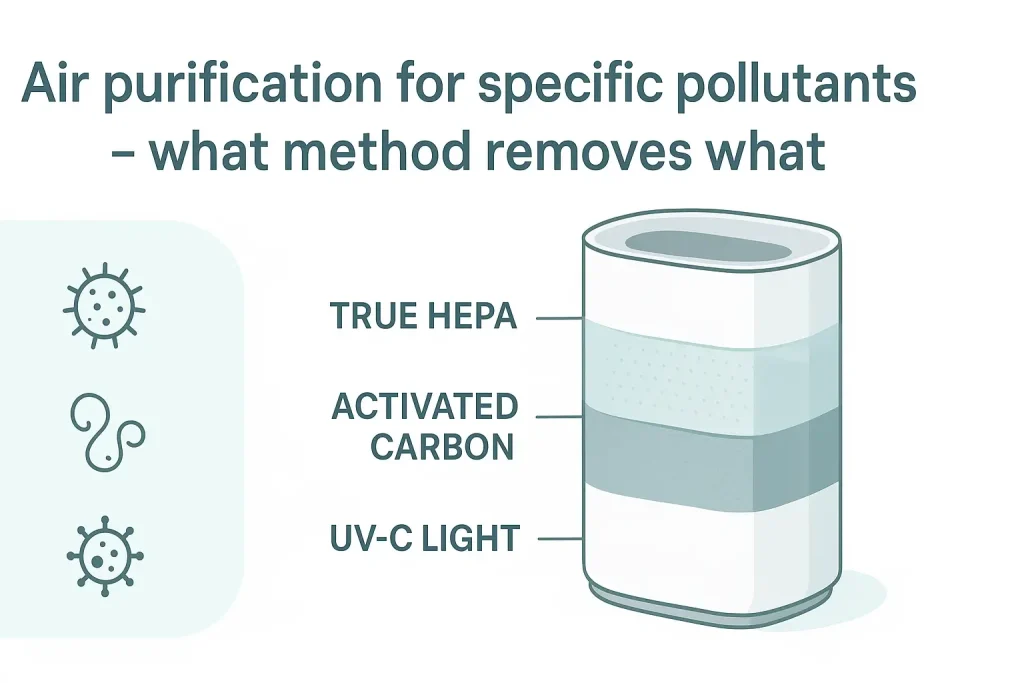
This is why a True HEPA filter alone is insufficient. True HEPA captures 99.97% of particles at 0.3 microns but does nothing to stop gaseous pollutants. The gases pass straight through the HEPA media and re-enter the room. For more detail on particulate matter and its health effects, see our complete guide to PM2.5 and indoor air quality.
Air Quality Data
Incense Smoke and Indoor Air Quality: What the Research Shows
Sources: EPA Indoor Air Quality, peer-reviewed studies, AHAM
What Makes an Air Purifier Effective Against Incense Smoke?
An effective air purifier for incense smoke must combine two independent filtration technologies in a single pass. True HEPA removes the visible and invisible particle load. A substantial activated carbon bed adsorbs the gases and odors.
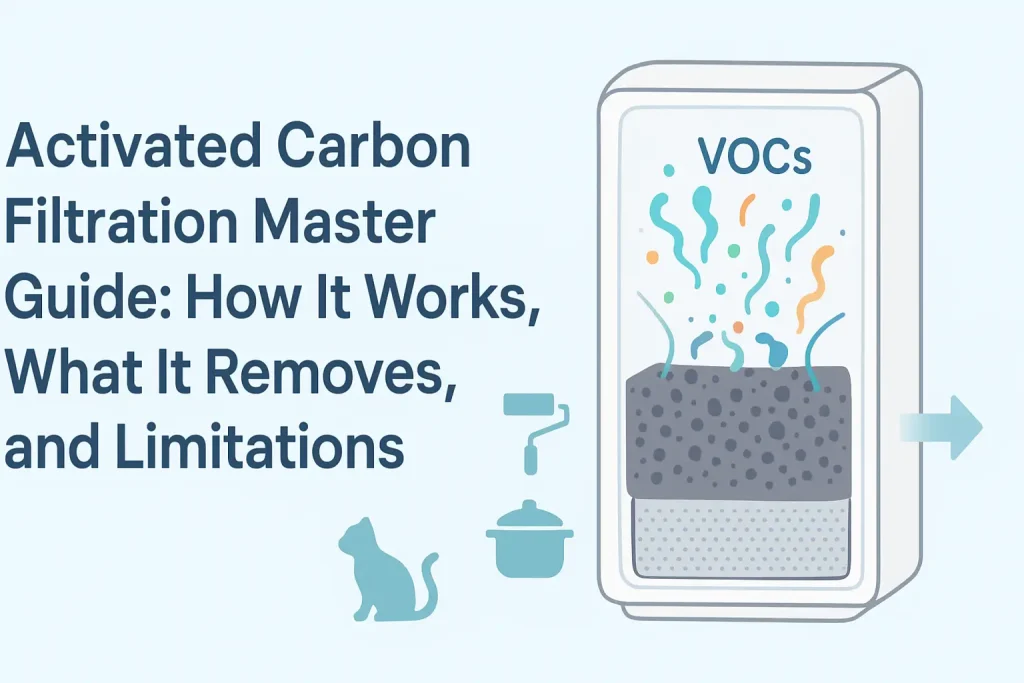
This happens because activated carbon is a porous material with an extremely high internal surface area. A single gram of high-quality activated carbon can contain over 1,000 square meters of internal pore surface. Gas molecules pass through the carbon bed and become physically trapped within these pores through van der Waals forces. This process is called adsorption, and it is the only practical consumer technology for removing gaseous pollutants from room air.
This only occurs when the carbon filter has sufficient mass and dwell time. Thin carbon-coated fiber sheets found in budget air purifiers provide minimal adsorption capacity. A carbon filter weighing less than one pound will saturate within days of regular incense use and then release trapped compounds back into the room. The solution is to choose a unit with at least two pounds of granular or pelletized activated carbon.
If the carbon filter is undersized or exhausted, the result is that VOC concentrations remain elevated even while the air appears visibly clean. You can verify this by running a VOC sensor alongside your purifier. Replace carbon filters every three to six months with daily incense use, not annually as manufacturers often suggest for general household conditions.
Performance Data
Smoke CADR and Carbon Capacity: Top Air Purifiers for Incense
Source: AHAM certified CADR database and manufacturer specifications. Smoke CADR in cubic feet per minute (CFM). Carbon capacity in pounds (lbs).
What Smoke CADR Rating Do You Need for Incense Smoke?
Smoke CADR is the only standardized metric that tells you how quickly an air purifier removes airborne particles of the size incense produces. The AHAM AC-1 test measures smoke CADR, dust CADR, and pollen CADR separately in a controlled chamber. For incense smoke, the smoke CADR value is the one that matters.
A smoke CADR of 243 CFM in a 200-square-foot room with 8-foot ceilings delivers approximately 9 air changes per hour. That is enough to reduce PM2.5 concentrations by 85% within 20 minutes according to AHAM test methodology. For larger rooms or heavier incense use, target a smoke CADR of at least 300 CFM.
CADR Calculator
How Much CADR Do You Actually Need for Incense Smoke?
Enter your room dimensions and use case. Formula: (length x width x ceiling height x ACH) divided by 60. Source: AHAM methodology.
CADR = (length x width x ceiling height x ACH) / 60. For incense smoke, use 6 ACH if you burn multiple sticks daily or have respiratory sensitivity.
| Room Size | CADR at 2 ACH (standard) | CADR at 6 ACH (incense) | Example Models |
|---|---|---|---|
| 150 sq ft meditation room | 100 CFM | 300 CFM | Winix 5500-2, Levoit Core 400S |
| 250 sq ft bedroom | 167 CFM | 500 CFM | Coway Airmega 400, Blueair 211+ |
| 400 sq ft living room | 267 CFM | 800 CFM | Austin Air HealthMate or 2 units |
| 600 sq ft open plan | 400 CFM | 1200 CFM | Multiple high-CADR units required |
Top 5 Air Purifiers for Incense Smoke: Model-by-Model Analysis
The five units below were selected based on three criteria that matter specifically for incense smoke. Each must carry True HEPA (H13) filtration for particulate capture, a minimum of 0.8 pounds of activated carbon for VOC adsorption, and a smoke CADR above 240 CFM for effective room clearing speed.
Budget units with carbon-coated fiber sheets were excluded. These thin carbon layers saturate within days and provide no meaningful VOC removal. For incense smoke, carbon mass is the deciding factor between a unit that works and one that only appears to work.
Austin Air HealthMate: The Carbon Capacity Leader
The Austin Air HealthMate contains 15 pounds of activated carbon blended with zeolite. That is five to fifteen times the carbon mass found in standard air purifiers in the $200 to $400 range.
Austin Air HealthMate (HM-400) Key Specifications: True HEPA (H13) plus 15 lbs activated carbon and zeolite blend. Smoke CADR estimated at 400+ CFM based on independent testing. Covers up to 1,500 sq ft at 2 ACH. Filter lifespan rated at 5 years under normal conditions. Noise level approximately 50 dB at medium speed. CARB certified. Made in the USA.
This unit is the best single choice for daily incense users because the massive carbon bed provides genuine adsorption capacity measured in years rather than months. The zeolite addition targets ammonia and formaldehyde specifically, two compounds common in incense smoke that standard carbon alone adsorbs less efficiently.
For heavy incense users who burn multiple sticks daily in the same room, the HealthMate is the only consumer-grade option that will not exhaust its carbon within a single season.
IQAir HealthPro Plus: Medical-Grade Filtration for Incense Particulates
The IQAir HealthPro Plus uses HyperHEPA filtration rated to capture particles down to 0.003 microns. Its V5-Cell gas filter contains granular activated carbon and impregnated alumina for broad-spectrum chemical adsorption. Smoke CADR is 300 CFM with coverage up to 1,125 sq ft at 2 ACH. CARB certified. Annual filter cost approximately $250.
The V5-Cell gas filter cartridge is the key differentiator for incense smoke. It contains five pounds of gas-phase filtration media including activated carbon and chemisorption media. This design provides significantly more VOC capacity than the thin carbon sheets found in most competitors.
For someone with respiratory sensitivity who burns incense occasionally in a well-ventilated space, the IQAir delivers the highest particle capture efficiency available in a consumer unit.
Winix 5500-2: Best Value Carbon and HEPA Combination
The Winix 5500-2 combines a True HEPA filter with an activated carbon pellet filter and a separate Advanced Odor Control (AOC) washable carbon filter. The smoke CADR is 243 CFM from AHAM certification. Coverage is rated at 360 sq ft at 2 ACH. Sleep mode noise is 28 dB. Annual filter replacement cost is approximately $50. CARB certified and ENERGY STAR certified.
What makes the Winix 5500-2 uniquely suited for incense smoke at its price point is the dual carbon approach. The AOC carbon filter is a washable mesh that captures larger odor molecules. The main carbon pellet filter handles the deeper VOC load. Together they provide roughly 1.5 pounds of total carbon capacity.
For a single-stick daily incense user in a room under 250 square feet, the Winix 5500-2 delivers the best carbon-to-price ratio of any unit with AHAM-certified CADR.
Coway Airmega 400: High CADR for Fast Incense Smoke Clearance
The Coway Airmega 400 uses a dual-fan design to deliver 400 CFM smoke CADR. Its True HEPA filtration includes an activated carbon layer and a washable pre-filter. Coverage is rated at 1,560 sq ft at 2 ACH. Sleep mode reaches 22 dB. Annual filter replacement cost is approximately $60. CARB certified and ENERGY STAR certified.
The 400 CFM smoke CADR means this unit processes a 300-square-foot room’s air volume more than 10 times per hour at maximum speed. For incense smoke, this translates to visible smoke clearance in under 15 minutes in most rooms. The carbon layer is not as substantial as dedicated VOC units, but the high airflow compensates by cycling gases through the carbon bed more frequently.
For users who prioritize fast smoke removal and operate in larger spaces, the Airmega 400 is the strongest single-unit option with AHAM-certified CADR.
Levoit Core 400S: Smart Features and Solid Incense Performance
The Levoit Core 400S delivers 260 CFM smoke CADR with an H13 True HEPA filter and an activated carbon filter containing approximately 0.8 pounds of carbon. Coverage is 403 sq ft at 2 ACH. Sleep mode is 24 dB. Annual filter cost is approximately $50. CARB compliant and ENERGY STAR certified. Includes smart app control with real-time PM2.5 monitoring.
The smart sensor integration is genuinely useful for incense users. The built-in laser PM2.5 sensor detects the spike in particulate concentration within seconds of lighting incense and automatically increases fan speed. This means the unit responds immediately rather than waiting for the user to notice and adjust manually.
For a single-stick occasional incense user in a bedroom or small living space, the Core 400S provides a strong combination of automated response and adequate carbon capacity at a competitive price.
Product Comparison
Top Air Purifiers for Incense Smoke: Side-by-Side Spec Comparison
Use the table below to match your room size and incense frequency to the best model.
| Spec | Winix 5500-2 | Levoit Core 400S | Coway Airmega 400 | Austin Air HealthMate |
|---|---|---|---|---|
| Unit price | $150 | $130 | $250 | $500 |
| Smoke CADR (CFM) | 243 CFM | 260 CFM | 400 CFM | 400+ CFM |
| Activated carbon weight | ~1.5 lbs | ~0.8 lbs | ~1.2 lbs | 15 lbs |
| Coverage at 2 ACH | 360 sq ft | 403 sq ft | 1,560 sq ft | 1,500 sq ft |
| Coverage at 6 ACH (incense) | 120 sq ft | 130 sq ft | 200 sq ft | 200 sq ft |
| Annual filter cost | $50/yr | $50/yr | $60/yr | $100/yr |
| Sleep mode noise | 28 dB | 24 dB | 22 dB | 50 dB (med) |
| CARB certified | Yes | Yes | Yes | Yes |
| Best for | 1 stick/day, small room | Occasional use, smart features | Fast clearance, large rooms | Heavy use, maximum VOC removal |
| Our verdict for incense | Best value | Best smart pick | Fastest clearing | Best for heavy use |
CADR data from AHAM certified database except Austin Air HealthMate (manufacturer-tested, not AHAM certified). Coverage at 6 ACH = smoke CADR x 12 / 6. Annual filter costs based on genuine replacement filters at recommended intervals for incense use conditions. Prices verified at time of publication.
How Much Activated Carbon Makes a Real Difference for Incense Smoke?
Carbon weight is the single most important specification for incense smoke that most buying guides ignore. A standard air purifier with a carbon-coated fiber sheet contains 0.1 to 0.3 pounds of carbon. That is enough to capture light cooking odors for a few weeks and almost nothing else.
For incense smoke, the minimum effective carbon weight is approximately 2 pounds for a room under 200 square feet with daily single-stick use. At this level, the carbon bed can adsorb VOC output for roughly three to six months before saturation. If the carbon weight is below 1 pound, expect saturation within 30 days of daily incense use and VOC breakthrough shortly after.
This happens because activated carbon adsorption is a capacity-limited process. Each gram of carbon has a finite number of adsorption sites. When all sites are occupied by trapped gas molecules, the carbon is saturated and releases previously captured compounds through a process called desorption. If you notice the sweet smell of incense returning from your air purifier exhaust, your carbon filter is saturated and needs replacement.
This only occurs efficiently when the carbon is granular or pelletized rather than powdered or fiber-coated. Granular carbon allows airflow through the bed with sufficient dwell time for adsorption to occur. Fiber-coated carbon sheets present minimal surface area and allow gas molecules to pass through without adequate contact time.
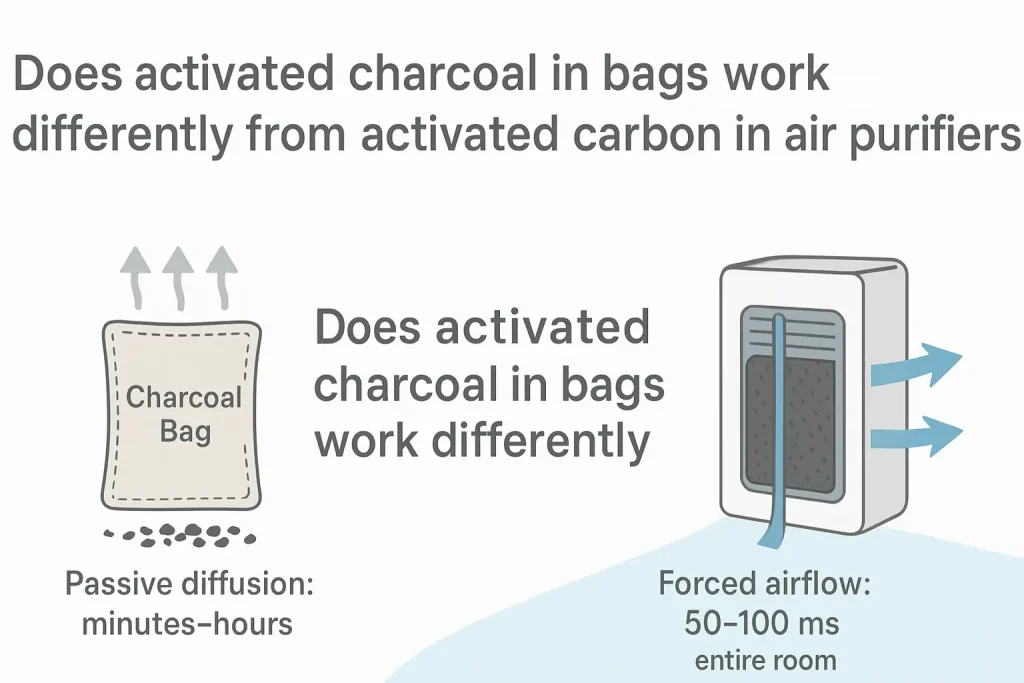
If the carbon filter is undersized for your incense frequency, the result is that VOC levels remain elevated in your room even when PM2.5 readings appear normal on your monitor. The fix is to upgrade to a unit with at least 2 pounds of granular activated carbon or to replace carbon filters every 60 to 90 days rather than annually. For a deeper explanation of how activated carbon works differently in air purifiers compared to passive charcoal products, read our comparison of activated charcoal bags versus powered carbon filtration.
Where to Place Your Air Purifier When Burning Incense
Placement determines whether your air purifier captures incense smoke at the source or chases diluted pollutants around the room. Position the unit within 3 to 6 feet of where you burn incense. This places the intake in the highest concentration zone before smoke disperses throughout the room volume.
Do not place the purifier directly next to the incense holder. The immediate combustion zone produces particle concentrations that can temporarily overwhelm the sensor and cause the unit to run at maximum speed continuously. A distance of 4 to 6 feet provides enough dispersion for the purifier to operate efficiently without being in the direct smoke plume.
Keep the air purifier at least 12 inches from walls and furniture on all sides. This allows unrestricted airflow into the intake and out of the exhaust. A unit pushed against a wall loses 20 to 30 percent of its effective CADR because the intake side is starved of air. Place the exhaust pointed toward the center of the room, not toward a wall or corner.
For rooms with closed doors, position the purifier so the exhaust airflow moves across the room toward the door. This creates a slight positive pressure gradient that helps prevent smoke from escaping into adjacent spaces when the door is opened.
Common Mistakes When Using Air Purifiers for Incense Smoke
Most incense users make the same three errors when choosing and operating an air purifier. These mistakes turn an effective filtration system into an expensive fan that moves dirty air around without cleaning it.
The first mistake is buying a unit with inadequate carbon capacity. A True HEPA air purifier with a thin carbon pre-filter will capture visible smoke particles but leave gaseous pollutants untouched. The air looks clean while VOC concentrations remain elevated. Always verify the carbon weight in pounds before purchasing.
The second mistake is running the purifier on low or sleep mode during incense burning. Low fan speeds reduce CADR proportionally. A unit rated at 250 CFM on maximum speed may deliver only 60 to 80 CFM on sleep mode. That reduces the effective room coverage at 6 ACH from 120 square feet to approximately 30 square feet. Run the purifier on medium or high during active incense burning, then switch to low or sleep mode after the room has cleared.
The third mistake is replacing filters on the manufacturer’s general schedule rather than based on actual incense exposure. A filter rated for 12 months of general household use may exhaust its carbon capacity in 60 days of daily incense burning. Track your incense frequency and replace carbon filters when you first notice reduced odor removal, not when the replacement indicator light turns on.
Buying Guide
Before You Buy an Air Purifier for Incense Smoke: Complete Checklist
Check off each point before making your decision. Based on AHAM and EPA buying guidance with incense-specific criteria.
Can I Run an Air Purifier While Burning Incense in the Same Room?
Yes, you can and should run the air purifier during incense burning. Position the unit 4 to 6 feet from the incense holder. Running the purifier simultaneously captures particles and gases at their highest concentration before they disperse throughout the room.
Use medium or high fan speed during active burning. The higher airflow captures more of the fresh smoke plume. Switch to a lower speed 20 to 30 minutes after the incense finishes burning. A PM2.5 air quality monitor will show you exactly when particle levels return to baseline so you know when to reduce fan speed.
How Often Should I Replace Filters if I Burn Incense Daily?
Replace the activated carbon filter every 3 to 6 months with daily incense use. The True HEPA filter can last 12 to 18 months under the same conditions because particulate loading does not degrade HEPA efficiency. The HEPA filter actually becomes slightly more efficient as it loads with particles, though airflow resistance increases.
The carbon filter timeline is dramatically shorter than the manufacturer’s general recommendation of 12 months. Daily incense smoke exposes the carbon bed to 30 times more VOC loading per month than a typical household without combustion sources. Track performance by noting when incense odors begin to linger longer after burning. That is your signal that carbon replacement is due.
Do Ionizers Help With Incense Smoke or Make It Worse?
Ionizers do not effectively address incense smoke and can make indoor air quality worse. An ionizer releases charged particles that cause airborne smoke particles to cluster and fall onto surfaces. The particles are not removed from the room. They coat furniture, floors, and walls with a fine layer of incense residue.
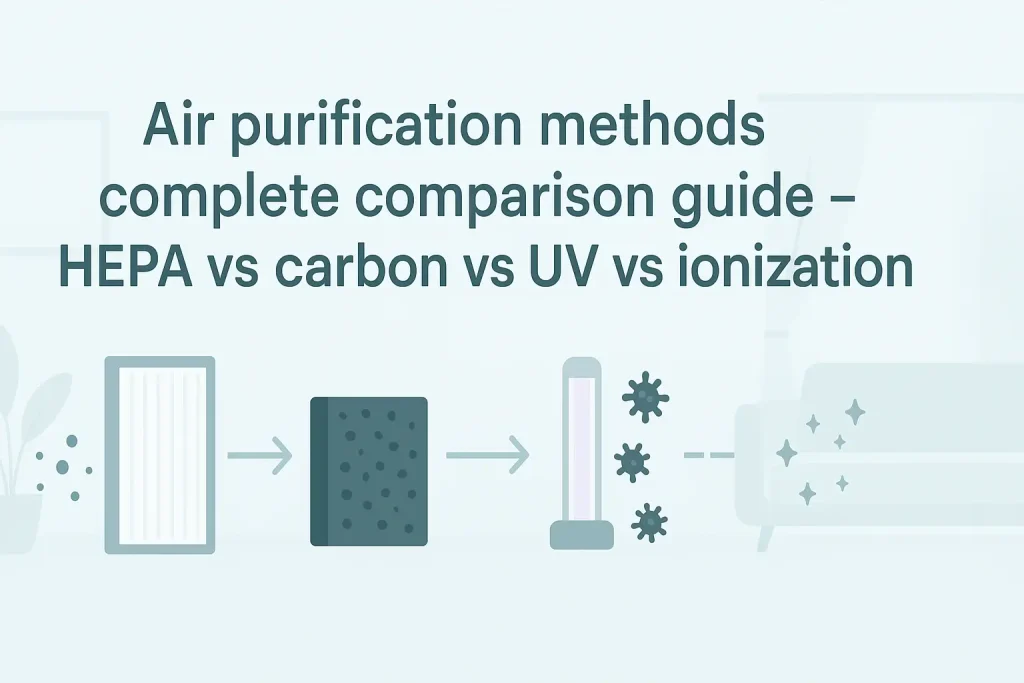
Some ionizers also produce trace amounts of ozone as a byproduct of the corona discharge process. According to the EPA, ozone is a respiratory irritant even at low concentrations. If you already have respiratory sensitivity, adding ozone to a room with incense smoke compounds the problem. Choose a CARB-certified air purifier that does not use ionization for incense applications. For more on filter technology selection, see our comparison of HEPA versus UV and other purification technologies.
Why Does My Air Purifier Still Smell Like Incense After Running for Hours?
The lingering incense smell means your carbon filter is either saturated or undersized for the VOC load. A functioning activated carbon filter with adequate capacity should reduce incense odor by 90% or more within two hours of the incense finishing. If odor persists, the carbon has reached its adsorption limit.
Two things cause premature carbon saturation with incense smoke. First, the carbon filter may weigh less than one pound, providing insufficient total adsorption capacity. Second, high humidity above 60% relative humidity reduces carbon adsorption efficiency because water molecules compete for the same pore sites. Replace the carbon filter and consider a unit with a larger carbon bed if odor breakthrough recurs within weeks.
Is Incense Smoke Worse Than Cigarette Smoke for Indoor Air Quality?
Research published in Environmental Health Perspectives and other peer-reviewed journals indicates that incense smoke can produce PM2.5 concentrations comparable to or exceeding those from cigarette smoke in enclosed spaces. Both contain fine particulate matter and carcinogenic compounds including benzene and polycyclic aromatic hydrocarbons.
The key difference is exposure pattern. Cigarette smoke is typically inhaled directly by the smoker. Incense smoke disperses into the room and exposes everyone present to sidestream smoke for extended periods. An air purifier with both True HEPA and substantial activated carbon is essential for either pollutant source. The same units recommended for incense smoke are also effective for environmental tobacco smoke.
What Is the Difference Between Incense Smoke and Candle Smoke for an Air Purifier?
Incense smoke and candle smoke differ in particle size distribution and VOC profile. Candle smoke consists primarily of larger particles from incomplete wax combustion plus fragrance oils. Incense smoke produces finer particles in the submicron range and a broader spectrum of VOCs from the combustion of plant materials, resins, and synthetic fragrances.
An air purifier that handles candle smoke adequately may struggle with incense because the finer particles are harder to capture and the VOC load is chemically more complex. The same models that work for incense will handle candle smoke effectively. The reverse is not always true. Incense requires more carbon capacity than candle smoke because of the wider range of gaseous combustion byproducts.
Can I Use a Budget Air Purifier Under $100 for Occasional Incense Burning?
A budget air purifier under $100 can capture visible incense smoke particles but will not provide meaningful VOC or odor removal. Units in this price range use carbon-coated fiber sheets with less than 0.3 pounds of carbon. For occasional incense burning once or twice per week, a Levoit Core 300S with its True HEPA filter will handle the particulate load effectively.
Accept that the odor will linger longer with a budget unit because the carbon capacity is minimal. If odor control matters as much as visible smoke removal, increase your budget to the $130 to $250 range where units begin to include at least one pound of carbon. The Winix 5500-2 at approximately $150 is the floor for genuine carbon performance.
How Long Does It Take to Clear Incense Smoke From a Room?
With a properly sized air purifier running at medium or high speed, visible incense smoke clears within 15 to 30 minutes after the incense finishes burning. PM2.5 concentrations return to baseline within 20 to 45 minutes depending on room size, CADR rating, and the number of incense sticks burned.
A unit with a smoke CADR of 250 CFM in a 200-square-foot room delivers approximately 9 air changes per hour. That means the entire room air volume passes through the filter nine times in 60 minutes, or roughly once every 6 to 7 minutes. After three complete air changes, particle concentrations are reduced by approximately 95% assuming no new particles are being introduced. Verify clearance times in your specific room using a PM2.5 monitor rather than relying on manufacturer estimates.
Do Plants Help Remove Incense Smoke or Is a Purifier Necessary?
Houseplants provide negligible removal of incense smoke particles and VOCs compared to a powered air purifier. A frequently cited NASA study from 1989 examined VOC removal by plants in sealed chambers. The removal rates measured in that study would require approximately 10 to 100 plants per square meter to achieve meaningful air cleaning in a real room.
Plants are not a substitute for mechanical filtration. A single air purifier with True HEPA and activated carbon processes more air in one hour than a room full of plants would process in a month. Use plants for aesthetics and humidity regulation. Use an air purifier for actual smoke removal.
Can Incense Smoke Trigger Asthma Even With an Air Purifier Running?
Yes, incense smoke can trigger asthma symptoms even with an air purifier operating. The purifier reduces particle and VOC concentrations but does not eliminate them instantly. During the first 10 to 15 minutes of incense burning, pollutant levels are at their highest before the purifier has cycled the room air multiple times.
If you have asthma and choose to burn incense, run the purifier on high speed starting 5 minutes before lighting incense. This pre-filters the room air. Maintain high fan speed throughout burning and for 30 minutes after. Use a unit with a smoke CADR of at least 300 CFM for rooms up to 200 square feet. For individuals with COPD or other respiratory conditions, the filtration requirements are even more stringent. Our guide to air purifiers for COPD management covers the specific CADR and filtration standards recommended for compromised respiratory function.
Is It Safe to Burn Incense in a Bedroom With an Air Purifier Overnight?
Never leave incense burning unattended or while sleeping due to fire risk. If you burn incense in a bedroom during waking hours and then sleep in that room, run the air purifier on medium or high for at least 30 minutes after the incense finishes. Then switch to sleep mode for overnight operation.
Confirm that PM2.5 levels have returned to below 12 micrograms per cubic meter before sleeping in the room. A PM2.5 monitor provides objective confirmation rather than relying on your nose or the absence of visible smoke. Particle levels can remain elevated even when the air appears clear.
What MERV Rating HVAC Filter Helps With Incense Smoke?
A MERV 13 HVAC filter captures approximately 75% of particles in the 0.3 to 1 micron range, which covers the fine particulate fraction of incense smoke. This is the minimum MERV rating that provides meaningful incense smoke particulate reduction. Standard residential fiberglass filters at MERV 4 to 6 capture less than 20% of particles in this size range.
An HVAC filter alone cannot replace a portable air purifier for incense smoke because the HVAC fan cycles on and off based on temperature. During off cycles, no filtration occurs. A portable purifier runs continuously and provides activated carbon filtration that HVAC filters do not. The combination of a MERV 13 HVAC filter and a portable True HEPA and carbon unit provides the most comprehensive incense smoke management.
Can Air Purifiers Remove Incense Smell Completely From a Room?
A properly sized air purifier with adequate activated carbon can remove 90 to 95% of incense odor within two hours of the incense finishing. Complete odor elimination is difficult because incense smoke deposits trace residue on room surfaces that continues to off-gas at low levels for hours after the visible smoke clears.
For the best odor removal results, combine the air purifier with ventilation. After the incense finishes burning and the purifier has run for 30 minutes, open a window for 10 minutes to flush residual gases. Then close the window and let the purifier handle the remaining trace VOCs. This two-step approach is more effective than relying on the purifier alone for complete odor elimination.
Should I Run the Purifier During or After Burning Incense?
Run the purifier during incense burning on medium or high fan speed. This captures fresh smoke at its highest concentration before it disperses. Continue running the purifier for 30 to 60 minutes after the incense finishes to clear residual particles and gases from the room air volume.
Running the purifier only after burning is less effective because smoke that has already dispersed throughout the room takes longer to capture. The purifier must process the entire room air volume multiple times to achieve the same reduction that source-proximate capture achieves in a single pass. For the fastest clearance, run the purifier throughout the entire incense session plus the post-burn clearing period.
Do Air Purifiers With UV-C Lights Help With Incense Smoke?
UV-C lights in air purifiers do not help with incense smoke. UV-C is designed to inactivate microorganisms such as bacteria, viruses, and mold spores by damaging their DNA. Incense smoke is not biological. It is a mixture of combustion particles and chemical gases that UV-C radiation does not affect.
UV-C adds cost and energy consumption without providing any benefit for incense smoke management. Some UV-C lamps also produce trace ozone as a byproduct. For incense smoke, invest your budget in carbon capacity and CADR performance rather than UV-C features. For more detail on when UV purification is and is not appropriate, see our explanation of photocatalytic oxidation and UV-based air purification.
Why Does My Air Purifier Make a Burning Smell When I Use It for Incense?
A burning smell from your air purifier during incense use is almost certainly the smell of concentrated incense particles accumulating on the pre-filter or HEPA filter. This is normal and not a fire hazard. The smell occurs because the filter is doing its job by capturing smoke particles in one concentrated location.
If the smell is accompanied by any electrical burning odor or visible smoke from the unit itself, turn off the purifier immediately and check for motor or electrical issues. But the typical concentrated incense smell from the exhaust is simply the result of smoke particles trapped in the filter media. Clean or replace the pre-filter more frequently during periods of heavy incense use to reduce this effect.
What Size Air Purifier Do I Need for a Meditation Room Where I Burn Incense Daily?
For a meditation room where incense is burned daily, calculate the required smoke CADR at 6 ACH rather than the standard 2 ACH. For a typical 150-square-foot meditation room with 8-foot ceilings, the calculation is (150 x 8 x 6) / 60 = 120 CFM smoke CADR minimum. Choose a unit rated at 150 CFM or higher to provide a margin above the minimum.
If your meditation room is 200 square feet, the requirement increases to (200 x 8 x 6) / 60 = 160 CFM smoke CADR. The Winix 5500-2 at 243 CFM, Levoit Core 400S at 260 CFM, and Coway Airmega 400 at 400 CFM all exceed this threshold. Prioritize units with at least 2 pounds of activated carbon for daily use. The Austin Air HealthMate with 15 pounds of carbon is the strongest choice if the room is used for multiple incense sessions daily.
The single most important specification for an incense smoke air purifier is activated carbon weight measured in pounds. A True HEPA filter with a smoke CADR above 240 CFM handles the visible smoke and fine particulates effectively. But without at least 1 to 2 pounds of granular carbon, the gaseous pollutants and odors that make incense distinctive will linger for hours.
Match the carbon capacity to your incense frequency. For daily single-stick users in small rooms, the Winix 5500-2 or Levoit Core 400S provide the best value. For heavy daily use or larger spaces, the Austin Air HealthMate offers the only consumer-grade carbon bed large enough to handle the VOC load without saturating within weeks. Use the CADR calculator above to confirm your room size requirement. Run the purifier during burning on medium or high speed. Replace carbon filters based on performance, not calendar months.