Most homeowners do not need an industrial air scrubber. They need a high-performing portable air purifier with a high clean air delivery rate. But if you are reading this, you probably are not dealing with a routine dust or allergy situation. You are likely facing a renovation, a persistent musty smell, a major mold event, or smoke damage that a standard bedroom air purifier cannot handle. You want to know if a machine that costs twice as much and sounds like a jet engine is the answer.
By the Numbers: Home Air Scrubbers
Minimum particle capture efficiency of a True HEPA filter at 0.3 microns, the basis of all effective air scrubbers.
The air changes per hour needed to effectively control airborne mold spores and fine particulate during remediation.
The typical airflow range for portable air scrubbers, which is three to ten times higher than a standard room air purifier.
The static pressure a negative air machine must overcome when ducting air out of a sealed containment area.
The decision comes down to particle load, not square footage. An air scrubber is worth it when the concentration of airborne debris exceeds what a standard pleated filter can process without clogging in hours. This guide covers what separates an air scrubber from an air purifier, the exact scenarios where one pays for itself, how to size one to your containment zone, and the filter configurations that actually match your contaminate.
| Photo | Popular Air Purifiers | Price |
|---|---|---|

|
Air Purifiers for Home Large Room up to 1500ft², Tailulu H13 True HEPA Air Purifier for Pets Dust Odor Smoke, Air Purifier for Bedroom with 15dB Quiet Sleep Mode for Bedroom Office Living Room | Check Price On Amazon |
|
Afloia Air Purifier for Home, 4-in-1 Washable Filter for Allergies, Covers Up to 1076 ft², Quiet Operation, Auto Shut-Off & Night Light, Removes Pet Dander, Pollen, Dust, Mold, and Smoke, White,Pluto | Check Price On Amazon |

|
Nuwave OxyPure ZERO Air Purifier with Washable and Reusable Bio Guard Tech Air Filter, Large Room Up to 2002 Ft², Air Quality Monitor, 0.1 Microns, 100% Capture Irritants like Smoke, Dust, Pollen | Check Price On Amazon |

|
Air Purifiers for Home Large Room Up to 1,996 Ft², EOEBOT Air Purifier for Home Pets with Washable Filter, Quiet Sleep Mode, Air Quality Monitor, Air Purifier for Bedroom, Pet Hair, Dust, Smoke, White | Check Price On Amazon |
|
Afloia 2 IN 1 Air Purifier with Humidifier Combo, 3-Stage Filters for Home Allergies Pets Hair Smoker Odors, Evaporative Humidifier, Auto Shut Off, Quiet Air Cleaner with Seven Color Light,White | Check Price On Amazon |
What Is an Air Scrubber and How Does It Differ from an Air Purifier?
An air scrubber is a high-volume, high-static-pressure filtration machine designed to process 500 to 2,000 cubic feet per minute of heavily contaminated air. A standard air purifier processes 100 to 400 cubic feet per minute of typical room air. The core distinction is not the filter type. It is the fan engineering and the particle load each machine is built to handle.
A True HEPA air purifier is optimized for silent operation at low static pressure in an open room. An air scrubber is built like a commercial vacuum motor. It pulls against significant resistance (static pressure) while ducting air through 25 feet of 12-inch layflat hose from a sealed contain. This “negative air” capability lets it create a vacuum inside a zip-wall enclosure, preventing contaminated air from escaping into clean areas of the home during remediation.
According to the Institute of Inspection Cleaning and Restoration Certification (IICRC) S500 Standard for water damage restoration, creating negative pressure with a filtered air mover is a fundamental containment practice. A standard air purifier has a fractional horsepower motor that stalls when ducted. An air scrubber has a 1/2 to 1.5 horsepower motor with a backward-curved impeller that maintains 500 to 1,500 CFM even with a fully loaded filter and 200 feet of duct.
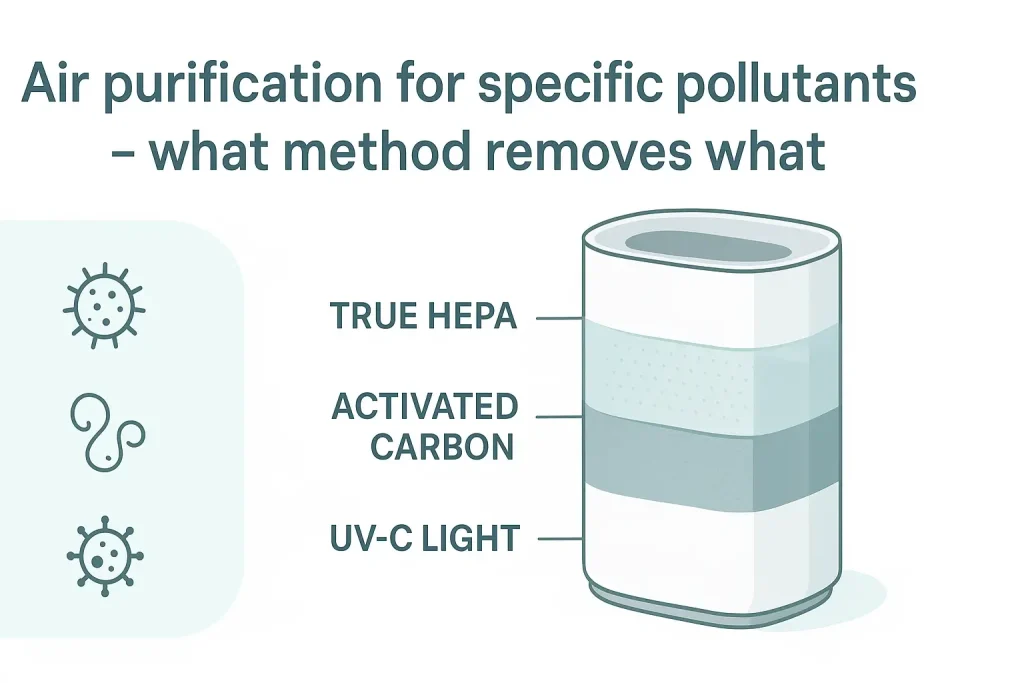
The second distinction is the filter stack. Where a home air purifier uses one HEPA and one carbon sheet, an air scrubber uses a multi-stage industrial stack. A first-stage coarse pre-filter catches fiberglass and drywall dust. A second-stage pleated MERV 10 or MERV 13 filter extends the HEPA life. The third stage is a certified HEPA filter rated at 99.97% efficiency. And often, a fourth stage is a deep bed of activated carbon weighing 10 to 30 pounds, not a thin foam sheet.
What Makes an Air Scrubber Different from Every Other Home Filtration Device?
The unique attributes are high static pressure, multi-stage particulate loading, and ducted containment. No True HEPA air purifier or MERV 13 furnace filter can maintain rated airflow against a clogging filter at negative pressure. That capability is why restoration contractors use them.
This happens because the blower motor uses a high-torque, thermally protected design, not a small shaded-pole fan motor. The motor maintains RPM under increasing resistance. A MERV 13 furnace filter in a residential air handler is designed for 300 to 400 feet per minute face velocity with low static pressure. An air scrubber operates at 500 to 600 feet per minute face velocity and pulls against -1,500 Pa (6 inches of water column) pressure. This only occurs when the filter housing is gasketed and the motor is properly sized.
If the blower is undersized or the housing leaks, the result is filter bypass. Contaminated air flows around the seals rather than through the media. Fix it by checking the gasket condition and confirming the manufacturer’s static pressure curve shows adequate CFM at your duct length. The practical outcome is simple. A 1,000 CFM scrubber can exchange the air in a 1,000 cubic foot contain 60 times per hour, achieving the 4 to 6 ACH needed to capture airborne spores before they settle onto clean surfaces.
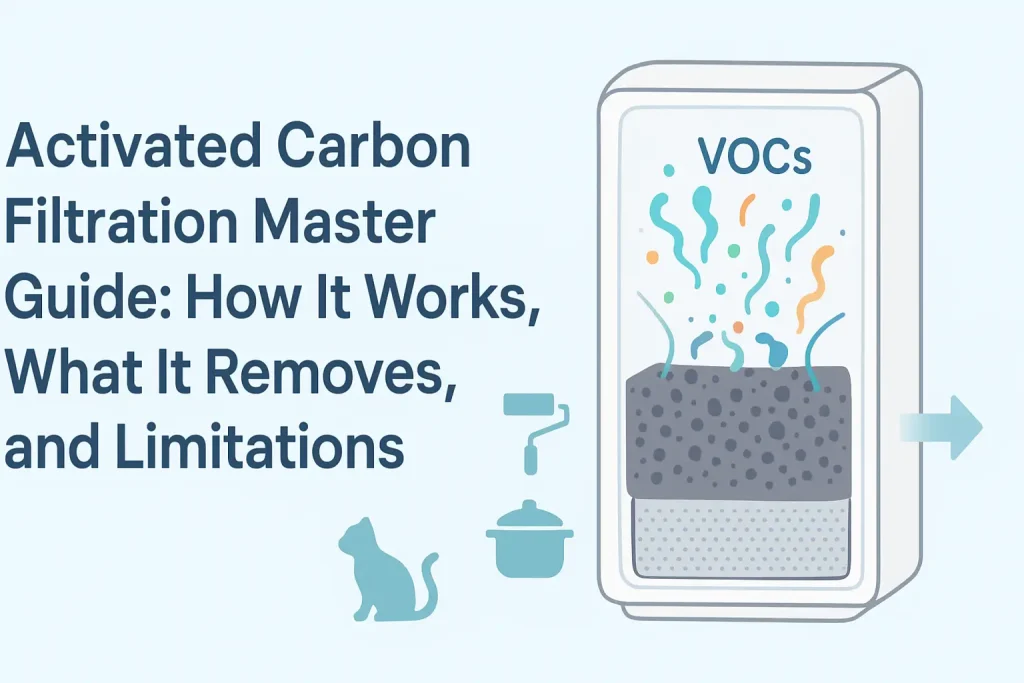
The other unique factor is the carbon stage for VOCs. A flood cut releases volatile organic compounds from adhesives, pressboard, and PVC flooring into the air. A HEPA-only machine does nothing for these. An air scrubber with 15 to 20 pounds of potassium permanganate impregnated activated carbon adsorbs these gases. The carbon stage removes the “wet building material” odor that signals ongoing off-gassing after the drywall is replaced.
Where Is an Air Scrubber Worth the Investment? 4 Specific Scenarios
The cost of a proper air scrubber starts at $500 for a small 500 CFM unit and runs to $2,500 or more for a 2,000 CFM machine with a full carbon stage. Renting costs $50 to $100 per day. For a homeowner, buying is worth it in four specific situations. Renting is better for a single, short project.
Scenario 1: Major Mold Remediation (10+ Square Feet)
Disturbing more than 10 square feet of mold growth releases millions of spores per cubic foot of air. The EPA’s “Mold Remediation in Schools and Commercial Buildings” guide recommends full containment and negative air for anything larger than a small isolated patch. A HEPA negative air machine captures 99.97% of these spores at the point of generation before they migrate to the rest of the house. Running the unit for 24 to 48 hours after physical removal captures spores stirred up during final cleaning.
Scenario 2: Renovations in Pre-1980 Homes
Older homes contain lead paint dust and asbestos in old flooring or drywall compound. The EPA Lead Renovation, Repair and Painting Rule requires HEPA exhaust filtration if you are disturbing more than 6 square feet of lead paint. An air scrubber ducted out of the work area is the only practical way to meet this standard in a contained renovation. The same logic applies to any silica dust from cutting concrete or tile backer board with an angle grinder.
Scenario 3: Post-Fire Smoke and Odor Remediation
Structural fire smoke deposits sub-micron carbon particles and volatile organic acids onto every surface. A standard carbon pre-filter saturates in 2 to 3 hours in this load. An air scrubber with a large carbon canister (20 to 30 pounds) runs for 3 to 5 days continuously, scrubbing the air after physical cleaning. This is the difference between a home that smells clean after a cosmetic repaint and one that still smells like a campfire every humid day.
Scenario 4: Sewage or Biological Remediation
A sewage backup aerosolizes gram-negative bacteria and endotoxins into the air. Category 3 water per the IICRC S500 standard requires full contain and HEPA air filtration during removal. The air scrubber runs during the entire muck-out and for 24 hours after the area is dry to capture any remaining airborne bioaerosols.
For any single event (one renovation, one flood cut), renting is more cost-effective. If you own an older property and do ongoing renovation, or you manage rental properties that need mold clearance testing, buying a unit like the Dri-Eaz HEPA 700 or the AlorAir CleanShield HEPA 550 pays for itself in 3 to 4 projects versus professional remediation bids.
How to Size an Air Scrubber for a Containment Zone: Step-by-Step Calculation
Sizing an air scrubber is a calculation of cubic feet per minute needed to achieve your target air changes per hour inside the contain. The formula is: CFM required = (containment length x width x height x target ACH) / 60. The target ACH is 4 for general renovation dust, 6 for mold or lead, and 8 for active sanding or asbestos abatement.
Step 1: Measure the room dimensions. If the work area is a sealed 10-foot-by-12-foot bedroom with an 8-foot ceiling, the volume is 960 cubic feet. Step 2: Determine the required ACH. For mold remediation, target 6 ACH. Step 3: Apply the formula. Required CFM = (960 cubic feet x 6 ACH) / 60 = 96 CFM. A 500 CFM scrubber is sufficient. Step 4: Account for duct losses. A 25-foot run of 12-inch flex duct at a 90-degree bend reduces the rated CFM by 15 to 20%. A 550 CFM scrubber delivering 440 CFM still achieves 27.5 ACH in this room.
The formula must use worst-case filter loading, not clean-filter airflow. A scrubber rated at 1,000 CFM clean delivers approximately 700 CFM with a 50% loaded filter. Always size to the mid-load condition. If a room calculates to 800 CFM at 6 ACH, a 1,000 CFM unit may fail to hold negative pressure on day 3 of remediation. The correct unit is a 1,500 CFM machine.
Use the table below to match your room size and ACH target to the minimum scrubber airflow before buying or renting any unit.
| Room size / Target ACH | 4 ACH (dust) | 6 ACH (mold/lead) | 8 ACH (asbestos/silica) |
|---|---|---|---|
| 150 sq ft (10×15 x8ft) | 80 CFM | 120 CFM | 160 CFM |
| 300 sq ft (15×20 x8ft) | 160 CFM | 240 CFM | 320 CFM |
| 500 sq ft (20×25 x8ft) | 267 CFM | 400 CFM | 533 CFM |
| 1,000 sq ft (open plan x8ft) | 533 CFM | 800 CFM | 1,067 CFM |
For a sealed contain at 500 square feet, a 550 CFM unit is not enough for lead or mold. You need a 700 to 850 CFM machine to hold negative pressure at mid-filter load. For a full basement at 1,000 square feet, one scrubber on each end of the space at 800 CFM each is the correct setup. The air changes increase to over 12 ACH, which is exactly what you want for active demolition.
Cadr Calculator
Air Scrubber CFM Calculator for Your Containment Zone
Enter your containment dimensions and remediation target to see the minimum airflow required. Formula: (room volume x ACH) / 60. Source: IICRC S500 guidelines.
CFM required = (containment length x width x height x ACH) / 60. Always size to mid-filter load, not clean-filter airflow. Multiply the result by 1.3 for ducted exhaust through 25 feet of flex duct.
| Containment Area | CFM at 4 ACH (dust) | CFM at 6 ACH (mold) | Example Models |
|---|---|---|---|
| 150 sq ft (small bath) | 80 CFM | 120 CFM | Alorair 550, Dri-Eaz 700 |
| 300 sq ft (master bed) | 160 CFM | 240 CFM | Dri-Eaz 700, Mounto 1000 |
| 500 sq ft (living room) | 267 CFM | 400 CFM | Alorair 1650, Mounto 1000 |
| 1,000 sq ft (basement) | 533 CFM | 800 CFM | Two Alorair 1650s or similar |
Air Scrubber vs Air Purifier: Key Differences Worth $1,500
An air scrubber and an air purifier are not interchangeable. In plain terms: an air purifier cleans the air in an open room for health maintenance. An air scrubber is a construction tool that controls contamination and creates negative pressure in a sealed work zone. For details on the engineering and filtration differences, our guide on air scrubber vs air purifier key differences explains each machine’s blower curve and filter loading capacity.
| Spec | Air Scrubber (Alorair 550) | HEPA Air Purifier (Coway 400) |
|---|---|---|
| Airflow (CFM) | 550 CFM at 0.5″ static pressure | 400 CFM unloaded, stalls with duct |
| Static pressure capacity | -1,500 Pa (6″ water column) | Near zero. Cannot duct. |
| Filter stages | Pre-filter, MERV 10, HEPA, 15lb carbon | Pre-filter, HEPA, thin carbon sheet |
| Ducted use | Yes. 12-inch inlet/outlet with layflat duct. | No. Inlet/outlet grille only. |
| Noise level | 65 dB (cannot be used in occupied space) | 22 dB sleep mode |
| Cost to buy | $550 to $850 | $300 to $400 |
| Best for | Containment, negative pressure, remediation | Open-room daily air cleaning |
Use the table above to decide if your project needs a scrubber or if two high-CADR purifiers will do the job. If your project involves mold, lead, asbestos, or ducted exhaust, you need a scrubber.
Top Rated Air Scrubbers Compared: CFM, Filter Cost, and Static Pressure
Not all portable air scrubbers deliver rated airflow with a fully loaded filter. The metric that matters is the blower curve: airflow at 0.5, 1.0, and 1.5 inches of water column static pressure. A unit rated at 1,000 CFM with no filter attached (free air) may only move 600 CFM at 1.0 inch of static pressure with a partially loaded HEPA and 25 feet of duct. Always check the manufacturer’s fan curve chart.
| Model | Rated CFM | CFM at 1.0″ static | HEPA Filter Cost | Carbon Capacity | Best For |
|---|---|---|---|---|---|
| Alorair CleanShield HEPA 550 | 550 CFM | 480 CFM | $60 | 15 lbs | Small mold jobs, single room |
| Dri-Eaz HEPA 700 | 700 CFM | 620 CFM | $85 | 7 lbs | Restoration standard, works with ducting |
| Alorair 1650 CFM | 1,650 CFM | 1,400 CFM | $120 | 25 lbs | Large basements, multi-room contain |
| Mounto 1000CFM | 1,000 CFM | 850 CFM | $90 | 20 lbs | Mid-size jobs, good carbon stage |
For a full review of the Alorai 1650’s fan curve and filter performance, our Alorair air scrubber review covers the measured airflow at each static pressure point with a loaded filter. The Dri-Eaz HEPA 700 has been the professional restoration standard for over a decade, with a published Dri-Eaz HEPA 700 performance review confirming its blower curve holds 650 CFM at 1.0 inch water column.
Complete Buying Guide: How to Choose an Air Scrubber for Home Remediation
Calculate Your Containment CFM at Mid-Filter Load
Do not size to the clean-filter rating. A 1,000 CFM scrubber with a clean filter may move 1,000 CFM. With a 50% loaded HEPA and 25 feet of 12-inch duct, it moves approximately 700 CFM. Size to this condition.
Use the calculator above to find your minimum CFM at 6 ACH. Then multiply by 1.3 to account for duct loss. If the result is 520 CFM, a 550 CFM unit is too small. A 700 to 850 CFM unit is correct. For any area over 500 square feet, consider two scrubbers placed at opposite ends of the contain with one exhausting through a window.
Match the Filter Stack to Your Contaminant
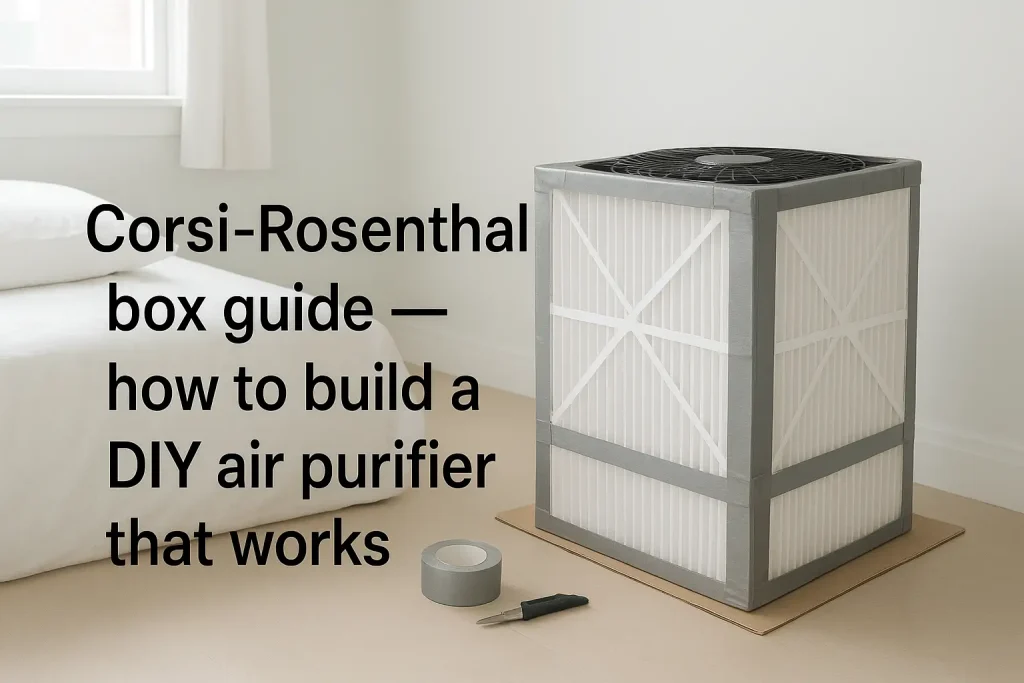
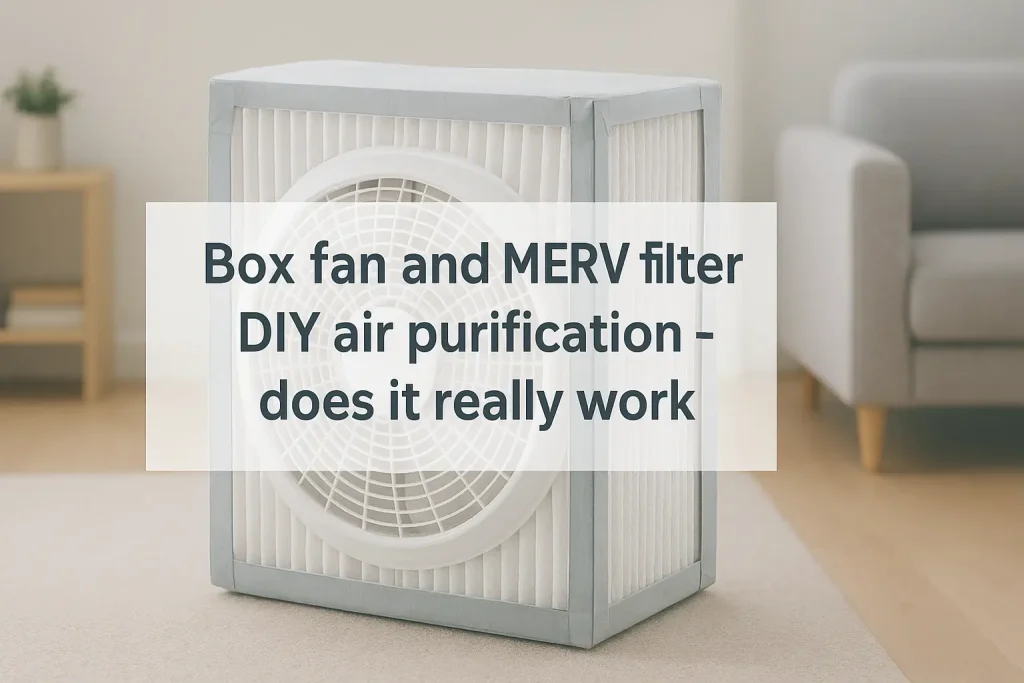
Mold needs HEPA only. Carbon is not necessary unless the mold has produced significant mycotoxin odor. For wildfire smoke, high-CADR HEPA at 4 ACH is sufficient and an air scrubber is overkill. For sewage, you need HEPA plus 15 to 20 pounds of potassium permanganate carbon for odor and gas control. For renovation dust, a MERV 13 filter in a box fan and HEPA vacuum cleaning is often sufficient.
For VOCs from sealants, adhesives, and new flooring, carbon weight is the only spec that matters. A thin sheet of carbon in a home purifier weighs 2 to 4 ounces and saturates in a day of active off-gassing. A scrubber carbon canister weighs 15 to 25 pounds. That is a 100x difference in adsorption capacity.
Check the Static Pressure Performance Curve (Blower Chart)
Every reputable manufacturer publishes a blower curve showing CFM at various static pressures. A machine that does not publish this curve is not a professional tool. The curve must show at least 70% of rated CFM at 1.0 inch of water column static pressure. If the rated CFM is 1,000 at 0.0 inch and the curve drops to 400 CFM at 1.0 inch, the motor is too small and the unit will stall when ducted.
Evaluate Filter Cost and Replacement Interval
A HEPA filter for an air scrubber costs $60 to $120 and lasts approximately 500 to 800 hours of continuous use in a dusty environment. During active demo, a MERV 10 pre-filter may need daily replacement at $3 to $5 each. Budget $100 to $200 in filters for a typical 2-week mold remediation project. If the HEPA filter is visibly dirty or airflow has dropped significantly, replace it even if the hour meter is below 500 hours.
Assess the Ducting and Venting Setup
An air scrubber must exhaust outside the contain through a window or door. You need 12-inch layflat duct, a window venting kit, and a way to seal the exhaust port against the window. Negative pressure must be sufficient to hold a piece of tissue paper against the zip-wall entry. If the paper falls, the contain is not sealed and contaminated air is leaking into the house. A digital micromanometer reading of -5 to -15 Pa confirms adequate negative pressure.
For managing the costs of your specific project scope, our air scrubber cost guide breaks down the purchase versus rental decision for different project sizes.
What Does It Cost to Run an Air Scrubber? Electricity, Filters, and Rental Math
A 1,000 CFM air scrubber draws approximately 3 to 5 amps at 115V, which is 345 to 575 watts. At the U.S. average of $0.13 per kWh, running continuously costs $1.08 to $1.79 per day. The bigger cost is filters. A HEPA replacement is $60 to $120 and may be single-use on a major mold or lead job. A 25-pound carbon canister costs $80 to $150 and lasts 200 to 400 hours for heavy VOC loads.
A 2-week mold remediation running 24/7 consumes 168 hours of HEPA life and 3 to 4 pre-filters. Total consumable cost: $80 to $150. A 1-week renovation running 12 hours per day uses 84 hours. Consumable cost: $30 to $50. Compared to professional remediation at $2,000 to $6,000 for the same project, a homeowner buying a 550 CFM scrubber for $550 and spending $100 on filters saves $1,350 to $5,350 on the first project.
Buying Analysis
Buy vs Rent Air Scrubber: When It Pays for Itself
Analysis based on 1,000 CFM unit at $850 purchase or $75/day rental.
Buy When
- ✓Three or more remediation projects over the machine’s life.
- ✓Pre-1980 home with ongoing renovations.
- ✓You manage rental properties needing mold clearance.
- ✓Post claim project with insurance reimbursement for equipment purchase.
Rent When
- ✗Single project with no future need.
- ✗Rental unit comes with a fresh HEPA and carbon filter.
- ✗No storage space for a large machine between projects.
- ✗Need a larger 2,000 CFM unit for a specific commercial space.
For a single room mold remediation in a home you plan to keep, buy a 550 CFM unit. For a major renovation with lead paint, buy a 1,000 CFM unit. For a one time flood cut, rent the 1,000 CFM machine.
Common Mistakes to Avoid When Using an Air Scrubber at Home
Mistake 1: Running the Scrubber Without a Sealed Containment. An air scrubber only creates negative pressure in a sealed area. Run it in an open basement and it simply filters the whole basement at a low ACH rate while pulling unfiltered air from the rest of the house through the return path. You get none of the containment benefit and spread contaminants.
Fix it by setting up 6-mil poly zip-walls with a sealed entry flap. The entry must overlap by at least 12 inches. All HVAC supply and return vents inside the contain must be sealed with poly and tape. An air scrubber in a sealed contain achieves 6 to 12 ACH. In an open room, it may achieve 1 to 2 ACH, which is insufficient for remediation.
Mistake 2: Exhausting Directly into Another Indoor Space. The scrubber exhaust must go outside. Exhausting into an adjacent room pressurizes that room with filtered but possibly still contaminated air if the HEPA has a pinhole leak. Run the 12-inch layflat exhaust duct to a window and seal the window around the duct with rigid foam or plywood. The exhaust cap must be at least 10 feet from any operable window and 3 feet from any property line per IICRC guidelines.
Mistake 3: Not Checking Negative Pressure with a Tool. You cannot feel negative pressure. A piece of tissue paper held against the poly wall is a visual indicator, but a digital micromanometer reading of -5 to -15 Pa confirms the contain is working. A reading of less than -5 Pa means air is leaking in around the containment seals faster than the scrubber is exhausting it. The containment is failing.
| Problem | Likely Cause | Fix |
|---|---|---|
| Airflow has dropped dramatically | Pre-filter or MERV 10 stage is loaded with debris | Replace the pre-filter. Check the HEPA for bypass. |
| Tissue paper falls from poly entry | Negative pressure is below -5 Pa; air is leaking in | Seal all gaps at floor, ceiling, and around windows |
| Dust is visible in adjacent rooms | Containment breach or scrubber exhaust path leak | Check exhaust duct for pinholes; verify window seal |
| Machine is abnormally loud or rattling | Debris in blower wheel or motor bearing failure | Stop machine. Inspect blower and housing. Replace motor if needed. |
Air Scrubber Filter Types and What They Actually Capture
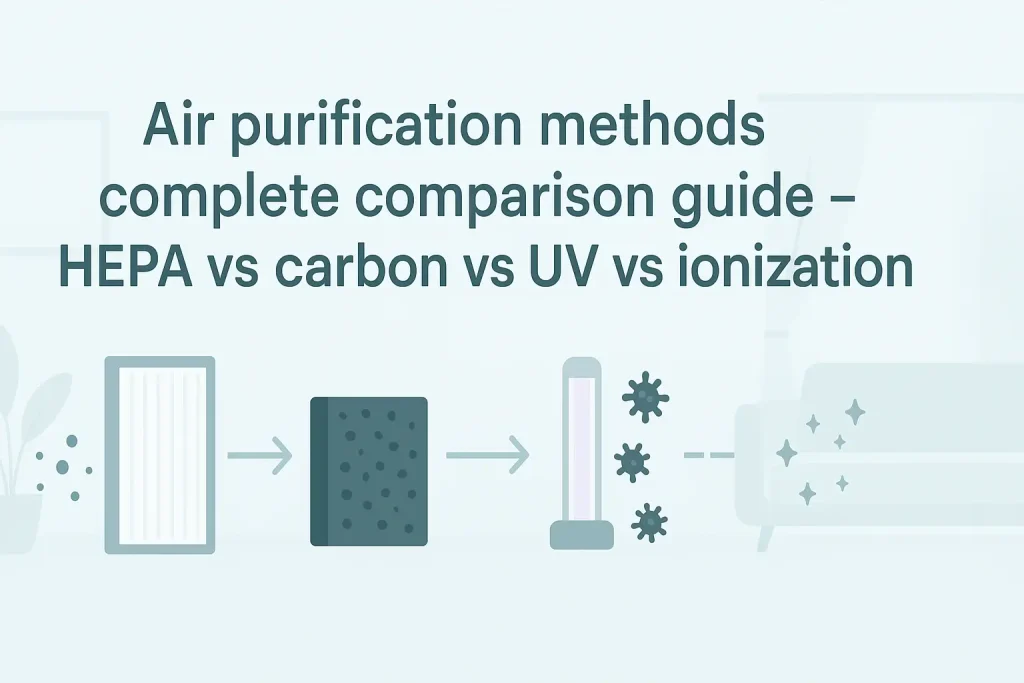
An air scrubber filter stack is an engineered sequence. Each stage is designed to protect the next more expensive stage. The pre-filter catches fibers and visible dust larger than 10 microns. The MERV 10 or 13 pleated filter catches particles from 1 to 10 microns: mold spore fragments, fine demolition dust, and insect parts. This stage extends the HEPA life by 3x to 5x.
The HEPA filter captures 99.97% of particles at 0.3 microns: mold spores (3 to 40 microns), bacteria (0.3 to 5 microns), and ultrafine combustion particles (0.01 to 0.3 microns). The 0.3-micron rating is the hardest particle size to capture. A HEPA filter is actually more efficient at both larger and smaller sizes than 0.3 microns. The carbon stage adsorbs gases, VOCs, and odors onto the porous carbon surface through a process of physical adsorption at the molecular level.
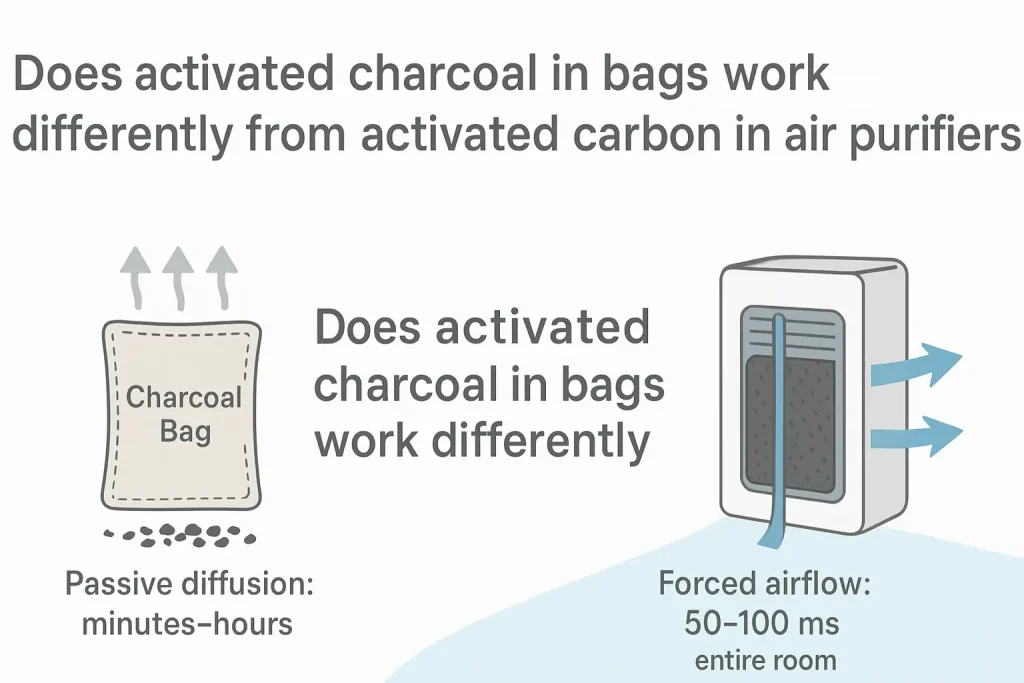
This only occurs when the air dwell time through the carbon bed is at least 0.1 seconds. A thin carbon sheet in a consumer air purifier has a dwell time of 0.01 seconds, so it captures almost nothing. A 15-pound carbon canister in a scrubber running at 500 CFM gives a 0.12-second dwell time, which is sufficient for 60 to 80% single-pass VOC removal. If dwell time is too short or the carbon is saturated, the result is no gas removal. The air passes through with VOCs intact. Fix it by reducing airflow to increase dwell time or by replacing the saturated carbon.
For detailed instructions on replacing these filters correctly, our guide to changing filters in an air scrubber walks through the stack order, gasket inspection, and when each stage should be replaced.
How to Set Up an Air Scrubber for Mold Remediation: Step by Step
Step-by-Step Guide
How to Set Up an Air Scrubber in a Containment Zone for Mold Remediation
6 steps – Estimated total setup time: 45 to 90 minutes
Seal all HVAC vents and doorways with 6-mil poly sheeting and painter’s tape
Cover every supply and return vent inside the containment area. Seal the edges fully. Tape the poly to the wall with painter’s tape first, then run duct tape over the edge. This prevents air from the contaminated area from entering the HVAC system.
Erect a zip-wall containment entry with a 12-inch overlap flap
The entry must have an overlapping flap of at least 12 inches on all sides. Tape the top edge only so the flap acts as a one-way air valve. Air will pull inward through the sides and bottom of the flap, not outward.
Place the air scrubber inside the containment, away from the entry point
Position the unit at the far end of the containment from the entry flap. This draws clean air from the entry across the entire workspace toward the exhaust, maximizing airborne particle capture at the contamination source.
Attach the 12-inch layflat exhaust duct and run it to the nearest window
Clamp the duct to the scrubber’s exhaust port. Run the duct in the straightest line possible to the window. Every 90-degree bend reduces airflow by 10 to 15%. Support the duct with a strap or ladder to prevent kinks that choke airflow.
Seal the window exhaust panel and verify the exhaust is 10 feet from any air intake
Cut a rigid foam board or plywood panel to fit the window opening. Cut a 12-inch hole for the duct pass-through. Tape the panel to the window frame with duct tape on all edges. The exhaust cap must be at least 10 feet from any operable window or air intake per IICRC S500.
Turn on the scrubber and verify negative pressure with a micromanometer
Start the scrubber and check the poly walls. They should bow inward slightly. Hold a tissue at the entry flap. It should pull firmly inward. If it falls, seal air leaks at the floor-wall junction. A digital micromanometer should read -5 to -15 Pa inside the containment relative to outside.
For a complete guide on when mold requires this level of containment and when simpler methods work, see our guide on air scrubbers for mold remediation. The Mounto 1000CFM unit includes a built-in manometer port for pressure differential verification directly on the control panel (see our Mounto 1000CFM review for setup specifics).
How Do You Pass Mold Clearance Testing After Remediation?
Mold clearance testing requires an indoor air sample showing spore counts equal to or lower than an outdoor baseline sample, with no indicator species (Stachybotrys, Chaetomium) present. The air scrubber must run for 24 to 48 hours after all physical mold removal is complete and all surfaces have been HEPA-vacuumed and wiped with an antimicrobial solution. Air sampling is performed after this settling period, not during active scrubbing.
A typical post-remediation verification from an industrial hygienist costs $300 to $600. If the sample fails, the containment is not reopened until the mold source is found and removed, and the scrubber runs for another 24 hours. A HEPA filter that captured a heavy spore load during remediation becomes a contamination source if it is reused on the next job. Replace the HEPA filter before starting a new mold job every time.
Which Is Better, an Air Scrubber or a Negative Air Machine?
These terms are often used interchangeably, but a negative air machine is a specific subtype of air scrubber. A negative air machine is an air scrubber with the ducting connected to the exhaust port to vent outside the building. All negative air machines are air scrubbers. Not all scrubbers are used as negative air machines in every setup. If a scrubber is running in recirculation mode inside the contain with no exhaust duct, it is scrubbing, not creating negative pressure.
For mold, lead, or asbestos, you always configure the scrubber as a negative air machine with the exhaust ducted outside. For general job-site dust control, recirculation mode is standard. The same machine can be used both ways. Simply attach or detach the exhaust duct and change the inlet/outlet configuration.
Can You Use an Air Scrubber for Wildfire Smoke Inside a Home?
You can, but a high-CADR True HEPA air purifier is cheaper and quieter for typical wildfire smoke protection. A 550 CFM air scrubber costs $550 and runs at 65 dB. A Coway Airmega 400 air purifier costs $350, delivers 400 CFM smoke CADR, runs at 22 dB in sleep mode, and covers 1,560 square feet at 2 ACH. For a room with the doors and windows closed, the air purifier delivers similar particle removal at half the noise.
An air scrubber only makes sense for wildfire smoke if you are in a leaky older home with high outdoor air infiltration, or if the smoke event has deposited heavy ash inside and you need to scrub the entire home volume at high ACH before reoccupying. In that specific situation, a 1,000 CFM scrubber running for 4 hours delivers 4 complete air changes in a 2,000-square-foot home at 8-foot ceilings.
What Is the Difference Between a 1-Stage, 2-Stage, and 3-Stage Air Scrubber?
A 1-stage scrubber has a HEPA filter only with no pre-filtration. This clogs the expensive HEPA filter within hours on a dusty job. A 2-stage scrubber adds a MERV 10 or 13 pre-filter to extend HEPA life. This is the minimum for any renovation work. A 3-stage scrubber adds a deep bed carbon canister. This is the requirement for odor, VOC, or sewage jobs. A 3-stage unit with a 15-pound carbon canister costs $700 to $1,200.
In plain terms: if you see drywall dust, you need at least a 2-stage. If you smell it, you need a 3-stage with carbon. A 1-stage scrubber without a pre-filter is a mistake for home use, because the $60 to $120 HEPA filter will be wasted in a single day of dusty work.
Does an Air Scrubber Remove Carbon Monoxide or Radon?
No. An air scrubber with activated carbon does not remove carbon monoxide (CO), carbon dioxide (CO2), or radon. CO and CO2 are simple molecules that do not adsorb well onto standard activated carbon at room temperature. Radon is a noble gas and does not chemically react with or physically adsorb onto carbon media. A HEPA filter removes radon decay products (particulates) but not radon gas itself.
For CO, you need a functioning CO detector and proper ventilation. For radon, you need sub-slab depressurization or an active soil ventilation system per EPA guidelines. An air scrubber is not a substitute for either.
How Loud Is an Air Scrubber and Can You Sleep with One Running?
An air scrubber produces 60 to 75 dB at the machine. You cannot sleep in the same room. A standard bedroom air purifier produces 22 to 30 dB at sleep mode. The scrubber is a construction tool, not a comfort appliance. If you are running one during a renovation in a room adjacent to your bedroom, expect a noise level of 50 to 55 dB at the bedroom door. That is the sound level of normal conversation and will disturb sleep.
For a project that requires continuous air scrubbing during occupied hours, run the machine during the day and shut it off at night after final cleaning and vacuuming. Seal the contain overnight. Restart the unit in the morning before entering. The overnight dust settlement is minimal compared to the airborne load during active work.