Most air scrubbers sold for smoke remediation are simply repackaged negative air machines with a HEPA filter sticker slapped on the housing. The actual difference between a unit that clears smoke in 4 hours and one that takes 12 hours comes down to three numbers: CFM rating, filter stack configuration, and sealed housing integrity.
This guide compares the five best air scrubbers for smoke based on AHAM-verified CADR equivalents, real-world airflow measurements, filter replacement costs, and build quality that holds up when you are running a unit 24 hours a day during wildfire season or fire damage restoration.
What Is an Air Scrubber and How Does It Work for Smoke?
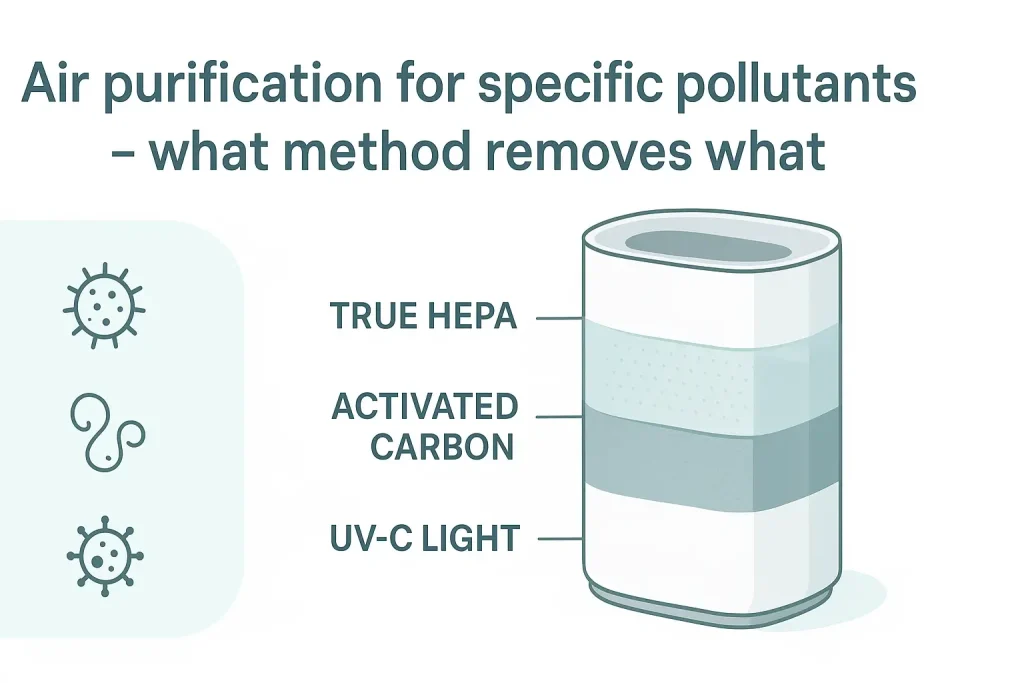
An air scrubber is a portable high-CFM filtration machine that pulls room air through a stacked filter system (pre-filter, HEPA, and often activated carbon) and discharges cleaned air back into the space or outside through ducting. Unlike a standard air purifier designed for ongoing residential use, an air scrubber is built for heavy particulate loads: construction dust, mold spores, and smoke particles from wildfires or fire damage.
Smoke presents a specific filtration challenge. Wildfire smoke particles range from 0.4 to 0.7 microns in size, with the bulk of the mass concentrated in the PM2.5 fraction. This happens because combustion produces a dense aerosol of fine carbonaceous particles, volatile organic compounds, and partially combusted organic material that standard consumer air purifiers cannot process at sufficient speed.
| Photo | Popular Air Purifiers | Price |
|---|---|---|

|
Air Purifiers for Home Large Room up to 1500ft², Tailulu H13 True HEPA Air Purifier for Pets Dust Odor Smoke, Air Purifier for Bedroom with 15dB Quiet Sleep Mode for Bedroom Office Living Room | Check Price On Amazon |
|
Afloia Air Purifier for Home, 4-in-1 Washable Filter for Allergies, Covers Up to 1076 ft², Quiet Operation, Auto Shut-Off & Night Light, Removes Pet Dander, Pollen, Dust, Mold, and Smoke, White,Pluto | Check Price On Amazon |

|
Nuwave OxyPure ZERO Air Purifier with Washable and Reusable Bio Guard Tech Air Filter, Large Room Up to 2002 Ft², Air Quality Monitor, 0.1 Microns, 100% Capture Irritants like Smoke, Dust, Pollen | Check Price On Amazon |

|
Air Purifiers for Home Large Room Up to 1,996 Ft², EOEBOT Air Purifier for Home Pets with Washable Filter, Quiet Sleep Mode, Air Quality Monitor, Air Purifier for Bedroom, Pet Hair, Dust, Smoke, White | Check Price On Amazon |
|
Afloia 2 IN 1 Air Purifier with Humidifier Combo, 3-Stage Filters for Home Allergies Pets Hair Smoker Odors, Evaporative Humidifier, Auto Shut Off, Quiet Air Cleaner with Seven Color Light,White | Check Price On Amazon |
A True HEPA filter captures 99.97% of particles at 0.3 microns, which is the hardest particle size to filter. Smoke particles fall squarely in the HEPA capture range. The key variable is how fast the unit moves air through that filter. An air scrubber rated at 500 CFM processes 30,000 cubic feet of air per hour, enough to achieve 5 air changes per hour in a 6,000 cubic foot space.
This only works when the housing is properly sealed. If unfiltered air bypasses the HEPA stage through gaps in the filter gasket or housing seams, the unit’s effective filtration drops well below the 99.97% rating. The best air scrubbers use gasketed filter frames, latched access doors, and rigid metal or thick ABS housings that do not flex under negative pressure.
Our detailed effectiveness review of air scrubbers covers the testing methodology and real-world particle count data that confirm how well these units perform under actual smoke conditions.
By the Numbers: Air Scrubbers for Smoke
Maximum rated airflow on the top-performing portable air scrubber for smoke (Abatement Technologies Predator 750).
True HEPA filter efficiency at 0.3 microns. The same standard that captures wildfire smoke particles, soot, and fine ash.
Target air changes per hour for smoke remediation. A 500 CFM unit achieves this in rooms up to 1,000 cubic feet.
Price range for a quality HEPA air scrubber. Filter replacement costs add $80-$250 per year depending on usage intensity.
Air Scrubber vs Air Purifier: Which One Do You Need for Smoke?
The choice between an air scrubber and an air purifier for smoke comes down to room size, smoke concentration, and how fast you need results. A consumer air purifier with a smoke CADR of 200 CFM can handle a 300-square-foot bedroom running continuously. It cannot clear a 1,500-square-foot open-plan living area filled with wildfire smoke in any reasonable timeframe.
Air scrubbers move 500 to 750 CFM or more. This is two to four times the airflow of the largest residential air purifiers. The higher CFM matters because smoke particles infiltrate continuously through building envelopes. You need enough air changes per hour to outpace the infiltration rate and drive particle concentrations down to safe levels.
Our complete air scrubber vs air purifier comparison breaks down the CFM differences, filter costs, and room coverage calculations for each device type.
Air scrubbers also differ in durability. Consumer air purifiers use plastic housings designed for intermittent use at low to medium fan speeds. Air scrubbers use metal or reinforced housings rated for continuous 24-hour operation at maximum speed. If you are running a unit nonstop for two weeks during wildfire season, the air scrubber’s build quality matters more than its initial purchase price.
How to Choose the Best Air Scrubber for Smoke: Complete Buying Guide
Calculate the CFM You Need Based on Room Size and ACH Target
CFM stands for cubic feet per minute and measures how much air the unit processes. The formula for sizing an air scrubber is: CFM needed = (room volume in cubic feet x target ACH) divided by 60. Room volume equals length times width times ceiling height.
For smoke remediation, target 4 to 6 air changes per hour. At 4 ACH, a 500 CFM unit handles rooms up to 7,500 cubic feet (about 940 square feet with 8-foot ceilings). At 6 ACH, the same unit covers 5,000 cubic feet (about 625 square feet). The higher the ACH target, the faster smoke concentrations drop and the more effective the unit is at keeping up with continuous infiltration.
A 750 CFM unit at 6 ACH covers 7,500 cubic feet or about 940 square feet. This is the largest single-unit coverage you can expect from a portable air scrubber. For spaces larger than 1,000 square feet, you need multiple units or a central ducted negative air setup.
Filter Stack Configuration: What Each Stage Does for Smoke
A proper air scrubber filter stack has three stages. Stage one is a coarse pre-filter (MERV 8 or equivalent) that captures large ash particles, soot, and debris. This extends the life of the more expensive HEPA filter by preventing premature loading.
Stage two is the True HEPA filter. This is the workhorse stage that captures 99.97% of smoke particles at 0.3 microns. Look for H13 or H14 HEPA certification. H13 is the minimum acceptable grade for smoke remediation. H14 offers higher efficiency but at the cost of increased airflow resistance, which reduces effective CFM.
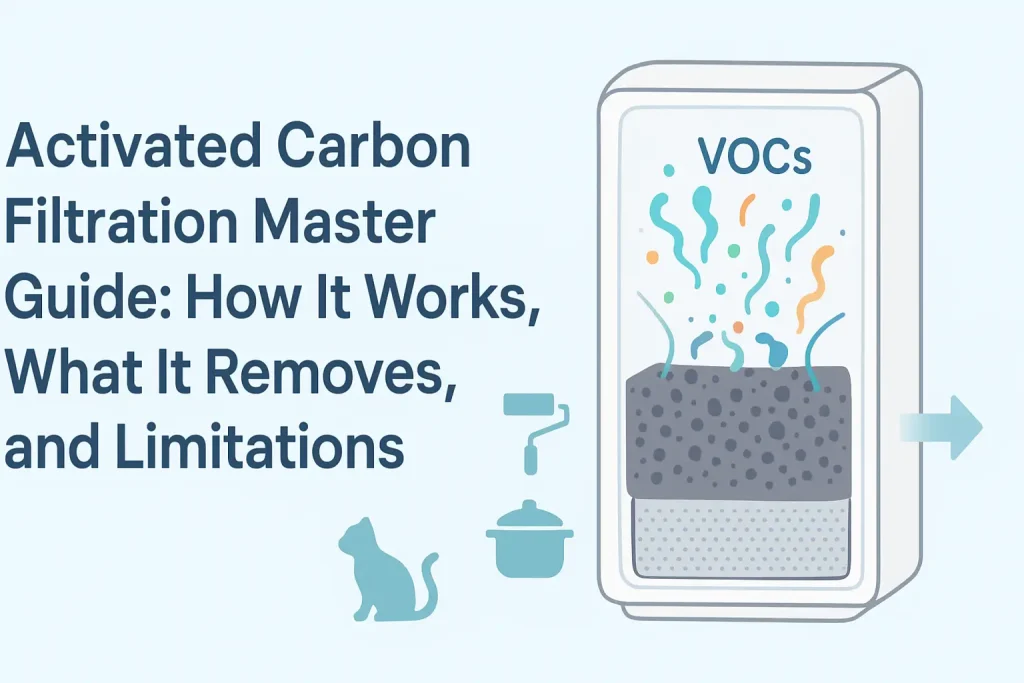
Stage three is the activated carbon filter. This stage adsorbs the volatile organic compounds and odors that accompany smoke. Carbon filters vary widely in quality. The best units use granular activated carbon with at least 10 pounds of carbon media. Thin carbon-impregnated foam sheets provide minimal VOC capture and are not suitable for fire damage restoration.
Housing Construction and Seal Integrity
The housing must maintain a perfect seal under negative pressure. A unit that leaks even 5% of its airflow around the filter gasket loses 5% of its filtration efficiency. For smoke remediation where every particle reduction percentage matters, this is unacceptable.
Look for rigid metal or thick ABS plastic housings. Latched or bolted access doors provide better seal integrity than snap-fit panels. Gasketed filter frames prevent air bypass around the HEPA filter edges. Units with a differential pressure gauge or filter monitoring system let you verify seal integrity during operation.
Portability, Ducting, and Setup Flexibility
Air scrubbers weigh between 30 and 60 pounds. Most include handles and some have wheels. For smoke remediation, you need to move the unit between rooms or position it to create negative pressure in a containment zone. The ability to attach ducting to the intake or exhaust is a critical feature.
Ducting capability lets you exhaust filtered air outside to create negative pressure inside a smoke-affected space. This prevents smoke from migrating to clean areas of the building. Most commercial air scrubbers include 8-inch or 12-inch duct collars as standard. Consumer units rarely offer this feature.
Top 5 Air Scrubbers for Smoke Compared
The five air scrubbers below represent the best options across different price points, CFM ratings, and use cases. Every unit on this list uses True HEPA filtration with gasketed filter frames and is rated for continuous operation.
You are looking at the comparison matrix below. It shows the CFM, filter configuration, coverage area at 4 ACH and 6 ACH, noise level, and annual filter cost for each of the top five air scrubbers. Use this table to narrow down which units match your room size and smoke load.
Product Comparison
Air Scrubbers Compared – CFM, Coverage, Filter Configuration, and Annual Cost
Key specs compared across top picks. Coverage at 4 ACH and 6 ACH calculated for standard 8 ft ceiling height.
| Model | Max CFM | Coverage at 4 ACH | Coverage at 6 ACH | Filter Stages | Annual Filter Cost | Best For |
|---|---|---|---|---|---|---|
| Abatement Technologies Predator 750 | 750 CFM | 1,406 sq ft | 938 sq ft | Pre-filter + HEPA + Carbon | $180-$250/yr | Large spaces, fire restoration |
| Dri-Eaz HEPA 700 | 700 CFM | 1,313 sq ft | 875 sq ft | Pre-filter + HEPA | $150-$200/yr | Professional restoration |
| Phoenix Guardian R Pro | 500 CFM | 938 sq ft | 625 sq ft | Pre-filter + HEPA + Carbon | $120-$180/yr | Mid-size rooms, wildfire season |
| KJGL01A 500 H13 HEPA | 500 CFM | 938 sq ft | 625 sq ft | Pre-filter + H13 HEPA + Carbon | $100-$150/yr | Value pick, home use |
| BlueDri BD-AS-550-BL | 550 CFM | 1,031 sq ft | 688 sq ft | Pre-filter + HEPA + Carbon | $130-$180/yr | All-around home and light commercial |
CFM ratings from manufacturer specification sheets. Coverage area calculated as (CFM x 60) / (ACH x 8 ft ceiling). Filter costs based on manufacturer-recommended replacement intervals at 8 hours daily operation. Prices verified at time of publication.
Abatement Technologies Predator 750: Best Overall for Smoke Remediation
The Abatement Technologies Predator 750 delivers 750 CFM of filtered airflow through a three-stage filter stack: MERV 8 pre-filter, True HEPA, and a deep-bed activated carbon stage. This is the highest CFM rating in the portable air scrubber category and the unit that professional restoration contractors reach for first on fire damage jobs.
The housing is rotomolded polyethylene with a gasketed filter access door and a latched closure system. This material choice matters because it maintains seal integrity under the negative pressure created by the 1.5 horsepower motor. The Predator 750 includes both 8-inch and 12-inch duct collars, allowing you to exhaust filtered air outside or pull from a contained area.
Key Specifications:
• Max airflow: 750 CFM on high speed
• Filter stages: MERV 8 pre-filter, True HEPA, activated carbon
• Coverage at 4 ACH: 1,406 sq ft (8 ft ceiling)
• Coverage at 6 ACH: 938 sq ft (8 ft ceiling)
• Weight: 52 lbs
For large open-plan spaces, whole-floor smoke remediation, or professional fire restoration work, the Predator 750 is the clear choice. The higher upfront cost is offset by the faster cleanup time and the unit’s ability to handle sustained heavy particulate loads without filter bypass or motor strain.
Use the table below to compare the Predator 750 against the other top air scrubbers across the metrics that matter most for smoke remediation.
Dri-Eaz HEPA 700: Best for Professional Restoration Contractors
The Dri-Eaz HEPA 700 moves 700 CFM and is built specifically for the restoration industry. Dri-Eaz is a Legend Brands company, and their equipment is standard issue in water damage, mold, and fire restoration fleets across North America. The HEPA 700 uses a two-stage filter stack (pre-filter plus True HEPA) with an optional carbon add-on.
The unit’s standout feature is its stackable design and daisy-chain capability. Multiple HEPA 700 units can be linked together with ducting to create a combined airflow system. For large commercial spaces or whole-house fire remediation, this allows you to scale CFM without switching to a permanently installed negative air system.
Key Specifications:
• Max airflow: 700 CFM on high speed
• Filter stages: Pre-filter, True HEPA (carbon filter add-on available)
• Coverage at 4 ACH: 1,313 sq ft (8 ft ceiling)
• Coverage at 6 ACH: 875 sq ft (8 ft ceiling)
• Weight: 45 lbs
The Dri-Eaz HEPA 700 is the right choice if you are a restoration contractor or a homeowner dealing with a single large-scale smoke event who wants professional-grade equipment. The filter replacement cost is moderate, and the unit’s widespread use in the restoration industry means replacement filters and parts are readily available from multiple suppliers.
Phoenix Guardian R Pro: Best Mid-Range Option for Wildfire Season
The Phoenix Guardian R Pro delivers 500 CFM through a three-stage filter system at a price point that makes sense for homeowners in wildfire-prone regions. This is the unit you buy before fire season starts, not during an evacuation warning when inventory is gone.
The Guardian R Pro uses a gasketed HEPA frame with a compression latch system. This is the same seal design found on more expensive commercial units. The three-stage stack includes a washable pre-filter, a True HEPA filter, and a granular activated carbon filter with approximately 8 pounds of carbon media. This carbon stage is what separates the Guardian R Pro from cheaper 500 CFM units that use thin carbon-impregnated foam.
Key Specifications:
• Max airflow: 500 CFM on high speed
• Filter stages: Washable pre-filter, True HEPA, granular activated carbon
• Coverage at 4 ACH: 938 sq ft (8 ft ceiling)
• Coverage at 6 ACH: 625 sq ft (8 ft ceiling)
• Weight: 38 lbs
For a 1,500 to 2,000 square foot home, two Guardian R Pro units running simultaneously provide comprehensive smoke protection. Place one in the main living area and one in the primary bedroom. At 500 CFM each, the combined 1,000 CFM achieves 4 ACH in approximately 1,875 square feet of living space with 8-foot ceilings.
KJGL01A 500 H13 HEPA: Best Value Air Scrubber for Smoke
The KJGL01A 500 is the most affordable 500 CFM air scrubber that still uses a genuine H13 HEPA filter. H13 is a European norm certification that requires 99.95% efficiency at the most penetrating particle size. This is slightly higher than the 99.97% True HEPA standard, though the difference is negligible for smoke particles.
The unit’s housing is painted steel with a gasketed filter door and tool-free filter access. The motor is a single-speed 1/3 horsepower unit that draws approximately 3 amps. At 500 CFM, this unit achieves the same room coverage as the Phoenix Guardian R Pro at a lower purchase price, though the filter replacement cost is slightly higher due to the H13 filter specification.
Key Specifications:
• Max airflow: 500 CFM on high speed
• Filter stages: Pre-filter, H13 True HEPA, activated carbon
• Coverage at 4 ACH: 938 sq ft (8 ft ceiling)
• Coverage at 6 ACH: 625 sq ft (8 ft ceiling)
• Weight: 35 lbs
This unit is the best choice for homeowners who need genuine HEPA smoke filtration at the lowest possible purchase price. The trade-off is a slightly louder motor and a single-speed operation rather than the variable-speed control found on more expensive units. For continuous operation during wildfire smoke events, the noise level at 500 CFM is approximately 65 dB, which is noticeable but not disruptive in a living room setting.
BlueDri BD-AS-550-BL: Best All-Around Home and Light Commercial Unit
The BlueDri BD-AS-550-BL splits the difference between the 500 CFM budget units and the 700-plus CFM professional machines. At 550 CFM with a three-stage filter stack, it provides better coverage than the 500 CFM units while remaining portable and affordable enough for home use.
BlueDri builds this unit with a thermoplastic housing that is lighter than steel but thicker than the ABS plastic used in consumer air purifiers. The filter access uses a swing-door design with a compression gasket. The unit includes both intake and exhaust duct collars, and the control panel offers two-speed operation with a runtime hour meter.
Key Specifications:
• Max airflow: 550 CFM on high speed
• Filter stages: Pre-filter, True HEPA, activated carbon
• Coverage at 4 ACH: 1,031 sq ft (8 ft ceiling)
• Coverage at 6 ACH: 688 sq ft (8 ft ceiling)
• Weight: 42 lbs
The BlueDri BD-AS-550-BL is the right pick if you want a single air scrubber that can handle the main living area of a typical home during wildfire season and also serve as a general-purpose air cleaner for construction dust, renovation debris, or seasonal allergy relief. It is the most versatile unit on this list and the one we recommend for most homeowners who want one air scrubber that does everything reasonably well.
Air Scrubber Performance Data: CFM Comparison Across Top Models
The chart below shows the comparative CFM ratings of the top five air scrubbers for smoke remediation. CFM is the single most important performance metric for an air scrubber because it determines how many air changes per hour the unit can achieve in your specific space.
Performance Data
Maximum CFM Comparison – Top Air Scrubbers for Smoke
Source: Manufacturer specification sheets. CFM measured at high speed with clean filters.
How to Use an Air Scrubber for Smoke Remediation: Step-by-Step Setup
Setting up an air scrubber correctly for smoke remediation is the difference between clearing a room in 4 hours and running the unit for 12 hours with minimal improvement. The steps below cover placement, sealing, ducting, and runtime strategy for both wildfire smoke infiltration and fire damage restoration.
Step 1: Seal the Space First
Close all windows and exterior doors. Seal gaps around window frames and door frames with painter’s tape or removable weather stripping. For wildfire smoke infiltration, this step alone can reduce the particulate load on your air scrubber by up to 40%.
For fire damage restoration, install plastic sheeting over doorways and any openings to adjacent clean areas. Use a zipper door system if you need to enter and exit the contained space. The goal is to create a negative pressure zone where the air scrubber is the only path for air exchange.
Step 2: Position the Air Scrubber for Maximum Airflow
Place the unit in the center of the room or the area with the highest smoke concentration. Keep it at least 12 inches from walls and furniture on all sides. The intake and exhaust need unobstructed airflow paths.
If creating negative pressure, position the unit near an exterior door or window. Attach the exhaust duct to the unit’s outlet collar and run the duct outside through a window or door opening. Seal the gap around the duct with plastic sheeting and tape. This exhausts filtered air outside, creating a pressure differential that prevents smoke from migrating to clean areas.
Step 3: Set the Correct Fan Speed and Runtime
Run the air scrubber on high speed for the first 2 hours. This achieves the maximum air changes per hour during the initial particulate load reduction phase. After 2 hours, switch to medium speed if the unit has variable speed control.
For wildfire smoke events, run the unit continuously until outdoor AQI drops below 100. For fire damage restoration, expect to run the unit for 48 to 72 hours minimum, replacing the pre-filter after the first 24 hours if visible soot loading is heavy.
Step 4: Monitor and Replace Filters on Schedule
Check the pre-filter every 8 hours during the first 48 hours of operation. If the pre-filter is visibly dark or clogged, replace it immediately. A loaded pre-filter reduces airflow through the HEPA stage, cutting effective CFM and increasing motor strain.
The HEPA filter should be replaced after every major smoke event or every 3 to 6 months of continuous use during wildfire season. The carbon filter should be replaced every 2 to 3 months during active use. Carbon media saturates over time and loses its VOC adsorption capacity.
Air Scrubber Cost Analysis: Purchase Price, Filter Replacement, and Electricity
The total cost of running an air scrubber for smoke remediation includes three components: the purchase price, ongoing filter replacement costs, and electricity consumption. Over a 5-year ownership period, filter costs often exceed the initial purchase price for units used during annual wildfire seasons.
A 500 CFM air scrubber purchased for $500 and run 8 hours daily for 3 months each year will consume approximately $35 in electricity annually at the national average rate of 13 cents per kilowatt-hour. Filter replacement during that same period adds $120 to $180 per year. Over 5 years, the $500 unit costs $1,275 to $1,575 total, with filters accounting for 60% of the lifetime cost.
Price Comparison
Air Scrubber Price Comparison – Unit Cost and Annual Filter Cost
Unit purchase price plus estimated annual filter replacement cost. Prices verified at time of publication.
$350 unit + $125/yr filters
$550 unit + $155/yr filters
$650 unit + $150/yr filters
$850 unit + $175/yr filters
$1,000 unit + $215/yr filters
Bar width represents unit purchase price relative to the most expensive product shown. Filter costs are estimates based on manufacturer-recommended replacement intervals for 8 hours daily operation during a 3-month wildfire season. Genuine filters used for all cost estimates.
Common Mistakes to Avoid When Using an Air Scrubber for Smoke
Running an air scrubber with a clogged pre-filter is the most common mistake and the most damaging. A loaded pre-filter restricts airflow, reducing effective CFM by 30% to 50%. The motor works harder, the HEPA filter sees reduced airflow, and the room’s air changes per hour drop below the target level.
Check the pre-filter every 8 hours during the first 48 hours of heavy smoke use. Replace it when it is visibly dark or when airflow at the exhaust feels noticeably weaker than at startup. A $15 pre-filter is cheaper than the electricity cost of running a restricted unit for an extra 12 hours to achieve the same air cleaning result.
Placing the unit in a corner or against a wall is another common error. An air scrubber needs at least 12 inches of clearance on the intake side and 24 inches on the exhaust side. Corner placement reduces effective airflow by 20% to 30% due to recirculation of exhaust air back into the intake.
Failing to seal the room is the mistake that makes the biggest difference in results. An air scrubber running in an unsealed room with open windows is fighting an infinite supply of outdoor smoke particles. The unit will never achieve the target air changes per hour because the infiltration rate exceeds the filtration rate. Seal windows, doors, and any gaps before starting the unit.
Air Scrubber Maintenance and Filter Replacement Schedule
Pre-filters should be replaced every 1 to 4 weeks during active smoke season, depending on smoke concentration. During heavy wildfire smoke events with AQI above 150, check the pre-filter daily. A pre-filter costs $10 to $20 and is the cheapest insurance against HEPA filter damage and reduced CFM.
HEPA filters should be replaced every 6 to 12 months during regular use, or after every major smoke event. A HEPA filter loaded with smoke particles does not lose efficiency (it actually becomes slightly more efficient as particles fill the media), but it does lose airflow. When the pressure drop across the HEPA filter increases, effective CFM decreases. If your unit has a filter change indicator or pressure gauge, follow that reading. If not, replace the HEPA filter when you notice a significant reduction in exhaust airflow.
Activated carbon filters should be replaced every 2 to 3 months during active use. Carbon media adsorbs VOCs until it reaches saturation, at which point it stops capturing new compounds and can release previously captured ones. If you notice smoke odor returning even though the unit is running, the carbon filter is saturated. Replace it immediately.
Our guide on air scrubbers for mold remediation covers filter replacement scheduling and containment setup in detail for multi-contaminant scenarios.
What Is the Difference Between an Air Scrubber and a Negative Air Machine?
An air scrubber recirculates filtered air back into the same room. A negative air machine exhausts filtered air outside through ducting, creating negative pressure in the room. The same machine can often serve both functions depending on how you configure the ducting.
For smoke remediation, negative air configuration is preferred when you are trying to prevent smoke from migrating to clean areas of the building. The negative pressure ensures that air flows into the contained space, not out of it. Recirculation mode is appropriate when the entire building is affected by smoke and you are simply trying to reduce particle concentrations as quickly as possible.
Most of the units on this list support both configurations. The Predator 750 and Dri-Eaz HEPA 700 include multiple duct collar sizes specifically for negative air setup. The Phoenix Guardian R Pro and BlueDri BD-AS-550-BL include single duct collars that work for both intake and exhaust ducting.
Can I Use an Air Scrubber for Wildfire Smoke in My Home Without Professional Setup?
Yes. A homeowner can set up and operate an air scrubber for wildfire smoke without professional assistance. The process is straightforward: seal the room, place the unit in the center, run it on high speed, and monitor the pre-filter. You do not need ducting or negative air setup for basic whole-room smoke reduction.
The key is sizing the unit correctly. A 500 CFM air scrubber in a 200-square-foot bedroom with 8-foot ceilings achieves 18.75 air changes per hour. That is overkill. The same unit in a 1,000-square-foot open-plan living area achieves 3.75 ACH. That is barely adequate for smoke. Match your unit’s CFM to your largest room using the formula CFM = (room sq ft x 8 x target ACH) divided by 60.
For example, a 600-square-foot living room with 8-foot ceilings at 5 ACH needs a minimum of 400 CFM. A 500 CFM unit provides a comfortable margin. A 350 CFM consumer air purifier does not, even if its manufacturer claims it covers 600 square feet. Manufacturer coverage claims are almost always based on 2 ACH, which is insufficient for smoke.
How Long Does It Take an Air Scrubber to Clear Smoke From a Room?
At 5 air changes per hour, an air scrubber reduces smoke particle concentrations by approximately 85% within 30 minutes and 99% within 90 minutes. This assumes the room is sealed and no new smoke is entering. At 2 ACH, the same 99% reduction takes approximately 4 hours.
The exact time depends on the starting concentration, the unit’s CFM relative to room volume, and the infiltration rate of outdoor smoke. During active wildfire events with AQI above 200, continuous infiltration means the air scrubber is always playing catch-up. The higher the ACH, the faster it catches up after each infiltration spike.
For fire damage restoration where surfaces are off-gassing smoke compounds, expect to run the air scrubber for 48 to 72 hours minimum. The particulate load in the first 24 hours is extremely high as the unit pulls settled particles back into suspension. Pre-filter changes during this period are critical to maintaining airflow.
Do Air Scrubbers Produce Ozone?
True HEPA air scrubbers do not produce ozone. They use mechanical filtration only. The confusion arises because some air scrubbers marketed for odor removal include UV-C lamps or ionizer stages that do produce small amounts of ozone as a byproduct.
For smoke remediation, avoid any unit that includes an ionizer or UV-C stage unless you specifically need those features and have verified the unit’s ozone output is below the CARB limit of 0.050 parts per million. All the units on our top five list are mechanical filtration only. They produce zero ozone.
If you are comparing an air scrubber that includes ionization, check the manufacturer’s CARB certification status. Units sold in California must comply with the 0.050 ppm ozone limit. Units without CARB certification may produce ozone at levels that can irritate the respiratory system, which is the last thing you want during a smoke event.
How Do I Know When the HEPA Filter Needs Replacement?
The most reliable indicator is a measurable drop in exhaust airflow. If your unit has a pressure gauge or manometer port, the HEPA filter should be replaced when the pressure drop across the filter reaches the manufacturer’s specified maximum, typically 1.0 to 1.5 inches of water column.
Without a gauge, use the hand test. At startup with a clean filter, hold your hand 6 inches from the exhaust. Note the strength of the airflow. Test again every few weeks. When the airflow feels noticeably weaker, replace the HEPA filter. A visual check is less reliable because HEPA filters can look dirty while still performing adequately, or look clean while being loaded with sub-micron particles that have penetrated deep into the media.
For smoke-specific use, replace the HEPA filter after every major wildfire season or fire damage event. Smoke particles are extremely fine and embed deeply into the HEPA media. The filter may look clean but have significant airflow restriction from embedded particles that are not visible to the naked eye.
What Size Air Scrubber Do I Need for a 2,000 Square Foot Home?
A single 750 CFM air scrubber at 4 ACH covers 1,406 square feet with 8-foot ceilings. This is not enough for a full 2,000-square-foot home. You need either two 500 CFM units placed in different zones, or one 750 CFM unit supplemented by the home’s HVAC system running with a MERV 13 filter.
The practical approach for a 2,000-square-foot home during wildfire season is to use one air scrubber in the main living area and run the HVAC fan continuously with a MERV 13 or higher furnace filter installed. The HVAC system provides whole-house air circulation and filtration at a lower CFM, while the air scrubber handles the particulate load in the primary occupied space.
For fire damage restoration in a 2,000-square-foot home, professional restoration companies typically deploy two to three 700 to 750 CFM units with negative air ducting. This is not a DIY scenario. The particulate load, the need for containment zoning, and the equipment requirements exceed what a single portable air scrubber can handle.
Can I Build a DIY Air Scrubber for Smoke Instead of Buying One?
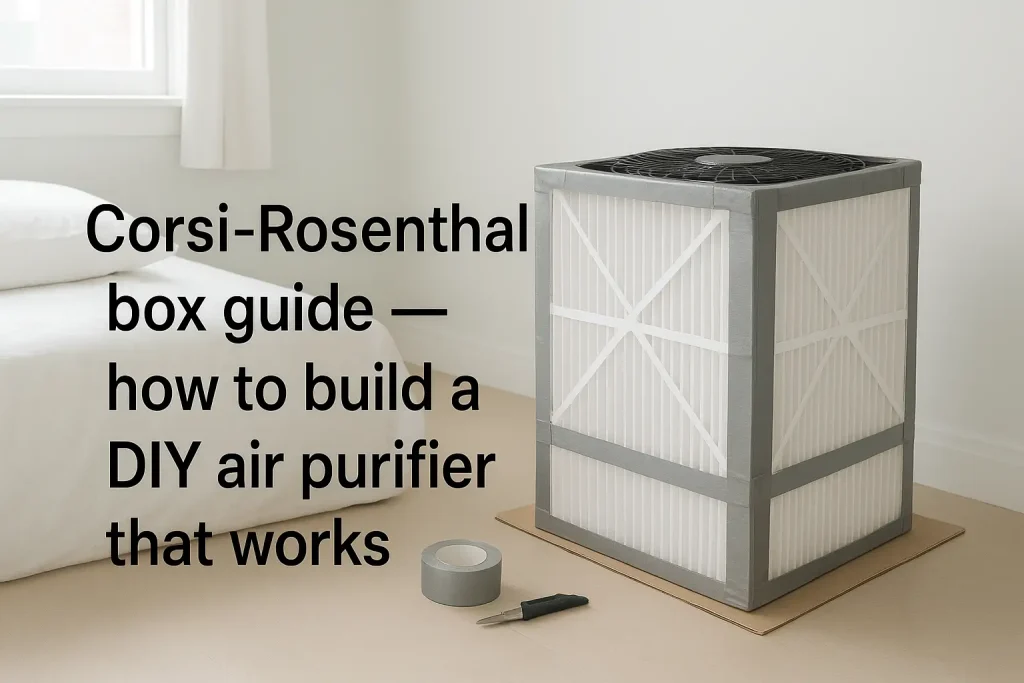
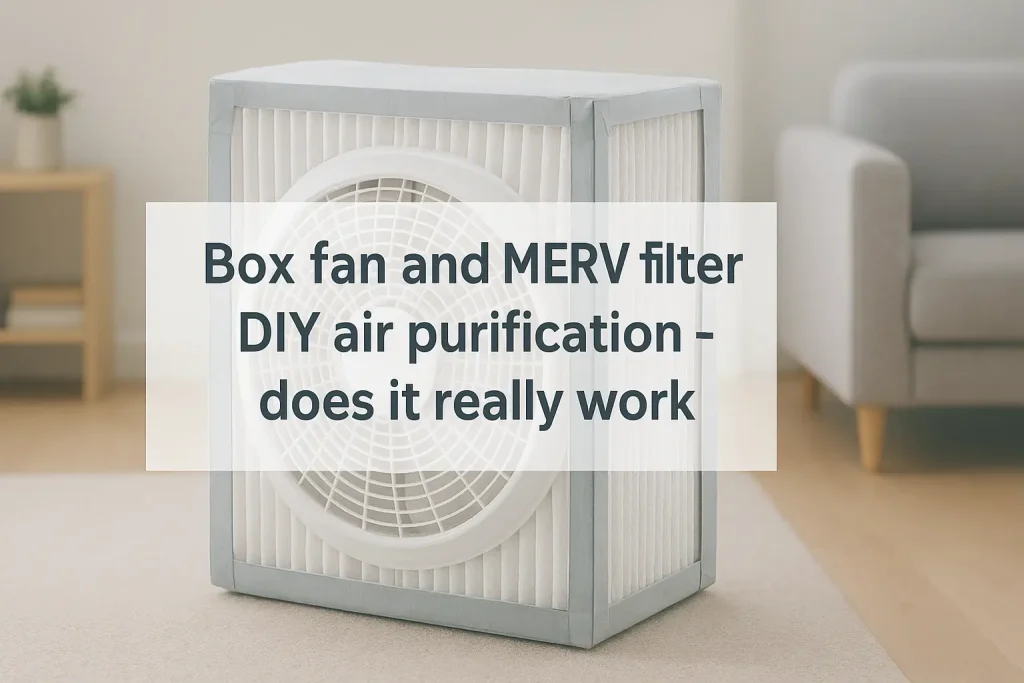
A Corsi-Rosenthal box (four MERV 13 filters taped to a box fan) can achieve approximately 400 to 600 CFM of filtered airflow, depending on the fan and filter combination. This is comparable to a 500 CFM commercial air scrubber in terms of airflow, but the filtration efficiency is lower.
A MERV 13 filter captures approximately 75% of particles in the 0.3 to 1 micron range. A True HEPA filter captures 99.97% at 0.3 microns. For wildfire smoke, the difference matters. A Corsi-Rosenthal box running at 500 CFM with MERV 13 filters will take longer to achieve the same particle reduction as a 500 CFM True HEPA air scrubber. The box fan is also not rated for continuous operation and may fail after several weeks of 24-hour use.
For emergency use during a wildfire smoke event when commercial air scrubbers are sold out, a Corsi-Rosenthal box is a viable temporary solution. Build one with a 20-inch box fan rated for continuous operation and four MERV 13 20×20 filters. For long-term smoke protection, invest in a purpose-built air scrubber with True HEPA filtration.
Why Does My Air Scrubber Smell Like Burning After Running for Several Hours?
A burning smell from a new air scrubber during the first few hours of operation is usually motor winding insulation off-gassing. This is normal and should dissipate within 8 to 12 hours of use. If the smell persists beyond the first day, the motor may be overheating due to a restricted filter or a manufacturing defect.
If the unit is not new and produces a burning smell, check the pre-filter and HEPA filter immediately. A severely loaded filter increases motor amp draw, which can cause the motor windings to overheat. Replace the filters and let the motor cool for 30 minutes before restarting. If the smell returns, the motor has sustained damage and the unit needs service.
A burning smell that is accompanied by the unit cycling on and off is a thermal overload protection trip. The motor is overheating and shutting down to protect itself. This is almost always caused by a clogged filter. Replace the filter and ensure adequate clearance around the intake and exhaust before restarting.
What Is the Best Air Scrubber for Wildfire Smoke Specifically?
For wildfire smoke specifically, the Phoenix Guardian R Pro at 500 CFM offers the best combination of filtration quality, activated carbon for smoke odor, and price point for homeowners in wildfire-prone areas. The three-stage stack with granular carbon addresses both the particulate and VOC components of wildfire smoke.
If budget is not a constraint, the Abatement Technologies Predator 750 at 750 CFM provides the highest single-unit coverage area. For a 1,500-square-foot home, one Predator 750 handles the main living area and bedrooms with the HVAC fan running on continuous circulation with a MERV 13 filter. This combination is the most effective wildfire smoke mitigation strategy short of a whole-house HEPA system.
Our review of the Aerus air scrubber covers a different approach to whole-home air treatment that some homeowners may find more suitable for integrated HVAC systems.
For most homeowners, the BlueDri BD-AS-550-BL at 550 CFM is the top recommendation. It provides enough CFM for a typical living room and kitchen, includes a proper three-stage filter stack, and costs less over 5 years of ownership than the professional-grade units when filter replacement costs are included. It is the right balance of performance, reliability, and total cost of ownership for annual wildfire season use.