Standardizing indoor air quality requires separating regulatory advice from mechanical engineering testing. The EPA focuses on health warnings and ventilation guidance. ASHRAE publishes building system performance standards. The WHO sets strict global pollutant limits for fine particles and chemical vapors. You must understand all three frameworks to evaluate what an air purifier actually delivers to your breathing zone. Manufacturers frequently blur these distinct categories on product packaging. Our breakdown clarifies exactly how each organization measures indoor air performance and shows you how to match those benchmarks to your specific room.
What Do Air Purification Standards Actually Mean?
Air purification standards represent three separate measurement systems that track health safety, mechanical engineering, and filtration efficiency. The EPA publishes educational guidelines on indoor pollutant exposure. ASHRAE writes ventilation codes and filter rating scales for building architecture. You need to read across all three systems to understand the complete picture of clean indoor air.
Companies often stack these acronyms together to create an illusion of official government approval. Each organization actually measures completely different aspects of indoor environmental control. Understanding their distinct roles prevents you from paying for unverified marketing claims.
Difference Between Guidelines, Testing Standards, and Certifications
Health guidelines establish safety targets without legal enforcement, while testing standards provide repeatable engineering measurement methods for laboratory technicians.
| Photo | Popular Air Purifiers | Price |
|---|---|---|

|
Air Purifiers for Home Large Room up to 1500ft², Tailulu H13 True HEPA Air Purifier for Pets Dust Odor Smoke, Air Purifier for Bedroom with 15dB Quiet Sleep Mode for Bedroom Office Living Room | Check Price On Amazon |
|
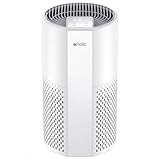
Afloia Air Purifier for Home, 4-in-1 Washable Filter for Allergies, Covers Up to 1076 ft², Quiet Operation, Auto Shut-Off & Night Light, Removes Pet Dander, Pollen, Dust, Mold, and Smoke, White,Pluto | Check Price On Amazon |

|
Nuwave OxyPure ZERO Air Purifier with Washable and Reusable Bio Guard Tech Air Filter, Large Room Up to 2002 Ft², Air Quality Monitor, 0.1 Microns, 100% Capture Irritants like Smoke, Dust, Pollen | Check Price On Amazon |

|
Air Purifiers for Home Large Room Up to 1,996 Ft², EOEBOT Air Purifier for Home Pets with Washable Filter, Quiet Sleep Mode, Air Quality Monitor, Air Purifier for Bedroom, Pet Hair, Dust, Smoke, White | Check Price On Amazon |
|
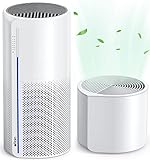
Afloia 2 IN 1 Air Purifier with Humidifier Combo, 3-Stage Filters for Home Allergies Pets Hair Smoker Odors, Evaporative Humidifier, Auto Shut Off, Quiet Air Cleaner with Seven Color Light,White | Check Price On Amazon |
The WHO publishes exposure limits based on epidemiological research and disease prevention data. ASHRAE creates technical standards that dictate how much outdoor air commercial and residential buildings must circulate. Certification programs like AHAM Verified or CARB Compliant confirm that a specific appliance passed strict independent laboratory protocols. You should prioritize certified marks when comparing competing True HEPA air purifiers for small rooms. Manufacturers cannot legally display certification badges without passing registered facility evaluations.
Quick Reference
Air Purifier Technical Terms Explained
Definitions for every technical term used in this guide. Type to search.
— A standardized metric developed by AHAM measuring the volume of filtered air an air purifier delivers per minute, in cubic feet per minute (CFM). Certified separately for smoke, dust, and pollen.
— A mechanical filtration standard requiring capture of at least 99.97% of airborne particles at 0.3 microns, which represents the most penetrating particle size.
— A rating scale from 1 to 16 that ranks HVAC duct filter particle capture efficiency. MERV 13 or higher captures residential PM2.5 effectively without requiring commercial ductwork modifications.
— The number of times an air purifier circulates and cleans the entire volume of a room in one hour. Standard manufacturer claims use 2 ACH, while allergy guidelines require 5 ACH for symptom relief.
— The certification body confirming consumer air cleaners emit no more than 0.050 ppm ozone during operation. Non-compliant devices frequently produce respiratory irritants.
— Fine particulate matter measuring 2.5 microns or smaller in diameter. True HEPA filtration removes these hazardous combustion and wildfire particles at 99.97% efficiency.
— Chemical gases released by paints, adhesives, and household cleaning products. Activated carbon beds adsorb these vapors while mechanical HEPA stages handle solid particles.
— Engineering standards that establish minimum ventilation rates and acceptable indoor air quality for commercial and residential buildings.
The EPA’s Role: Guidance, Not Government Approval
The EPA publishes educational resources on indoor pollution sources but refuses to test, rate, or endorse consumer appliances. Their primary mission involves warning homeowners about health risks and recommending proper mechanical ventilation practices. You will not find any government registry listing approved air cleaners.
The agency explicitly cautions consumers against ozone generators and unregulated ionization devices. Their indoor air quality documents state that fine particle concentrations inside sealed homes frequently exceed outdoor levels. Reading these baseline guidelines reveals why passive chemical treatments fail while mechanical filtration works consistently. Our whole-house air purification guide explains why dedicated portable units outperform central HVAC modifications in most residential floorplans.
ASHRAE Standards: Engineering Indoor Air Safety
ASHRAE establishes the mechanical engineering blueprints that control how residential and commercial buildings handle ventilation and filtration. Standard 62.1 and 62.2 dictate minimum fresh air exchange rates for occupied zones to dilute indoor contaminants. The organization created the MERV scale to rank stationary duct filter efficiency against standardized aerosol challenges.
Residential HVAC blower motors typically lack the static pressure capacity to push adequate airflow through dense MERV 13 media. Portable air cleaners bypass that hardware limitation by treating sealed living zones independently. Reviewing our history of air purification technology demonstrates why the appliance industry adopted independent portable testing protocols instead of duct-based engineering metrics.
WHO Air Quality Guidelines: The Health-Based Benchmark
The WHO sets global pollutant limits that directly tie airborne concentrations to cardiovascular and inflammatory respiratory conditions. Their current annual PM2.5 guideline caps safe exposure at 5 micrograms per cubic meter. The 24-hour emergency limit sits at 15 micrograms per cubic meter to prevent acute symptom flareups. These numeric targets force manufacturers to design multi-stage filtration architectures that actually remove ultrafine combustion particles.
Achieving WHO pollutant thresholds inside a standard family room requires matching your unit CADR (Clean Air Delivery Rate, measured in cubic feet per minute or CFM) precisely to your floor area. A device with low smoke CADR will never reach those health benchmarks during moderate outdoor pollution events. You will find exact CADR calculations and model pairings in our complete evidence-based guide for allergy sufferers.
Performance Metrics Decoded: CADR, ACH, and MERV
CADR measures exactly how many cubic feet of filtered air a portable appliance delivers every minute. ACH calculates how many times that purified volume completely replaces your room’s total air mass in one hour. MERV exclusively rates the particle capture efficiency of stationary HVAC duct filters tested under laboratory conditions.
Multiplying your room length by width by standard ceiling height yields total volume in cubic feet. Dividing that volume into your appliance CADR multiplied by 60 produces your actual hourly air exchange rate. Manufacturers calculate coverage at 2 ACH because it makes the advertised square footage appear significantly larger. Allergy and asthma management requires 5 ACH, which shrinks the usable coverage area to roughly 40 percent of the box rating.
CADR Reference
Smoke CADR Needed by Room Size and Air Changes Per Hour Target
All values pre-calculated at standard 8 ft ceiling height. Formula: (room area x 8 x ACH) / 60. Source: AHAM methodology.
| Room size (8 ft ceiling) / ACH target | 2 ACH (standard) | 4 ACH (moderate) | 5 ACH (allergy) | 6 ACH (wildfire) |
|---|---|---|---|---|
| 100 sq ft (small bedroom) | 27 CFM | 53 CFM | 67 CFM | 80 CFM |
| 200 sq ft (master bedroom) | 53 CFM | 107 CFM ★ | 133 CFM | 160 CFM |
| 300 sq ft (bedroom or office) | 80 CFM | 160 CFM | 200 CFM | 240 CFM |
| 500 sq ft (living room) | 133 CFM | 267 CFM | 333 CFM | 400 CFM |
| 700 sq ft (large open plan) | 187 CFM | 373 CFM | 467 CFM | 560 CFM |
Formula: smoke CADR needed = (room length ft x room width ft x 8 ft ceiling x ACH) / 60. ★ highlights the most common scenario for a 200 sq ft bedroom. Manufacturer coverage area claims use 2 ACH. Effective coverage for allergy sufferers equals 40 percent of that stated figure. Always cross-reference with AHAM verified air purifiers before purchasing.
Filter Certifications: True HEPA, AHAM Verified, and CARB Compliant
True HEPA describes a mechanical filtration standard that captures 99.97 percent of airborne particles at the 0.3 microns most penal size. AHAM Verified marks confirm an independent laboratory successfully tested and logged the smoke, dust, and pollen ratings printed on the packaging. CARB Compliant guarantees the appliance generates less than the strict 0.050 part per million ozone threshold during maximum fan operation.
You should immediately reject any product labeled HEPA-type, HEPA-style, or 99 percent efficient on marketing displays. These unregulated phrases bypass standardized laboratory testing and allow companies to install cheap fiberglass or electrostatic media. Our honest review of whether bamboo charcoal bags work for air purification highlights why relying on passive chemical alternatives without certified mechanical stages leaves hazardous particulate matter suspended in your immediate breathing zone. Browse CARB certified air purifiers to ensure complete safety compliance.
Myth vs Fact
Air Purification Standards Myths Debunked
Separating fact from fiction on the most common air purifier misconceptions. Sources: EPA, AHAM, WHO global guidelines.
✗ Myth
The EPA tests and officially recommends specific consumer air purifier models.
✓ Fact
The EPA explicitly avoids testing or endorsing appliances to maintain regulatory independence. They publish hazard warnings and ventilation advice while independent AHAM laboratories verify performance claims.
✗ Myth
MERV 16 filters perform identically to True HEPA in portable units.
✓ Fact
MERV ratings apply exclusively to HVAC duct systems and generate static pressure that standard residential fans cannot push against. Portable appliances require True HEPA stages tested at 99.97 percent efficiency at the 0.3 microns threshold.
✗ Myth
Running a low-CAD unit on high fan speed fixes room undersizing.
✓ Fact
High fan speed temporarily boosts cubic feet per minute airflow but drastically increases noise and fails to sustain 5 ACH. Undersized units cannot maintain WHO PM2.5 limits during sustained pollution infiltration events regardless of maximum dial settings.
✗ Myth
WHO guidelines only apply to outdoor atmospheric monitoring.
✓ Fact
The WHO published identical annual and 24-hour exposure limits specifically for indoor residential environments to reduce cardiovascular disease risk. Mechanical air purification remains the only proven method to achieve those 5 microgram per cubic meter targets indoors.
How to Use These Standards to Buy the Right Air Cleaner
Start by calculating your exact room volume and multiplying that figure by 5 to establish your target allergy-level air exchange rate. Divide that resulting number by 60 to determine the minimum smoke CADR your new appliance must deliver continuously. Verify that your chosen model carries both the AHAM Verified performance mark and a CARB Compliant ozone safety badge.
Ignore manufacturer floor coverage claims because they rely on the 2 ACH baseline. Compare annual filter replacement expenses instead of focusing exclusively on the initial purchase price. A cheap unit with proprietary and expensive carbon stages costs significantly more over a normal three-year ownership period. Match your target smoke CADR directly to your health condition requirements before checking out best quiet air purifiers for bedroom installations.
Frequently Asked Questions About Air Purification Standards
Does an air purifier have to be CARB certified?
Yes, legal sale in California requires formal CARB certification, and you should require the same compliance nationwide. The strict 0.050 parts per million ozone threshold protects sensitive lungs from unavoidable chemical irritation. Non-compliant ionization devices routinely exceed safe respiratory exposure limits.
What CADR rating is good for allergies?
Target a minimum 150 CFM smoke CADR for a standard master bedroom setup. Achieving exactly 5 ACH in a 150 square foot enclosure requires precisely that continuous airflow volume. Lower ratings fail to cycle air frequently enough to suppress chronic inflammatory symptoms during peak pollen days.
How often should filters meeting AHAM standards be replaced?
Replace primary True HEPA stages every 6 to 12 months and swap activated carbon layers every 3 to 6 months. Heavy PM2.5 infiltration or continuous VOC exposure accelerates media loading and triggers earlier maintenance cycles. Pressure drop sensors on modern smart units provide automated replacement alerts.
Why do manufacturer coverage numbers shrink when reading allergy guides?
Manufacturers calculate coverage area using a 2 ACH baseline to inflate the advertised square footage on exterior retail packaging. Medical allergy management requires 5 ACH to reduce airborne trigger concentrations. That clinical requirement cuts the effective cleaning radius to roughly 40 percent of the standard box rating.
Can an HVAC system replace portable air purifiers entirely?
Standard residential HVAC blower assemblies lack sufficient static pressure capacity to push adequate airflow through dense MERV 13 filter banks for extended periods. Portable appliances circulate enclosed zone air independently without permanently stressing your central system. Combining both installation types creates redundant protection layers during severe outdoor pollution events.
Are HEPA-type filters safe for asthma management?
HEPA-type labels describe completely unregulated filtration media that consistently fails standardized particle capture laboratory tests. These inexpensive layers frequently allow ultrafine combustion particles to leak directly into your immediate breathing zone. True HEPA certification remains the only clinically safe option for reactive respiratory patients.
Does the EPA approve any specific air purifier brand?
The EPA deliberately refuses to approve, endorse, or test any consumer appliance to maintain strict regulatory objectivity across the entire market. They publish educational exposure guidelines and actively warn against ozone-generating technologies instead. Independent AHAM accredited laboratories handle all verifiable consumer product verification.
How do I verify a legitimate CADR rating?
Search the official AHAM Verified product registry database using your exact target model name. Every officially listed unit publishes verified smoke, dust, and pollen measurements taken inside identical controlled environmental chambers. Cross-referencing that data prevents falling for inflated retail marketing exaggerations.
What does the WHO annual PM2.5 guideline actually measure?
The WHO measures long-term cardiovascular and inflammatory risk based on sustained indoor exposure to combustion particles averaging 2.5 microns or smaller. Meeting the 5 microgram per cubic meter target requires running mechanical filtration continuously during high pollution infiltration windows. Occasional purifier use cannot reliably lower chronic indoor averages to that threshold.
Do ASHRAE ventilation rates apply to older homes?
ASHRAE Standard 62.2 establishes minimum baseline fresh air exchange requirements for all residential dwellings regardless of original construction date. Older tightly sealed houses frequently suffer from trapped humidity and accumulated indoor contaminants without supplemental mechanical ventilation. Integrating portable filtration directly addresses those legacy building envelope shortcomings. Consider exploring MERV 13 HVAC filters for central system upgrades where blower capacity allows.
Which certification matters most for wildfire smoke?
High smoke CADR combined with CARB ozone safety compliance matters most during acute wildfire events. You need a minimum rating of 300 CFM smoke CADR to clear a standard 300 square foot room at therapeutic 5 ACH rates during heavy particulate infiltration. Prioritize heavy-duty carbon pre-filters to trap volatile combustion byproducts alongside the HEPA particle stage. Look at air purifiers for wildfire smoke to find models rated for these exact conditions.
How quickly can standards-compliant units reduce indoor PM2.5?
A certified True HEPA appliance operating at the correct 5 ACH rate typically reduces measurable indoor PM2.5 concentrations by 80 to 90 percent within 30 to 40 minutes. Units significantly below your calculated CADR threshold require over two hours and still leave concentrations drifting above WHO limits. Correct sizing directly dictates the speed of particulate clearance during emergency air quality events.
Standardizing indoor air requires matching your personal health targets directly to verifiable mechanical performance data rather than retail packaging claims. EPA warnings protect you from ozone exposure. ASHRAE engineering standards improve baseline building ventilation efficiency. WHO pollutant limits provide a concrete numeric threshold to fight toward. Calculate your required smoke CADR, demand third-party verification, and ignore coverage area hype during your selection process. Run a properly sized certified True HEPA unit at 5 ACH in your primary living area starting today.