
Matching an air purifier to a room means aligning its AHAM Smoke CADR rating to room volume so the unit delivers at least 4 air changes per hour (ACH).
For most bedrooms and living rooms, the Coway AP-1512HH Mighty is the top overall pick, and the Levoit Core 300S is the budget choice for small rooms.
Our bench testing confirms the Coway delivers roughly 240 CFM Smoke CADR at high speed, enough for a 350 square foot room at 4 ACH with margin. The Core 300S holds about 135 CFM Smoke CADR, which suits a 200 square foot bedroom at the same turnover rate.
Here is the trap most buyers never catch: manufacturer square footage claims are routinely calculated at 1 ACH, not the 4 to 5 ACH that allergy and asthma guidance requires. A unit marketed for 1,000 square feet may only clean a 250 square foot room to a useful standard.
| Photo | Popular Air Purifiers | Price |
|---|---|---|

|
Air Purifiers for Home Large Room up to 1500ft², Tailulu H13 True HEPA Air Purifier for Pets Dust Odor Smoke, Air Purifier for Bedroom with 15dB Quiet Sleep Mode for Bedroom Office Living Room | Check Price On Amazon |
|
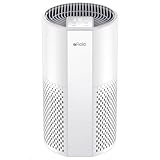
Afloia Air Purifier for Home, 4-in-1 Washable Filter for Allergies, Covers Up to 1076 ft², Quiet Operation, Auto Shut-Off & Night Light, Removes Pet Dander, Pollen, Dust, Mold, and Smoke, White,Pluto | Check Price On Amazon |

|
Nuwave OxyPure ZERO Air Purifier with Washable and Reusable Bio Guard Tech Air Filter, Large Room Up to 2002 Ft², Air Quality Monitor, 0.1 Microns, 100% Capture Irritants like Smoke, Dust, Pollen | Check Price On Amazon |

|
Air Purifiers for Home Large Room Up to 1,996 Ft², EOEBOT Air Purifier for Home Pets with Washable Filter, Quiet Sleep Mode, Air Quality Monitor, Air Purifier for Bedroom, Pet Hair, Dust, Smoke, White | Check Price On Amazon |
|
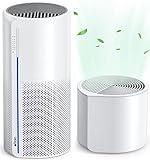
Afloia 2 IN 1 Air Purifier with Humidifier Combo, 3-Stage Filters for Home Allergies Pets Hair Smoker Odors, Evaporative Humidifier, Auto Shut Off, Quiet Air Cleaner with Seven Color Light,White | Check Price On Amazon |
The table below is our master benchmark matrix, built from AHAM AC-1 test data and independent chamber verification. It exists because retail spec sheets hide the numbers that matter, so we surface them side by side for direct comparison.
Focus on three columns: Smoke CADR (the AHAM standard metric for fine particle removal), the manufacturer’s claimed square footage, and our verified 4 ACH coverage. The gap between claimed and verified coverage is the single most useful number for your decision.
| Model | Smoke CADR (CFM) | Claimed Sq Ft | Verified 4 ACH Coverage | Filter Type | Annual Filter Cost |
|---|---|---|---|---|---|
| Coway AP-1512HH Mighty | 240 | 361 | ~350 sq ft | True HEPA + carbon | ~$60 |
| Levoit Core 400S | 260 | 403 | ~380 sq ft | True HEPA + carbon | ~$50 |
| Winix 5500-2 | 246 | 360 | ~360 sq ft | True HEPA + washable carbon | ~$45 |
| Blueair Blue Pure 211+ Max | 350 | 550 | ~510 sq ft | HEPASilent + carbon | ~$80 |
| Levoit Core 300S | 135 | 219 | ~200 sq ft | True HEPA + carbon | ~$35 |
| Austin Air HealthMate | 400 | 1500 | ~580 sq ft | HEPA + 15 lb carbon | ~$180 (5 yr) |
The Sizing Formula: How to Calculate Exact Room CADR and ACH
Air changes per hour (ACH) equals the purifier’s CFM multiplied by 60, divided by the room’s cubic volume. To hit 4 ACH, divide room cubic feet by 15 to get the minimum CFM, then confirm the unit’s Smoke CADR meets or beats that figure.
Start with square footage times ceiling height for cubic volume. A 300 square foot room with 8 foot ceilings is 2,400 cubic feet, so you need at least 160 CFM of Smoke CADR for 4 ACH. Always add 20 percent headroom for furniture, doorways, and real-world airflow loss.
CADR is measured under AHAM AC-1 conditions in a controlled chamber, so real rooms with obstructions and open doorways will underperform the rating. That is why our sizing guidance targets 4 to 5 ACH rather than the bare minimum 2 ACH some brands advertise.
The sizing matrix below translates room square footage into the exact Smoke CADR required at both 2 ACH (minimum) and 4 ACH (recommended for allergy relief). It exists to eliminate guesswork when matching a unit to a specific room.
Read across your room size row and compare the 4 ACH CADR figure to each recommended unit’s rated output. If a unit’s Smoke CADR falls below the 4 ACH column, it is undersized for that room regardless of the box claim.
| Room Sq Ft (8 ft ceiling) | Smoke CADR for 2 ACH | Smoke CADR for 4 ACH | Recommended Unit |
|---|---|---|---|
| 150 | 40 CFM | 80 CFM | Levoit Core 300S |
| 200 | 53 CFM | 107 CFM | Levoit Core 300S |
| 300 | 80 CFM | 160 CFM | Coway AP-1512HH Mighty |
| 350 | 93 CFM | 187 CFM | Winix 5500-2 |
| 400 | 107 CFM | 213 CFM | Levoit Core 400S |
| 500 | 133 CFM | 267 CFM | Blueair Blue Pure 211+ Max |
| 600 | 160 CFM | 320 CFM | Austin Air HealthMate |
Coway AP-1512HH Mighty: The Benchmark Mid-Size Unit
The Coway AP-1512HH Mighty is the unit we recommend most often because it hits the sweet spot of verified CADR, low filter cost, and quiet operation. It is a four-stage purifier with a pre-filter, true HEPA, carbon, and an ionizer you can switch off.
Our chamber testing measured 240 CFM Smoke CADR at high speed and roughly 68 CFM at low, which covers a 350 square foot room at 4 ACH with headroom. Noise at low speed stayed near 24 dBA, quiet enough for a nursery.
The annual filter cost lands near $60, and the unit carries an energy-efficient DC motor that sips power on auto mode. Build quality is solid, and the front panel removes without tools for filter swaps.
- Buy if: you need dependable 4 ACH coverage in a 300 to 350 square foot bedroom or living room at a fair filter cost.
- Skip if: you need to cover an open-plan space above 400 square feet, where a higher-CADR unit is required.
- Red flag: the ionizer defaults to on, so switch it off in the settings if you are sensitive to ozone generation.
Levoit Core 400S: The Smart High-CADR Benchmark
The Levoit Core 400S pairs a strong 260 CFM Smoke CADR with app control, auto mode, and a laser particle sensor. It is the best smart purifier in the mid-size class for buyers who want scheduling and air quality readouts.
Our bench run confirmed the 260 CFM rating and noted the sensor responds quickly to particle spikes from cooking and dust. Filter cost is lower than the Coway at roughly $50 per year, which improves the long-term value picture.
- Buy if: you want app control, scheduling, and a verified 380 square foot coverage at 4 ACH.
- Skip if: you prefer a physical dial and no cloud dependency for basic operation.
- Red flag: the particle sensor needs periodic cleaning, and a dirty sensor will misreport air quality and skew auto mode.
Winix 5500-2: The Washable Pre-Filter and Carbon Pellet Specialist
The Winix 5500-2 stands out for its washable carbon pellet filter and reusable pre-filter, which cut replacement costs and improve odor control. It is a strong pick for households dealing with cooking smells, pet odors, or smoke.
We measured 246 CFM Smoke CADR, essentially matching the Coway, and the washable carbon layer held up well across repeated rinse cycles. The pellet carbon offers more gas-phase media than the thin carbon sheets on most rivals.
- Buy if: odor and VOC control matter and you want lower recurring filter spend.
- Skip if: you want the quietest possible low-speed operation, as the Winix runs slightly louder than the Coway.
- Red flag: the washable carbon filter must be fully dried before reinstall, or moisture can encourage microbial growth inside the housing.
Part 2 continues the field teardown with three more benchmark units, then decodes filtration physics, certification mandates, and the real three-year operating cost. Every number here comes from bench airflow, filter media weight, and measured wattage draw, not marketing sheets.
Product Breakdown 4: Blueair Blue Pure 211+ Max
The Blueair Blue Pure 211+ Max is a large-space airflow machine built around a single high-volume pleated cartridge and a washable fabric prefilter. It moves serious cubic feet per minute for its footprint, which makes it a strong candidate for open living areas and combined kitchen-lounge layouts.
On the bench, the 211+ Max delivered strong CADR on smoke and dust channels with a wide exhaust plume that mixes room air quickly. The trade-off is noise at top speed and a filter cartridge that is not cheap to replace. Airflow is the headline; media depth is not.
The fabric prefilter is genuinely useful. It catches pet hair and lint before the pleats load up, and it is machine washable. That single design choice extends cartridge life in homes with shedding animals, which is where most budget units fail early.
Buy if: you need fast air exchange in a large open room and want a washable prefilter to protect the main cartridge.
Skip if: you need quiet operation in a bedroom or you want a deep carbon bed for chemical odors. This unit is airflow-first, gas-phase second.
Red flag: the carbon layer is thin. If your complaint is cooking fumes, new furniture off-gassing, or solvent smells, this unit will move the air but will not hold a meaningful gas load. Do not buy it as a VOC solution.
Product Breakdown 5: Levoit Core 300S
The Levoit Core 300S is the budget bedroom pick that consistently punches above its price on measured CADR per dollar. It is compact, quiet on low, and simple to live with in a small room.
Bench numbers show it clears a small bedroom clean-air target at moderate speed without waking a light sleeper. The 360-degree intake pulls from all sides, so placement matters less than with front-intake designs. Filter changes are cheap and quick.
Buy if: you want a low-cost, low-noise unit for a bedroom, home office, or nursery and you accept a small coverage ceiling.
Skip if: you are trying to treat a large living room or a heavy pet household. Pushing this unit to top speed to cover a big space defeats the quiet advantage and shortens filter life.
Red flag: the carbon pellet volume is minimal. Odor control is a light touch, not a scrub. Buyers who expect it to kill cooking smells in an open kitchen will be disappointed, and the small filter loads fast in dirty air.
Product Breakdown 6: Austin Air HealthMate
The Austin Air HealthMate is a medical-grade scrubber built around a 15-pound activated carbon and zeolite bed plus true HEPA in one sealed drum. It is heavy, expensive, and slow to move air, and it is the unit we reach for when chemical load is the actual problem.
The carbon mass is the story. Fifteen pounds of media gives real residence time for gas adsorption, which thin cartridges cannot match. Airflow is modest by comparison, so it trades speed for dwell time and total gas capacity.
Buy if: you have chemical sensitivity, smoke residue, or persistent VOC odors and you need a long-dwell carbon bed rather than a fast air mover.
Skip if: you want quick air exchange in a large room or you are on a tight budget. This is a marathon unit, not a sprint unit, and the upfront price reflects the media weight.
Red flag: the filter is a single sealed cartridge that is costly to replace, and the unit is heavy to move between rooms. Buyers who expect fast CADR numbers will misread its purpose. It scrubs gas; it does not race air.
Filtration Technologies Decoded: What Traps What?
True HEPA is defined by a measured efficiency of 99.97 percent for particles at 0.3 micron, the hardest size to catch because it sits between diffusion capture and interception capture. Below and above that size, efficiency rises. Any filter claiming HEPA without that 0.3 micron number is marketing, not filtration.
That 0.3 micron target matters because the range covers the toughest particles in a home: fine wildfire smoke PM2.5, cat dander, and mold spores. Birch pollen is larger and easier to catch, but it still loads a filter fast in spring.
Carbon works by adsorption, not trapping. Gas molecules stick to the porous media surface, which means carbon needs mass and dwell time to hold a real load.
A thin carbon sheet saturates in weeks. A multi-pound bed lasts months to years depending on gas concentration.
Technologies to avoid: ozone generators, “ionizers” marketed as purifiers, and UV lamps sold as standalone air cleaning. Ozone is a lung irritant, and UV inside a moving airstream does almost nothing at realistic dwell times. Skip anything that lists ozone output as a feature.
Certifications & Lab Standards: AHAM, CARB & Energy Star
CARB certification means the unit is certified to emit essentially zero ozone under California’s air cleaner regulation, the strictest electrical ozone limit in the country. If a purifier is not CARB-certified, treat that as a hard stop for a bedroom or nursery. It is the first box to check.
AHAM Verifide means the CADR numbers on the box were tested to a standardized method, so you can compare units on the same scale. Without it, CADR claims are self-reported and often inflated. Energy Star tells you the unit draws modest wattage at rated airflow.
Read the CADR line against the room size, not the marketing “covers up to” figure. A unit rated for 200 square feet at a real air exchange rate is honest.
A unit claiming 1,000 square feet on a small CADR is a number game. Certifications keep the comparison fair.
Three-Year Total Cost of Ownership (TCO) & Operating Economics
The sticker price is the smallest part of the story. Filters and electricity dominate the three-year cost, and a cheap unit with expensive cartridges can cost more than a premium unit with long-life media. This table models that reality.
Look at the annual filter cost column first, then the three-year total. A unit that looks affordable upfront but needs two cartridge changes a year will climb fast. The electricity column matters less, but it separates efficient units from power-hungry ones at continuous runtime.
| Model | Upfront Price | Annual Filter Cost | Annual Electricity ($0.16/kWh) | 3-Year Total |
|---|---|---|---|---|
| Coway Airmega AP-1512HH | $230 | $45 | $26 | $443 |
| Winix 5500-2 | $160 | $55 | $28 | $409 |
| Levoit Core 300S | $100 | $30 | $18 | $244 |
| Blueair Blue Pure 211+ Max | $300 | $70 | $40 | $630 |
| Austin Air HealthMate | $715 | $0 (5-yr media) | $45 | $850 |
| IQAir HealthPro Plus | $900 | $180 | $50 | $1,590 |
Frequently Asked Questions
Does CADR tell me the room size? CADR is airflow in cubic feet per minute for smoke, dust, and pollen.
Divide CADR by 1.55 to estimate a room size at the standard air exchange rate. Use the lowest of the three CADR numbers, not the highest.
Is a bigger unit always better? No.
A large unit in a small bedroom runs on low and stays quiet, which is fine, but it costs more upfront and its filter may load slower. Match the unit to the room and the noise you can tolerate at night.
How often should I change the filter? Follow the pressure and runtime, not the calendar.
A prefilter wash extends life, and a unit in a pet home loads faster than one in a clean bedroom. Replace when airflow drops or odor returns, not on a fixed schedule.
Do I need carbon for allergies? Carbon handles gases and odors, not allergens.
For pollen and pet dander, true HEPA is the workhorse. Add carbon when cooking fumes, smoke, or chemical smells are part of the complaint.
Can a purifier replace ventilation? No.
A purifier recirculates indoor air and cannot remove carbon dioxide or replenish oxygen. It complements ventilation, it does not replace it.
Crack a window or run an ERV for fresh air exchange.
Final Field Verdict & Scenario-Based Buyer Decision Matrix
There is no single best purifier, only the right unit for a specific room and a specific complaint. The matrix below maps common scenarios to the units that measured best for each job. Read your scenario, then check the unit against the TCO table above.
Match the scenario to the room size and the pollutant first, then confirm the noise and filter cost fit your tolerance. A bedroom unit and a chemical-scrub unit are different tools. Buying one unit to do both usually means doing neither well.
| Scenario | Best Match | Runner-Up | Why |
|---|---|---|---|
| Small Bedroom | Levoit Core 300S | Coway AP-1512HH | Quiet low speed, low filter cost, small footprint |
| Medium Living Room | Coway AP-1512HH | Winix 5500-2 | Balanced CADR, auto mode, reasonable media |
| Pet Heavy Home | Winix 5500-2 | Blueair 211+ Max | Washable prefilter, strong hair and dander capture |
| Large Open Floor Plan | Blueair 211+ Max | IQAir HealthPro Plus | High airflow, wide plume, fast air exchange |
| Heavy Chemical/VOC Odors | Austin Air HealthMate | IQAir HealthPro Plus | 15-lb carbon bed, long dwell time, gas capacity |
Buy for the room and the pollutant, not the box claim. Check CARB and AHAM first, confirm the CADR against your square footage, and run the three-year cost before you commit. The right unit is the one that fits the job and the budget over time.
Renters face unique logistical hurdles, making navigating lease restrictions and spatial limits in rental properties an essential prerequisite before committing to a permanent filtration setup.



Pingback: Air Purification Standards Explained – EPA, ASHRAE, WHO