Most renters assume bad indoor air is something they just have to live with. That assumption is wrong, and it costs you sleep quality, allergy relief, and thousands of hours breathing air that does not need to be that dirty.
The real difference between a renter and a homeowner solving indoor air quality problems comes down to one thing: how much you can modify the building itself. A renter can plug in a portable True HEPA air purifier in 30 seconds and achieve 85% PM2.5 reduction at 5 ACH in a standard bedroom. A homeowner can do that too, but they can also upgrade the furnace filter to MERV 13, install an in-duct UV-C system, or add a whole-house energy recovery ventilator.
What Makes Air Purification Different for Renters vs Homeowners?
A renter can control exactly one thing: the air inside the rooms they occupy. They cannot cut holes in walls for ventilation ducts. They cannot swap out the central HVAC filter for a high-MERV upgrade without landlord permission, and many landlords will say no because high-MERV filters increase static pressure on older blower motors.
A homeowner controls the entire building envelope. They can decide to install a MERV 13 media cabinet at the furnace, add a whole-house bypass HEPA unit, or run dedicated makeup air with an energy recovery ventilator. They also bear the full cost of every decision, which means the value calculation is completely different.
| Photo | Popular Air Purifiers | Price |
|---|---|---|

|
Air Purifiers for Home Large Room up to 1500ft², Tailulu H13 True HEPA Air Purifier for Pets Dust Odor Smoke, Air Purifier for Bedroom with 15dB Quiet Sleep Mode for Bedroom Office Living Room | Check Price On Amazon |
|
Afloia Air Purifier for Home, 4-in-1 Washable Filter for Allergies, Covers Up to 1076 ft², Quiet Operation, Auto Shut-Off & Night Light, Removes Pet Dander, Pollen, Dust, Mold, and Smoke, White,Pluto | Check Price On Amazon |

|
Nuwave OxyPure ZERO Air Purifier with Washable and Reusable Bio Guard Tech Air Filter, Large Room Up to 2002 Ft², Air Quality Monitor, 0.1 Microns, 100% Capture Irritants like Smoke, Dust, Pollen | Check Price On Amazon |

|
Air Purifiers for Home Large Room Up to 1,996 Ft², EOEBOT Air Purifier for Home Pets with Washable Filter, Quiet Sleep Mode, Air Quality Monitor, Air Purifier for Bedroom, Pet Hair, Dust, Smoke, White | Check Price On Amazon |
|
Afloia 2 IN 1 Air Purifier with Humidifier Combo, 3-Stage Filters for Home Allergies Pets Hair Smoker Odors, Evaporative Humidifier, Auto Shut Off, Quiet Air Cleaner with Seven Color Light,White | Check Price On Amazon |
The practical upshot: renters need solutions that plug into a standard 120V outlet and require zero building modification. Homeowners should evaluate the cost-effectiveness of whole-house filtration before buying multiple portable units, because whole-house systems filter every room simultaneously and the per-square-foot cost drops sharply above 2,000 square feet of conditioned space.
What Renters Can Do: The Complete Option Set
A renter’s air purification toolkit includes portable True HEPA air purifiers sized correctly for each room, a Corsi-Rosenthal box for high-CADR filtration at roughly one-sixth the cost of a commercial unit, and a standalone PM2.5 monitor to verify performance. That is the full list of options that require zero landlord approval.
Renters can also request HVAC filter upgrades, ask about window sealing, and negotiate permission to install a window-unit air conditioner with a clean filter. These requests succeed more often than renters expect, especially when framed as health accommodations rather than cosmetic improvements.
What Homeowners Can Do: The Expanded Option Set
Homeowners have every option renters have, plus the ability to modify the central HVAC system. They can install MERV 13 or MERV 16 furnace filters, add a whole-house electronic air cleaner, integrate an in-duct UV-C germicidal system, install an HRV or ERV for fresh air exchange, or seal the building envelope to reduce outdoor particle infiltration by 60 to 80 percent.
The key homeowner decision is whether to solve air quality at the room level with portable units or at the whole-house level with HVAC-integrated systems. The right answer depends on house size, existing HVAC equipment, budget, and the specific pollutant profile.
Portable Air Purifiers: The Universal Solution for Both Renters and Homeowners
Air Quality Data
Renter vs Homeowner Air Purification – Key Numbers
Sources: EPA Indoor Air Quality, AHAM, U.S. Census Bureau American Housing Survey, ENERGY STAR
A portable True HEPA air purifier is the only solution that works identically for renters and homeowners. You plug it in, place it in the center of the room at least 18 inches from walls, and it removes 99.97% of airborne particles at 0.3 microns from whatever room it is in.
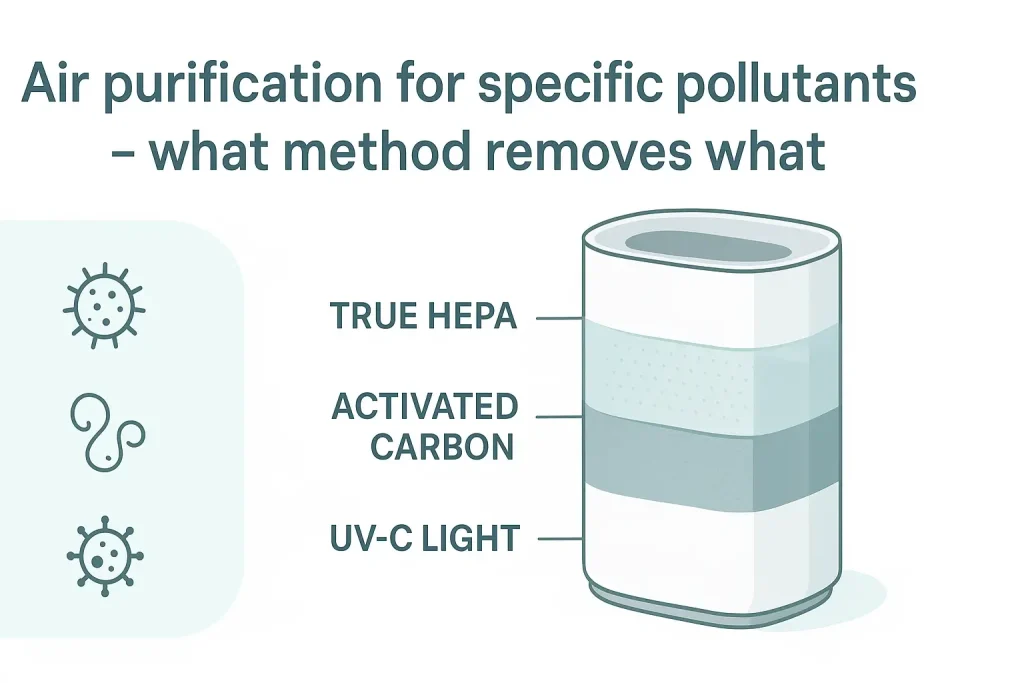
This happens because a fan pulls room air through a dense mat of polypropylene or fiberglass fibers. Particles are captured by three mechanisms: inertial impaction for larger particles above 1 micron, interception for mid-sized particles, and Brownian diffusion for ultrafine particles below 0.1 micron. The combined capture efficiency peaks at 0.3 microns, which is why the True HEPA standard tests at that specific size.
The critical specification for any portable unit is smoke CADR, measured in cubic feet per minute. A True HEPA air purifier with a smoke CADR of at least 200 CFM delivers 5 air changes per hour in a 300-square-foot bedroom. That is the minimum threshold for allergy and asthma relief. For general air quality at 2 ACH, that same 200 CFM covers roughly 500 square feet.
Noise level at the fan speed you will actually run matters more than noise at sleep mode. A unit rated at 24 dB at sleep mode but 62 dB at medium is useless if the room needs medium fan speed to hit the target ACH. Always check the dB rating at the fan speed corresponding to your room’s CADR requirement.
CADR Calculator
How Much CADR Do You Actually Need?
Enter your room dimensions and use case. Formula: (length x width x ceiling height x ACH) divided by 60. Source: AHAM methodology.
CADR = (length x width x ceiling height x ACH) / 60. For allergy and asthma sufferers, always calculate at 5 ACH — not the manufacturer-stated 2 ACH figure.
| Room Size | CADR at 2 ACH (standard) | CADR at 5 ACH (allergy) | Example Models |
|---|---|---|---|
| 150 sq ft bedroom | 100 CFM | 250 CFM | Levoit Core 300, Coway AP-1512HH |
| 300 sq ft bedroom | 200 CFM | 500 CFM | Winix 5500-2, Levoit Core 400S |
| 500 sq ft living room | 333 CFM | 833 CFM | Coway Airmega 400, Blueair 605 |
| 700 sq ft open plan | 467 CFM | 1167 CFM | IQAir HealthPro Plus or 2 units |
| 1000 sq ft open plan | 667 CFM | 1667 CFM | Multiple units required |
For renters in small apartments, one Levoit Core 300S with 145 CFM smoke CADR at $99 covers a 219-square-foot bedroom at 2 ACH. For a 500-square-foot living space, a Coway Airmega 400 with 400 CFM dual-fan output covers the entire area at 2 ACH or roughly 240 square feet at the allergy-target 5 ACH.
Homeowners benefit from the same portable units, but they can also use them strategically as supplemental filtration in problem rooms. A bedroom with an attached bathroom that has visible mold needs its own dedicated unit even if the whole-house system handles the rest of the house.
Whole-House HVAC Filtration: The Homeowner’s Exclusive Advantage
A whole-house filtration system processes every cubic foot of air that moves through your central heating and cooling ducts. This happens because the furnace blower motor pulls return air through a filter media cabinet before it reaches the heat exchanger or cooling coil. A MERV 13 filter installed in this position captures 75% or more of particles in the 0.3 to 1 micron range per ASHRAE Standard 52.2 testing.
This only works when the HVAC system’s blower motor can overcome the additional static pressure of a high-MERV filter. Older single-speed PSC motors typically cannot handle anything above MERV 8 without reducing total airflow below the equipment’s minimum requirement. If a MERV 13 filter is installed on a system rated for MERV 8 maximum, the result is reduced heating and cooling efficiency, frozen evaporator coils in summer, and premature blower motor failure. The fix is to upgrade to an ECM variable-speed blower motor rated for the higher static pressure, or to use a separate bypass HEPA system with its own fan.
According to the EPA Indoor Air Quality guidance, whole-house filtration combined with source control and adequate ventilation is the most effective long-term strategy for residential indoor air quality improvement. A MERV 13 pleated furnace filter costs roughly $15 to $25 each and should be replaced every 90 days in normal conditions. That is $60 to $100 per year for whole-house filtration covering 2,500 square feet or more. The equivalent coverage with portable units would require four to six units at a combined annual filter cost of $200 to $400.
When Whole-House Filtration Is Worth the Investment
Whole-house filtration makes financial sense when the home has more than 2,000 square feet of conditioned space, an ECM variable-speed blower motor, and ductwork in good condition without significant leakage. Under these conditions, the cost per square foot per year drops below portable units.
It also makes health sense when the primary pollutant is something that originates throughout the house: pet dander from multiple animals, dust mite allergen from carpeted bedrooms, or wildfire smoke that infiltrates through every window seal. A whole-house filter addresses all rooms simultaneously. Portable units only address the room they sit in.
Beyond Basic Filtration: Electronic Air Cleaners and UV-C Systems
Homeowners can install a whole-house electronic air cleaner that uses electrostatic precipitation to capture particles too small for even MERV 16 filters. These systems charge particles and collect them on oppositely charged plates, achieving up to 95% capture efficiency on particles as small as 0.01 microns.
The trade-off is maintenance: collection plates must be washed monthly, and some units produce trace ozone as a byproduct of the corona discharge process. CARB-certified electronic air cleaners keep ozone output below 0.050 ppm, which is the California regulatory limit and the de facto national safety standard. Non-certified units can produce significantly more.
In-duct UV-C germicidal systems are a separate category. A UV-C lamp installed in the HVAC ductwork inactivates bacteria, viruses, and mold spores that pass within the lamp’s effective irradiation zone. This only occurs when the air moves slowly enough to receive a sufficient UV dose, typically 10,000 to 30,000 microwatt-seconds per square centimeter for bacterial inactivation. If the air velocity is too high or the lamp is underpowered, pathogens pass through without enough exposure to be inactivated. The fix is to verify lamp output matches duct velocity using manufacturer engineering tables before installation.
DIY Air Purifiers: A Low-Cost Option That Works for Renters and Homeowners
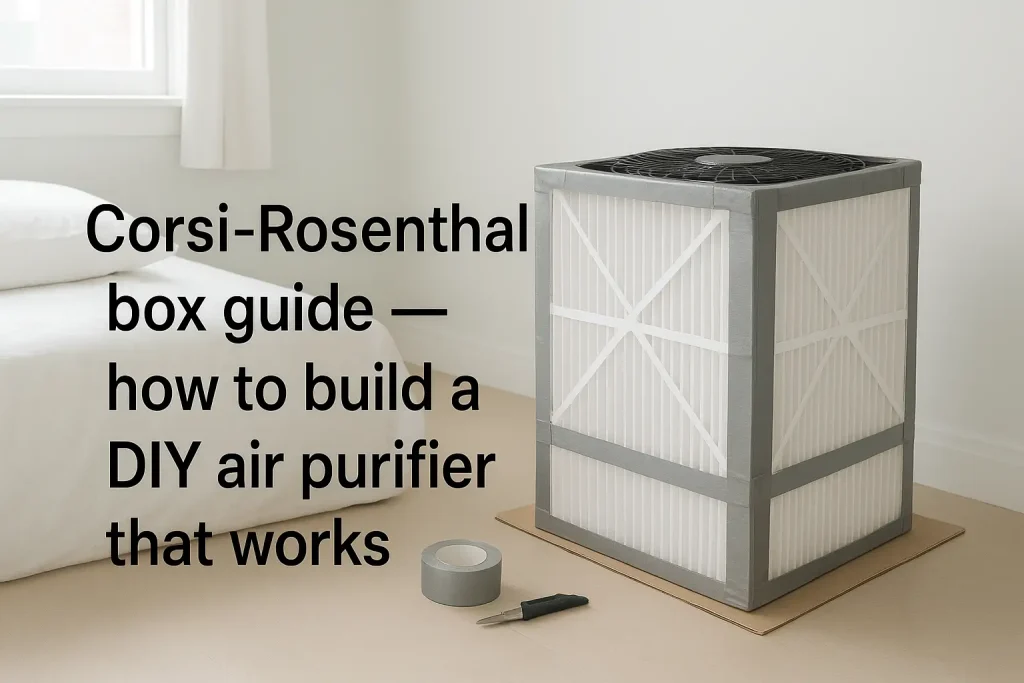
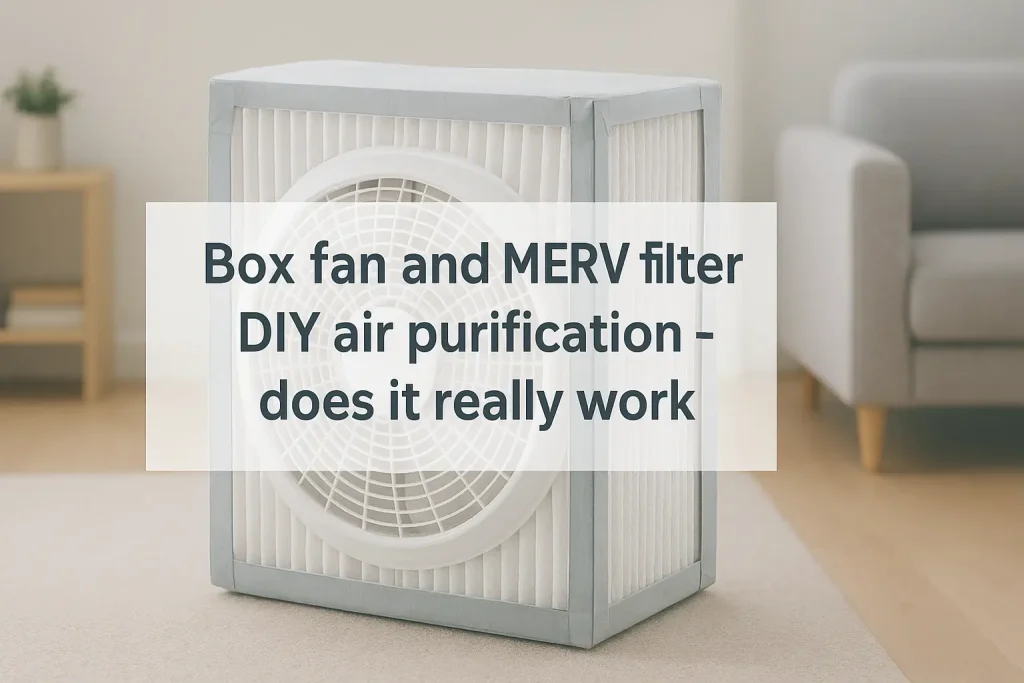
A Corsi-Rosenthal box is a DIY air purifier built from four MERV 13 20×20-inch furnace filters taped into a cube with a 20-inch box fan on top pulling air through the filters and exhausting upward. This design delivers a smoke CADR of approximately 300 to 450 CFM depending on fan speed and filter resistance, for a total build cost of roughly $80.
This happens because four MERV 13 filters provide roughly 16 square feet of total filter surface area, which reduces air velocity through each filter and keeps static pressure low enough for a standard box fan to maintain adequate airflow. The box fan’s blade design is not optimized for static pressure. A fan rated at 2,000 CFM in free air may only deliver 400 CFM when pulling through four MERV 13 filters. Using a 20-inch box fan with a high-velocity motor and four MERV 13 20x20x1 filters produces the most consistent results.
For renters, a Corsi-Rosenthal box is the cheapest path to high-CADR filtration in a single room. It is loud at high speed and visually industrial, but it outperforms most portable units under $200 on raw CADR. For homeowners, it is a temporary solution during wildfire season or a permanent basement workshop filter. Both audiences should verify performance with a PM2.5 air quality monitor placed 6 feet from the box after 30 minutes of runtime to confirm the actual clean air delivery rate.
Cost Comparison: Renter Solutions vs Homeowner Solutions Over 5 Years
Use the table below to compare the total cost of ownership for the most common renter and homeowner air purification configurations over a five-year period.
Cost Comparison
5-Year Air Purification Cost: Renter vs Homeowner Scenarios
Includes unit purchase price, filter replacements, electricity at 13 cents/kWh, and installation where applicable. Prices verified at time of publication.
| Scenario | Initial Cost | 5-Year Filter Cost | 5-Year Electricity | 5-Year Total |
|---|---|---|---|---|
| Renter: 1 portable unit (bedroom only) | $100 | $125 | $47 | $272 |
| Renter: Corsi-Rosenthal box | $80 | $200 | $130 | $410 |
| Renter: 2 portable units (bedroom + living room) | $300 | $250 | $94 | $644 |
| Homeowner: MERV 13 HVAC filter upgrade | $0 | $400 | $60* | $460 |
| Homeowner: Whole-house electronic air cleaner | $600 | $100 | $180 | $880 |
| Homeowner: MERV 13 + 2 portable units (full coverage) | $400 | $650 | $154 | $1,204 |
*Homeowner HVAC electricity cost reflects increased blower motor runtime when circulating for filtration, not the full heating/cooling energy cost. All electricity calculated at 13 cents/kWh average U.S. residential rate. Filter costs based on genuine manufacturer replacement filters at standard replacement intervals. Installation not included unless noted.
For a renter in a 600-square-foot apartment, one $100 portable unit in the bedroom plus a Corsi-Rosenthal box in the living room provides high-CADR coverage for both primary rooms with a five-year total cost under $700. For a homeowner in a 2,500-square-foot house, upgrading to MERV 13 HVAC filtration and adding two portable units in high-priority bedrooms delivers whole-house baseline coverage plus targeted filtration where it matters most.
How to Talk to Your Landlord About Air Quality Improvements
Landlords respond to legal obligations, not comfort requests. The most effective approach is to cite specific habitability standards: the EPA indoor air quality guidance identifies mold, excessive dust accumulation from leaky ducts, and combustion byproducts from poorly vented appliances as health hazards that fall under the implied warranty of habitability in most states.
Frame the request as a maintenance issue rather than an upgrade. A furnace filter that has not been changed in 12 months is a maintenance failure, not a missing amenity. A bathroom exhaust fan that does not move enough air to control humidity is a building code issue, not a comfort preference. Document with photos and PM2.5 monitor readings before contacting the landlord.
If the landlord agrees to an upgrade, offer to pay the difference between a standard MERV 8 filter and a MERV 13 filter. This difference is roughly $8 per filter change. A landlord who hears “it will cost me zero extra dollars and I am legally reducing my liability for indoor mold and tenant respiratory complaints” is far more likely to say yes than one who hears “I want better air.”
Common Mistakes Renters Make with Air Purification
The most expensive mistake renters make is buying a unit that is too small for their room at the ACH rate their health condition requires. A purifier rated for 200 square feet at 2 ACH only covers 80 square feet at the 5 ACH needed for allergy relief. The unit physically fits in a 200-square-foot bedroom and makes less noise than a larger unit, but it never achieves meaningful particle reduction in that space.
Another common error is placing the purifier against a wall or in a corner. This reduces effective coverage by 20 to 30 percent because the intake side is partially blocked and the discharge jet cannot establish the circulation pattern that mixes clean air throughout the room. The correct placement is at least 18 inches from any wall with the intake facing the center of the room and the discharge pointing toward the primary breathing zone.
Renters also frequently forget that air purifiers do nothing for stale air. A sealed apartment with no mechanical ventilation will accumulate CO2 from occupants, and no HEPA filter removes CO2. The solution is periodic window opening or a window-unit ventilation fan. Even 10 minutes of cross-ventilation twice a day drops CO2 from 2,500 ppm to under 800 ppm in a standard apartment.
Common Mistakes Homeowners Make with Air Purification
Homeowners frequently overspend on whole-house solutions that underperform because the supporting infrastructure is not ready. Installing a whole-house electronic air cleaner on a system with leaky ducts and an undersized return plenum is a waste of money. Twenty to thirty percent of the air the system pulls through the expensive filter never reaches the living spaces because it leaks out of supply ducts in unconditioned attics and crawlspaces.
The correct sequence is: seal the ductwork first, verify the blower motor can handle the additional static pressure of a high-efficiency filter, then install the filtration system. A duct sealing with mastic and UL 181-rated tape costs under $100 in materials and improves both filtration efficiency and HVAC energy performance by 15 to 25 percent.
Another homeowner-specific mistake is installing a whole-house UV-C system without a plan for lamp replacement. UV-C lamps lose 30 to 50 percent of their output within 9,000 hours of operation, which is roughly 12 to 18 months of continuous use. A system installed and forgotten will be producing zero germicidal effect within two years while still consuming electricity. Schedule annual lamp replacement as part of the HVAC maintenance calendar.
Air Quality Monitors: Non-Negotiable for Both Audiences
You cannot manage what you cannot measure. A standalone PM2.5 monitor is the single most cost-effective tool for verifying that any air purification solution, portable or whole-house, is actually working. Without one, you are guessing based on whether the air “smells cleaner” or whether your allergy symptoms improved, both of which are unreliable indicators.
A PM2.5 laser particle counter costing $40 to $100 will show you the exact particle concentration before and after running your purifier. The test is simple: note the PM2.5 reading in micrograms per cubic meter, run the purifier on high for 30 minutes, and check again. A properly sized unit at the correct ACH should reduce PM2.5 by 70 to 85 percent in a closed room.
For renters, a monitor provides the data to prove to a landlord that the existing conditions are inadequate. Saying “the PM2.5 in my apartment is 45 micrograms per cubic meter, three times the EPA annual standard of 12” is a legally meaningful statement. Saying “the air feels stuffy” is not.
Buying Guide
Before You Buy an Air Purifier – Complete Checklist for Renters and Homeowners
Check off each point before making your decision. Based on AHAM and EPA buying guidance.
Which Is Better for Allergy Sufferers: A Portable Air Purifier in the Bedroom or a Whole-House MERV 13 Filter?
A portable True HEPA air purifier in the bedroom delivers 5 ACH to the room where you spend 8 hours sleeping. A whole-house MERV 13 filter delivers roughly 2 to 3 ACH to every room simultaneously because residential HVAC systems typically cycle air 3 to 5 times per hour through a filter that captures 75% of 0.3 to 1 micron particles rather than 99.97%.
For allergy sufferers, the bedroom unit wins on particle removal efficiency during the highest-exposure period. However, a whole-house MERV 13 filter reduces the baseline allergen load throughout the entire house, including the kitchen, living room, and hallways where you spend the other 16 hours of the day. The optimal allergy strategy combines both: a MERV 13 HVAC filter for whole-house baseline reduction and a dedicated True HEPA air purifier for allergies in the bedroom at 5 ACH during sleep.
Can I Install a MERV 13 Filter If I Am a Renter?
Yes, if the HVAC filter slot is accessible and the equipment can handle the additional resistance. Many renters can simply swap a standard MERV 8 filter for a MERV 13 pleated filter in the same size during a routine filter change. The landlord may never notice the difference, and the renter gets improved whole-apartment filtration at a cost increase of roughly $5 per filter.
Check the HVAC equipment model number and look up the maximum recommended MERV rating before doing this. If the system is rated for MERV 8 maximum, using MERV 13 can reduce airflow enough to cause coil freezing or heat exchanger overheating. In that case, ask the landlord to approve the upgrade and verify compatibility, or stick with portable units and do not modify the HVAC filter.
What Is the Difference Between a Portable Air Purifier and a Whole-House Electronic Air Cleaner?
A portable air purifier uses a self-contained fan and True HEPA filter to clean the air in one room. It plugs into a standard outlet and costs $80 to $500 upfront with $25 to $100 annual filter replacements. A whole-house electronic air cleaner installs into the HVAC ductwork at the furnace or air handler and uses electrostatic precipitation to capture particles from all air moving through the central system.
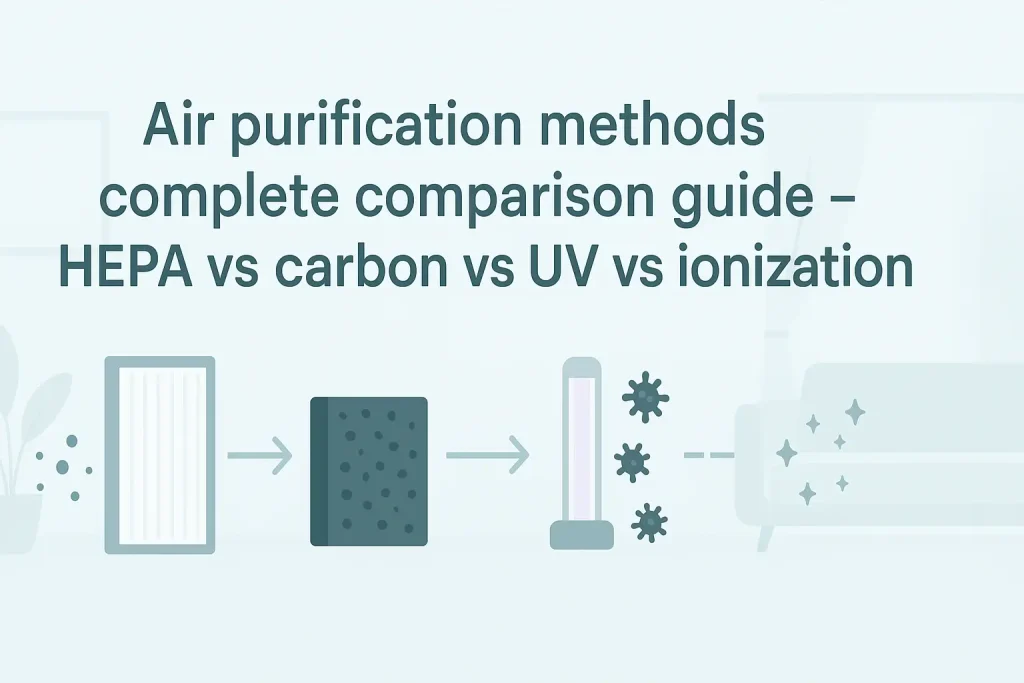
The CADR comparison is not straightforward. A whole-house electronic air cleaner processes 800 to 2,000 CFM depending on the blower motor, which is 4 to 10 times the airflow of a typical portable unit. However, the single-pass efficiency is typically 85 to 95 percent compared to True HEPA at 99.97 percent. The net result across multiple air passes through the recirculating system is roughly comparable for particle reduction, but the whole-house unit covers every room simultaneously. The electronic air cleaner costs $500 to $1,500 installed and requires monthly plate washing rather than annual filter replacement.
Why Does My Portable Air Purifier Make the Room Feel Hotter?
The fan motor in a portable air purifier consumes 30 to 100 watts of electricity at medium to high speed, and nearly all of that energy is converted to heat inside the room. A unit running at 60 watts for 24 hours adds roughly 1,400 watt-hours of heat to the room per day, which is equivalent to running a small space heater on its lowest setting for about 20 minutes.
In a small, well-sealed bedroom, this can raise the temperature by 2 to 4 degrees Fahrenheit overnight. The fix is to run the purifier on a lower fan speed if the room size permits it, or to run the unit during the day and turn it off at night if your health condition does not require continuous nighttime filtration. For more guidance on runtime, see our guide on how long to run an air purifier each day for optimal results.
Do Air Purifiers Use a Lot of Electricity If Run Continuously?
No. A standard portable True HEPA air purifier uses 30 to 60 watts at medium fan speed, which costs $34 to $68 per year running 24/7 at the U.S. average electricity rate of 13 cents per kilowatt-hour. An ENERGY STAR certified unit uses at least 25 percent less energy than the federal minimum, bringing the annual cost down to $25 to $50 for continuous operation.
A whole-house electronic air cleaner adds roughly 40 to 80 watts of continuous draw plus increased blower motor runtime, which can add $80 to $160 per year to the electricity bill. The trade-off is filtering every room versus filtering one room.
Can I Run an Air Purifier with the Windows Open?
You can, but the purifier is trying to clean outdoor air that continuously enters through the window faster than the unit can process it. An open window in a 150-square-foot bedroom lets in roughly 50 to 100 CFM of unfiltered outdoor air through natural ventilation. If your purifier delivers 200 CFM of clean air, the net result is roughly 50 to 67 percent of the air in the room is filtered, and the rest is unfiltered outdoor air mixing continuously.
This is only acceptable on days when outdoor PM2.5 is below 12 micrograms per cubic meter, the EPA annual standard. On poor air quality days with AQI above 100, close the windows and run the purifier on high. For pollen-specific concerns, check our guide on air purifiers designed for pollen removal during allergy season.
What Went Wrong When My Landlord’s HVAC Filter Upgrade Made the Air Worse?
If a MERV 13 filter was installed on an older HVAC system not designed for that restriction level, the blower motor pulls less total airflow through the system. This means fewer air changes per hour through the filter, and any duct leaks in unconditioned spaces now pull in more unfiltered attic or crawlspace air due to the increased negative pressure in the return ducts.
The result is higher particle counts in the living space, not lower. The fix is to verify the HVAC system is rated for MERV 13, seal the return ductwork, and measure post-installation PM2.5 levels to confirm the upgrade actually reduced particle concentrations.
Is Ozone from Electronic Air Cleaners Safe for a Rented Apartment?
Only if the unit is CARB certified with ozone output below 0.050 ppm. Non-certified electronic air cleaners and ionizers can produce ozone concentrations of 0.080 to 0.200 ppm in a closed room, which exceeds both the CARB limit and the EPA’s 8-hour National Ambient Air Quality Standard of 0.070 ppm. Ozone at these concentrations causes airway inflammation, reduced lung function, and increased asthma symptoms within hours of exposure.
Renters should never buy a non-CARB-certified ionizer or electronic air cleaner. The room is smaller than a house, so ozone concentrations build up faster. If you already own one, verify the ozone output with a portable ozone meter capable of reading down to 0.001 ppm and compare the 1-hour average to the 0.050 ppm CARB limit.
How Do I Know If My Air Purifier Is Actually Working in My Specific Room?
Measure PM2.5 before and after with a laser particle counter. Take a baseline reading in the center of the room with the purifier off and windows closed for at least one hour. Run the purifier on the highest fan speed you will tolerate during actual use, wait 30 minutes, and measure again in the same spot. A reduction of less than 50 percent means the unit is undersized for that room at the selected fan speed.
This is the only test that accounts for your specific room size, ceiling height, furniture arrangement, air leakage rate, and actual filter condition. Manufacturer CADR ratings are laboratory values in a sealed chamber with no obstacles. Your room has furniture, open doorways, and infiltration. For more on particulate monitoring, see our guide on air purifiers for dust and PM2.5 reduction.
Do I Need a Different Air Purifier If I Have Pets in My Rental Apartment?
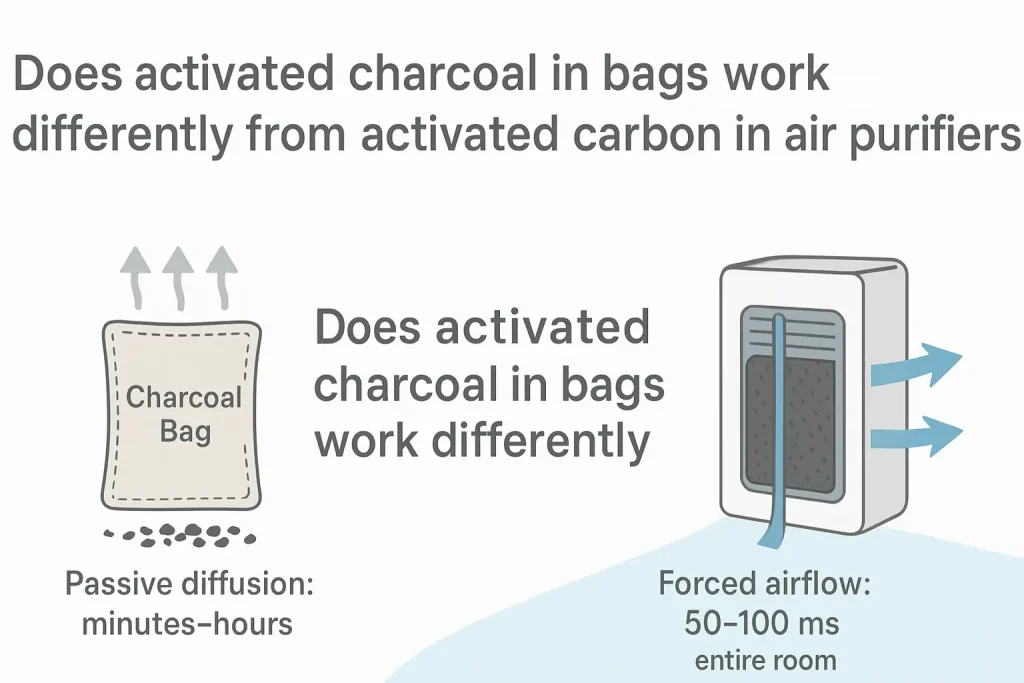
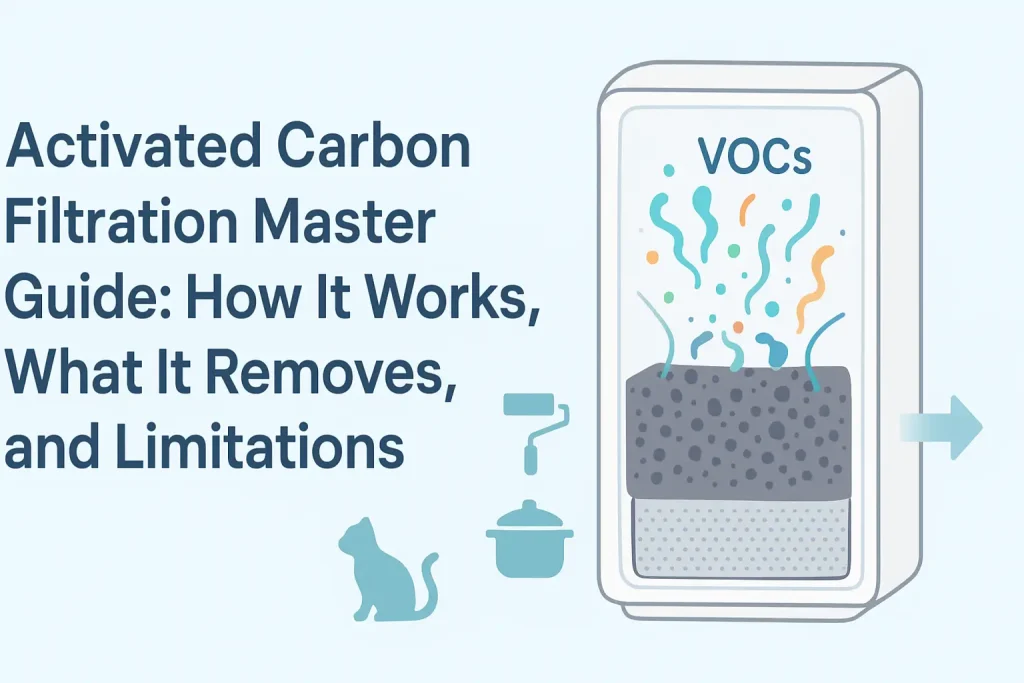
Yes. A pet-appropriate air purifier needs a thicker activated carbon stage for odor adsorption plus True HEPA for dander capture. Standard units with thin carbon sheets lose odor capacity within weeks in a home with cats or dogs because the carbon saturates quickly. Look for units with at least 2 pounds of activated carbon or zeolite media.
The best air purifiers for pet owners combine True HEPA for dander removal with an activated carbon bed rated for at least 6 months of odor adsorption in a household with pets. For apartments with cats, also see our recommendations for the best air purifier for cat litter odor control.
Can I Take My Air Purifier With Me When I Move?
Yes. Portable air purifiers are personal property. They unplug in 5 seconds and fit in a moving box. This is the core advantage for renters: your entire air quality investment moves with you to the next apartment, the next city, or the next stage of life. A whole-house HVAC filtration upgrade stays with the house and benefits the next owner.
This portability changes the value equation. A $200 portable unit that lasts 7 years and moves across 3 apartments costs $29 per year of use plus filters. A $1,200 whole-house electronic air cleaner that stays with the house when you sell costs the full amount against the years you personally benefit from it.
What Is the Single Best Air Purification Setup for a Renter on a Tight Budget?
One Corsi-Rosenthal box in the main living space for high-CADR filtration at $80 all-in cost, plus one used or refurbished True HEPA unit for the bedroom at $50 to $70. Verify both with a $40 PM2.5 monitor. Total startup cost under $200 for whole-apartment coverage with performance verification.
Replace the Corsi-Rosenthal box filters every 6 months ($40 per change) and the HEPA unit filter annually ($25). Total annual operating cost: $105. This setup outperforms a single $300 commercial unit because it provides high-CADR coverage in two separate rooms simultaneously.
Are Whole-House Air Purification Systems Worth It for a Small Single-Family Home?
No, usually. A home under 1,200 square feet with 2 to 3 bedrooms is more cost-effectively served by two or three portable units than a whole-house system. The installed cost of a whole-house electronic air cleaner or bypass HEPA system starts at $800 and often exceeds $1,500. Three portable units covering the bedrooms and living area cost $300 to $500 total.
The break-even point for whole-house systems is roughly 2,000 square feet of conditioned space. Below that, portable units provide better value and allow room-by-room prioritization. Above 2,000 square feet, the cost of four to six portable units with annual filter replacements exceeds the amortized cost of a well-designed whole-house system.
Can Air Purifiers Help with Skin Conditions Like Eczema in a Rental?
Yes, indirectly. Airborne dust mite allergen is a known trigger for atopic dermatitis flares, and True HEPA filtration reduces airborne dust mite allergen concentrations by 95 to 99 percent in the filtered room. Lower airborne allergen loads mean less immune system activation, which can reduce eczema severity in sensitized individuals.
This is not a substitute for dust mite encasements on bedding and humidity control below 50 percent, which address the source of the allergen. But for renters who cannot replace carpeting or control the building’s humidity, a bedroom True HEPA unit provides meaningful allergen reduction during the 8 hours of sleep when skin healing is most active. Read our full guide on the best air purifiers for eczema and skin condition management.
How Long Should an Air Purifier Run Each Day in a Rental Apartment?
Minimum 8 hours in the bedroom during sleep, plus whenever you are home and awake in the living area. This covers the highest-exposure periods. In a rental with unknown HVAC history, old carpeting, and building envelope leakage you cannot control, continuous 24/7 operation on auto mode is ideal because the pollutant load is unpredictable.
Auto mode uses a particle sensor to vary fan speed based on real-time PM2.5 readings. When the air is clean, it runs at the lowest speed consuming 5 to 10 watts. When cooking, cleaning, or outdoor pollution spikes particle levels, it ramps up to the needed speed. This balances filtration effectiveness with energy cost better than manual on/off cycling.
The right air purification solution depends on whether you can modify your building or only control the air inside the rooms you plug things into. Renters get excellent results from portable True HEPA units, Corsi-Rosenthal boxes, and PM2.5 monitors, with a complete setup costing $200 to $500 upfront and $100 to $250 annually in filters and electricity. Homeowners have those same options plus whole-house MERV 13 HVAC filtration, electronic air cleaners, and in-duct UV-C systems that filter every room simultaneously at a lower cost per square foot above 2,000 square feet.
The single most important decision for both audiences is sizing the filtration correctly: calculate your smoke CADR requirement at 5 ACH if you have allergies, asthma, or chemical sensitivity, and verify actual performance with a PM2.5 monitor after installation. Everything else, including brand choice and feature preferences, is secondary to getting the clean air delivery rate right for your specific rooms.