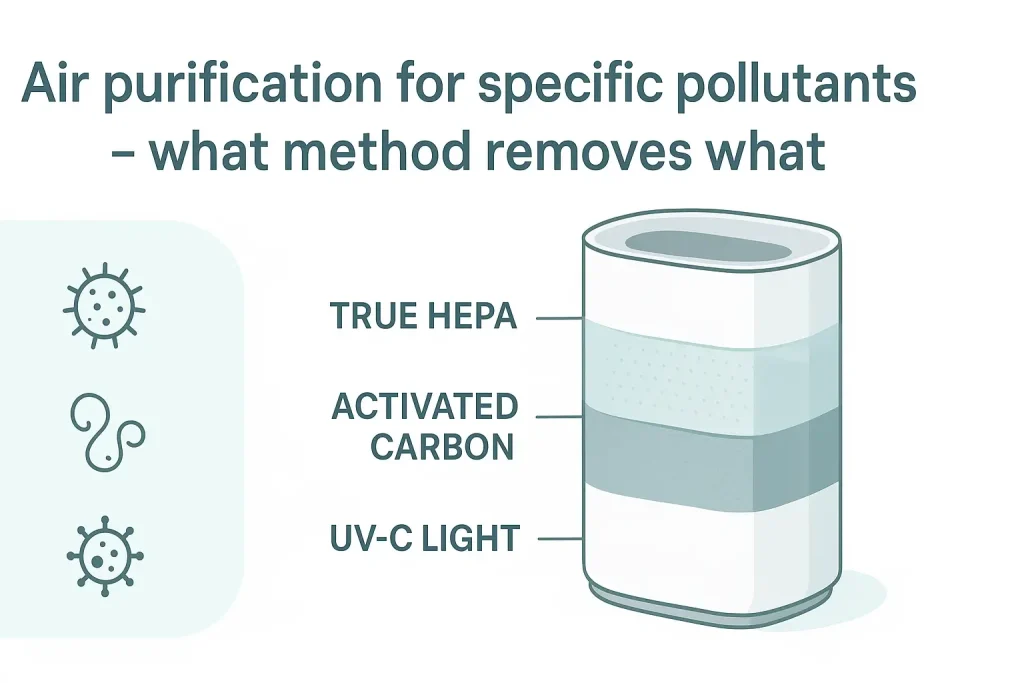
Most air purifiers are built for particle removal. Multiple Chemical Sensitivity demands something entirely different: a unit that strips VOCs, formaldehyde, and chemical fumes from the air without adding any pollutants of its own.
A standard True HEPA unit with a thin carbon sheet will not help an MCS sufferer. It was never designed to.
What Is Multiple Chemical Sensitivity and Why Standard Air Purifiers Fall Short
Multiple Chemical Sensitivity (MCS) is a condition where individuals experience acute reactions to low-level chemical exposures that most people tolerate without symptoms. Common triggers include fragrances, cleaning products, paint fumes, new carpet off-gassing, pesticides, and volatile organic compounds (VOCs) from building materials and furnishings.
The core problem with standard air purifiers for MCS is straightforward: they were designed for particles, not chemicals. A typical $100-$200 True HEPA unit contains a thin carbon sheet weighing 0.5 to 2 pounds. That sheet saturates within weeks in a room with active VOC sources.
| Photo | Popular Air Purifiers | Price |
|---|---|---|

|
Air Purifiers for Home Large Room up to 1500ft², Tailulu H13 True HEPA Air Purifier for Pets Dust Odor Smoke, Air Purifier for Bedroom with 15dB Quiet Sleep Mode for Bedroom Office Living Room | Check Price On Amazon |
|
Afloia Air Purifier for Home, 4-in-1 Washable Filter for Allergies, Covers Up to 1076 ft², Quiet Operation, Auto Shut-Off & Night Light, Removes Pet Dander, Pollen, Dust, Mold, and Smoke, White,Pluto | Check Price On Amazon |

|
Nuwave OxyPure ZERO Air Purifier with Washable and Reusable Bio Guard Tech Air Filter, Large Room Up to 2002 Ft², Air Quality Monitor, 0.1 Microns, 100% Capture Irritants like Smoke, Dust, Pollen | Check Price On Amazon |

|
Air Purifiers for Home Large Room Up to 1,996 Ft², EOEBOT Air Purifier for Home Pets with Washable Filter, Quiet Sleep Mode, Air Quality Monitor, Air Purifier for Bedroom, Pet Hair, Dust, Smoke, White | Check Price On Amazon |
|
Afloia 2 IN 1 Air Purifier with Humidifier Combo, 3-Stage Filters for Home Allergies Pets Hair Smoker Odors, Evaporative Humidifier, Auto Shut Off, Quiet Air Cleaner with Seven Color Light,White | Check Price On Amazon |
An MCS-grade air purifier must contain at least 10 to 15 pounds of activated carbon, often blended with zeolite or potassium permanganate-impregnated alumina, to deliver meaningful chemical adsorption over months or years rather than days. The difference is not incremental. It is categorical.
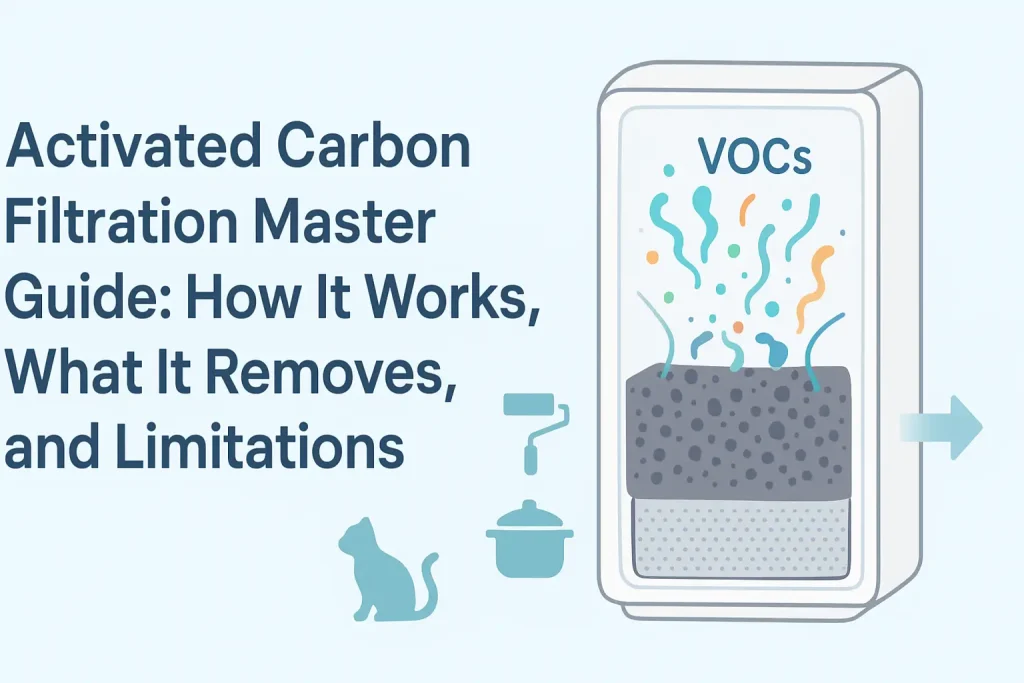
This happens because activated carbon adsorbs VOCs through a physical process where gas molecules adhere to the vast internal surface area of the carbon pores. One gram of activated carbon contains 500 to 1,500 square meters of internal surface area. A unit with 15 pounds of carbon provides roughly 10,000 times more adsorption capacity than a unit with a thin carbon sheet.
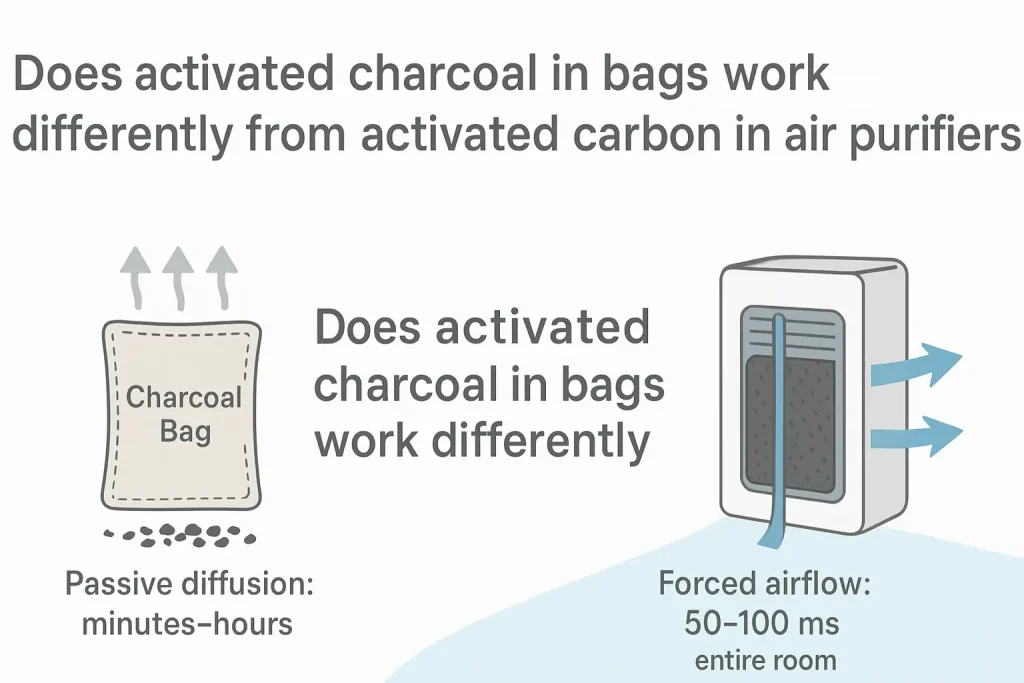
This only works when the carbon bed is deep enough that air spends adequate contact time passing through it. A thin carbon-coated foam or fiber sheet allows air to pass through in milliseconds. A packed carbon bed 2 to 3 inches deep provides 0.1 to 0.3 seconds of dwell time, which is the minimum for effective VOC adsorption at typical airflow rates.
If the carbon bed is too shallow or the airflow too fast, VOCs pass through without being captured. The measurable result is that a standard air purifier reduces airborne chemical concentrations by 5 to 15 percent, while an MCS-grade unit reduces them by 85 to 99 percent depending on the specific VOC and carbon type. Fix this by selecting a unit with at minimum 10 pounds of activated carbon and a fan speed that achieves 2 to 4 air changes per hour in your room.
By the Numbers: MCS and Air Purification
Activated carbon weight needed in an MCS-grade air purifier. Standard units carry 0.5-2 lbs and cannot handle chemical sensitivity needs.
True HEPA particle capture at 0.3 microns. MCS requires this plus deep carbon: particles and chemicals need separate filtration stages.
Maximum carbon filter lifespan in units like the Austin Air HealthMate under normal conditions. Thin carbon sheets in standard units last 3-6 months.
CARB ozone limit. MCS users must verify zero or near-zero ozone output. Any unit producing detectable ozone is unacceptable for chemical sensitivity.
Off-gassing period some new air purifiers require before MCS-safe use. Units with powder-coated steel housings and no adhesives minimize this window.
What Makes an Air Purifier Suitable for MCS: The Non-Negotiable Specifications
Five specifications separate an MCS-appropriate air purifier from a standard household unit. If a purifier fails any one of these, it is not suitable for someone with chemical sensitivity regardless of its CADR rating or price.
First, carbon weight. The unit must contain at least 10 pounds of activated carbon or a carbon-zeolite blend. Second, carbon bed depth of at least 2 inches. Third, zero or near-zero ozone output verified by CARB certification. Fourth, a housing made from powder-coated steel or inert materials that will not off-gas VOCs itself. Fifth, a True HEPA stage to handle particles, because MCS sufferers often react to particulate triggers as well as chemical ones.
The carbon type also matters. Coconut shell carbon has a high micro-pore structure ideal for small-molecule VOCs like formaldehyde and acetone. Bituminous coal-based carbon has a broader pore distribution that handles larger VOC molecules found in fragrances and solvents. The best MCS units blend multiple carbon types or add zeolite, which selectively captures ammonia, hydrogen sulfide, and certain aldehydes that carbon alone adsorbs poorly.
According to research published in the journal Indoor Air, activated carbon filters with sufficient dwell time reduce total VOC (TVOC) concentrations by 70 to 90 percent in controlled chamber tests. The same research found that thin carbon sheets achieved only 10 to 25 percent TVOC reduction under identical conditions.
The Critical Role of Activated Carbon Weight: Why Pounds Matter More Than CADR for MCS
CADR measures how fast an air purifier removes particles from a defined test chamber. It tells you nothing about VOC removal. For MCS, the single most important specification is the weight of the activated carbon or carbon-zeolite bed in pounds.
This is because VOC adsorption is a capacity-limited process. A carbon bed has a finite number of adsorption sites. When those sites are occupied, breakthrough occurs: incoming VOCs pass through uncaptured. A 15-pound carbon bed contains roughly 15 to 20 times more adsorption sites than a 1-pound carbon sheet, meaning it lasts 15 to 20 times longer under the same VOC load before breakthrough begins.
The relationship between carbon weight and effective lifespan is roughly linear. A unit like the Austin Air HealthMate with 15 pounds of carbon and zeolite can operate for 3 to 5 years before requiring a filter replacement under normal household conditions. The IQAir GC MultiGas with approximately 12 pounds of gas-phase media achieves similar longevity. By contrast, a Levoit Core 300S with a thin activated carbon pre-filter requires replacement every 3 to 6 months for any meaningful VOC control, and even then handles only light odor loads.
This only occurs when the carbon is protected by an adequate pre-filter that captures larger particles before they clog the carbon pores. Without a pre-filter, dust and pet dander coat the carbon surface, blocking VOC access to adsorption sites and reducing effective lifespan by 40 to 60 percent.
If the pre-filter is not cleaned or replaced regularly, the carbon bed loses capacity prematurely. The result is VOC breakthrough at 6 to 12 months instead of 3 to 5 years. Fix it by vacuuming or washing the pre-filter monthly and replacing it when visibly discolored.
Filter Lifespan Reference
Activated Carbon Filter Lifespan by Carbon Weight and VOC Exposure Level
Estimated filter replacement interval in months. Source: manufacturer specifications and independent carbon saturation testing.
| Carbon weight / VOC exposure | Light (no active sources) | Moderate (cleaning products, occupants) | Heavy (off-gassing, renovations) | Severe (new construction, MCS triggers) |
|---|---|---|---|---|
| 0.5-2 lbs (standard unit) | 3-6 months | 1-3 months | 2-4 weeks | 1-2 weeks |
| 10-15 lbs (MCS-grade) | 4-5 years | 2-3 years | 12-18 months | 6-12 months |
| 15-26 lbs (premium MCS) | 5+ years | 3-5 years | 18-24 months | 12-18 months |
| 26-32 lbs (maximum MCS) | 5+ years | 4-5 years | 2-3 years | 18-24 months |
Filter lifespan estimates based on continuous operation at 2-4 ACH in the recommended room size. Light exposure: no active VOC sources, windows occasionally open. Moderate: standard household with cleaning products and 2-3 occupants. Heavy: recent painting, new furniture, or ongoing renovation. Severe: new construction, multiple known MCS triggers, or continuous chemical exposure. Replace filters when VOC odor or symptoms return — carbon saturation has no visible indicator.
Use the table above to estimate how long your carbon filter will last under your specific exposure conditions before budgeting for replacements.
Top Air Purifiers for Multiple Chemical Sensitivity: Complete Comparison
The four units below represent the current best options for MCS across different price points and room sizes. Each contains at least 10 pounds of activated carbon or gas-phase media, uses a True HEPA stage for particles, and carries CARB certification for low ozone output.
Use the table below to compare carbon weight, filter lifespan, coverage area, noise levels, and total ownership cost across the top MCS-grade air purifiers.
Product Comparison
Austin Air HealthMate vs IQAir GC MultiGas vs AirPura V600 vs EnviroKlenz Mobile – Side by Side
Detailed spec comparison including carbon weight, filter type, coverage area, noise level, filter cost, and MCS-specific certifications.
| Spec | Austin Air HealthMate | IQAir GC MultiGas | AirPura V600 | EnviroKlenz Mobile |
|---|---|---|---|---|
| Unit price | $714 | $1,099 | $949 | $799 |
| Carbon weight | 15 lbs (carbon + zeolite) | 12 lbs (multi-gas media) | 18 lbs (carbon + zeolite) | Proprietary earth mineral blend |
| Filter type | True HEPA + carbon/zeolite | HyperHEPA + 4 gas cartridges | True HEPA + carbon/zeolite | HEPA + earth mineral + UV-C |
| Coverage at 2 ACH | 1,500 sq ft | 1,125 sq ft | 2,000 sq ft | 1,000 sq ft |
| Coverage at 5 ACH (MCS recommended) | 600 sq ft | 450 sq ft | 800 sq ft | 400 sq ft |
| Filter lifespan (normal conditions) | Up to 5 years | 2-4 years (gas cartridges) | 2-5 years | 6 months (mineral cartridge) |
| Annual filter cost | $58-$72/yr | $175-$275/yr | $80-$130/yr | $200-$250/yr |
| Noise at low/high | 35 dB / 65 dB | 22 dB / 60 dB | 30 dB / 62 dB | 35 dB / 60 dB |
| CARB certified | Yes | Yes | Yes | Yes |
| Best for | Best overall MCS value | Broadest chemical spectrum | Largest coverage area | Unique destruction tech |
Prices verified at time of publication. Filter costs based on manufacturer-recommended replacement intervals at normal household VOC levels. Coverage at 5 ACH calculated as smoke CADR x 12 / 5. All four units are CARB certified. EnviroKlenz uses a proprietary earth mineral technology that chemically destroys VOCs rather than adsorbing them — its cartridge requires replacement every 6 months regardless of pollutant load. IQAir GC MultiGas uses four separate gas-phase cartridges that can be replaced individually based on saturation.
Austin Air HealthMate: The Best Overall MCS Air Purifier for Most Users
The Austin Air HealthMate delivers the best balance of carbon capacity, filter longevity, and purchase price among MCS-grade air purifiers. Its 15-pound carbon and zeolite blend provides genuine multi-year VOC protection at a unit cost nearly $400 below the IQAir GC MultiGas.
The filter combines True HEPA with the carbon-zeolite bed in a single canister. This integrated design means both stages are replaced together every 4 to 5 years under normal conditions, at a cost of approximately $290 for the replacement filter — equivalent to $58 to $73 per year.
Key Specifications:
• Carbon weight: 15 lbs (activated carbon + zeolite blend)
• Filter type: True HEPA + carbon/zeolite in single canister
• Coverage at 2 ACH: 1,500 sq ft
• Coverage at 5 ACH: 600 sq ft
• Sleep mode noise: 35 dB
• Annual filter cost: approximately $58-$73/yr
The HealthMate uses a powder-coated steel housing that does not off-gas. This is critical for MCS users who cannot tolerate the plastic outgassing common with ABS-housed purifiers during their first weeks of operation. The unit ships ready to run with no break-in period needed.
For most MCS users in rooms up to 600 square feet at the recommended 5 ACH, the Austin Air HealthMate is the default starting point. It handles VOCs, formaldehyde, ammonia, and hydrogen sulfide through the zeolite component while the True HEPA stage captures PM2.5, pollen, and mold spores.
The Austin Air HealthMate is available with multiple carbon blend options including standard, allergy, and chemical-specific formulations.
IQAir GC MultiGas: The Broadest Chemical Filtration Spectrum Available
The IQAir GC MultiGas is the most comprehensive gas-phase air purifier on the consumer market. Unlike units that use a single carbon blend, the GC MultiGas uses four separate gas-phase cartridges — each targeting a different class of chemical compounds — plus a HyperHEPA particle filter that captures particles down to 0.003 microns.
The four cartridges are arranged in sequence: a pre-filter for large particles, then gas cartridge 1 (for broad-spectrum VOCs), gas cartridge 2 (for formaldehyde and light aldehydes), gas cartridge 3 (for heavier VOCs and solvents), and gas cartridge 4 (for acid gases and ammonia), followed by the HyperHEPA stage. This sequential design means each cartridge can be optimized for its target compound class without compromise.
Key Specifications:
• Gas-phase media: 12 lbs across 4 cartridges
• Filter type: HyperHEPA + 4-stage gas filtration
• Coverage at 2 ACH: 1,125 sq ft
• Coverage at 5 ACH: 450 sq ft
• Sleep mode noise: 22 dB at lowest speed
• Annual filter cost: approximately $175-$275/yr (cartridges replaced on different schedules)
The individual cartridge design also means you replace only saturated cartridges rather than the entire filter set. For MCS users with specific known triggers — formaldehyde from furniture, solvents from a home workshop, or fragrances from shared building air — this targeted replacement can reduce annual operating costs compared to replacing a single large carbon bed prematurely.
The GC MultiGas achieves its broad chemical coverage because each cartridge uses different impregnation chemistry. Cartridge 2 uses potassium permanganate-impregnated alumina to oxidize formaldehyde on contact. Cartridge 4 uses a specialized media for acid gas neutralization. This only works because the airflow path is engineered to provide adequate dwell time through each cartridge stage individually.
If one cartridge saturates before the others, the overall system still provides partial protection through the remaining stages while you replace the spent cartridge. The result is that breakthrough is gradual and detectable rather than sudden, giving MCS users time to order replacements before full protection is lost. Fix it by monitoring which cartridge triggers symptoms and replacing it first.
The IQAir GC MultiGas is the reference standard for chemical sensitivity applications and is used in hospitals and chemical-sensitive environments.
AirPura V600: The Highest Carbon Capacity for Large Spaces
The AirPura V600 contains 18 pounds of activated carbon and zeolite in a single deep bed, making it the highest-capacity option for large rooms and open-plan spaces. With a coverage area of 2,000 square feet at 2 ACH and 800 square feet at 5 ACH, it handles spaces that require two units from most other MCS-grade brands.
The V600 uses a multi-stage design: a pre-filter captures large particles and protects the carbon bed, a 3-inch-deep carbon-zeolite bed handles VOCs and chemical fumes, a True HEPA filter captures fine particles, and an optional UV-C lamp addresses biological contaminants. The UV-C stage can be switched off independently — an important feature for MCS users who want to avoid any potential ozone production from UV-C lamps.
Key Specifications:
• Carbon weight: 18 lbs (activated carbon + zeolite)
• Carbon bed depth: 3 inches
• Filter type: Pre-filter + carbon/zeolite + True HEPA + optional UV-C
• Coverage at 2 ACH: 2,000 sq ft
• Coverage at 5 ACH: 800 sq ft
• Noise at low/high: 30 dB / 62 dB
• Annual filter cost: approximately $80-$130/yr
The powder-coated steel housing eliminates plastic off-gassing concerns. The unit is available with multiple carbon blend options: standard activated carbon, carbon with potassium iodide for enhanced formaldehyde capture, and a medical-grade blend for the broadest chemical coverage.
The AirPura V600 is the best choice for MCS users with large open-plan living spaces who need maximum carbon capacity in a single unit.
EnviroKlenz Mobile Air System: A Different Approach to Chemical Destruction
The EnviroKlenz Mobile takes a fundamentally different approach to chemical removal. Instead of adsorption onto carbon, it uses a proprietary earth mineral blend that chemically reacts with and destroys VOCs on contact through a process the manufacturer describes as chemical neutralization rather than filtration.
This technology has an important advantage for MCS users: it does not saturate in the traditional sense. Carbon beds eventually fill all adsorption sites and require replacement. The EnviroKlenz earth mineral cartridge continues reacting with VOCs until the reactive mineral surface is consumed, at which point breakthrough occurs more abruptly. The manufacturer recommends cartridge replacement every 6 months regardless of pollutant load.
Key Specifications:
• Chemical media: Proprietary earth mineral blend
• Filter type: HEPA + earth mineral cartridge + UV-C
• Coverage at 2 ACH: 1,000 sq ft
• Coverage at 5 ACH: 400 sq ft
• Noise at low/high: 35 dB / 60 dB
• Annual filter cost: approximately $200-$250/yr (mineral cartridge + HEPA)
The higher annual cost — driven by the 6-month cartridge replacement interval — is the main trade-off. For MCS users who have not responded well to carbon-based units or who need a different chemical removal mechanism, the EnviroKlenz offers an alternative worth testing. The earth mineral technology is particularly effective against certain aldehydes and organic acids that carbon adsorbs less efficiently.
The EnviroKlenz Mobile Air System is appropriate for MCS users who need chemical destruction rather than adsorption, particularly those sensitive to compounds that carbon alone handles poorly.
How to Choose the Right MCS Air Purifier for Your Specific Triggers and Room Size
Selecting an MCS air purifier requires matching three variables: your specific chemical triggers, your room size at the recommended 5 ACH rate, and your budget for both the initial purchase and ongoing filter replacements. The interactive tool below narrows the field to a single recommendation based on your primary concern and budget tier.
Interactive Tool
Find the Right MCS Air Purifier for You
Answer 2 questions for a personalized MCS-grade air purifier recommendation based on your primary chemical trigger and budget.
For MCS users with known formaldehyde sensitivity, units with potassium permanganate-impregnated carbon or dedicated aldehyde cartridges are essential. Standard activated carbon adsorbs formaldehyde poorly because formaldehyde is a small, polar molecule that does not adhere well to non-impregnated carbon surfaces.
Off-Gassing Concerns: Why Your New Air Purifier Should Not Make Things Worse
A new air purifier that off-gasses VOCs from its own plastic housing, adhesives, or packaging is worse than useless for an MCS sufferer. It actively adds chemical triggers to the room. This is the most common and most damaging mistake MCS users make when buying their first air purifier.
Most consumer air purifiers use ABS plastic housings that release residual solvents and plasticizers for 2 to 8 weeks after unboxing. For someone without chemical sensitivity, this off-gassing is imperceptible or mildly noticeable. For an MCS sufferer, it can trigger immediate symptoms: headache, respiratory irritation, cognitive fog, or full systemic reaction.
This happens because injection-molded ABS plastic contains residual styrene monomer, plasticizers, and mold release agents that continue to outgas at room temperature for weeks after manufacturing. The warmer the unit runs, the faster these compounds release into the room air.
This only occurs with plastic-housed units. Powder-coated steel housings — used by Austin Air, AirPura, and AllerAir — contain no residual solvents or plasticizers and do not off-gas. The powder coating is cured at 350 to 400 degrees Fahrenheit during manufacturing, fully polymerizing the coating before the unit ships.
If you must use a plastic-housed unit, run it in a garage or ventilated spare room at maximum speed for 2 to 4 weeks before bringing it into your living space. The off-gassing rate is highest during the first 7 to 14 days and declines exponentially after that. Monitor with a VOC sensor if possible. The complete guide to off-gassing timelines and how to accelerate the process covers the science and practical steps in detail.
Room Sizing for MCS: Why 5 ACH Is the Minimum Target
Manufacturer coverage area claims use 2 air changes per hour (ACH) per the AHAM AC-1 standard. For MCS users, 2 ACH is not enough. At 2 ACH, airborne chemical concentrations drop by roughly 50 percent within the first hour of operation. At 5 ACH, they drop by 85 percent within the same period.
The difference matters because MCS reactions often occur at concentrations measured in parts per billion. A 50 percent reduction from 100 ppb leaves 50 ppb — still above the trigger threshold for many MCS sufferers. An 85 percent reduction leaves 15 ppb, which may fall below the reaction threshold entirely.
This only works when the CADR is matched to the room volume at 5 ACH. A unit rated for 600 square feet at 2 ACH covers only 240 square feet at 5 ACH — less than half the manufacturer’s stated coverage. The formula is straightforward: smoke CADR in CFM x 12 divided by 5 gives the square footage at 5 ACH with an 8-foot ceiling.
If you undersize the unit — buying one rated for your room at 2 ACH and expecting 5 ACH performance — the result is that air changes happen too slowly, chemical concentrations remain elevated, and symptoms persist. Fix it by calculating your needed smoke CADR at 5 ACH before buying, not at 2 ACH.
CADR Calculator
How Much CADR Do You Need for Your MCS-Safe Room?
Enter your room dimensions and target ACH. For MCS, use 5 ACH minimum. Formula: (length x width x ceiling height x ACH) divided by 60. Source: AHAM methodology.
CADR = (length x width x ceiling height x ACH) / 60. For MCS users, always calculate at 5 ACH minimum — not the manufacturer’s stated 2 ACH coverage figure. Severe MCS with active VOC sources should use 6 ACH.
| Room Size | CADR at 2 ACH | CADR at 5 ACH (MCS) | Example MCS Units |
|---|---|---|---|
| 120 sq ft bedroom | 32 CFM | 80 CFM | Austin Air HealthMate, IQAir GC MultiGas |
| 200 sq ft bedroom | 53 CFM | 133 CFM | Austin Air HealthMate, AirPura V600 |
| 400 sq ft living area | 107 CFM | 267 CFM | AirPura V600, AllerAir 6000 |
| 600 sq ft open plan | 160 CFM | 400 CFM | AirPura V600 or dual Austin Air units |
| 800 sq ft open plan | 213 CFM | 533 CFM | Two AirPura V600 units recommended |
Common Mistakes When Choosing an Air Purifier for MCS
The most frequent error MCS users make is buying a particle-focused air purifier and expecting it to handle chemical triggers. A unit with a high CADR and a thin carbon sheet will reduce PM2.5 effectively while doing almost nothing for VOCs. For MCS, carbon weight matters vastly more than CADR.
The second error is ignoring off-gassing from the purifier itself. A plastic-housed unit from a major brand may off-gas VOCs for weeks, directly worsening the very symptoms it is supposed to relieve. Always confirm housing material before purchasing. Powder-coated steel is the safest choice for MCS.
The third error is running the unit on a low fan speed to minimize noise, which reduces the effective ACH rate below the therapeutic threshold. Running at the lowest speed on an MCS-grade unit may deliver only 1 to 2 ACH instead of the 5 ACH needed. Run the unit at the fan speed that achieves your target ACH, even if that means medium or high during peak exposure periods.
The fourth error is assuming one unit is enough for a whole home. MCS-grade air purifiers with deep carbon beds have lower airflow than particle-focused units because air must pass slowly through the carbon for adequate dwell time. One unit typically handles 400 to 800 square feet at 5 ACH. Larger homes need multiple units or a whole-house carbon filtration system integrated with the HVAC.
For guidance on whole-home air quality approaches that complement a portable MCS air purifier, our article on sick building syndrome causes and remediation strategies covers ventilation, source control, and filtration in combination.
Cost Analysis: What to Expect at Every Budget Level for MCS Air Purification
MCS-grade air purifiers cost more than standard units because deep carbon beds require more material and heavier-duty fan motors to push air through dense media. The purchase price range is approximately $700 to $1,200 for a quality unit, with annual filter costs of $60 to $275 depending on the model and your exposure conditions.
At the entry level — $500 to $700 — the Austin Air HealthMate and AllerAir 5000 series provide 12 to 15 pounds of carbon with True HEPA. Annual filter cost is $58 to $120. These units deliver genuine MCS-grade protection at the lowest possible long-term cost and are the right starting point for most MCS users.
At the premium level — $800 to $1,100 — the IQAir GC MultiGas and AirPura V600 add more carbon, separate gas cartridges, or broader chemical coverage. Annual filter cost rises to $80 to $275. The IQAir’s separate cartridge system means higher annual cost but also targeted replacement that can save money long-term if only certain cartridges saturate quickly in your environment.
At the maximum level — above $1,200 — the AllerAir 6000 D Exec with up to 32 pounds of specialized impregnated carbon provides the highest residential VOC capacity available. Annual filter cost of $150 to $200. These units are appropriate for severe MCS in VOC-heavy environments such as newly constructed homes or spaces with ongoing chemical exposure.
For MCS users also dealing with cooking-related chemical triggers, our guide on air purifiers for cooking odors and fumes covers units with enhanced carbon for kitchen-specific VOCs and particulates.
Can a Corsi-Rosenthal Box Help with MCS?
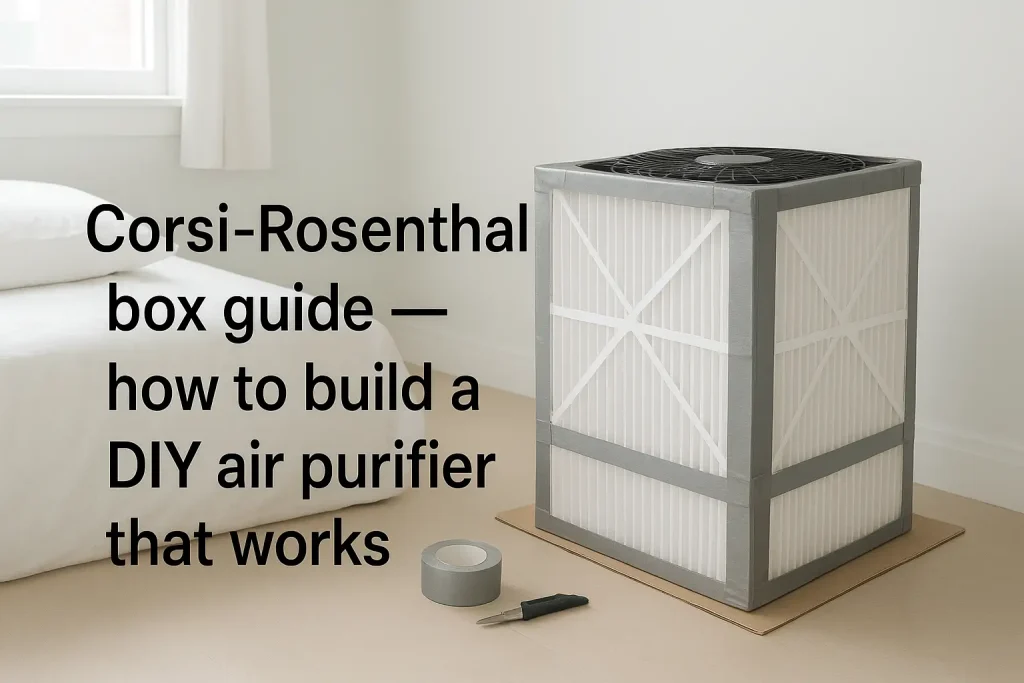
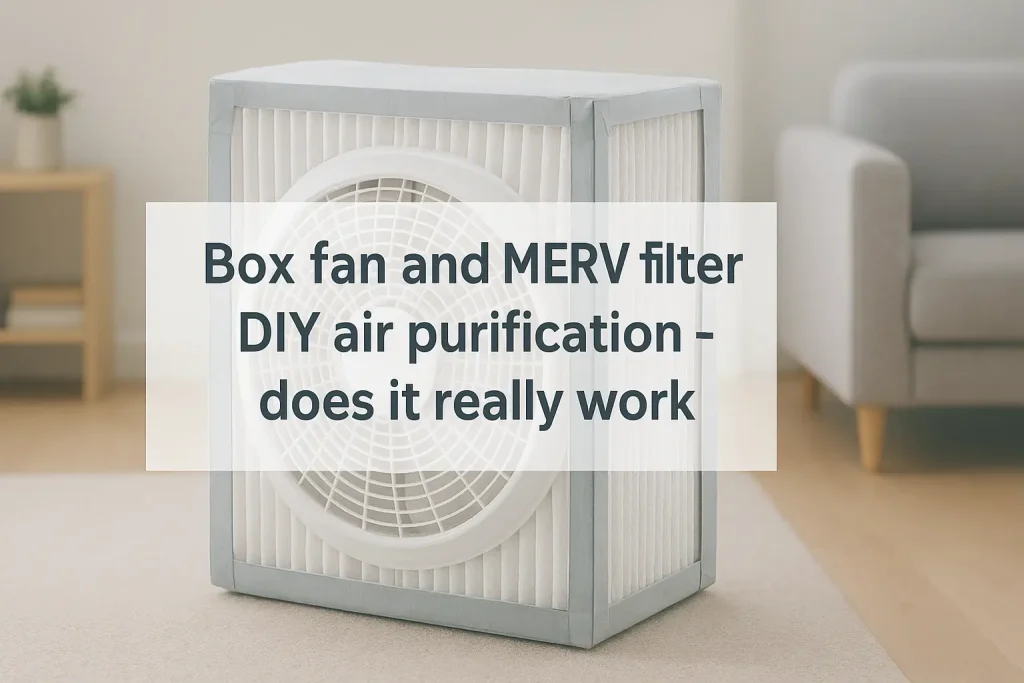
A standard Corsi-Rosenthal box uses four MERV 13 furnace filters and a box fan to remove particles. It delivers impressive particle reduction for under $80 in materials but does almost nothing for VOCs or chemical triggers. MERV 13 filters are mechanical filters rated for particles — they contain zero activated carbon and do not adsorb gases.
You can modify a Corsi-Rosenthal box by adding activated carbon panels, but the result is inconsistent. The fan is not designed to push against the resistance of a deep carbon bed, airflow drops sharply, and the carbon typically lacks adequate dwell time for effective VOC adsorption. For MCS, a purpose-built unit with an engineered carbon bed is worth the additional cost.
If budget is an absolute constraint and you need some carbon filtration immediately, purchase a 20×20 activated carbon filter sheet and tape it to the intake side of a box fan. This provides minimal but non-zero VOC reduction — approximately 10 to 25 percent for light odor loads — while you save for a proper MCS-grade unit. Replace the carbon sheet monthly.
For smoke-related chemical sensitivity that overlaps with particle concerns, our smoke air purifier guide covers units with both high CADR for particles and meaningful carbon for combustion byproducts.
What Is the Difference Between Activated Carbon, Zeolite, and Potassium Permanganate Media?
Activated carbon captures VOCs through physical adsorption: gas molecules stick to the carbon’s internal pore surfaces via van der Waals forces. It works well for non-polar VOCs like benzene, toluene, and chlorinated solvents but poorly for small polar molecules like formaldehyde and ammonia.
Zeolite is an aluminosilicate mineral with a crystalline cage structure that selectively captures small polar molecules — exactly the ones carbon misses. Zeolite pores are uniform in size, unlike carbon’s range of pore sizes, making zeolite more selective but with a narrower range of target compounds. The combination of carbon plus zeolite covers both non-polar and polar VOCs in a single bed.
Potassium permanganate-impregnated alumina or carbon works differently: it chemically oxidizes certain VOCs on contact, converting formaldehyde to carbon dioxide and water, for example. This is chemisorption, not physical adsorption. The permanganate is consumed in the reaction, meaning this media has a finite reactive capacity that cannot be regenerated. It is essential for formaldehyde-sensitive MCS users because standard carbon adsorbs formaldehyde poorly.
This only works when the air spends enough time in contact with the impregnated media. A potassium permanganate carbon blend in a deep bed provides adequate dwell time. A thin impregnated sheet does not.
How Long Do MCS Air Purifier Filters Actually Last?
Filter lifespan depends on carbon weight and VOC exposure level, not on elapsed time. A 15-pound carbon bed in a room with no active VOC sources — no new furniture, no fragrances, no recent painting — can last 4 to 5 years. The same bed in a room with daily fragrance use, new flooring, or ongoing renovation may saturate in 6 to 12 months.
Carbon saturation has no visible indicator. The filter looks identical on day 1 and day 1,000. The only reliable indicators of saturation are: return of symptoms at previously effective fan speeds, detection of VOC odors that were previously absent, or rising VOC readings on a monitor. Replace the filter when any of these signs appear, not on a calendar schedule.
This only applies to deep-bed carbon units. Thin carbon sheets in standard purifiers saturate in 1 to 3 months under any VOC load and provide largely cosmetic odor reduction rather than therapeutic chemical filtration for MCS.
Where Should You Place an MCS Air Purifier in the Room for Maximum Effectiveness?
Place the unit in the part of the room where you spend the most time. For a bedroom, this means within 3 to 6 feet of the bed, with the clean air output directed toward the sleeping area. For a living room, place it near the seating area where you spend hours at a time.
Do not place the unit in a corner or against a wall. These positions restrict airflow into the intake and reduce effective coverage by 20 to 40 percent compared to central placement. Allow at least 12 inches of clearance on all sides of the intake and at least 24 inches in front of the output grille.
If the room has a known VOC source — a new piece of furniture, a computer workstation, or an area where cleaning products are stored — place the unit between that source and your primary seating or sleeping position. This creates a clean air buffer zone between you and the emission source before the VOCs can disperse through the room.
For MCS users who also need protection in vehicles, our guide to high-end car air purifiers for heavy pollution covers portable units suitable for automotive use where chemical exposure from traffic and interior materials is concentrated.
Do MCS Air Purifiers Produce Ozone, and Is That a Concern?
None of the MCS-grade units recommended in this guide produce measurable ozone. The Austin Air HealthMate, IQAir GC MultiGas, AirPura V600, and AllerAir units are all CARB certified, meaning they produce less than 0.050 parts per million of ozone — the California limit that is the most stringent in the United States.
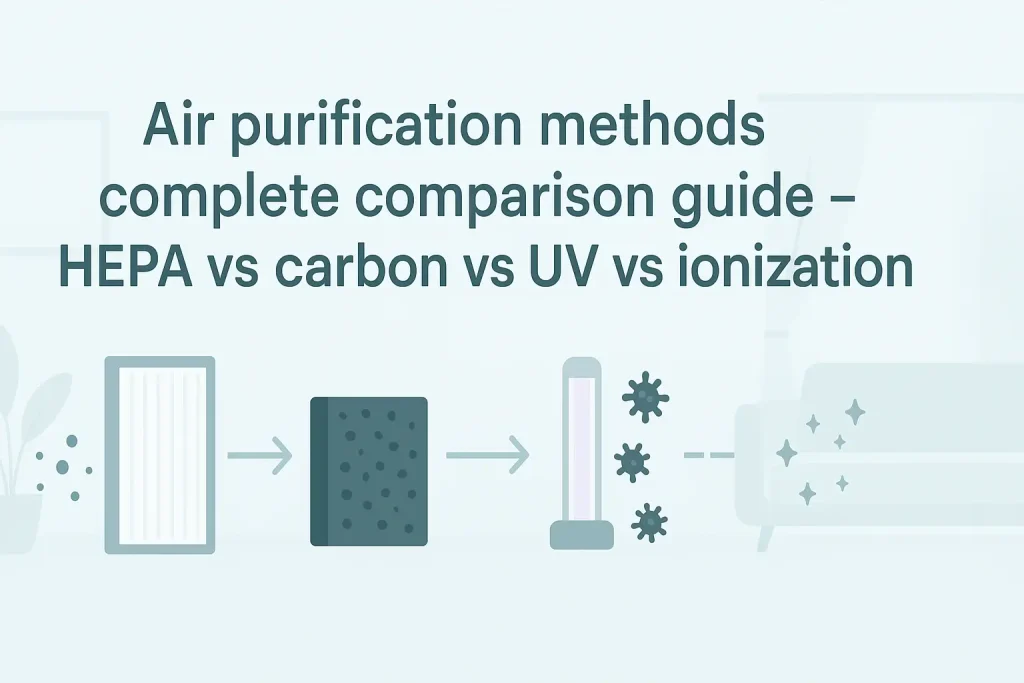
Avoid any air purifier that uses ionization, plasma, or photocatalytic oxidation as a primary or secondary air cleaning mechanism. These technologies intentionally generate reactive oxygen species including ozone. Even if the manufacturer claims ozone output is below the CARB limit, MCS users should avoid any intentional ozone or reactive oxygen production entirely given their heightened sensitivity to airborne oxidants.
The EnviroKlenz Mobile includes a UV-C lamp, which can produce trace ozone. The manufacturer states the unit is CARB certified and ozone levels are within safe limits. However, MCS users with extreme sensitivity or known ozone reactions should choose a unit with no UV-C component — namely the Austin Air HealthMate, IQAir GC MultiGas, or AllerAir series — to eliminate even this theoretical risk.
If any air purifier produces a bleach-like or “electric” smell, it is generating ozone or reactive oxygen species above your detection threshold. Stop using it immediately. That smell is not “clean air” — it is a respiratory irritant that triggers inflammation at concentrations far below the CARB regulatory limit.
What Is the Difference Between the Austin Air HealthMate and HealthMate Plus for MCS?
The standard HealthMate uses a 15-pound blend of activated carbon and zeolite. The HealthMate Plus uses the same weight but adds potassium iodide impregnation to the carbon, which enhances capture of chlorinated VOCs, certain solvents, and some fragrance compounds that the standard blend adsorbs less efficiently.
For MCS users with known fragrance sensitivity or solvent triggers, the HealthMate Plus is worth the approximately $50 to $75 price premium. For MCS users whose primary triggers are formaldehyde, ammonia, or general VOCs where the specific trigger is unknown, the standard HealthMate with zeolite provides adequate coverage at a slightly lower cost.
Both units use identical housings, fan motors, and True HEPA stages. The only difference is the carbon impregnation chemistry. Filter lifespan is identical between the two models under the same exposure conditions.
Can I Run an MCS Air Purifier Continuously, or Does It Need to Cycle Off?
MCS-grade air purifiers are designed for continuous 24/7 operation. The fan motors in the Austin Air, IQAir, AirPura, and AllerAir units are rated for continuous duty. Running them continuously maintains steady-state VOC concentrations rather than allowing levels to rise during off cycles and requiring the unit to catch up when restarted.
For MCS, continuous operation at the fan speed that achieves 5 ACH is the recommended protocol. This ensures chemical concentrations remain at the lowest achievable level at all times. Cycling the unit off — even at night — allows VOCs to accumulate from ongoing off-gassing sources, and the occupant breathes elevated concentrations during the off period.
The annual electricity cost of continuous operation is manageable. A typical MCS-grade unit draws 50 to 150 watts at medium speed. At the national average electricity rate of approximately 13 cents per kilowatt-hour, continuous operation costs $57 to $171 per year. This is a modest price for maintaining a low-VOC breathing environment around the clock.
For MCS users who are also managing allergy triggers, our complete allergy season air purification guide covers the overlap between particle and chemical sensitivity management during high-pollen months.
What Is the Best Way to Test Whether an MCS Air Purifier Is Working?
The most reliable method is a handheld VOC air quality monitor that reports TVOC in parts per billion or micrograms per cubic meter. Take a baseline reading before turning on the purifier. Then run the unit at your target fan speed for 60 minutes and take a second reading. A reduction of 70 percent or more in TVOC indicates the carbon bed is functioning correctly and the unit is appropriately sized for the room.
Symptom tracking is the other essential measure. Keep a simple daily log rating symptom severity on a 1-to-10 scale, noting the purifier fan speed and any known exposure events. A sustained reduction in average symptom scores over 2 to 4 weeks of consistent use is the most meaningful validation for MCS specifically — more relevant than any VOC monitor reading.
This only provides meaningful data if you run the unit consistently at the same fan speed and do not introduce new VOC sources during the evaluation period. A new piece of furniture, a different cleaning product, or a visitor wearing fragrance all confound the measurement.
Do I Need a Separate Air Purifier for the Bedroom if I Have One in the Living Room?
Yes. MCS-grade air purifiers with deep carbon beds have lower airflow than particle-focused units because adequate VOC adsorption requires slow air passage through the carbon. One unit cannot effectively serve multiple rooms separated by walls and doors.
A single unit in the living room will not meaningfully reduce VOC concentrations in a bedroom 30 feet away with the door partially closed. Air exchange between rooms in a typical home occurs at 0.5 to 1 ACH even with doors open — far below the 5 ACH needed for therapeutic VOC reduction.
The bedroom is the highest priority for a dedicated MCS air purifier because you spend 6 to 9 hours there continuously with the door typically closed. If budget requires prioritizing one room, place the best unit in the bedroom and use a second, less expensive carbon unit — or no unit — in living areas until you can add a second MCS-grade purifier.
For guidance on nursery air purification where chemical sensitivity in infants is a concern, our nursery air purifier guide covers units with the lowest possible off-gassing and quietest operation for infant sleep environments.
What About Whole-Home Carbon Filtration Instead of Portable Units?
Whole-home carbon filtration integrated into the HVAC system can provide baseline VOC reduction throughout the house. A MERV 13 filter with a 2-to-4-inch carbon panel in the furnace return captures both particles and a portion of airborne VOCs passing through the HVAC system.
However, whole-home carbon panels are typically thin — 1 to 2 inches of carbon — and the HVAC blower moves air at 800 to 2,000 CFM, far too fast for adequate carbon dwell time. The result is 20 to 40 percent VOC reduction per pass through the system, compared with 70 to 90 percent from a properly sized portable MCS unit with a deep carbon bed.
The most effective approach for severe MCS is both: whole-home carbon filtration for baseline reduction in all rooms plus a deep-bed portable unit in the bedroom and primary living space for the therapeutic 5 ACH VOC removal needed to keep symptoms controlled. The whole-home system handles background levels. The portable unit creates a high-purity zone where you spend the most time.
Conclusion
An air purifier for Multiple Chemical Sensitivity is a fundamentally different device from a standard home air purifier. The carbon weight — measured in pounds, not ounces — determines whether the unit provides genuine VOC reduction or cosmetic odor masking.
Start with the Austin Air HealthMate if you need a proven MCS-grade unit at the lowest long-term cost. Move to the IQAir GC MultiGas if your chemical triggers span multiple compound classes requiring individually optimized gas-phase cartridges. Choose the AirPura V600 for large spaces where maximum carbon capacity in a single unit is essential.
Confirm the unit uses a powder-coated steel housing with no plastic off-gassing. Size it for 5 ACH in your room, not the manufacturer’s 2 ACH stated coverage. Run it continuously at the fan speed that achieves your target air change rate. Monitor results with a combination of VOC measurements and daily symptom tracking.