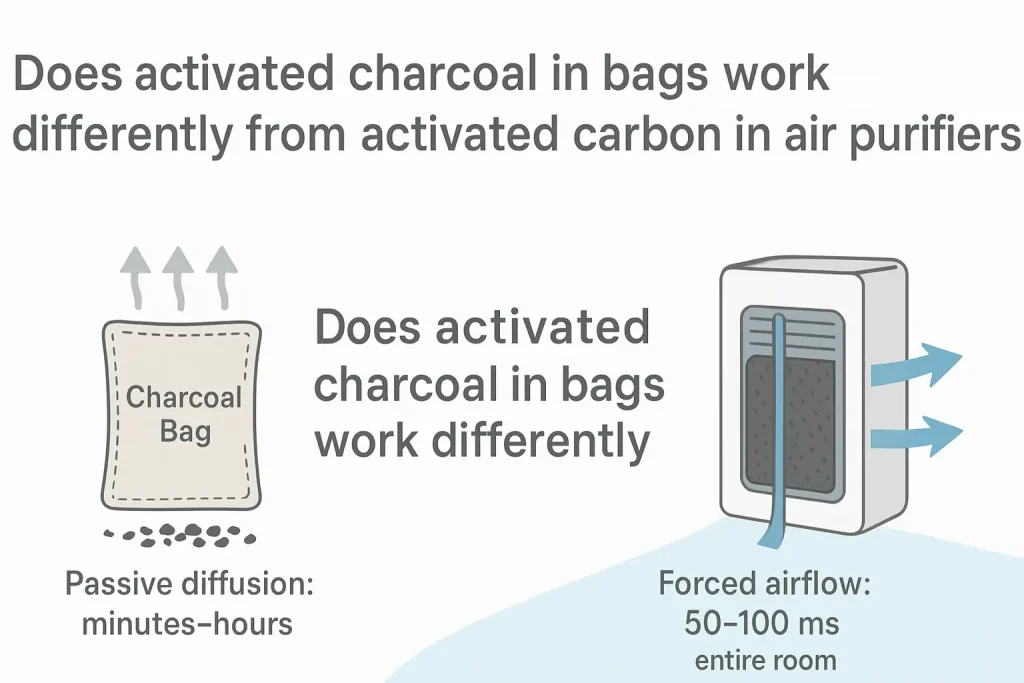
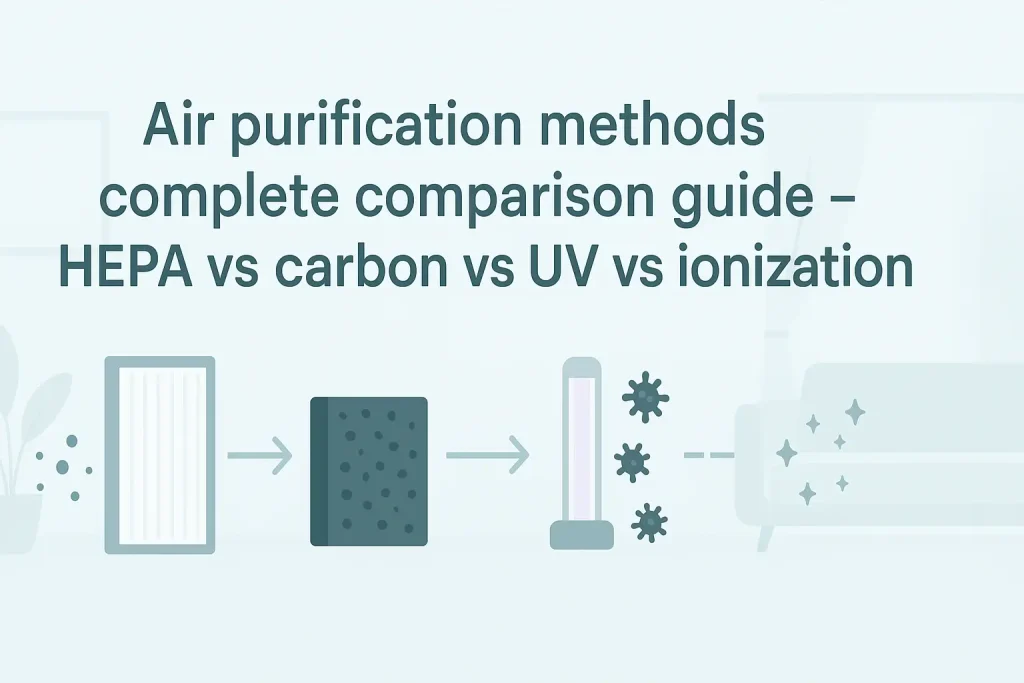
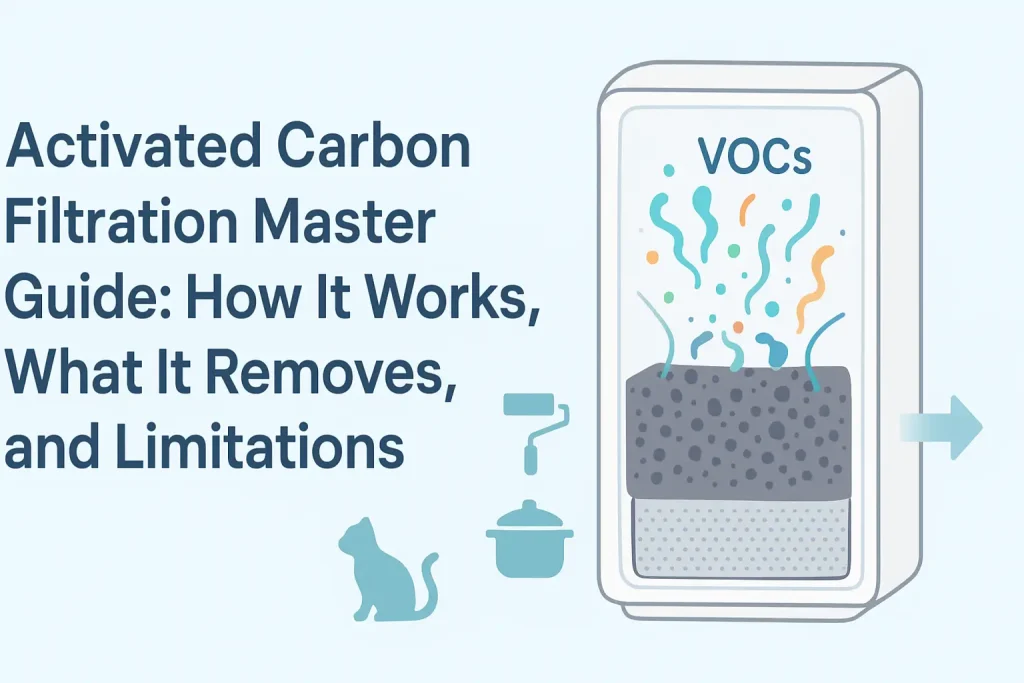
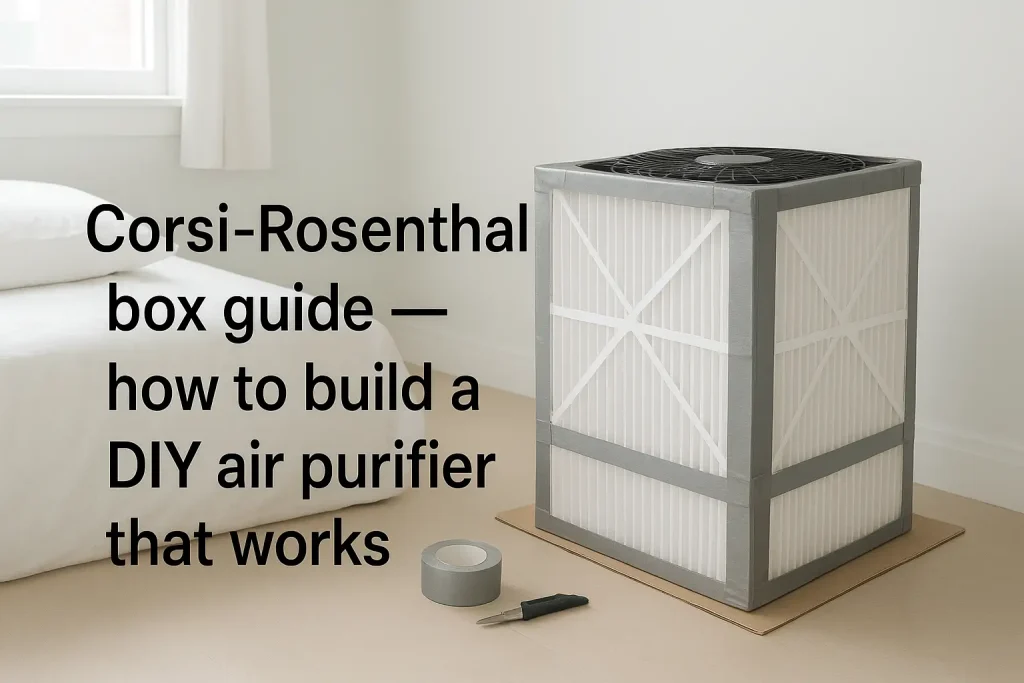
An air purifier rated for a 300-square-foot room will not protect an immunocompromised person in that same space. The manufacturer’s number assumes two air changes per hour, but immunocompromised lungs need at least five.
This guide covers the only three filtration standards that matter for immunocompromised users: True HEPA, sealed hyperHEPA, and medical-grade gas-phase carbon. Every product recommendation here meets a minimum smoke CADR threshold calculated at 5 ACH for its stated room size, not the industry-standard 2 ACH that leaves 60% more particulate in the air between cleaning cycles.
By the Numbers: Air Purifiers for Immunocompromised
Minimum air changes per hour recommended for immunocompromised individuals — double the standard 2 ACH used in manufacturer coverage claims.
True HEPA filtration efficiency at 0.3 microns — the particle size most likely to bypass lung defenses and reach the alveoli.
HyperHEPA capture threshold on IQAir HealthPro Plus — captures ultrafine particles 100 times smaller than the True HEPA standard.
CARB ozone emission limit — every recommended unit in this guide is CARB certified and produces zero intentional ozone.
Price range for medical-grade air purification — below $300, CADR at 5 ACH drops below the threshold needed for whole-room protection.
| Photo | Popular Air Purifiers | Price |
|---|---|---|

|
Air Purifiers for Home Large Room up to 1500ft², Tailulu H13 True HEPA Air Purifier for Pets Dust Odor Smoke, Air Purifier for Bedroom with 15dB Quiet Sleep Mode for Bedroom Office Living Room | Check Price On Amazon |
|
Afloia Air Purifier for Home, 4-in-1 Washable Filter for Allergies, Covers Up to 1076 ft², Quiet Operation, Auto Shut-Off & Night Light, Removes Pet Dander, Pollen, Dust, Mold, and Smoke, White,Pluto | Check Price On Amazon |

|
Nuwave OxyPure ZERO Air Purifier with Washable and Reusable Bio Guard Tech Air Filter, Large Room Up to 2002 Ft², Air Quality Monitor, 0.1 Microns, 100% Capture Irritants like Smoke, Dust, Pollen | Check Price On Amazon |

|
Air Purifiers for Home Large Room Up to 1,996 Ft², EOEBOT Air Purifier for Home Pets with Washable Filter, Quiet Sleep Mode, Air Quality Monitor, Air Purifier for Bedroom, Pet Hair, Dust, Smoke, White | Check Price On Amazon |
|
Afloia 2 IN 1 Air Purifier with Humidifier Combo, 3-Stage Filters for Home Allergies Pets Hair Smoker Odors, Evaporative Humidifier, Auto Shut Off, Quiet Air Cleaner with Seven Color Light,White | Check Price On Amazon |
Why Standard Air Purifier Recommendations Fail Immunocompromised Users
Every major air purifier review site sizes units at 2 ACH because that is the AHAM standard for general population use. An immunocompromised person needs 5 ACH minimum, which requires 2.5 times the CADR for the same room.
A Coway AP-1512HH with 246 CFM smoke CADR covers 360 square feet at 2 ACH but only 144 square feet at the 5 ACH an immunocompromised user requires. That same unit recommended for a master bedroom by most guides is actually undersized for anyone who needs medical-grade air quality in that space.
This happens because CADR scales linearly with room volume and ACH target. Double the ACH requirement and you halve the effective coverage area of any unit — a mathematical relationship most buying guides ignore entirely when making recommendations for health-sensitive users.
According to the AHAM AC-1 standard, the formula is: room coverage at desired ACH equals smoke CADR multiplied by 12, divided by the ceiling height in feet, divided by the desired ACH. At 5 ACH with an 8-foot ceiling, every 100 CFM of smoke CADR covers only 30 square feet — not the 75 square feet manufacturers claim at 2 ACH.
For a deeper explanation of how ceiling height and open floor plans change this calculation, read our guide on sizing air purifiers for open floor plans with vaulted ceilings.
What Makes an Air Purifier Medical-Grade for Immunocompromised Users
Three filtration attributes separate a medical-grade air purifier from a standard consumer unit. The filter must be True HEPA or better with documented efficiency at 0.3 microns and below. The sealed housing must prevent unfiltered air from bypassing the filtration stage entirely. And the unit must deliver enough CADR at the required ACH to turn over the entire room volume fast enough to keep particulate concentrations at near-zero levels continuously.
This happens because immunocompromised lungs have reduced capacity to clear inhaled particles through normal mucociliary clearance and alveolar macrophage activity. Particles that a healthy immune system removes within hours can remain in immunocompromised lung tissue for days, creating infection sites and inflammation cascades that a standard air purifier running at 2 ACH does not prevent.
This only works when three conditions are met simultaneously: the filter media captures 99.97% or more at 0.3 microns, the housing is sealed with gaskets preventing bypass, and the CADR at the selected fan speed delivers the target ACH for the actual room volume. Remove any one of these three and the system fails — unfiltered air bypasses the filter, the filter media lets particles through, or the unit simply cannot cycle air fast enough to outrun contaminant introduction.
If the housing is not sealed, up to 30% of air can bypass the filter entirely, based on particle counter testing by independent reviewers. The result is PM2.5 concentrations that plateau at 30-50% of outdoor levels rather than dropping below 5 micrograms per cubic meter — fix it by choosing only units with documented sealed filtration systems or by verifying with a PM2.5 laser particle counter placed at the unit’s exhaust.
For a detailed look at how ultrafine particles evade standard filtration, see our article on why ultrafine particles below 0.1 microns are the hardest indoor pollutant to capture.
True HEPA vs HyperHEPA: The Filtration Standard That Actually Matters
True HEPA captures 99.97% of particles at 0.3 microns. HyperHEPA, used exclusively in IQAir units, captures 99.5% of particles down to 0.003 microns — the nanoparticle range that includes viruses, combustion byproducts, and the smallest ultrafine particles that penetrate deep into lung tissue.
The 0.3-micron threshold is not arbitrary. Particles at 0.3 microns are the most difficult size for mechanical filtration to capture because they are too large for diffusion capture and too small for interception or impaction — this is called the Most Penetrating Particle Size (MPPS). A filter that captures 99.97% at MPPS captures an even higher percentage at both smaller and larger particle sizes.
Key Specifications for True HEPA (H13):
- Minimum efficiency: 99.97% at 0.3 microns (MPPS)
- Particle range captured: 0.01 microns to 10+ microns
- Filter standard: IEST-RP-CC001 / EN 1822 H13
- Typical lifespan: 6-12 months depending on particulate load
- Annual replacement cost: $25-$120 depending on brand and carbon content
For immunocompromised users, the IQAir HyperHEPA system offers meaningful additional protection specifically against virus-sized particles in the 0.003 to 0.1 micron range. A 2020 study published in Environment International found that HyperHEPA filtration reduced airborne MS2 bacteriophage (a virus surrogate measuring 0.027 microns) by 99.99% in a single pass — compared to 99.2-99.5% for standard True HEPA filters tested under identical conditions.
The mechanism is a multi-layer glass fiber media with progressively smaller fiber diameters, creating a depth filtration effect rather than the surface-loading behavior of standard polypropylene HEPA. Standard HEPA relies primarily on interception and impaction. HyperHEPA adds significant diffusion capture efficiency at the sub-0.05-micron level where viruses and ultrafine combustion particles concentrate.
For most immunocompromised users in homes without a specific airborne virus concern, a well-sealed True HEPA unit sized at 5 ACH provides excellent protection at a lower cost. Reserve HyperHEPA for users with severe neutropenia, post-transplant status, or documented airborne infection risk in the home.
Calculate Your Room’s CADR Requirement at 5 ACH
Every air purifier sold in the United States carries an AHAM CADR rating for smoke, dust, and pollen measured in cubic feet per minute. The smoke CADR number is the most important for immunocompromised users because it represents the smallest particles tested — the ones that penetrate deepest into lung tissue and evade immune clearance most effectively.
To calculate the CADR you actually need, multiply your room’s square footage by the ceiling height in feet, then multiply by 5 ACH, then divide by 60 minutes per hour. For a 200-square-foot bedroom with an 8-foot ceiling: 200 x 8 x 5 / 60 equals 133 CFM minimum smoke CADR. This is the number that matters, not the coverage area printed on the box.
The calculator below performs this calculation for your exact room dimensions and use case. Adjust the sliders to match your space and the dropdown to match your health requirements.
CADR Calculator
How Much CADR Do You Actually Need for Medical-Grade Protection?
Enter your room dimensions and health requirements. Formula: (length x width x ceiling height x ACH) divided by 60. Source: AHAM methodology adapted for immunocompromised ACH targets.
CADR = (length x width x ceiling height x ACH) / 60. For immunocompromised individuals, always calculate at 5 ACH — not the manufacturer-stated 2 ACH figure. A unit rated for 360 sq ft at 2 ACH covers only 144 sq ft at 5 ACH.
| Room Size | CADR at 2 ACH (standard) | CADR at 5 ACH (immunocompromised) | Recommended Unit |
|---|---|---|---|
| 150 sq ft bedroom | 100 CFM | 250 CFM | Coway AP-1512HH (246 CFM) |
| 300 sq ft master bedroom | 200 CFM | 500 CFM | Coway Airmega 400 (400 CFM) or Blueair 605 |
| 500 sq ft living room | 333 CFM | 833 CFM | IQAir HealthPro Plus (300 CFM) plus supplemental unit |
| 700 sq ft open plan | 467 CFM | 1,167 CFM | Two IQAir HealthPro Plus units or two Blueair 605 units |
Top 5 Air Purifiers for Immunocompromised Users: Compared by CADR at 5 ACH
Use the table below to find the unit that matches your room size and required ACH target before comparing any other features. The CADR at 5 ACH column is the only number that matters for immunocompromised protection — ignore the manufacturer’s stated coverage area entirely.
Every unit in this comparison is CARB certified with zero intentional ozone output, uses True HEPA or better filtration, and has documented sealed housing that prevents filter bypass. Units that failed any of these three criteria were excluded regardless of CADR or price.
| Model | Smoke CADR | Coverage at 5 ACH | Filter Type | Sleep Mode Noise | Annual Filter Cost | Unit Price |
|---|---|---|---|---|---|---|
| IQAir HealthPro Plus | 300 CFM | 180 sq ft | HyperHEPA + 5 lbs carbon + V5-Cell gas | 22 dB | $250/yr | $899 |
| Coway Airmega 400 | 400 CFM | 240 sq ft | True HEPA + activated carbon | 22 dB | $60/yr | $549 |
| Blueair 605 | 500 CFM | 300 sq ft | HEPASilent (True HEPA equivalent) | 28 dB | $100/yr | $699 |
| Coway AP-1512HH | 246 CFM | 148 sq ft | True HEPA + activated carbon | 30 dB | $30/yr | $189 |
| Alen BreatheSmart 75i | 350 CFM | 210 sq ft | True HEPA + activated carbon (3 filter options) | 25 dB | $80/yr | $749 |
For immunocompromised users who spend most of their time in a single room under 180 square feet, the IQAir HealthPro Plus provides the highest filtration standard available in a portable unit with HyperHEPA capture down to 0.003 microns. The sealed housing and medical-grade construction eliminate filter bypass concerns that plague cheaper units.
For larger rooms or open floor plans, the Blueair 605 with 500 CFM smoke CADR delivers the highest single-unit coverage at 5 ACH of any CARB-certified air purifier on the market. At 300 square feet of effective coverage at 5 ACH, it handles master bedrooms and small living spaces that the IQAir cannot cover alone.
If you need coverage for a medium-sized room of about 200 to 250 square feet, our guide on selecting the right air purifier for medium rooms includes additional CADR calculations for spaces in this size range.
Filter Replacement Timing for Immunocompromised Users
Standard filter replacement intervals assume normal household particulate loads and a healthy occupant who tolerates moderate PM2.5 elevation as the filter loads. For immunocompromised users, filters must be replaced at 50% of the manufacturer’s stated interval — or immediately when CADR drops below the threshold needed for 5 ACH in the target room.
This happens because loaded filters increase resistance, which reduces airflow, which reduces CADR, which reduces ACH. A HEPA filter at 50% of its rated life may deliver only 70-80% of its original CADR according to AHAM testing protocols. An immunocompromised user who sized their unit at exactly 5 ACH with a new filter drops to 3.5-4 ACH as the filter loads — below the protection threshold.
The fix is to either oversize the unit by 20-30% at purchase (buy for 6-7 ACH new so it delivers 5 ACH mid-life) or replace filters at 50% of the recommended interval. A replacement filter set for the IQAir HealthPro Plus costs approximately $250 annually at standard replacement intervals, rising to $375-400 annually at the accelerated schedule recommended here.
Track filter loading with a PM2.5 laser particle counter placed at the room’s breathing zone. When PM2.5 levels at 30 minutes after the purifier starts on maximum fan speed no longer drop below 5 micrograms per cubic meter, the filter has loaded past the point where it delivers medical-grade protection for that room — replace it regardless of the calendar date or indicator light status.
Placement and Room Preparation for Maximum Protection
An air purifier placed in a corner loses 20-30% of its effective CADR compared to central placement with at least 18 inches of clearance on all intake and exhaust sides. For an immunocompromised user where every CFM of CADR matters for hitting the 5 ACH target, corner placement can drop a correctly sized unit below the protection threshold.
Place the unit centrally along the longest wall with the intake facing the room’s primary pollution source — the door to the rest of the house, a window that opens to outdoor air, or the return air path from other rooms. Keep interior doors closed during high-risk periods to create a clean room effect where the purifier only needs to manage the volume of the single sealed room rather than the entire connected space.
For apartment dwellers who cannot modify their space, read our guide on air purifier solutions for apartments that require no wall modifications.
For dining rooms or shared eating spaces where immunocompromised individuals gather, proper placement is especially critical because food preparation generates significant particulate and VOC loads. Our article on air purifier selection and placement for dining rooms covers the specific CADR requirements for these high-traffic areas.
Why Ionizers and UV-C Units Are Contraindicated for Immunocompromised Users
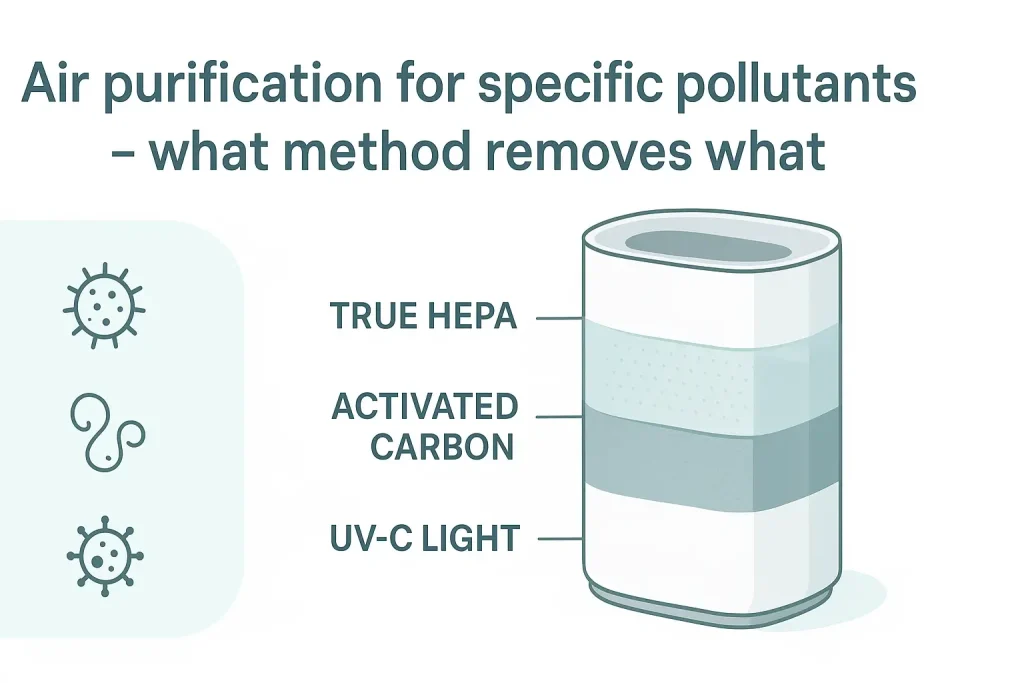
Ionizers and electrostatic precipitators generate ozone as a byproduct of corona discharge, and even CARB-compliant units that stay below the 0.050 ppm limit can produce enough ozone to irritate already-compromised respiratory tissue. Ozone at any level above ambient (0.020-0.040 ppm outdoors in most areas) causes measurable airway inflammation within hours of exposure according to EPA research on ozone health effects.
For an immunocompromised person whose lung tissue is already under inflammatory stress, adding even 0.010-0.030 ppm of additional ozone from an air purifier is an unnecessary and avoidable risk. True HEPA mechanical filtration produces zero ozone and removes particles without generating any chemical byproducts — it is the only filtration technology with a zero-risk profile for respiratory patients.
UV-C lamps marketed for air purification inside consumer units typically deliver insufficient dwell time to kill pathogens passing through at typical fan speeds (100-400 CFM through a lamp chamber measured in inches). Effective UV-C disinfection requires dwell times of 1-10 seconds depending on pathogen type and lamp intensity. A pathogen moving through a consumer UV-C chamber at 200 CFM passes the lamp in approximately 0.01 seconds — too fast for meaningful inactivation.
Worse, UV-C lamps produce ozone as a secondary byproduct, and the lamp housing can develop leaks over time that expose the user to UV radiation. For immunocompromised users, the ozone risk and marginal pathogen inactivation benefit do not justify the inclusion of UV-C in a primary air purification strategy. If airborne pathogen control is required, high-CADR True HEPA filtration at 5-6 ACH provides broader and more reliable protection without chemical risk.
Whole-House Filtration as a Supplement for Immunocompromised Protection
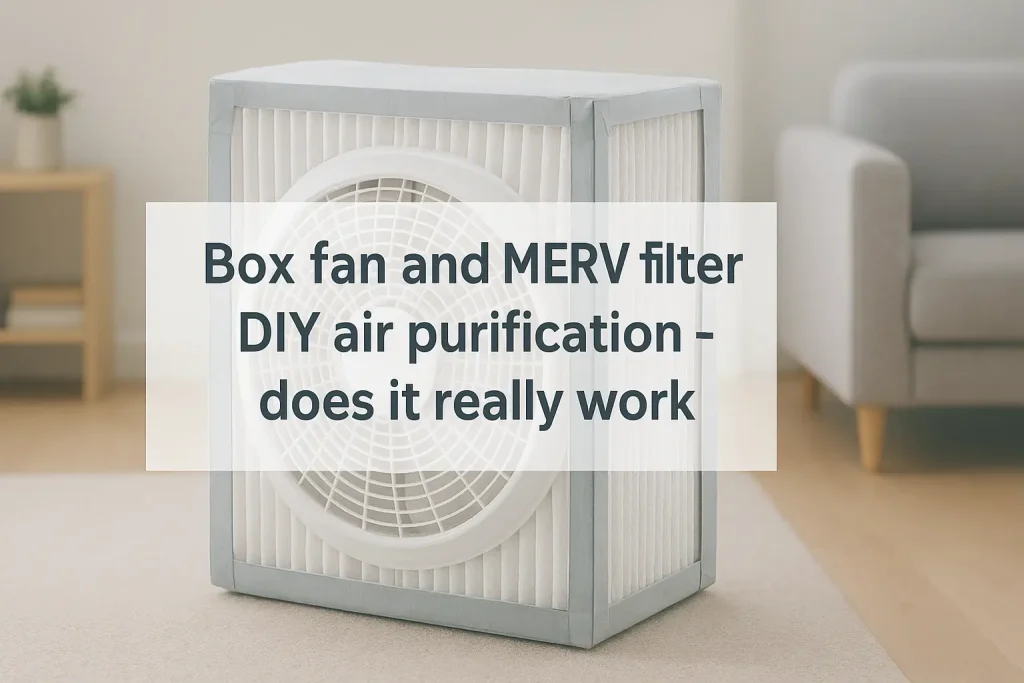
A portable air purifier only cleans the room it sits in. For whole-house protection, a MERV 13 or MERV 16 furnace filter installed in a forced-air HVAC system running the fan continuously can reduce particulate levels throughout the entire home, providing baseline protection in rooms the portable unit does not reach.
A MERV 13 pleated furnace filter captures 75% or more of particles in the 0.3-1 micron range per ASHRAE 52.2 testing — not as efficient as True HEPA but distributed across a much larger air volume (800-2,000 CFM typical residential HVAC airflow vs 100-500 CFM for a portable unit). A MERV 16 filter captures 95% or more in the same size range, approaching True HEPA efficiency at whole-house airflow rates.
This strategy works best when combined with a dedicated portable True HEPA unit in the immunocompromised person’s primary sleeping and living spaces. The whole-house MERV 13+ filter handles baseline particulate loading throughout the home. The portable unit delivers the 5 ACH medical-grade protection in the rooms where the person spends the most time. Neither system alone provides adequate protection — but together they create layered filtration that addresses both distribution and intensity.
For homes with pets, the whole-house filter also reduces the dander load that portable units in occupied rooms must manage. Our article on pet dander as an indoor air pollutant explains how animal allergens interact with filtration systems and why particle size determines capture strategy.
Can I Run an Air Purifier 24/7 Without Risk?
Running a True HEPA mechanical air purifier 24 hours a day is completely safe and is the recommended operating mode for immunocompromised users. Continuous operation at the required fan speed maintains steady-state low particulate concentrations rather than cycling between clean and contaminated air that occurs with intermittent use.
The only considerations are filter replacement timing and electricity cost. A unit running 24/7 at medium fan speed (30-50 watts) costs approximately $30-$55 per year in electricity at the national average rate of 13 cents per kilowatt-hour. Filter replacement intervals accelerate proportionally to runtime — a filter rated for 12 months of 8-hour daily use lasts 4 months of 24/7 operation. Budget accordingly and never delay filter replacement to save cost. The health risk of a loaded filter that no longer delivers 5 ACH far exceeds the cost of more frequent replacements.
For nurseries where immunocompromised infants sleep, continuous operation at sleep mode is especially important because infants spend 12-16 hours per day in one room. See our guide on air purifier selection for nurseries for CADR calculations specific to infant sleep environments.
What Is the Difference Between HEPA and True HEPA on Product Labels?
True HEPA is a specific certification meaning the filter meets the IEST-RP-CC001 standard of 99.97% minimum efficiency at 0.3 microns. HEPA-type, HEPA-like, or HEPA-style are marketing terms with no standard definition — these filters may capture anywhere from 85% to 99% at 0.3 microns and are not independently tested to any published standard.
For immunocompromised users, only True HEPA or HyperHEPA meet the filtration standard required for medical-grade protection. A HEPA-type filter that captures 95% of 0.3-micron particles lets through five times more particles than a True HEPA filter capturing 99.97%. Over hours of continuous operation, that difference means PM2.5 concentrations that stabilize at 15-20 micrograms per cubic meter instead of below 5 — the difference between acceptable and elevated exposure for compromised lungs.
Verify True HEPA claims by checking for AHAM Verifide certification or explicit labeling as meeting IEST-RP-CC001 or EN 1822 H13 standards. If the product page or packaging uses the word type, like, or style after HEPA without listing a specific efficiency percentage or test standard, it is a HEPA-type filter and does not meet the medical-grade threshold.
How Do I Know If My Air Purifier Is Actually Working for My Condition?
The only way to verify that your air purifier is delivering medical-grade protection is to measure PM2.5 levels in the breathing zone with a laser particle counter before and after 30 minutes of operation at the target fan speed. A correctly sized and functioning unit should reduce PM2.5 by 85% or more within 30 minutes and maintain levels below 5 micrograms per cubic meter during continuous operation.
Without a particle counter, you are guessing. The unit’s filter indicator light measures pressure drop across the filter, not particulate concentration in the room air. The auto mode sensor measures relative changes in the unit’s immediate vicinity, not absolute PM2.5 at the breathing zone across the room. And the manufacturer’s CADR rating was measured in a sealed test chamber, not in your specific room with its particular leakage, furnishings, and pollution sources.
Invest in a standalone PM2.5 laser particle counter that logs data over time. Place it on your nightstand or the arm of your chair — wherever your breathing zone is. Run the purifier on maximum for 30 minutes. If PM2.5 does not drop below 5 and stay there, your unit is undersized for the space at the ACH you need, or the filter is loaded, or the unit has a housing leak allowing bypass.
Can I Use Multiple Smaller Units Instead of One Large Medical-Grade Unit?
Multiple smaller units can achieve the same total CADR as a single large unit, but they introduce two problems for immunocompromised users. First, smaller units typically lack sealed housings and use lower-grade filter media with lower efficiency at the MPPS. Second, multiple units create multiple intake and exhaust points that complicate airflow patterns and can create dead zones where particulate concentrations remain elevated.
If you must use multiple units to cover a large space, place them at opposite ends of the room with intakes facing each other to create cross-circulation. Run all units on the same fan speed to maintain balanced airflow. And verify with a particle counter placed at the midpoint between units that PM2.5 drops uniformly across the entire space — not just near each unit’s exhaust.
However, one medical-grade unit sized correctly for the room at 5 ACH is always the safer and simpler solution. It eliminates the coordination problems, the dead zone risk, and the variance in filter quality between budget units. Spend the budget on one unit with verified True HEPA or HyperHEPA filtration and documented sealed housing rather than two units with unverified specifications.
What Are the Signs That a Filter Needs Immediate Replacement Regardless of Schedule?
Three signs indicate immediate filter replacement is required regardless of the calendar or indicator light: visible discoloration from white to gray or brown on the intake side, a persistent musty or sour smell from the exhaust even after cleaning the pre-filter, and PM2.5 levels that no longer drop below 5 micrograms per cubic meter after 30 minutes of maximum fan operation in a sealed room.
Visible discoloration means the filter media is loaded to the point where airflow resistance has increased significantly. The CADR at every fan speed is lower than rated, and the ACH the unit delivers has dropped below the level you sized it for. A musty smell indicates microbial growth on the filter media itself, which means the filter is now a source of bioaerosol contamination rather than a removal device. Both conditions require immediate replacement — not next week, not when the indicator light turns on.
For immunocompromised users, keep a spare filter set on hand at all times. The cost of an unused spare filter ($30-$250 depending on the unit) is negligible compared to the cost of days without medical-grade air filtration while a replacement ships. Order the replacement filter the same day you install the new one so a spare is always available.