Preventing indoor pollution at the origin removes up to 90 percent of contaminant loads permanently, while running a portable air cleaner only recirculates existing particles until the filter saturates. Source control eliminates pollutants before they enter your breathing zone. True HEPA air purifiers capture what escapes your control measures, making them a mandatory secondary defense. The United States Environmental Protection Agency ranks source elimination as the most effective strategy because it requires zero ongoing energy and produces no filter waste.
The EPA’s Indoor Air Quality Hierarchy: Where Source Control and Air Cleaning Fit
The Environmental Protection Agency places source control at the top of its indoor air quality hierarchy because eliminating a pollutant at its origin is scientifically proven to reduce exposure faster than mechanical filtration. This three-step framework dictates that prevention, ventilation, and air cleaning must operate in that exact sequence for optimal health outcomes.
Indoor environments often trap chemical vapors and biological spores that accumulate over time when windows stay closed. Running an exhaust fan or replacing a volatile paint with a low-emission alternative directly lowers the baseline concentration that your mechanical filter must handle.
What Is Source Control? Eliminating Pollutants Before They Reach Indoor Air
Source control refers to any physical modification or behavioral change that stops contaminants from entering the indoor environment in the first place. Simple actions include switching to non-toxic cleaning products, banning indoor smoking, repairing water leaks, and upgrading HVAC intake screens. These preventative IAQ measures cost significantly less over a decade than replacing HEPA filters every three months.
| Photo | Popular Air Purifiers | Price |
|---|---|---|

|
Air Purifiers for Home Large Room up to 1500ft², Tailulu H13 True HEPA Air Purifier for Pets Dust Odor Smoke, Air Purifier for Bedroom with 15dB Quiet Sleep Mode for Bedroom Office Living Room | Check Price On Amazon |
|
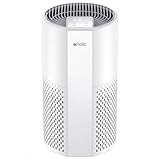
Afloia Air Purifier for Home, 4-in-1 Washable Filter for Allergies, Covers Up to 1076 ft², Quiet Operation, Auto Shut-Off & Night Light, Removes Pet Dander, Pollen, Dust, Mold, and Smoke, White,Pluto | Check Price On Amazon |

|
Nuwave OxyPure ZERO Air Purifier with Washable and Reusable Bio Guard Tech Air Filter, Large Room Up to 2002 Ft², Air Quality Monitor, 0.1 Microns, 100% Capture Irritants like Smoke, Dust, Pollen | Check Price On Amazon |

|
Air Purifiers for Home Large Room Up to 1,996 Ft², EOEBOT Air Purifier for Home Pets with Washable Filter, Quiet Sleep Mode, Air Quality Monitor, Air Purifier for Bedroom, Pet Hair, Dust, Smoke, White | Check Price On Amazon |
|
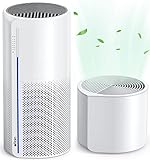
Afloia 2 IN 1 Air Purifier with Humidifier Combo, 3-Stage Filters for Home Allergies Pets Hair Smoker Odors, Evaporative Humidifier, Auto Shut Off, Quiet Air Cleaner with Seven Color Light,White | Check Price On Amazon |
Residential humidity levels above 50 percent create ideal conditions for mould spore reproduction and dust mite reproduction across carpets and bedding. Installing a properly sized dehumidifier or fixing a leaking basement wall removes the moisture feedstock before allergens multiply. You can also seal ductwork joints with mastic tape to prevent attic dust from infiltrating forced-air supply vents.
How Air Purification (Portable Air Cleaners) Works to Remove Existing Pollutants
Portable air cleaners draw contaminated room air through a mechanical filtration stage that traps suspended solids while passing cleaner air back into the living space. A certified HEPA filter captures at least 99.97 percent of particles measuring 0.3 microns, which covers the most penetrating particle size range. These mechanical air filtration devices operate continuously to maintain steady-state pollutant reductions.
The United States Environmental Protection Agency confirms that indoor air can contain two to five times more pollutants than outdoor air during normal daily activities. Portable units compensate for sealed windows and inadequate HVAC return airflow by creating localized circulation patterns in high-occupancy zones. The effectiveness depends entirely on your room volume and the certified Clean Air Delivery Rate of the specific unit.
Understanding CADR, ACH, and Real-World Coverage Limits
Clean Air Delivery Rate (CADR) measures the actual volume of filtered air a device delivers per minute for smoke, dust, and pollen independently verified by the Association of Home Appliance Manufacturers. Manufacturer coverage area claims assume two air changes per hour (ACH), but allergy and asthma guidelines require five ACH for clinically meaningful symptom reduction. You must divide the stated square footage rating by roughly two and a half to find the true allergy-safe coverage.
Independent laboratory testing consistently demonstrates that running a unit at the recommended five ACH reduces airborne particulate matter by over 85 percent within thirty minutes. You can find exact noise levels in db at each fan speed setting in our comprehensive guide to portable cleaner acoustics. A 300 cubic feet per minute smoke CADR unit covers 300 square feet at two ACH, but it only manages 120 square feet effectively at the five ACH standard.
Activated Carbon Media: Grams vs Adsorption Capacity vs VOC Breakthrough
Chemical adsorption relies on porous activated carbon media that physically traps gaseous VOCs and formaldehyde molecules within microscopic surface pores until the media reaches saturation. Thin carbon sheets impregnated into standard pre-filters offer negligible VOC removal because the contact time between passing air and carbon atoms remains far too short. You need at least three pounds of granular activated carbon for meaningful gas-phase filtration in a typical bedroom.
Once the carbon bed reaches capacity, trapped chemical vapors can desorb back into your room if the relative humidity rises or temperatures increase. You must replace saturated carbon stages every four to six months under normal household loads to prevent this VOC breakthrough phenomenon. Heavy-duty units with deep carbon beds capture more household solvents, but they still cannot eliminate carbon dioxide or biological effluents.
Source Control vs Air Purification: Head-to-Head Effectiveness Comparison
Source control permanently reduces indoor pollutant loads with minimal ongoing costs, while air purification continuously processes circulating air until filter media reaches saturation or requires replacement. Prevention wins on total cost of ownership, but mechanical filtration delivers faster symptom relief during acute exposure events like cooking grease or sudden dust storms. You should implement both strategies to maintain healthy indoor environments year round.
Long-term exposure studies show that combining elimination tactics with certified HEPA filtration reduces asthma medication usage more effectively than either method operating in isolation. The table below breaks down the exact performance differences across common household scenarios. Always verify your unit’s certification status before relying on it for chemical sensitivity management.
| Scenario | Source Control Result | Air Purification Result | Optimal Combined Approach |
|---|---|---|---|
| Wildfire smoke infiltration | Sealing windows with weatherstripping reduces PM2.5 entry by 60 percent | High smoke CADR units drop indoor concentrations by 85 percent in 30 minutes | Seal perimeter gaps, then run dual units at max fan speed until outdoor air quality improves |
| Kitchen grease and cooking fumes | Using a vented range hood removes 80 percent of combustion byproducts immediately | Carbon filters adsorb lingering odours but saturate rapidly under heavy cooking loads | Exhaust directly outside during cooking, then run a carbon-rich purifier on medium for odour polishing |
| Pet dander and hair shedding | Weekly grooming and washing bedding reduces allergen reservoirs by over 40 percent | HEPA filters capture airborne dander but settle quickly onto surfaces requiring vacuuming | Bathe pets regularly, use MERV 13 HVAC filters, and place a purifier near sleeping areas |
| New furniture off-gassing | Replacing particleboard with solid wood eliminates formaldehyde emission at the origin | Activated carbon beds temporarily trap VOCs but require replacement every three months | Select CARB Phase II compliant furnishing, then run heavy carbon filtration for the first 90 days |
Particulate Matter (PM2.5, Smoke, Allergens) Which Method Wins?
Elimination tactics win long-term by removing the physical reservoirs that continuously shed microscopic solids into your breathing space. You will still need high-efficiency particulate filters during acute exposure periods because vacuuming and wiping cannot capture suspended microscopic matter instantly. The American Lung Association confirms that continuous mechanical capture remains necessary during high-pollution weather events.
Running a certified unit at five air changes per hour drops PM2.5 concentrations below World Health Organization guidelines within a single operating hour. You must maintain your vacuum cleaner with a sealed bag and a genuine exhaust filter to prevent re-circulating captured dust back into the room. Always cross-reference manufacturer claims with third-party testing databases to confirm real-world particle reduction rates.
Volatile Organic Compounds (Formaldehyde, Off-gassing) The Adsorption Reality
Removing chemical vapors at the source provides immediate and permanent exposure reduction without requiring expensive replacement media. You can achieve this by selecting low-VOC paints, avoiding aerosol sprays, and choosing solid hardwood instead of pressed wood laminates for cabinetry installations. Mechanical filtration alone cannot destroy gas-phase molecules once they permeate porous building materials.
Chemical adsorption requires heavy carbon beds or specialized catalytic stages that slowly degrade trapped molecules over extended contact periods. Thin filter layers pass air too quickly to allow proper molecular bonding, meaning breakthrough occurs rapidly in high-humidity environments. You should always prioritize buying medical-grade gas-phase systems if you experience chemical sensitivity symptoms.
Why Air Purification Cannot Replace Source Control or Ventilation
Mechanical filters recirculate stagnant air but cannot lower carbon dioxide levels, remove oxygen-depleted air, or extract heavy water vapor from enclosed spaces. Ventilation physically exchanges stale indoor air with fresh outdoor air using exhaust fans or balanced heat recovery systems to maintain healthy oxygen ratios. You must integrate all three layers to prevent bioeffluent buildup and maintain thermal comfort.
Relying solely on purifiers during high outdoor pollution events traps heat and moisture while rapidly saturating your HEPA stage. You will notice a sharp spike in carbon dioxide concentrations within ninety minutes when windows stay sealed and fans run continuously. Proper dilution strategies combined with targeted exhaust ventilation keep your indoor environment breathable and prevent structural moisture damage.
How to Build a Layered IAQ Strategy That Actually Works (Step-by-Step)
Follow this exact sequence to minimize exposure while keeping filter replacement costs and electricity consumption manageable throughout the year. Start by inspecting your home for hidden moisture sources and replacing high-emission products with certified low-release alternatives. Smart indoor air quality sensors help you track real-time particle counts before deploying mechanical systems.
Step-by-Step IAQ Implementation
Identify active emission sources using visual inspection and a baseline particle or VOC monitor.
Eliminate or replace high-polluting materials such as spray cleaners, unsealed particleboard, and synthetic air fresheners.
Seal building envelope leaks around windows and ductwork, then install exhaust ventilation in kitchens and bathrooms.
Calculate required CADR based on room volume and target five ACH, then size your mechanical unit accordingly.
Position purifiers three feet away from walls on the floor and run continuously during high-occupancy hours.
Myth vs Fact
Air Purification Myths Debunked
Myth
An air purifier eliminates the need for proper ventilation in sealed rooms.
Fact
Filtration recirculates existing air but cannot lower carbon dioxide or oxygenate the space. Exhaust ventilation or fresh air exchange remains mandatory for healthy indoor environments.
Myth
All carbon filters remove VOCs equally regardless of weight or brand.
Fact
Effective gas-phase filtration requires at least three pounds of granular activated carbon media to achieve meaningful contact time. Thin impregnated sheets saturate within weeks and stop adsorbing chemical vapors entirely.
Frequently Asked Questions: Source Control vs Air Purification
You can find complete answers to common indoor air quality questions below to help you prioritize your budget effectively. The guidance aligns directly with current United States Environmental Protection Agency recommendations and third-party filtration studies. Each answer includes specific measurements to help you make confident purchasing decisions.
Does an air purifier replace source control for reducing allergy symptoms?
No, because mechanical filters only capture particles already suspended in the air while leaving allergen reservoirs in carpets, bedding, and upholstery untouched. Source control eliminates the physical reservoirs that continuously release dust mite feces and pet dander into room circulation. You must replace synthetic rugs with hard flooring and wash bedding weekly in hot water before relying on mechanical capture.
Which method works better for removing formaldehyde from new furniture?
Eliminating chemical vapors at the origin provides immediate exposure reduction by swapping pressed wood laminates for solid hardwood or metal cabinetry. Adsorption stages only trap formaldehyde temporarily and saturate quickly without destroying the molecules. You should always choose solid wood alternatives and ventilate the space continuously during the first ninety days of off-gassing.
How much does a HEPA purifier actually reduce PM2.5 during wildfire events?
Running a certified unit at five air changes per hour drops indoor PM2.5 concentrations by 85 to 94 percent within thirty minutes of continuous operation. You must also seal window gaps and set your HVAC system to recirculate to achieve these reduction rates. A 300 cubic feet per minute smoke CADR unit covers approximately 120 square feet effectively under heavy smoke loads.
Is it cheaper to replace all VOC-emitting products or run carbon filtration continuously?
Source elimination costs significantly less over a ten-year period because it requires zero electricity and produces no recurring filter expenses. Heavy carbon beds cost over one hundred dollars annually to replace and still fail under high humidity conditions. You should prioritize buying low-emission materials during renovations to permanently eliminate chemical exposure risks.
Can mechanical filtration remove carbon dioxide from a crowded room?
Mechanical filtration cannot lower carbon dioxide levels because particulate traps and carbon beds lack the chemical capacity to absorb or neutralize gaseous bioeffluents. You must install an exhaust fan or crack windows periodically to introduce fresh outdoor air and dilute accumulated carbon dioxide. Running purifiers in sealed rooms will quickly raise carbon dioxide concentrations above 1000 ppm.
CADR Calculator
Calculate Your Minimum Required CADR
Enter your room dimensions and use case. Formula: length multiplied by width multiplied by ceiling height multiplied by target ACH divided by 60. Source: AHAM methodology.
Final Verdict: Which Should You Choose for Your Home or Office?
Prevention tactics permanently lower indoor contaminant loads while mechanical capture devices provide rapid temporary relief during acute exposure spikes. You must eliminate high-emission sources and repair moisture leaks before spending money on expensive filter replacements. High-CADR mechanical units remain essential for polishing remaining particulate matter and capturing smoke during outdoor pollution events.
Allergy households should seal perimeter gaps, switch to solid surface flooring, and run certified units continuously at five air changes per hour in bedrooms. Chemical sensitivity sufferers must replace pressed wood furniture with solid alternatives and install heavy carbon filtration to trap lingering formaldehyde. Start your journey by replacing disposable spray cleaners and checking our complete guide to filter safety and compatibility before purchasing your next replacement media.
Compare top-rated models side by side using verified performance databases to ensure your brand selection matches your exact room volume. You can also explore mechanical filtration versus ionic technology to avoid ozone-producing devices that degrade indoor health metrics. Finally, check noise output thresholds in our comprehensive acoustic guide to ensure uninterrupted sleep during overnight operation.