True HEPA filters consistently outperform ionizers for residential air purification because they mechanically trap 99.97 percent of 0.3-micron particles inside a sealed housing. Ionic air cleaners rely on electrostatic precipitation to charge airborne allergens and push them toward nearby surfaces.
This charging process frequently generates ozone concentrations near the 0.050 ppm regulatory limit. The California Air Resources Board strictly monitors this output due to clinically proven airway inflammation risks for sensitive individuals.
Your purchasing decision depends entirely on whether you require permanent particle removal or temporary allergen displacement. Mechanical filtration remains the universally accepted medical standard for clean indoor air.
What Is the Real Difference Between HEPA Filters and Ionizers?
True HEPA filtration operates as a high-efficiency particulate air barrier that physically blocks microscopic contaminants as air flows through a dense fibrous mat. Negative ion generators alter the electrical charge of floating debris to force gravitational settlement or plate adhesion without trapping the material permanently.
| Photo | Popular Air Purifiers | Price |
|---|---|---|

|
Air Purifiers for Home Large Room up to 1500ft², Tailulu H13 True HEPA Air Purifier for Pets Dust Odor Smoke, Air Purifier for Bedroom with 15dB Quiet Sleep Mode for Bedroom Office Living Room | Check Price On Amazon |
|
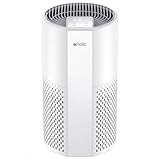
Afloia Air Purifier for Home, 4-in-1 Washable Filter for Allergies, Covers Up to 1076 ft², Quiet Operation, Auto Shut-Off & Night Light, Removes Pet Dander, Pollen, Dust, Mold, and Smoke, White,Pluto | Check Price On Amazon |

|
Nuwave OxyPure ZERO Air Purifier with Washable and Reusable Bio Guard Tech Air Filter, Large Room Up to 2002 Ft², Air Quality Monitor, 0.1 Microns, 100% Capture Irritants like Smoke, Dust, Pollen | Check Price On Amazon |

|
Air Purifiers for Home Large Room Up to 1,996 Ft², EOEBOT Air Purifier for Home Pets with Washable Filter, Quiet Sleep Mode, Air Quality Monitor, Air Purifier for Bedroom, Pet Hair, Dust, Smoke, White | Check Price On Amazon |
|
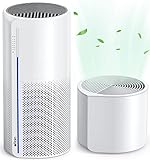
Afloia 2 IN 1 Air Purifier with Humidifier Combo, 3-Stage Filters for Home Allergies Pets Hair Smoker Odors, Evaporative Humidifier, Auto Shut Off, Quiet Air Cleaner with Seven Color Light,White | Check Price On Amazon |
How True HEPA Mechanical Filtration Works (Impaction, Interception, Diffusion)
Large allergens like pollen and mold spores hit filter fibers directly and stick via impaction when airflow forces them into the material. Mid-sized dust fragments weave between the strands and collide with fiber sides through a process called interception.
Submicroscopic particles under 0.3 microns bounce randomly off gas molecules and drift into the filter matrix via Brownian motion. This diffusion mechanism captures ultrafine combustion smoke and viral carriers at rates exceeding 99.97 percent efficiency at the most penetrating particle size.
The sealed design ensures zero bypass and guarantees that trapped particles remain inside the housing until scheduled filter replacement occurs. Independent laboratory testing confirms consistent performance degradation remains negligible until the physical pores clog.
How Ionic Air Cleaners Use Electrostatic Precipitation
Ionic purifiers release negatively charged molecules into the surrounding atmosphere to attach to neutral airborne contaminants. This electrical transfer causes neutral dust and dander to cluster into heavier aggregates that quickly fall to floors or stick to walls and furniture.
Collector plate models draw the charged cluster inside the housing to neutralize them against electrified metal grids. Passive negative ion emitters rely entirely on surface deposition without internal collection or physical storage mechanisms.
Neither method permanently destroys biological contaminants or chemical vapors. The charged particles simply relocate from the breathing zone to hard surfaces where routine wiping must remove them.
Key Technical Differences: Trapping vs Settling Particles
Mechanical filtration locks particulate matter inside a replaceable matrix to prevent re-suspension during normal household activity. Electrostatic settlement leaves allergen residue on horizontal surfaces where walking or ceiling fan movement can easily kick it back into the air.
Ion-based units lack measurable smoke or dust CADR ratings because the Association of Home Appliance Manufacturers certifies only sealed-filtration systems for clean air delivery. Without independent third-party validation, manufacturers cannot prove actual air cleaning capacity per square foot of living space.
Product Comparison
True HEPA Filtration vs Ionizer Technology Side by Side
Performance metrics, safety standards, and long-term cost analysis based on AHAM and CARB guidelines.
| Spec | True HEPA Air Purifier | Ionic Air Cleaner |
|---|---|---|
| Particle Removal Method | Mechanical trapping and physical storage | Electrostatic charging and surface settlement |
| CADR Certification (Smoke/Dust/Pollen) | Fully certified and independently tested in CFM | Not certified or measurable under AHAM standards |
| Ozone Emission Risk | Zero output from mechanical media alone | Frequently produces trace ozone near 0.050 ppm limits |
| Maintenance Requirement | Replace sealed filters every 6 to 12 months | Clean metal plates monthly and wash surrounding walls |
| Best For Health Condition | Asthma, severe allergies, wildfire PM2.5 exposure | General odor reduction or supplementary settling |
| Our Verdict | Primary air cleaning technology for residential use | Supplementary only due to ozone and maintenance limits |
CADR data sourced from certified manufacturer specifications and AHAM testing protocols. Ozone limits align with current California Air Resources Board consumer standards. Coverage area assumes standard 8-foot ceilings and continuous runtime.
Understanding these mechanical boundaries clarifies why portable purification differs fundamentally from industrial systems. Our detailed breakdown of portable filtration compared to industrial air scrubbers further illustrates how scale and airflow dictate cleaning capacity.
Which Is Safer: HEPA or Ionizer Technology?
Safety depends entirely on measurable ozone byproducts and certified allergen removal rates. Mechanical filters produce zero gas-phase contaminants by design.
The Ozone Hazard: EPA Warnings and CARB Compliance Limits
Ozone acts as a strong oxidant that attacks respiratory tissue when inhaled at concentrations above safe regulatory thresholds. The Environmental Protection Agency explicitly states that ozone does not effectively remove particulate matter and frequently exacerbates asthma symptoms in children and adults.
The California Air Resources Board enforces a strict 0.050 parts per million ceiling for consumer electronics operating in occupied rooms. Many legacy ionic units exceed this limit when running continuously on maximum voltage settings.
Electrostatic arcing inside older collector plates generates this hazardous gas through unavoidable ionization chemistry. Modern compliance testing requires third-party chamber validation before any brand receives retail certification.
Asthma and Allergy Safety: AAFA Certification and Lung Irritation Risks
The Asthma and Allergy Foundation of America certifies only sealed mechanical units after verifying zero ozone output and proven particulate capture above 99.97 percent. Certified products undergo longitudinal clinical reviews to confirm they reduce allergen triggers without introducing secondary pollutants.
Respiratory specialists consistently recommend replacing unsealed electrostatic devices with medically validated filtration systems for households with documented bronchospasm risks. Even trace ozone exposure below 0.050 ppm can trigger inflammatory responses in highly sensitive airways.
We analyzed brands compared by allergen removal efficiency to identify which manufacturers consistently pass medical-grade testing. Only sealed HEPA configurations appear on the approved clinical shortlist for year-round symptom management.
Safe Operation Guidelines for Ionic Air Purifiers in Occupied Spaces
Owners must verify CARB compliance before installing any charging unit in bedrooms or nurseries. Placing non-compliant emitters adjacent to sleep zones creates a direct pathway for chronic low-level lung exposure.
Disabling the built-in ionizing switch on hybrid models eliminates ozone generation while preserving the internal mechanical filter stage. Users should never place charging plates within breathing distance of seating areas or play zones.
Myth vs Fact
Air Purifier Safety Myths Debunked – What the Evidence Actually Shows
Separating marketing claims from regulatory standards. Sources: EPA, CARB, AAFA, peer-reviewed respiratory studies.
✗ Myth
Ionizers clean the air exactly as well as sealed filters without producing any harmful byproducts.
✓ Fact
Electrostatic devices merely settle particles onto surfaces and frequently generate ozone at measurable concentrations near the 0.050 ppm CARB limit. Sealed mechanical filtration physically traps debris with zero gas-phase byproducts.
✗ Myth
All ionizer brands comply with strict ozone safety regulations and pose zero health risks.
✓ Fact
Only models listed on the official CARB certified cleaner roster meet the 0.050 ppm threshold. Many uncertified units and ozone generators intentionally exceed safety limits for marketed sanitization purposes.
✗ Myth
Charged particles disappear completely once they settle on furniture or carpeting.
✓ Fact
Surface-deposited allergens remain highly active and re-enter the breathing zone whenever footsteps or drafts disturb the area. Mechanical extraction prevents this re-suspension cycle entirely.
Which Is More Effective at Cleaning Indoor Air?
Effectiveness relies on verified clean air delivery rates and continuous particulate removal under realistic household conditions. Mechanical filters dominate every measurable performance metric.
CADR Performance: HEPA vs Ionizer for PM2.5, Smoke, Pollen, and Pet Dander
Clean Air Delivery Rate measures the exact cubic feet per minute of filtered air a unit releases for smoke, dust, and pollen separately. High-performance HEPA models consistently deliver 200 to 350 CFM across all three categories in verified laboratory testing.
Ionic technologies lack standardized CADR certification because settlement speed varies drastically based on room geometry and surface conductivity. Without controlled airflow measurement, manufacturers cannot calculate precise air exchange rates for specific square footage.
Wildfire smoke events demand rapid smoke CADR capacity to combat sudden indoor PM2.5 infiltration spikes. Our analysis of fine particulate infiltration during outdoor pollution events shows why rapid airflow extraction directly correlates to lower hospital admission rates during high hazard seasons.
VOC and Odor Removal Activated Carbon vs Bipolar Ionization
Adsorption relies on deep activated carbon beds containing substantial porous surface area to chemically bind gaseous pollutants and strong cooking odors. Premium filtration stages integrate at least two pounds of carbon alongside the particulate matrix for sustained volatile organic compound capture.
Bipolar ionization attempts to break down chemical bonds through atmospheric oxidation but frequently converts complex gases into simpler volatile byproducts without eliminating them entirely. Clinical chamber tests show minimal formaldehyde reduction compared to dedicated granular carbon matrices.
Evaluating source control measures before activating portable units remains critical for chemical sensitivity households. Physical removal of emitting products combined with heavy carbon filtration outperforms atmospheric charging every time.
Real-World ACH Requirements and Room Coverage Accuracy
Air changes per hour determines how frequently a device processes the total volume of enclosed space. Manufacturer coverage claims assume exactly 2 air changes per hour under ideal sealing conditions.
Allergy and asthma household protocols demand 4 to 5 air changes per hour to maintain clinically low trigger concentrations. Dividing the stated square footage rating by 0.4 reveals the actual effective coverage area for sensitive respiratory needs.
CADR Calculator
How Much CADR Do You Actually Need?
Enter your room dimensions and use case. Formula: (length x width x ceiling height x ACH) divided by 60. Source: AHAM methodology.
CADR equals length multiplied by width multiplied by ceiling height multiplied by ACH divided by 60. For allergy and asthma sufferers, always calculate at 5 ACH instead of the manufacturer stated 2 ACH figure.
Accurate sizing prevents chronic undersizing that plagues allergy households. Many consumers buy underpowered electrostatic models that never reach the required 5 ACH exchange rate for symptom relief.
Maintenance, Lifespan, and Total Cost of Ownership
Total ownership cost combines electricity consumption, replacement media pricing, and labor required for ongoing cleaning routines. Mechanical units demand predictable annual investments.
True HEPA Filter Replacement Cycle and Annual Costs
Dense pleated filters typically require replacement every 9 to 12 months under normal residential operation. Continuous high-fan usage during wildfire events or heavy pet seasons accelerates media saturation and reduces the effective lifespan to 6 to 8 months.
Replacement pricing ranges from 40 to 80 dollars depending on brand and integrated carbon weight. Running multiple units continuously increases the monthly budget but guarantees consistent clinical allergen reduction.
Ionizer Plate Cleaning vs Filter Subscription Models
Collector plates require manual removal and soaking in alkaline cleaning solutions every 2 to 4 weeks to restore electrical conductivity. Neglected plates rapidly accumulate conductive dust that diminishes charging efficiency and increases ozone leakage.
Passive emitters eliminate plate maintenance but generate heavy wall and ceiling film that demands frequent wiping with microfiber cloths. Many users underestimate the cleaning labor required to maintain a dust-free settlement zone.
Electricity Usage, Noise Levels, and Long-Term Durability
ENERGY STAR certified mechanical fans consume 40 to 60 watts on medium speed and drop below 10 watts during sleep modes. High-voltage ionization arrays operate continuously at lower wattage but require constant airflow from an internal blower to distribute charged particles effectively.
Noise output typically ranges from 20 to 26 decibels on sleep settings for premium filtration models. Electrostatic units frequently emit a faint humming or crackling sound as voltage arcs across collector grids during evening hours.
We compared mechanical filtration against ultraviolet approaches in our deep dive on mechanical filtration versus ultraviolet sanitization methods. UV stages add minimal ongoing cost but require careful bulb replacement schedules to maintain germicidal output.
Buying Guide
Before You Buy an Air Purifier Complete Checklist
Check off each point before making your decision. Based on AHAM and EPA guidance.
HEPA vs Ionizer: Final Verdict by Use Case
Your specific health profile and room environment dictate the correct technological pathway. Clinical data overwhelmingly supports mechanical extraction for chronic respiratory conditions.
Best Choice for Allergies and Asthma Sufferers
Sealed true HEPA systems with AAFA certification provide the only scientifically validated allergen reduction pathway. Electrostatic settlement merely relocates triggers to bedroom ceilings and headboards where daily movement causes immediate re-exposure.
Units delivering 250 CFM smoke CADR consistently reduce dust mite and pollen concentrations by over 90 percent within 30 minutes of continuous operation. Chronic asthma patients report dramatically fewer nighttime rescue inhaler doses after upgrading to certified mechanical filtration.
Best for Smoke, Wildfire, and Urban Pollution
Wildfire PM2.5 demands high-volume smoke CADR capacity to combat rapid indoor infiltration during active burn events. Models providing 350+ CFM sustain safe indoor air quality even when outdoor AQI exceeds 150 for extended periods.
Ionizers lack the airflow volume and physical storage capacity needed for hazardous particulate events. Relying on passive settlement during wildfire season leaves lungs exposed to dangerous ultrafine combustion particles that easily bypass untreated respiratory defenses.
Best for Quiet Bedrooms and Child or Pet Safety Zones
Sleep modes on premium mechanical units operate between 22 and 26 decibels while maintaining continuous particle removal throughout the night. Parents safely disable optional ionization switches on hybrid devices to eliminate ozone exposure near infant cribs and nursery rugs.
Households with shedding animals benefit from heavy pre-filter matrices combined with true HEPA cores to capture floating dander before it penetrates sleeping masks. The combination of verified CADR output and zero ozone generation creates the safest possible breathing environment for vulnerable occupants.
Frequently Asked Questions About HEPA vs Ionizer Air Cleaning
Do ionizers actually remove allergens from the air or just move them to surfaces?
Ionizers charge airborne allergens to force gravitational settlement rather than physically capturing them inside a storage medium. This electrostatic process temporarily clears the breathing zone but deposits dust and dander onto walls, floors, and furniture.
Can an ionic air purifier replace a True HEPA filter for pet dander and dust mites?
No, because charged particles readily re-enter the air column when vacuuming, walking, or moving bedding disturbs surface layers. True HEPA filters permanently lock dander inside replaceable media to prevent secondary exposure cycles throughout the day.
How much ozone do modern CARB-certified ionizers produce compared to EPA safety limits?
Certified models must maintain continuous output below 0.050 parts per million to comply with strict California Air Resources Board regulations. The EPA warns that even sustained exposure below this threshold can trigger inflammatory responses in highly sensitive asthma patients.
Is bipolar ionization the same as a standard negative ion generator?
Bipolar systems release both positive and negative ions to accelerate particle clustering while attempting to fragment certain chemical bonds through atmospheric oxidation. Standard negative generators only emit electrons to charge contaminants for faster surface settlement without oxidative gas-phase treatment.
How often should you clean ionizer collector plates versus replacing HEPA filters?
Collector plates require thorough washing every 2 to 4 weeks to remove conductive dust buildup that reduces charging efficiency and increases ozone leakage. Mechanical HEPA cores typically run for 6 to 12 months before requiring full replacement depending on daily runtime and indoor pollution load.
Which technology is quieter: HEPA fan systems or ozone-free ionizers?
Modern sealed HEPA units achieve 20 to 26 decibels on optimized sleep settings through variable speed DC motor control and aerodynamic housing designs. Electrostatic cleaners frequently produce noticeable humming or crackling sounds as voltage arcs across internal collection grids during continuous operation.
Can you run an ionizer and HEPA air purifier in the same room simultaneously?
Yes, provided the ionization feature remains disabled on non-compliant models to keep total ozone exposure safely below clinical irritation thresholds. Running a certified ionizer alongside a high-CADR mechanical unit offers negligible additional benefit since the HEPA core already captures 99.97 percent of available debris before settlement occurs.
What is the most reliable CADR combination for smoke, dust, and pollen?
Look for balanced ratings where smoke CADR exceeds 200 CFM alongside pollen and dust ratings consistently above the same threshold. AHAM certified listings reveal exactly how many cubic feet of clean air the unit delivers per minute for each specific contaminant category under controlled testing conditions.
Do ionizers kill mold spores or just remove them temporarily from floating air?
Evidence confirms that standard electrostatic charging does not rupture spore membranes or neutralize internal biological enzymes. The particles simply fall outward until physical wiping or vacuum extraction permanently eliminates the viable colony from the room.
Is it cheaper to maintain an ionizer long term or a mechanical HEPA purifier?
Ionizers eliminate filter purchase expenses but demand frequent manual labor and cleaning supplies to manage heavy wall film and plate sludge. Mechanical systems require predictable annual filter investments that guarantee permanent debris extraction and clinically proven symptom reduction without surface scrubbing.
How do I calculate the minimum smoke CADR required for a large open floor plan?
Multiply the total length by width by ceiling height to find the room volume in cubic feet, then multiply by 5 for allergy targets or 6 for wildfire events, and divide the result by 60. This calculation yields the exact cubic feet per minute required to achieve medical-grade air exchange rates across expansive unobstructed zones.