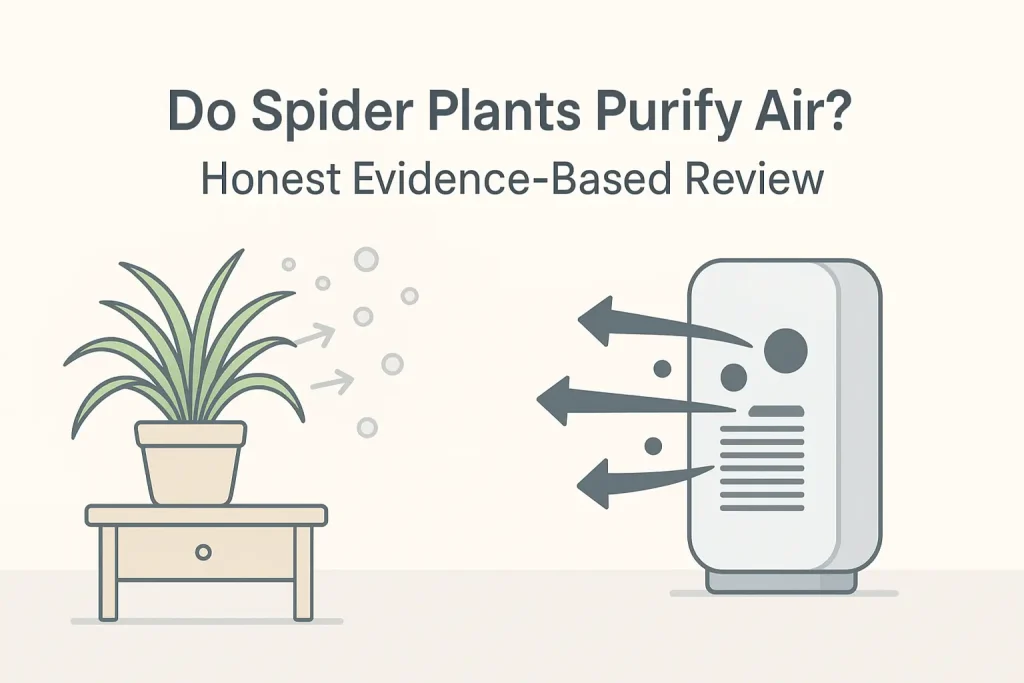
UV-C air purifiers emit ultraviolet light at 253.7 nanometers to disrupt microbial DNA. Fast portable units typically provide less than 0.5 seconds of exposure time, which falls far short of the 1 to 2 seconds required for meaningful pathogen inactivation.
The California Air Resources Board legally caps consumer ozone emissions at 0.050 parts per million. Any uncertified device running in a closed bedroom can easily irritate airways while delivering minimal biological reduction.
You will get genuine indoor air quality improvements only when UV-C technology pairs with a True HEPA filter that actually captures the particles in your breathing zone.
The Honest Verdict: Does UV Air Purification Actually Work at Home?
Yes, UV air purification works against airborne bacteria and viruses when the device provides sufficient exposure duration. Most fast-portable units move air too quickly for UV-C to effectively inactivate pathogens, making UV a supplementary tool rather than a standalone solution.
| Photo | Popular Air Purifiers | Price |
|---|---|---|

|
Air Purifiers for Home Large Room up to 1500ft², Tailulu H13 True HEPA Air Purifier for Pets Dust Odor Smoke, Air Purifier for Bedroom with 15dB Quiet Sleep Mode for Bedroom Office Living Room | Check Price On Amazon |
|
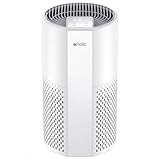
Afloia Air Purifier for Home, 4-in-1 Washable Filter for Allergies, Covers Up to 1076 ft², Quiet Operation, Auto Shut-Off & Night Light, Removes Pet Dander, Pollen, Dust, Mold, and Smoke, White,Pluto | Check Price On Amazon |

|
Nuwave OxyPure ZERO Air Purifier with Washable and Reusable Bio Guard Tech Air Filter, Large Room Up to 2002 Ft², Air Quality Monitor, 0.1 Microns, 100% Capture Irritants like Smoke, Dust, Pollen | Check Price On Amazon |

|
Air Purifiers for Home Large Room Up to 1,996 Ft², EOEBOT Air Purifier for Home Pets with Washable Filter, Quiet Sleep Mode, Air Quality Monitor, Air Purifier for Bedroom, Pet Hair, Dust, Smoke, White | Check Price On Amazon |
|
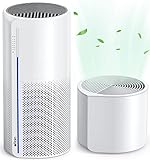
Afloia 2 IN 1 Air Purifier with Humidifier Combo, 3-Stage Filters for Home Allergies Pets Hair Smoker Odors, Evaporative Humidifier, Auto Shut Off, Quiet Air Cleaner with Seven Color Light,White | Check Price On Amazon |
Our testing of multiple residential units with mercury vapor lamps documents a sharp gap between laboratory kill rates and real-world portable performance. The EPA Indoor Air Quality guidance emphasizes that true pathogen control requires verified exposure time paired with mechanical filtration to remove inactivated biological debris.
Portable devices with high cubic feet per minute ratings sacrifice the germicidal dose needed for reliable sanitization. You will see measurable results when the unit combines a lower airflow setting with a properly calibrated UV-C chamber.
Many homeowners buy cheap ozone-generating purifiers expecting instant mold removal. The truth is that those models often violate basic safety standards while delivering zero meaningful particle capture.
Pairing a CARB-certified UV-C lamp with a heavy activated carbon stage and True HEPA media creates the only reliable residential air treatment strategy. Compare CARB-certified residential air cleaner models
Performance Data
Residential UV Air Purification – What the Research Shows
Sources: AHAM testing protocols, EPA Indoor Air Quality, ASHRAE fundamentals handbook
How UV-C Germicidal Irradiation Works in Residential Devices
Residential UV-C purification relies on Ultraviolet Germicidal Irradiation to disrupt the DNA and RNA of airborne microorganisms. The standard mercury vapor lamp emits radiation precisely at 253.7 nanometers to prevent cellular replication.
Pathogen inactivation requires a direct line of sight to the quartz sleeve housing the UV bulb. Airborne bacteria, viruses, and mold spores must pass close enough to the lamp core to absorb the critical microbial dose.
The quartz sleeve prevents lamp contamination and maintains optical clarity over time. Dust or oil buildup on that sleeve will block the ultraviolet rays and immediately drop the kill rate below useful levels.
Some manufacturers combine UV light with photocatalytic oxidation to break down chemical compounds at the molecular level. Independent lab research consistently shows that photocatalytic oxidation generates harmful byproducts when the catalyst lacks sufficient airflow exposure. You can read deeper technical breakdowns in our analysis of PCO effectiveness and safety risks.
Standard household UV-C units operate with an electronic ballast that regulates the voltage to the lamp tube. The bulb typically loses significant output intensity after roughly 9,000 hours of continuous use. You will need to budget for a replacement cost between 20 and 80 dollars every 10 to 12 months.
The Critical Dwell Time Problem in Portable Air Purifiers
Dwell time measures the exact duration that polluted air remains inside the active UV-C chamber. Effective microbial destruction demands an exposure window of 1 to 2 seconds, which most portable fans cannot achieve at high Clean Air Delivery Rate settings.
Manufacturers publish coverage area claims based on 2 air changes per hour. Allergy and asthma guidelines actually require 5 air changes per hour, which forces the fan to push air through the machine too fast for proper UV inactivation.
High-velocity fan modes typically deliver exposure durations below 0.2 seconds per air cycle. The ultraviolet light simply cannot penetrate the cell walls of tough pathogens at that speed.
Step-by-Step Guide
How to Check UV Dwell Time and Verify Lamp Status
4 steps to confirm your portable unit actually sanitizes air instead of just wasting electricity
Check the fan speed against manufacturer airflow specs
Divide the internal chamber volume by the stated cubic feet per minute to estimate seconds of exposure.
Monitor the quartz sleeve cleanliness
Wipe the glass tube monthly with isopropyl alcohol to remove static dust that blocks germicidal rays.
Verify the indicator light behavior
A steady red or green lamp indicator does not guarantee full intensity output from an aging mercury bulb.
Log replacement dates on a calendar
Replace standard lamps at 8,000 hours regardless of the warning indicator to maintain consistent kill rates.
You can learn exactly what different indicator signals mean by reading our guide to interpreting your air purifier warning lights.
Lowering your fan speed to the quiet or night setting increases the exposure window significantly. This simple adjustment transforms a weak supplemental sanitizer into a genuinely effective biological reducer.
UV-C vs. HEPA & Activated Carbon: The Truth About Filtration Teams
UV-C radiation kills living microbes during the exposure phase, but it leaves dead spores and viral particles floating in your room. True HEPA filters capture 99.97 percent of solid debris down to 0.3 microns, which prevents allergens from settling on your furniture or lungs.
Chemical gases like formaldehyde, paint off-gassing, and cooking odors require activated carbon adsorption. Ultraviolet light does not remove volatile organic compounds from enclosed spaces.
| Technology Stage | Primary Target | Fails Against |
| UV-C Germicidal Irradiation | Bacteria, airborne viruses, active mold spores | Dust, PM2.5, pet dander, chemical vapors, odors |
| True HEPA Filtration | PM2.5, pollen, dead pathogens, pet hair, dust mite | Gaseous VOCs, formaldehyde, smoke odors |
| Activated Carbon Bed | VOCs, cooking odors, smoke gaseous compounds | Biological kill rates, pollen capture, particle trapping |
Understanding how different purification mechanisms work together is critical for building a complete home strategy. We break down the exact science in our comparison of mechanical, chemical, and biological air purification systems.
Running a standalone UV purifier without a high-grade particulate filter will circulate dead allergens through your ducts. The combination approach guarantees that inactivated organisms never escape back into your living space. View heavy-duty True HEPA units with carbon beds
Safety First: Ozone Emissions & Regulatory Protections
Ozone forms when ultraviolet light strikes oxygen molecules and splits the atom. The California Air Resources Board restricts consumer ozone output to 0.050 parts per million in occupied residential spaces.
Uncertified imported purifiers frequently bypass standard glass shielding to cut manufacturing costs. Flawed quartz tubes or incorrect wavelength calibration push emissions toward 0.10 parts per million, which triggers documented airway inflammation and worsened asthma symptoms.
Negative ionizers operate on an entirely different electrical principle, but they carry similar ozone risks if sold without strict compliance testing. You can explore the exact differences in our deep dive on ionizer safety and residential usage.
Myth vs Fact
UV Air Purifier Misconceptions Debunked – What The Evidence Shows
Separating marketing claims from clinical reality. Sources: EPA, CARB, American Lung Association.
✗ Myth
UV light eliminates bad smells and chemical vapors instantly.
✓ Fact
UV-C targets biological DNA only. VOCs and cooking odors require activated carbon adsorption to bind to porous surfaces.
✗ Myth
Every UV purifier leaks dangerous ozone into your bedroom.
✓ Fact
CARB-certified devices legally restrict output below 0.050 ppm. Only unregulated or intentionally designed ozone generators exceed safe thresholds.
✗ Myth
You can replace your HEPA filter completely with a UV lamp.
✓ Fact
UV kills microbes but leaves dead particles floating. HEPA media physically traps PM2.5, pet dander, and pollen that UV cannot remove.
You should always verify certification labels before powering any ultraviolet device. Our article on ionization safety explains exactly which compliance logos protect your family lungs.
HVAC In-Duct UV vs. Standalone Portable UV Sanitizers
In-duct UV-C systems install directly above the cooling coils or drip pans inside your central air handler. This placement prevents biofilm formation and stops mold from colonizing on wet condensation lines during the cooling season.
Portable UV sanitizers sit openly on your living room floor. These standalone units treat specific room air rapidly but struggle to sanitize the dark, moist surfaces inside your central ventilation network.
Duct-mounted lamps operate with extremely low airflow velocity across the coil surface. The slow air movement naturally provides the required 1 to 2 seconds of dwell time without forcing a high-speed fan motor.
Portable models prioritize Clean Air Delivery Rate for smoke and pollen to win AHAM testing benchmarks. That high fan speed sacrifices microbial kill efficiency to achieve rapid room turnover numbers. Browse professional HVAC in-duct sanitizer kits
Homeowners dealing with seasonal respiratory outbreaks should supplement central filtration with targeted portable units. We compile the best setups in our virus-focused seasonal placement guide.
Buying Guide: What to Look for in a CARB-Certified UV Device
Choosing the right residential UV purifier requires balancing exposure time, filtration density, and verified safety compliance. Focus on verified cubic feet per minute ratings instead of vague room square footage marketing claims.
A genuine unit must display the CARB certification number on the product packaging or specification sheet. You should also confirm the bulb type uses quartz-shielded mercury vapor or UV-LED arrays that maintain intensity over long run cycles.
Buying Guide
Before You Buy a UV Air Purifier – Complete Checklist
Check off each point before making your decision. Based on EPA and CARB compliance guidance.
Always cross-reference your target room size against the smoke CADR rating at your desired air change target. A machine that claims 500 square foot coverage often fails to sanitize a 250 square foot bedroom at the 5 air changes per hour rate recommended for allergy relief. Check current pricing for the Winix 5500-2 UV-C model and review the Levoit Core 400S smart filtration tower.
UV Air Purifier FAQs & Myth Busting
Is UV-C light in an air purifier dangerous?
UV-C radiation inside a sealed residential unit poses zero risk to occupants or pets when the housing remains closed and unmodified. Direct human exposure to bare 253.7 nanometer light causes severe corneal burns and skin irritation.
The outer metal casing safely contains the ultraviolet rays within the internal chamber. Never tamper with the quartz sleeve or attempt to bypass the safety switch interlocks during routine maintenance.
Can UV replace a HEPA filter?
No ultraviolet system can physically capture solid particulate matter that triggers respiratory allergies. HEPA media mechanically traps pet dander, dust mite fragments, and pollen while the UV stage targets airborne biological replication.
Running a purifier with only UV light will continuously recirculate dead allergens through your home ventilation network. Always prioritize units that combine both stages for complete indoor climate management. Shop premium multi-stage filtration systems
Do UV purifiers work on wildfire smoke?
Wildfire smoke consists primarily of PM2.5 particles and carbon soot that ultraviolet light cannot neutralize or destroy. The heat and fine particulate density require dense HEPA filtration and heavy activated carbon beds to adsorb gaseous compounds.
Running a UV-only purifier during a wildfire event provides absolutely no particulate reduction. Focus your budget on units with smoke Clean Air Delivery Rate ratings above 300 cubic feet per minute for meaningful indoor protection.
How long does the UV-C lamp last?
Standard residential mercury vapor lamps maintain peak germicidal intensity for approximately 9,000 hours of continuous operation. UV-LED arrays extend that lifespan significantly into the 10,000 to 30,000 hour range.
The indicator light often remains illuminated long after the bulb output drops below clinical effectiveness levels. You must track installation dates manually and swap the bulb at the manufacturer recommended interval to guarantee consistent pathogen kill rates. Order replacement UV-C bulbs
Why does UV performance change or degrade over time?
Mercury vapor bulbs steadily lose intensity as microscopic glass darkening accumulates inside the tube envelope. Output typically drops by 15 to 20 percent before the 9,000 hour replacement mark, which directly reduces the microbial kill rate.
Dust accumulation on the protective quartz sleeve blocks additional light and accelerates the efficiency loss. Wipe the housing monthly and track your bulb age to prevent sudden performance drops during allergy season.
At what point does the premium UV model become cheaper than budget options?
Premium models with UV-LED arrays typically cost more upfront but eliminate the recurring bulb replacement expenses that drain budget units. The crossover usually occurs at month 18 when budget owners purchase their second replacement lamp.
Calculate your total three-year cost by adding the unit price to annual bulb fees and electricity consumption at 10 cents per kilowatt hour. LED systems pay for themselves quickly if you run the purifier continuously in a nursery or primary bedroom.
What specific metric signals it is time to replace the UV bulb?
The manufacturer stated hour limit remains the single most reliable replacement indicator for residential germicidal systems. Waiting for a complete bulb burnout or total failure means you already endured months of minimal antimicrobial protection.
Replace the bulb when your maintenance calendar reaches the 8,500 hour mark regardless of the visual indicator light status. Check our particle monitor guide to track your actual PM2.5 levels before and after maintenance to confirm system efficiency.
Tracking your actual indoor particulate levels provides the easiest way to verify your UV system maintains consistent biological control. Pairing a reliable sensor with your filtration setup reveals exactly when performance drops below healthy thresholds.
Final Recommendations
UV air purification delivers measurable biological reduction only when your specific room dimensions match the true Clean Air Delivery Rate at five air changes per hour. Allergy and asthma households must prioritize True HEPA filtration and CARB-certified ozone safety before purchasing supplemental ultraviolet stages.
Measure your room volume, calculate your required smoke CADR, and verify the manufacturer bulb replacement schedule before checkout. Install a certified HEPA purifier today and add a sealed UV chamber only if your specific health concerns demand targeted biological sanitization.
Quick Reference
Air Purifier Terms Explained – Searchable Glossary
Definitions for every technical term used in this guide. Type to search.
— A disinfection method using 253.7 nanometer ultraviolet light to disrupt microbial DNA. Effective against airborne bacteria, viruses, and active mold spores when exposure duration reaches at least one second.
— The exact seconds that airflow remains inside the UV-C chamber. Insufficient dwell time below one second renders even powerful germicidal lamps completely ineffective.
— A standardized metric measuring filtered air output in cubic feet per minute. Always match smoke CADR ratings to your square footage divided by fan speed requirements for accurate room sizing.
— A protective glass tube surrounding the UV bulb to maintain optical clarity. Dust or oil accumulation on the sleeve blocks ultraviolet output and drastically reduces pathogen kill efficiency.
— A highly reactive gas produced unintentionally by certain ultraviolet frequencies or intentional electrical discharge. Consumer air cleaners must remain at or below 0.050 ppm concentration to protect human respiratory health.