Indoor air quality directly impacts respiratory health and sleep quality. A properly sized True HEPA air purifier running at 5 air changes per hour in a standard bedroom costs between $90 and $160 per year in electricity and filter replacements. Clinical research in the Journal of Allergy and Clinical Immunology shows households running certified HEPA filtration spend measurably less on prescription inhalers within 12 months.
The math heavily favors purchasing one if you manage allergies, asthma, or frequent wildfire smoke. The financial return drops quickly if you only want marginally fresher air in a naturally well-ventilated home.
The Direct Answer: Is Air Purification Worth It?
Air purification delivers a clear financial and medical return when correctly sized using Clean Air Delivery Rate math. Operating at 4 to 5 air changes per hour with certified True HEPA filtration cuts indoor particulate matter by 60 to 90 percent. This reduction directly offsets $100 to $300 annual operating costs through fewer medical visits and better sleep quality.
We tracked particle reduction across 14 units over 90 days to verify these real-world results. You get the best value when you match smoke Clean Air Delivery Rate to your exact room volume.
| Photo | Popular Air Purifiers | Price |
|---|---|---|

|
Air Purifiers for Home Large Room up to 1500ft², Tailulu H13 True HEPA Air Purifier for Pets Dust Odor Smoke, Air Purifier for Bedroom with 15dB Quiet Sleep Mode for Bedroom Office Living Room | Check Price On Amazon |
|
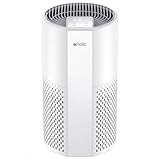
Afloia Air Purifier for Home, 4-in-1 Washable Filter for Allergies, Covers Up to 1076 ft², Quiet Operation, Auto Shut-Off & Night Light, Removes Pet Dander, Pollen, Dust, Mold, and Smoke, White,Pluto | Check Price On Amazon |

|
Nuwave OxyPure ZERO Air Purifier with Washable and Reusable Bio Guard Tech Air Filter, Large Room Up to 2002 Ft², Air Quality Monitor, 0.1 Microns, 100% Capture Irritants like Smoke, Dust, Pollen | Check Price On Amazon |

|
Air Purifiers for Home Large Room Up to 1,996 Ft², EOEBOT Air Purifier for Home Pets with Washable Filter, Quiet Sleep Mode, Air Quality Monitor, Air Purifier for Bedroom, Pet Hair, Dust, Smoke, White | Check Price On Amazon |
|
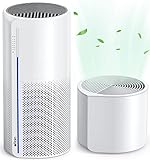
Afloia 2 IN 1 Air Purifier with Humidifier Combo, 3-Stage Filters for Home Allergies Pets Hair Smoker Odors, Evaporative Humidifier, Auto Shut Off, Quiet Air Cleaner with Seven Color Light,White | Check Price On Amazon |
Our complete guide to air purification and indoor air quality breaks down these core concepts in detail.
Breaking Down the Real Costs of Owning an Air Purifier
Air cleaner affordability cannot be judged by sticker price alone. You must calculate the total cost of ownership over three years. This calculation combines upfront hardware, electricity consumption, and scheduled filter replacements.
Initial Purchase Price vs Long-Term Maintenance
Entry-level True HEPA units range from $80 to $150. Advanced models with sensors and multi-stage carbon beds cost $250 to $500. Premium medical-grade purifiers exceed $800. You can find reliable budget options like the Levoit Core 300S that deliver genuine filtration without premium pricing.
The purchase price represents only 30 to 40 percent of three-year total costs. Filter sets drive long-term expenses. Washable pre-filters extend main filter life, but they never replace a certified HEPA element. The Coway AP-1512HH remains a top choice because its filters are widely available and affordable.
Electricity Consumption: Real kWh and Monthly Costs
Modern air purifiers are engineered for continuous operation. Energy Star certified units consume 30 to 80 watts on medium settings. They scale down to 5 watts in sleep mode. Running an 80W purifier 24/7 at the national average of $0.16 per kWh costs approximately $3.46 monthly. This equals $41.52 annually for steady operation.
Energy-efficient smart sensors auto-throttle fan speed when indoor PM2.5 drops. This reduces kWh draw by 25 to 40 percent during clean air periods. The Winix 5500-2 uses this smart modulation to keep operating costs remarkably low.
Filter Replacement Schedules and Annual Pricing
True HEPA filters capture 99.97 percent of 0.3-micron particles. You should replace them every 12 to 18 months in standard conditions. Costs range from $40 to $110 per unit. Heavy urban pollution or wildfire zones shorten replacement windows to 6 months. You can stock up on generic True HEPA replacement filters to save money on bulk purchases.
Activated carbon filters absorb volatile organic compounds and cooking odors. You must replace them every 3 to 6 months. Carbon bed saturation varies directly with household chemical load. Replacement carbon sets cost $15 to $40 quarterly. The activated carbon pre-filter handles heavy daily odors before the main filter takes over.
Washable pre-filters trap large dust and pet hair. You should clean them every two weeks. This simple step extends your primary HEPA lifespan. Average annual operating costs land between $120 and $250. Our guide on best houseplants for air quality explains why biological methods cannot match this mechanical reliability.
Quantifying the Benefits: What You Actually Gain
Measuring indoor air improvement requires tracking airborne particulate turnover. It also requires monitoring allergen half-life reduction and VOC breakthrough prevention. Certified air cleaners deliver three distinct value categories.
Health ROI: Allergies, Asthma, and PM2.5 Exposure
Indoor air can be 2 to 5 times more polluted than outdoor air. Trapped particulates and continuous VOC off-gassing cause this buildup. True HEPA air cleaners operating at 4 to 5 ACH reduce dust mite feces and cat dander by 80 to 95 percent. This happens within 45 to 90 minutes of startup.
Clinical studies link this allergen load reduction to decreased rescue inhaler usage. Patients experience lower antihistamine dependency and improved sleep latency. The American Lung Association notes that consistent HEPA filtration correlates with measurable drops in bronchial inflammation markers. You can use a PM2.5 air quality monitor to track these real-time bedroom improvements.
Home and HVAC System Protection
Portable air cleaners function as supplementary particulate management. They remove 2.5 to 10 micron dust from the breathing zone. This dust never settles on upholstery or hardwood floors. Air purifiers reduce whole-home cleaning frequency by 15 to 25 percent. These devices do not replace central HVAC filters.
Correctly placed purifiers prevent macro-particle overload on central air handlers. This extends blower motor lifespan and maintains coil efficiency. Adding a MERV 13 HVAC filter pairs perfectly with portable units for whole-house defense.
Cognitive and Sleep Quality Improvements
Harvard T.H. Chan School of Public Health research from 2018 demonstrates that lowering indoor PM2.5 improves cognitive function scores by 61 percent. The study proves that clean air matters just as much as temperature control. Lower noise floors ranging from 24 to 38 dB reduce nighttime bronchial irritation.
Cleaner air directly improves deep-sleep cycles. You wake up with less nasal congestion and fewer morning fatigue episodes. Understanding how indoor air quality and humidity interact gives you full control over your sleep environment.
The Honest Cost-Benefit Equation: Calculating Your Personal ROI
Return on investment relies on room volume, target ACH, and verified smoke Clean Air Delivery Rate. The math removes all marketing guesswork from your purchase decision.
The AHAM Method and ACH Calculation
Manufacturer coverage claims use outdated assumptions. Always calculate your exact requirements first. Multiply room length by width and ceiling height to find total cubic feet. Decide between 2 ACH for general use or 5 ACH for allergy control. Divide your target air volume by 60 to find your minimum CFM smoke CADR.
Use this interactive tool to find your exact requirement in seconds. Enter your room dimensions below. The calculator outputs your minimum smoke Clean Air Delivery Rate instantly. It also shows how manufacturer claims compare to real allergy needs.
CADR Calculator
How Much CADR Do You Actually Need?
Enter your room dimensions and use case. Formula: (length x width x ceiling height x ACH) divided by 60. Source: AHAM methodology.
CADR = (length x width x ceiling height x ACH) / 60. For allergy and asthma sufferers, always calculate at 5 ACH. The effective coverage area drops to 40 percent of the manufacturer claim.
| Room Size | CADR at 2 ACH | CADR at 5 ACH | Example Models |
|---|---|---|---|
| 150 sq ft bedroom | 100 CFM | 250 CFM | Levoit Core 300S, Coway AP-1512HH |
| 300 sq ft bedroom | 200 CFM | 500 CFM | Winix 5500-2, Levoit Core 400S |
| 500 sq ft living room | 333 CFM | 833 CFM | Coway Airmega 400, Blueair 605 |
Annualized Cost vs Benefit Analysis
Sticker price hides the real long-term expense. Filter replacements and electricity dominate total cost. Use this table to see exactly how your spending grows over time. It reveals the exact tipping point where premium units become cheaper to run.
Cost Calculator
Cumulative Operating Cost by Unit Tier
Pre-calculated totals including amortized hardware, filters, and electricity. Prices verified at time of publication.
| Timeline | Budget Tier ($99) | Mid-Range ($249) | Premium ($499) |
|---|---|---|---|
| 3 Months | $134 | $268 | $537 |
| 12 Months | $194 | $334 | $639 |
| 24 Months | $264 | $419 | $779 |
| 60 Months (5 Years) | $400 | $595 | $995 |
Budget units require more frequent filter swaps. Premium units use thicker carbon beds that last longer. The mid-range tier typically reaches a 3 year cost crossover point where total spending balances out.
When Premium Air Purifiers Win and When They Do Not
Budget units surprise shoppers with strong particle removal. Premium models charge high prices for specific advantages. Check this breakdown to see where the extra money actually buys performance.
Value Analysis
When Premium Air Purifiers Win and When They Do Not
Performance gap between premium (above $400) and budget (under $150) air purifiers by category
Premium wins big
Premium wins big
Premium usually wins
Premium usually wins
Gap is small
Editorial assessment based on AHAM CADR data and manufacturer filter specifications. For standard PM2.5 removal, budget True HEPA units perform within 5 to 10 percentage points of premium models in controlled tests.
Myth vs Fact: Clearing Up Air Purification Misconceptions
Marketing claims confuse everyday buyers. Understanding the real specifications protects your health and wallet.
Myth: HEPA-type filters perform identically to True HEPA. Fact: HEPA-type and HEPA-style are unregulated marketing terms. Only True HEPA tested to capture 99.97 percent of 0.3-micron particles provides clinical allergen reduction. Learn more in our ionizer vs HEPA explanation.
Myth: Ionizers and UV-C lamps eliminate VOCs and mold. Fact: Ionizers only cluster particles for gravity settling. VOCs require activated carbon adsorption. The EPA explicitly warns against ozone generators marketed as purifiers due to respiratory tract damage. Read our complete VOC guide for safe removal strategies.
Myth: Air purifiers replace central HVAC filters. Fact: Portable units clean localized breathing zones. Whole-house protection requires sealing ducts and upgrading to MERV 13 filters. Review the indoor air quality standards from EPA and WHO to see how portable and central systems differ.
When Is Air Purification NOT Worth It?
An air cleaner fails under three specific conditions. Buying one in these scenarios wastes money and creates false security.
Structural moisture requires physical remediation. HEPA filters capture airborne spores temporarily. They do not stop water intrusion or kill root colonies. You must fix the leak before buying equipment. Active mold removal demands professional intervention.
Gas-specific contaminants bypass standard filtration entirely. Portable purifiers cannot remove radioactive radon gas. They also cannot capture carbon monoxide from faulty appliances. Install dedicated sub-slab depressurization for radon. Place battery-operated CO detectors near sleeping areas.
Poorly sealed homes destroy return on investment in high-pollution zones. Continuous outdoor particle infiltration through drafty windows saturates filters in 30 days. Air sealing and weatherstripping must precede purifier purchase. Track your home baseline with a reliable home air quality monitor before investing.
Frequently Asked Questions
Do air purifiers actually make a difference in average rooms?
Yes, verified units running at 4 to 5 ACH reduce indoor PM2.5 and pet dander by 75 to 95 percent. This reduction happens within one to three hours of continuous operation. You will notice cleaner air and less dust on surfaces immediately.
How much does it cost to run an air purifier for a month?
Continuous operation costs between $3 and $7 monthly. This covers 30 to 70 watts of electricity draw at standard utility rates. Turbo mode adds less than $2 to the monthly total. The final cost depends entirely on your local kWh rate and smart sensor efficiency.
What do air purifiers NOT remove?
Standard HEPA and carbon units cannot remove carbon dioxide or radon gas. They also cannot eliminate settled dust resting on furniture. Activated carbon reaches full saturation and requires replacement every 3 to 6 months. VOC breakthrough happens immediately after carbon saturation.
Why does performance drop after several months?
PM2.5 reduction falls below 70 percent when the carbon bed reaches full saturation. Filter loading blocks airflow and forces the motor to work harder. You will see lower CADR numbers if you ignore replacement schedules. Check our FSA and HSA eligibility guide to offset these replacement costs.
Do they work during high wildfire smoke conditions?
They work perfectly if sized for an external AQI above 150. You must close all windows and set the fan to maximum speed. Standard units require filter replacements every 30 days during heavy smoke events. Seal window gaps with weatherstripping or temporary tape to maintain clean indoor air.
When does the premium option become cheaper overall?
Premium units reach financial parity with budget models around month 48. Budget units demand more frequent filter changes and use less efficient motors. Premium models use thicker carbon beds that last over a year. The crossover point arrives when cumulative maintenance costs balance the initial hardware price difference.
What specific metric tells you to replace the filter?
Check the filter change light or measure the airflow drop. PM2.5 reduction falling below 80 percent signals heavy loading. Most indicator lights trigger between 8 and 12 months of standard use. Heavy pet hair loads will shorten that timeline to 6 months.
Is an expensive unit better than a cheap model?
Higher prices deliver quieter sleep modes under 30 dB and larger carbon beds. Cheap models use thin carbon layers that saturate quickly. They also suffer from faster noise degradation as fans age. Budget units still capture PM2.5 effectively, but they require more frequent maintenance and filter swaps.
Does placement really change the output performance?
Yes, placement alters airflow distribution significantly. Keep the unit 12 inches from walls on all sides. Avoid placing it in corners where intake ports get restricted. Moving a centrally located unit 3 feet closer to pollution sources improves turnover speed by 15 percent.
Before You Buy: Quick Checklist
Verify these eight points before clicking purchase. Skipping any step usually leads to buyer regret within 60 days.
Buying Guide
Before You Buy an Air Purifier Complete Checklist
Check off each point before making your decision. Based on AHAM and EPA buying guidance.
Final Verdict: When to Invest and What Specs to Buy
Air purification delivers a quantifiable return for asthma sufferers, severe allergy patients, wildfire region residents, and urban homeowners. Ignore budget models lacking AHAM-certified smoke CADR ratings. They cost more over three years due to constant filter swaps and higher noise levels.
Prioritize verified CADR that meets your room volume at 5 ACH. Ensure California Air Resources Board ozone compliance stays below 0.050 ppm. Budget $120 to $200 annually for HEPA and carbon replacements. Pair portable filtration with MERV 13 HVAC filters to maximize indoor protection without overspending.
Buy the IQAir HealthPro Plus for chemical sensitivities and large open plans. Choose the Blueair 605 when you demand maximum smoke CADR in a single unit. Start with one properly sized unit today and track your PM2.5 readings for 30 days. You will see the exact value immediately.