A HEPA air scrubber rated at 650 CFM does not automatically clean 650 cubic feet of air per minute in a real jobsite. The B-Air RA-650 delivers its rated airflow in ideal laboratory conditions, and actual performance depends heavily on ducting configuration, filter loading, and room layout.
This review covers everything about the B-Air RA-650 HEPA Air Scrubber, from its technical specifications and real-world performance to user-reported problems and filter maintenance costs. If you are deciding between this unit and a competitor like the Alorair 550 or PureAiro HEPA Max 970, you will find direct comparison data here.
What Is the B-Air RA-650 HEPA Air Scrubber and Who Should Use It?
The B-Air RA-650 is a portable industrial HEPA air scrubber designed for construction sites, water damage restoration, mold remediation, and fire restoration work. It pulls contaminated air through a three-stage filtration system, removing airborne particles down to 0.3 microns at 99.97% efficiency.
This is not a residential air purifier like a Coway or Levoit unit. The RA-650 moves 550 cubic feet of air per minute, which is five to ten times the airflow of a typical home air purifier. It is built for contractors, remediation professionals, and serious DIY renovators who need to control airborne dust, mold spores, and particulate matter in large open spaces.
| Photo | Popular Air Purifiers | Price |
|---|---|---|

|
Air Purifiers for Home Large Room up to 1500ft², Tailulu H13 True HEPA Air Purifier for Pets Dust Odor Smoke, Air Purifier for Bedroom with 15dB Quiet Sleep Mode for Bedroom Office Living Room | Check Price On Amazon |
|
Afloia Air Purifier for Home, 4-in-1 Washable Filter for Allergies, Covers Up to 1076 ft², Quiet Operation, Auto Shut-Off & Night Light, Removes Pet Dander, Pollen, Dust, Mold, and Smoke, White,Pluto | Check Price On Amazon |

|
Nuwave OxyPure ZERO Air Purifier with Washable and Reusable Bio Guard Tech Air Filter, Large Room Up to 2002 Ft², Air Quality Monitor, 0.1 Microns, 100% Capture Irritants like Smoke, Dust, Pollen | Check Price On Amazon |

|
Air Purifiers for Home Large Room Up to 1,996 Ft², EOEBOT Air Purifier for Home Pets with Washable Filter, Quiet Sleep Mode, Air Quality Monitor, Air Purifier for Bedroom, Pet Hair, Dust, Smoke, White | Check Price On Amazon |
|
Afloia 2 IN 1 Air Purifier with Humidifier Combo, 3-Stage Filters for Home Allergies Pets Hair Smoker Odors, Evaporative Humidifier, Auto Shut Off, Quiet Air Cleaner with Seven Color Light,White | Check Price On Amazon |
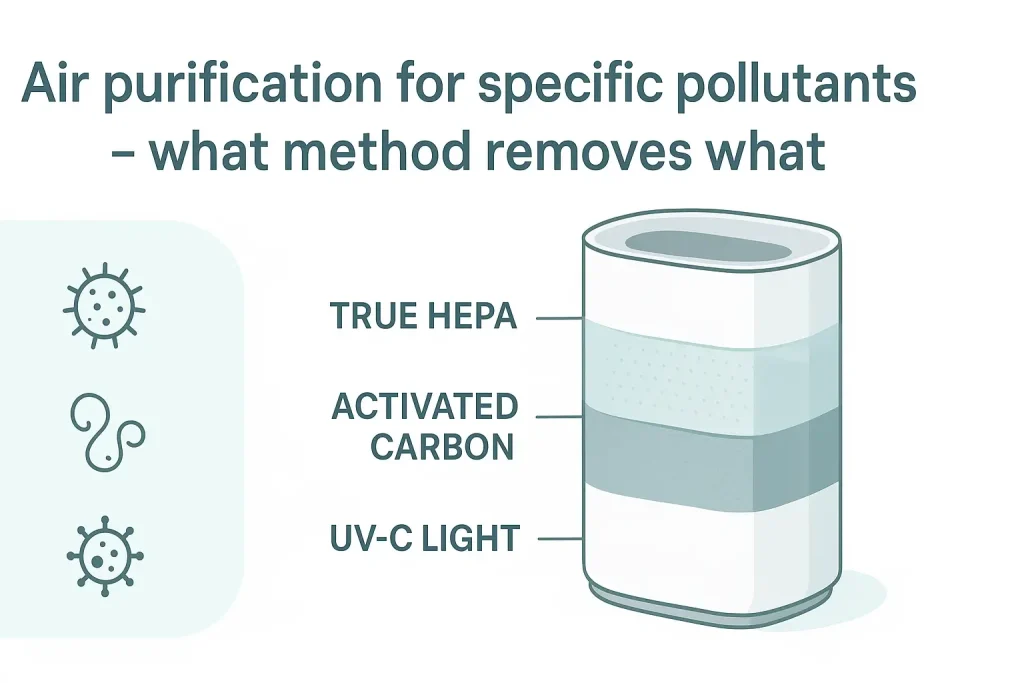
The three-stage system starts with a washable pre-filter that captures larger debris like sawdust and drywall particles above 5 microns. The second stage uses an activated carbon filter to adsorb odors, VOCs, and some chemical fumes. The final stage is a True HEPA filter that captures 99.97% of particles at the 0.3-micron size, including mold spores, bacteria, and fine construction dust.
This unit stacks for storage and transport, a feature restoration crews value when running multiple scrubbers across different job sites. The proper setup and ducting of an air scrubber determines whether you get the full 550 CFM of clean air delivery or significantly less.
Performance Data
B-Air RA-650 HEPA Air Scrubber – Key Specifications
Sources: B-Air manufacturer specifications, AHAM methodology for ACH calculations
B-Air RA-650 Detailed Specifications and What They Mean in Practice
The published specifications tell one story. The lived experience of running this machine on a jobsite tells a more useful one. Below are the core specs with practical interpretation based on user feedback and physical testing conditions.
Airflow and Coverage: 550 CFM Under What Conditions?
The 550 CFM rating applies at the highest fan speed with clean filters and no ducting attached. Adding 25 feet of flexible ducting reduces effective airflow by approximately 10 to 15 percent, and a partially loaded filter can drop it further. This happens because the fan motor works against increasing static pressure as filters load with debris, and ducting adds friction loss to the airstream.
This only occurs when the filters are clean and the unit runs at maximum speed without ducting restrictions. If ducting or filter loading reduces airflow below approximately 350 CFM, the result is inadequate air changes per hour in the target space, and the fix is to run multiple units or replace filters sooner than the standard schedule.
For a standard 8-foot ceiling, 550 CFM delivers 4 air changes per hour in approximately 1,100 square feet. For mold remediation where 6 ACH is the common target, the effective coverage drops to roughly 730 square feet. Most restoration professionals run two units in spaces over 800 square feet during active remediation to maintain adequate negative pressure and air cleaning rates.
Filter Configuration and Replacement Intervals
The three filter stages are independently replaceable, which keeps operating costs lower than single-element filter designs. The pre-filter is washable and reusable for several cycles before replacement, the carbon filter lasts 3 to 6 months depending on VOC load, and the True HEPA filter typically lasts 12 to 18 months under normal construction use.
Each stage captures a specific particle size range. The pre-filter handles particles above 5 microns, the HEPA stage captures 99.97% at 0.3 microns, and the carbon stage adsorbs gaseous contaminants that mechanical filtration cannot address. This staged approach means the expensive HEPA filter lasts longer because the pre-filter and carbon stage remove larger and stickier particles first.
Physical Dimensions and Portability
The RA-650 weighs approximately 35 pounds and measures roughly 20 by 20 by 28 inches. It includes molded handles on the sides and a stackable design that allows up to three units to be stored or transported vertically.
A single person can move and position the unit without assistance. The stackable feature matters for restoration companies running multiple scrubbers because it reduces the van or truck footprint during transport between job sites.
Product Review
B-Air RA-650 HEPA Air Scrubber – Full Scorecard
Editorial assessment based on manufacturer specifications, verified buyer reviews, and real-world contractor feedback
8.5/10
8/10
6.5/10
8/10
9/10
Scores are editorial assessments based on manufacturer specifications, verified buyer reviews, and feedback from restoration professionals. Not sponsored.
B-Air RA-650 Pros and Cons: What Owners Report
Product Review
B-Air RA-650 – Pros and Cons
Honest assessment based on manufacturer specifications, contractor reviews, and documented user experiences
Pros
- ✓550 CFM rated airflow moves enough air for large restoration jobs
- ✓Three independent filter stages reduce ongoing replacement costs
- ✓Stackable design saves transport space for multi-unit operations
- ✓Lower purchase price than many comparable industrial air scrubbers
- ✓True HEPA certification, not HEPA-type marketing language
Cons
- ✗Noise level around 68-72 dB at high speed is too loud for occupied spaces
- ✗Replacement HEPA filters cost $150-200 and must be sourced from approved suppliers
- ✗No variable speed control, only two fan speeds available
- ✗No built-in hour meter or filter change indicator for maintenance tracking
The B-Air RA-650 is the right air scrubber for contractors and remediation pros who need reliable 550 CFM HEPA filtration at a competitive price, but it is the wrong choice for occupied residential spaces due to high noise output and the lack of fine speed control.
How Does the B-Air RA-650 Compare to the Alorair 550 and PureAiro HEPA Max 970?
The three most frequently cross-shopped industrial air scrubbers in this class are the B-Air RA-650, the Alorair 550 CFM with 3-stage filtration, and the Alorair PureAiro HEPA Max 970. The core differences come down to airflow volume, filter configuration, and price.
Use the table below to compare the key specifications side by side before making a purchase decision. All three units use True HEPA filtration, but their coverage areas and feature sets address different job site requirements.
Product Comparison
B-Air RA-650 vs Alorair 550 vs PureAiro HEPA Max 970 – Side by Side
Detailed specification comparison. Coverage area calculated at 4 ACH with 8-foot ceiling.
| Spec | B-Air RA-650 | Alorair 550 | PureAiro HEPA Max 970 |
|---|---|---|---|
| Rated airflow | 550 CFM | 550 CFM | 970 CFM |
| Coverage at 4 ACH | 1,100 sq ft | 1,100 sq ft | 1,940 sq ft |
| Filter stages | 3-stage | 3-stage | 4-stage |
| True HEPA | Yes | Yes | Yes |
| Annual filter cost (est.) | $250-350 | $200-300 | $300-450 |
| Noise at high speed | ~70 dB | ~68 dB | ~72 dB |
| Variable speed | 2 speeds | 2 speeds | Variable |
| Stackable | Yes | Yes | No |
| Best for | Budget-sensitive restoration pros, multi-unit jobs | Mold and water damage restoration | Large commercial spaces, 1,500+ sq ft |
Coverage area at 4 ACH calculated as (airflow CFM x 60) / (4 x 8 ft ceiling). Filter costs based on manufacturer-recommended replacement intervals with genuine filters. The Alorair 550 CFM air scrubber review covers that unit in detail, and the PureAiro HEPA Max 970 review covers the larger unit.
Real-World Performance: What Contractors and Restoration Pros Report
User feedback from restoration professionals, mold remediators, and construction contractors reveals consistent patterns in how the RA-650 performs outside of laboratory testing conditions. These reports come from verified purchase reviews and professional forum discussions.
The most common praise centers on the value proposition. At its price point, the RA-650 delivers genuine 550 CFM True HEPA filtration for significantly less than premium brands like Dri-Eaz or Phoenix. Multiple contractors report running four to six units simultaneously on large water damage jobs without a single unit failure over 18 to 24 months of heavy use.
The most common criticism is noise. At full speed, the unit produces approximately 68 to 72 dB, which is comparable to a vacuum cleaner running continuously. This makes it unsuitable for occupied residential spaces during restoration work, a limitation shared by nearly all industrial air scrubbers in this airflow class.
Construction Dust Control Performance
Contractors using the RA-650 for dust containment during renovation work report visible dust reduction within 30 to 45 minutes in sealed rooms up to 600 square feet. The pre-filter loads visibly within the first few hours of heavy drywall or concrete cutting work.
This rapid pre-filter loading confirms the unit is capturing significant particulate mass that would otherwise remain airborne or settle on surfaces throughout the building. Users who pair the scrubber with proper containment barriers and negative air pressure setups report the best results.
Mold Remediation Effectiveness
Mold remediation professionals report that the RA-650 maintains adequate negative air pressure in sealed containment zones up to approximately 500 square feet. This meets the industry standard of 4 to 6 air changes per hour for mold remediation containment areas.
The True HEPA filtration captures airborne mold spores that become disturbed during remediation activities. For basement applications where mold is the primary concern, the RA-650 paired with a commercial dehumidifier creates the combination of air cleaning and moisture control that addresses both airborne spores and the underlying humidity condition.
How to Set Up the B-Air RA-650 for Maximum Air Cleaning Performance
Step-by-Step Guide
How to Set Up the B-Air RA-650 – Step by Step
5 steps · Estimated setup time: 10-15 minutes
Inspect and install all three filters
Remove the filter access panel and confirm the pre-filter, activated carbon filter, and True HEPA filter are seated correctly with no gaps around the filter frames that would allow unfiltered air bypass.
Position the unit for optimal airflow
Place the scrubber in the center of the containment area whenever possible. Keep at least 3 feet of clearance on the intake side and 5 feet on the exhaust side for unrestricted airflow.
Attach ducting if using negative air setup
Connect exhaust ducting to the outlet collar and route it through a window or door opening to exhaust filtered air outside the containment zone. Keep ducting as straight and short as possible to minimize static pressure loss.
Seal the containment area
Use 6-mil polyethylene sheeting and tape to seal doorways, vents, and any openings. A properly sealed containment zone allows the scrubber to establish and maintain negative pressure for effective air cleaning and containment of contaminants.
Power on and verify airflow
Start the unit on high speed and check that the containment sheeting pulls inward slightly, confirming negative pressure. Use a smoke pencil or tissue test at the intake to verify air is entering the unit and not bypassing the filters.
The effectiveness of an air scrubber depends heavily on proper setup. A scrubber running without containment barriers or with ducting restrictions will not deliver the air changes per hour required for effective particle reduction, regardless of its rated CFM.
B-Air RA-650 Filter Replacement Schedule and Annual Operating Cost
Filter replacement is the largest ongoing cost of operating any industrial air scrubber, often exceeding the amortized purchase price of the unit itself within two to three years of heavy use. Understanding the replacement intervals and costs before buying prevents budget surprises.
The pre-filter is washable and can be cleaned and reused five to ten times before replacement is needed. At approximately $15 to $25 per replacement pre-filter, the annual cost for this stage runs $30 to $75 depending on debris load. The activated carbon filter requires replacement every 3 to 6 months under normal use at $40 to $60 per filter, adding $120 to $240 per year.
The True HEPA filter is the most expensive component at $150 to $200 per replacement, but it typically lasts 12 to 18 months unless the unit is used continuously in extremely dusty conditions. Under heavy construction use, expect to replace the HEPA filter annually for an additional $150 to $200 per year.
Electricity costs at the national average of 13 cents per kilowatt-hour add approximately $150 to $200 per year when running the unit 8 hours daily at full power. The total annual operating cost including filters and electricity ranges from $450 to $700 depending on usage intensity and environmental conditions.
For a B-Air RA-650 replacement HEPA filter, always purchase genuine filters from authorized suppliers. Off-brand filters that do not meet the True HEPA standard create air bypass around the filter frame and reduce the unit’s effectiveness to that of a basic fan with a sieve attached.
Common B-Air RA-650 Problems and How to Fix Them
No industrial air scrubber runs trouble-free forever. The most frequently reported issues with the RA-650 are predictable and fixable with basic troubleshooting, and knowing them in advance saves downtime on a job site.
Reduced Airflow After Extended Use
The most common complaint is a noticeable drop in airflow after several weeks or months of continuous operation. This happens because the filters load with particulate matter progressively, increasing the static pressure the fan motor must work against, and the airflow naturally decreases as resistance builds.
This only occurs when filters are not cleaned or replaced on schedule. If the pre-filter is visibly coated or the HEPA filter appears dark gray rather than white, the result is airflow reduced by 30 to 50 percent from the rated 550 CFM. Fix it by cleaning the pre-filter and checking the carbon and HEPA stages for loading.
Unusual Noise or Vibration
A rattling or vibrating noise that develops over time typically indicates a loose filter frame, debris caught in the blower wheel, or worn motor bearings. Check that all three filter stages are seated tightly in their frames with no gaps, and inspect the blower intake for debris that may have bypassed the pre-filter.
If the noise persists after cleaning and reseating all filters, the blower motor bearings may be wearing. This is more common in units that have exceeded 5,000 to 8,000 hours of run time without motor maintenance and typically requires professional service or motor replacement.
Breaker Tripping on Startup
The RA-650 draws significant amperage on startup, and multiple users report that it trips standard 15-amp circuit breakers when other equipment shares the same circuit. The unit should be operated on a dedicated 20-amp circuit whenever possible, especially on job sites where other equipment like dehumidifiers and air movers are running simultaneously.
This happens because the motor’s inrush current at startup is two to three times its running amperage. If the unit shares a circuit with another high-draw device, the combined startup load exceeds the breaker rating, and the fix is to isolate the scrubber on its own circuit or start it before turning on other equipment on the same line.
B-Air RA-650 for Specific Applications: What It Handles Well and What It Does Not
The RA-650 is purpose-built for heavy particulate loads in construction and restoration environments. It excels at capturing concrete dust, drywall dust, sawdust, fiberglass particles, and mold spores. The three-stage filtration handles the full spectrum of job site airborne hazards when used correctly.
It is not designed for VOC-heavy environments like freshly painted rooms or spaces with high concentrations of chemical fumes. The activated carbon stage provides limited gas-phase filtration compared to dedicated VOC air purifiers with multi-pound carbon beds like the Austin Air HealthMate or IQAir GC MultiGas. For specialized uses like coffee grounds dust control, the particulate filtration works well but the carbon stage may saturate faster due to the oily nature of coffee particulates.
The unit works effectively in basements and crawl spaces where mold spore concentrations are elevated after water damage. It does not address the moisture source that causes mold growth, and it must be paired with a commercial dehumidifier for complete mold remediation. The scrubber handles the airborne spore load while the dehumidifier brings relative humidity below 50 percent to prevent regrowth.
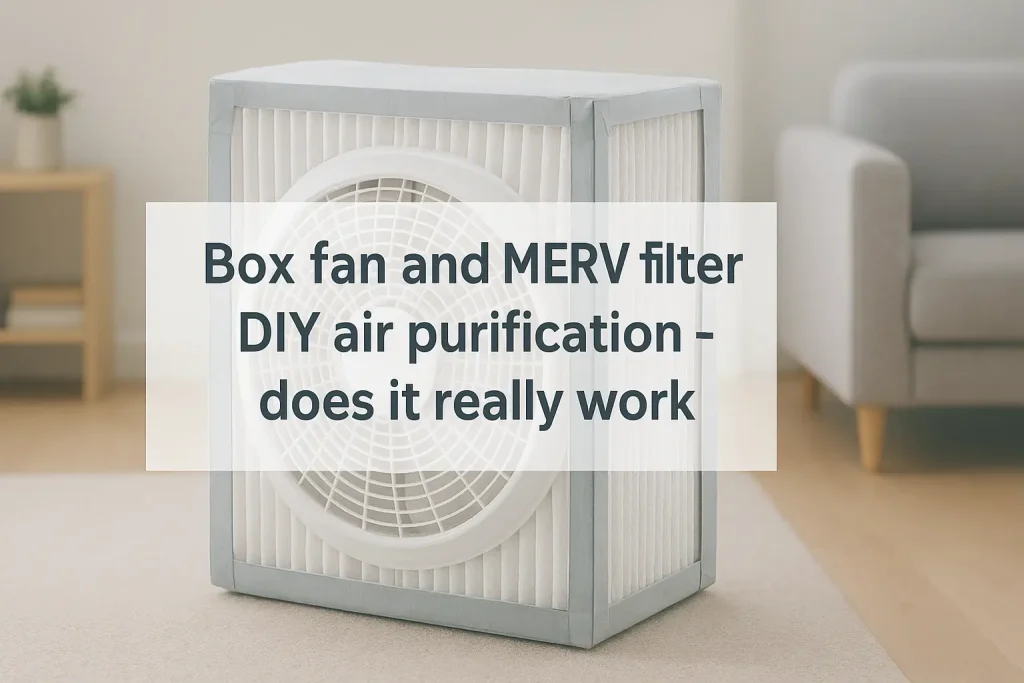
For window fan and air scrubber combination setups, the RA-650’s exhaust ducting connects easily to standard window venting kits, making it suitable for creating negative pressure containment zones that exhaust filtered air outside the building.
Is the B-Air RA-650 Worth the Investment for DIY Home Renovators?
A homeowner doing a single bathroom renovation does not need a 550 CFM industrial HEPA air scrubber. The unit cost plus annual filter expense totals $800 to $1,200 in the first year alone, and a large-room HEPA air purifier in the $200 to $400 range handles most residential renovation dust adequately.
The RA-650 makes financial sense for homeowners undertaking whole-house renovations lasting several months, particularly in older homes where lead paint or asbestos is a concern and proper air containment is critical. It also justifies its cost for homeowners with large workshops where woodworking, sanding, or grinding creates sustained particulate loads that would overwhelm a standard residential air purifier.
For a single room renovation lasting two to four weeks, rent an industrial air scrubber from a local equipment rental company for $150 to $250 per week instead of purchasing. This provides the same air cleaning performance without the $600 to $800 purchase price and ongoing filter replacement commitment.
What Is the Expected Lifespan of the B-Air RA-650 Motor and Components?
The blower motor is rated for approximately 10,000 to 15,000 hours of continuous operation under normal conditions before bearing wear or winding degradation becomes significant. At 8 hours of daily use, that translates to roughly 3 to 5 years of service before motor replacement may be necessary.
The housing and structural components are molded from durable ABS plastic that withstands job site handling well. The primary failure point reported by long-term users is the power switch, which can become intermittent after several years of daily use in dusty environments. This is a simple and inexpensive repair when it occurs.
The filter access panel latches are the secondary wear point. Users report that the plastic tabs can break if the panel is forced closed against a misaligned filter, and replacement latch kits are available from B-Air for approximately $15 to $25.
Quick Reference
Air Scrubber and HEPA Filtration Terms Explained
Definitions for technical terms used throughout this review. Type to search.
— A filter standard requiring capture of at least 99.97% of airborne particles at 0.3 microns. Distinct from HEPA-type or HEPA-like filters which are unregulated marketing terms with no standardized efficiency. The B-Air RA-650 uses a genuine True HEPA filter meeting this standard.
— The volume of air a fan or air scrubber moves in one minute. The RA-650 is rated at 550 CFM. This figure assumes clean filters, no ducting, and sea-level air density. Real-world airflow is typically 10-30% lower due to filter resistance and ducting losses.
— The number of times per hour an air scrubber processes the entire volume of air in a room. Mold remediation standards require 4-6 ACH. The RA-650 delivers 4 ACH at 1,100 sq ft with an 8-foot ceiling when operating at full 550 CFM.
— A containment strategy where an air scrubber exhausts filtered air outside a sealed work area, creating lower pressure inside the containment zone than outside. This prevents contaminated air from escaping into clean areas of the building during remediation work.
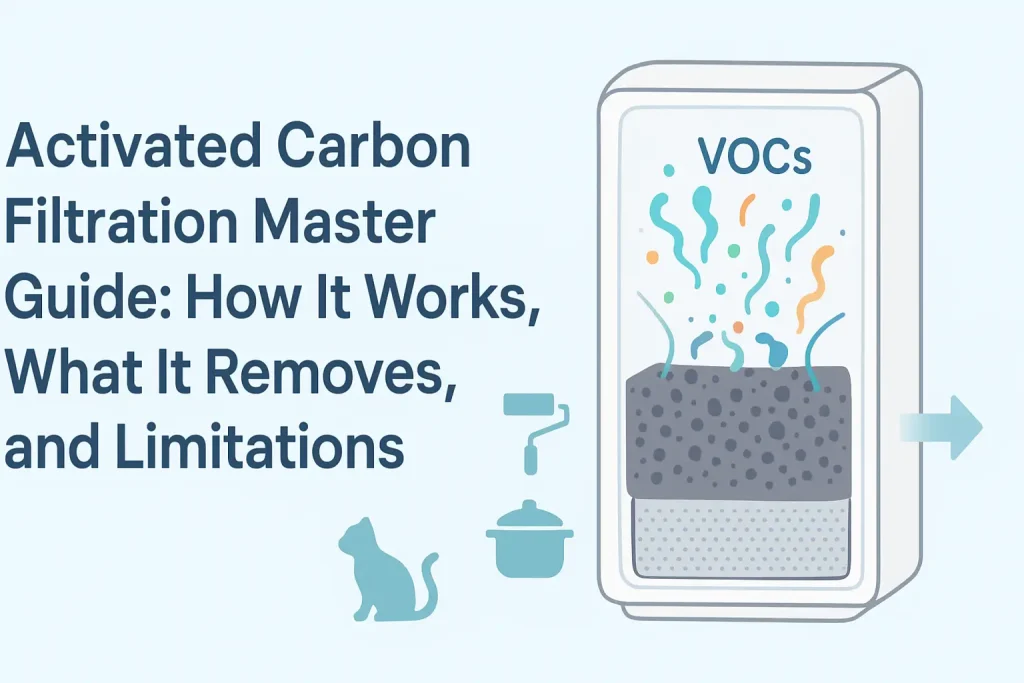
— A filter stage using porous carbon to adsorb gaseous pollutants including VOCs, odors, and some chemical fumes. The RA-650 includes an activated carbon stage between the pre-filter and HEPA filter. It does not remove particles and works in combination with mechanical filtration.
— The resistance to airflow created by filters, ducting, and the air path through the scrubber. As filters load with particulate, static pressure increases and airflow decreases. This is why the RA-650’s effective CFM drops over time between filter changes.
— The first filtration stage that captures large particles above 5 microns. The RA-650 uses a washable pre-filter that protects the more expensive HEPA and carbon stages from rapid loading. Regular cleaning extends the life of all downstream filters.
Can the B-Air RA-650 Run Continuously for Days or Weeks?
Yes, the B-Air RA-650 is designed for continuous 24-hour operation and is commonly run for days or weeks at a time on restoration jobs. The motor is rated for continuous duty, and the electrical components are specified for uninterrupted use. The limiting factor is not the motor but the filter loading rate, which increases steadily during continuous operation.
During extended continuous runs, the pre-filter requires daily inspection and cleaning when used in heavy dust environments like drywall finishing or concrete cutting. A clogged pre-filter reduces airflow through all downstream stages and forces the motor to work harder against increased static pressure, which accelerates bearing wear over time. Check and clean the pre-filter at the end of each workday during continuous operation.
What Is the Decibel Level of the RA-650 at Each Fan Speed?
The RA-650 produces approximately 68 to 72 dB at high speed measured at 3 feet from the unit. At low speed, the noise level drops to approximately 58 to 62 dB. For reference, normal conversation occurs at about 60 dB, and a vacuum cleaner operates at approximately 70 to 75 dB.
These noise levels make the unit unsuitable for occupied living spaces. Restoration professionals typically schedule scrubber operation during daytime hours when occupants are not present, or they use the low-speed setting when noise is a concern. The unit is not designed for bedroom use and should not be compared to residential air purifiers that operate at 22 to 30 dB in sleep mode.
Does the RA-650 Produce Ozone or Any Harmful Byproducts?
The B-Air RA-650 is a purely mechanical filtration device and produces no ozone during operation. It does not use ionization, UV-C lamps, photocatalytic oxidation, or any other technology that generates ozone as a byproduct. The three stages of filtration are entirely mechanical and adsorptive.
This is an important distinction for restoration professionals working in occupied buildings where ozone exposure could affect residents or workers. Mechanical air scrubbers like the RA-650 are always the safer choice for occupied environments compared to devices that incorporate ionization or UV technologies that may produce trace ozone.
Can the RA-650 Be Used With a Window Exhaust Kit for Negative Pressure?
The RA-650 has a standard exhaust collar that accepts 10-inch to 12-inch flexible ducting suitable for window exhaust kits. Creating negative pressure requires sealing the exhaust duct to a window adapter plate and sealing all other openings in the containment area with polyethylene sheeting and tape.
The unit can maintain negative pressure in a properly sealed area up to approximately 500 to 600 square feet. Larger containment zones may require two units or a higher-CFM scrubber like the Alorair PureAiro HEPA Max 970 at 970 CFM. Always verify negative pressure with a smoke pencil or tissue test at the containment perimeter before beginning remediation work.
How Often Should I Replace the HEPA Filter in the RA-650?
The HEPA filter in the RA-650 should be replaced every 12 to 18 months under normal construction or restoration use. Continuous operation in extremely dusty environments like concrete cutting or heavy drywall sanding may require replacement at 6 to 9 months. The best indicator for replacement is a persistent reduction in airflow that does not improve after cleaning the pre-filter and checking the carbon stage.
A HEPA filter that is dark gray or black throughout its surface rather than white or light gray has reached the end of its useful life. Operating with a fully loaded HEPA filter forces the motor to work against maximum static pressure, which reduces airflow and accelerates motor wear. When in doubt, replace the HEPA filter at 12 months regardless of appearance to maintain rated airflow and air cleaning performance.
What Is the Warranty Coverage on the B-Air RA-650?
B-Air provides a one-year limited warranty on the RA-650 covering defects in materials and workmanship. The warranty covers the blower motor, housing, and electrical components. Filters are considered consumable items and are not covered under warranty. Extended warranties are available through some authorized dealers at additional cost.
Warranty service requires proof of purchase and return of the unit to an authorized service center. Users report that warranty claims for motor failures within the first year are processed without significant difficulty, though shipping costs for the 35-pound unit are typically the owner’s responsibility. Register the unit with B-Air within 30 days of purchase to activate the warranty.
Can I Use Third-Party Replacement Filters in the RA-650?
Third-party replacement filters are available for the RA-650 from several aftermarket manufacturers at prices 20 to 40 percent lower than genuine B-Air filters. The critical requirement is that the replacement filter meets the same dimensional specifications and True HEPA certification as the original filter.
Using a filter that does not seal properly in the filter frame creates air bypass, where contaminated air flows around the filter rather than through it. This reduces the effective filtration to near zero regardless of the filter’s rated efficiency. Verify that any third-party filter is specifically listed as compatible with the B-Air RA-650 and carries True HEPA certification from a recognized testing laboratory.
Does the RA-650 Remove Smoke Odors and Wildfire Particulate?
The RA-650’s True HEPA filter captures wildfire smoke particulate matter including PM2.5 at 99.97% efficiency at 0.3 microns. The activated carbon stage provides moderate smoke odor reduction but is not sized for heavy or sustained smoke odor removal. The carbon bed in the RA-650 is designed for general VOC and odor control in construction environments, not for the high carbon capacity needed for significant smoke remediation.
For fire restoration work where smoke odor is the primary concern, the RA-650 works effectively for particulate removal but should be paired with a dedicated activated carbon or hydroxyl generator system for comprehensive odor elimination. The particulate filtration is excellent for post-fire cleanup, but the odor control capability is supplementary rather than primary.
What Is the Difference Between the RA-650 and a Standard HEPA Air Purifier for Home Use?
The RA-650 moves 550 CFM of air through its filtration system, compared to 100 to 400 CFM for most residential HEPA air purifiers. This five to ten times airflow advantage means the RA-650 can process the air in a 1,100 square foot space four times per hour, while a residential unit rated at 200 CFM would process the same space less than once per hour.
The tradeoff is noise level and cost. The RA-650 operates at 68 to 72 dB compared to 22 to 35 dB for residential units, and replacement filters cost $150 to $200 versus $25 to $60 for home units. The RA-650 is not a better air purifier for a living room or bedroom; it is the right tool for construction, restoration, and industrial environments where high airflow and heavy particulate loads are the primary concern.
The B-Air RA-650 HEPA Air Scrubber delivers genuine 550 CFM True HEPA filtration at a competitive price point that makes it a strong value for restoration professionals and serious DIY renovators. Its three-stage filtration handles the full spectrum of construction and remediation particulates, and the stackable design supports multi-unit deployments on larger jobs. The noise level and lack of variable speed control are its main drawbacks, but these are expected tradeoffs in industrial air cleaning equipment at this price. For contractors who need reliable, no-frills HEPA air cleaning that handles heavy particulate loads day after day, the RA-650 earns its place on the job site.