Most people assume moving air around with a window fan is the same as cleaning it. They are wrong. A window fan dilutes contaminated air by bringing in outside air. An air scrubber removes the contaminants from the air already inside the room. These two devices solve completely different problems, and choosing the wrong one means your indoor air stays polluted.
This guide compares air scrubbers and window fans across 11 critical dimensions: filtration mechanism, particle removal, VOC handling, airflow performance, cost, noise, energy use, installation, maintenance, best use cases, and health safety. You will know exactly which device your situation demands by the end.
Air Quality Data
| Photo | Popular Air Purifiers | Price |
|---|---|---|

|
Air Purifiers for Home Large Room up to 1500ft², Tailulu H13 True HEPA Air Purifier for Pets Dust Odor Smoke, Air Purifier for Bedroom with 15dB Quiet Sleep Mode for Bedroom Office Living Room | Check Price On Amazon |
|
Afloia Air Purifier for Home, 4-in-1 Washable Filter for Allergies, Covers Up to 1076 ft², Quiet Operation, Auto Shut-Off & Night Light, Removes Pet Dander, Pollen, Dust, Mold, and Smoke, White,Pluto | Check Price On Amazon |

|
Nuwave OxyPure ZERO Air Purifier with Washable and Reusable Bio Guard Tech Air Filter, Large Room Up to 2002 Ft², Air Quality Monitor, 0.1 Microns, 100% Capture Irritants like Smoke, Dust, Pollen | Check Price On Amazon |

|
Air Purifiers for Home Large Room Up to 1,996 Ft², EOEBOT Air Purifier for Home Pets with Washable Filter, Quiet Sleep Mode, Air Quality Monitor, Air Purifier for Bedroom, Pet Hair, Dust, Smoke, White | Check Price On Amazon |
|
Afloia 2 IN 1 Air Purifier with Humidifier Combo, 3-Stage Filters for Home Allergies Pets Hair Smoker Odors, Evaporative Humidifier, Auto Shut Off, Quiet Air Cleaner with Seven Color Light,White | Check Price On Amazon |
Air Scrubbers vs Window Fans – What the Numbers Show
Sources: EPA Indoor Air Quality, AHAM, industry specifications
What Is an Air Scrubber and How Does It Work?
An air scrubber is a portable or permanently installed air cleaning device that pulls contaminated air through multiple filtration stages, captures particles and gases, and discharges cleaned air back into the space. Unlike an air purifier designed for home use, an air scrubber is built for heavy-duty particle loads: construction dust, mold spores after water damage, smoke particles, and industrial contaminants.
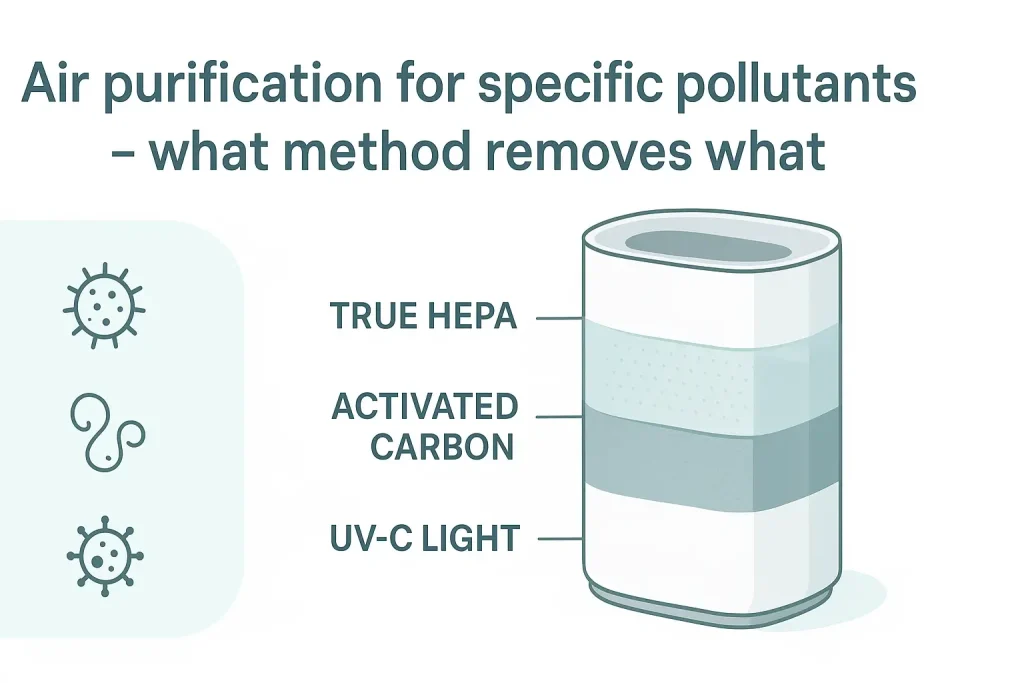
A portable HEPA air scrubber like the AlorAir 550 CFM HEPA air scrubber uses three filtration stages. Stage one is a coarse pre-filter that catches visible debris. Stage two is a True HEPA filter capturing 99.97% of particles at 0.3 microns. Stage three is an activated carbon filter that adsorbs VOCs, odors, and chemical fumes.
This happens because HEPA filtration is a mechanical process. Dense fiber media physically traps particles as air is forced through the filter at a specific velocity. This only occurs when the filter media meets True HEPA specifications with a minimum efficiency of 99.97% at the most penetrating particle size of 0.3 microns. If the filter is not properly sealed in its housing, air bypasses the media and contaminated air re-enters the room. Fix it by checking gasket seals every time you replace the filter.
For whole-house applications, an in-duct air scrubber like the Aerus model installs directly into your HVAC system and treats air across the entire home continuously. Key Specifications: Installs in supply or return plenum. Uses active photocatalytic oxidation plus UV light. Treats up to 3,000 sq ft through existing ductwork. Requires professional installation. Annual maintenance includes UV lamp replacement every 12 to 24 months.
Air scrubbers are not air purifiers and they are not fans. An air scrubber is a type of negative air machine designed for contaminant capture at the source. It differs from a standard HEPA air purifier in its higher static pressure, higher airflow capacity, and the ability to be ducted for negative pressure containment.
What Is a Window Fan and How Does It Work?
A window fan is a simple axial fan mounted in a window opening that moves outdoor air into the room or exhausts indoor air outside. It provides zero filtration. The only thing a window fan does is exchange air volume between indoors and outdoors at a rate determined by the fan’s CFM rating.
A standard dual window fan delivers between 500 and 2,500 CFM of airflow depending on blade size and motor power. This is enough to cycle the air in a 300-square-foot room 12 to 60 times per hour. That sounds impressive until you realize that the outdoor air you are pulling in may carry pollen, PM2.5 from traffic, wildfire smoke, or humidity that encourages mold growth.
Window fans work because a motor spins blades that create a pressure differential across the window opening. Outdoor air rushes in through the intake side, and indoor air exits through the exhaust side if the fan has a reversible function. This only creates meaningful air quality improvement when the outdoor air is cleaner than the indoor air. If outdoor PM2.5 levels are elevated above 35 micrograms per cubic meter, a window fan actively makes indoor air worse. The failure mode is simple: bringing in unfiltered polluted air. Fix it by only using a window fan when the outdoor AQI is below 50.
Filtration: HEPA Capture vs Simple Dilution
This is the single biggest difference. An air scrubber removes particles from the air. A window fan replaces dirty indoor air with outdoor air that may or may not be cleaner. These are fundamentally different mechanisms with different outcomes for different pollutants.
Product Comparison
Air Scrubber vs Window Fan – Side by Side Specification Comparison
Detailed comparison across all critical performance dimensions. CADR values for air scrubbers based on manufacturer specifications.
| Specification | Air Scrubber (HEPA) | Window Fan |
|---|---|---|
| PM2.5 removal | 99.97% capture at 0.3 microns | 0% – relies on outdoor dilution |
| VOC and gas removal | Activated carbon stage (1-10+ lbs) | Dilution only if outdoor air is clean |
| Typical airflow range | 250-1,650 CFM (filtered) | 500-2,500 CFM (unfiltered) |
| Coverage area recommendation | 200-1,500 sq ft at 4 ACH | 100-400 sq ft per fan unit |
| Annual filter cost | $80-$300 depending on usage | $0 (no filter) |
| Typical noise at medium speed | 55-72 dB | 45-60 dB |
| Energy consumption (continuous) | 150-500 watts | 30-100 watts |
| CARB certification | Yes (models without ionizers) | Not applicable |
| Ducting capability | Yes – 8 to 12 inch duct ports | No |
| Best use case | Construction dust, mold remediation, smoke, VOCs | Ventilation when outdoor AQI is below 50 |
Airflow and coverage estimates based on manufacturer specifications for mid-range portable HEPA air scrubbers and dual window fans. Actual performance varies by model, ducting configuration, and window placement.
Particulate Matter: PM2.5 and PM10 Removal Compared
Air scrubbers remove PM2.5 and PM10 through mechanical filtration with verified efficiency. Window fans move particulate matter from outdoors to indoors or vice versa depending on which direction is cleaner. If outdoor air contains wildfire smoke at PM2.5 concentrations of 150 micrograms per cubic meter, a window fan delivers 150 micrograms per cubic meter directly into your breathing zone.
According to the EPA, indoor PM2.5 concentrations in homes without filtration track outdoor concentrations within 50 to 80 percent. A window fan accelerates this equalization. A HEPA air scrubber like the Phoenix Guardian R Pro with 500 CFM actively strips PM2.5 from the air on each pass through the filter. After one complete air change, PM2.5 is reduced by approximately 80 percent. After three air changes, the reduction exceeds 99 percent.
For a room with active dust generation, such as a renovation zone or a workshop, the air scrubber is the only effective choice. A window fan does not capture drywall dust at all. The PuriSystems 600 CFM air scrubber covers 800 square feet at 4 air changes per hour and maintains negative pressure when ducted to exhaust. This is the standard for professional mold remediation and water damage restoration.
VOCs, Gases, and Chemical Fumes: Carbon Adsorption vs Ventilation
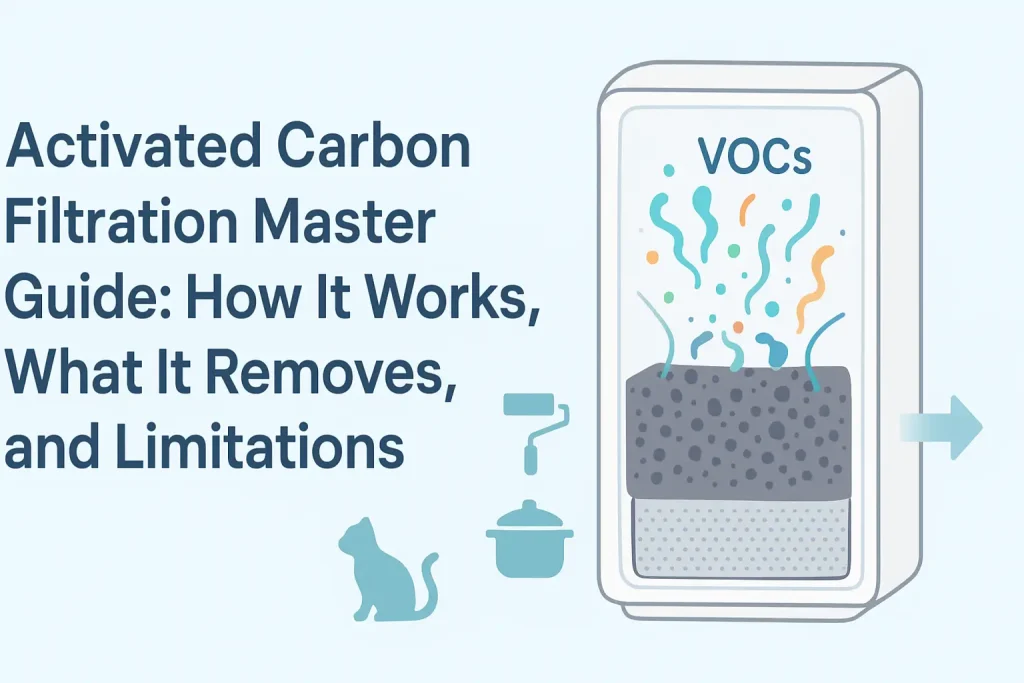
Activated carbon in an air scrubber removes VOCs by adsorption. Gas molecules physically bond to the carbon surface inside millions of microscopic pores. Window fans dilute VOCs by exhausting indoor air and pulling in outdoor replacement air. The effectiveness of a window fan for VOC removal depends entirely on outdoor VOC concentrations being lower than indoor concentrations.
According to EPA research, indoor VOC levels are typically 2 to 10 times higher than outdoor levels. A window fan running on exhaust mode reduces indoor VOC concentrations toward outdoor background levels within 15 to 30 minutes in a well-sealed room. This happens because the pressure differential forces indoor air out and draws in replacement air with lower VOC levels.
However, activated carbon in an air scrubber achieves far deeper VOC reduction. A unit with 10 to 15 pounds of activated carbon, like the heavy-duty carbon air scrubber models with large carbon beds, reduces indoor VOC concentrations below outdoor background levels. The carbon continues adsorbing VOCs on every air pass until the media is saturated. This only works when the carbon bed has sufficient contact time with the airstream. If airflow velocity through the carbon is too high, contact time drops and VOC capture efficiency falls below 50 percent.
Airflow and Coverage: CFM, Room Size, and Air Changes Per Hour
Window fans produce higher raw CFM numbers than portable air scrubbers. A 20-inch box fan in a window delivers 1,000 to 2,500 CFM on high speed. A portable HEPA air scrubber delivers 250 to 1,650 CFM. The difference is that air scrubber CFM is filtered CFM, and window fan CFM is raw unfiltered air movement.
The AlorAir 1650 CFM air scrubber is one of the highest-capacity portable units available and covers 800 square feet at 4 air changes per hour. This is professional-grade equipment. For comparison, a standard dual window fan delivering 1,500 CFM moves more total air volume but with zero contaminant removal.
Use the table below to match your room size to the required air scrubber capacity at different air change rates.
CADR Reference
Air Scrubber CFM Required by Room Size and Air Changes Per Hour
All values calculated at standard 8 ft ceiling height. Formula: (room area x 8 x ACH) / 60. Source: AHAM methodology adapted for air scrubbers.
| Room size (8 ft ceiling) / ACH target | 2 ACH (ventilation assist) | 4 ACH (dust control) | 6 ACH (mold/smoke) | 8 ACH (remediation) |
|---|---|---|---|---|
| 200 sq ft (small room) | 53 CFM | 107 CFM | 160 CFM | 213 CFM |
| 400 sq ft (large room) | 107 CFM | 213 CFM | 320 CFM | 427 CFM |
| 600 sq ft (open area) | 160 CFM | 320 CFM | 480 CFM | 640 CFM |
| 800 sq ft (basement/workshop) | 213 CFM | 427 CFM | 640 CFM | 853 CFM |
| 1,200 sq ft (multiple rooms) | 320 CFM | 640 CFM | 960 CFM | 1,280 CFM |
Formula: CFM required = (room length ft x room width ft x 8 ft ceiling x ACH) / 60. For mold remediation, use 6-8 ACH. For general dust control during renovation, 4 ACH is sufficient. Highlighted cell represents the most common small-room air scrubber application.
Cost Analysis: Purchase Price, Filters, Electricity, and Total Ownership
A window fan costs $30 to $100. A portable HEPA air scrubber costs $300 to $2,500 depending on CFM capacity and brand. That upfront difference looks enormous. But the real cost comparison is more complicated once you account for filter replacements, electricity, and what happens when you choose the wrong tool for the job.
A 20-inch box fan in a window costs about $25 and uses 40 watts at medium speed. Annual electricity cost at 8 hours daily use and 13 cents per kWh is approximately $15. There is zero filter cost. Total three-year ownership: about $70.
A mid-range portable air scrubber like the B-Air RA-650 HEPA air scrubber costs approximately $500 to $700 for the unit. HEPA filter replacement runs $80 to $120 and is needed every 6 to 12 months depending on particle load. The pre-filter needs replacement every 1 to 3 months at $15 to $30 each. The carbon filter lasts 3 to 6 months at $30 to $60 each. Electricity at 200 watts continuous use adds $228 annually at 13 cents per kWh.
For comprehensive cost breakdowns across purchase, rental, and installation scenarios, refer to the detailed air scrubber cost guide comparing purchase price, rental rates, and professional installation. Annual filter costs for heavy-use air scrubbers typically range from $200 to $600. The window fan has zero ongoing consumable cost.
Noise Levels: Decibel Comparison at Operating Speeds
Window fans are quieter than air scrubbers at equivalent airflow. A dual window fan on low speed produces 40 to 45 dB. On high speed, 55 to 60 dB is typical. These are axial fans with relatively low static pressure and smooth airflow. The sound is mostly moving air with some motor hum.
Portable HEPA air scrubbers are louder because they push air through dense filter media. A 500 CFM air scrubber on high speed produces 65 to 75 dB. This is comparable to a vacuum cleaner running continuously. On low speed, a unit like the B-Air RA-650 drops to approximately 55 dB. This is still audible in a quiet room but tolerable in a workshop or renovation zone.
This happens because the fan motor must overcome the resistance of the HEPA filter, which creates back pressure. The motor works harder and produces more mechanical and airflow noise. The only way to reduce noise on an air scrubber is to run it at a lower speed, which reduces CFM and air changes per hour. If noise is your primary concern and outdoor air quality is good, a window fan on low speed is the quieter choice.
Energy Consumption: Watts, Annual Cost, and Efficiency
Window fans are remarkably energy-efficient. A typical dual window fan uses 30 to 70 watts on medium speed. At 13 cents per kWh and 8 hours daily use, the annual electricity cost is $11 to $26. There is no filter resistance to overcome and no dense media to push air through.
Air scrubbers use significantly more electricity because the fan motor must overcome HEPA filter resistance. A 500 CFM unit typically draws 150 to 250 watts. A 1,650 CFM unit like the high-capacity portable air scrubber at maximum airflow draws 400 to 500 watts. Annual electricity cost ranges from $140 to $450 depending on the unit size and daily run time.
An ENERGY STAR certified window fan uses at least 20 percent less energy than standard models. Air scrubbers are not part of the ENERGY STAR program because they are considered commercial and industrial equipment, not consumer appliances, even when used in residential settings. The energy cost gap between a window fan and an air scrubber is roughly 10 to 1 in favor of the window fan.
Installation and Setup: Window Mounting vs Strategic Placement
A window fan installs in under two minutes. Open the window, place the fan on the sill, adjust the side panels to seal the opening, and plug it in. Some models include mounting brackets for a more secure fit. That is the entire setup process for a window fan.
An air scrubber requires more deliberate placement. The unit must be positioned so the intake faces the contamination source. For construction dust, place the intake near the work area. For mold remediation, position the unit so it draws from the affected zone and, ideally, exhausts filtered air outside through a duct run through a window or door. The air scrubber ducting kit with 8-inch flex duct connects to the exhaust port and routes cleaned or contaminated air through a window panel.
This setup takes 10 to 20 minutes. It is not difficult, but it is more involved than dropping a fan in a window. For negative pressure containment, which is required for professional mold and asbestos abatement, the air scrubber must exhaust outside through sealed ducting while the room is sealed with plastic sheeting. This is a professional setup that requires training.
Maintenance: Filter Replacement vs Blade Cleaning
Window fan maintenance is trivial. Unplug the unit. Wipe the blades and grille with a damp cloth every few months. That is the entire maintenance routine. The fan motor is sealed and requires no lubrication under normal household use. A window fan will run for 3 to 5 years with no maintenance cost beyond cleaning.
Air scrubber maintenance is more intensive and more critical. The pre-filter must be checked every 2 to 4 weeks during active use and replaced when visibly loaded. The HEPA filter requires replacement every 6 to 12 months under normal conditions, or every 1 to 3 months during heavy construction or remediation use. A loaded HEPA filter increases static pressure, reduces airflow, and strains the motor. The activated carbon filter saturates and stops adsorbing VOCs after 3 to 6 months, even if it looks unchanged.
This happens because HEPA filters are depth-loading media. Particles accumulate throughout the filter thickness, not just on the surface. Once the filter reaches its particle-holding capacity, airflow drops and filtration efficiency remains high but CFM is reduced. The failure mode for air scrubbers is running with a loaded filter. The air quality appears worse because the unit moves less air, not because the filter stopped working. Fix it by tracking filter hours and replacing on a schedule rather than waiting for visible degradation.
When an Air Scrubber Wins: Best Use Cases
An air scrubber is the correct choice when you need to remove contaminants from indoor air regardless of outdoor conditions. Construction and renovation projects generate massive dust loads that window fans simply redistribute. A HEPA air scrubber positioned near the work area captures drywall dust, wood particles, and silica dust at the source before it spreads through the house.
Mold remediation demands an air scrubber. The same HEPA air scrubber technology used in mold remediation is also ideal for grow rooms where spore control is critical. The unit creates negative pressure in the containment area, preventing spores from escaping into clean parts of the building. A window fan exhausts air from the room but sends unfiltered mold spores outside where they can re-enter through other openings.
Wildfire smoke conditions make window fans actively dangerous. When outdoor AQI exceeds 150, bringing outside air into the home increases indoor PM2.5 concentrations. An air scrubber running on recirculation mode cleans the indoor air without introducing new smoke particles. Pair it with a real-time PM2.5 air quality monitor to verify that indoor concentrations stay below 12 micrograms per cubic meter, the EPA annual standard.
When a Window Fan Wins: Best Use Cases
A window fan is the correct choice when outdoor air is cleaner than indoor air and the goal is rapid ventilation rather than filtration. Cooking odors, bathroom humidity after a shower, or a room that feels stuffy are all solved more efficiently by a window fan than by an air scrubber.
The window fan wins on cost, simplicity, and energy efficiency for these dilution-based tasks. If you burn toast and want the smell gone in five minutes, a window fan on exhaust mode at 1,500 CFM clears the room faster than an air scrubber at 500 CFM. The air scrubber would remove the odor particles eventually, but the window fan replaces the entire air volume with fresh outdoor air in minutes.
Seasonal ventilation when outdoor air is comfortable and clean is another window fan strength. Spring and fall evenings with outdoor temperatures between 55 and 75 degrees Fahrenheit and AQI below 50 are ideal for window fan use. The fan cools the house without air conditioning and refreshes indoor air that has accumulated CO2 and indoor pollutants from cooking, cleaning, and off-gassing materials.
Health and Safety: Ozone, Mold, and Contaminant Risks
Air scrubbers with True HEPA filters and no ionizer produce zero ozone. This is the safe standard. Some air scrubbers include UV-C lamps for germicidal irradiation. Properly designed UV-C chambers are sealed and do not expose occupants to UV radiation. However, UV-C lamps in the 254 nanometer wavelength produce trace ozone as a byproduct of irradiating oxygen molecules.
According to the CARB CCR Title 17 standard, ozone output from air cleaning devices must not exceed 0.050 parts per million. Any air scrubber sold in California must meet this standard. When purchasing an air scrubber with UV-C, verify the CARB certification status. A CARB certified air scrubber with HEPA filtration provides the highest safety assurance for occupied spaces.
Window fans pose a different health risk. During high-pollen seasons, a window fan pulls allergen-laden air directly into the room. A window fan with a basic mesh filter screen catches large debris and insects but does nothing for pollen grains in the 10 to 40 micron range or PM2.5 particles below 2.5 microns. During high outdoor pollen counts above 100 grains per cubic meter, a window fan can trigger allergy symptoms within 30 minutes.
Can You Use an Air Scrubber and a Window Fan Together?
Yes, and this combination is common in professional remediation. The window fan exhausts contaminated air from the containment zone to the outdoors. The air scrubber runs inside the contained space, continuously filtering the remaining air and capturing particles that become airborne during work. This setup provides both negative pressure containment and active filtration.
In a home setting with good outdoor air quality, a window fan on intake brings fresh air into the room while an air scrubber runs on recirculation to filter both the incoming air and the existing indoor air. This arrangement provides ventilation plus filtration. The outdoor air dilutes indoor CO2 and VOCs, and the air scrubber removes particles from the combined air volume. This is the closest you can get to a balanced ventilation plus filtration system without installing an HRV or ERV.
What Size Air Scrubber Do You Need for a Renovation Project?
Calculate the room volume in cubic feet and multiply by your target air changes per hour, then divide by 60. For a 400-square-foot room with 8-foot ceilings, the volume is 3,200 cubic feet. At 6 ACH for construction dust control, you need 320 CFM minimum from the air scrubber. The B-Air RA-650 at 650 CFM exceeds this requirement with room to spare for ducting losses.
Ducting an air scrubber reduces effective CFM by 10 to 25 percent depending on the length and diameter of the duct run. If you need 320 CFM at the intake and you plan to use 15 feet of 8-inch flex duct, select a unit rated at least 400 CFM to compensate for duct losses. A CFM anemometer for verifying air scrubber airflow lets you measure actual delivered CFM at the intake to confirm performance.
How Loud Is an Air Scrubber Compared to a Window Fan at Night?
An air scrubber on low speed produces 55 to 60 dB. A window fan on low produces 40 to 45 dB. The difference of 15 dB represents more than double the perceived loudness. A window fan is quiet enough for sleep in most bedrooms. An air scrubber at 55 to 60 dB is comparable to a window air conditioner and may disrupt light sleepers.
This noise difference exists because air scrubbers move air through dense HEPA media, creating turbulent airflow noise and motor load noise. Window fans move air freely through an open window with minimal resistance. If nighttime noise is unacceptable, run the air scrubber during the day at high speed to clean the room, then switch to a window fan or no device at night when outdoor air quality permits.
Do Window Fans Help With Dust or Do They Make It Worse?
Window fans make indoor dust worse unless the outdoor air is exceptionally clean and the fan is on intake mode with a filter. Without filtration, a window fan on intake brings outdoor dust, pollen, and PM2.5 into the room. A window fan on exhaust removes indoor-generated dust by pushing it outside, which is helpful for dust from cooking, pet activity, or indoor projects.
For indoor dust control, an exhaust window fan combined with a HEPA air scrubber running on recirculation is the most effective approach. The exhaust fan removes dust-laden air at the source. The air scrubber captures airborne dust that escapes before it reaches the window. This combination reduces PM10 concentrations faster than either device alone.
Can an Air Scrubber Replace a Window Fan for Cooling?
No. An air scrubber does not provide cooling. It recirculates room air through a filter and returns it to the same room at approximately the same temperature. The fan motor adds a small amount of heat, typically 1 to 3 degrees Fahrenheit in a closed room. A window fan provides actual cooling by bringing in cooler outdoor air during evening and nighttime hours.
For cooling purposes, a window fan is the correct tool. For air cleaning during hot weather when windows must remain closed for air conditioning, an air scrubber or a standard HEPA air purifier is the correct tool. The two devices serve complementary rather than competing functions in a comprehensive indoor air quality strategy.
What Is the Difference Between an Air Scrubber and an Air Purifier?
An air scrubber is a heavy-duty air cleaning device designed for high contaminant loads, ducting capability, and negative pressure applications. An air purifier is a consumer appliance designed for ongoing air cleaning in occupied living spaces at lower noise levels and lower airflow. Air scrubbers move 500 to 1,650 CFM through coarse pre-filters and HEPA. Air purifiers move 50 to 400 CFM through finer filtration stages optimized for continuous residential use.
Air scrubbers are built for construction, remediation, and industrial settings. They are louder, heavier, and more expensive to operate. Air purifiers are built for bedrooms, living rooms, and offices. They are quieter, more energy-efficient, and styled for home decor. A True HEPA air purifier for bedroom use at 24 to 30 dB sleep mode is appropriate for nighttime operation. An air scrubber at 60 dB is not.
How Often Should You Replace Air Scrubber Filters During Heavy Use?
During active construction, replace the pre-filter every 1 to 2 weeks. Replace the HEPA filter every 1 to 3 months depending on visible loading and airflow reduction. Replace the carbon filter every 3 months regardless of appearance, since carbon saturation is not visible. These intervals assume 8 to 12 hours of daily operation in a high-dust environment.
For mold remediation, replace all filters after the project is complete. Do not reuse HEPA filters that have captured mold spores. The spores remain viable in the filter media and can regrow if the filter is stored in humid conditions. This is a safety requirement, not a cost consideration. For standard household use without heavy contamination, HEPA filters last 6 to 12 months and pre-filters last 2 to 3 months.
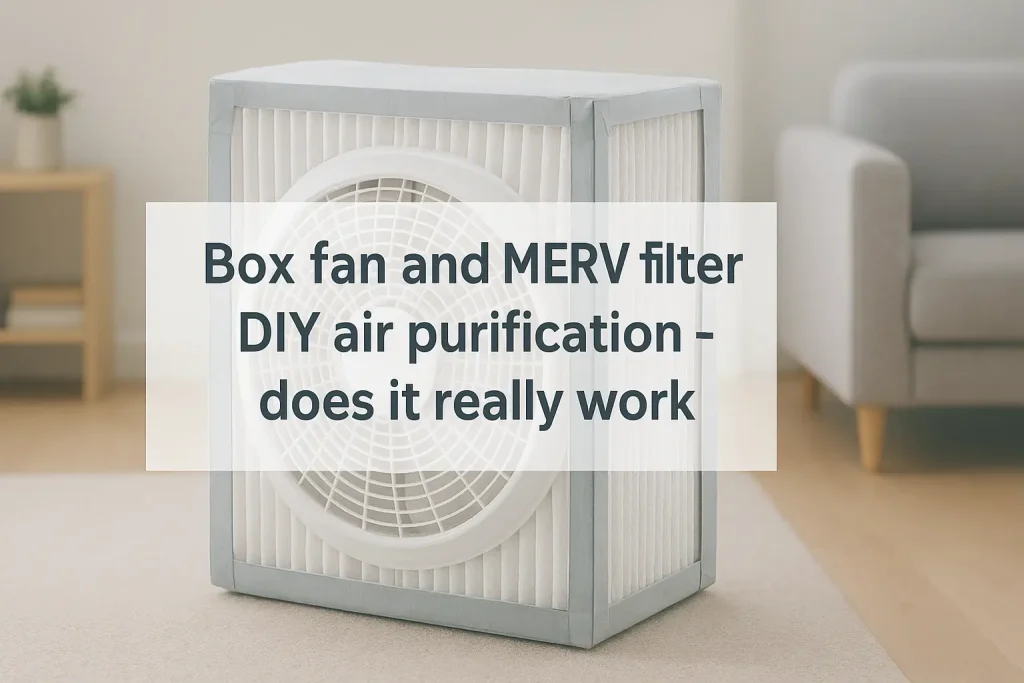
Can You Use a Box Fan With a Furnace Filter as a DIY Air Scrubber?
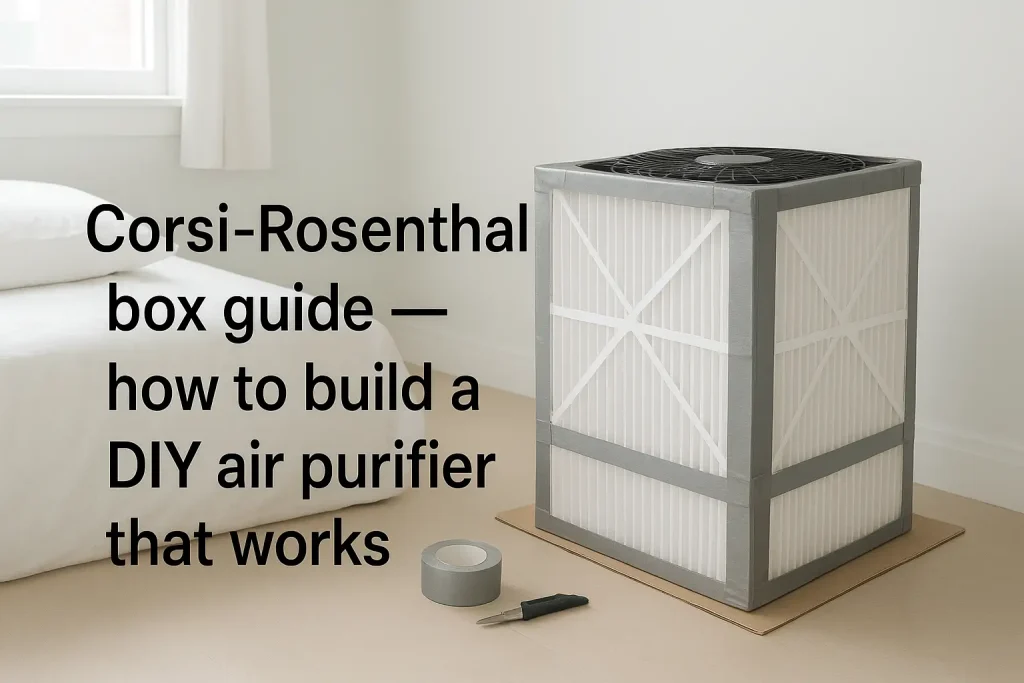
Yes, attaching a MERV 13 20x20x1 furnace filter to a 20-inch box fan creates a functional DIY air filtration device. This setup, often called a Corsi-Rosenthal box when four filters are taped into a cube with the fan on top, delivers approximately 400 to 600 CFM of filtered airflow depending on filter resistance and fan speed. The total build cost is $60 to $80.
Use a 20-inch box fan rated 1,000+ CFM and a MERV 13 20x20x1 furnace filter 4-pack for the build. This DIY air scrubber provides effective particle removal for a fraction of the cost of a commercial unit. It works well for wildfire smoke, allergy season, and general dust reduction. It does not provide the ducting capability, negative pressure, or very high static pressure performance of a purpose-built air scrubber.
Buying Guide
Before You Buy an Air Scrubber or Window Fan – Decision Checklist
Check off each point that applies to your situation to determine which device you need.
Product Review
Portable HEPA Air Scrubber – Pros and Cons
Honest assessment based on manufacturer specifications, industry use cases, and verified buyer experiences.
Pros
- ✓True HEPA filtration captures 99.97% of particles at 0.3 microns
- ✓Activated carbon stage removes VOCs and odors
- ✓Can be ducted for negative pressure containment
- ✓Works regardless of outdoor air quality conditions
- ✓High airflow up to 1,650 CFM on larger units
Cons
- ✗Loud at 55-75 dB when running on high speed
- ✗High electricity consumption: 150-500 watts
- ✗Ongoing filter costs of $200-$600 annually
- ✗Bulky and heavy; not suitable for moving room to room daily
- ✗Not designed for cooling or temperature control
An air scrubber is a specialized tool for heavy contaminant loads: construction dust, mold remediation, wildfire smoke, and industrial particles. It is not a general-purpose home appliance. If your primary need is ventilation and cooling with clean outdoor air, a window fan is better. If you need contaminant removal regardless of outdoor conditions, the air scrubber is the only tool that works.
Does an Air Scrubber Use More Electricity Than Running a Window Fan 24/7?
Yes. An air scrubber at 200 watts continuous use costs approximately $228 per year. A window fan at 50 watts continuous use costs approximately $57 per year. The air scrubber uses four times the electricity. This gap narrows slightly in winter when a window fan would introduce cold air that your heating system must warm, but the air scrubber still consumes more direct electrical energy.
Factor this electricity cost into your total ownership calculation along with filter replacement costs. The three-year operating cost for an air scrubber including filters and electricity ranges from $900 to $2,200 depending on the unit and usage intensity. The three-year operating cost for a window fan is $45 to $170 for electricity only.
Why Does My Air Scrubber Smell Like Burning Plastic When It Is New?
A new air scrubber may emit a temporary odor from the motor windings and manufacturing residues burning off during the first few hours of operation. This is normal and typically resolves within 24 hours of continuous use. Run the unit in a ventilated area or with the exhaust ducted outside during the initial break-in period.
If the burning plastic smell persists beyond 48 hours or intensifies, stop using the unit immediately. This indicates a potential motor defect, a failing capacitor, or an obstructed fan blade causing motor overheating. Contact the manufacturer for warranty service. Do not operate an air scrubber with a persistent electrical burning odor in an occupied space.
Can a Window Fan Be Used With an Air Purifier in the Same Room?
Yes. A window fan on intake brings fresh air into the room. A True HEPA air purifier running in the same room filters the combined air volume. This setup provides the benefits of ventilation and filtration simultaneously. Place the window fan and the air purifier on opposite sides of the room to create cross-flow air circulation.
During high pollen season, avoid using a window fan on intake even with an air purifier in the room. The incoming pollen load may exceed the purifier’s capacity to capture it, especially at high window fan airflow rates. A fine mesh pollen filter screen for window fans helps reduce the incoming allergen load but does not eliminate it.
How Do I Know If Outdoor Air Is Clean Enough for a Window Fan?
Check your local AQI on AirNow.gov or a portable outdoor air quality monitor with PM2.5 sensor. An AQI below 50 is good. An AQI between 51 and 100 is acceptable for most people but may affect sensitive individuals. An AQI above 100 means you should not use a window fan on intake mode without a high-efficiency filter on the incoming air.
If you do not have a monitor, look at visibility and check for known pollution sources. If you can see haze or smell smoke, exhaust, or industrial odors outdoors, the air is not clean enough for unfiltered window fan intake. During wildfire season in the western United States, AQI can exceed 150 for days or weeks. During these periods, keep windows closed and run an air scrubber or HEPA air purifier on recirculation.
What Is the Best Air Scrubber for a Home Workshop or Garage?
For a 400 to 600 square foot workshop with 8 to 10 foot ceilings, a 500 to 650 CFM portable HEPA air scrubber provides adequate dust control at 4 to 6 air changes per hour. The B-Air RA-650 at 650 CFM and the Phoenix Guardian R Pro at 500 CFM are both strong candidates. Choose the higher CFM unit if you do heavy sanding or use tools that generate fine dust.
Position the air scrubber with the intake facing your primary work area. If you generate dust at multiple stations, place the unit centrally and use a longer intake duct to reach the most active dust source. Run the air scrubber during all dust-generating activity and for at least 30 minutes after you finish working to clear residual airborne particles.
The choice between an air scrubber and a window fan comes down to one question: do you need to remove contaminants from the air, or do you need to replace the air itself? If you are dealing with dust, mold, smoke, or chemicals, an air scrubber is the answer. If you want to freshen a stuffy room with clean outdoor air, a window fan is the better and far cheaper tool. For comprehensive indoor air quality, use both. A window fan provides ventilation when outdoor conditions permit. An air scrubber provides filtration when conditions demand it.
Select the right device for your specific indoor air quality challenge. Use the comparison tables above to match room size to required airflow. Calculate your filter costs before buying an air scrubber so there are no surprises. And always check your outdoor AQI before opening windows or running an unfiltered window fan.