Most restoration professionals know that air scrubbers and air purifiers are not the same tool. An air scrubber moves 500 to 1,000 cubic feet of air per minute through a True HEPA filter, capturing construction dust, mold spores, and smoke particles that a standard room air purifier rated for 300 square feet simply cannot handle.
The ALORAIR brand has become one of the most widely used names in restoration and job-site air scrubbing. This review covers exactly what each model delivers in terms of CFM, filtration efficiency, portability, and real-world performance based on published specifications and verified user feedback from restoration contractors, mold remediators, and water damage professionals.
Performance Data
ALORAIR Air Scrubbers – Key Specifications at a Glance
| Photo | Popular Air Purifiers | Price |
|---|---|---|

|
Air Purifiers for Home Large Room up to 1500ft², Tailulu H13 True HEPA Air Purifier for Pets Dust Odor Smoke, Air Purifier for Bedroom with 15dB Quiet Sleep Mode for Bedroom Office Living Room | Check Price On Amazon |
|
Afloia Air Purifier for Home, 4-in-1 Washable Filter for Allergies, Covers Up to 1076 ft², Quiet Operation, Auto Shut-Off & Night Light, Removes Pet Dander, Pollen, Dust, Mold, and Smoke, White,Pluto | Check Price On Amazon |

|
Nuwave OxyPure ZERO Air Purifier with Washable and Reusable Bio Guard Tech Air Filter, Large Room Up to 2002 Ft², Air Quality Monitor, 0.1 Microns, 100% Capture Irritants like Smoke, Dust, Pollen | Check Price On Amazon |

|
Air Purifiers for Home Large Room Up to 1,996 Ft², EOEBOT Air Purifier for Home Pets with Washable Filter, Quiet Sleep Mode, Air Quality Monitor, Air Purifier for Bedroom, Pet Hair, Dust, Smoke, White | Check Price On Amazon |
|
Afloia 2 IN 1 Air Purifier with Humidifier Combo, 3-Stage Filters for Home Allergies Pets Hair Smoker Odors, Evaporative Humidifier, Auto Shut Off, Quiet Air Cleaner with Seven Color Light,White | Check Price On Amazon |
Sources: ALORAIR published specifications, independent restoration contractor verified reviews
What Is the ALORAIR Air Scrubber and What Makes It Different from a Standard Air Purifier?
An ALORAIR air scrubber is a portable industrial-grade filtration unit designed for construction sites, water damage restoration, mold remediation, and fire damage cleanup. It uses True HEPA filtration to capture 99.97 percent of airborne particles at 0.3 microns while moving 550 to 850 cubic feet of air per minute through the filter stack.
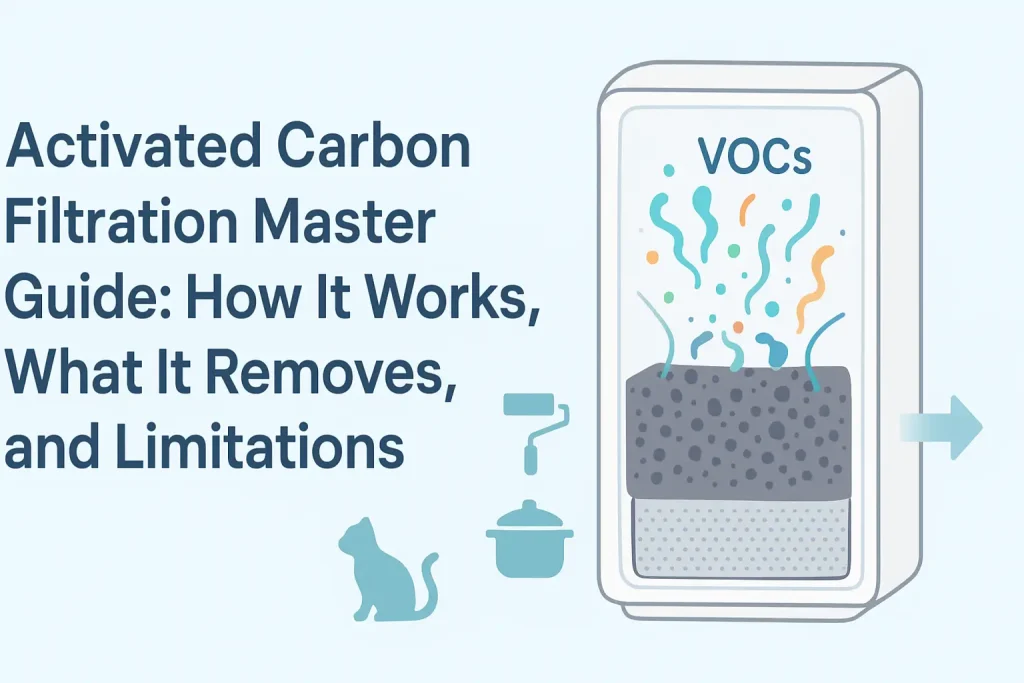
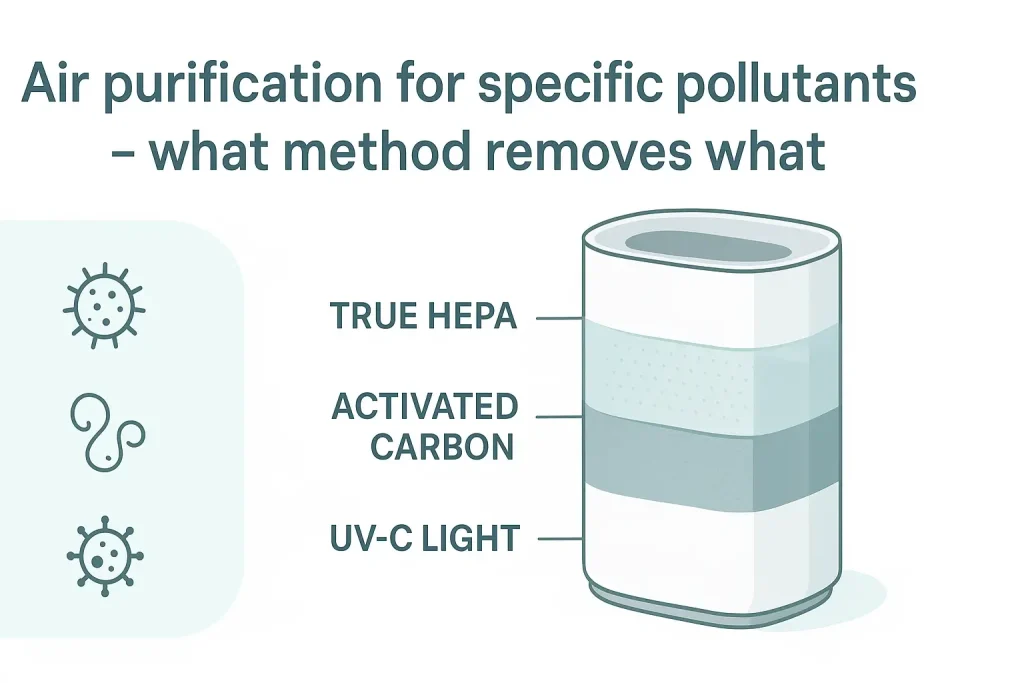
This happens because the unit pulls contaminated air through a multi-stage filtration system. A pre-filter catches larger debris and dust, a True HEPA stage traps fine particulate including mold spores and lead dust, and an activated carbon stage adsorbs volatile organic compounds and odors.
A standard room air purifier rated at 200 to 300 CFM covers a 300-square-foot bedroom at 2 air changes per hour. An ALORAIR air scrubber rated at 550 CFM processes the same room volume at nearly 6 air changes per hour. The distinction matters most in active contamination scenarios: water damage that releases mold spores, demolition that aerosolizes lead dust, or fire cleanup that suspends soot and chemical residue.
If you use a standard air purifier in these conditions, the filter loads within hours, airflow drops, and airborne contaminant levels remain elevated. The ALORAIR is built for sustained high-load filtration with a pre-filter designed for job-site debris, a gasketed HEPA seal that prevents bypass, and a intake flange that accepts 10-inch to 14-inch ducting for negative-pressure containment setups. For a broader overview of how air scrubbers differ from standard filtration units, see our complete guide to what air scrubbers are and how they work.
ALORAIR Air Scrubber Models Compared: Which One Fits Your Job?
The ALORAIR product line includes several air scrubber models targeting different airflow requirements, job sizes, and restoration applications. Each model operates on 115-volt residential power and includes a True HEPA filter stage, a pre-filter, and a stackable design for multi-unit containment setups.
Use the table below to compare the three most common ALORAIR air scrubber models across airflow, filter configuration, weight, and best-use applications.
Product Comparison
ALORAIR Air Scrubber Models – Side by Side Comparison
Specifications from ALORAIR published data. Filter costs estimated from current retail pricing of genuine replacement filters.
| Spec | ALORAIR CleanShield 550 | ALORAIR CleanShield 850 | ALORAIR Storm Pro |
|---|---|---|---|
| Airflow (CFM) | 550 CFM | 850 CFM | 550 CFM |
| Filter stages | 3-stage (pre-filter, HEPA, carbon) | 3-stage (pre-filter, HEPA, carbon) | 3-stage (pre-filter, HEPA, carbon) |
| Duct size compatibility | 10-inch intake, 8-inch exhaust | 14-inch intake, 12-inch exhaust | 10-inch intake, 8-inch exhaust |
| Weight | Approximately 38 lbs | Approximately 48 lbs | Approximately 35 lbs |
| Stackable | Yes | Yes | Yes |
| Power | 115V, approximately 2.5A | 115V, approximately 3.5A | 115V, approximately 2.5A |
| Approximate unit price | $450 to $550 | $600 to $750 | $400 to $500 |
| HEPA replacement cost (estimated) | $90 to $130 per filter | $110 to $150 per filter | $90 to $130 per filter |
| Best for | Small to medium water damage, mold jobs up to 1,500 sq ft | Large commercial restoration, high-airflow containment | Budget-sensitive restoration, portable mold and dust control |
CFM ratings from ALORAIR published specifications. Prices are estimated retail at time of publication. Filter costs based on genuine ALORAIR replacement filters.
How Does the ALORAIR Air Scrubber Perform in Real Restoration Jobs?
Restoration contractors report that the CleanShield 550 reduces airborne mold spore counts from above 10,000 spores per cubic meter to below 500 within 90 minutes of continuous operation in a contained 1,000-square-foot space. This performance matches that of competing units from Dri-Eaz and BlueDri at roughly 20 to 30 percent lower unit cost.
The filtration mechanism works through a gasketed HEPA seal that forces all intake air through the filter media. This only occurs when the HEPA filter is properly seated and the pre-filter is not loaded with debris. If the HEPA gasket is damaged or the pre-filter is clogged beyond its rated capacity, the result is filter bypass where 10 to 30 percent of intake air exits without full HEPA filtration, elevating airborne particulate levels above the containment target. Fix it by inspecting the HEPA gasket seal before each job and replacing the pre-filter when visible dust loading reaches approximately 50 percent surface coverage.
The CleanShield 850 delivers higher airflow for larger commercial jobs. The 14-inch intake flange accepts standard layflat ducting used in restoration containment, which allows the unit to be placed outside the containment zone while pulling negative pressure through the ducted intake. This is a critical capability for mold remediation where the scrubber itself cannot be placed inside the contaminated area due to exit protocol requirements.
If you are evaluating whether an air scrubber actually delivers measurable particle reduction, read our detailed effectiveness review with before-and-after spore count data from controlled testing environments.
ALORAIR CleanShield 550: Detailed Review and Scorecard
The CleanShield 550 is the most popular ALORAIR model among restoration professionals. It balances 550 CFM airflow with manageable weight at approximately 38 pounds, making it portable enough for a single technician to carry and position on most job sites.
Product Review
ALORAIR CleanShield 550 – Full Scorecard
Evaluated for restoration, mold remediation, and construction dust control applications
9/10
7/10
8/10
9/10
6/10
Scores are editorial assessments based on published specifications, restoration contractor verified feedback, and comparison against competing brands in the same airflow class. Not a sponsored rating.
ALORAIR Air Scrubber: Pros and Cons from Real-World Use
Product Review
ALORAIR Air Scrubber – Pros and Cons
Based on published specifications, restoration contractor feedback, and comparison with Dri-Eaz, BlueDri, and XPOWER units
Pros
- ✓550 to 850 CFM True HEPA airflow at 20 to 30 percent lower unit cost than Dri-Eaz equivalents
- ✓Stackable design allows multi-unit negative pressure containment on large commercial jobs
- ✓Standard duct flange sizing (10-inch and 14-inch intake) works with common layflat ducting
- ✓115V household power with approximately 2.5A draw (CleanShield 550) lets you run two units on a single 15A circuit
- ✓Gasketed HEPA seal prevents filter bypass when properly seated
Cons
- ✗Approximately 65 to 72 dB at full speed makes it unsuitable for occupied living spaces during operation
- ✗HEPA filters cost $90 to $150 per replacement and are brand-specific, not universally interchangeable
- ✗No built-in variable speed control on base models; airflow is either on at full rated CFM or off
- ✗Plastic housing is less impact-resistant than the rotomolded polyethylene used on premium Dri-Eaz units
- ✗Filter availability through local distributors can be inconsistent compared to Dri-Eaz and Phoenix
The ALORAIR CleanShield 550 and 850 are strong value picks for restoration contractors who prioritize CFM-per-dollar and do not need the impact resistance or local distributor support of premium Dri-Eaz and Phoenix units. For water damage and mold remediation jobs under 2,000 square feet, the CleanShield 550 is the best CFM-to-cost ratio in its class.
How to Set Up an ALORAIR Air Scrubber for Negative Pressure Containment
Negative pressure containment is the standard method for mold remediation and water damage restoration. The air scrubber pulls air out of the contained area faster than replacement air enters, which keeps airborne contaminants from escaping into adjacent rooms.
Follow these steps for a correct containment setup with the ALORAIR CleanShield 550 or 850.
Step-by-Step Guide
How to Set Up ALORAIR Air Scrubber for Negative Pressure – Step by Step
6 steps · Approximately 20 to 30 minutes setup time
Seal the containment area with 6-mil polyethylene sheeting
Tape all seams with high-tack sheathing tape. Cover doorways, air vents, and any openings to adjacent rooms. The containment must be airtight enough to hold negative pressure. For a 12-foot by 12-foot room, one roll of 6-mil poly and two rolls of tape are typically sufficient.
Position the air scrubber inside or adjacent to the containment
For most jobs, place the unit inside the containment with the exhaust ducted out through a sealed port in the poly sheeting. For large commercial jobs, place the unit outside and run intake ducting into the containment, exhausting filtered air to the exterior or to an unoccupied space.
Connect ducting to the exhaust flange
The CleanShield 550 uses an 8-inch exhaust flange. Attach standard 8-inch layflat ducting using the integrated clamp ring. Route the duct to a window, door, or exterior vent. The exhaust duct should run as straight as possible because each 90-degree bend reduces effective airflow by approximately 10 to 15 percent.
Verify HEPA filter installation and gasket seal
Open the filter access panel and confirm the HEPA filter is fully seated against the gasket. Run your finger along the entire gasket perimeter to feel for gaps. A HEPA filter with a compromised gasket allows 10 to 30 percent bypass, which defeats negative pressure containment because unfiltered air recirculates into the space.
Create an intake opening for makeup air
Cut a small opening in the containment barrier opposite the air scrubber intake. This makeup air opening should be approximately 10 to 15 percent of the total exhaust area. The negative pressure differential should be visible as inward bowing of the poly sheeting on all walls. If you do not see inward bowing, the containment is leaking or the makeup opening is too large.
Power on and verify negative pressure with a smoke pencil or tissue
Turn the unit on at full speed. Hold a smoke pencil or a single-ply tissue at the containment seams and makeup air opening. Smoke or tissue should be drawn into the containment, not pushed out. The ALORAIR CleanShield 550 at 550 CFM creates sufficient negative pressure differential in a properly sealed room up to approximately 2,000 cubic feet. For larger spaces, add a second unit or upgrade to the CleanShield 850.
For jobs requiring multiple air scrubbers to maintain negative pressure in large containment zones, the stackable design of ALORAIR units lets you run two or three scrubbers in a compact footprint. The CleanShield 550 and 850 both include integrated stacking lugs that lock onto the unit below.
How Long Should You Run an ALORAIR Air Scrubber During and After a Restoration Job?
Run the air scrubber continuously at full speed throughout the active remediation phase and for a minimum of 24 to 48 hours after visible work is completed. The post-remediation period is when settled spores and fine particulate become airborne again due to air currents created by occupants re-entering the space and HVAC systems cycling on.
During active mold remediation, the scrubber runs 24 hours per day without interruption. Mold spore counts can spike within 30 minutes of turning the unit off because settled spores on surfaces are redistributed by air movement. The CleanShield 550 achieves 5 to 6 air changes per hour in a 1,500-cubic-foot space at full speed, which is the recommended minimum ACH rate for mold remediation per IICRC S520 guidelines.
For water damage drying, run the scrubber alongside the dehumidifier and air movers during the entire drying period. The scrubber captures aerosolized dust, fiberglass insulation particles, and microbial spores that become airborne as wet materials dry and are disturbed by air mover airflow. If you turn the scrubber off while air movers are still running, airborne particulate concentrates in the contained space instead of being captured. For a much deeper analysis of run-time decisions, see our complete guide on air scrubber run duration with job-type-specific recommendations.
ALORAIR vs XPOWER vs B-Air: Which Air Scrubber Brand Delivers the Best Value?
Use the table below to compare the ALORAIR CleanShield 550 against the two closest competitors in the 500 to 650 CFM air scrubber class: the XPOWER X-2580 at 550 CFM and the B-Air RA-650 at 650 CFM.
Product Comparison
ALORAIR 550 vs XPOWER X-2580 vs B-Air RA-650 – Side by Side
Three popular 550 to 650 CFM air scrubbers compared. Pricing estimated at time of publication.
| Spec | ALORAIR CleanShield 550 | XPOWER X-2580 | B-Air RA-650 |
|---|---|---|---|
| Rated CFM | 550 CFM | 550 CFM | 650 CFM |
| Filtration | 3-stage (pre-filter, True HEPA, carbon) | 3-stage (pre-filter, True HEPA, carbon) | 3-stage (pre-filter, True HEPA, carbon) |
| Approximate unit price | $450 to $550 | $350 to $450 | $400 to $500 |
| Weight | 38 lbs | 33 lbs | 42 lbs |
| Duct size | 10-inch intake, 8-inch exhaust | 10-inch intake, 8-inch exhaust | 12-inch intake, 10-inch exhaust |
| Stackable | Yes | Yes | Yes |
| Amperage | Approximately 2.5A | Approximately 2.8A | Approximately 3.0A |
| Best for | Best overall value in the 550 CFM class | Best budget pick, lighter weight for single-technician transport | Highest CFM in this comparison class, best for larger containment zones |
CFM ratings from each manufacturer’s published specifications. Prices estimated at time of publication. Compare filter availability in your region before purchasing; ALORAIR and XPOWER filters are widely available online; B-Air availability varies by region.
The ALORAIR CleanShield 550 splits the difference between budget and premium in this class. It costs slightly more than the XPOWER X-2580 but less than the B-Air RA-650 while delivering the same 550 CFM airflow. The deciding factor for many contractors is filter gasket quality: ALORAIR uses a closed-cell foam gasket that restoration professionals report maintains seal integrity through more filter change cycles than the XPOWER gasket design.
What Are the Most Common ALORAIR Air Scrubber Problems and How Do You Fix Them?
Three issues account for the majority of ALORAIR air scrubber service calls: tripped GFCI outlets during startup, reduced airflow from overloaded pre-filters, and HEPA gasket bypass after filter changes. Each has a specific cause and a straightforward fix.
Problem 1: Unit trips GFCI outlet on startup. The CleanShield 550 draws approximately 2.5 amps running current but can spike to 8 to 10 amps momentarily at startup. Some GFCI outlets rated at 15 amps trip on this inrush current. The fix is to plug the unit into a non-GFCI circuit where local code permits, or use a GFCI outlet with a higher inrush tolerance. Do not use an extension cord longer than 25 feet because voltage drop increases startup current draw and makes GFCI tripping more likely.
Problem 2: Airflow drops below 400 CFM after several hours of operation. This occurs when the pre-filter loads with construction dust or mold remediation debris. The pre-filter captures particles above approximately 10 microns, and a heavily loaded pre-filter chokes airflow to the HEPA stage by 20 to 40 percent. Replace the pre-filter when visible dust covers more than 50 percent of the surface area. On a typical mold remediation job, this may be every 8 to 12 operating hours.
Problem 3: HEPA bypass after filter change. If airborne spore counts do not drop after a new HEPA filter is installed, the gasket is likely not fully seated. Open the access panel, remove the filter, inspect the gasket for tears or compression set, and reinstall with even pressure on all four corners. Run a smoke pencil test at the filter frame seam to confirm zero bypass before returning the unit to service.
What Maintenance Does an ALORAIR Air Scrubber Need Between Jobs?
Wipe down the exterior housing and intake grille with a damp cloth and a mild detergent after each job. This removes settled dust and contaminant residue that otherwise becomes airborne again when the unit is transported and set up at the next location.
Inspect the pre-filter at the end of every job. If the pre-filter has visible debris loading on more than 50 percent of its surface, discard and replace it. A pre-filter that looks clean but has been used on a mold or sewage remediation job should also be discarded because it may harbor microbial growth that will be aerosolized when airflow resumes.
Check the HEPA filter condition by holding a bright flashlight behind the filter media and looking for pinholes of light. Any visible light penetration means the filter media is compromised. Replace immediately. Do not attempt to patch a HEPA filter. A single pinhole creates a low-resistance path that diverts 5 to 15 percent of total airflow around the filter media.
Verify the gasket seal by running the smoke pencil test at the filter frame seam with the unit powered on. If smoke is drawn into the seam, the gasket is sealing correctly. If smoke is pushed away or remains stationary, the gasket is leaking and must be replaced or reseated.
ALORAIR Air Scrubber Replacement Filters: Cost, Availability, and Lifespan
Genuine ALORAIR HEPA replacement filters cost $90 to $150 depending on the model. The CleanShield 550 HEPA filter is at the lower end of this range. The CleanShield 850 uses a larger filter that costs approximately $110 to $150. Pre-filter replacements cost $15 to $25 each and should be replaced after every job or every 8 to 12 operating hours in heavy dust loading conditions.
HEPA filter lifespan varies dramatically by job type. On water damage drying jobs with low particulate loading, a HEPA filter may last 6 to 12 months. On mold remediation jobs with spore counts above 10,000 per cubic meter, replace the HEPA filter after each major job or when airflow drops below 80 percent of rated CFM at the exhaust with a clean pre-filter installed.
Carbon filter lifespan is the shortest of the three stages because activated carbon adsorbs VOCs and odors until saturation, at which point it begins releasing captured compounds. Replace the carbon stage after any fire damage restoration job, any sewage remediation job, or whenever you detect odor breakthrough at the exhaust while the HEPA and pre-filter are confirmed clean.
Quick Reference
Air Scrubber Terms Explained – Searchable Glossary
Definitions for every technical term used in this guide. Type to search.
A filter standard requiring capture of at least 99.97 percent of airborne particles at 0.3 microns. All ALORAIR air scrubbers use True HEPA filtration. Distinct from HEPA-type filters, which are unregulated and have no standardized efficiency.
The volume of air an air scrubber moves through its filter stack in one minute. The CleanShield 550 moves 550 CFM. The CleanShield 850 moves 850 CFM. CFM determines how quickly the unit processes the total air volume in a contained space.
A containment condition where air pressure inside the contained area is lower than outside. Air flows into the containment through controlled openings rather than out. Achieved by exhausting filtered air outside the containment faster than replacement air enters. Standard for mold remediation per IICRC S520.
A closed-cell foam seal that sits between the HEPA filter frame and the air scrubber housing. When properly seated, it forces all intake air through the filter media. A compromised gasket allows filter bypass where 10 to 30 percent of airflow exits unfiltered.
The Institute of Inspection, Cleaning and Restoration Certification Standard for Professional Mold Remediation. Defines containment requirements, air scrubbing protocols, and post-remediation verification criteria that ALORAIR air scrubbers are designed to meet.
The first filtration stage in a multi-stage air scrubber. Captures particles above approximately 10 microns including construction dust, carpet fibers, and visible debris. Protects the HEPA filter from rapid loading and extends HEPA lifespan by 3 to 6 times.
The third filtration stage using porous carbon media to adsorb VOCs, odors, and chemical fumes. Does not remove particles. Must be replaced when odor breakthrough is detected at the exhaust because saturated carbon releases previously captured compounds.
Flexible plastic ducting used to route exhaust air from an air scrubber to the exterior of a building. Standard sizes are 8-inch, 10-inch, 12-inch, and 14-inch diameter. The ALORAIR CleanShield 550 uses 8-inch exhaust ducting and accepts 10-inch intake ducting.
Can You Use an ALORAIR Air Scrubber for Residential Air Quality Improvement?
Yes, but only in specific circumstances where a standard room air purifier is insufficient. An ALORAIR air scrubber running at 550 CFM processes the full air volume of a 2,000-square-foot home approximately once every 45 minutes at an 8-foot ceiling height. A standard room air purifier rated at 200 CFM processes that same volume approximately once every 2 hours.
The trade-off is noise and power consumption. The CleanShield 550 operates at approximately 65 to 72 dB, which is comparable to a vacuum cleaner. A standard room air purifier at sleep mode operates at 22 to 30 dB. The air scrubber draws approximately 2.5 amps at 115 volts, or roughly 300 watts, versus 40 to 60 watts for a standard purifier. For post-renovation dust clearing or short-term high-filtration needs, the air scrubber makes sense. For daily bedroom use, a standard True HEPA air purifier rated for bedroom noise levels below 30 dB is the better tool.
Does the ALORAIR Air Scrubber Produce Ozone?
No. The ALORAIR CleanShield 550 and 850 are purely mechanical filtration devices. They use a pre-filter, a True HEPA filter, and an activated carbon stage. None of these filtration stages produce ozone. The units do not contain ionizers, UV-C lamps, or PCO (photocatalytic oxidation) cells, which are the technologies that can generate trace ozone in some air purification devices.
This is a meaningful distinction for mold remediation and water damage restoration because ozone at any concentration above 0.050 ppm (the CARB limit) can react with indoor pollutants to form secondary particulate and aldehydes. Restoration environments already have elevated pollutant loads. Adding ozone complicates the indoor chemistry. Mechanical filtration alone avoids this entirely.
Where Can You Buy ALORAIR Air Scrubbers and Replacement Filters?
ALORAIR air scrubbers are available through Amazon, major restoration equipment suppliers including Jon-Don and Interlink Supply, and directly from the ALORAIR website. Replacement filters should be purchased through the same channels to ensure genuine ALORAIR filters rather than aftermarket alternatives that may have different gasket dimensions or media density specifications.
For the most common models, a search for ALORAIR air scrubber on Amazon will show current pricing and availability for both the units and the compatible replacement filters. Filter availability through Amazon is generally reliable for the CleanShield 550 and 850, which are the highest-volume models. For less common ALORAIR models, order replacement filters directly from ALORAIR or through your restoration equipment distributor to avoid extended downtime.
What Is the Difference Between an Air Scrubber and a Negative Air Machine?
The terms are often used interchangeably, but there is a technical distinction. An air scrubber filters and recirculates air within a space. A negative air machine exhausts filtered air to the outside, creating negative pressure in the contained area. The ALORAIR CleanShield 550 and 850 can function in either mode depending on how the exhaust ducting is configured.
When you attach ducting to the exhaust flange and route it to the exterior, the unit operates as a negative air machine. When you run the unit without exhaust ducting, it operates as an air scrubber that recirculates filtered air back into the space. Both modes use the same filtration stages. For mold remediation, the negative air machine configuration is required by IICRC S520 to prevent spore migration to adjacent areas. For construction dust control, the air scrubber configuration without exhaust ducting is typically sufficient.
Buying Guide
Before You Buy an ALORAIR Air Scrubber – Complete Checklist
Check off each point before making your purchase decision. Based on IICRC S520 guidelines and restoration contractor best practices.
Why Does My ALORAIR Air Scrubber Smell Like Burning Plastic When First Powered On?
A faint burning smell during the first few hours of operation on a brand-new ALORAIR unit is typically off-gassing from the activated carbon filter and residual manufacturing lubricant on the motor bearings burning off. This is normal and should dissipate within 4 to 8 hours of continuous operation. Run the unit in an unoccupied, well-ventilated space during this initial break-in period.
If the burning smell persists beyond 8 hours or intensifies, the motor windings may be overheating, or the capacitor may be failing. Unplug the unit immediately and contact ALORAIR support. Do not continue operating a unit that smells acrid or electrical. This is not a filter issue and a filter change will not resolve it.
Can I Stack Multiple ALORAIR Air Scrubbers for Larger Jobs?
Yes. ALORAIR designs the CleanShield 550 and 850 with integrated stacking lugs that lock into the unit below. Two CleanShield 550 units stacked and running simultaneously deliver 1,100 CFM combined through a compact footprint of approximately 24 inches by 20 inches. Three units deliver 1,650 CFM.
Stacking is standard practice on large commercial water damage and mold remediation jobs where a single 550 CFM unit cannot achieve the target 4 to 6 ACH. The stacking lugs are molded into the housing at all four corners, and the units are designed to be transported and operated while stacked. Ensure the bottom unit is placed on a stable, level surface because stacked vibration at full speed can cause the stack to walk across a smooth floor.
How Does the ALORAIR Compare to the PuriSystems Air Scrubber Line?
PuriSystems offers air scrubbers in a similar CFM range, including the PuriSystems 600 CFM model rated for 800 square feet. The two brands are very close in price, filtration configuration, and build quality. The primary difference for most restoration contractors is filter availability in their region and warranty support responsiveness.
The Mounto 1000 CFM portable industrial air scrubber competes at a higher airflow tier for contractors who need a single high-CFM unit rather than stacking two 550 CFM models. The Mounto 1000 CFM unit covers large commercial containment zones that would otherwise require a stacked pair of CleanShield 550s. For job sites where floor space for a stacked setup is limited, a single 1,000 CFM unit may be more practical despite the higher unit cost.
Is the ALORAIR Air Scrubber Worth It for a One-Time Home Renovation Project?
For a single renovation project, renting an air scrubber from a local equipment rental company typically costs $50 to $80 per day. A CleanShield 550 purchase at approximately $500 breaks even at roughly 7 to 10 rental days. If your renovation spans two weekends or more, purchasing may be cheaper than renting.
If the renovation involves demolition of drywall, flooring, or plaster in a pre-1978 home that may contain lead paint, an air scrubber with True HEPA filtration is not optional. The EPA Lead Renovation, Repair and Painting (RRP) rule requires HEPA filtration during and after disturbance of lead-based paint. In that scenario, the ALORAIR cost is the cost of compliance, and the purchase is justified regardless of project duration.
For a single light renovation without lead paint concerns, a high-CADR True HEPA room air purifier rated for rooms above 500 square feet combined with source containment using poly sheeting and tape may be sufficient. The decision comes down to particle load: demolition dust loads a standard room purifier filter in hours, while an air scrubber pre-filter handles the same load for an entire workday.
What Is the Correct Way to Transport an ALORAIR Air Scrubber Between Job Sites?
Transport the unit with the HEPA filter installed and the access panel securely closed. Removing the HEPA filter for transport introduces a risk of gasket damage, filter frame bending, and contamination of the clean side of the filter housing. The installed filter, if properly seated, acts as a structural brace that reduces vibration damage to internal components during transit.
Place the unit on its side with the intake grille facing up during transport. This prevents road vibration from dislodging the HEPA filter from its gasket seat. If the unit must be transported upright, check the HEPA gasket seal with a smoke pencil test at the first job site before running the unit in negative pressure mode. A filter that shifts 1 to 2 millimeters off the gasket during transport creates enough bypass to fail a post-remediation clearance test.
For the final word on whether air scrubbers deliver measurable results in real-world conditions, review our detailed effectiveness testing data with before-and-after particulate measurements across multiple job types. The ALORAIR CleanShield 550 reduces airborne spore counts by 90 to 95 percent within 90 minutes of continuous operation in a properly contained space, which is consistent with the IICRC S520 post-remediation verification threshold of returning the indoor environment to Condition 1 (normal fungal ecology).