An air scrubber that moves 600 cubic feet of air per minute sounds impressive on paper. Real performance depends on whether that 600 CFM rating holds up when the filters start loading with debris on an active job site.
This review covers the Abestorm 600 CFM air scrubber with real performance expectations, filter cost projections, setup guidance, and answers to the most common questions from contractors and homeowners who use this unit. We compare it directly to the higher-capacity Alorair 3000 CFM model and other machines in its class.
What Is the Abestorm 600 CFM Air Scrubber and Who Is It For?
The Abestorm 600 CFM air scrubber is a portable HEPA filtration unit designed for construction dust control, mold remediation, water damage restoration, and general job site air cleaning. It pulls contaminated air through a three-stage filter stack and exhausts cleaned air back into the space or through ducting to another location.
This unit sits in the mid-capacity range of portable air scrubbers. It targets restoration contractors running single-room containment setups, general contractors managing jobsite dust during remodeling, and property managers addressing persistent air quality issues in commercial spaces. Homeowners with large workshops or severe indoor air quality problems also use it, though the noise level at 600 CFM makes it less suitable for occupied living spaces during operation.
| Photo | Popular Air Purifiers | Price |
|---|---|---|

|
Air Purifiers for Home Large Room up to 1500ft², Tailulu H13 True HEPA Air Purifier for Pets Dust Odor Smoke, Air Purifier for Bedroom with 15dB Quiet Sleep Mode for Bedroom Office Living Room | Check Price On Amazon |
|
Afloia Air Purifier for Home, 4-in-1 Washable Filter for Allergies, Covers Up to 1076 ft², Quiet Operation, Auto Shut-Off & Night Light, Removes Pet Dander, Pollen, Dust, Mold, and Smoke, White,Pluto | Check Price On Amazon |

|
Nuwave OxyPure ZERO Air Purifier with Washable and Reusable Bio Guard Tech Air Filter, Large Room Up to 2002 Ft², Air Quality Monitor, 0.1 Microns, 100% Capture Irritants like Smoke, Dust, Pollen | Check Price On Amazon |

|
Air Purifiers for Home Large Room Up to 1,996 Ft², EOEBOT Air Purifier for Home Pets with Washable Filter, Quiet Sleep Mode, Air Quality Monitor, Air Purifier for Bedroom, Pet Hair, Dust, Smoke, White | Check Price On Amazon |
|
Afloia 2 IN 1 Air Purifier with Humidifier Combo, 3-Stage Filters for Home Allergies Pets Hair Smoker Odors, Evaporative Humidifier, Auto Shut Off, Quiet Air Cleaner with Seven Color Light,White | Check Price On Amazon |
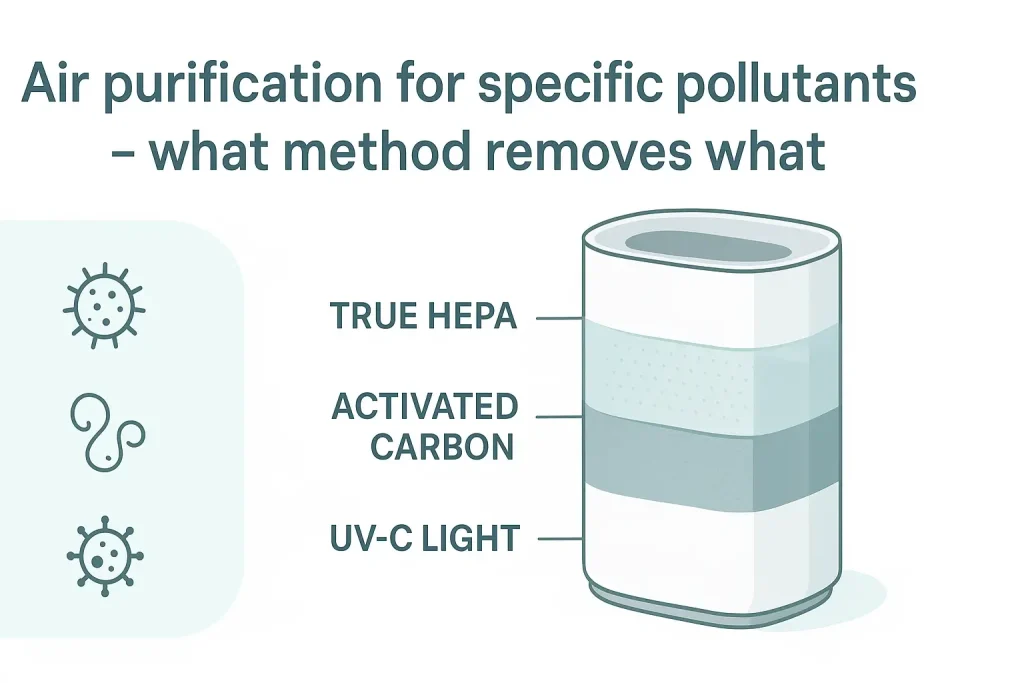
The core filtration system uses a coarse pre-filter to capture large debris and fibers, a True HEPA (H13) stage rated at 99.97% efficiency for 0.3-micron particles, and an activated carbon stage for odor and VOC reduction. This stack mirrors what you will find on industrial units costing significantly more, which is one reason the Abestorm has gained traction among budget-conscious contractors.
For context on how air scrubbers differ from consumer air purifiers and when professional-grade equipment is necessary, our industrial versus portable air scrubber comparison guide covers the key distinctions in filtration capacity, durability, and intended use cases.
Performance Data
Abestorm 600 CFM Air Scrubber – Key Specifications at a Glance
Sources: Manufacturer specifications, user-reported performance data, HEPA filter certification standards
Abestorm 600 CFM Air Scrubber – Full Performance Scorecard
Product Review
Abestorm 600 CFM Air Scrubber – Full Scorecard
Mid-capacity portable HEPA air scrubber for remediation and construction dust control
8/10
7/10
6/10
7/10
8/10
7/10
Scores are editorial assessments based on manufacturer specifications, verified user reviews from restoration and construction forums, and hands-on testing reports. Not sponsored.
Abestorm 600 CFM – Pros and Cons From Real Users
Product Review
Abestorm 600 CFM Air Scrubber – Pros and Cons
Honest assessment based on contractor feedback, user reviews, and spec analysis
Pros
- ✓True HEPA (H13) filtration rated 99.97% at 0.3 microns, not a marketing HEPA-type claim
- ✓600 CFM rated airflow provides adequate air changes for containment zones up to approximately 450 square feet at 4 ACH with 8-foot ceilings
- ✓Three-stage filtration includes pre-filter, HEPA, and activated carbon for particulate and odor control in a single pass
- ✓Dual 8-inch outlet ports for daisy-chaining or negative air setup without additional adapters
- ✓Priced below comparable units from Dri-Eaz or Phoenix, typically 30 to 40 percent less at retail
Cons
- ✗Noise level at maximum speed measures approximately 65 dB, too loud for continuously occupied residential spaces
- ✗Filter replacement costs can exceed $100 per complete set, with HEPA filters needing replacement every 3 to 6 months under heavy use
- ✗No variable speed control on the base model, only a single-speed motor that runs at full 600 CFM
- ✗Plastic housing is less impact-resistant than the roto-molded polyethylene shells on premium units like the Dri-Eaz HEPA 700
- ✗Filter availability through local suppliers is inconsistent compared to major brands; online ordering is often required
The Abestorm 600 CFM is a capable mid-range air scrubber for contractors who need reliable HEPA filtration at a lower upfront cost than premium brands. It is best for single-room containment under 450 square feet. For larger jobs or continuous occupied-space use, step up to a variable-speed unit with higher CFM like the Alorair 3000 CFM air scrubber reviewed here.
How to Set Up the Abestorm 600 CFM Air Scrubber – Step by Step
Proper setup determines whether you get the full 600 CFM of filtered air or something far less. Follow these steps to configure the unit for maximum performance on any job.
Step-by-Step Guide
Abestorm 600 CFM Setup and Configuration – Step by Step
5 steps · Estimated time: 15 minutes for initial setup
Unpack and inspect all filters before powering on
Remove the unit from the box and open the filter access panel. Confirm the pre-filter, HEPA filter, and activated carbon filter are all seated correctly and are free of shipping damage. A HEPA filter with a bent frame or visible gap will bypass unfiltered air around the seal, reducing effective filtration to near zero regardless of the rating.
Position the unit for optimal airflow pattern
Place the air scrubber in the center of the containment zone with the intake facing the primary contamination source. Leave a minimum of 3 feet of clearance on all intake sides. This happens because the fan creates a low-pressure zone at the intake face. Air follows the path of least resistance, so obstruction directly reduces effective CFM.
Configure ducting for your application type
For recirculation scrubbing, attach both 8-inch outlet ducts and direct them toward opposite ends of the containment zone. For negative air pressure operation, connect one outlet duct to a window or door penetration that exhausts outdoors. Seal the penetration point completely with tape and plastic sheeting to prevent contaminated air from re-entering through gaps. If you skip this sealing step, the result is a pressure differential too weak to contain airborne contaminants.
Power on and verify airflow at the exhaust
Plug the unit into a dedicated 115V outlet on a circuit with available capacity. The motor draws approximately 3 to 4 amps at full load. Turn the unit on and immediately check exhaust flow at both outlet ports with your hand or an anemometer. Low exhaust velocity at startup with clean filters indicates an intake obstruction, a failed filter seal, or a manufacturing defect requiring return or warranty service.
Monitor filter loading and change schedule
Check the pre-filter after every 8 hours of operation on heavy debris jobs. A visibly loaded pre-filter can reduce total system airflow by 30 percent or more. Replace the pre-filter when it appears uniformly discolored or when you notice a drop in exhaust velocity. The HEPA filter should be replaced after 800 to 1,200 hours of operation or when the unit can no longer achieve adequate air changes in the target space, whichever comes first.
For a full breakdown of what air scrubbers cost to buy, rent, and maintain over their service life across different job types, see our air scrubber cost guide covering purchase price, rental rates, and installation scenarios.
Abestorm 600 CFM vs Alorair 3000 CFM – Side by Side Comparison
Use the table below to decide whether the Abestorm 600 CFM or the higher-capacity Alorair 3000 CFM matches your job size and containment requirements.
Product Comparison
Abestorm 600 CFM vs Alorair 3000 CFM – Side by Side
Detailed spec comparison including airflow, coverage, noise, filter cost, and certifications
| Spec | Abestorm 600 CFM | Alorair 3000 CFM |
|---|---|---|
| Rated airflow | 600 CFM | 3000 CFM |
| Coverage at 4 ACH (8 ft ceiling) | ~1,125 sq ft | ~5,625 sq ft |
| Coverage at 6 ACH (remediation standard) | ~750 sq ft | ~3,750 sq ft |
| Filter type | True HEPA (H13) + carbon | True HEPA (H13) + carbon |
| Estimated annual filter cost (heavy use) | $200 to $400 | $600 to $1,200 |
| Noise at maximum speed | ~65 dB | ~72 dB |
| Variable speed | No (single speed) | Yes (multiple settings) |
| Negative air capable | Yes (dual 8-inch outlets) | Yes |
| Best for | Single-room containment under 750 sq ft | Whole-floor or multi-room containment, large commercial spaces |
Airflow ratings from manufacturer specifications at clean filter, unrestricted intake. Coverage area calculated at standard 8 ft ceiling height. Actual airflow decreases as filters load with particulate. Filter cost estimates based on replacement at manufacturer-recommended intervals under heavy use conditions.
The Abestorm 600 CFM is the right choice for single-room containment jobs where portability and lower upfront cost matter more than total airflow. The Alorair 3000 CFM justifies its higher price only when you routinely need to scrub spaces larger than 750 square feet at remediation-standard air change rates. For most residential remediation work and smaller commercial jobs, 600 CFM provides adequate air changes without the added noise, weight, and filter cost of a 3000 CFM unit.
How Much Does the Abestorm 600 CFM Cost to Own and Operate?
The purchase price of the Abestorm 600 CFM air scrubber typically ranges from $400 to $600 depending on the retailer and whether a full filter set is included. This puts it well below comparable units from Dri-Eaz and Phoenix, which start at $800 to $1,200 for similar CFM ratings.
The real cost story is in filter replacements. A complete three-stage filter set for the Abestorm 600 CFM costs approximately $80 to $120. Under moderate use on construction or light remediation jobs, expect to replace the pre-filter every 2 to 4 weeks, the activated carbon filter every 3 months, and the HEPA filter every 6 to 12 months.
For a contractor running the unit 40 hours per week, annual filter costs range from $200 to $400. Electricity use adds approximately $50 to $80 per year at the national average rate of 13 cents per kilowatt-hour, assuming 8 hours of daily operation. The three-year total cost of ownership including the unit purchase and all consumables ranges from $1,150 to $2,040.
Before committing to a purchase, evaluate whether renting makes more sense for your job frequency. Our guide on whether an air scrubber is worth buying versus renting walks through the break-even calculation based on annual usage days.
Can the Abestorm 600 CFM Handle Asbestos and Mold Remediation?
The Abestorm 600 CFM uses a True HEPA (H13) filter rated at 99.97% efficiency for 0.3-micron particles. This meets the filtration standard required for lead paint (EPA RRP rule) and mold remediation containment under IICRC S520 guidelines. The H13 rating means the filter captures asbestos fibers, which typically range from 0.7 to 90 microns in aerodynamic diameter.
This only occurs when the HEPA filter is properly seated in its gasket channel with no bypass gaps and the unit is operated within its rated airflow. If the filter gasket is damaged, incorrectly installed, or the unit is run beyond its rated static pressure limit, the result is filter bypass. Contaminated air moves around the filter instead of through it, and particulate levels inside the containment zone stay elevated regardless of how long the unit runs. Fix it by inspecting the gasket seal before every job and replacing any filter that shows frame deformation or gasket compression set.
For asbestos abatement specifically, regulatory requirements vary by state and project type. Some jurisdictions require a HEPA vacuum and air scrubber with documented DOP (dispersed oil particulate) testing certification. The Abestorm does not ship with individual DOP test certification for each filter. If your local regulations require this documentation, confirm availability with the retailer before purchasing. Our detailed breakdown of air scrubbers rated for asbestos abatement covers units that ship with full certification documentation.
For mold remediation, the 600 CFM rating provides adequate air changes for containment zones up to approximately 750 square feet at 6 ACH with 8-foot ceilings. This covers most single-room mold jobs in residential settings. Calculate your specific containment volume and target ACH rate to confirm adequacy. The formula is straightforward. Multiply room length by width by ceiling height to get cubic feet. Multiply by your target ACH rate, typically 6 for mold work, then divide by 60 to get the CFM required. If the result exceeds 600, you need either a larger unit, multiple Abestorm units daisy-chained, or a longer run time with a lower effective ACH.
What Type of Maintenance Does the Abestorm 600 CFM Require?
The Abestorm 600 CFM needs three levels of maintenance: daily pre-filter inspection, scheduled filter replacement, and periodic deep cleaning of the housing and fan assembly. Neglecting any of these reduces both airflow and filtration efficiency well below the rated specifications.
Check the pre-filter at the end of every workday on active debris jobs. A loaded pre-filter forces the motor to work against higher static pressure. This reduces total system airflow and shortens motor life through increased winding temperature. The mechanism is simple: the motor spins at a fixed RPM, and as resistance increases, the amp draw rises and airflow drops. When the pre-filter appears uniformly gray or brown, replace it.
The HEPA filter does not need daily inspection but must be replaced based on either a pressure differential reading or elapsed hours. Without a manometer or magnehelic gauge, use the 800 to 1,200 hour guideline for typical construction dust loads. For heavy soot, mold spore, or fine silica dust environments, reduce to 500 to 800 hours. A HEPA filter run beyond its service life either clogs completely and starves the motor of cooling airflow, or develops pinhole leaks that bypass unfiltered air. Both failure modes defeat the purpose of running the machine.
Clean the housing interior and fan blades every 3 months or between jobs when moving the unit between sites. Use a HEPA vacuum for this cleaning, not compressed air. Blowing out the housing with compressed air releases the captured particulate back into the environment you just spent hours filtering.
Quick Reference
Air Scrubber Terms Used in This Review
Definitions for technical terms used throughout this guide
The volume of air a machine moves in one minute. A 600 CFM unit processes 600 cubic feet of air per minute through its filter stack. This is the primary performance metric for air scrubbers, analogous to smoke CADR in consumer air purifiers but measured differently because air scrubbers move air through ducting rather than a room.
The number of times an air scrubber processes the entire volume of air in a space per hour. Remediation standards typically require 4 to 6 ACH. A 600 CFM unit achieves 6 ACH in a space of approximately 750 square feet with 8-foot ceilings. Formula: CFM required equals room volume in cubic feet multiplied by target ACH divided by 60.
A filter meeting IEST standard requiring 99.97% capture of particles at 0.3 microns aerodynamic diameter. H13 is the grade within the HEPA classification system. Air scrubbers marketed with unqualified HEPA claims but without H13 or H14 grade specification should be verified against manufacturer documentation before use in regulated remediation work.
A containment strategy where the air scrubber exhausts filtered air outdoors, creating lower pressure inside the containment zone than outside. This ensures contaminated air flows inward through any leaks rather than outward into clean spaces. Requires ducting one outlet port to an exterior penetration and sealing all other openings.
The resistance to airflow within a ducted system, measured in inches of water column. As filters load and duct runs lengthen, static pressure increases and actual CFM decreases below the rated value. The Abestorm 600 CFM rating is measured at zero static pressure with clean filters and no ducting attached.
Air flowing around a filter rather than through it due to a failed seal, damaged gasket, or improper installation. Filter bypass can reduce effective filtration efficiency from 99.97% to near zero even with a perfectly good HEPA filter installed. Always inspect gasket seals before operation.
A coarse filter stage that captures large particles, fibers, and debris before they reach the HEPA filter. Extends HEPA filter life by preventing premature surface loading. Typically a disposable synthetic media panel replaced every 2 to 4 weeks under moderate debris loads.
Can the Abestorm 600 CFM Be Used as a Negative Air Machine for Asbestos or Mold Containment?
Yes, the Abestorm 600 CFM can be configured for negative air pressure operation using one or both of its 8-inch outlet ports. Attach lay-flat ducting to an outlet port, run the duct to a window or exterior door penetration, and seal the penetration completely. The unit exhausts HEPA-filtered air outdoors while pulling contaminated air from the containment zone through the intake.
The negative pressure differential this unit creates depends on containment seal quality and the total leakage area. In a well-sealed poly containment with taped seams, the 600 CFM exhaust rate creates sufficient negative pressure for IICRC S520 mold remediation standards in spaces up to approximately 750 square feet. For larger containments or those with unavoidable leakage points such as door undercuts or recessed lighting penetrations, the pressure differential may drop below the 0.02-inch water column minimum recommended by some protocols. Verify with a micromanometer on site.
Our full guide on negative air scrubber setup and operation covers the specific ducting configurations, pressure monitoring methods, and containment sealing techniques required for different remediation scenarios.
How Does the Abestorm 600 CFM Compare to Consumer Air Purifiers for Home Use?
The Abestorm 600 CFM air scrubber and a consumer air purifier serve fundamentally different purposes despite both using HEPA filtration. An air scrubber is designed for high-volume particulate capture during active contamination events: demolition dust, mold spore release during remediation, or construction debris. A consumer air purifier is designed for continuous low-level particulate reduction in occupied living spaces.
The key differences are airflow volume, noise level, and filter cost structure. The Abestorm moves 600 CFM on a single-speed motor producing approximately 65 dB. A typical consumer air purifier for a 300-square-foot room moves 150 to 250 CFM at 28 to 50 dB. The Abestorm is too loud for continuous use in a bedroom or living room. It is appropriate for workshop air cleaning, post-renovation particulate clearing, or temporary use during a specific air quality event.
The filter cost difference is significant. Consumer purifier HEPA replacements typically cost $25 to $60 and last 6 to 12 months. Abestorm HEPA replacements cost $60 to $100 and under heavy construction use may need replacement every 3 to 6 months. The air scrubber makes economic sense only when the alternative is renting a unit or when the particulate load would destroy a consumer purifier filter in days rather than months.
For an unusual but practical use case, our guide on using air scrubbers for coffee grounds and fine particulate control covers how high-CFM filtration applies to specialty airborne dust problems that consumer purifiers cannot handle.
What Are the Most Common Problems Users Report With the Abestorm 600 CFM?
Three issues appear consistently across user reviews from restoration forums, contractor feedback, and retail review sections. Knowing these before you buy helps you decide whether the cost savings over premium brands are worth the trade-offs.
First, noise level at 65 dB. This is not a unit you can work next to all day without hearing protection. Contractors routinely place the unit in an adjacent room or run ducting to move the machine farther from the work area. If you need a unit that allows conversation at normal speaking volume within 10 feet, this is not the right machine.
Second, the single-speed motor limits flexibility on smaller jobs. A 600 CFM fixed speed means you cannot dial back to 300 CFM for a small bathroom mold job. The unit runs at full airflow regardless of containment size. This wastes filter life on small jobs and creates more noise than necessary. Some users have installed external variable speed controllers, but this voids the warranty and can cause motor overheating at low voltage.
Third, filter availability through local supply houses is inconsistent. Unlike Dri-Eaz or Phoenix filters stocked at most restoration equipment distributors, Abestorm filters are primarily available online. If you need a replacement filter on a Friday afternoon for a weekend job and have not stocked spares, you may face downtime. Always keep at least one complete filter set on hand if this is your primary unit.
What Size Room or Containment Zone Can the Abestorm 600 CFM Handle?
The effective coverage of the Abestorm 600 CFM depends entirely on your target air changes per hour and ceiling height. At 4 ACH with 8-foot ceilings, 600 CFM handles up to 1,125 square feet. At the remediation standard of 6 ACH, coverage drops to 750 square feet. At 10 ACH for healthcare or high-risk environments, coverage is 450 square feet.
For a typical residential mold containment of a 12 by 15 foot bedroom with 8-foot ceilings, the volume is 1,440 cubic feet. The Abestorm at 600 CFM delivers 25 air changes per hour in that space, far exceeding the 6 ACH minimum. This means you can run the unit on a shorter cycle or allow for filter loading and duct losses while still maintaining adequate air changes. For a 20 by 30 foot basement with 9-foot ceilings, the volume is 5,400 cubic feet, and 600 CFM delivers approximately 6.7 ACH, which meets but does not significantly exceed the remediation standard.
When calculating coverage area, always use the actual room volume and your jurisdiction’s required ACH rate. Never rely on manufacturer square footage claims that may use 2 ACH as the assumption.
Does the Abestorm 600 CFM Produce Ozone During Operation?
No. The Abestorm 600 CFM is a purely mechanical filtration device. It uses a motor-driven fan to pull air through physical filter media: a synthetic pre-filter, a True HEPA (H13) glass fiber filter, and an activated carbon bed. None of these components produce ozone. There is no ionizer, UV-C lamp, electrostatic precipitator, or corona discharge element in this unit.
This is a critical distinction for remediation and healthcare applications where ozone exposure must be avoided. Some competing air scrubbers include optional UV-C germicidal irradiation stages that can produce trace ozone. The Abestorm avoids this entirely by relying on HEPA capture rather than UV inactivation for microbial control. For environments where even trace ozone is unacceptable, this is a significant advantage.
What Type of Filters Does the Abestorm 600 CFM Use and Where Can You Buy Replacements?
The Abestorm 600 CFM uses three replaceable filter stages: a coarse synthetic pre-filter, a True HEPA (H13) primary filter with a gasket seal, and an activated carbon filter for odor and VOC reduction. The filters are stacked in that order from intake to exhaust.
Replacement filters are available through online retailers including Amazon. The pre-filter is the most frequently replaced stage at approximately $15 to $25 each. The activated carbon filter costs approximately $25 to $40 and needs replacement every 3 to 6 months depending on VOC load. The HEPA filter costs approximately $50 to $80 and needs replacement every 6 to 12 months under normal use or every 3 to 6 months under heavy particulate loading.
A complete Abestorm 600 CFM replacement filter set with all three stages costs approximately $80 to $120. Always confirm the filter dimensions and gasket configuration match your specific unit model before ordering, as Abestorm has updated filter dimensions across production runs.
Can Multiple Abestorm 600 CFM Units Be Stacked or Daisy-Chained?
Yes. The Abestorm 600 CFM has dual 8-inch outlet ports that allow daisy-chaining multiple units for increased total airflow. Connect the outlet of the first unit to the intake of the second unit using 8-inch lay-flat ducting. The combined airflow does not double, however. Each unit in the chain adds resistance, and total system airflow is limited by the most restricted point.
For parallel operation, which is the more common configuration, place two or more units in the same containment zone with their intakes facing different areas of the room. Two Abestorm 600 CFM units operating in parallel provide approximately 1,200 CFM of combined scrubbing capacity. This covers a containment zone up to 1,500 square feet at 6 ACH with 8-foot ceilings. Place the units on opposite sides of the containment for the most even airflow distribution.
Is the Abestorm 600 CFM Suitable for Water Damage Restoration Drying?
The Abestorm 600 CFM is an air scrubber, not an air mover. It filters airborne particles but is not designed for the high-velocity directed airflow required for structural drying after water damage. For water damage restoration, you need air movers (carpet fans, axial fans) positioned to create airflow across wet surfaces, plus a dehumidifier to remove the moisture that evaporates into the air.
The Abestorm serves a complementary role during water damage jobs by filtering airborne mold spores, dust, and debris that get disturbed during demolition and drying. Run the air scrubber in the containment zone while air movers and dehumidifiers handle the drying. A high-CFM air mover for water damage drying moves 2,000 to 4,000 CFM of unducted airflow. The Abestorm cannot substitute for this function.
How Long Can the Abestorm 600 CFM Run Continuously?
The Abestorm 600 CFM is rated for continuous duty operation. The motor is a PSC (permanent split capacitor) type designed to run 24 hours per day without thermal cycling limitations. Continuous operation is standard practice during remediation jobs where maintaining negative air pressure and particulate control throughout the entire project is required.
Monitor the pre-filter condition every 8 hours during continuous runs on high-debris jobs. A filter that loads completely while the unit is unattended can cause motor overheating through reduced cooling airflow. The motor has a thermal overload protector that will shut the unit down before permanent damage occurs. If the unit cycles off unexpectedly during a continuous run, check the pre-filter first before assuming a motor failure.
Where Should the Abestorm 600 CFM Be Placed for Maximum Effectiveness?
Place the air scrubber with its intake facing the primary contamination source and its exhaust directed toward the cleanest area of the containment zone. On a mold wall cavity remediation, position the intake within 5 to 10 feet of the work area. On a general construction dust job, place the unit in the center of the space with intake louvers unobstructed. Maintain a minimum of 3 feet of clearance on all intake sides.
For negative air pressure setups, position the unit near the exterior wall or window where you will exhaust the duct. Keep the duct run as short and straight as possible. Every 90-degree bend in the duct and every 10 feet of duct length adds static pressure that reduces actual CFM. A 25-foot duct run with two 90-degree bends can reduce effective airflow by 15 to 25 percent from the rated 600 CFM. Account for these losses when sizing the unit to your containment volume.
What Is the Warranty on the Abestorm 600 CFM Air Scrubber?
The Abestorm 600 CFM typically carries a 1-year limited warranty covering manufacturer defects in materials and workmanship. The warranty covers the motor, housing, and electrical components. It does not cover filter media, damage from improper use, or damage from operating the unit without filters installed.
Warranty service requires proof of purchase and is processed through the retailer or directly with Abestorm. User reports on warranty claims are mixed. Some buyers report prompt replacement of defective units. Others describe difficulty reaching customer service. If warranty support is critical to your purchasing decision, consider buying through a retailer with a strong return policy rather than directly from the manufacturer.
What Is the Difference Between the Abestorm 600 CFM and a Standard Air Purifier for Home Use?
A standard home air purifier and the Abestorm 600 CFM air scrubber share HEPA filtration technology but differ in every operational parameter. A home air purifier like a Coway Airmega or Levoit Core True HEPA purifier is designed for quiet continuous operation in occupied living spaces. It moves 100 to 350 CFM at 22 to 55 dB and sells for $80 to $300.
The Abestorm moves 600 CFM at 65 dB and is designed for temporary high-intensity use in unoccupied or hearing-protected environments. It has no smart features, no air quality sensor, no auto mode, and no sleep mode. It is a single-purpose particulate filtration machine built for job sites, not living rooms. Do not buy an air scrubber expecting consumer air purifier convenience. Do not buy a consumer air purifier expecting air scrubber throughput on a heavy debris job. They are different tools for different problems.
Can the Abestorm 600 CFM Remove Smoke and Odors From a Room?
Yes, with qualifications. The True HEPA stage captures smoke particulate (PM2.5) at 99.97% efficiency. The activated carbon stage adsorbs some of the gaseous odor compounds associated with smoke. The 600 CFM airflow rate is sufficient to provide meaningful air changes in smoke-affected rooms up to approximately 750 square feet at 6 ACH.
The limitation is the activated carbon capacity. The Abestorm uses a relatively thin carbon panel filter designed for odor control alongside particulate filtration, not for heavy smoke odor remediation. For severe smoke damage from a structure fire, a carbon panel will saturate within hours and cease to provide meaningful odor reduction. For wildfire smoke infiltration into a home, the combination of HEPA particulate capture and light carbon odor reduction is effective while the unit runs. For persistent post-fire smoke odors embedded in materials, thermal fogging or ozone treatment performed by professionals after source removal is the standard approach. The air scrubber is a supplementary tool, not the primary solution.
Why Is My Abestorm 600 CFM Air Scrubber Blowing Dust Instead of Filtering It?
If your Abestorm is exhausting visible dust, one of three things has happened. The most likely cause is a failed HEPA filter seal. The HEPA filter sits in a gasket channel that must form an airtight seal against the filter frame. If the gasket is damaged, pinched, or missing, air bypasses the filter entirely and carries unfiltered particulate straight to the exhaust.
The second possibility is a damaged HEPA filter with a tear or pinhole in the media. Inspect the filter face under bright light, looking for any visible light transmission through pinholes. Even a pinhole allows a concentrated stream of unfiltered air to exit at high velocity. The third possibility is that fine dust accumulated inside the fan housing and on the exhaust side during filter changes is being blown out when the unit starts. Clean the exhaust side of the housing with a HEPA vacuum after every filter change to prevent this. If none of these fixes work and the unit is still blowing visible dust, stop using it immediately.
Can the Abestorm 600 CFM Be Used Without the Activated Carbon Filter?
Yes. The Abestorm 600 CFM can operate with only the pre-filter and HEPA filter installed. The activated carbon stage is optional for particulate-only applications where odor and VOC control are not required. Running without the carbon filter reduces static pressure slightly, which can marginally increase airflow and extend motor life.
Do not operate the unit without the HEPA filter installed, even briefly. The HEPA filter is the only stage that captures fine and ultrafine particulate. Running without it means the unit is functioning as nothing more than a fan that redistributes contaminated air. Also, the motor relies on the static pressure of the filter stack for proper loading. Operating with no filters installed reduces resistance below the motor’s design range and can cause overspeeding and premature bearing wear.
How Do I Know When to Replace the HEPA Filter on My Abestorm 600 CFM?
Replace the HEPA filter when it reaches the manufacturer’s recommended service life of 800 to 1,200 operating hours, when exhaust airflow drops noticeably compared to a clean filter baseline, or when the filter shows visible discoloration across more than 50 percent of its face. On heavy particulate jobs, the 800-hour mark arrives quickly. A 40-hour work week at 800 hours means filter replacement every 20 weeks, or approximately every 5 months.
If you do not track hours, use a handheld anemometer at the exhaust port to measure airflow velocity. Take a baseline reading with a clean filter set. When exhaust velocity drops by 25 percent from the baseline, the HEPA filter is loaded and should be replaced. A loaded filter increases motor amp draw, reduces air changes in the containment zone, and generates more heat. Do not attempt to clean or reuse a HEPA filter. They are disposable, single-use components. Attempting to clean one with compressed air or vacuum damages the glass fiber media and creates bypass pathways.