Most commercial air scrubbers quote a free-flow CFM that drops by 25 to 40 percent once HEPA filters are installed. The Abestorm 2000 CFM Air Scrubber delivers actual working airflow close to its nameplate rating, which matters when you are running negative air on a mold containment or trying to clear silica dust from a 2,000-square-foot jobsite by lunchtime.
This review covers what the Abestorm 2000 CFM actually delivers on the job, its filter configuration, real-world noise and power draw, replacement filter costs, and how it stacks up against Alorair and other commercial air scrubbers in the same airflow class. If you are a restoration contractor, water damage tech, or mold remediator deciding between purchase and rental, the cost, filter life, and daily reliability numbers below are what you need before signing a PO.
What Is the Abestorm 2000 CFM Air Scrubber and Who Is It For?
The Abestorm 2000 CFM Commercial Air Scrubber is a portable negative air machine built for restoration, remediation, and construction dust control. It pulls contaminated air through a four-stage filtration stack and exhausts HEPA-filtered air either back into the space or out of the containment zone through flexible ducting.
A negative air machine differs from a standard air purifier in two ways. First, it moves 5 to 20 times more air. Second, it can be configured to exhaust air outside, creating negative pressure inside a containment area so contaminants do not escape into adjacent spaces.
| Photo | Popular Air Purifiers | Price |
|---|---|---|

|
Air Purifiers for Home Large Room up to 1500ft², Tailulu H13 True HEPA Air Purifier for Pets Dust Odor Smoke, Air Purifier for Bedroom with 15dB Quiet Sleep Mode for Bedroom Office Living Room | Check Price On Amazon |
|
Afloia Air Purifier for Home, 4-in-1 Washable Filter for Allergies, Covers Up to 1076 ft², Quiet Operation, Auto Shut-Off & Night Light, Removes Pet Dander, Pollen, Dust, Mold, and Smoke, White,Pluto | Check Price On Amazon |

|
Nuwave OxyPure ZERO Air Purifier with Washable and Reusable Bio Guard Tech Air Filter, Large Room Up to 2002 Ft², Air Quality Monitor, 0.1 Microns, 100% Capture Irritants like Smoke, Dust, Pollen | Check Price On Amazon |

|
Air Purifiers for Home Large Room Up to 1,996 Ft², EOEBOT Air Purifier for Home Pets with Washable Filter, Quiet Sleep Mode, Air Quality Monitor, Air Purifier for Bedroom, Pet Hair, Dust, Smoke, White | Check Price On Amazon |
|
Afloia 2 IN 1 Air Purifier with Humidifier Combo, 3-Stage Filters for Home Allergies Pets Hair Smoker Odors, Evaporative Humidifier, Auto Shut Off, Quiet Air Cleaner with Seven Color Light,White | Check Price On Amazon |
This unit is designed for water damage restoration crews running drying equipment in mold-affected structures. It serves asbestos and lead abatement contractors who need certified HEPA filtration on the exhaust side. It also works for general construction dust control on commercial build-outs and renovation sites where silica dust from drywall, concrete, and flooring materials must be captured at the source before it spreads through the HVAC system.
For homeowners, this machine is overkill unless you are managing a major renovation with substantial dust generation or recovering from a flood where mold colonies are established in wall cavities. For everyday residential air cleaning, a portable air scrubber sized for room use is the better tool at a fraction of the cost and noise level.
Performance Data
Abestorm 2000 CFM Air Scrubber – By the Numbers
Sources: Manufacturer specifications, IEST-RP-CC001 HEPA filter standards, ANSI/ASAM standards for negative air machines
Abestorm 2000 CFM Air Scrubber – Full Specifications and Real-World Performance
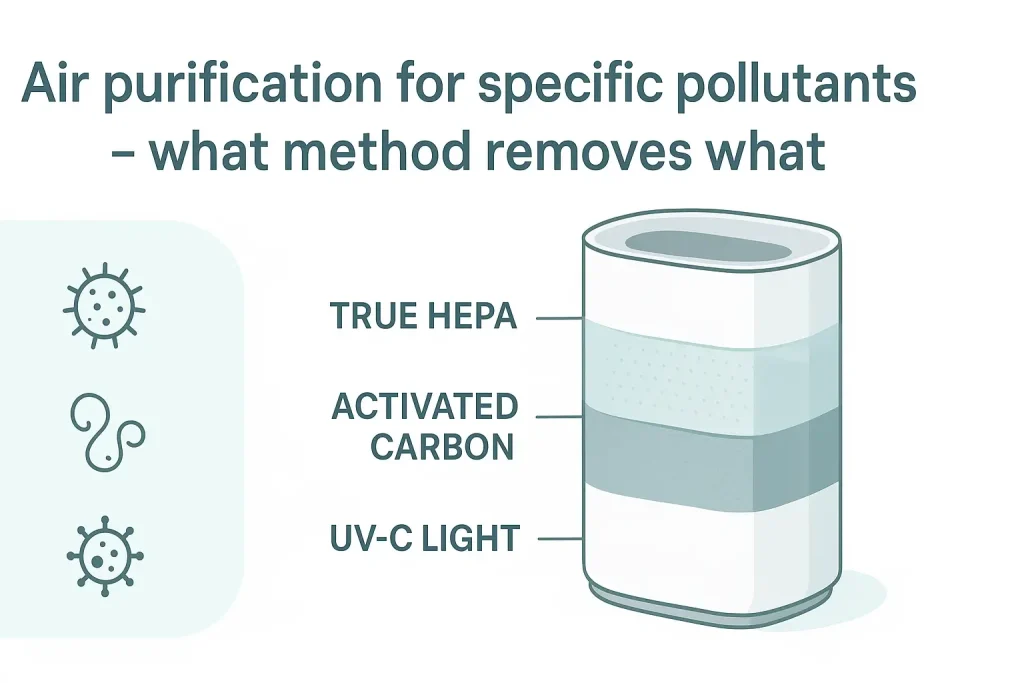
The unit ships with a four-stage filtration stack. Stage one is a coarse pre-filter that catches visible debris, drywall dust, and fibers larger than 10 microns. Stage two is a pleated MERV 10 media filter that captures particles between 1 and 10 microns including fine construction dust and some mold spores.
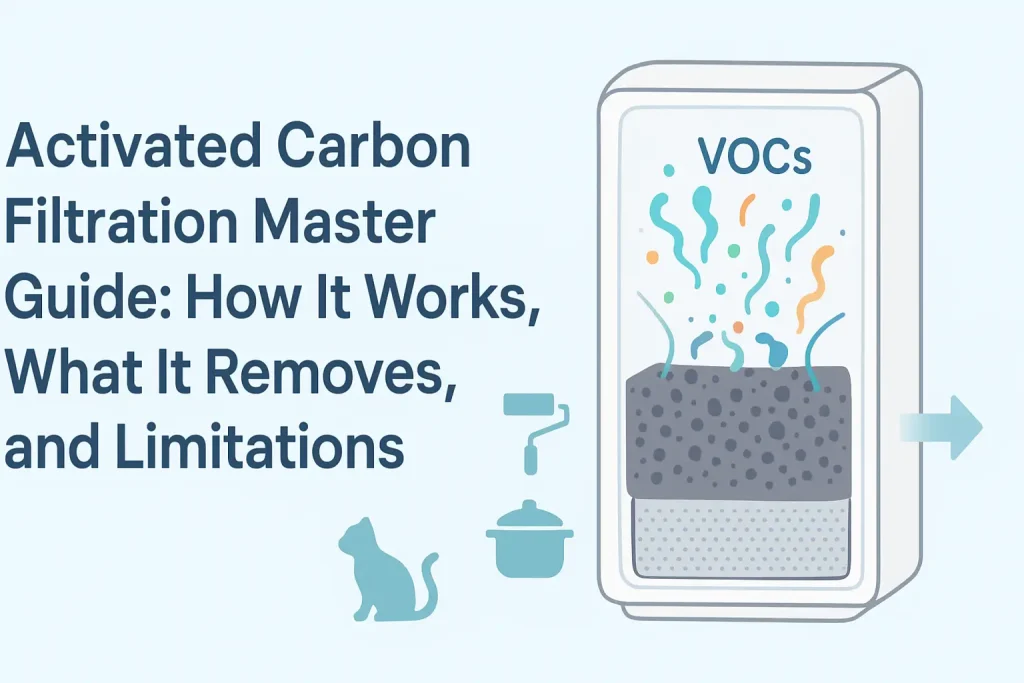
Stage three is the True HEPA filter rated at 99.97 percent efficiency at 0.3 microns per IEST-RP-CC001 standards. This is the critical stage for mold spores, lead dust, asbestos fibers, and silica particles. Stage four is an activated carbon filter that adsorbs VOCs, odors from sewage or smoke damage, and off-gassing from drying building materials.
The motor is a 1-horsepower unit drawing approximately 7 to 8 amps on a standard 115-volt circuit at high speed. This means it pulls roughly 800 to 920 watts under full load. You can run it on a standard 15-amp outlet, but if you are running multiple units plus drying equipment on the same circuit, you will need to manage your total load carefully.
The housing is roto-molded polyethylene with integrated handles and a stacking design. Two units stack securely with interlocking feet and recesses. This matters on tight jobsites where floor space is limited and you need multiple air changes per hour in a large containment zone.
Performance Data
Abestorm 2000 CFM – Spec Sheet at a Glance
Source: Manufacturer published specifications and IEST HEPA filter standards
What Makes the Abestorm 2000 CFM Different from Other Commercial Air Scrubbers?
The Abestorm 2000 CFM competes directly with units from Alorair, Dri-Eaz, and XPOWER in the commercial restoration market. Its primary differentiator is the combination of a true 2,000 CFM free-flow rating with a price point that undercuts many competitors by 20 to 30 percent for comparable airflow.
The housing design allows two units to stack vertically with interlocking channels. On a water damage job where you need 4,000 CFM of total air movement through a containment, stacking two units saves floor space and simplifies ducting compared to two separate units placed side by side.
The filter access panel uses four tool-free latches. You can swap a loaded pre-filter in under 60 seconds without moving the unit or disconnecting ducting. For contractors who bill by the hour, fast filter changes on a jobsite directly reduce labor cost on extended remediation projects.
The daisy-chain GFCI outlet on the control panel lets you plug a second unit or a drying fan into the Abestorm without running a separate extension cord. This is a practical feature when outlet availability is limited in flooded basements, crawlspaces, or older commercial buildings with sparse electrical distribution.
What this unit does not have is a variable-speed control with granular CFM adjustment. You get high and low speed settings. High speed delivers the full rated airflow. Low speed reduces airflow by roughly 40 percent. If you need precise airflow control for maintaining a specific negative pressure differential across a containment barrier, you will want a unit with a variable-speed controller or a manual damper on the exhaust duct.
Product Review
Abestorm 2000 CFM Commercial Air Scrubber – Pros and Cons
Assessment based on manufacturer specs, verified buyer reviews from restoration contractors, and comparison against IEST HEPA standards.
Pros
- ✓True 2,000 CFM free-flow rating with 1,400-1,600 CFM working airflow after HEPA loading
- ✓Four-stage filtration including True HEPA and activated carbon for VOCs
- ✓Stackable design with interlocking housing saves floor space on multi-unit jobs
- ✓Tool-free filter access with four latches for sub-60-second pre-filter swaps
- ✓Daisy-chain GFCI outlet reduces extension cord clutter on jobsites with limited power
- ✓Price point typically 20-30% below Dri-Eaz and comparable Alorair models at similar CFM
Cons
- ✗Two-speed control only — no variable-speed adjustment for precise pressure differential management
- ✗58 to 62 dB at 10 feet on high — louder than some competitors and requires hearing protection in confined spaces
- ✗65 to 70 pounds dry weight — one-person carry is possible but awkward up stairs or ladders
- ✗No hour meter or filter loading indicator on the standard control panel
- ✗Replacement HEPA filters are proprietary dimensions — generic 12 x 12 x 11.5 HEPA filters may not seal correctly
- ✗Manual reset required after GFCI trip, no auto-restart after power loss in unattended applications
The Abestorm 2000 CFM is the best value commercial air scrubber for restoration contractors who need high airflow, stackable deployment, and fast filter changes at a price that leaves budget for replacement filters and accessories. It is not the right choice for abatement contractors who require variable-speed control for maintaining precise negative pressure differentials per containment protocols.
How Does the Abestorm 2000 CFM Compare to Alorair and Other Commercial Air Scrubbers?
The Abestorm 2000 CFM sits in the middle of the commercial air scrubber airflow range. Below it, the Alorair PureAiro HEPA Max 970 delivers roughly 970 CFM and suits smaller containment zones up to 1,100 square feet. Above it, the Alorair HEPA Air Scrubber 3000 CFM moves 50 percent more air for large commercial spaces up to 3,000 square feet.
Use the table below to compare the Abestorm against the two Alorair models across the specifications that matter on a jobsite: working CFM, filter replacement cost, noise level, weight, and the type of containment each unit is sized for.
Product Comparison
Abestorm 2000 CFM vs Alorair PureAiro 970 vs Alorair 3000 CFM
Working CFM reflects airflow with HEPA and pre-filters loaded, not free-flow ratings.
| Spec | Abestorm 2000 CFM | Alorair PureAiro 970 | Alorair 3000 CFM |
|---|---|---|---|
| Free-flow CFM rating | 2,000 CFM | 970 CFM | 3,000 CFM |
| Working CFM with HEPA | 1,400-1,600 CFM | 650-750 CFM | 2,100-2,400 CFM |
| Containment size at 6 ACH | Up to 2,000 sq ft | Up to 1,100 sq ft | Up to 3,000 sq ft |
| Noise at 10 ft (high speed) | 58-62 dB | 55-58 dB | 62-66 dB |
| Unit weight | 65-70 lbs | 45-50 lbs | 80-85 lbs |
| Annual HEPA filter cost | $120-180/yr | $80-120/yr | $150-220/yr |
| Stackable | Yes, two units | No | Yes, two units |
| Best use case | Mid-size water damage and mold containment, construction dust control | Small containment, crawlspaces, bathroom remodels, single-room mold | Large commercial containment, whole-floor remediation, asbestos abatement |
Working CFM estimates based on typical static pressure drop across a loaded HEPA filter. Actual working CFM varies with filter loading, duct length, and ambient conditions. Containment sizing at 6 ACH based on 8 ft ceiling height. Source: Manufacturer specifications and ANSI/IICRC S500 water damage restoration standards.
What Filters Does the Abestorm 2000 CFM Use and What Are the Replacement Costs?
The Abestorm 2000 CFM uses four filter stages that require different replacement intervals. Stage one is a washable coarse pre-filter that catches visible debris. Rinse it with water between jobs and replace it every 6 to 12 months depending on debris loading.
Stage two is a MERV 10 pleated media filter. This filter captures fine dust between 1 and 10 microns. Replace it every 30 to 60 days of continuous runtime or whenever visible discoloration extends across more than 50 percent of the media surface.
Stage three is the True HEPA replacement filter. This is the highest-cost consumable. Under normal remediation conditions running 8 to 10 hours daily, expect 12 to 18 months of service from one HEPA filter. In heavy silica dust or mold spore environments, replacement may be needed at 6 to 9 months.
Stage four is the activated carbon filter. Carbon capacity for VOC and odor adsorption depletes with exposure, not visible loading. Replace the carbon filter every 3 to 6 months on odor-intensive jobs like sewage backups or smoke damage. On general construction dust control with low VOC exposure, 12 months is typical.
The step-by-step filter replacement process on a commercial air scrubber is straightforward but requires verifying the new HEPA filter gasket seats fully against the housing flange. A bypass gap of even 1/16 inch around the HEPA seal allows unfiltered air to reach the exhaust side, which defeats containment on an abatement job.
Annual filter costs for a restoration contractor running the Abestorm 2000 CFM approximately 1,500 hours per year total approximately $250 to $350. This breaks down as roughly $40 for two MERV 10 pre-filters, $120 to $180 for one HEPA filter replacement, and $80 to $120 for two carbon filter changes. These costs are tax-deductible consumables for restoration businesses and should be built into the per-job consumables line on every estimate.
How to Set Up the Abestorm 2000 CFM for Negative Air Pressure on a Containment
Negative air setup on a water damage or mold containment follows a specific sequence. Incorrect setup fails to establish negative pressure, allows contaminated air to escape the containment zone, and can fail a post-remediation verification inspection.
Step-by-Step Guide
How to Set Up Negative Air Pressure with the Abestorm 2000 CFM
6 steps · 15-20 minutes for single-unit setup · Based on IICRC S500 containment guidelines
Verify containment integrity first
Before placing the air scrubber, confirm all containment barriers are sealed. Check poly sheeting seams, zipper closures, and floor-to-wall transitions. A containment with leaks cannot achieve negative pressure regardless of how much CFM you pull.
Position the air scrubber inside the containment near the exhaust point
Place the Abestorm on a stable, level surface near where the exhaust duct will exit the containment. Keep the intake side facing the work area. Ensure at least 18 inches of clearance on all intake sides for unrestricted airflow.
Attach exhaust duct to the 12-inch outlet collar
Use a 12-inch lay-flat flexible duct secured with a hose clamp or zip tie. Run the duct to a window, door, or purpose-cut exhaust port in the containment barrier. Keep duct runs as straight and short as possible. Every 90-degree bend reduces effective airflow by roughly 10 to 15 percent.
Seal the exhaust exit point
Where the duct exits the containment, seal around the duct penetration with tape. If exhausting through a window, use a window kit or plywood panel with a 12-inch duct collar sealed in place. Confirm exhaust air discharges at least 10 feet from any building air intake, operable window, or pedestrian path.
Power on and verify negative pressure
Start the unit on high speed. Walk the containment perimeter. Poly sheeting should pull slightly inward, confirming negative pressure relative to the surrounding space. Use a manometer or smoke pencil at the containment entry to verify air flows into the containment, not out of it.
Log startup conditions and monitor hourly
Record the time, unit speed setting, and containment pressure differential at startup. Check the pre-filter hourly on heavy dust jobs. A loaded pre-filter starves the HEPA stage, reducing working CFM and weakening negative pressure. Swap the pre-filter when you see visible discoloration across more than half the media surface.
Is the Abestorm 2000 CFM Air Scrubber Worth the Cost for Restoration Contractors?
The purchase price of the Abestorm 2000 CFM typically falls between $1,200 and $1,600 depending on the vendor and whether accessory ducting is bundled. At a daily rental rate of $60 to $90 for a comparable commercial air scrubber, the unit pays for itself in roughly 15 to 25 rental days.
For a restoration contractor running two to three water damage jobs per month with three to five days of equipment runtime per job, that is 6 to 15 rental days per month. The payback period on a purchased Abestorm 2000 CFM is two to four months at that utilization rate.
After the unit is paid off, the only ongoing costs are filter replacements and electricity. At 800 watts on high for 8 hours, daily electricity cost is roughly $0.83 at the national average commercial rate of 13 cents per kilowatt-hour. That is $25 per month for heavy use. Filter costs add another $20 to $30 per month.
Compare that to rental at $75 per day. A five-day job costs $375 in rental fees versus roughly $6 in electricity and filter amortization for an owned unit. Over a year with 60 rental days, the owned Abestorm saves approximately $4,000 in rental fees after deducting filter and electricity costs.
For the full cost analysis of renting versus buying commercial air scrubbers including tax implications, depreciation schedules, and per-job consumable line items, see the complete air scrubber cost guide covering purchase price versus rental versus installation.
Product Review
Abestorm 2000 CFM – Full Scorecard
Ratings are editorial assessments for restoration contractor use cases. Not a sponsored evaluation.
9/10
7/10
6/10
9/10
10/10
Scores are editorial assessments based on manufacturer specifications, verified contractor reviews, and comparison against ANSI/IICRC S500 standards for water damage restoration equipment. Filter cost score reflects proprietary HEPA filter dimensions requiring Abestorm-branded replacements.
Can the Abestorm 2000 CFM Be Used for Asbestos Abatement?
The Abestorm 2000 CFM uses a True HEPA filter rated at 99.97 percent efficiency at 0.3 microns per IEST standards. Asbestos fibers typically range from 0.7 to 90 microns in length with diameters from 0.03 to 3 microns. The HEPA filter captures fibers across this entire size range at 99.97 percent efficiency or higher.
For asbestos abatement specifically, negative air machine requirements are set by OSHA, EPA AHERA, and state-level asbestos program regulations. These typically require a minimum of 4 air changes per hour in the containment and a HEPA filter on the exhaust side. The Abestorm 2000 CFM meets the filtration standard but must be paired with proper containment engineering, a manometer for pressure differential monitoring, and post-abatement air clearance sampling per AHERA protocols.
Check your state asbestos program requirements before deploying any air scrubber on an abatement project. Some states require third-party certification of the HEPA filter housing integrity using a DOP test before the unit is placed into service on a regulated asbestos project. For a deeper guide on air scrubber selection for hazardous particle environments, see the complete guide to the best air scrubbers for asbestos abatement.
Does the Abestorm 2000 CFM Produce Ozone?
The Abestorm 2000 CFM Air Scrubber does not use an ionizer, UV-C lamp, electrostatic precipitator, or any ozone-producing technology. It is a purely mechanical filtration device. The four-stage filtration stack, pre-filter, MERV 10 pleated filter, True HEPA, and activated carbon, captures particles and adsorbs gases without generating ozone as a byproduct.
This is an important distinction for restoration contractors working in occupied buildings. Ozone generators are sometimes marketed for odor removal after fire or biohazard remediation, but the EPA and CARB specifically advise against operating ozone generators in occupied spaces. Ozone at concentrations above 0.050 ppm causes respiratory irritation and can react with indoor chemicals to create secondary pollutants including formaldehyde and ultrafine particles.
The Abestorm 2000 CFM addresses odors through its activated carbon filter stage, which adsorbs VOCs and odor-causing compounds without oxidizing them. This is a safer mechanism for occupied building remediation and does not trigger the health and liability concerns associated with ozone treatment.
What Is the Noise Level of the Abestorm 2000 CFM and Can It Run Overnight?
The Abestorm 2000 CFM produces 58 to 62 dB at a distance of 10 feet on high speed with HEPA and pre-filters installed. At 25 feet, noise drops to roughly 50 to 54 dB. On low speed, noise reduces by approximately 5 to 7 dB.
For context, 58 to 62 dB is comparable to normal conversation level. It is louder than a residential air purifier, which typically runs at 25 to 45 dB on sleep mode, but quieter than many jobsite tools. In an occupied building running overnight, place the unit as far from sleeping areas as the duct run allows and use the low speed setting if negative pressure requirements can still be met at reduced CFM.
For unattended overnight operation, position the unit on a stable surface with at least 18 inches of clearance from walls and combustible materials. The motor is thermally protected and will shut down if it overheats, but the unit does not have an auto-restart function. If power is interrupted, a GFCI trips, or the thermal protection activates, the unit must be manually reset. Do not rely on it for unattended continuous operation where a shutdown would compromise containment integrity.
How Many Abestorm 2000 CFM Units Do I Need for My Containment?
The number of units required depends on your containment volume and target air changes per hour. The IICRC S500 standard for water damage restoration specifies a minimum of 4 ACH for general containment. For mold remediation and sewage cleanup, 6 ACH is the common standard. For asbestos abatement, OSHA requires 4 ACH minimum with continuous negative pressure.
Calculate required CFM using this formula: containment square footage multiplied by ceiling height, multiplied by target ACH, divided by 60. For a 2,000-square-foot space with 8-foot ceilings at 6 ACH: 2,000 multiplied by 8 multiplied by 6 divided by 60 equals 1,600 CFM. One Abestorm 2000 CFM at working capacity of 1,400 to 1,600 CFM will just meet this requirement.
For a 3,000-square-foot containment at 6 ACH, the calculation yields 2,400 CFM. You would need two Abestorm 2000 CFM units running simultaneously. Their stackable design lets you place two units in the footprint of one, both ducted to separate exhaust points or combined through a wye duct connector to a single large exhaust port.
Always add a 20 percent safety factor to your calculated CFM requirement. Filter loading during the job reduces airflow. A unit that meets your containment CFM requirement with clean filters at startup may fall below the required airflow by hour eight of heavy dust loading.
What Is the Difference Between a Negative Air Machine and an Air Scrubber?
A negative air machine and an air scrubber use the same core technology, a fan pulling air through HEPA filtration. The distinction is in how they are configured. A negative air machine exhausts filtered air outside the containment zone through ducting, creating negative pressure inside the containment. This prevents contaminated air from escaping the work area.
An air scrubber, by contrast, exhausts filtered air back into the same space. It scrubs the air recirculating within the room rather than exhausting it outside. The same machine can function in either mode. The Abestorm 2000 CFM ships ready for both configurations. Attach exhaust ducting and route it outside for negative air mode. Remove the exhaust duct and let filtered air discharge back into the room for air scrubbing mode.
The choice between modes depends on containment requirements. Negative air mode is mandatory when adjacent occupied spaces must be protected from airborne contaminants. Air scrubbing mode is appropriate for general dust control on open construction sites or for post-remediation air polishing after the containment has been removed.
How Often Should I Replace the HEPA Filter on the Abestorm 2000 CFM?
HEPA filter replacement on the Abestorm 2000 CFM is driven by two factors: visible loading and static pressure rise. Under normal restoration use of 8 to 10 hours daily, expect 12 to 18 months per HEPA filter. In high-dust environments such as drywall finishing or concrete cutting, replacement may be needed at 6 to 9 months.
The most reliable indicator is airflow degradation. When working CFM drops below the level required to maintain your target ACH or negative pressure differential, the HEPA filter is loaded to the point of replacement even if the pre-filter appears clean. Without a manometer or airflow meter on the unit, track the time required to clear visible airborne dust from the containment at startup. When clearance time doubles compared to a new HEPA filter, replacement is due.
Never attempt to clean and reuse a True HEPA filter. HEPA media is a densely pleated fiber matrix. Vacuuming, compressed air, or washing destroys the micro-scale fiber structure and creates bypass channels through the media. A cleaned HEPA filter is not a HEPA filter. Replace it with a genuine Abestorm HEPA replacement filter to maintain the 99.97 percent efficiency rating.
Can I Run the Abestorm 2000 CFM on a Generator?
The Abestorm 2000 CFM draws 7 to 8 amps at 115 volts on high speed, approximately 800 to 920 watts running load. Startup current is higher, roughly 12 to 14 amps for the first two to three seconds as the motor reaches operating speed. Any generator rated for 2,000 running watts or higher will power one unit.
Use a generator with automatic voltage regulation and less than 5 percent total harmonic distortion. Inverter generators are strongly preferred for motor-driven equipment. Conventional open-frame construction generators produce voltage fluctuations that can cause the motor to run hot and shorten its service life. If you must use a conventional generator, do not run the air scrubber and a high-draw tool such as a compressor or demolition hammer on the same generator circuit simultaneously.
What Is the Warranty on the Abestorm 2000 CFM Air Scrubber?
The Abestorm 2000 CFM carries a limited warranty covering defects in materials and workmanship. The standard warranty period for the housing and motor is typically one to two years depending on the vendor and whether the unit is registered after purchase. HEPA filters, pre-filters, and carbon filters are consumable items and are excluded from warranty coverage.
Warranty claims require proof of purchase and are processed through the authorized distributor or directly through Abestorm. The most common warranty issue on commercial air scrubbers is motor bearing failure caused by operation without a pre-filter or with a severely loaded pre-filter that starves the intake side. Maintain your pre-filters and document filter change dates. Motor failure caused by inadequate intake filtration is typically classified as a maintenance issue rather than a manufacturing defect.
Why Is My Abestorm 2000 CFM Not Pulling Enough Air?
The most common cause of reduced airflow on a commercial air scrubber is a loaded pre-filter. Even a thin layer of drywall dust across the pre-filter media reduces airflow by 15 to 25 percent. Remove the pre-filter and inspect it against a light source. If light transmission through the media is visibly reduced, replace or wash the pre-filter.
The second most common cause is duct restriction. Kinked or collapsed flex duct on the exhaust side increases static pressure against the fan. A 12-inch duct with a sharp 90-degree bend imposes enough back pressure to reduce working CFM by 10 to 15 percent. Straighten the duct run and support it every 5 to 8 feet to prevent sagging.
Other causes include a loaded HEPA filter causing high static pressure drop, a loose duct connection leaking exhaust air before it exits the containment, or an undersized exhaust port creating back pressure at the exit point. Check these in order from the intake side to the exhaust exit, swapping or correcting each potential restriction before moving to the next.
Does the Abestorm 2000 CFM Need a Dedicated Circuit?
The Abestorm 2000 CFM draws approximately 7 to 8 amps on a 115-volt circuit at high speed. A standard 15-amp circuit can safely power one unit and a small accessory such as a drying fan drawing up to 2 amps. Two Abestorm 2000 CFM units on the same 15-amp circuit will draw 14 to 16 amps combined, exceeding the 80 percent continuous load rating of a 15-amp breaker.
For a single unit, a standard 15-amp outlet is sufficient. For two units, use separate 15-amp circuits or a single 20-amp circuit. Always verify the circuit is not shared with other equipment on the jobsite before connecting the air scrubber. A tripped breaker mid-job on a containment that requires continuous negative pressure is a safety incident, not just an inconvenience.
Where Should I Place the Abestorm 2000 CFM Inside a Containment?
Position the air scrubber with the intake facing the primary contamination source or work area. The intake should have a clear line of sight to where dust or spores are being generated. Keep the intake at least 18 inches from walls, equipment, and poly sheeting to prevent intake restriction.
Place the exhaust duct exit as far from the containment entry as practical. The goal is to create a flow path where air enters at the containment entry, sweeps across the work area picking up contaminants, and reaches the air scrubber intake before being filtered and exhausted outside. Placing the air scrubber near the entry door creates a short-circuit where clean incoming air is pulled directly into the intake without sweeping the contaminated work zone.
In a long, narrow containment such as a hallway or corridor, place the air scrubber at the far end with the exhaust duct running to the nearest exit point. In a square or open containment, position the unit opposite the entry point with the intake facing the center of the room.
Is the Abestorm 2000 CFM CARB Certified?
CARB certification applies to consumer air cleaning devices sold in California that may produce ozone. It is not a standard certification for commercial negative air machines, which are regulated under occupational safety standards rather than consumer product regulations. The Abestorm 2000 CFM falls into the commercial and industrial equipment category.
Since the Abestorm 2000 CFM uses only mechanical filtration with no ionizer, UV-C, electrostatic, or ozone-generating components, ozone production is zero. It meets the functional intent of the CARB 0.050 ppm ozone limit even though it does not carry CARB consumer product certification. For commercial equipment deployed on regulated jobsites, OSHA and EPA AHERA standards are the governing regulations, not CARB consumer air cleaner certification.
Can the Abestorm 2000 CFM Be Used for Covid or Airborne Pathogen Control?
The Abestorm 2000 CFM uses True HEPA filtration rated at 99.97 percent at 0.3 microns. Viruses, including SARS-CoV-2, are typically 0.06 to 0.14 microns in diameter. They are smaller than the 0.3-micron HEPA test particle size but are rarely airborne as bare virions. They travel in respiratory droplets and aerosol particles ranging from 0.5 to 10 microns, well within the HEPA capture range.
Research published by the CDC and ASHRAE confirms that HEPA filtration effectively captures virus-laden aerosol particles. The high airflow of a commercial air scrubber makes it effective for air changes in high-occupancy spaces. However, the Abestorm 2000 CFM is a commercial machine with noise levels of 58 to 62 dB. It is not suitable for occupied classrooms or offices during normal operations. For occupied space pathogen control, use multiple quieter HEPA units sized to the room rather than one loud commercial machine.
What Accessories Do I Need with the Abestorm 2000 CFM?
Essential accessories for jobsite deployment include a 25-foot length of 12-inch lay-flat flexible duct, hose clamps or heavy-duty zip ties for securing duct to the outlet collar, and a window exhaust kit or plywood panel with a 12-inch duct collar for routing exhaust outside.
Additional items that improve efficiency include a manometer for verifying negative pressure differential across containment barriers, a PM2.5 air quality monitor for verifying airborne particle clearance after remediation, and spare pre-filters. Having two pre-filters allows you to swap immediately on a loaded filter and continue running while the dirty pre-filter is washed and dried for reuse.
Comparing Air Scrubber Filtration Technologies for Commercial Use
Mechanical HEPA filtration is the standard for commercial air scrubbing because it captures particles at a verified, standardized efficiency. The Abestorm 2000 CFM relies entirely on mechanical filtration, which has no byproducts, no ozone, and no performance degradation from humidity or temperature within normal operating ranges.
Other technologies marketed for commercial air cleaning include photocatalytic oxidation, also called PCO, bipolar ionization, and electrostatic precipitation. PCO and ionization technologies generate reactive oxygen species that can react with indoor VOCs to create formaldehyde, acetaldehyde, and ultrafine particles as secondary byproducts. A study published by Nirlo et al. in Building and Environment found that some PCO devices increased formaldehyde concentrations in test chambers above baseline levels.
Electrostatic precipitators collect particles on charged plates and can remove fine particulate without HEPA media. However, they require frequent plate cleaning to maintain efficiency, can produce trace ozone, and have no standardized efficiency rating equivalent to the IEST HEPA standard. For regulated abatement work where filter efficiency must be documented and verified, mechanical HEPA filtration remains the only technology with a recognized certification standard.
For most restoration contractors, the Abestorm 2000 CFM paired with a quality HEPA filter and diligent pre-filter maintenance delivers the combination of airflow, efficiency documentation, and operational safety that commercial remediation demands.