
A MERV 13 furnace filter taped to a box fan cleans air as effectively as a $300 commercial purifier. That sentence sounds like a scam, but the physics checks out perfectly.
The Corsi-Rosenthal Box delivers smoke CADR in the 300 to 600 CFM range using $60 to $80 worth of hardware store parts. For comparison, a Coway Airmega 400 costs $300 and delivers 400 CFM smoke CADR. Same performance, one-fifth the price, and you build it yourself in 30 minutes.
What Is a Corsi-Rosenthal Box and Why Does It Work?
A Corsi-Rosenthal Box is a DIY air purifier made from four MERV 13 furnace filters taped into a cube with a 20-inch box fan on top pulling air through the filters and exhausting clean air upward.
Dr. Richard Corsi, Dean of Engineering at UC Davis, conceived the design in 2020 as a low-cost pandemic response tool. Jim Rosenthal, CEO of Tex-Air Filters, built the first prototype and refined the construction method. The design spread globally through social media and is now used in schools, offices, and homes as a high-CADR air cleaner that costs a fraction of commercial units.
| Photo | Popular Air Purifiers | Price |
|---|---|---|

|
Air Purifiers for Home Large Room up to 1500ft², Tailulu H13 True HEPA Air Purifier for Pets Dust Odor Smoke, Air Purifier for Bedroom with 15dB Quiet Sleep Mode for Bedroom Office Living Room | Check Price On Amazon |
|
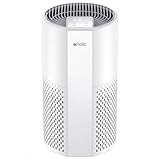
Afloia Air Purifier for Home, 4-in-1 Washable Filter for Allergies, Covers Up to 1076 ft², Quiet Operation, Auto Shut-Off & Night Light, Removes Pet Dander, Pollen, Dust, Mold, and Smoke, White,Pluto | Check Price On Amazon |

|
Nuwave OxyPure ZERO Air Purifier with Washable and Reusable Bio Guard Tech Air Filter, Large Room Up to 2002 Ft², Air Quality Monitor, 0.1 Microns, 100% Capture Irritants like Smoke, Dust, Pollen | Check Price On Amazon |

|
Air Purifiers for Home Large Room Up to 1,996 Ft², EOEBOT Air Purifier for Home Pets with Washable Filter, Quiet Sleep Mode, Air Quality Monitor, Air Purifier for Bedroom, Pet Hair, Dust, Smoke, White | Check Price On Amazon |
|
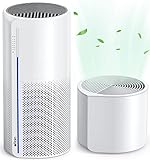
Afloia 2 IN 1 Air Purifier with Humidifier Combo, 3-Stage Filters for Home Allergies Pets Hair Smoker Odors, Evaporative Humidifier, Auto Shut Off, Quiet Air Cleaner with Seven Color Light,White | Check Price On Amazon |
The mechanism is straightforward. The box fan creates negative pressure inside the filter cube, pulling room air through all four MERV 13 filter panels simultaneously. Each filter captures particles as air passes through, and the fan exhausts cleaned air out the top face of the cube.
This happens because the large total filter surface area (approximately 16 square feet across four 20×20 panels) reduces air resistance enough that a standard box fan can move 1,000 to 2,000 CFM through the filters without overheating the motor. The high airflow combined with MERV 13 particle capture produces a smoke CADR comparable to or exceeding most commercial HEPA air purifiers under $400.
This only works when all four filters are properly sealed to the fan with no gaps or bypass. Any air that leaks around the filter edges rather than passing through them reduces effective CADR. If the tape seal fails or the cardboard shroud is missing, the result is filter bypass where 30 to 50 percent of air skips filtration entirely. Fix it by inspecting all tape seams weekly and re-taping any gaps immediately.
A Corsi-Rosenthal Box is not a HEPA air purifier. It uses MERV 13 filtration, which captures 75 percent or more of particles in the 0.3 to 1.0 micron range per ASHRAE Standard 52.2. True HEPA captures 99.97 percent of particles specifically at 0.3 microns. However, at the high airflow rates a CR Box achieves, the total clean air delivery rate often matches or beats a commercial HEPA unit because the box moves two to three times more air per minute.
By the Numbers: Corsi-Rosenthal Box Performance
Smoke CADR range achieved by a standard 4-filter CR Box with a 20-inch box fan on high speed.
Total build cost using four MERV 13 20×20 filters plus a standard box fan and duct tape.
Particle capture efficiency of MERV 13 filters per ASHRAE 52.2, covering fine wildfire smoke and allergens.
Filter lifespan under continuous use in average household conditions before replacement is needed.
Measured indoor PM2.5 reduction within 30 minutes at 4 ACH in a standard 200 sq ft bedroom.
Materials and Tools You Need to Build a Corsi-Rosenthal Box
Every component needed is available at any hardware store or online. Nothing is proprietary, and no specialty tools are required. The entire bill of materials fits in a single shopping cart.
For the filters, you need four MERV 13 20-inch by 20-inch by 1-inch furnace filters. The MERV 13 rating is non-negotiable. MERV 11 filters capture only 65 percent of particles in the 0.3 to 1.0 micron range. MERV 13 captures 75 percent or more in that same critical size range, which includes wildfire smoke, most allergens, and respiratory droplets. Do not substitute MERV 8 or MERV 11 filters and expect comparable performance.
For the fan, use a standard 20-inch box fan. A 3-speed box fan rated at 1,000 CFM or higher on the highest setting provides sufficient airflow. Basic models from Lasko, Genesis, or Comfort Zone all work. The fan does not need a HEPA filter built in. Those combination units have far less filter surface area and deliver substantially lower CADR than a four-filter CR Box.
For assembly, you need one roll of 2-inch wide duct tape. Standard silver duct tape works. For a cleaner look, use white or colored duct tape. You also need a piece of cardboard roughly 22 by 22 inches cut from the fan packaging or any shipping box. This cardboard shroud covers the fan corners where they extend past the filter cube and prevents unfiltered air from being pulled in around the fan edges.
Optional tools that help: a utility knife for cutting cardboard, a ruler or tape measure for checking filter alignment, and a second person to hold filters in place during initial taping. Working alone is completely doable but takes about 15 extra minutes.
The total cost breakdown: four MERV 13 20x20x1 filters at approximately $8 to $12 each ($32 to $48 total), one 20-inch box fan at $20 to $30, one roll of duct tape at $5, and a scrap piece of cardboard free. Total build cost ranges from $57 to $83 depending on local filter pricing and fan availability.
How to Build a Corsi-Rosenthal Box: Step-by-Step Instructions
Building a CR Box takes 30 to 45 minutes the first time and about 20 minutes once you have done it before. The process has five steps, and none of them require mechanical skill beyond cutting tape and cardboard.
Step-by-Step Guide
How to Build a Corsi-Rosenthal Box – Step by Step
5 steps – 30 to 45 minutes total build time
Arrange four filters in a square on the floor with arrows pointing inward
Every MERV 13 filter has an airflow direction arrow printed on the cardboard frame. Arrange all four filters with their arrows pointing toward the center of the square. The dirty side of each filter faces outward. This orientation ensures air is pulled through the filter media from outside to inside the cube.
Tape all four vertical seams to form a sealed cube with an open top
Run duct tape along each of the four vertical seams where adjacent filters meet. Press the tape firmly into the filter frames. The tape must cover the full length of each seam from bottom to top with no gaps. A continuous strip per seam works best. Overlapping the tape an inch beyond the top and bottom edges creates a stronger seal.
Cut a cardboard shroud to cover the four triangular gaps at the fan corners
Place the box fan on top of the filter cube. Notice the four triangular gaps where the square fan base extends past the circular filter opening. Cut a piece of cardboard roughly 22 by 22 inches with a circular cutout matching the fan diameter. This shroud blocks unfiltered air from entering around the fan edges. Without it, up to 30 percent of airflow bypasses the filters entirely.
Tape the fan to the top of the filter cube with the shroud in place
Position the cardboard shroud between the fan and the filter cube. Align the fan so it pulls air upward, exhausting away from the filters. Run duct tape around the entire perimeter where the fan meets the shroud and where the shroud meets the filters. The seal must be continuous with no visible gaps.
Test all seals and run the fan on high for 5 minutes to check for bypass
Plug in the fan and run it on the highest speed. Hold a tissue or piece of lightweight paper near each taped seam. If the tissue flutters toward the seam, air is being pulled in through a leak. Add tape to any leaking areas. A properly sealed CR Box pulls air exclusively through the filter media, not through the seams.
After completing these five steps, your Corsi-Rosenthal Box is ready to operate. Place it in the center of the room with at least 12 inches of clearance on all four filter sides. Air must be able to enter freely through all four filter panels for maximum CADR.
For allergy and asthma management, run the fan on medium or high speed continuously while the room is occupied. The higher airflow produces more air changes per hour, which is the metric that determines how quickly particle concentrations drop. Running on low speed reduces CADR by approximately 40 to 50 percent compared to high speed.
How Much CADR Does a Corsi-Rosenthal Box Actually Produce?
A standard four-filter CR Box with a 20-inch box fan on high speed produces a smoke CADR between 300 and 600 CFM depending on the specific fan model, filter brand, and seal quality. Researchers at UC Davis and the University of Connecticut independently tested multiple CR Box configurations and published CADR values in this range.
The 300 to 600 CFM smoke CADR means a CR Box can deliver 5 air changes per hour in a room between 180 and 360 square feet at an 8-foot ceiling height. For a standard 200-square-foot bedroom, that is more than enough for allergy-level filtration. For larger living rooms up to 500 square feet, the CR Box still delivers approximately 3.6 ACH on high speed, which provides meaningful particle reduction.
Use the CADR calculator below to determine exactly what smoke CADR you need for your specific room dimensions and use case. Enter your room size and target ACH to find the minimum CADR requirement.
CADR Calculator
How Much CADR Do You Actually Need for Your Room?
Enter your room dimensions and use case. Formula: (length x width x ceiling height x ACH) divided by 60. Source: AHAM methodology.
CADR = (length x width x ceiling height x ACH) / 60. For allergy and asthma sufferers, always calculate at 5 ACH, not the manufacturer-stated 2 ACH figure. A standard CR Box with 400 CFM smoke CADR delivers 5 ACH in a room up to 240 sq ft.
| Room Size | CADR at 2 ACH (standard) | CADR at 5 ACH (allergy) | CR Box Suitability |
|---|---|---|---|
| 150 sq ft bedroom | 100 CFM | 250 CFM | Single CR Box on medium speed |
| 200 sq ft master bedroom | 133 CFM | 333 CFM | Single CR Box on high speed |
| 300 sq ft bedroom or office | 200 CFM | 500 CFM | Single CR Box on high, verify CADR |
| 500 sq ft living room | 333 CFM | 833 CFM | Two CR Boxes recommended |
| 700 sq ft open plan | 467 CFM | 1167 CFM | Two or more CR Boxes required |
For most bedrooms under 250 square feet, a single properly built CR Box running on high delivers 5 ACH or more. For larger spaces or during wildfire smoke events, two CR Boxes placed at opposite ends of the room provide redundant filtration and higher total CADR.
Corsi-Rosenthal Box vs Commercial HEPA Air Purifiers: Cost and Performance Comparison
The single most compelling reason to build a CR Box is the price-to-performance ratio. A CR Box costs $60 to $80 and produces 300 to 600 CFM smoke CADR. A commercial HEPA air purifier with comparable CADR costs $250 to $400.
Use the price comparison below to see first-year costs including the unit purchase price and estimated filter replacements. The CR Box costs about one-fifth as much to buy and about one-third as much to maintain per year.
Price Comparison
CR Box vs Commercial Air Purifiers – First-Year Cost Comparison
Unit purchase price plus estimated filter replacement cost. Prices verified at time of publication.
$70 unit + $35/yr filters
$190 unit + $50/yr filters
$300 unit + $60/yr filters
$400 unit + $100/yr filters
Bar width represents unit purchase price relative to the most expensive product shown. Filter costs are estimates based on manufacturer-recommended replacement intervals. CR Box filter cost based on replacing all four MERV 13 filters annually at $8 to $12 per filter.
The filter replacement cost difference is equally stark. Commercial HEPA filters cost $40 to $100 per year for a single replacement filter. CR Box filters cost $32 to $48 to replace all four MERV 13 panels, and the larger media surface area means they load more slowly at equivalent CADR.
However, commercial units have advantages that matter in specific situations. They include multiple fan speeds with quiet sleep modes at 22 to 30 dB, integrated air quality sensors with auto mode, smartphone app control, and a finished appearance suitable for living rooms. A CR Box on high speed produces approximately 50 to 55 dB, which is noticeable during sleep. Running it on low speed reduces noise to roughly 40 dB but cuts CADR by about half.
For bedrooms where noise is a primary concern, consider a commercial unit like the Coway Airmega 400 at 22 dB sleep mode. For living rooms, workshops, school classrooms, wildfire season, or budget-constrained situations, the CR Box is the clear winner on both cost and CADR. For the full comparison of HEPA filtration methods and when activated carbon becomes necessary, our guide on HEPA versus carbon filtration and which removes what pollutants covers the decision framework in detail.
Filter Maintenance and Replacement Schedule for CR Boxes
MERV 13 filters in a CR Box should be replaced every 6 to 12 months under continuous use in average household conditions. The exact interval depends on your indoor particle load, outdoor air quality, and whether you have pets, smoke, or live in a wildfire-prone region.
Visual inspection tells you most of what you need to know. When the white filter media visible from the outside of the cube turns uniformly gray or brown across the entire surface, the filters have reached capacity. A light gray color in the center of each panel with white edges is normal loading. When the color is dark and uniform from edge to edge, replace all four filters.
Do not attempt to clean MERV 13 filters by vacuuming, washing, or blowing compressed air through them. MERV 13 media relies on electrostatic charge in addition to mechanical capture, and physical cleaning damages the fiber structure and removes the electrostatic coating. Used filters go in the trash. There is no practical way to refurbish them.
During wildfire season with sustained AQI above 150, check filters weekly and expect to replace them after 2 to 3 months of continuous high-load operation. The heavy PM2.5 loading from wildfire smoke saturates filter media far faster than typical household dust and allergens. For more detail on how air quality conditions affect filter loading and when carbon filtration becomes necessary for smoke odor, see our guide on what activated carbon filters can and cannot remove.
Placement and Operating Tips for Maximum Performance
Place the CR Box in the center of the room with at least 12 inches of clearance on all four filter sides and at least 24 inches of clearance above the fan exhaust. Air must enter freely through all filter panels and exit unobstructed from the top.
Corner placement reduces effective CADR by 20 to 30 percent because one or two filter faces become partially blocked by walls, reducing total intake area. If you must place the box against a wall, orient it so the fan exhaust points toward the center of the room rather than at the wall. The airflow exiting the top needs space to circulate, not bounce off a ceiling corner.
Run the fan on high speed during high-pollution events, including wildfire smoke days, allergy season peaks, or when cooking produces visible particulate. Run on medium speed for continuous background filtration during normal conditions. Low speed provides adequate filtration only in small rooms under 150 square feet or during sleep when noise is the priority.
A CR Box can run 24 hours per day, 7 days per week without damage to the fan motor. Box fans are designed for continuous operation. The electricity cost at 13 cents per kWh is approximately $3 to $5 per month on high speed, or about $36 to $60 per year. This is comparable to or slightly higher than commercial ENERGY STAR certified purifiers at equivalent CADR because box fan motors are less efficient than the DC motors used in premium air purifiers.
Corsi-Rosenthal Box vs Ionizer Air Purifiers: Which Is Safer and More Effective?
CR Boxes use only mechanical filtration. They capture particles on MERV 13 media without generating ozone, ions, or any chemical byproduct. Ionizer air purifiers use electrostatic precipitation or corona discharge to charge particles, which then stick to surfaces or collection plates.
The key safety difference: CR Boxes produce zero ozone. Ionizers produce ozone as a byproduct of the corona discharge process, with some units emitting levels above the CARB limit of 0.050 ppm. Ozone is a respiratory irritant that can cause lung inflammation and reduced lung function, particularly in people with asthma or COPD. The EPA and American Lung Association specifically recommend against ozone-generating air cleaners in occupied spaces.
The key performance difference: CR Boxes remove particles from the air permanently by trapping them in filter media. Ionizers cause particles to deposit on room surfaces, including floors, furniture, and walls. Those particles can become re-suspended in the air when disturbed by walking, sitting, or vacuuming. The ionizer does not remove particles from the room. It just relocates them from the air to your surfaces. For a comprehensive analysis of ionization technology safety concerns and effectiveness data, read our guide on ionization air purification and its documented safety concerns.
How Does a CR Box Compare to Other DIY Air Purifier Designs?
Several DIY air purifier designs circulate online. The single-filter taped to a box fan is the most common, where one MERV 13 filter is taped directly to the intake side of a 20-inch box fan. This design costs about $30 to $35 but produces significantly less CADR than the four-filter CR Box.
The single-filter design restricts airflow because the filter surface area is only one-fourth of the CR Box design. The higher air resistance forces the fan motor to work harder, reducing total airflow and potentially causing the motor to overheat over extended run times. Testing by UC Davis researchers found single-filter designs produce smoke CADR of approximately 100 to 180 CFM, compared to 300 to 600 CFM for the four-filter CR Box.
Two-filter triangle designs split the difference. They use two MERV 13 filters arranged in a V shape with a fan pulling air through both. Smoke CADR ranges from 180 to 300 CFM at roughly $40 to $50 total cost. These work well for small rooms under 150 square feet but do not match the four-filter cube for larger spaces or allergy-level ACH targets.
The CR Box cube design with four filters is the optimal configuration for maximum CADR per dollar. Adding more filters, such as a five-filter pentagon design, increases cost without meaningfully improving CADR because the existing four-filter design already provides more than enough filter surface area for a standard box fan motor. For most homes, the standard four-filter cube is the best combination of cost, performance, and simplicity.
How Does Humidity Affect Corsi-Rosenthal Box Filter Performance?
MERV 13 filter media loses efficiency in very high humidity conditions above 80 percent relative humidity. The moisture causes filter fibers to swell slightly, which can increase air resistance and reduce airflow. More importantly, wet filter media provides a growth surface for mold and bacteria if moisture exposure is sustained.
In normal indoor humidity between 30 and 60 percent, CR Box filters perform at their rated efficiency without degradation. Bathrooms, laundry rooms, and damp basements require caution. If you run a CR Box in an environment where condensation forms on surfaces, the filter media can become damp enough to support microbial growth within 48 to 72 hours. Replace filters immediately if they develop a musty odor or visible mold spots.
During wildfire season in humid climates, the combination of heavy particulate loading and elevated humidity can shorten filter life to as little as 4 to 6 weeks. The moisture causes particles to adhere more firmly to filter fibers, increasing pressure drop across the media faster than dry loading. For a deeper look at humidity interactions with air purification, our article on indoor air quality and humidity relationships covers the science in detail including optimal humidity ranges for filtration performance.
What Safety Precautions Should You Take When Building and Running a CR Box?
The primary safety concern with a CR Box is the exposed fan blades on top of the unit. A standard box fan has a plastic grille covering the blades, but the grille openings are large enough for a child’s fingers to pass through. Place the CR Box out of reach of small children, or add a secondary metal mesh screen over the fan grille for additional protection.
Fire risk is extremely low but not zero. Box fans contain an AC motor that can overheat if airflow is severely restricted. The four-filter cube design provides low air resistance and adequate motor cooling, but a blocked or fully loaded filter array combined with a stalled fan motor could theoretically cause overheating. This is why you should never cover the fan exhaust or block the filter intake faces while the unit is running. Standard safety practice: unplug the fan when not in use or when leaving the house for extended periods.
Electrical safety requires using a grounded outlet and keeping the fan cord away from foot traffic. The fan cord should not run under rugs or through doorways where it can be pinched or damaged. A damaged cord can cause shock or fire. Inspect the cord monthly for nicks, cuts, or exposed wiring. Replace the fan if the cord is damaged.
Filter off-gassing is minimal with MERV 13 filters, as they do not contain adhesives or chemical treatments that produce VOCs. The cardboard filter frames and duct tape may emit trace VOCs for the first 24 to 48 hours of operation. This is not a health concern at the levels produced, but sensitive individuals may notice a faint cardboard or adhesive smell during initial use. Running the unit in a well-ventilated space for the first two days eliminates any residual off-gassing.
Can You Use a CR Box for Wildfire Smoke Protection?
A CR Box is one of the most effective and affordable tools for indoor wildfire smoke protection. The MERV 13 filters capture 75 percent or more of particles in the 0.3 to 1.0 micron range per ASHRAE 52.2, which is exactly the size range of wildfire smoke PM2.5 particles that penetrate deep into the lungs.
During a wildfire smoke event with outdoor AQI above 150, run the CR Box on high speed continuously in the room you occupy most. Close all windows and exterior doors. If your home has central HVAC, set the system fan to “on” rather than “auto” and use a MERV 13 furnace filter if your system can accommodate the pressure drop. For homes without central air, one CR Box per occupied room provides meaningful protection.
Filter replacement during wildfire season follows an accelerated schedule. Check filters weekly by visual inspection. When the white filter media turns uniformly dark gray, replace all four filters. Do not wait for the standard 6 to 12 month interval. A heavy smoke event can load filters to capacity in 4 to 8 weeks. Keep spare filters on hand during fire season so you can replace them immediately when needed. A PM2.5 air quality monitor helps verify that your CR Box is maintaining indoor levels below the EPA 24-hour standard of 35 micrograms per cubic meter even when outdoor AQI exceeds 200.
How Long Does It Take a CR Box to Clean a Room?
A CR Box delivering 400 CFM smoke CADR in a 200-square-foot bedroom at 5 ACH reduces PM2.5 concentrations by approximately 85 percent within 30 minutes. The same unit reduces PM2.5 by roughly 63 percent within 15 minutes and by about 95 percent within 60 minutes.
The cleaning rate follows exponential decay. The first 15 minutes produce the largest absolute reduction. Each subsequent 15-minute interval removes a smaller absolute amount because there are progressively fewer particles remaining in the air. This is why running a purifier continuously produces better air quality than cycling it on and off. The steady-state particle concentration when running continuously is far lower than the concentration 15 minutes after turning the unit on in a room that has been accumulating particles for hours.
Real-world performance varies based on several factors. Open doors reduce effective ACH by 20 to 40 percent because the cleaned air mixes with untreated air from adjacent spaces. Walking through the room stirs up settled particles from surfaces, temporarily raising airborne concentrations. Cooking, burning candles, or using a fireplace continuously introduces new particles that the purifier must remove. A CR Box running continuously on medium to high speed handles these real-world variables effectively in most residential rooms under 300 square feet.
What Are the Limitations of a Corsi-Rosenthal Box Compared to Commercial Units?
The CR Box has three meaningful limitations compared to commercial HEPA air purifiers. It has no activated carbon stage for VOC and odor removal. It is louder than premium commercial units at equivalent CADR. It has no smart features, air quality sensor, or auto mode.
The lack of activated carbon means a CR Box does not remove formaldehyde, benzene, cooking odors, or other gaseous pollutants. MERV 13 is a particulate filter only. If you need VOC removal, you need a commercial unit with a substantial activated carbon bed, such as the Austin Air HealthMate with 15 pounds of carbon and zeolite, or the IQAir GC MultiGas for the broadest spectrum of chemical filtration. For a complete comparison of all air purification technologies including when carbon filtration, UV-C, and ionization are appropriate, see our guide on all air purification methods compared across efficiency, cost, and safety.
The noise level of a CR Box on high speed, roughly 50 to 55 dB, is comparable to normal conversation or a refrigerator running. This is acceptable for living rooms, workshops, and daytime use but disruptive for sleep in a quiet bedroom. Commercial units like the Coway Airmega 400 at 22 dB sleep mode or the Levoit Core 400S at 24 dB sleep mode are substantially quieter. If bedroom noise is a dealbreaker, a commercial unit is the better choice despite the higher cost.
The aesthetic limitation is real. A CR Box looks like exactly what it is: four furnace filters taped to a box fan. It does not blend into home decor the way a commercial unit with a finished plastic housing does. This is irrelevant in a workshop, classroom, or utility room. In a living room or bedroom where appearance matters, some people paint the filter frames or build a decorative cover. Others accept the industrial look as a badge of practical engineering. Neither approach affects performance as long as airflow is not restricted.