Air changes per hour measures how many times a room fills with filtered air every sixty minutes. The exact number you need depends on your health goals and local pollution levels.
Most households require two to three changes for baseline comfort. Allergy or asthma sufferers need five air exchanges to safely clear fine dust and pollen from breathing zones.
Wildfire smoke or virus mitigation demands six or more exchanges each hour to maintain clinical safety. You will find the precise calculation and real world placement rules in the sections below.
What Are Air Changes Per Hour (ACH) and Why They Matter
Air Changes Per Hour, or ACH, is the standard metric for measuring how quickly an air purifier replaces the total volume of indoor air with filtered air. The calculation directly determines how fast airborne pollutants drop to safe levels. Clean air delivery relies entirely on this exchange rate, not just on filter marketing claims.
| Photo | Popular Air Purifiers | Price |
|---|---|---|

|
Air Purifiers for Home Large Room up to 1500ft², Tailulu H13 True HEPA Air Purifier for Pets Dust Odor Smoke, Air Purifier for Bedroom with 15dB Quiet Sleep Mode for Bedroom Office Living Room | Check Price On Amazon |
|
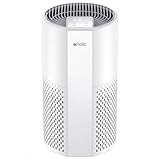
Afloia Air Purifier for Home, 4-in-1 Washable Filter for Allergies, Covers Up to 1076 ft², Quiet Operation, Auto Shut-Off & Night Light, Removes Pet Dander, Pollen, Dust, Mold, and Smoke, White,Pluto | Check Price On Amazon |

|
Nuwave OxyPure ZERO Air Purifier with Washable and Reusable Bio Guard Tech Air Filter, Large Room Up to 2002 Ft², Air Quality Monitor, 0.1 Microns, 100% Capture Irritants like Smoke, Dust, Pollen | Check Price On Amazon |

|
Air Purifiers for Home Large Room Up to 1,996 Ft², EOEBOT Air Purifier for Home Pets with Washable Filter, Quiet Sleep Mode, Air Quality Monitor, Air Purifier for Bedroom, Pet Hair, Dust, Smoke, White | Check Price On Amazon |
|
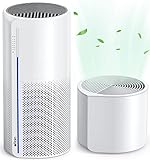
Afloia 2 IN 1 Air Purifier with Humidifier Combo, 3-Stage Filters for Home Allergies Pets Hair Smoker Odors, Evaporative Humidifier, Auto Shut Off, Quiet Air Cleaner with Seven Color Light,White | Check Price On Amazon |
Higher exchange rates consistently produce lower pollutant concentrations. A unit running at five changes per hour clears airborne particles three times faster than a unit running at two exchanges. This difference matters most for respiratory health and indoor air safety.
ACH vs Ventilation Rate: Key Differences
Air changes per hour tracks mechanical air cleaning, while ventilation rate measures natural or mechanical fresh air intake from outdoors. The two metrics serve completely different purposes in indoor air management. Mechanical ventilation brings in outside air but also introduces humidity, outdoor pollen, and urban smog. A portable clean air delivery rate system captures fine particles and volatile compounds without bringing those external contaminants inside.
Health authorities recommend combining both approaches for optimal results. You should use an energy recovery ventilator for baseline fresh air intake while running a true HEPA air purifier to maintain target particle dilution indoors.
The ACH Formula: Calculating Your Exact Clean Air Target
The correct formula for your room is simple. Multiply your room length by its width and your ceiling height to get total cubic footage. Multiply that volume by your target air changes per hour. Divide the result by sixty. The final number is your minimum required smoke clean air delivery rate in cubic feet per minute.
This calculation removes all manufacturer guesswork from your buying decision. You will know exactly which machine delivers the airflow your specific room dimensions require.
Use this interactive calculator to find your exact smoke CADR requirement before shopping.
CADR Calculator
How Much CADR Do You Actually Need?
Enter your room dimensions and use case. Formula: (length x width x ceiling height x ACH) divided by 60. Source: AHAM methodology.
CADR equals (length x width x ceiling height x ACH) divided by 60. Calculate at 5 ACH for allergy households. Manufacturer claims use 2 ACH.
| Room Size | CADR at 2 ACH (standard) | CADR at 5 ACH (allergy) | Example Models |
|---|---|---|---|
| 150 sq ft bedroom | 100 CFM | 250 CFM | Levoit Core 300, Coway AP-1512HH |
| 300 sq ft bedroom | 200 CFM | 500 CFM | Winix 5500-2, Levoit Core 400S |
| 500 sq ft living room | 333 CFM | 833 CFM | Coway Airmega 400, Blueair 605 |
| 700 sq ft open plan | 467 CFM | 1167 CFM | IQAir HealthPro Plus or 2 units |
| 1000 sq ft open plan | 667 CFM | 1667 CFM | Multiple units required |
Room Volume (L×W×H) Explained
Room volume equals length times width times ceiling height. Standard residential construction assumes eight foot ceilings. Taller vaulted or cathedral ceilings drastically increase the cubic footage you must treat. You must measure actual height with a tape measure. A twelve foot ceiling requires fifty percent more clean air delivery rate than a standard eight foot floor. Ignoring vertical space guarantees inadequate pollutant dilution.
Linking CADR (CFM) to ACH
Clean Air Delivery Rate measures filtered cubic feet per minute across smoke, dust, and pollen. The smoke rating always dictates pathogen and aerosol clearance speed. You divide your target exchange rate times room volume by sixty to find the exact CFM your machine must produce. Manufacturer coverage claims assume two exchanges. A bedroom targeting five changes actually needs a unit with two and a half times the stated CFM rating. Always prioritize verified AHAM smoke data over marketing square footage claims.
Quick-Reference ACH Chart by Room Size
Use this precomputed reference to match your target exchange rate with verified smoke CADR values. All calculations assume standard eight foot ceiling heights.
CADR Reference
Smoke CADR Needed by Room Size and Air Changes Per Hour Target
All values pre-calculated at standard 8 ft ceiling height. Formula: (room area x 8 x ACH) / 60. Source: AHAM methodology.
| Room size (8 ft ceiling) / ACH target | 2 ACH (standard) | 4 ACH (moderate) | 5 ACH (allergy) | 6 ACH (wildfire) |
|---|---|---|---|---|
| 100 sq ft (small bedroom) | 27 CFM | 53 CFM | 67 CFM | 80 CFM |
| 200 sq ft (master bedroom) | 53 CFM | 107 CFM | 133 CFM | 160 CFM |
| 300 sq ft (bedroom or office) | 80 CFM | 160 CFM | 200 CFM | 240 CFM |
| 500 sq ft (living room) | 133 CFM | 267 CFM | 333 CFM | 400 CFM |
| 700 sq ft (large open plan) | 187 CFM | 373 CFM | 467 CFM | 560 CFM |
How Many Air Changes Per Hour Do You Actually Need?
Baseline comfort requires two air changes per hour. Allergy mitigation demands five air changes. Infectious disease control and heavy wildfire smoke demand six or more exchanges. The correct target matches your health profile to your local outdoor air quality index.
2 ACH: Baseline IAQ & General Comfort
Two air changes per hour provides acceptable baseline indoor air quality for healthy adults without respiratory conditions. This rate matches standard residential ventilation recommendations from ASHRAE Standard 62.2. A bedroom at this exchange level gradually reduces dust accumulation and stale air odors over several hours. General household units operating at this rate use less electricity and generate minimal noise. You can safely run budget friendly models like the Levoit Core 300 True HEPA air purifier on continuous low speed for twenty four hour background clearance.
4–5 ACH: Allergies, Asthma & Pet Dander
Four to five air changes per hour triggers rapid allergen dilution in breathing zones. Research published in the Journal of Allergy and Clinical Immunology shows five exchanges reduce airborne pollen and pet dander concentrations by seventy nine percent within sixty minutes. Asthma patients experience measurable symptom reduction at this intensity level because fine particulate matter never settles long enough to trigger flare ups. You must size the unit using smoke CADR divided by room volume times sixty. A properly sized machine for a three hundred square foot bedroom requires a two hundred fifty to three hundred CFM rating to hit this target consistently.
5–6+ ACH: Wildfire Smoke & Pathogen Control
Five to six air changes per hour represents the clinical threshold for infectious aerosol mitigation and heavy wildfire smoke clearance. The EPA and CDC recommend five exchanges minimum for pathogen dilution in occupied indoor spaces. Six exchanges actively suppress ultrafine PM2.5 surges during high outdoor air quality index days. You cannot rely on a single low capacity unit for open floor plans at these levels. A seven hundred square foot living area requires at least four hundred CFM of verified smoke delivery. You should pair multiple Winix 5500-2 True HEPA with PlasmaWave units or deploy one medical grade alternative to maintain continuous dilution during crisis events. For comprehensive virus focused configurations, review our best air purifier setup for cold and flu season virus focused picks.
Real-World ACH: Why Manufacturer Claims Fall Short
Stated coverage area claims assume an empty concrete box. Real rooms contain furniture, curtains, and irregular airflow patterns that disrupt clean air distribution. Actual effective exchange rate drops by fifteen to thirty percent due to physical obstacles and poor placement strategies.
Furniture, Curtains & Airflow Obstacles
Large bookshelves, heavy drapery, and closed doors block filtered air circulation. Air purifiers rely on intake and exhaust pathways to push treated air across the entire room volume. Furniture clusters directly in front of the intake grille reduce effective delivery by up to twenty percent. You must keep three feet of clearance around all sides of the unit. Heavy velvet curtains trap dust near windows and require higher fan speeds to achieve stated exchange targets. Removing physical barriers immediately restores verified clean air delivery rate performance.
Ceiling Height Multiplier Effect
Standard sizing formulas collapse at ten foot ceilings and above. Nine foot rooms require twenty five percent more clean air delivery than eight foot baselines to maintain identical exchange rates. Vaulted spaces trap heated air near rafters, forcing mechanical mixing fans to work harder. You must recalculate cubic footage accurately before purchasing. A twenty percent CFM underestimation creates dead zones where pollen concentrates near the floor. Always verify actual vertical dimensions before trusting online sizing calculators.
Air Mixing & Purifier Placement Strategy
Placement determines whether your unit achieves target dilution or only cleans its own immediate footprint. Corner placement against two walls restricts intake airflow by forty percent. Center room positioning or placement opposite exterior walls maximizes circular air mixing. You should point the exhaust toward the primary seating area or bed to drive treated air across breathing zones. Avoid placing the machine inside enclosed cabinets or near heat registers. Proper positioning alone improves spatial uniformity and reduces required fan speed by nearly twenty percent.
Use this glossary to decode technical specifications before purchasing any unit.
Quick Reference
Air Purifier Terms Explained – Searchable Glossary
Definitions for every technical term used in this guide. Type to search.
– A filter standard requiring capture of at least 99.97 percent of airborne particles at 0.3 microns. H13 grade. Distinct from HEPA-type filters, which are unregulated marketing terms with no standardized efficiency.
– A standardized metric developed by AHAM measuring the volume of filtered air an air purifier delivers per minute, in cubic feet per minute (CFM). Certified separately for smoke, dust, and pollen. Smoke CADR drives pathogen aerosol clearance.
– The number of times per hour an air purifier processes the entire volume of air in a room. Manufacturer coverage area claims use 2 ACH. Allergy and asthma guidelines recommend 5 ACH, which reduces effective coverage area to 40 percent of the stated figure.
– Fine particulate matter with diameter of 2.5 microns or smaller. The primary health-hazardous component of wildfire smoke, traffic pollution, and combustion sources. True HEPA filters capture PM2.5 at 99.97 percent efficiency.
– Gaseous chemicals emitted from household products including paint, furniture, flooring, cleaning products, and adhesives. Removed by activated carbon filtration, not by HEPA mechanical filtration. EPA notes indoor VOC concentrations are 2 to 10 times higher than outdoors.
– A rating scale for HVAC filter efficiency. MERV 13 or higher is recommended for residential PM2.5 capture. Standard disposable fiberglass HVAC filters are typically MERV 4 to 6.
– Certification confirming an air cleaner emits no more than 0.050 ppm ozone under standard operating conditions. The strictest consumer air cleaner ozone standard in the US.
– A filter stage using porous activated carbon to adsorb gaseous pollutants including VOCs, formaldehyde, and odours. Does not remove particles. Capacity is proportional to carbon weight.
Step-by-Step: How to Size an Air Purifier for Your Target ACH
Follow this exact sequence to match clean air delivery rate to your target exchange rate. You will eliminate guesswork and guarantee clinical grade dilution in your primary living spaces.
- Measure your room length, width, and exact ceiling height with a standard tape measure.
- Multiply those three numbers to calculate total room volume in cubic feet.
- Select your health target exchange rate from the reference chart above.
- Multiply room volume by target ACH, then divide by sixty.
- The result equals your minimum required smoke clean air delivery rate in cubic feet per minute.
- Cross reference that number with verified AHAM certification data before purchasing.
- Verify California Air Resources Board compliance to guarantee zero harmful ozone emissions during continuous operation.
Always prioritize smoke CADR over dust or pollen ratings. Aerosols and ultrafine particles dictate true respiratory safety thresholds.
Frequently Asked Questions About ACH & Indoor Air Quality
Is 2 ACH enough for clean indoor air?
Two air changes per hour meets baseline residential ventilation standards but fails allergy and asthma thresholds. Healthy adults experience acceptable comfort at this exchange level over longer timeframes. You will notice dust settling faster on surfaces because fine particles lack sufficient dilution force to stay suspended and reach filters. Respiratory patients should target five exchanges to achieve measurable symptom relief.
How do I calculate ACH for my room?
You multiply room length times width times ceiling height to get cubic footage. Multiply that volume by your target exchange rate, then divide by sixty. The answer reveals the exact smoke clean air delivery rate your machine must produce. Manufacturer coverage charts assume two exchanges, so you must manually adjust upward for higher health targets.
Can I combine HVAC + portable ACH?
Combining central HVAC filtration with targeted portable units significantly improves spatial uniformity. Standard residential furnaces move large volumes of air but rarely achieve five exchanges in isolated bedrooms. You should install a minimum MERV 13 media filter in your furnace return grille first. Supplement high traffic zones with a Coway AP-1512HH True HEPA air cleaner running at maximum safe fan speed during peak allergy months.
Does filter age reduce ACH?
Loaded filter media creates airflow resistance that directly lowers actual clean air delivery rate. Fine dust accumulation increases static pressure and forces the blower motor to work harder at identical voltage. Particle capture efficiency drops below ninety percent after heavy saturation. Replace filters on schedule and monitor indicator lights carefully. If you notice a persistent red warning, follow our troubleshooting steps to learn what the red light on your air purifier meaning.
What happens if my ceiling height exceeds eight feet?
Taller ceilings increase room volume by twenty five to fifty percent depending on architectural design. You must recalculate total cubic footage using actual measured height. The required clean air delivery rate scales linearly with volume increases. A ninety inch ceiling demands noticeably higher motor output than a ninety six inch standard room to maintain identical particulate dilution rates.
Which CADR rating should I use for the calculation?
Smoke CADR dictates aerosol and pathogen clearance because it measures fine particle filtration down to 0.3 microns. Pollen CADR only tracks larger biological fragments above 5 microns. Dust CADR measures mid range household debris. Always use the smoke rating for respiratory safety calculations. This ensures your machine handles combustion byproducts, vehicle exhaust, and ultrafine allergens effectively.
Do ionizers replace the need for high ACH?
Ionizers only charge airborne particles so they drop onto surfaces faster. The charged particles never leave the room and frequently coat walls or furniture. Some ionizers produce ozone concentrations above the 0.050 ppm safety limit during high output operation. Always verify does ionizer air purification actually work evidence and safety review before relying on electrical charging alone for respiratory protection. Mechanical HEPA filtration remains the only proven method for true particulate removal.
Should I add UV-C lighting to reach target exchange rates?
UV-C germicidal lamps inactivate biological spores passing directly across the bulb but do not increase air volume movement. Air changes per hour strictly measures mechanical air turnover. You cannot substitute radiation exposure for physical dilution. UV-C technology works best as a secondary stage in closed chamber systems. Review our UV-C germicidal air purification explained effectiveness and limitations article to understand safe exposure thresholds and bulb replacement cycles.
How does furniture layout impact effective ACH?
Closed doors and floor to ceiling bookshelves create stagnant air pockets that bypass intake zones. Filtered clean air follows the path of least resistance and cannot penetrate sealed compartments. You should leave at least thirty inches of clearance around all sides of the machine. Moving heavy furniture away from exhaust pathways immediately improves spatial mixing efficiency and reduces required motor load.
When should I upgrade from a small bedroom unit to a larger model?
You must upgrade when calculated smoke CADR exceeds the maximum output of your current unit. A three hundred fifty square foot master bedroom requires a higher capacity machine to sustain five exchanges continuously. Monitor particle sensor readings during peak pollen hours. If your indoor concentration remains elevated despite maximum fan speed, your current machine has reached its physical airflow limit and requires replacement.
What is the difference between mechanical ventilation and ACH?
Mechanical ventilation introduces fresh outside air through ducts or exhaust fans while ACH tracks how many times your purifier cycles total indoor air through filters. Ventilation lowers carbon dioxide and introduces oxygen but carries outdoor pollutants inside. Mechanical clean air delivery reduces indoor particulate matter without importing external smog. You need both systems operating simultaneously to achieve comprehensive indoor environmental control.
Can I use two small units to equal one large unit?
Two smaller calibrated units often outperform one oversized machine in open floor plans. Distributed placement eliminates dead zones and maintains uniform air velocity across multiple rooms. You must verify combined smoke CADR totals match your target dilution requirement. Check your best air purifier brands ranked honest comparison of all major brands to identify models with reliable dual fan architecture or modular stacking capabilities.
Always run both machines on synchronized fan speeds during emergency smoke events to maximize spatial coverage.
Calculate your exact room volume and match it to a verified smoke clean air delivery rate rating. Allergy and asthma households should target five exchanges to trigger measurable symptom relief. Healthy occupants can operate at two exchanges for general comfort. Replace loaded filters promptly and position machines away from walls to maintain optimal airflow. Clean indoor air requires deliberate mechanical dilution, not passive hope.