Mechanical ventilation lowers indoor pollutant concentrations by continuously replacing stale indoor air with fresh outdoor air, but it does not actively capture particles. This dilution process follows an exponential decay curve where a rate of 5 air changes per hour removes 99.3 percent of airborne contaminants within sixty minutes. Facility managers use the ASHRAE 241-2023 standard to calculate equivalent clean airflow that combines outdoor air intake with recirculated filtration.
Understanding this balance prevents energy waste and keeps pathogen risks low in schools, offices, and homes. You must size your intake fans and select your supplemental purifiers based on room volume rather than floor area alone.
How Dilution Ventilation Works: The Science of Exponential Decay
Dilution ventilation works by mechanically introducing fresh outdoor air into a space while exhausting contaminated indoor air. The process relies on volume replacement rather than particle capture to lower pollutant concentrations.
Air changes per hour measures how many times a system replaces the total air volume in a room within sixty minutes. The decay follows a strict exponential formula where each new air change removes a percentage of whatever contaminants remain.
| Photo | Popular Air Purifiers | Price |
|---|---|---|

|
Air Purifiers for Home Large Room up to 1500ft², Tailulu H13 True HEPA Air Purifier for Pets Dust Odor Smoke, Air Purifier for Bedroom with 15dB Quiet Sleep Mode for Bedroom Office Living Room | Check Price On Amazon |
|
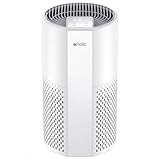
Afloia Air Purifier for Home, 4-in-1 Washable Filter for Allergies, Covers Up to 1076 ft², Quiet Operation, Auto Shut-Off & Night Light, Removes Pet Dander, Pollen, Dust, Mold, and Smoke, White,Pluto | Check Price On Amazon |

|
Nuwave OxyPure ZERO Air Purifier with Washable and Reusable Bio Guard Tech Air Filter, Large Room Up to 2002 Ft², Air Quality Monitor, 0.1 Microns, 100% Capture Irritants like Smoke, Dust, Pollen | Check Price On Amazon |

|
Air Purifiers for Home Large Room Up to 1,996 Ft², EOEBOT Air Purifier for Home Pets with Washable Filter, Quiet Sleep Mode, Air Quality Monitor, Air Purifier for Bedroom, Pet Hair, Dust, Smoke, White | Check Price On Amazon |
|
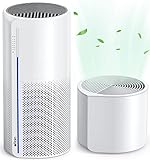
Afloia 2 IN 1 Air Purifier with Humidifier Combo, 3-Stage Filters for Home Allergies Pets Hair Smoker Odors, Evaporative Humidifier, Auto Shut Off, Quiet Air Cleaner with Seven Color Light,White | Check Price On Amazon |
One air change eliminates approximately 63.2 percent of airborne pollutants. Two air changes remove 86.5 percent, three changes clear 95 percent, and five changes reach 99.3 percent clearance.
Engineers use this calculation to size HVAC fans and ductwork for commercial buildings. Homeowners apply the same logic when positioning window fans or calculating portable purifier AHAM certified clean air delivery ratings for closed bedrooms.
What is the ACH decay formula?
The exponential decay formula calculates remaining pollutant concentration as initial concentration multiplied by e raised to the negative ACH times hours. This mathematical relationship proves that doubling your ventilation airflow drastically shortens the time required to clear stale air or airborne pathogens.
Facility teams use this formula to program demand-controlled ventilation sequences. You should run your system at peak capacity for 15 to 20 minutes after occupancy peaks to reset baseline contaminant levels.
Quick Reference
Ventilation and Filtration Terms Explained
Definitions for every technical term used in this guide. Type to search.
The number of times the total air volume in a room is replaced with fresh outdoor air in one hour. Mechanical ventilation targets 3 to 6 ACH for infection control. Natural opening of windows provides unpredictable and often insufficient exchange rates.
A calculated metric that converts recirculated filtration performance into a ventilation-equivalent value. High-efficiency portable purifiers contribute eACH by filtering indoor air without introducing outdoor thermal loads. This metric bridges dilution and filtration compliance.
The process of lowering indoor contaminant concentrations by mixing polluted indoor air with clean outdoor air. Dilution does not remove mass from the building envelope. It relies on exhaust pathways and fresh air intake dampers to cycle stale air outward.
A mathematical model used to estimate the probability of airborne disease transmission in indoor spaces. The equation factors breathing rate, infectious quanta, time, and room ventilation rates. Increasing equivalent clean airflow directly reduces the calculated infection risk.
ASHRAE Standards for Ventilation and Indoor Air Quality
The American Society of Heating, Refrigerating and Air-Conditioning Engineers publishes the definitive guidelines for North American ventilation design. These codes separate baseline comfort requirements from advanced pathogen control strategies.
ASHRAE Standard 62.1 and 62.2 Explained
Standard 62.1 establishes minimum outdoor airflow requirements for commercial and institutional buildings. The code mandates 15 to 20 cubic feet per minute per occupant to control human bio-effluents and building material off-gassing.
Standard 62.2 targets single-family homes and low-rise residential buildings. It calculates whole-house ventilation needs using a base of 35 cubic feet per minute plus 7.5 cubic feet per bedroom occupant.
Both standards focus on controlling carbon dioxide, volatile organic compounds, and humidity levels. They do not address airborne infectious disease transmission on their own.
ASHRAE Standard 241-2023: Control of Infectious Aerosols
Standard 241-2023 represents the first consensus guideline specifically targeting infectious aerosol management. It introduces equivalent clean airflow to bridge the gap between natural ventilation and high-efficiency filtration.
The standard calculates a minimum clean airflow requirement based on occupancy density and pathogen risk levels. This figure allows building operators to meet safety targets using outdoor air intake or recirculated HEPA filtration.
Facility engineers combine mechanical ventilation with central filters to reach these thresholds efficiently. Portable units fill the ventilation gap in older structures with rigid ductwork constraints. You can review our analysis of genuine versus third-party filter safety to ensure your HVAC upgrade meets certification requirements.
Ventilation vs. Air Purification: Complementary Roles in IAQ
Opening windows lowers indoor carbon dioxide rapidly, but it simultaneously admits outdoor pollen and vehicle exhaust. True air purification physically removes particle mass using dense filter media or targeted gas-phase chemistry.
Does ventilation filter indoor air?
Mechanical ventilation systems do not filter the air unless the supply airstream passes through a dedicated filtration stage. Dilution simply reduces the concentration of existing pollutants by expanding the available air volume.
You can open a window to vent cooking odors or stale air, but you cannot rely on that method during wildfire smoke events. Outdoor intakes on commercial HVAC systems require pre-filters to protect downstream coils from heavy dust loads. Learn more about building a DIY ventilation supplement box for heavy smoke conditions when standard systems fail.
Myth vs Fact
Common Ventilation and Filtration Misconceptions
Separating fact from fiction on air exchange myths. Sources: EPA, ASHRAE technical committees, peer-reviewed exposure studies.
✗ Myth
Opening windows provides sufficient ventilation per professional standards at all times.
✓ Fact
Natural airflow depends entirely on wind speed and temperature differentials. Mechanical dampers and exhaust fans guarantee consistent exchange rates regardless of outdoor weather patterns.
✗ Myth
HEPA air purifiers completely eliminate the need for fresh outdoor ventilation.
✓ Fact
HEPA stages remove particulate matter but do not lower carbon dioxide or dilute off-gassing volatile organic compounds. ASHRAE 241 explicitly requires baseline outdoor dilution combined with recirculated filtration for complete air management.
✗ Myth
More outdoor airflow always guarantees healthier indoor environments.
✓ Fact
Unfiltered outdoor intake during high particulate events or extreme humidity introduces new contaminants. Intake air requires pre-filtration or the space requires temporary shelter-in-place protocols with recirculated air cleaning.
Calculating eACH with Portable Air Cleaners
Equivalent air changes per hour translate a portable air purifier clean air delivery rate into a ventilation-equivalent metric. This calculation allows facility managers to treat a standalone HEPA unit as supplemental ductwork.
You determine the room volume by multiplying floor area by ceiling height. Multiply that volume by your target air exchange rate and divide by 60 to find the required CADR in cubic feet per minute.
A 400 cubic foot room targeting 5 air changes per hour requires 167 CFM of clean air delivery. Add a 20 percent buffer for furniture obstruction and filter aging, which raises your target to approximately 200 CFM.
High-CADR HEPA purifiers deliver this clean airflow consistently at medium fan speeds. Place the unit near the center of the room or along a wall with unobstructed intake and output pathways.
CADR Calculator
How Much Equivalent CADR Do You Need for Ventilation?
Enter your room dimensions and target air change rate. Formula: (length x width x ceiling height x ACH) divided by 60. Source: AHAM methodology and ASHRAE ventilation guidelines.
CADR = (length x width x ceiling height x ACH) divided by 60. Select 4 to 6 ACH for schools and offices to meet current aerosol management targets.
Practical Implementation: Meeting ASHRAE Recommendations
Balancing fresh air exchange with energy efficiency requires careful equipment selection. You can achieve compliance without destroying your utility budget by pairing demand-controlled ventilation with targeted filtration.
Using CO₂ Monitors as a Ventilation Proxy
Indoor carbon dioxide levels provide a reliable real-time indicator of stale air accumulation and respiratory pathogen risk. Outdoor air typically contains 400 parts per million, while occupied indoor spaces quickly exceed 800 parts per million without adequate fresh air exchange.
Readings consistently above 1,000 parts per million indicate insufficient dilution according to baseline expectations. Install calibrated NDIR CO2 sensors in densely occupied conference rooms and classrooms. Trigger your HVAC outdoor air dampers when concentrations hit your threshold.
Calibrate your monitor monthly to maintain accuracy. Review our practical testing guide to verify that your supplemental purifiers respond correctly to rising particle loads alongside carbon dioxide spikes.
Energy Recovery: ERVs and HRVs
Introducing 100 percent fresh outdoor air creates a massive thermal load in extreme climates. Energy recovery ventilators transfer heat between outgoing exhaust and incoming fresh air to reclaim up to 90 percent of your heating or cooling investment.
Heat recovery ventilators focus strictly on temperature exchange, which suits cold northern climates exceptionally well. Energy recovery ventilators exchange both heat and moisture, making them the superior choice for hot and humid regions that struggle with indoor relative humidity spikes.
Pair either recovery unit with standard residential filters to capture fine dust before it recirculates through your living spaces. You can explore electrostatic precipitation mechanics as an alternative pre-filtration stage that traps dust without restricting airflow. Always review ionization safety thresholds before adding active polarity plates to your recovery bypass.
Frequently Asked Questions About Ventilation and ASHRAE Standards
Dilution ventilation reduces indoor pollutant concentrations by continuously mixing fresh outdoor air with the indoor environment. This process lowers contaminant density exponentially based on your air exchange rate.
Ventilation dilutes indoor air by replacing it with outdoor air, but it does not actively remove particulate matter or chemical vapors. ASHRAE 241 explicitly requires combining outdoor dilution with recirculated HEPA filtration for complete air management.
ASHRAE Standard 241-2023 establishes minimum equivalent clean airflow requirements specifically for infectious aerosol control. The guideline quantifies how ventilation and high-efficiency recirculation work in tandem to lower pathogen transmission risk.
Baseline commercial standards mandate 15 to 20 cubic feet per minute per person for general occupancy. Current infection control recommendations target 4 to 6 equivalent air changes per hour for classrooms and open offices.
Portable air cleaners provide high-efficiency filtration but cannot lower carbon dioxide or dilute chemical off-gassing. Deploy them as supplemental clean airflow alongside your mechanical intake system.
Multiply your room length, width, and ceiling height to calculate total volume. Divide your target clean air flow by 60 to find the exact air change rate.
Opening windows works temporarily when outdoor air quality exceeds indoor quality. Close them immediately when external AQI surpasses 150 or when pollen counts peak in your region.
Readings below 800 parts per million generally indicate effective fresh air intake. Sustained measurements above 1,000 parts per million signal compromised ventilation pathways or exhausted outdoor dampers.
Energy recovery ventilators transfer moisture along with thermal energy to prevent indoor humidity spikes. They maintain comfortable relative humidity levels below 55 percent while delivering continuous fresh airflow.
Raw outdoor intake during high particulate events damages indoor air quality instantly. Switch your HVAC system to recirculation mode and deploy standalone HEPA purifiers until external conditions stabilize.
Replace central filters every 3 months under standard ventilation rates. Shorten the replacement cycle to 6 or 8 weeks when running high fresh air percentages or during heavy seasonal pollen influx.
ASHRAE does not dictate fixed fan speeds because system capacity varies widely by building design. Increase airflow volume proportionally to maintain your target air changes per hour during peak occupancy.
Pairing mechanical ventilation with targeted HEPA filtration achieves the air quality targets outlined in current ASHRAE guidelines. Use CO2 monitors to verify your fresh air exchange and adjust your portable purifier CADR to match seasonal contaminant loads. Install energy recovery units to maintain comfort while scaling your ventilation volume. Start measuring your baseline air changes per hour today and size your dilution strategy accordingly.