Most air purifiers under $500 are tested in a sealed laboratory chamber, not in a room with an open door and a kitchen 30 feet away. Your actual results depend on matching the smoke CADR rating to your room size at the right air changes per hour.
A True HEPA air purifier under $500 can deliver genuine medical-grade filtration if you know which specs matter. The smoke CADR number tells you exactly how fast it cleans, and the filter cost tells you what you will actually pay over three years.
What Makes a Great Air Purifier Under $500
The $500 price point is where air purifiers stop compromising on core performance and start adding meaningful extras. Below $150 you get solid True HEPA filtration for small rooms. Between $150 and $500 you get genuine whole-room coverage, smart sensors, and filter savings that compound over years.
A great sub-$500 air purifier has four non-negotiable specifications. It must have an AHAM-certified smoke CADR that matches your room size at 5 ACH. It must be CARB certified with zero measurable ozone output. It must use True HEPA, not HEPA-type filtration media. And it must have replacement filters that cost under $80 per year.
| Photo | Popular Air Purifiers | Price |
|---|---|---|

|
Air Purifiers for Home Large Room up to 1500ft², Tailulu H13 True HEPA Air Purifier for Pets Dust Odor Smoke, Air Purifier for Bedroom with 15dB Quiet Sleep Mode for Bedroom Office Living Room | Check Price On Amazon |
|
Afloia Air Purifier for Home, 4-in-1 Washable Filter for Allergies, Covers Up to 1076 ft², Quiet Operation, Auto Shut-Off & Night Light, Removes Pet Dander, Pollen, Dust, Mold, and Smoke, White,Pluto | Check Price On Amazon |

|
Nuwave OxyPure ZERO Air Purifier with Washable and Reusable Bio Guard Tech Air Filter, Large Room Up to 2002 Ft², Air Quality Monitor, 0.1 Microns, 100% Capture Irritants like Smoke, Dust, Pollen | Check Price On Amazon |

|
Air Purifiers for Home Large Room Up to 1,996 Ft², EOEBOT Air Purifier for Home Pets with Washable Filter, Quiet Sleep Mode, Air Quality Monitor, Air Purifier for Bedroom, Pet Hair, Dust, Smoke, White | Check Price On Amazon |
|
Afloia 2 IN 1 Air Purifier with Humidifier Combo, 3-Stage Filters for Home Allergies Pets Hair Smoker Odors, Evaporative Humidifier, Auto Shut Off, Quiet Air Cleaner with Seven Color Light,White | Check Price On Amazon |
Smoke CADR is the hardest CADR value to achieve because smoke particles are tiny (0.09-0.3 microns). A unit that scores high on smoke CADR will also perform well on dust and pollen CADR. Always check the smoke CADR first when comparing models under $500.
True HEPA means the filter media captures 99.97% of particles at 0.3 microns according to IEST test standards. HEPA-type and HEPA-like are unregulated marketing terms with no standardized test behind them. Several sub-$500 units carry genuine True HEPA certification including the Coway AP-1512HH and the Levoit Core 400S.
CARB certification matters even for units that do not use ionization. The California Air Resources Board limits ozone output to 0.050 ppm maximum. Every unit we recommend below $500 is CARB certified or has been third-party tested to emit zero ozone.
The annual filter cost determines your true cost of ownership. The Coway Airmega 400 uses a washable pre-filter that extends HEPA life to 12-plus months for approximately $60 per year in filter replacements. The Levoit Core 300S costs about $25 per year but covers a smaller room.
For a complete breakdown of filter costs and energy consumption across multiple brands over a three-year period, our detailed guide on air purifier total cost of ownership provides itemized projections for every major sub-$500 model.
Below is a price comparison of four popular air purifiers under $500 showing both the unit purchase price and the annual filter replacement cost.
Price Comparison
Air Purifier Price Comparison – Unit Cost and Annual Filter Cost
Unit purchase price plus estimated annual filter replacement cost. Prices verified at time of publication.
$99 unit + $25/yr filters
$160 unit + $40/yr filters
$200 unit + $30/yr filters
$400 unit + $60/yr filters
Bar width represents unit purchase price relative to the most expensive product shown. Filter costs are estimates based on manufacturer-recommended replacement intervals. Genuine filters used for all cost estimates.
Top Air Purifiers Under $500 for Every Need
Every air purifier below is CARB certified, uses True HEPA filtration, and has an AHAM-certified smoke CADR rating. We selected units across three price tiers so you can match your budget to your room size and air quality needs.
By the Numbers: Air Purifiers Under $500
350-500 CFM smoke CADR: The range you should target for rooms 300-500 square feet at 5 ACH for allergy relief. Most units under $500 achieve this.
$25-$100 per year: Annual filter replacement costs across popular sub-$500 models. A $99 Levoit Core 300S costs $25 per year in filters while a $400 Coway Airmega 400 costs approximately $60.
22-30 dB at sleep mode: The quietest sub-$500 units operate at this noise level. Coway Airmega 400 reaches 22 dB and the Levoit Core 400S reaches 24 dB.
5 out of 8 top models: The number of best-selling sub-$500 air purifiers that carry both CARB certification and ENERGY STAR certification. These two certifications together mean zero ozone risk and verified low energy consumption.
Levoit Core 300S: Best Budget Pick Under $100
The Levoit Core 300S delivers a smoke CADR of 145 CFM with True HEPA H13 filtration for under $100. It covers up to 219 square feet at 2 ACH or approximately 88 square feet at 5 ACH for allergy relief.
Key Specifications:
- Smoke CADR: 145 CFM (AHAM certified)
- Coverage: 219 sq ft at 2 ACH, 88 sq ft at 5 ACH
- Noise: 24 dB at sleep mode
- Annual filter cost: Approximately $25
- Certifications: CARB, ENERGY STAR, AHAM Verifide
The VeSync app controls scheduling and fan speed remotely. The sleep mode at 24 dB is virtually silent. For a small bedroom or home office under 150 square feet with standard 8-foot ceilings, this unit delivers 5 ACH at maximum fan speed.
Filter replacement takes under 60 seconds with a twist-off bottom panel. Genuine Levoit replacement filters cost approximately $25 and are widely available. The activated carbon pre-filter layer handles light cooking odors and pet smells in addition to particulate capture.
Coway AP-1512HH: Best Value Under $200
The Coway AP-1512HH has been the top-rated air purifier in independent testing for years. Its smoke CADR of 246 CFM covers 360 square feet at 2 ACH or 148 square feet at 5 ACH at a street price near $200.
Key Specifications:
- Smoke CADR: 246 CFM (AHAM certified)
- Coverage: 360 sq ft at 2 ACH, 148 sq ft at 5 ACH
- Noise: 30 dB at sleep mode, 55 dB at turbo
- Annual filter cost: Approximately $30
- Certifications: CARB, ENERGY STAR, AHAM Verifide, AAFA certified
The four-stage filtration includes washable pre-filter, activated carbon, True HEPA, and an ionizer that can be switched off independently. The auto mode uses a laser particle sensor to detect PM2.5 levels and adjust fan speed in real time. The air quality indicator light changes from blue to red as particulate levels rise.
This unit carries AAFA (Asthma and Allergy Foundation of America) certification. Filter replacements run approximately $30 per year with the genuine Coway filter set. The washable pre-filter extends HEPA life to 12 months under normal household conditions.
For a direct head-to-head comparison with its closest competitor, see our detailed Coway vs Winix comparison covering CADR, noise, and long-term costs.
Winix 5500-2: Best Feature Set Under $170
The Winix 5500-2 delivers a smoke CADR of 243 CFM covering 360 square feet at 2 ACH for approximately $160. Its PlasmaWave technology produces hydroxyls for additional VOC reduction and can be disabled with a button press.
Key Specifications:
- Smoke CADR: 243 CFM (AHAM certified)
- Coverage: 360 sq ft at 2 ACH, 146 sq ft at 5 ACH
- Noise: 27 dB at sleep mode
- Annual filter cost: Approximately $40
- Certifications: CARB, ENERGY STAR, AHAM Verifide
The washable pre-filter captures large dust and pet hair. A built-in AOC carbon pellet filter (not a thin carbon sheet) provides meaningful VOC reduction for its price class. The sleep mode drops to 27 dB with the display lights off, making it suitable for light-sensitive sleepers.
Levoit Core 400S: Best Mid-Size Unit Under $200
The Levoit Core 400S offers a smoke CADR of 260 CFM covering 400 square feet at 2 ACH for approximately $190. The cylindrical intake design pulls air from all sides, which means you can place it closer to walls than front-intake units without sacrificing performance.
Key Specifications:
- Smoke CADR: 260 CFM (AHAM certified)
- Coverage: 400 sq ft at 2 ACH, 156 sq ft at 5 ACH
- Noise: 24 dB at sleep mode
- Annual filter cost: Approximately $40
- Certifications: CARB, ENERGY STAR, AHAM Verifide, AAFA certified
The VeSync app provides real-time PM2.5 readings and tracks filter life by usage hours, not a simple timer. The sleep mode at 24 dB is one of the quietest in this price range. For medium bedrooms up to 200 square feet at 5 ACH, this unit provides genuine allergy-grade air cleaning.
Coway Airmega 400: Best Large Room Unit Under $500
The Coway Airmega 400 delivers a combined smoke CADR of 400 CFM through dual fans covering 1,560 square feet at 2 ACH or 240 square feet at 5 ACH. At approximately $400, it is the highest-value large-room purifier under $500.
Key Specifications:
- Smoke CADR: 400 CFM (AHAM certified, dual fan)
- Coverage: 1,560 sq ft at 2 ACH, 240 sq ft at 5 ACH
- Noise: 22 dB at sleep mode, 57 dB at turbo
- Annual filter cost: Approximately $60
- Certifications: CARB, ENERGY STAR, AHAM Verifide
The dual-fan design means you can run one fan for light cleaning and both for heavy pollution events. The washable pre-filter captures visible dust and pet hair. At 22 dB in sleep mode, this is the quietest large-room purifier on the market. The smart mode adjusts fan speed based on real-time PM2.5 readings from the built-in sensor.
The Coway Airmega 400 uses two separate True HEPA filters and two activated carbon filters. Total annual filter cost runs approximately $60 when replacing all four filters on the recommended 12-month schedule. The pre-filter washes clean with water and extends HEPA life significantly.
Blueair Blue Pure 211+: Best High-CADR Unit Under $350
The Blueair Blue Pure 211+ achieves a smoke CADR of 350 CFM covering 540 square feet at 2 ACH at a price around $300. The washable fabric pre-filter comes in multiple colors and captures large particles before they reach the main filter.
Key Specifications:
- Smoke CADR: 350 CFM (AHAM certified)
- Coverage: 540 sq ft at 2 ACH, 210 sq ft at 5 ACH
- Noise: 31 dB at lowest speed, 56 dB at highest
- Annual filter cost: Approximately $85
- Certifications: CARB, ENERGY STAR, AHAM Verifide
Blueair uses HEPASilent technology, which combines electrostatic charging with mechanical filtration. This achieves higher CADR per watt than pure mechanical True HEPA units. The tradeoff is slightly higher annual filter costs at approximately $85. The single-button control and color fabric pre-filters make this unit popular for living rooms where appearance matters.
Use the table below to compare all six air purifiers across the specifications that determine real-world performance.
Product Comparison
Air Purifiers Under $500 Compared – CADR, Coverage, Noise, and Filter Cost
Key specs compared across all six picks. CADR from AHAM certified database. Coverage at 5 ACH calculated as smoke CADR x 12 / 5.
| Model | Price | Smoke CADR | Coverage 2 ACH | Coverage 5 ACH | Sleep dB | Filter/yr | Best For |
|---|---|---|---|---|---|---|---|
| Levoit Core 300S | $99 | 145 CFM | 219 sq ft | 88 sq ft | 24 dB | $25/yr | Small bedroom |
| Winix 5500-2 | $160 | 243 CFM | 360 sq ft | 146 sq ft | 27 dB | $40/yr | Pets, medium rooms |
| Coway AP-1512HH | $200 | 246 CFM | 360 sq ft | 148 sq ft | 30 dB | $30/yr | Allergies, asthma |
| Levoit Core 400S | $190 | 260 CFM | 400 sq ft | 156 sq ft | 24 dB | $40/yr | Medium bedroom |
| Blueair 211+ | $300 | 350 CFM | 540 sq ft | 210 sq ft | 31 dB | $85/yr | Living room |
| Coway Airmega 400 | $400 | 400 CFM | 1,560 sq ft | 240 sq ft | 22 dB | $60/yr | Large room, open plan |
CADR data from AHAM certified database. Coverage at 5 ACH = smoke CADR x 12 / 5. Noise levels at lowest fan speed setting. Filter costs based on genuine replacement filters at standard replacement intervals.
How Much CADR Do You Need for Your Room Size
Smoke CADR determines how fast an air purifier cleans your room. To calculate the smoke CADR you need, use the formula: (room length in feet x room width in feet x 8-foot ceiling x ACH target) divided by 60. This gives you the minimum smoke CADR in CFM.
For allergy and asthma sufferers, target 5 ACH (air changes per hour). This means all the air in the room passes through the filter five times every 60 minutes. At 5 ACH, a 200-square-foot bedroom with 8-foot ceilings needs a smoke CADR of 133 CFM. That same room at 2 ACH (standard manufacturer rating) needs only 53 CFM.
Manufacturers advertise coverage area at 2 ACH because the number looks larger. A unit rated for 360 square feet at 2 ACH covers only 144 square feet at 5 ACH. If you have allergies, always calculate coverage at 5 ACH, not the manufacturer’s stated number.
The Coway AP-1512HH with a smoke CADR of 246 CFM covers 360 square feet at 2 ACH. At 5 ACH for allergy relief, it covers 148 square feet. That is a standard bedroom, but it will not handle a 300-square-foot master bedroom at allergy-grade air cleaning speeds.
For a full room-by-room CADR calculator with pre-computed values for every common room size, see our guide on matching air purifier size and CADR to your specific room dimensions.
Filter Replacement Costs: The Hidden $100 Decision
The purchase price is only half the cost story. A $99 air purifier with $60 annual filters costs more over three years ($279 total) than a $200 unit with $25 annual filters ($275 total). Always calculate the three-year total before choosing a model.
HEPA filter lifespan ranges from 6 to 12 months depending on pollution load and pre-filter maintenance. Units with washable pre-filters like the Coway Airmega 400 and Winix 5500-2 extend HEPA life to 12 months or more. Units without washable pre-filters in dusty or pet-heavy homes may need HEPA replacement every 6 months.
Activated carbon filters for VOC and odor removal typically last 3 to 6 months because carbon becomes saturated. If you cook frequently, have pets, or live in a high-VOC environment, budget for carbon filter replacements at the short end of that range. Several sub-$500 units combine HEPA and carbon into one filter, which reduces cost but means you replace both at the HEPA replacement schedule.
Genuine manufacturer filters cost more but guarantee the rated efficiency. Third-party compatible filters are cheaper but rarely carry AHAM certification for CADR performance. In independent testing, third-party filters reduced CADR by 10 to 25% compared to genuine filters in some models. For allergy and asthma applications, genuine filters are worth the premium.
Our detailed cost-benefit analysis of air purification ownership breaks down the full three-year total cost for every major brand including electricity, filter replacements, and amortized unit cost.
Air Purifier Placement: Why Location Changes CADR Performance
Where you place an air purifier changes its effective CADR by 20 to 30%. A unit placed in a corner with restricted airflow on two sides cannot pull air at its rated CADR. A unit placed in the center of the room with no obstructions within 18 inches on all sides performs at or near its AHAM-certified CADR.
This happens because CADR testing occurs in a standardized chamber with the unit in open space at a specified distance from walls. In a real furnished room, airflow obstruction from furniture, curtains, and close wall proximity reduces actual clean air delivery. Place your purifier at least 18 inches from any wall, with the intake side facing the room’s open space.
For bedrooms, place the purifier on the side of the bed opposite the door with the exhaust pointing toward the bed. This creates a clean air zone around your breathing area during sleep. For living rooms, place the purifier near the primary pollution source (kitchen doorway for cooking smoke, near the main entrance for outdoor PM2.5 infiltration).
Quick Reference: Key Air Purifier Terms
CADR (Clean Air Delivery Rate): The AHAM-certified measurement in CFM of how fast a purifier removes smoke, dust, or pollen particles from a standard test chamber. Smoke CADR is the hardest to achieve and the most important number.
ACH (Air Changes per Hour): How many times all room air passes through the filter in one hour. Use 2 ACH for general air quality, 5 ACH for allergies and asthma, and 6 ACH for wildfire smoke events.
True HEPA: Filter media certified to capture 99.97% of particles at 0.3 microns per IEST standards. HEPA-type, HEPA-like, and 99% HEPA are unregulated marketing terms with no standardized testing.
CARB Certification: California Air Resources Board certification that a device emits less than 0.050 ppm ozone. Required for sale in California but a useful safety standard for all buyers.
PM2.5: Particulate matter smaller than 2.5 microns. These particles penetrate deep into lung tissue. Wildfire smoke, cooking smoke, and outdoor pollution are common indoor PM2.5 sources.
VOC (Volatile Organic Compounds): Gaseous chemicals from paints, furniture, cleaning products, and building materials. Activated carbon filters adsorb VOCs but require regular carbon replacement to maintain effectiveness.
MERV (Minimum Efficiency Reporting Value): ASHRAE 52.2 filter rating for HVAC filters (1-16). MERV 13 captures 75%+ of particles 0.3-1 micron. Not applicable to portable air purifiers, which use CADR instead.
ENERGY STAR: EPA certification that the unit meets energy efficiency standards. An ENERGY STAR air purifier uses approximately 40% less energy than a non-certified equivalent.
Before You Buy: Complete Air Purifier Checklist
Use the checklist below to verify you have considered every factor that determines whether an air purifier under $500 will actually solve your air quality problem. Each unchecked item represents a potential reason the unit may not perform as expected.
Buying Guide
Before You Buy an Air Purifier Under $500 – Complete Checklist
Check off each point before making your decision. Based on AHAM and EPA buying guidance.
What Is the Difference Between True HEPA and HEPA-Type Filters
True HEPA filters are independently certified to capture 99.97% of airborne particles at 0.3 microns per IEST standards. HEPA-type and HEPA-like filters have no standardized test and capture 85% to 99% of particles at unspecified sizes. The difference in actual PM2.5 reduction between True HEPA and HEPA-type can be 15% or more in real rooms.
This only occurs when the filter media meets the 99.97% specification at the hardest-to-capture 0.3-micron particle size. Particles smaller than 0.3 microns are captured by diffusion (Brownian motion causes them to collide with filter fibers). Particles larger than 0.3 microns are captured by interception and impaction. The 0.3-micron size is the penetration peak where mechanical filtration is least efficient, so certifying at that size guarantees efficiency across all particle sizes.
If a filter is labeled HEPA-type and not independently tested, you cannot verify its efficiency at any particle size. The result is unknown PM2.5 reduction. Fix it by choosing only units with AHAM-certified CADR, which requires True HEPA filtration to achieve the rated smoke CADR values.
Do I Need Activated Carbon in My Air Purifier
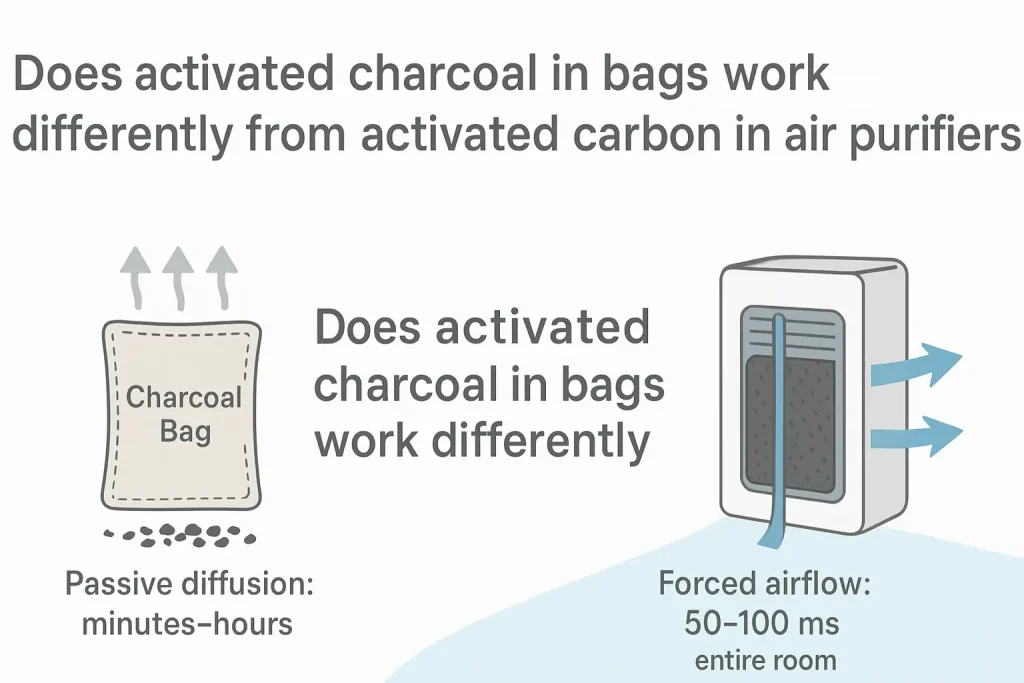
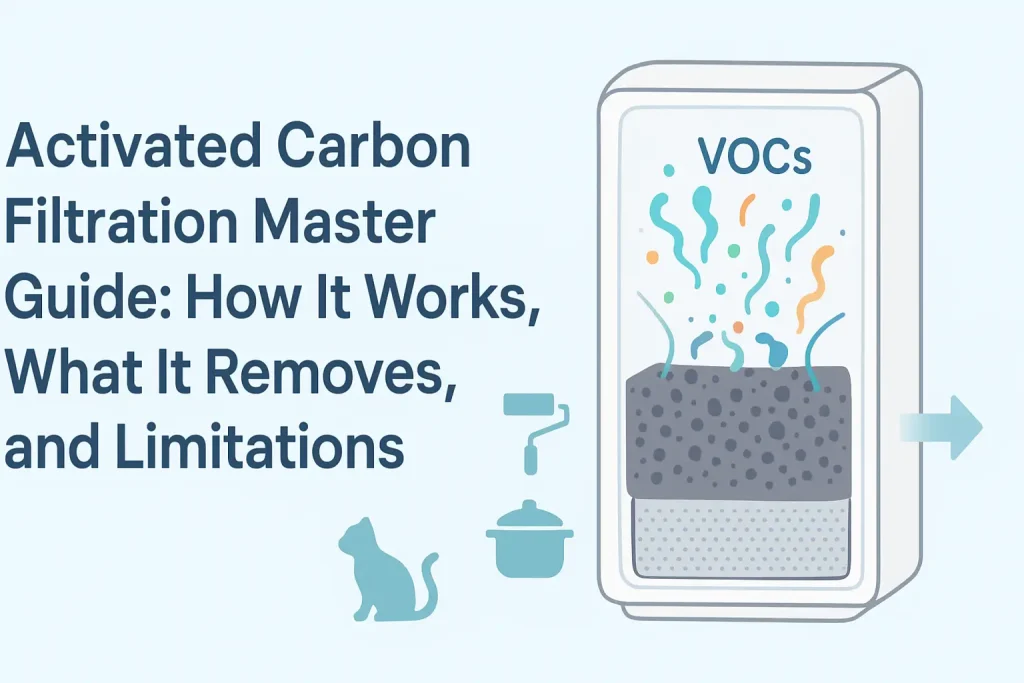
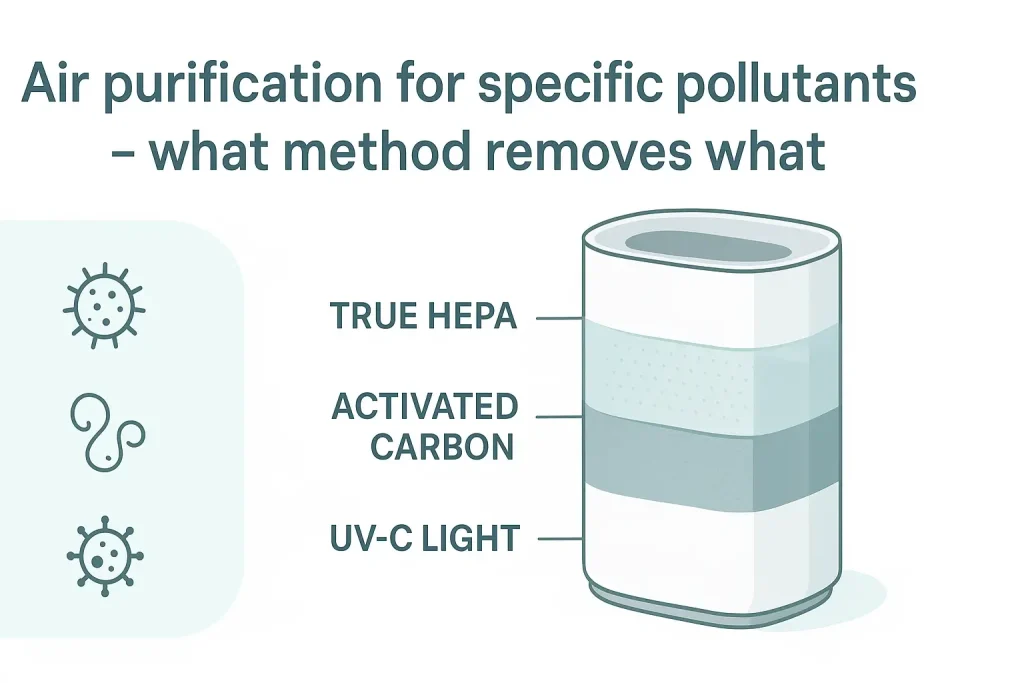
Activated carbon is necessary only if you have VOC sources (paints, new furniture, cleaning chemicals), cooking odors, pet odors, or wildfire smoke that contains gaseous compounds. True HEPA alone removes particles but does nothing for gases and odors. A room with a new carpet off-gassing formaldehyde needs activated carbon. A room with only dust and pollen does not.
This happens because activated carbon adsorbs gas molecules onto its porous surface through physical adsorption. True HEPA captures solid and liquid particles through mechanical filtration. These are two completely different removal mechanisms requiring two different filter types. A combined HEPA plus carbon filter handles both.
If you run a HEPA-only purifier in a room with VOC sources, PM2.5 levels drop but VOC levels stay unchanged. The result is clean-smelling but chemically contaminated air. Fix it by choosing a unit with a substantial carbon pellet filter (not a thin carbon sheet), such as the Winix 5500-2 with its AOC carbon filter or the Coway Airmega 400 with dual carbon filters.
Can I Use One Air Purifier for My Entire Home
No single portable air purifier under $500 can filter an entire home effectively. Even the Coway Airmega 400 with a 400 CFM smoke CADR covers 1,560 square feet at only 2 ACH. At allergy-grade 5 ACH, it covers 240 square feet. For whole-home air purification, you need multiple portable units or a whole-house HVAC filtration system.
The physical limitation is airflow. Air does not move efficiently through doorways and around corners. A purifier in the living room cleans the living room air. Bedroom air stays mostly unfiltered unless doors are open and air circulates freely, which most homes do not achieve without a central HVAC fan running continuously.
For a three-bedroom home, a practical approach places one high-CADR unit in the main living area and smaller units in each bedroom. Three Levoit Core 300S units in bedrooms ($297 total) combined with one Coway Airmega 400 in the living area ($400) provides whole-home coverage for approximately $700, just above $500 per unit but far more effective than a single purifier trying to cover the entire floor plan.
Why Does My Air Purifier Smell Like Plastic When New
A plastic or chemical smell from a new air purifier is off-gassing from manufacturing residues on internal components and filter media. This is normal and typically dissipates within 24 to 72 hours of continuous operation. Run the unit on turbo speed in a well-ventilated room for the first two days to accelerate the process.
This off-gassing is not ozone. It comes from volatile compounds in the plastics, adhesives, and filter materials used during manufacturing. All new appliances with plastic components experience some level of off-gassing. The smell is noticeable because the purifier circulates the off-gassed compounds through the very filter meant to capture them, creating a brief cycle before the carbon filter or HEPA media absorbs the compounds.
If the smell persists beyond 72 hours or smells like chlorine or electrical burning, that indicates a genuine defect. Return the unit. If the smell is distinctly like ozone (a sharp, metallic scent similar to after a thunderstorm), the unit may be producing ozone above the CARB limit. Stop using it and verify its CARB certification status.
Is It Safe to Run an Air Purifier 24/7
Yes, running a CARB-certified, ENERGY STAR air purifier 24 hours per day is safe and is the recommended usage pattern for continuous air quality maintenance. An ENERGY STAR certified unit like the Coway AP-1512HH uses approximately 45 watts at medium speed. At 13 cents per kWh, continuous operation costs about $4 per month in electricity.
Continuous operation maintains steady-state PM2.5 levels. When you turn a purifier off at night, particulate levels rise as dust settles and outdoor air infiltrates. When you turn it back on in the morning, it must re-clean the entire room volume from the elevated PM2.5 baseline. Running continuously at auto mode or a low fan speed maintains air quality with minimal energy cost.
The filter replacement interval shortens with continuous operation because more total air passes through the filter. A filter rated for 12 months at 8 hours per day may last only 4 to 6 months at 24/7 operation. Budget your filter replacements accordingly. If filter cost concerns you, choose a unit with lower annual filter costs like the Coway AP-1512HH ($30 per year) rather than reducing daily operating hours.
How Do I Know If My Air Purifier Is Actually Working
The only way to verify your air purifier is working is to measure PM2.5 levels with a particle counter before and after running the unit. Place a PM2.5 air quality monitor in the room, record the baseline reading, run the purifier on high for 30 minutes, and check the reduction percentage. An effective setup reduces PM2.5 by 80% or more within 30 minutes at the correct ACH rate.
Visual indicators like filter color change confirm the filter is capturing particles but do not tell you whether the clean air delivery rate is sufficient for the room. A gray filter proves the purifier is doing something. It does not prove the CADR is adequate for your room volume at your target ACH.
If PM2.5 does not drop by at least 50% within 30 minutes on high fan speed, your CADR is insufficient for the room or the filter needs replacement. Measure again with a new filter. If the issue persists, you need a higher-CADR unit or additional units for that space.
What Went Wrong When My Air Purifier Made the Air Worse
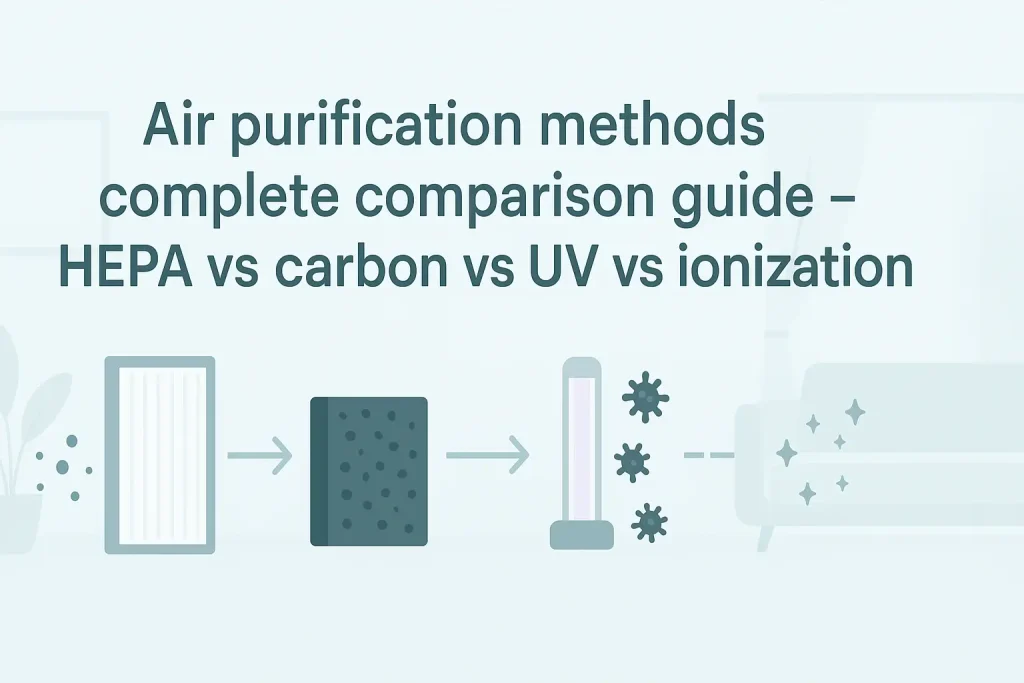
An air purifier that makes air quality worse is almost always an ionizer or ozone generator, not a True HEPA unit. Ionizers emit charged particles that cause airborne PM2.5 to clump together and fall onto surfaces (walls, floors, furniture). The particles are not removed from the room. They are redistributed onto surfaces where they can become resuspended into the air by foot traffic, vacuuming, or air currents.
True standalone ozone generators deliberately produce ozone above the CARB 0.050 ppm safety limit and should never be used in occupied spaces. Ozone is a lung irritant that reacts with indoor air compounds to create secondary pollutants including formaldehyde and ultrafine particles. Even hybrid units with ionizers that cannot be switched off may produce enough ozone to affect sensitive individuals.
Fix this by using only mechanical filtration units (True HEPA plus activated carbon) with CARB certification. If your unit has an ionizer, ensure it can be disabled and keep it turned off. All units recommended in this guide either lack ionizers entirely or allow the ionizer to be switched off independently from the fan.
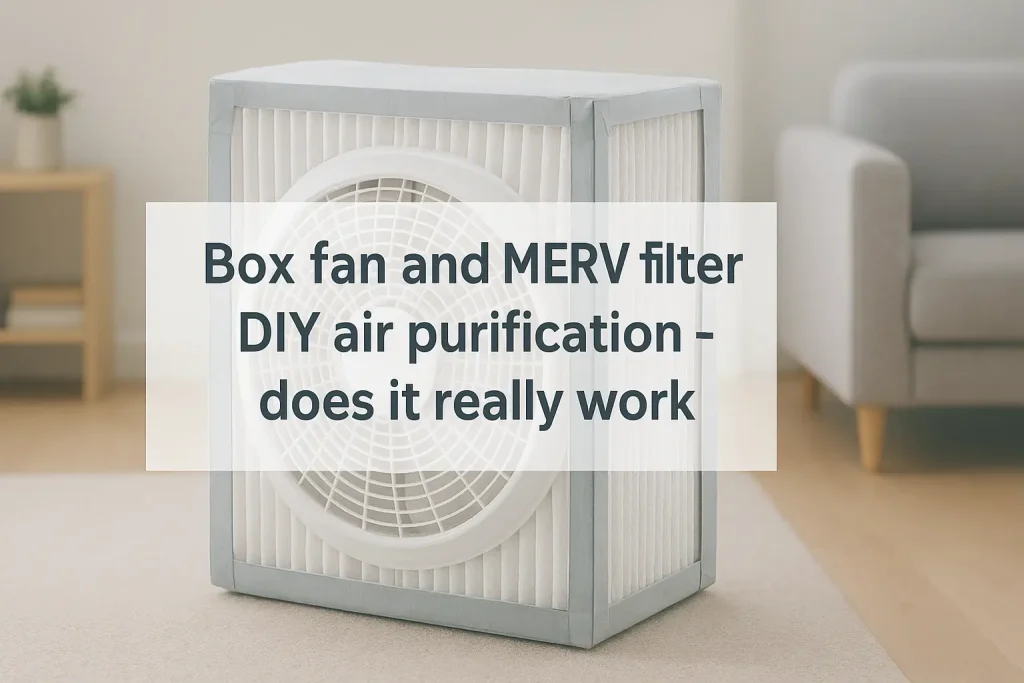
Can I Use a MERV 13 Furnace Filter Instead of a Portable Air Purifier
A MERV 13 furnace filter in your HVAC system filters whole-house air at 800 to 2,000 CFM, far higher airflow than any portable unit. However, it only filters when the HVAC fan runs. Most residential HVAC systems run the fan only during heating or cooling cycles, which total 15 to 45 minutes per hour. The remaining 15 to 45 minutes per hour have zero filtration.
A portable True HEPA purifier runs continuously at 50 to 400 CFM, providing constant filtration for a specific room. The best approach for whole-home air quality combines both: a MERV 13 HVAC filter running whenever the system fan is on (switch your thermostat fan setting from Auto to On during high pollution events) plus portable True HEPA units in bedrooms and primary living spaces.
This combination approach addresses the airflow limitation of portable units (low CFM but continuous) and the runtime limitation of HVAC filters (high CFM but intermittent). During wildfire season or high-pollen periods, running both systems simultaneously provides the highest total clean air delivery.
Does the Pre-Filter Actually Do Anything Important
The pre-filter is the most undervalued component in air purifier maintenance. A washable pre-filter captures large particles (visible dust, pet hair, lint) before they reach the HEPA filter. Without a functioning pre-filter, the HEPA filter loads with large particles and loses CADR performance within weeks. A clean pre-filter extends HEPA filter life by 30 to 50%.
This happens because HEPA media has limited total particulate holding capacity before airflow resistance increases and CADR drops. Large particles consume that capacity disproportionately. A pre-filter intercepts the largest particles at the intake, preserving HEPA capacity for the fine and ultrafine particles that only HEPA can capture.
If you never clean or replace the pre-filter, HEPA replacement frequency doubles or triples. The result is higher annual filter costs and degraded CADR between replacements. Clean washable pre-filters every 2 to 4 weeks under running water. Dry completely before reinstalling.
How Long Does a HEPA Filter Actually Last Under $500 Units
Most sub-$500 air purifier HEPA filters last 6 to 12 months under normal household conditions (no smoking, no major renovation dust, pets present in moderation). In homes with active wildfire smoke exposure, heavy cooking with poor ventilation, or multiple shedding pets, HEPA filter life drops to 3 to 6 months because the particle loading rate exceeds the filter’s design capacity.
Filter change indicators on air purifiers are typically timer-based, not actual loading-based. They count hours of operation at various fan speeds and estimate filter saturation. A laser particle sensor that detects reduced CADR by measuring outlet air particle counts would be more accurate, but no sub-$500 unit currently includes this feature. Replace your filter when the change indicator signals, or when a PM2.5 monitor shows reduced reduction percentages at high fan speed, whichever comes first.
For a more detailed breakdown of filter lifespan across brands and pollution conditions, our comparison of Levoit and Holmes filter longevity and replacement costs provides real-world filter life data under different usage patterns.
Which Certification Matters Most: CARB, ENERGY STAR, or AHAM
All three certifications matter for different reasons, and a sub-$500 air purifier should carry all three. AHAM Verifide certification guarantees the CADR numbers are independently tested and accurate. CARB certification guarantees ozone output is below 0.050 ppm. ENERGY STAR certification guarantees the unit uses no more energy than the EPA efficiency threshold for its CADR class.
AHAM certification is the most important because it verifies the core performance claim. Without AHAM CADR testing, the manufacturer’s claimed coverage area has no independent verification. Several brands publish coverage area numbers without AHAM certification. Their CADR claims are unverified and may be inflated by 20% or more compared to AHAM-tested equivalents.
CARB certification matters even for non-ionizing units because it confirms the unit was tested and found to produce negligible ozone. ENERGY STAR is the least critical of the three but matters for units you plan to run 24/7. An ENERGY STAR certified unit saves approximately $15 to $25 per year in electricity compared to a non-certified unit with the same CADR.
Our Verdict: The Best Air Purifier Under $500 for Most People
For most buyers, the Coway AP-1512HH at approximately $200 delivers the best balance of smoke CADR (246 CFM), low noise (30 dB at sleep), low annual filter cost ($30), and independent certifications (AHAM, CARB, ENERGY STAR, AAFA). It covers a standard bedroom at allergy-grade 5 ACH and handles dust, pollen, pet dander, and moderate smoke conditions.
If you need coverage for a large living room or open floor plan under $500, the Coway Airmega 400 at approximately $400 is the clear choice. Its 400 CFM dual-fan smoke CADR and 22 dB sleep mode have no equal in this price range. The washable pre-filter and $60 annual filter cost keep long-term ownership affordable.
If your budget is tight, the Levoit Core 300S at $99 with $25 annual filters is a genuine True HEPA purifier that covers small bedrooms and home offices effectively. It lacks the smart features and higher CADR of the more expensive units, but the core filtration performance at this price is unmatched.